The History of the Constitution
By John Awad and Robb Benitez
The Actual Constitution
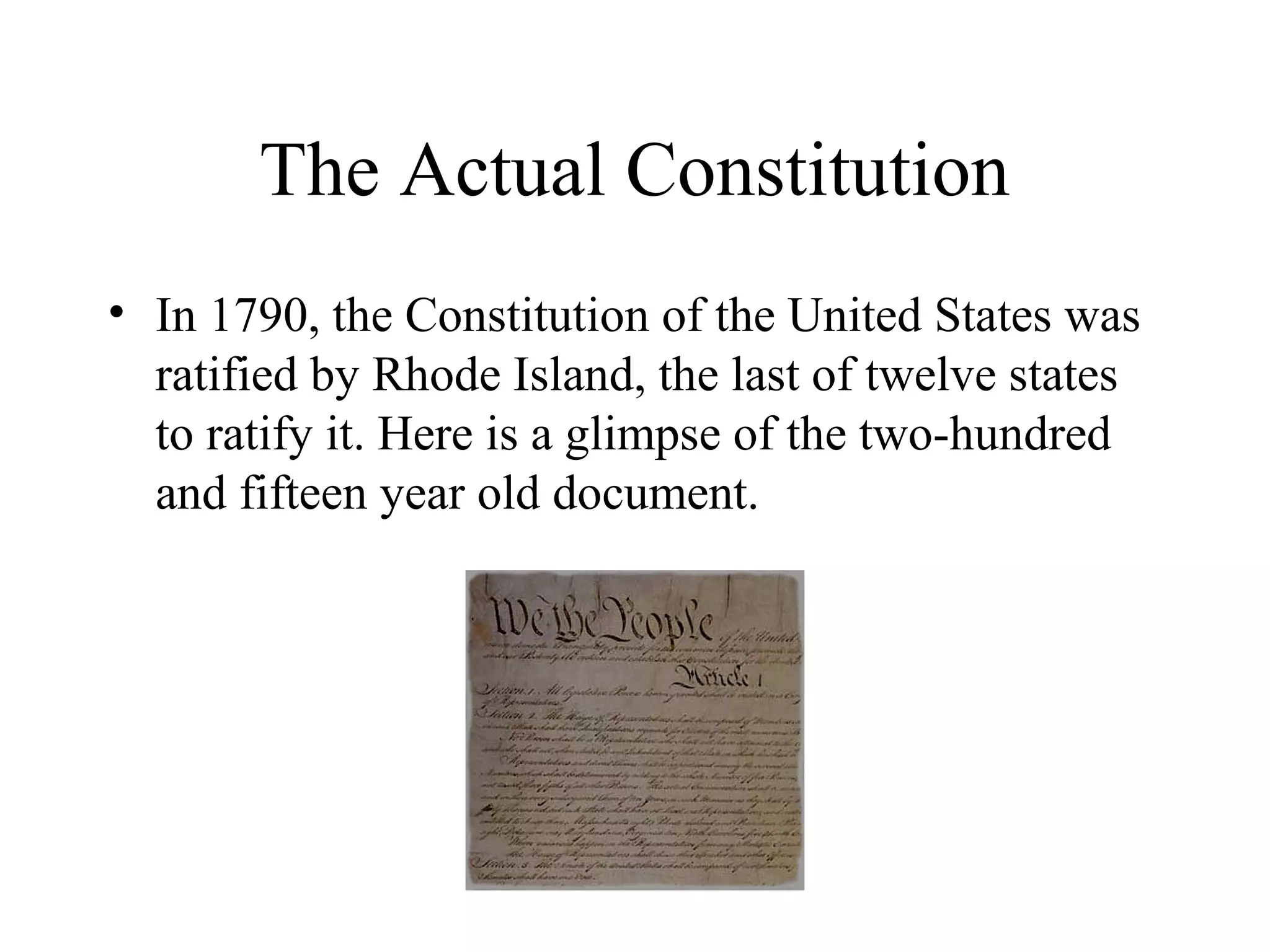
• In 1790, the Constitution of the United States was
ratified by Rhode Island, the last of twelve states
to ratify it. Here is a glimpse of the two-hundred
and fifteen year old document.
The Cause of the Constitution
• The first and most major cause of the making of
the Constitution was the failure of the Articles of
Confederation to provide the U.S. with and
adequate and reliable government.
• The second major cause of the making of the
Constitution was the fact that the U.S. needed a
strong executive to take control of its foreign and
domestic needs.
The Effect of the Constitution
• One major effect of the making of the Constitution
was the Whiskey Rebellion.
• Another major effect of the making of the
Constitution was Shay’s Rebellion.
• One final effect of the making of the Constitution
was the enragement of the Anti-federalists towards
the Federalists, and, the making of two different
political parties.
Conventions Prior to the
Constitution’s Ratification
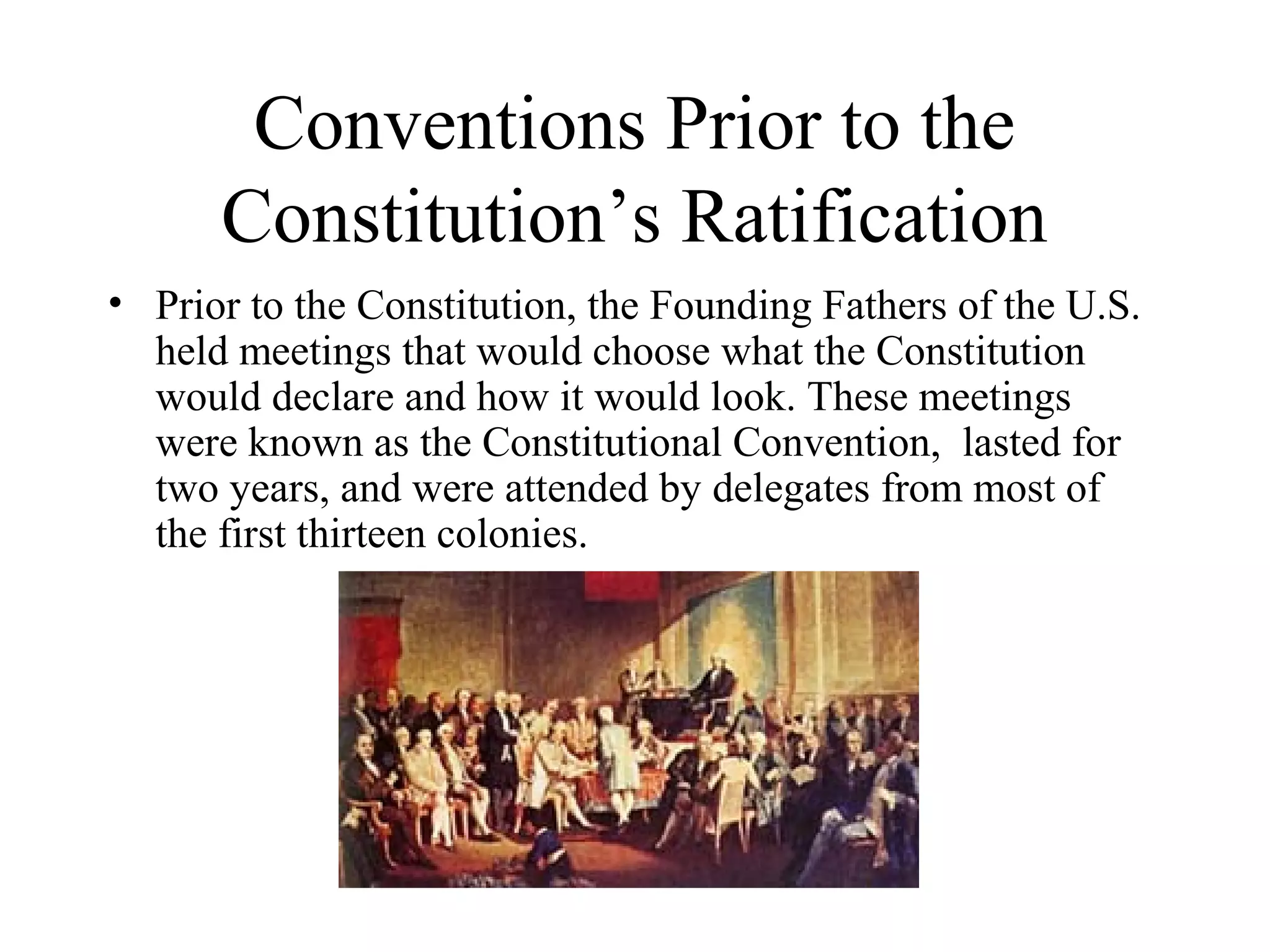
• Prior to the Constitution, the Founding Fathers of the U.S.
held meetings that would choose what the Constitution
would declare and how it would look. These meetings
were known as the Constitutional Convention, lasted for
two years, and were attended by delegates from most of
the first thirteen colonies.
Men who Attended the
Constitutional Convention
• As many people already
know, only men were
allowed to attend the
Constitutional
Convention.
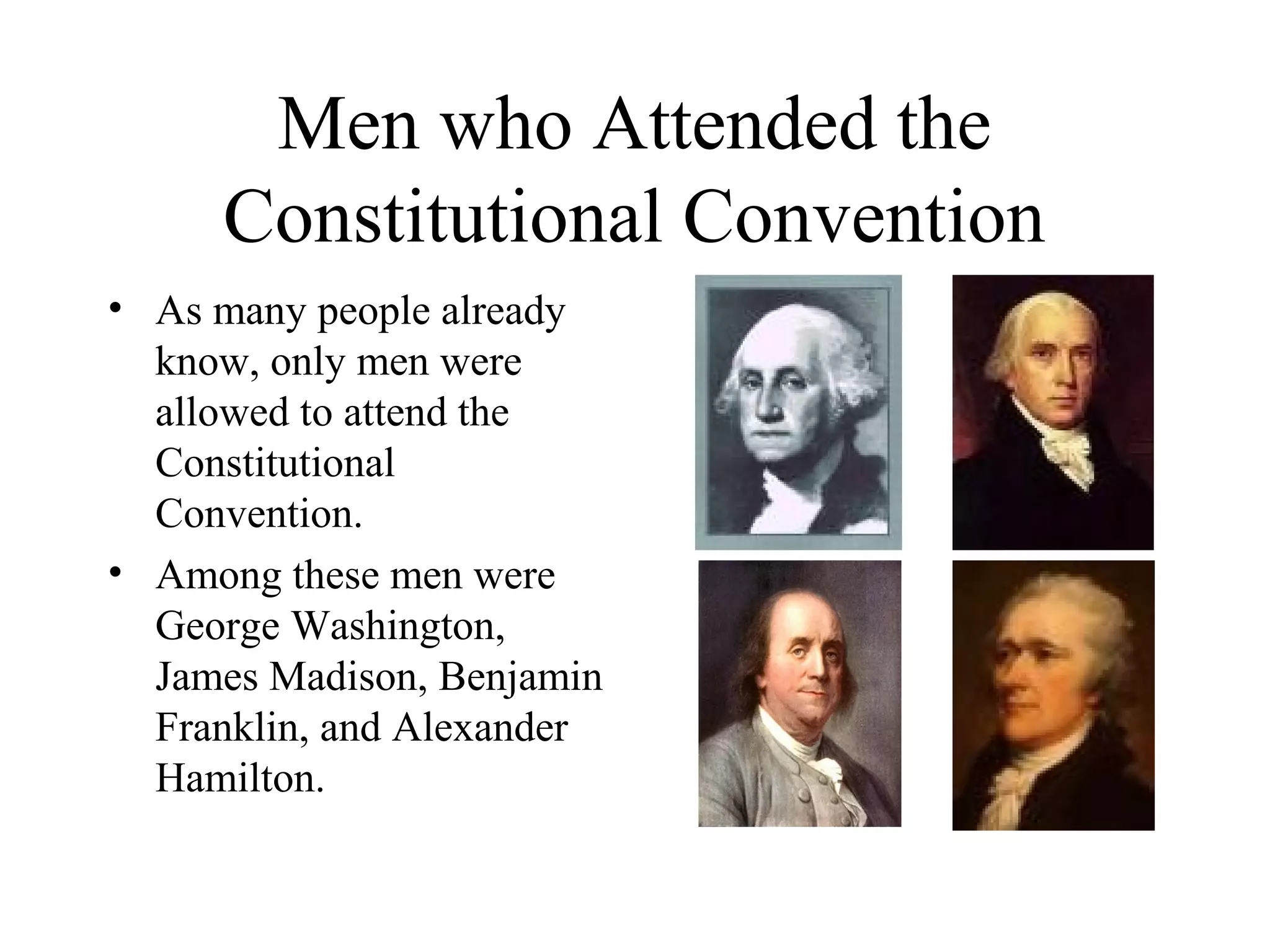
• Among these men were
George Washington,
James Madison, Benjamin
Franklin, and Alexander
Hamilton.
Inside the Constitution
• When the Constitution was first made, it was a
government success for different reasons. First, it
offered a separation of powers in which the
government could function. This separation of
powers came to be known as the branches of
government (legislative branch, judicial branch,
and executive branch). Second, the Constitution
offered checks and balances on each branch of
government. Finally, the Constitution allowed the
citizens of the U.S. to be highly involved
government proceedings and affairs.
The Legislative Branch
• The Legislative Branch is made up of the
House and the Senate. The House is made
up of 450 representatives while, the Senate
is made up of two senators from each state.
This group is known as Congress and
makes bills to become laws, can impeach
government officials, and has much power
in the U.S.
The Judicial Branch
• The Judicial Branch is mainly made up by
the Supreme Court. This branch can claim
laws to be unconstitutional, redefine the
Constitution, and make major sentences and
statements towards the state or individuals.
The Executive Branch
• The Executive Branch is mainly made up
by the President and the Cabinet. The
Cabinet is made up of advisors to the
President. The Cabinet includes the
Secretary of State, the Secretary of War,
and the Secretary of Agriculture. This
branch deals with foreign affairs, leads the
U.S. army into war, and can impeach
members of the other branches.
Faults of the
Original Constitution
No Bill of Rights!!
• Although the original Constitution was a
success, it lacked a Bill of Rights for the
people. A year after the Constitution was
ratified, the Bill of Rights was added to the
Constitution. Ten Amendments was what
the Bill of Rights was made up of. These
amendments dealed with the civil rights of
the U.S. citizens.
More Amendments
• After the first ten amendments were added
to the Constitution, it still lacked some
rights for the U.S. citizens. Due to this,
seventeen more amendments were added to
the Constitution. These amendments dealed
with slavery, voting rights, and taxes.
Summary
• All in all, the Constitution had its faults and
its victories. Mostly, the Constitution
provided the U.S. with proper laws and a
proper system of government. Throughout
its history, the Constitution had
amendments made to it, was redefined, and
protected the U.S. from ravenous frauds.
Thank You!!!
The End!!!

History of the Constitution

  • 1.
    The History ofthe Constitution By John Awad and Robb Benitez
  • 2.
    The Actual Constitution •In 1790, the Constitution of the United States was ratified by Rhode Island, the last of twelve states to ratify it. Here is a glimpse of the two-hundred and fifteen year old document.
  • 3.
    The Cause ofthe Constitution • The first and most major cause of the making of the Constitution was the failure of the Articles of Confederation to provide the U.S. with and adequate and reliable government. • The second major cause of the making of the Constitution was the fact that the U.S. needed a strong executive to take control of its foreign and domestic needs.
  • 4.
    The Effect ofthe Constitution • One major effect of the making of the Constitution was the Whiskey Rebellion. • Another major effect of the making of the Constitution was Shay’s Rebellion. • One final effect of the making of the Constitution was the enragement of the Anti-federalists towards the Federalists, and, the making of two different political parties.
  • 5.
    Conventions Prior tothe Constitution’s Ratification • Prior to the Constitution, the Founding Fathers of the U.S. held meetings that would choose what the Constitution would declare and how it would look. These meetings were known as the Constitutional Convention, lasted for two years, and were attended by delegates from most of the first thirteen colonies.
  • 6.
    Men who Attendedthe Constitutional Convention • As many people already know, only men were allowed to attend the Constitutional Convention. • Among these men were George Washington, James Madison, Benjamin Franklin, and Alexander Hamilton.
  • 7.
  • 8.
    • When theConstitution was first made, it was a government success for different reasons. First, it offered a separation of powers in which the government could function. This separation of powers came to be known as the branches of government (legislative branch, judicial branch, and executive branch). Second, the Constitution offered checks and balances on each branch of government. Finally, the Constitution allowed the citizens of the U.S. to be highly involved government proceedings and affairs.
  • 9.
    The Legislative Branch •The Legislative Branch is made up of the House and the Senate. The House is made up of 450 representatives while, the Senate is made up of two senators from each state. This group is known as Congress and makes bills to become laws, can impeach government officials, and has much power in the U.S.
  • 10.
    The Judicial Branch •The Judicial Branch is mainly made up by the Supreme Court. This branch can claim laws to be unconstitutional, redefine the Constitution, and make major sentences and statements towards the state or individuals.
  • 11.
    The Executive Branch •The Executive Branch is mainly made up by the President and the Cabinet. The Cabinet is made up of advisors to the President. The Cabinet includes the Secretary of State, the Secretary of War, and the Secretary of Agriculture. This branch deals with foreign affairs, leads the U.S. army into war, and can impeach members of the other branches.
  • 12.
  • 13.
    No Bill ofRights!! • Although the original Constitution was a success, it lacked a Bill of Rights for the people. A year after the Constitution was ratified, the Bill of Rights was added to the Constitution. Ten Amendments was what the Bill of Rights was made up of. These amendments dealed with the civil rights of the U.S. citizens.
  • 14.
    More Amendments • Afterthe first ten amendments were added to the Constitution, it still lacked some rights for the U.S. citizens. Due to this, seventeen more amendments were added to the Constitution. These amendments dealed with slavery, voting rights, and taxes.
  • 15.
    Summary • All inall, the Constitution had its faults and its victories. Mostly, the Constitution provided the U.S. with proper laws and a proper system of government. Throughout its history, the Constitution had amendments made to it, was redefined, and protected the U.S. from ravenous frauds.
  • 16.