What is the Eatwell Plate?           
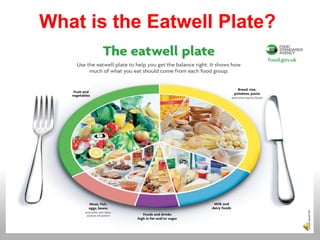
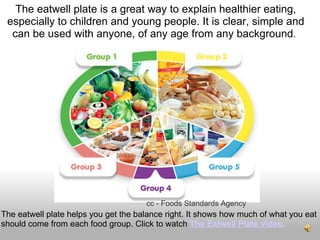
The eatwell plate is a great way to explain healthier eating, especially to children and young people. It is clear, simple and can be used with anyone, of any age from any background .      The eatwell plate helps you get the balance right. It shows how much of what you eat should come from each food group. Click to watch  The Eatwell Plate video. cc - Foods Standards Agency
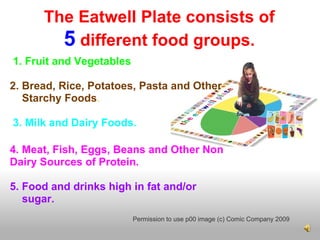
The Eatwell Plate consists of  5  different food groups.    1. Fruit and Vegetables   2. Bread, Rice, Potatoes, Pasta and Other       Starchy Foods .     3. Milk and Dairy Foods. 4. Meat, Fish, Eggs, Beans and Other Non  Dairy Sources of Protein.    5. Food and drinks high in fat and/or      sugar.       Permission to use p00 image (c) Comic Company 2009
1. Fruit and Vegetables We need to eat  L O T S  of this group We should all be eating more fruit and vegetables. But most of us aren’t eating enough.   We should be eating at least five portions of fruit and vegetables every day.  You can choose from fresh, frozen, tinned, dried or juiced.     But remember potatoes    do not  count. cc Images by Gracie and Viv. cc Image by Manasses Cakery What do these    5  groups consist of?
2. Bread, rice, potatoes,   pasta and other starch foods   provide   us with energy and contain many important vitamins and minerals.  Wholemeal versions are good sources of fibre and help to provide energy over a sustained period.          We need to eat  L O T S  of this group Cc Image by Indywriter.
3. Milk &  Dairy Foods     contains calcium which is needed to keep teeth and bones strong and healthy.  It is really important that children get enough calcium when they are growing up in order for their bones to develop properly. We need to eat   S O M E   of this group cc Image by cwbuecheler cc Image by Leah Pritchard cc Image by Striatic
4.   Meat, fish, eggs, beans and other non dairy sources of protein.   This group is essential for our growth and development. Vegetarian alternatives are included in this group, for example, tofu, soya and lentils. Oily fish is a great source of essential fatty acids such as omega 3.     We need to eat  S O M E   of this group cc Image by Izlk
5. Foods and drinks high in fat and/or sugar should be eaten only once or twice a day.       Foods from this group should be eaten    O N L Y  O C C A S I O N A L L Y    Foods from this group contain few nutrients and vitamins and when eaten to excess can cause weight gain. cc Image by Matti Matilla
Healthy eating is about getting a balance of different foods.    The 'Eatwell Plate' can assist us to get this message across. Did you know? *Fifteen per cent of preschool children consume just under half their  recommended daily energy intake in the form of sugary drinks.  *Infomation provided by  http://www.waterforhealth.org.uk/ No food is completely  healthy or completely unhealthy. There are  some foods that  we should try to eat more of and others that we should eat only occasionally. Permission to use p00 image (c) Comic Company 2009
Let's make our children aware! The Eatwell plate, we can help us deliver clear and simple healthier eating messages. Did you know? The recommended daily salt requirement for children is 3 grams.  A pre-packed chicken and bacon sandwich from Asda contains 3 grams of salt.* *Information provided by  http://www.actiononsalt.org.uk/consumers/sandwiches_2007.htm   Permission granted from Nutriskill for image use.
Eggs belong in the dairy section?     True or False?   cc Image by Woodleywonderworks
  False    They belong to the Meat, fish, eggs, beans and other non-dairy sources of protein group. cc Image by Woodleywonderworks
  Potatoes belong to the fruit and veg section?   True or False?  cc Image by di the huntress.
They belong to the bread, rice, potatoes, pasta and other starchy foods group. False.  cc Image by di the huntress.
Butter belongs in the dairy section?    True or False?     cc Image by VirtualErn
  Butter is the fat part of the milk and belongs in the foods and drinks high in fat and/or sugar group.    False?   cc Image by VirtualErn
The Eatwell Plate
1. Base your meals on the bread, rice potatoes and pasta food group.   cc Image byIngorrr
2.Eat lots of fruit and vegetables  cc Image by Savannah Grandfather
3. Eat more fish  cc - image by e900
4. Cut down on saturated fat and sugar
5.  Try to eat less salt cc Image by Ingorrr
6. Get active and try to be a healthy weight  cc Image by mikebaird
7. Drink plenty of water  cc Image by iphonepcis.
8. Don’t skip breakfast    cc Image by Guillermo Esteves
 

Eatwell Plate

  • 1.
    What is the EatwellPlate?           
  • 2.
    The eatwell plateis a great way to explain healthier eating, especially to children and young people. It is clear, simple and can be used with anyone, of any age from any background .      The eatwell plate helps you get the balance right. It shows how much of what you eat should come from each food group. Click to watch The Eatwell Plate video. cc - Foods Standards Agency
  • 3.
    The Eatwell Plateconsists of  5 different food groups.    1. Fruit and Vegetables   2. Bread, Rice, Potatoes, Pasta and Other       Starchy Foods .     3. Milk and Dairy Foods. 4. Meat, Fish, Eggs, Beans and Other Non Dairy Sources of Protein.    5. Food and drinks high in fat and/or     sugar.       Permission to use p00 image (c) Comic Company 2009
  • 4.
    1. Fruit andVegetables We need to eat L O T S of this group We should all be eating more fruit and vegetables. But most of us aren’t eating enough.   We should be eating at least five portions of fruit and vegetables every day.  You can choose from fresh, frozen, tinned, dried or juiced.     But remember potatoes   do not count. cc Images by Gracie and Viv. cc Image by Manasses Cakery What do these   5 groups consist of?
  • 5.
    2. Bread, rice, potatoes,  pasta and other starch foods provide us with energy and contain many important vitamins and minerals.  Wholemeal versions are good sources of fibre and help to provide energy over a sustained period.          We need to eat L O T S of this group Cc Image by Indywriter.
  • 6.
    3. Milk & Dairy Foods    contains calcium which is needed to keep teeth and bones strong and healthy.  It is really important that children get enough calcium when they are growing up in order for their bones to develop properly. We need to eat  S O M E of this group cc Image by cwbuecheler cc Image by Leah Pritchard cc Image by Striatic
  • 7.
    4.   Meat,fish, eggs, beans and other non dairy sources of protein.   This group is essential for our growth and development. Vegetarian alternatives are included in this group, for example, tofu, soya and lentils. Oily fish is a great source of essential fatty acids such as omega 3.     We need to eat S O M E of this group cc Image by Izlk
  • 8.
    5. Foods anddrinks high in fat and/or sugar should be eaten only once or twice a day.       Foods from this group should be eaten    O N L Y O C C A S I O N A L L Y   Foods from this group contain few nutrients and vitamins and when eaten to excess can cause weight gain. cc Image by Matti Matilla
  • 9.
    Healthy eating is aboutgetting a balance of different foods.   The 'Eatwell Plate' can assist us to get this message across. Did you know? *Fifteen per cent of preschool children consume just under half their recommended daily energy intake in the form of sugary drinks.  *Infomation provided by http://www.waterforhealth.org.uk/ No food is completely  healthy or completely unhealthy. There are some foods that we should try to eat more of and others that we should eat only occasionally. Permission to use p00 image (c) Comic Company 2009
  • 10.
    Let's make ourchildren aware! The Eatwell plate, we can help us deliver clear and simple healthier eating messages. Did you know? The recommended daily salt requirement for children is 3 grams.  A pre-packed chicken and bacon sandwich from Asda contains 3 grams of salt.* *Information provided by  http://www.actiononsalt.org.uk/consumers/sandwiches_2007.htm  Permission granted from Nutriskill for image use.
  • 11.
    Eggs belong in the dairysection?     True or False? cc Image by Woodleywonderworks
  • 12.
      False   They belong to the Meat, fish, eggs, beans and other non-dairy sources of protein group. cc Image by Woodleywonderworks
  • 13.
      Potatoes belongto the fruit and veg section? True or False? cc Image by di the huntress.
  • 14.
    They belong tothe bread, rice, potatoes, pasta and other starchy foods group. False. cc Image by di the huntress.
  • 15.
    Butter belongs inthe dairy section?   True or False?   cc Image by VirtualErn
  • 16.
      Butter isthe fat part of the milk and belongs in the foods and drinks high in fat and/or sugar group.   False?  cc Image by VirtualErn
  • 17.
  • 18.
    1. Base yourmeals on the bread, rice potatoes and pasta food group. cc Image byIngorrr
  • 19.
    2.Eat lots offruit and vegetables cc Image by Savannah Grandfather
  • 20.
    3. Eat morefish cc - image by e900
  • 21.
    4. Cut downon saturated fat and sugar
  • 22.
    5. Tryto eat less salt cc Image by Ingorrr
  • 23.
    6. Get activeand try to be a healthy weight cc Image by mikebaird
  • 24.
    7. Drink plentyof water cc Image by iphonepcis.
  • 25.
    8. Don’t skipbreakfast   cc Image by Guillermo Esteves
  • 26.

Editor's Notes

  • #2 Welcome to the Healthier Eating workshop. In this presentation we are going to show you how you can use the Eatwell Plate to help pupils understand about healthier eating.