J-CLUB
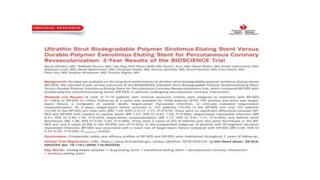
Comparison of Contemporary Drug-Eluting Stents in Patients Undergoing Complex High-Risk Indicated
Procedures
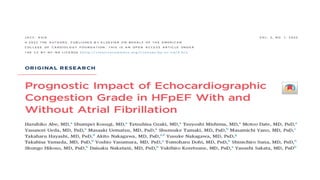
Prognostic Impact of Echocardiographic Congestion Grade in HFpEF With and Without Atrial Fibrillation
2-Year Results With a Sirolimus-Eluting Self-Expanding Stent for Femoropopliteal Lesions The First-in-Human
ILLUMINA Study
PRESENTER: DR MOHSIN
MODERATOR: DR VIMAL METHA
PROFESSOR DEPT OF CARDIOLOGY
GIPMER
BACKGROUND
Limited data are available on the relative performances of diverse
contemporary drug-eluting stents (DES) in patients undergoing complex
high-risk indicated procedures (CHIP).
AIM
The purpose of this study was to evaluate the comparative
effectiveness of contemporary second generationDES for CHIP patients
in “real-world” settings.
METHODOLOGY
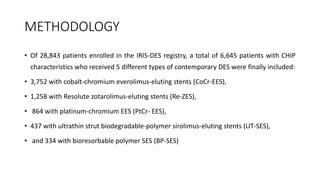
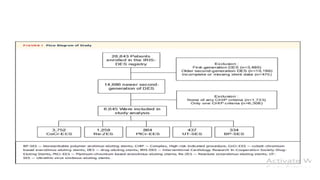
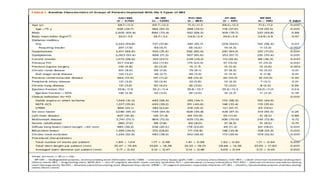
• Of 28,843 patients enrolled in the IRIS-DES registry, a total of 6,645 patients with CHIP
characteristics who received 5 different types of contemporary DES were finally included:
• 3,752 with cobalt-chromium everolimus-eluting stents (CoCr-EES),
• 1,258 with Resolute zotarolimus-eluting stents (Re-ZES),
• 864 with platinum-chromium EES (PtCr- EES),
• 437 with ultrathin strut biodegradable-polymer sirolimus-eluting stents (UT-SES),
• and 334 with bioresorbable polymer SES (BP-SES)
CHIP
patients with CHIP characteristics were selected in whom both clinical and angiographic criteria had been met (Supplemental
1) clinical criteria of CHIP were 1 of the following characteristics: multiple comorbidities (ie, age >75 years, diabetes mellitus,
chronic renal disease, previous bypass surgery, history of cerebrovascular disease, peripheral artery disease, or chronic lung
disease, ST-segment elevation myocardial infarction (MI) requiring primary PCI, poor ventricular function/hemodynamic
instability (ie, severe left ventricular dysfunction, defined as ejection fraction <30% or clinical presentation with cardiogenic
shock); and
2) angiographic criteria of CHIP were any of the following characteristics: complex coronary lesions (ie, unprotected left main
disease, multivessel disease, severely calcified lesions, very diffuse long lesions [total stent length >40 mm], bifurcation
lesions, or chronic total occlusion).
CHIP patients should have at least 1 clinical criterion as well as at least 1 angiographic criterion.
OUTCOME
• The primary outcome :of the study was target-vessel failure ,defined as a
composite of cardiac death, target-vessel MI, or clinically driven target-
vessel revascularization (TVR).
• Secondary outcomes: included individual components of the primary
outcome; death from any cause; any revascularization; stent thrombosis;
and major adverse cardiac events (MACE), a composite of all-cause death,
any MI, or any revascularization.
EXCLUSION CRITERIA
• cardiogenic shock
• diagnosed with a malignancy ,
• had a life expectancy <12 months,
• treated with a combination of different DES types,
• had active bleeding contraindicating treatment withdual-antiplatelet therapy
• scheduled to undergo planned surgery necessitating the interruption of
antiplatelet drugs within 6 months after PCI
RESULTS
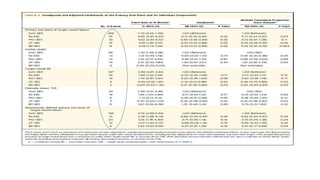
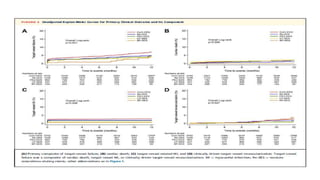
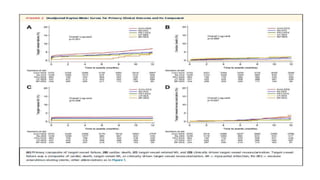
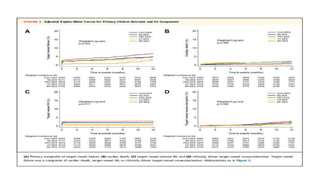
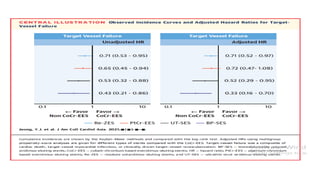
• At 12 months, the rate of target-vessel failure was highest in the CoCr-EES (7.1%)
group; intermediate in the Re-ZES (5.0%), PtCr-EES (4.6%), and BP-SES (4.2%)
groups; and lowest in the UT-SES (3.8%) group (overall long-rank P ¼ 0.001).
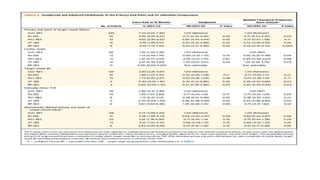
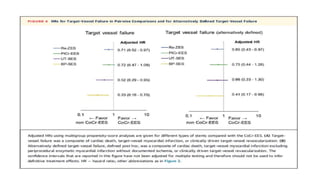
• In multiple-treatment propensity-score analysis, the adjusted hazard ratios (HRs)
for target-vessel failure were significantly lower in the Re-ZES (HR: 0.71; 95%
confidence interval [CI]: 0.52-0.97), the UT-SES (HR: 0.52; 95% CI: 0.29-0.95), and
BP-SES (HR: 0.33; 95% CI: 0.16-0.70) groups than in the CoCr-EES group
DISCUSSION
• Elderly patients, patients with multiple comorbidities and hemodynamic unstable patients are usually at
substantially higher risks of adverse cardiovascular events and mortality regardless of PCI success.
• In addition, PCI for complex CAD (eg, left main disease, true bifurcation lesion, multivessel disease, heavily
calcified lesion, or chronic total occlusion) is associated with an increased incidence of procedure-related
complications, leading to periprocedural MI, bleeding, arrhythmia, and decompensated heart failure.
• For such higher-risk PCI patients, there are still unanswered questions with regard to the relative
effectiveness and safety of different contemporary DES in the real-world PCI settings.
• Similar to previous randomized trials of the BIOFLOW V (Safety and Effectiveness of the
Orsiro Sirolimus-Eluting Coronary Stent System in Subjects With Coronary Artery Lesions)
and BIOSTEMI (A Comparison of an Ultrathin Strut Biodegradable Polymer Sirolimus-
Eluting Stent With a Durable Polymer Everolimus-Eluting Stent forPatients With Acute ST-
Segment Elevation Myocardial Infarction Undergoing Primary Percutaneous Coronary
Intervention) ,
• our study found that the rate of target-vessel failure at 1 year was significantly lower in
the UT-SES than in the Co-Cr-EES group, with this difference mainly driven by the
difference in periprocedural MI rate.
• Compared with CoCr-EES, BP-SES showed a significantly lower risk of target
vessel failure, mainly driven by a lower incidence of periprocedural MI.
• The BP-SES is a thin strut, cobalt chromium, biodegradable-polymer,
abluminal -coated sirolimus -eluting stent with an open-cell 2-link design
and uniform architecture for optimal coverage of bifurcation anatomy .
• Thin biocompatible, bioresorbable gradient coating was intended to reduce
polymer cracking and delamination on the hinges of the stent.
The incidence of stent thrombosis was extremely low in the overall
population.
A relatively low rate ofstent thrombosis might be explained in part by
differences in clinical or lesion characteristics, interventional
practice (eg, a higher use of intravascular ultrasound), or race or ethnic
groups (eg, East-Asian paradox for differential ischemic and bleeding
tendency).
CONCLUSION
In this contemporary PCI registry, we observed the differential risks of
target-vessel failure according to various types of contemporary DES in
patients with CHIP characteristics.
However, owing to inherent selection bias, the results should be
considered hypothesis-generating, highlighting the need for further
randomized trials.
LIMITATIONS
• First, this was an observational registry; thus, overall findings should be considered hypothesis-
generating.
• In addition, the P values and confidence intervals were not adjusted for multiple testing and
therefore should not be used to infer definitive treatment effects.
• Second, the choice of the specific stents in our registries was not randomized and thus is subject
to selection bias.
• Third, given that the sample size of each stent groupwas relatively limited, our study was
underpowered to detect clinically relevant differences in hard clinicalendpoints
BACKGROUND
Atrial fibrillation (AF) is common in heart failure with preserved
ejection fraction (HFpEF).
AIM
This study aimed to investigate the prognostic value of
echocardiographic markers of congestion that can be applied to both
AF and patients without AF with HFpEF.
METHODOLOGY
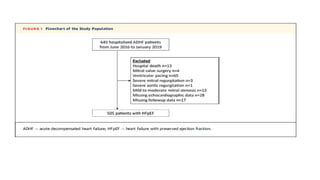
• Multicenter study of 505 patients with HFpEF admitted to hospitals for acute decompensated
heart failure.
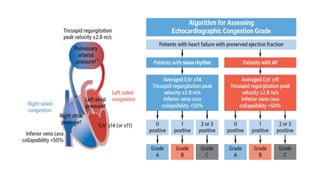
• The ratio of early diastolic transmitral flow velocity to mitral annulus velocity (E/e’), the tricuspid
regurgitation peak velocity, and the collapsibility of the inferior vena cava were obtained at
discharge.
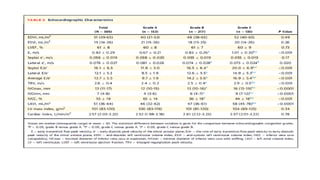
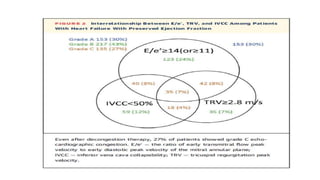
• Congestion was determined by echocardiography if any one of E/e’>14 (E/e’ >11 for AF), tricuspid
regurgitation peak velocity >2.8 m/s, or inferior vena cava collapsibility <50% was positive.
• Classified patients into grade A, grade B, and grade C according to the number of positive
congestion indices
END POINT
• The primary endpoint was the composite of cardiovascular death and
heart failure hospitalization.
RESULTS
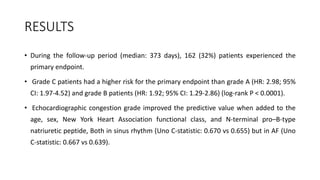
• During the follow-up period (median: 373 days), 162 (32%) patients experienced the
primary endpoint.
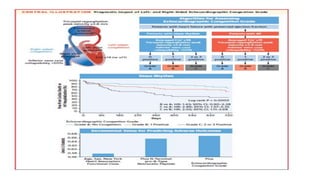
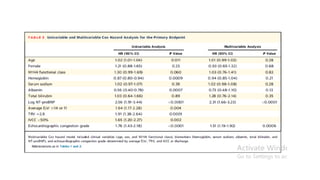
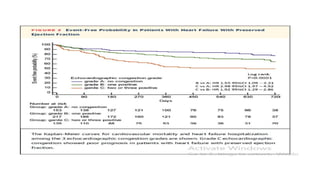
• Grade C patients had a higher risk for the primary endpoint than grade A (HR: 2.98; 95%
CI: 1.97-4.52) and grade B patients (HR: 1.92; 95% CI: 1.29-2.86) (log-rank P < 0.0001).
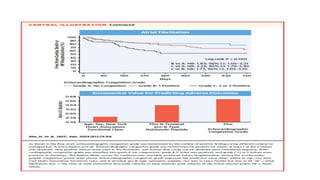
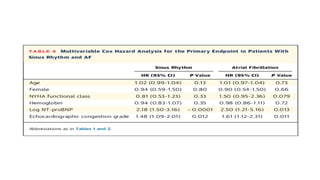
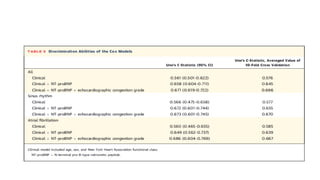
• Echocardiographic congestion grade improved the predictive value when added to the
age, sex, New York Heart Association functional class, and N-terminal pro–B-type
natriuretic peptide, Both in sinus rhythm (Uno C-statistic: 0.670 vs 0.655) but in AF (Uno
C-statistic: 0.667 vs 0.639).
DISCUSSION
• AF existed in 43% of patients at discharge, which cannot be ignored in our HFpEF study.
• Elevated left ventricular filling pressure leads to left atrial stretching and remodeling and to
increased pulmonary pressures and right ventricular afterload.
• Patients with HFpEF with AF had higher pulmonary capillary wedge pressure and mean
pulmonary artery pressure compared to patients with HFpEF in sinus rhythm.
• The presence of pulmonary hypertension in AF is associated with more right atrial dilatation and
higher right atrial pressures compared to pulmonary hypertensionin patients without AF
• Right-sided congestion, which can be measured as IVCC, is considered to reflect various
pathophysiologic features of HFpEF.
• Values of right atrial pressure are affected by many variables such as venous return and stressed
volume regulated by the autonomic nervous system, abdominal pressure inducing an
intercompartmental fluid shift from the splanchnic vessels to the IVC,intrathoracic pressure, and
pulmonary arterial resistance.
• These mechanisms can predispose patients to heart failure exacerbations regardless of total
body volume status. From the results of these earlier studies, IVCC as right-sided congestion is
considered to be important in predicting prognosis in HFpEF.
CONCLUSION
Echocardiographic left- and right-sided congestion grade may add an
incremental value for predicting adverse outcomes over the clinical
factors (age, sex,and NYHA functional class) and NT-proBNP, not only
in sinus rhythm but in patients with AF with HFpEF.
LIMITATIONS
1. First, many patients were older than 80 years and had renal dysfunction, which may increase E/e’ and NT
proBNP values.
2. Second, the entry requirement of admission NT-proBNP of >400 pg/mL or brain natriuretic peptide of >100
pg/mL is based on the recommendation of the Japanese Heart Failure Society, which is different from
European Society of Cardiology guidelines.
3. Third, we excluded patients without echocardiography data and follow-up data.
BACKGROUND
• DES releasing paclitaxel exhibited good patency rates after
femoropopliteal interventions.
• No benefithas been reported when sirolimus or everolimus were used
for antiproliferative stent coating.
AIM
• The aim of the study was to assess 24-month efficacy and safety of a
novel drug-eluting stent (DES) for femoropopliteal interventions with
an innovative stent design and abluminal reservoir technology
releasing the amphilimus formulation (sirolimus plus fatty acid) for
efficient drug transfer and optimized release kinetics.
METHODOLOGY
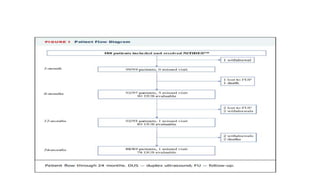
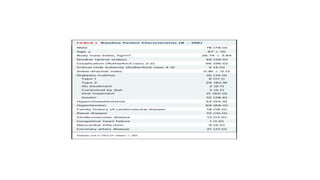
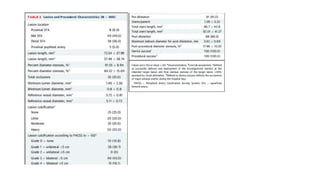
• Within a multicenter, first-in-man, single-arm study, 100 patients with
symptomatic femoropopliteal disease (Rutherford category 2-4, mean
lesion length 5.8 3.9 cm, 35.0% total occlusions) were treated with the
NiTiDES stent (Alvimedica).
• Two-year follow-up included assessment of primary patency (defined as
absence of clinically driven target lesion revascularization or binary
restenosis with a peak systolic velocity ratio >2.4 by duplex ultrasound),
safety, functional, and clinical outcomes
INCLUSION AND EXCLUSION
1. Enrolled patients had 1 or more (in tandem, with a distance between lesions #3 cm not exceeding the
maximum lesion length) de novo or restenotic lesions of the above-the-knee femoropopliteal artery of
one limb, meeting the general inclusion and exclusion criteria.
2. Major inclusion criteria comprised Rutherford category 2 to 4 and resting ankle-brachial index (ABI) <0.9.
3. Major exclusion criteria --lesions in the contralateral superficial femoral artery requiring intervention
during the index procedure or within 30 days after the procedure and previous target vessel stenting.
4. Angiographic criteria comprised lesion length #14 cm, >50% diameter stenosis, and at least 1 patent
runoff vessel (<50%stenosis throughout its course).
STENT
1. The NiTiDES stent was developed by CID S.p.A. (member of Alvimedica Group).
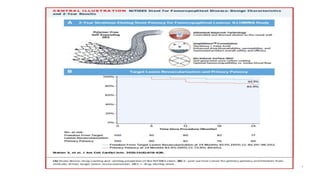
2. NiTiDES isa CE-certified, polymer-free self-expanding DES in nitinol alloy, loaded with the amphilimus
formulation(sirolimus plus fatty acid) enhancing drug bioavailability .
3. The drug is contained within grooves (reservoirs) on the outer surface of the stent (Abluminal Reservoir
Technology), and therefore it is eluted only toward the vessel wall, allowing a fast stent re-
endothelialization.
4. The entire structure, including the reservoirs, is homogeneously coated with an ultra-thin film of pure
carbon (i-Carbofilm [Bio Inducer Surface]) in order to increase hemocompatibility and biocompatibility
and ensure thromboresistance.
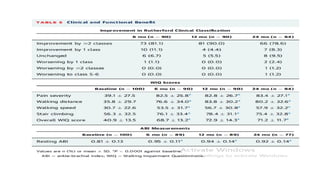
RESULTS
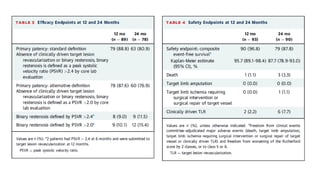
• At 24 months, Kaplan-Meier estimates of primary patency and freedom from
clinically driven target lesion revascularization were 83.4% (95% CI: 73.9%-89.6%)
and 93.1% (95% CI: 85.3%-96.9%), respectively.
• Over the study period, 3 deaths were reported with no major limb amputation.
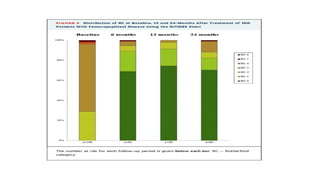
• Functional and clinical benefits were sustained, as 82.1% of patients fell into
Rutherford category 0 or 1 at 24 months, which was associated with preserved
improvements in all walking disability questionnaire scores
1. The observed primary patency rate of 83.4% in the ILLUMINA studycompares well with other trials investigating DES for
femoropopliteal interventions.
2. In the recently published IMPERIAL (A Randomized Trial Comparing the ELUVIA Drug-eluting Stent Versus Zilver PTX
Stent for Treatment of Superficial Femoral and/or Proximal Popliteal Arteries) trial comparing 2 paclitaxel-eluting stents,
one with a polymer coating (Eluvia [Boston Scientific]) and one without (Zilver PTX [Cook Medical]), the primary patency
rate was 83.0% for Eluvia and 77.1% for Zilver PTX after 24 months of follow-up.
3. In the BATTLE (Bare Metal Stent vs. Paclitaxel Eluting Stent in the Setting of Primary Stenting of Intermediate-Length
Femoropopliteal Lesions) trial, a head-to-head randomized comparison of the Zilver PTX vs a BMS, patency rates of
78.8% and 74.6% were reported at 2 years for the DES and BMS, respectively.15
1. The polymer-free concept is attractive, as chronic inflammation has been linked to the presence of
durable polymers of coronary DES before.
2. The amphilimus drug formulation supports enhanced drug tissue permeation through utilizing fatty acid
pathways, which might be particularly beneficial in diabetics as an increased uptake of fatty acids has
been described in diabetic cells.
3. Importantly, prior studies suggested a relative ineffectiveness for restenosis inhibition by coronary DES
eluting paclitaxel or M-tor inhibitors (-limus drugs) in diabetics, which could be overcome by the
amphilimus formulation and thereby contribute to the observed efficacy in the ILLUMINA study, with 35%
of patients being diabetics
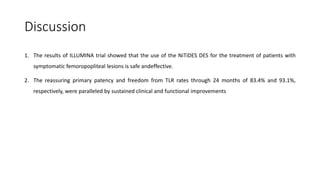
Discussion
1. The results of ILLUMINA trial showed that the use of the NiTiDES DES for the treatment of patients with
symptomatic femoropopliteal lesions is safe andeffective.
2. The reassuring primary patency and freedom from TLR rates through 24 months of 83.4% and 93.1%,
respectively, were paralleled by sustained clinical and functional improvements
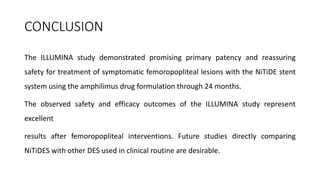
CONCLUSION
The ILLUMINA study demonstrated promising primary patency and reassuring
safety for treatment of symptomatic femoropopliteal lesions with the NiTiDE stent
system using the amphilimus drug formulation through 24 months.
The observed safety and efficacy outcomes of the ILLUMINA study represent
excellent
results after femoropopliteal interventions. Future studies directly comparing
NiTiDES with other DES used in clinical routine are desirable.
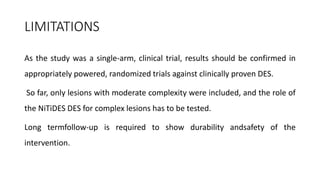
LIMITATIONS
As the study was a single-arm, clinical trial, results should be confirmed in
appropriately powered, randomized trials against clinically proven DES.
So far, only lesions with moderate complexity were included, and the role of
the NiTiDES DES for complex lesions has to be tested.
Long termfollow-up is required to show durability andsafety of the
intervention.

Presentation1.pptx

  • 1.
    J-CLUB Comparison of ContemporaryDrug-Eluting Stents in Patients Undergoing Complex High-Risk Indicated Procedures Prognostic Impact of Echocardiographic Congestion Grade in HFpEF With and Without Atrial Fibrillation 2-Year Results With a Sirolimus-Eluting Self-Expanding Stent for Femoropopliteal Lesions The First-in-Human ILLUMINA Study PRESENTER: DR MOHSIN MODERATOR: DR VIMAL METHA PROFESSOR DEPT OF CARDIOLOGY GIPMER
  • 4.
    BACKGROUND Limited data areavailable on the relative performances of diverse contemporary drug-eluting stents (DES) in patients undergoing complex high-risk indicated procedures (CHIP).
  • 5.
    AIM The purpose ofthis study was to evaluate the comparative effectiveness of contemporary second generationDES for CHIP patients in “real-world” settings.
  • 6.
    METHODOLOGY • Of 28,843patients enrolled in the IRIS-DES registry, a total of 6,645 patients with CHIP characteristics who received 5 different types of contemporary DES were finally included: • 3,752 with cobalt-chromium everolimus-eluting stents (CoCr-EES), • 1,258 with Resolute zotarolimus-eluting stents (Re-ZES), • 864 with platinum-chromium EES (PtCr- EES), • 437 with ultrathin strut biodegradable-polymer sirolimus-eluting stents (UT-SES), • and 334 with bioresorbable polymer SES (BP-SES)
  • 8.
    CHIP patients with CHIPcharacteristics were selected in whom both clinical and angiographic criteria had been met (Supplemental 1) clinical criteria of CHIP were 1 of the following characteristics: multiple comorbidities (ie, age >75 years, diabetes mellitus, chronic renal disease, previous bypass surgery, history of cerebrovascular disease, peripheral artery disease, or chronic lung disease, ST-segment elevation myocardial infarction (MI) requiring primary PCI, poor ventricular function/hemodynamic instability (ie, severe left ventricular dysfunction, defined as ejection fraction <30% or clinical presentation with cardiogenic shock); and 2) angiographic criteria of CHIP were any of the following characteristics: complex coronary lesions (ie, unprotected left main disease, multivessel disease, severely calcified lesions, very diffuse long lesions [total stent length >40 mm], bifurcation lesions, or chronic total occlusion). CHIP patients should have at least 1 clinical criterion as well as at least 1 angiographic criterion.
  • 9.
    OUTCOME • The primaryoutcome :of the study was target-vessel failure ,defined as a composite of cardiac death, target-vessel MI, or clinically driven target- vessel revascularization (TVR). • Secondary outcomes: included individual components of the primary outcome; death from any cause; any revascularization; stent thrombosis; and major adverse cardiac events (MACE), a composite of all-cause death, any MI, or any revascularization.
  • 10.
    EXCLUSION CRITERIA • cardiogenicshock • diagnosed with a malignancy , • had a life expectancy <12 months, • treated with a combination of different DES types, • had active bleeding contraindicating treatment withdual-antiplatelet therapy • scheduled to undergo planned surgery necessitating the interruption of antiplatelet drugs within 6 months after PCI
  • 12.
    RESULTS • At 12months, the rate of target-vessel failure was highest in the CoCr-EES (7.1%) group; intermediate in the Re-ZES (5.0%), PtCr-EES (4.6%), and BP-SES (4.2%) groups; and lowest in the UT-SES (3.8%) group (overall long-rank P ¼ 0.001). • In multiple-treatment propensity-score analysis, the adjusted hazard ratios (HRs) for target-vessel failure were significantly lower in the Re-ZES (HR: 0.71; 95% confidence interval [CI]: 0.52-0.97), the UT-SES (HR: 0.52; 95% CI: 0.29-0.95), and BP-SES (HR: 0.33; 95% CI: 0.16-0.70) groups than in the CoCr-EES group
  • 21.
    DISCUSSION • Elderly patients,patients with multiple comorbidities and hemodynamic unstable patients are usually at substantially higher risks of adverse cardiovascular events and mortality regardless of PCI success. • In addition, PCI for complex CAD (eg, left main disease, true bifurcation lesion, multivessel disease, heavily calcified lesion, or chronic total occlusion) is associated with an increased incidence of procedure-related complications, leading to periprocedural MI, bleeding, arrhythmia, and decompensated heart failure. • For such higher-risk PCI patients, there are still unanswered questions with regard to the relative effectiveness and safety of different contemporary DES in the real-world PCI settings.
  • 22.
    • Similar toprevious randomized trials of the BIOFLOW V (Safety and Effectiveness of the Orsiro Sirolimus-Eluting Coronary Stent System in Subjects With Coronary Artery Lesions) and BIOSTEMI (A Comparison of an Ultrathin Strut Biodegradable Polymer Sirolimus- Eluting Stent With a Durable Polymer Everolimus-Eluting Stent forPatients With Acute ST- Segment Elevation Myocardial Infarction Undergoing Primary Percutaneous Coronary Intervention) , • our study found that the rate of target-vessel failure at 1 year was significantly lower in the UT-SES than in the Co-Cr-EES group, with this difference mainly driven by the difference in periprocedural MI rate.
  • 23.
    • Compared withCoCr-EES, BP-SES showed a significantly lower risk of target vessel failure, mainly driven by a lower incidence of periprocedural MI. • The BP-SES is a thin strut, cobalt chromium, biodegradable-polymer, abluminal -coated sirolimus -eluting stent with an open-cell 2-link design and uniform architecture for optimal coverage of bifurcation anatomy . • Thin biocompatible, bioresorbable gradient coating was intended to reduce polymer cracking and delamination on the hinges of the stent.
  • 24.
    The incidence ofstent thrombosis was extremely low in the overall population. A relatively low rate ofstent thrombosis might be explained in part by differences in clinical or lesion characteristics, interventional practice (eg, a higher use of intravascular ultrasound), or race or ethnic groups (eg, East-Asian paradox for differential ischemic and bleeding tendency).
  • 25.
    CONCLUSION In this contemporaryPCI registry, we observed the differential risks of target-vessel failure according to various types of contemporary DES in patients with CHIP characteristics. However, owing to inherent selection bias, the results should be considered hypothesis-generating, highlighting the need for further randomized trials.
  • 26.
    LIMITATIONS • First, thiswas an observational registry; thus, overall findings should be considered hypothesis- generating. • In addition, the P values and confidence intervals were not adjusted for multiple testing and therefore should not be used to infer definitive treatment effects. • Second, the choice of the specific stents in our registries was not randomized and thus is subject to selection bias. • Third, given that the sample size of each stent groupwas relatively limited, our study was underpowered to detect clinically relevant differences in hard clinicalendpoints
  • 28.
    BACKGROUND Atrial fibrillation (AF)is common in heart failure with preserved ejection fraction (HFpEF).

  • 29.
    AIM This study aimedto investigate the prognostic value of echocardiographic markers of congestion that can be applied to both AF and patients without AF with HFpEF.
  • 30.
    METHODOLOGY • Multicenter studyof 505 patients with HFpEF admitted to hospitals for acute decompensated heart failure. • The ratio of early diastolic transmitral flow velocity to mitral annulus velocity (E/e’), the tricuspid regurgitation peak velocity, and the collapsibility of the inferior vena cava were obtained at discharge. • Congestion was determined by echocardiography if any one of E/e’>14 (E/e’ >11 for AF), tricuspid regurgitation peak velocity >2.8 m/s, or inferior vena cava collapsibility <50% was positive. • Classified patients into grade A, grade B, and grade C according to the number of positive congestion indices
  • 32.
    END POINT • Theprimary endpoint was the composite of cardiovascular death and heart failure hospitalization.
  • 35.
    RESULTS • During thefollow-up period (median: 373 days), 162 (32%) patients experienced the primary endpoint. • Grade C patients had a higher risk for the primary endpoint than grade A (HR: 2.98; 95% CI: 1.97-4.52) and grade B patients (HR: 1.92; 95% CI: 1.29-2.86) (log-rank P < 0.0001). • Echocardiographic congestion grade improved the predictive value when added to the age, sex, New York Heart Association functional class, and N-terminal pro–B-type natriuretic peptide, Both in sinus rhythm (Uno C-statistic: 0.670 vs 0.655) but in AF (Uno C-statistic: 0.667 vs 0.639).
  • 44.
    DISCUSSION • AF existedin 43% of patients at discharge, which cannot be ignored in our HFpEF study. • Elevated left ventricular filling pressure leads to left atrial stretching and remodeling and to increased pulmonary pressures and right ventricular afterload. • Patients with HFpEF with AF had higher pulmonary capillary wedge pressure and mean pulmonary artery pressure compared to patients with HFpEF in sinus rhythm. • The presence of pulmonary hypertension in AF is associated with more right atrial dilatation and higher right atrial pressures compared to pulmonary hypertensionin patients without AF
  • 45.
    • Right-sided congestion,which can be measured as IVCC, is considered to reflect various pathophysiologic features of HFpEF. • Values of right atrial pressure are affected by many variables such as venous return and stressed volume regulated by the autonomic nervous system, abdominal pressure inducing an intercompartmental fluid shift from the splanchnic vessels to the IVC,intrathoracic pressure, and pulmonary arterial resistance. • These mechanisms can predispose patients to heart failure exacerbations regardless of total body volume status. From the results of these earlier studies, IVCC as right-sided congestion is considered to be important in predicting prognosis in HFpEF.
  • 46.
    CONCLUSION Echocardiographic left- andright-sided congestion grade may add an incremental value for predicting adverse outcomes over the clinical factors (age, sex,and NYHA functional class) and NT-proBNP, not only in sinus rhythm but in patients with AF with HFpEF.
  • 47.
    LIMITATIONS 1. First, manypatients were older than 80 years and had renal dysfunction, which may increase E/e’ and NT proBNP values. 2. Second, the entry requirement of admission NT-proBNP of >400 pg/mL or brain natriuretic peptide of >100 pg/mL is based on the recommendation of the Japanese Heart Failure Society, which is different from European Society of Cardiology guidelines. 3. Third, we excluded patients without echocardiography data and follow-up data.
  • 50.
    BACKGROUND • DES releasingpaclitaxel exhibited good patency rates after femoropopliteal interventions. • No benefithas been reported when sirolimus or everolimus were used for antiproliferative stent coating.
  • 51.
    AIM • The aimof the study was to assess 24-month efficacy and safety of a novel drug-eluting stent (DES) for femoropopliteal interventions with an innovative stent design and abluminal reservoir technology releasing the amphilimus formulation (sirolimus plus fatty acid) for efficient drug transfer and optimized release kinetics.
  • 52.
    METHODOLOGY • Within amulticenter, first-in-man, single-arm study, 100 patients with symptomatic femoropopliteal disease (Rutherford category 2-4, mean lesion length 5.8 3.9 cm, 35.0% total occlusions) were treated with the NiTiDES stent (Alvimedica). • Two-year follow-up included assessment of primary patency (defined as absence of clinically driven target lesion revascularization or binary restenosis with a peak systolic velocity ratio >2.4 by duplex ultrasound), safety, functional, and clinical outcomes
  • 53.
    INCLUSION AND EXCLUSION 1.Enrolled patients had 1 or more (in tandem, with a distance between lesions #3 cm not exceeding the maximum lesion length) de novo or restenotic lesions of the above-the-knee femoropopliteal artery of one limb, meeting the general inclusion and exclusion criteria. 2. Major inclusion criteria comprised Rutherford category 2 to 4 and resting ankle-brachial index (ABI) <0.9. 3. Major exclusion criteria --lesions in the contralateral superficial femoral artery requiring intervention during the index procedure or within 30 days after the procedure and previous target vessel stenting. 4. Angiographic criteria comprised lesion length #14 cm, >50% diameter stenosis, and at least 1 patent runoff vessel (<50%stenosis throughout its course).
  • 55.
    STENT 1. The NiTiDESstent was developed by CID S.p.A. (member of Alvimedica Group). 2. NiTiDES isa CE-certified, polymer-free self-expanding DES in nitinol alloy, loaded with the amphilimus formulation(sirolimus plus fatty acid) enhancing drug bioavailability . 3. The drug is contained within grooves (reservoirs) on the outer surface of the stent (Abluminal Reservoir Technology), and therefore it is eluted only toward the vessel wall, allowing a fast stent re- endothelialization. 4. The entire structure, including the reservoirs, is homogeneously coated with an ultra-thin film of pure carbon (i-Carbofilm [Bio Inducer Surface]) in order to increase hemocompatibility and biocompatibility and ensure thromboresistance.
  • 57.
    RESULTS • At 24months, Kaplan-Meier estimates of primary patency and freedom from clinically driven target lesion revascularization were 83.4% (95% CI: 73.9%-89.6%) and 93.1% (95% CI: 85.3%-96.9%), respectively. • Over the study period, 3 deaths were reported with no major limb amputation. • Functional and clinical benefits were sustained, as 82.1% of patients fell into Rutherford category 0 or 1 at 24 months, which was associated with preserved improvements in all walking disability questionnaire scores
  • 58.
    1. The observedprimary patency rate of 83.4% in the ILLUMINA studycompares well with other trials investigating DES for femoropopliteal interventions. 2. In the recently published IMPERIAL (A Randomized Trial Comparing the ELUVIA Drug-eluting Stent Versus Zilver PTX Stent for Treatment of Superficial Femoral and/or Proximal Popliteal Arteries) trial comparing 2 paclitaxel-eluting stents, one with a polymer coating (Eluvia [Boston Scientific]) and one without (Zilver PTX [Cook Medical]), the primary patency rate was 83.0% for Eluvia and 77.1% for Zilver PTX after 24 months of follow-up. 3. In the BATTLE (Bare Metal Stent vs. Paclitaxel Eluting Stent in the Setting of Primary Stenting of Intermediate-Length Femoropopliteal Lesions) trial, a head-to-head randomized comparison of the Zilver PTX vs a BMS, patency rates of 78.8% and 74.6% were reported at 2 years for the DES and BMS, respectively.15
  • 59.
    1. The polymer-freeconcept is attractive, as chronic inflammation has been linked to the presence of durable polymers of coronary DES before. 2. The amphilimus drug formulation supports enhanced drug tissue permeation through utilizing fatty acid pathways, which might be particularly beneficial in diabetics as an increased uptake of fatty acids has been described in diabetic cells. 3. Importantly, prior studies suggested a relative ineffectiveness for restenosis inhibition by coronary DES eluting paclitaxel or M-tor inhibitors (-limus drugs) in diabetics, which could be overcome by the amphilimus formulation and thereby contribute to the observed efficacy in the ILLUMINA study, with 35% of patients being diabetics
  • 65.
    Discussion 1. The resultsof ILLUMINA trial showed that the use of the NiTiDES DES for the treatment of patients with symptomatic femoropopliteal lesions is safe andeffective. 2. The reassuring primary patency and freedom from TLR rates through 24 months of 83.4% and 93.1%, respectively, were paralleled by sustained clinical and functional improvements
  • 66.
    CONCLUSION The ILLUMINA studydemonstrated promising primary patency and reassuring safety for treatment of symptomatic femoropopliteal lesions with the NiTiDE stent system using the amphilimus drug formulation through 24 months. The observed safety and efficacy outcomes of the ILLUMINA study represent excellent results after femoropopliteal interventions. Future studies directly comparing NiTiDES with other DES used in clinical routine are desirable.
  • 67.
    LIMITATIONS As the studywas a single-arm, clinical trial, results should be confirmed in appropriately powered, randomized trials against clinically proven DES. So far, only lesions with moderate complexity were included, and the role of the NiTiDES DES for complex lesions has to be tested. Long termfollow-up is required to show durability andsafety of the intervention.