

COMPARTMENT SYNDROME
BY DR MANMATHA NAYAK
JUNIOR RESIDENT ,DEPT OF ORTHOPAEDIC
GOVT MEDICAL COLLEGE, KOTTAYAM,KERALA
COMPARTMENT SYNDROME
• DEFINiTION
• TYPES
• PATHOPHYSIOLOGY
• ETIOLOGY
• CLINICAL EVALUATION
• DIAGNOSIS
• MANAGEMENT
• COMPLICATION
DEFINITION
‘’Elevation of the interstitial pressure in a closed osteofascial
compartment that result in microvascular compromise’’
TYPES
• Depending on the cause of the increased pressure and the duration of
symptoms
• A)ACUTE COMPARTMENT SYNDROME
• B)CHRONIC EXERTIONAL COMPARTMENT SYNDROME
PATHOPHYSIOLOGY
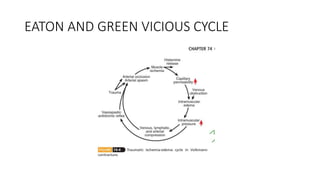
• Insult to normal local tissue haemostsis results in
-Increased tissue pressure
-decreased capillary blood flow
-local tissue necrosis caused by oxygen deprivation
EATON AND GREEN VICIOUS CYCLE
ETIOLOGY OF ACS
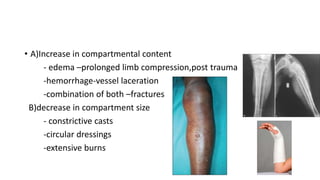
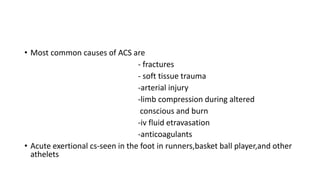
• A)Increase in compartmental content
- edema –prolonged limb compression,post trauma
-hemorrhage-vessel laceration
-combination of both –fractures
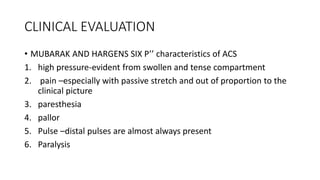
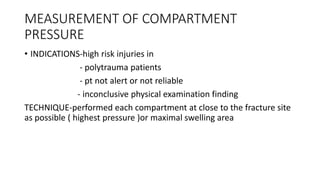
B)decrease in compartment size
- constrictive casts
-circular dressings
-extensive burns
• Most common causes of ACS are
- fractures
- soft tissue trauma
-arterial injury
-limb compression during altered
conscious and burn
-iv fluid etravasation
-anticoagulants
• Acute exertional cs-seen in the foot in runners,basket ball player,and other
athelets
CLINICAL EVALUATION
• MUBARAK AND HARGENS SIX P’’ characteristics of ACS
1. high pressure-evident from swollen and tense compartment
2. pain –especially with passive stretch and out of proportion to the
clinical picture
3. paresthesia
4. pallor
5. Pulse –distal pulses are almost always present
6. Paralysis
MEASUREMENT OF COMPARTMENT
PRESSURE
• INDICATIONS-high risk injuries in
- polytrauma patients
- pt not alert or not reliable
- inconclusive physical examination finding
TECHNIQUE-performed each compartment at close to the fracture site
as possible ( highest pressure )or maximal swelling area
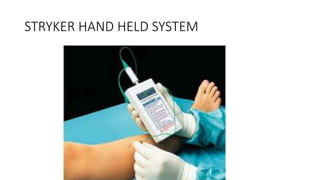
STRYKER HAND HELD SYSTEM
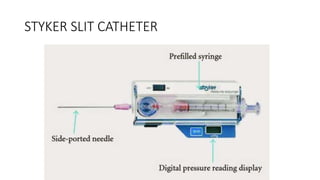
STYKER SLIT CATHETER
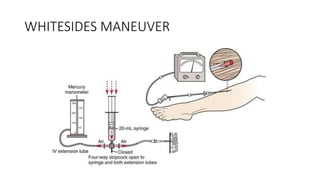
WHITESIDES MANEUVER
MANAGEMENT
• EARLY MANAGEMENT-
> remove cast or bandage
> positioning of the limb at the level heart
-do not elevate the affected limb ->decrease arterial pressure
> hydration
> oxygen suppliment
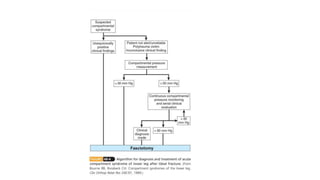
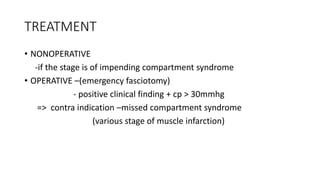
TREATMENT
• NONOPERATIVE
-if the stage is of impending compartment syndrome
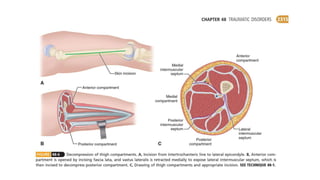
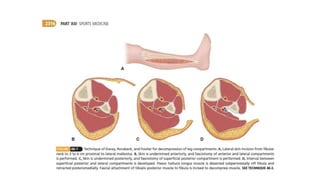
• OPERATIVE –(emergency fasciotomy)
- positive clinical finding + cp > 30mmhg
=> contra indication –missed compartment syndrome
(various stage of muscle infarction)
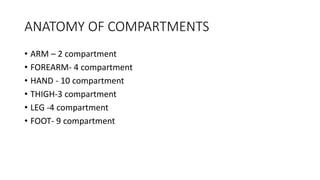
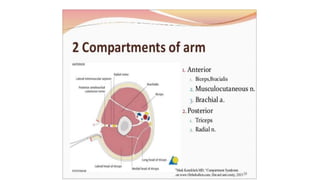
ANATOMY OF COMPARTMENTS
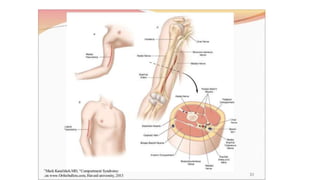
• ARM – 2 compartment
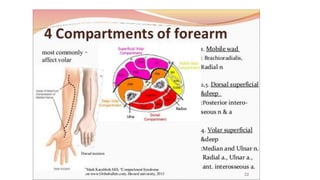
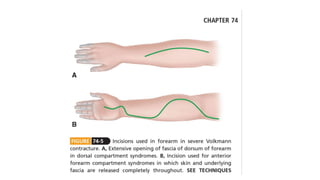
• FOREARM- 4 compartment
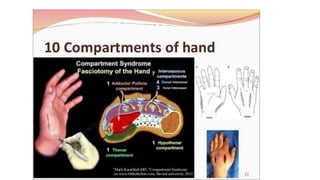
• HAND - 10 compartment
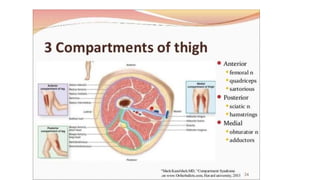
• THIGH-3 compartment
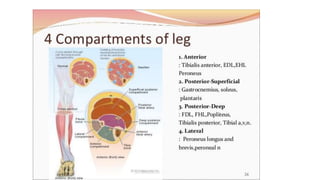
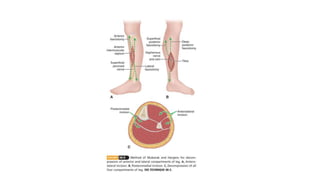
• LEG -4 compartment
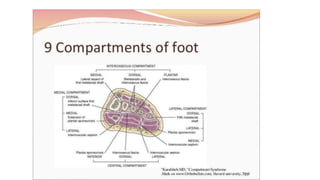
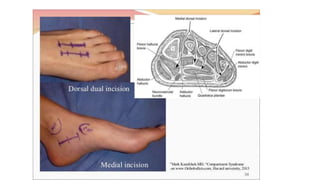
• FOOT- 9 compartment
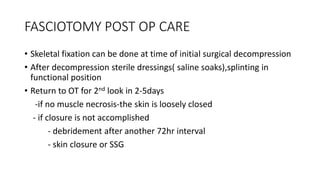
FASCIOTOMY POST OP CARE
• Skeletal fixation can be done at time of initial surgical decompression
• After decompression sterile dressings( saline soaks),splinting in
functional position
• Return to OT for 2nd look in 2-5days
-if no muscle necrosis-the skin is loosely closed
- if closure is not accomplished
- debridement after another 72hr interval
- skin closure or SSG
COMPLICATIONS
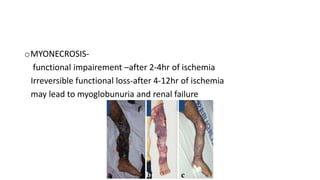
oMYONECROSIS-
functional impairement –after 2-4hr of ischemia
Irreversible functional loss-after 4-12hr of ischemia
may lead to myoglobunuria and renal failure
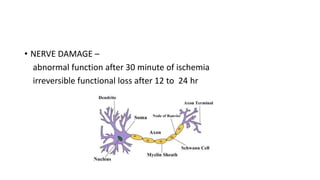
• NERVE DAMAGE –
abnormal function after 30 minute of ischemia
irreversible functional loss after 12 to 24 hr
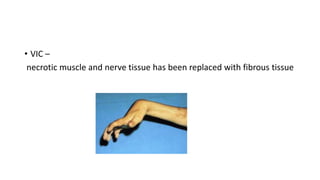
• VIC –
necrotic muscle and nerve tissue has been replaced with fibrous tissue
• REPERFUSION SYNDROME-
> Influx of myoglobulin ,phosphorus,potassium into the circulation
> resulting in myoglobunuria,hyperkalemia,hypovolemic shock
acidosis, renal failure
• INFECTION
• AMPUTATION
CHRONIC COMPARTMENT SYNDROME
• Known as exertional cs
recurrent cs
subacute cs
typical patients are young athelet (long distance runner) and military
recruits
occur mainly in lower limb
PATHOPHYSIOLOGY
• Not yet fully understood
• Probably increased muscle relaxation pressure during exercise
- decreased muscle blood flow
- ischemic pain and impaired muscle function
PHYSICAL EXAM IN CCS
• Exercise induced pain
• Tenderness over the compartment
• Bilateral involvement is common upto 82%
• Fascial hernia
DD
• Periostitis
• Entrapment of superficial peroneal nerve
• Tendinitis posterior tibial tendon
• Stress fracture of tibia
• Intermittent claudication
WORK UP OF CCS
• Plain x ray- show 90% of stress fracture
• Bone scan – diffuse uptake – periostitis
localized uptake – stress fracture
• Tinel test – +ve in nerve entrapment
• NCS – could be helpful
• MRI - promising results reported
DIAGNOSIS OF CCS
• Intracompartmental testing is the hallmark of diagnosis (as reported
by PEDWOTIZ ET.AL)
1) Preexercise resting pressure of 15mmhg or more
2) After 1 minute of exercise pressure of 30mmhg
3) After 5minute of exercise pressure of 20mmhg or more
TREATMENT OF CCS
• NONOPERATIVE-
-- NSAID
- Electrostimulation
- muscle relaxant
- cessation or significant reduction of atheletic activities
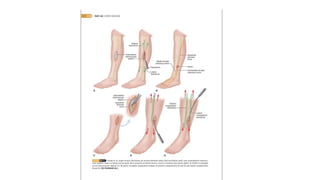
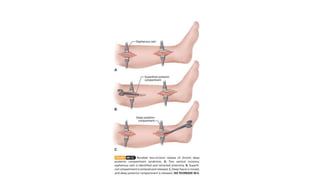
• OPERATIVE TREATMENT-
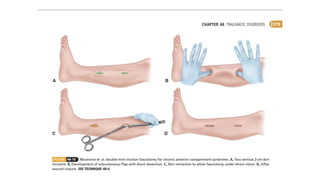
> single incision fasciotomy
>double incision fasciotomy
• AFTER SURGERY -
> early ROM are encouraged
>wt bearing on crutches is allowed on POD1
>light jogging is allowed at 2-3weeks if no swelling or tenderness
COMPARTMENT SYNDROME

COMPARTMENT SYNDROME

  • 1.
    COMPARTMENT SYNDROME BY DRMANMATHA NAYAK JUNIOR RESIDENT ,DEPT OF ORTHOPAEDIC GOVT MEDICAL COLLEGE, KOTTAYAM,KERALA
  • 2.
    COMPARTMENT SYNDROME • DEFINiTION •TYPES • PATHOPHYSIOLOGY • ETIOLOGY • CLINICAL EVALUATION • DIAGNOSIS • MANAGEMENT • COMPLICATION
  • 3.
    DEFINITION ‘’Elevation of theinterstitial pressure in a closed osteofascial compartment that result in microvascular compromise’’
  • 5.
    TYPES • Depending onthe cause of the increased pressure and the duration of symptoms • A)ACUTE COMPARTMENT SYNDROME • B)CHRONIC EXERTIONAL COMPARTMENT SYNDROME
  • 6.
    PATHOPHYSIOLOGY • Insult tonormal local tissue haemostsis results in -Increased tissue pressure -decreased capillary blood flow -local tissue necrosis caused by oxygen deprivation
  • 7.
    EATON AND GREENVICIOUS CYCLE
  • 8.
  • 9.
    • A)Increase incompartmental content - edema –prolonged limb compression,post trauma -hemorrhage-vessel laceration -combination of both –fractures B)decrease in compartment size - constrictive casts -circular dressings -extensive burns
  • 10.
    • Most commoncauses of ACS are - fractures - soft tissue trauma -arterial injury -limb compression during altered conscious and burn -iv fluid etravasation -anticoagulants • Acute exertional cs-seen in the foot in runners,basket ball player,and other athelets
  • 11.
    CLINICAL EVALUATION • MUBARAKAND HARGENS SIX P’’ characteristics of ACS 1. high pressure-evident from swollen and tense compartment 2. pain –especially with passive stretch and out of proportion to the clinical picture 3. paresthesia 4. pallor 5. Pulse –distal pulses are almost always present 6. Paralysis
  • 12.
    MEASUREMENT OF COMPARTMENT PRESSURE •INDICATIONS-high risk injuries in - polytrauma patients - pt not alert or not reliable - inconclusive physical examination finding TECHNIQUE-performed each compartment at close to the fracture site as possible ( highest pressure )or maximal swelling area
  • 13.
  • 14.
  • 15.
  • 16.
    MANAGEMENT • EARLY MANAGEMENT- >remove cast or bandage > positioning of the limb at the level heart -do not elevate the affected limb ->decrease arterial pressure > hydration > oxygen suppliment
  • 18.
    TREATMENT • NONOPERATIVE -if thestage is of impending compartment syndrome • OPERATIVE –(emergency fasciotomy) - positive clinical finding + cp > 30mmhg => contra indication –missed compartment syndrome (various stage of muscle infarction)
  • 19.
    ANATOMY OF COMPARTMENTS •ARM – 2 compartment • FOREARM- 4 compartment • HAND - 10 compartment • THIGH-3 compartment • LEG -4 compartment • FOOT- 9 compartment
  • 32.
    FASCIOTOMY POST OPCARE • Skeletal fixation can be done at time of initial surgical decompression • After decompression sterile dressings( saline soaks),splinting in functional position • Return to OT for 2nd look in 2-5days -if no muscle necrosis-the skin is loosely closed - if closure is not accomplished - debridement after another 72hr interval - skin closure or SSG
  • 33.
  • 34.
    oMYONECROSIS- functional impairement –after2-4hr of ischemia Irreversible functional loss-after 4-12hr of ischemia may lead to myoglobunuria and renal failure
  • 35.
    • NERVE DAMAGE– abnormal function after 30 minute of ischemia irreversible functional loss after 12 to 24 hr
  • 36.
    • VIC – necroticmuscle and nerve tissue has been replaced with fibrous tissue
  • 37.
    • REPERFUSION SYNDROME- >Influx of myoglobulin ,phosphorus,potassium into the circulation > resulting in myoglobunuria,hyperkalemia,hypovolemic shock acidosis, renal failure
  • 38.
  • 39.
    CHRONIC COMPARTMENT SYNDROME •Known as exertional cs recurrent cs subacute cs typical patients are young athelet (long distance runner) and military recruits occur mainly in lower limb
  • 40.
    PATHOPHYSIOLOGY • Not yetfully understood • Probably increased muscle relaxation pressure during exercise - decreased muscle blood flow - ischemic pain and impaired muscle function
  • 41.
    PHYSICAL EXAM INCCS • Exercise induced pain • Tenderness over the compartment • Bilateral involvement is common upto 82% • Fascial hernia
  • 42.
    DD • Periostitis • Entrapmentof superficial peroneal nerve • Tendinitis posterior tibial tendon • Stress fracture of tibia • Intermittent claudication
  • 43.
    WORK UP OFCCS • Plain x ray- show 90% of stress fracture • Bone scan – diffuse uptake – periostitis localized uptake – stress fracture • Tinel test – +ve in nerve entrapment • NCS – could be helpful • MRI - promising results reported
  • 44.
    DIAGNOSIS OF CCS •Intracompartmental testing is the hallmark of diagnosis (as reported by PEDWOTIZ ET.AL) 1) Preexercise resting pressure of 15mmhg or more 2) After 1 minute of exercise pressure of 30mmhg 3) After 5minute of exercise pressure of 20mmhg or more
  • 45.
    TREATMENT OF CCS •NONOPERATIVE- -- NSAID - Electrostimulation - muscle relaxant - cessation or significant reduction of atheletic activities
  • 46.
    • OPERATIVE TREATMENT- >single incision fasciotomy >double incision fasciotomy
  • 50.
    • AFTER SURGERY- > early ROM are encouraged >wt bearing on crutches is allowed on POD1 >light jogging is allowed at 2-3weeks if no swelling or tenderness