RESULTS Figure 5. Morphology and Antigenicity
Figure 7. Total SNP Variant Calls.
Total SNP Variant Calls (TVC) were submitted to
cluster and heat map analysis by calculating mismatch
score = (variants in one) + (variants in the other) –
(variants in common). Lower and more negative
numbers indicate similar TVC between samples.
Similar sample, fixation and time point cluster along a
diagonal line. BF was not included in the analyses due
to poor performance.
Figure 7. Total SNP Variant Calls
Figure 8. Fixative Type affects NGS Metrics.
Results from two way ANOVA analysis results
qualitatively compare the effect of time and fixative
on the DNA NGS metrics. Cells shaded green
indicate that the experimental variable had a
statistically significant outcome on the
corresponding metric (p<0.05). Tukey multiple
comparisons of means with a 95% family-wise
confidence level performed on mismatch score data
were used to select optimal fixative and time point.
BF was not included in the analyses due to poor
performance.
Figure 8. Fixative Type affects NGS Metrics
DISCUSSION
Fixation method affects nearly all NGS metrics, whereas fixation time affects base
coverage depth and mapped reads for LCa tissues. Optimal IHC scores were observed at
24 hours for NBF, as well as 8 and 72 hours for ZBF. NBF performed sufficiently by H+E
stain at all time points. BF produced good H+E staining, but poor IHC scores and NGS
metrics as many samples could not produce NGS libraries. Clustering analysis suggests
that 8 and 24 hour time points outperform 72 hours. The clustering analysis also showed
that ZBF produced worse results compared to EtOH, MeOH, and NBF.
FUTURE DIRECTIONS
The results presented here represent preliminary data with LCa samples and additional
research is underway to expand this type of study to additional tissue types including
research samples from colon and breast cancer.
CONCLUSIONS
24 hour NBF fixation of lung cancer research samples had the best overall results for all
methods tested here: NGS, H&E staining and IHC.
REFERENCES
1.Paavilainen, L. et al. Journal of Histochemistry and Cytochemistry (2010)58.3
2.Tanca, A. et al. J Proteomics (2011)74.10
3.William, H. et al. Methods (2014)
TRADEMARKS/LICENSING
© 2016 Thermo Fisher Scientific Inc. All rights reserved. All trademarks are the property of
Thermo Fisher Scientific and its subsidiaries unless otherwise specified.
Comparison of Type and Time of Fixation on Tissue DNA Sequencing Results
For Research Use Only. Not for use in diagnostic procedures. Thermo Fisher Scientific • 5781 Van Allen Way • Carlsbad, CA 92008 • thermofisher.com
Rob Brown1, Kirk Elliott1, Tanya Biorac2, Michael Allen2, Jennifer Freeland1, Ferda Filiz3, Shayna Donoghue1, Jim Veitch4, Cristina Van Loy2, and Jared Isaac1
Anatomical Pathology Division (APD) Kalamazoo, MI1, Clinical Sequencing Division (CSD) Carlsbad, CA2, APD Fremont, CA3, and CSD South San Francisco, CA4
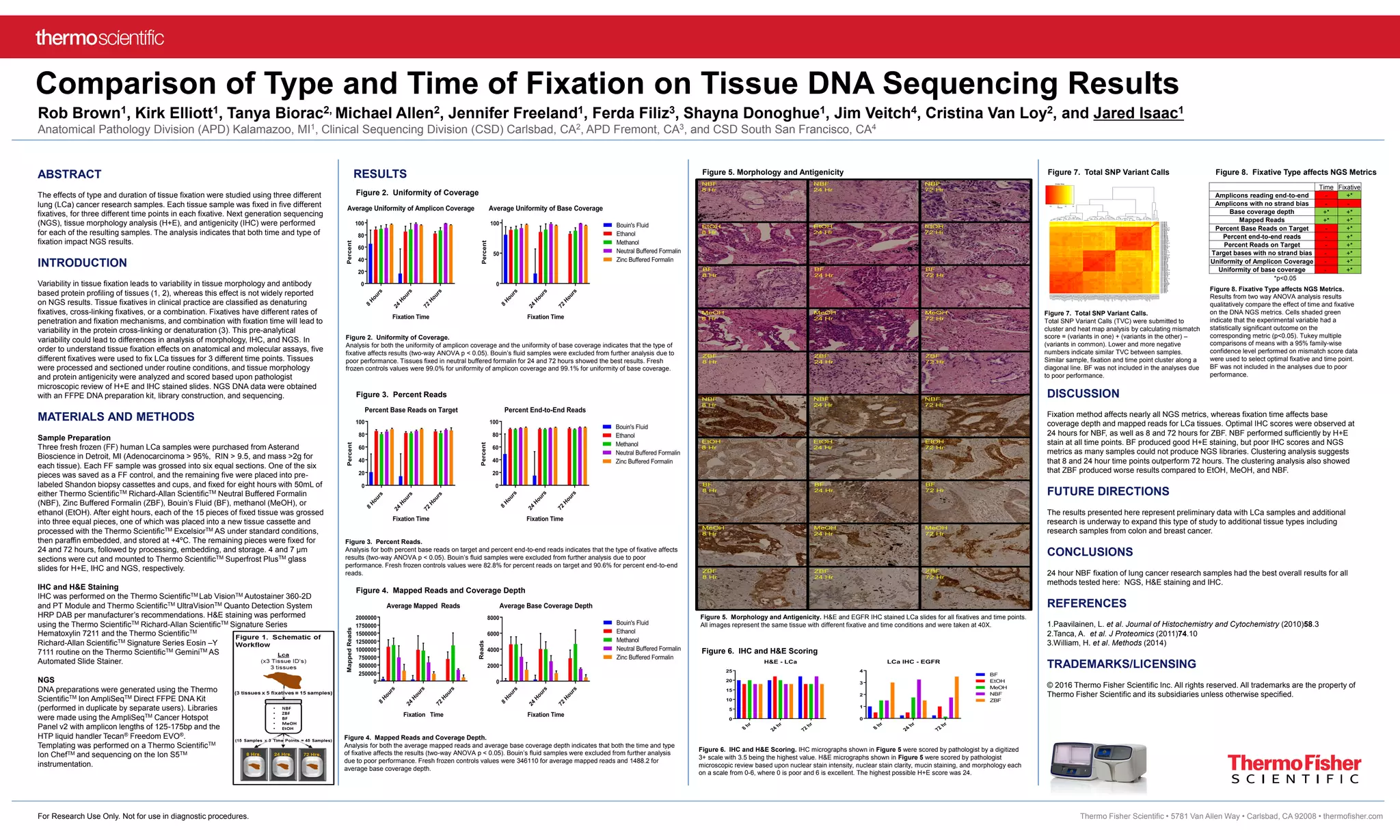
Figure 5. Morphology and Antigenicity. H&E and EGFR IHC stained LCa slides for all fixatives and time points.
All images represent the same tissue with different fixative and time conditions and were taken at 40X.
Figure 2. Uniformity of Coverage
Figure 2. Uniformity of Coverage.
Analysis for both the uniformity of amplicon coverage and the uniformity of base coverage indicates that the type of
fixative affects results (two-way ANOVA p < 0.05). Bouin’s fluid samples were excluded from further analysis due to
poor performance. Tissues fixed in neutral buffered formalin for 24 and 72 hours showed the best results. Fresh
frozen controls values were 99.0% for uniformity of amplicon coverage and 99.1% for uniformity of base coverage.
Figure 3. Percent Reads
Figure 3. Percent Reads.
Analysis for both percent base reads on target and percent end-to-end reads indicates that the type of fixative affects
results (two-way ANOVA p < 0.05). Bouin’s fluid samples were excluded from further analysis due to poor
performance. Fresh frozen controls values were 82.8% for percent reads on target and 90.6% for percent end-to-end
reads.
Figure 4. Mapped Reads and Coverage Depth
Figure 4. Mapped Reads and Coverage Depth.
Analysis for both the average mapped reads and average base coverage depth indicates that both the time and type
of fixative affects the results (two-way ANOVA p < 0.05). Bouin’s fluid samples were excluded from further analysis
due to poor performance. Fresh frozen controls values were 346110 for average mapped reads and 1488.2 for
average base coverage depth.
Time Fixative
Amplicons reading end-to-end - +*
Amplicons with no strand bias - -
Base coverage depth +* +*
Mapped Reads +* +*
Percent Base Reads on Target - +*
Percent end-to-end reads - +*
Percent Reads on Target - +*
Target bases with no strand bias - +*
Uniformity of Amplicon Coverage - +*
Uniformity of base coverage - +*
*p<0.05
Figure 6. IHC and H&E Scoring
Figure 6. IHC and H&E Scoring. IHC micrographs shown in Figure 5 were scored by pathologist by a digitized
3+ scale with 3.5 being the highest value. H&E micrographs shown in Figure 5 were scored by pathologist
microscopic review based upon nuclear stain intensity, nuclear stain clarity, mucin staining, and morphology each
on a scale from 0-6, where 0 is poor and 6 is excellent. The highest possible H+E score was 24.
ABSTRACT
The effects of type and duration of tissue fixation were studied using three different
lung (LCa) cancer research samples. Each tissue sample was fixed in five different
fixatives, for three different time points in each fixative. Next generation sequencing
(NGS), tissue morphology analysis (H+E), and antigenicity (IHC) were performed
for each of the resulting samples. The analysis indicates that both time and type of
fixation impact NGS results.
INTRODUCTION
Variability in tissue fixation leads to variability in tissue morphology and antibody
based protein profiling of tissues (1, 2), whereas this effect is not widely reported
on NGS results. Tissue fixatives in clinical practice are classified as denaturing
fixatives, cross-linking fixatives, or a combination. Fixatives have different rates of
penetration and fixation mechanisms, and combination with fixation time will lead to
variability in the protein cross-linking or denaturation (3). This pre-analytical
variability could lead to differences in analysis of morphology, IHC, and NGS. In
order to understand tissue fixation effects on anatomical and molecular assays, five
different fixatives were used to fix LCa tissues for 3 different time points. Tissues
were processed and sectioned under routine conditions, and tissue morphology
and protein antigenicity were analyzed and scored based upon pathologist
microscopic review of H+E and IHC stained slides. NGS DNA data were obtained
with an FFPE DNA preparation kit, library construction, and sequencing.
MATERIALS AND METHODS
Sample Preparation
Three fresh frozen (FF) human LCa samples were purchased from Asterand
Bioscience in Detroit, MI (Adenocarcinoma > 95%, RIN > 9.5, and mass >2g for
each tissue). Each FF sample was grossed into six equal sections. One of the six
pieces was saved as a FF control, and the remaining five were placed into pre-
labeled Shandon biopsy cassettes and cups, and fixed for eight hours with 50mL of
either Thermo ScientificTM Richard-Allan ScientificTM Neutral Buffered Formalin
(NBF), Zinc Buffered Formalin (ZBF), Bouin’s Fluid (BF), methanol (MeOH), or
ethanol (EtOH). After eight hours, each of the 15 pieces of fixed tissue was grossed
into three equal pieces, one of which was placed into a new tissue cassette and
processed with the Thermo ScientificTM ExcelsiorTM AS under standard conditions,
then paraffin embedded, and stored at +4ºC. The remaining pieces were fixed for
24 and 72 hours, followed by processing, embedding, and storage. 4 and 7 µm
sections were cut and mounted to Thermo ScientificTM Superfrost PlusTM glass
slides for H+E, IHC and NGS, respectively.
IHC and H&E Staining
IHC was performed on the Thermo ScientificTM Lab VisionTM Autostainer 360-2D
and PT Module and Thermo ScientificTM UltraVisionTM Quanto Detection System
HRP DAB per manufacturer’s recommendations. H&E staining was performed
using the Thermo ScientificTM Richard-Allan ScientificTM Signature Series
Hematoxylin 7211 and the Thermo ScientificTM
Richard-Allan ScientificTM Signature Series Eosin –Y
7111 routine on the Thermo ScientificTM GeminiTM AS
Automated Slide Stainer.
NGS
DNA preparations were generated using the Thermo
ScientificTM Ion AmpliSeqTM Direct FFPE DNA Kit
(performed in duplicate by separate users). Libraries
were made using the AmpliSeqTM Cancer Hotspot
Panel v2 with amplicon lengths of 125-175bp and the
HTP liquid handler Tecan® Freedom EVO®.
Templating was performed on a Thermo ScientificTM
Ion ChefTM and sequencing on the Ion S5TM
instrumentation.

Comparison of Type and Time of Fixation on Tissue DNA Sequencing Results

  • 1.
    RESULTS Figure 5.Morphology and Antigenicity Figure 7. Total SNP Variant Calls. Total SNP Variant Calls (TVC) were submitted to cluster and heat map analysis by calculating mismatch score = (variants in one) + (variants in the other) – (variants in common). Lower and more negative numbers indicate similar TVC between samples. Similar sample, fixation and time point cluster along a diagonal line. BF was not included in the analyses due to poor performance. Figure 7. Total SNP Variant Calls Figure 8. Fixative Type affects NGS Metrics. Results from two way ANOVA analysis results qualitatively compare the effect of time and fixative on the DNA NGS metrics. Cells shaded green indicate that the experimental variable had a statistically significant outcome on the corresponding metric (p<0.05). Tukey multiple comparisons of means with a 95% family-wise confidence level performed on mismatch score data were used to select optimal fixative and time point. BF was not included in the analyses due to poor performance. Figure 8. Fixative Type affects NGS Metrics DISCUSSION Fixation method affects nearly all NGS metrics, whereas fixation time affects base coverage depth and mapped reads for LCa tissues. Optimal IHC scores were observed at 24 hours for NBF, as well as 8 and 72 hours for ZBF. NBF performed sufficiently by H+E stain at all time points. BF produced good H+E staining, but poor IHC scores and NGS metrics as many samples could not produce NGS libraries. Clustering analysis suggests that 8 and 24 hour time points outperform 72 hours. The clustering analysis also showed that ZBF produced worse results compared to EtOH, MeOH, and NBF. FUTURE DIRECTIONS The results presented here represent preliminary data with LCa samples and additional research is underway to expand this type of study to additional tissue types including research samples from colon and breast cancer. CONCLUSIONS 24 hour NBF fixation of lung cancer research samples had the best overall results for all methods tested here: NGS, H&E staining and IHC. REFERENCES 1.Paavilainen, L. et al. Journal of Histochemistry and Cytochemistry (2010)58.3 2.Tanca, A. et al. J Proteomics (2011)74.10 3.William, H. et al. Methods (2014) TRADEMARKS/LICENSING © 2016 Thermo Fisher Scientific Inc. All rights reserved. All trademarks are the property of Thermo Fisher Scientific and its subsidiaries unless otherwise specified. Comparison of Type and Time of Fixation on Tissue DNA Sequencing Results For Research Use Only. Not for use in diagnostic procedures. Thermo Fisher Scientific • 5781 Van Allen Way • Carlsbad, CA 92008 • thermofisher.com Rob Brown1, Kirk Elliott1, Tanya Biorac2, Michael Allen2, Jennifer Freeland1, Ferda Filiz3, Shayna Donoghue1, Jim Veitch4, Cristina Van Loy2, and Jared Isaac1 Anatomical Pathology Division (APD) Kalamazoo, MI1, Clinical Sequencing Division (CSD) Carlsbad, CA2, APD Fremont, CA3, and CSD South San Francisco, CA4 Figure 5. Morphology and Antigenicity. H&E and EGFR IHC stained LCa slides for all fixatives and time points. All images represent the same tissue with different fixative and time conditions and were taken at 40X. Figure 2. Uniformity of Coverage Figure 2. Uniformity of Coverage. Analysis for both the uniformity of amplicon coverage and the uniformity of base coverage indicates that the type of fixative affects results (two-way ANOVA p < 0.05). Bouin’s fluid samples were excluded from further analysis due to poor performance. Tissues fixed in neutral buffered formalin for 24 and 72 hours showed the best results. Fresh frozen controls values were 99.0% for uniformity of amplicon coverage and 99.1% for uniformity of base coverage. Figure 3. Percent Reads Figure 3. Percent Reads. Analysis for both percent base reads on target and percent end-to-end reads indicates that the type of fixative affects results (two-way ANOVA p < 0.05). Bouin’s fluid samples were excluded from further analysis due to poor performance. Fresh frozen controls values were 82.8% for percent reads on target and 90.6% for percent end-to-end reads. Figure 4. Mapped Reads and Coverage Depth Figure 4. Mapped Reads and Coverage Depth. Analysis for both the average mapped reads and average base coverage depth indicates that both the time and type of fixative affects the results (two-way ANOVA p < 0.05). Bouin’s fluid samples were excluded from further analysis due to poor performance. Fresh frozen controls values were 346110 for average mapped reads and 1488.2 for average base coverage depth. Time Fixative Amplicons reading end-to-end - +* Amplicons with no strand bias - - Base coverage depth +* +* Mapped Reads +* +* Percent Base Reads on Target - +* Percent end-to-end reads - +* Percent Reads on Target - +* Target bases with no strand bias - +* Uniformity of Amplicon Coverage - +* Uniformity of base coverage - +* *p<0.05 Figure 6. IHC and H&E Scoring Figure 6. IHC and H&E Scoring. IHC micrographs shown in Figure 5 were scored by pathologist by a digitized 3+ scale with 3.5 being the highest value. H&E micrographs shown in Figure 5 were scored by pathologist microscopic review based upon nuclear stain intensity, nuclear stain clarity, mucin staining, and morphology each on a scale from 0-6, where 0 is poor and 6 is excellent. The highest possible H+E score was 24. ABSTRACT The effects of type and duration of tissue fixation were studied using three different lung (LCa) cancer research samples. Each tissue sample was fixed in five different fixatives, for three different time points in each fixative. Next generation sequencing (NGS), tissue morphology analysis (H+E), and antigenicity (IHC) were performed for each of the resulting samples. The analysis indicates that both time and type of fixation impact NGS results. INTRODUCTION Variability in tissue fixation leads to variability in tissue morphology and antibody based protein profiling of tissues (1, 2), whereas this effect is not widely reported on NGS results. Tissue fixatives in clinical practice are classified as denaturing fixatives, cross-linking fixatives, or a combination. Fixatives have different rates of penetration and fixation mechanisms, and combination with fixation time will lead to variability in the protein cross-linking or denaturation (3). This pre-analytical variability could lead to differences in analysis of morphology, IHC, and NGS. In order to understand tissue fixation effects on anatomical and molecular assays, five different fixatives were used to fix LCa tissues for 3 different time points. Tissues were processed and sectioned under routine conditions, and tissue morphology and protein antigenicity were analyzed and scored based upon pathologist microscopic review of H+E and IHC stained slides. NGS DNA data were obtained with an FFPE DNA preparation kit, library construction, and sequencing. MATERIALS AND METHODS Sample Preparation Three fresh frozen (FF) human LCa samples were purchased from Asterand Bioscience in Detroit, MI (Adenocarcinoma > 95%, RIN > 9.5, and mass >2g for each tissue). Each FF sample was grossed into six equal sections. One of the six pieces was saved as a FF control, and the remaining five were placed into pre- labeled Shandon biopsy cassettes and cups, and fixed for eight hours with 50mL of either Thermo ScientificTM Richard-Allan ScientificTM Neutral Buffered Formalin (NBF), Zinc Buffered Formalin (ZBF), Bouin’s Fluid (BF), methanol (MeOH), or ethanol (EtOH). After eight hours, each of the 15 pieces of fixed tissue was grossed into three equal pieces, one of which was placed into a new tissue cassette and processed with the Thermo ScientificTM ExcelsiorTM AS under standard conditions, then paraffin embedded, and stored at +4ºC. The remaining pieces were fixed for 24 and 72 hours, followed by processing, embedding, and storage. 4 and 7 µm sections were cut and mounted to Thermo ScientificTM Superfrost PlusTM glass slides for H+E, IHC and NGS, respectively. IHC and H&E Staining IHC was performed on the Thermo ScientificTM Lab VisionTM Autostainer 360-2D and PT Module and Thermo ScientificTM UltraVisionTM Quanto Detection System HRP DAB per manufacturer’s recommendations. H&E staining was performed using the Thermo ScientificTM Richard-Allan ScientificTM Signature Series Hematoxylin 7211 and the Thermo ScientificTM Richard-Allan ScientificTM Signature Series Eosin –Y 7111 routine on the Thermo ScientificTM GeminiTM AS Automated Slide Stainer. NGS DNA preparations were generated using the Thermo ScientificTM Ion AmpliSeqTM Direct FFPE DNA Kit (performed in duplicate by separate users). Libraries were made using the AmpliSeqTM Cancer Hotspot Panel v2 with amplicon lengths of 125-175bp and the HTP liquid handler Tecan® Freedom EVO®. Templating was performed on a Thermo ScientificTM Ion ChefTM and sequencing on the Ion S5TM instrumentation.