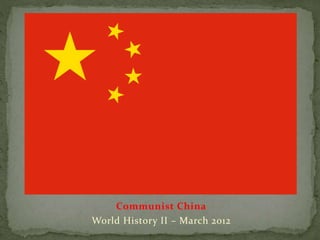
Communist China
World History II – March 2012
 The final dynasty
 Qing Dynasty falls in 1911
 Ends 2,000 years of imperial rule in China
 Civil War
 Military warlords take over provinces of China after Qing
 Communist Party of China formed in 1921
 Civil war rages on and off from 1927-1950
 Fought between Chinese nationalists and Communist party
 Brief break from 1937-1945 to fight the Japanese together
 War re-ignites between Nationalists and Communists
 Communist Party
 Appeals to peasants in countryside
 Has support from Soviets
 Nationalist Party
 Defeated in 1949
 2 million flee mainland China to Taiwan
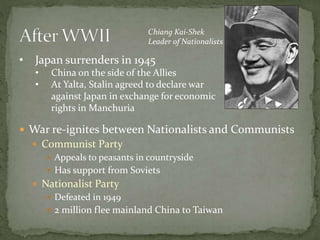
Chiang Kai-Shek
Leader of Nationalists
• Japan surrenders in 1945
• China on the side of the Allies
• At Yalta, Stalin agreed to declare war
against Japan in exchange for economic
rights in Manchuria
 After the Civil War
 1949 - People’s Republic of China’s government signs an
alliance with the USSR
 1950’s - United States responds by expanding
containment policies
 US allies with Japan, Australia, NZ, Thailand & the
Philippines
 Creates long-term military bases for US in Pacific
 Korean War
 China allies with North Korean communist regime
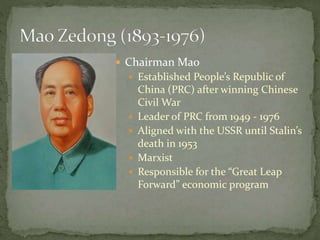
 Chairman Mao
 Established People’s Republic of
China (PRC) after winning Chinese
Civil War
 Leader of PRC from 1949 - 1976
 Aligned with the USSR until Stalin’s
death in 1953
 Marxist
 Responsible for the “Great Leap
Forward” economic program
 Communist economic program
 700,000 existing collective farms combined into
26,000 “communes”
 Each commune had ~30,000 people
 Group child care let 500,000 mothers work the fields
 “Hard work for a few years, happiness for a thousand”
 Goal: Classless society by the end of the century
 Fails due to bad weather & peasant anger
 15 million people died from starvation
 “Great Proletarian Cultural Revolution” begins in 1966
 Goal: “permanent revolution” to achieve classless society
 Return of Mao to absolute power after failure of Great Leap
Forward
 Mao’s ideas are gathered into the Little Red Book
 Available everywhere, constantly quoted by Communists
 Almost a Chinese Communist bible
 Revolution enforced by “Red Guard”
 Young people who violently enforced Mao’s ideas
 Eliminate the “Four Olds”
 Old ideas
 Old culture
 Old customs
 Old habits
 Enforce socialism, eliminate
 Capitalism
 Nationalism
 Bourgeoisie
 Cultural elements of society
Criticize the old world and build a new
world with Mao Zedong’s thought as a
weapon
 Re-education
 “Down to the countryside” movement
 Sent privileged urban youth to farming villages
 Idea: they would learn from workers and farmers
 Many sent right after graduating high school
 No opportunity to attend university
 Created a “lost generation”
 Some say this was used to re-educate some of the Red
Guard (thus keeping them from continuing their reign of
terror)
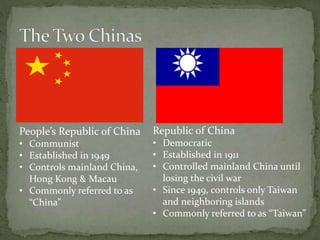
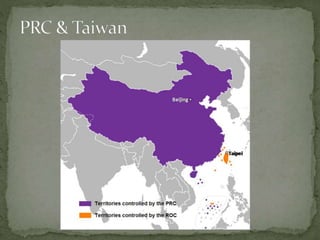
People’s Republic of China
• Communist
• Established in 1949
• Controls mainland China,
Hong Kong & Macau
• Commonly referred to as
“China”
Republic of China
• Democratic
• Established in 1911
• Controlled mainland China until
losing the civil war
• Since 1949, controls only Taiwan
and neighboring islands
• Commonly referred to as “Taiwan”
 Politics
 People’s Republic of China now “socialism with Chinese
characteristics” or “red capitalism”
 Relationship with USSR weakened after Stalin’s death
 Argued over leadership of worldwide communist movement
 Richard Nixon becomes first US President to visit
Communist China in 1972
 Society
 Women have more rights
 More freedom for citizens: clothing, traditions
 One child policy

Communist China Origins

  • 1.
  • 2.
     The finaldynasty  Qing Dynasty falls in 1911  Ends 2,000 years of imperial rule in China  Civil War  Military warlords take over provinces of China after Qing  Communist Party of China formed in 1921  Civil war rages on and off from 1927-1950  Fought between Chinese nationalists and Communist party  Brief break from 1937-1945 to fight the Japanese together
  • 3.
     War re-ignitesbetween Nationalists and Communists  Communist Party  Appeals to peasants in countryside  Has support from Soviets  Nationalist Party  Defeated in 1949  2 million flee mainland China to Taiwan Chiang Kai-Shek Leader of Nationalists • Japan surrenders in 1945 • China on the side of the Allies • At Yalta, Stalin agreed to declare war against Japan in exchange for economic rights in Manchuria
  • 4.
     After theCivil War  1949 - People’s Republic of China’s government signs an alliance with the USSR  1950’s - United States responds by expanding containment policies  US allies with Japan, Australia, NZ, Thailand & the Philippines  Creates long-term military bases for US in Pacific  Korean War  China allies with North Korean communist regime
  • 5.
     Chairman Mao Established People’s Republic of China (PRC) after winning Chinese Civil War  Leader of PRC from 1949 - 1976  Aligned with the USSR until Stalin’s death in 1953  Marxist  Responsible for the “Great Leap Forward” economic program
  • 6.
     Communist economicprogram  700,000 existing collective farms combined into 26,000 “communes”  Each commune had ~30,000 people  Group child care let 500,000 mothers work the fields  “Hard work for a few years, happiness for a thousand”  Goal: Classless society by the end of the century  Fails due to bad weather & peasant anger  15 million people died from starvation
  • 7.
     “Great ProletarianCultural Revolution” begins in 1966  Goal: “permanent revolution” to achieve classless society  Return of Mao to absolute power after failure of Great Leap Forward  Mao’s ideas are gathered into the Little Red Book  Available everywhere, constantly quoted by Communists  Almost a Chinese Communist bible  Revolution enforced by “Red Guard”  Young people who violently enforced Mao’s ideas
  • 8.
     Eliminate the“Four Olds”  Old ideas  Old culture  Old customs  Old habits  Enforce socialism, eliminate  Capitalism  Nationalism  Bourgeoisie  Cultural elements of society Criticize the old world and build a new world with Mao Zedong’s thought as a weapon
  • 9.
     Re-education  “Downto the countryside” movement  Sent privileged urban youth to farming villages  Idea: they would learn from workers and farmers  Many sent right after graduating high school  No opportunity to attend university  Created a “lost generation”  Some say this was used to re-educate some of the Red Guard (thus keeping them from continuing their reign of terror)
  • 10.
    People’s Republic ofChina • Communist • Established in 1949 • Controls mainland China, Hong Kong & Macau • Commonly referred to as “China” Republic of China • Democratic • Established in 1911 • Controlled mainland China until losing the civil war • Since 1949, controls only Taiwan and neighboring islands • Commonly referred to as “Taiwan”
  • 12.
     Politics  People’sRepublic of China now “socialism with Chinese characteristics” or “red capitalism”  Relationship with USSR weakened after Stalin’s death  Argued over leadership of worldwide communist movement  Richard Nixon becomes first US President to visit Communist China in 1972  Society  Women have more rights  More freedom for citizens: clothing, traditions  One child policy

Editor's Notes

  • #4 : supplies and surrendered Japanese weapons
  • #6 Exploding cigars
  • #7 Classless society = the final stage of communism
  • #8 Red Guard responsible for carrying out the Revolution
  • #9 Examples: red (color of the Communists) means “go” on a traffic light, street names changed to revolutionary names, attacks on foreigners, tearing down religious structures
  • #10 Examples: red (color of the Communists) means “go” on a traffic light, street names changed to revolutionary names, attacks on foreigners, tearing down religious structures
  • #13 Quarantine line 800 miles from Cuba, then pulled back to 500