COMMUNICATION 
TRAINING
Different Communication Styles 
• Flat or Passive 
• Carbonated or Assertive 
• Over Carbonated or Aggressive
Elements of Passive Style 
Mottoes and Beliefs 
"Don't express your true feelings." 
"Don't make waves." 
"Don't disagree." 
"Others have more rights than I do.“ 
Communication Style 
Indirect 
Always agrees 
Doesn't speak up 
Hesitant 
Characteristics 
Apologetic, self-conscious 
Trusts others, but not self 
Doesn't express own wants and feelings 
Allows others to make decisions for self 
Doesn't get what he or she wants
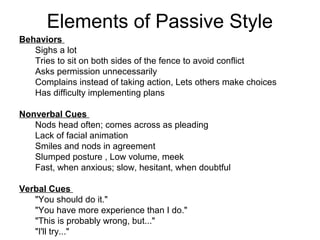
Elements of Passive Style 
Behaviors 
Sighs a lot 
Tries to sit on both sides of the fence to avoid conflict 
Asks permission unnecessarily 
Complains instead of taking action, Lets others make choices 
Has difficulty implementing plans 
Nonverbal Cues 
Nods head often; comes across as pleading 
Lack of facial animation 
Smiles and nods in agreement 
Slumped posture , Low volume, meek 
Fast, when anxious; slow, hesitant, when doubtful 
Verbal Cues 
"You should do it." 
"You have more experience than I do." 
"This is probably wrong, but..." 
"I'll try..."
Elements of Passive Style 
Confrontation and Problem Solving 
Avoids, ignores, leaves, postpones 
Withdraws, is sullen and silent 
Agrees externally, while disagreeing internally 
Expends energy to avoid conflicts that are anxiety provoking 
Spends too much time asking for advice, supervision 
Agrees too often 
Feelings Felt 
Powerlessness 
Wonders why doesn't receive credit for good work 
Chalks lack of recognition to others' inabilities 
Effects 
Gives up being him or herself 
Doesn't know where he or she stands 
Slowly loses self esteem 
Promotes others' causes
Elements of Carbonated or 
Assertive Style 
Mottoes and Beliefs 
Believes self and others are valuable 
Knowing that assertiveness doesn't mean you always win, but that you 
handled the situation as effectively as possible 
"I have rights and so do others.“ 
Communication Style 
Effective, active listener, States limits, expectations 
States observations, no labels or judgments 
Expresses self directly, honestly, & as soon as possible about feelings 
& wants 
Checks on others feelings 
Non-judgmental 
Observes behavior rather than labeling it, Trusts self and others 
Confident , Self-aware 
Open, flexible, versatile 
Playful, sense of humor, Decisive, Proactive, initiating
Elements of Carbonated or 
Assertive Style 
Behavior 
Operates from choice 
Knows what it is needed and develops a plan to get it, Action-oriented 
Firm, Realistic in her expectations 
Fair, just, Consistent 
Takes appropriate action toward getting what she wants without 
denying rights of others 
Nonverbal Cues 
Open, natural gestures 
Attentive, interested facial expression 
Direct eye contact, Confident or relaxed posture 
Vocal volume appropriate, expressive, Varied rate of speech 
Verbal Cues 
"I choose to..." 
"What are my options?" 
"What alternatives do we have?"
Elements of Carbonated or 
Assertive Style 
Confrontation and Problem Solving 
Negotiates, bargains, trades off, compromises 
Confronts problems at the time they happen 
Doesn't let negative feelings build up 
Feelings Felt 
Enthusiasm 
Well being 
Even tempered 
Effects 
Increased self-esteem and self-confidence 
Increased self-esteem of others 
Feels motivated and understood 
Others know where they stand
Elements of Over Carbonated or 
Aggressive Style 
Mottos and Beliefs 
"Everyone should be like me." 
"I am never wrong." 
"I've got rights, but you don't." 
Communication Style 
Close minded 
Poor listener 
Has difficulty seeing the other person's point of view 
Interrupts 
Monopolizing 
Characteristics 
Achieves goals, often at others' expense 
Domineering, bullying 
Patronizing 
Condescending, sarcastic
Elements of Over Carbonated or 
Aggressive Style 
Behavior 
Puts others down 
Doesn't ever think they are wrong 
Bossy, Moves into people's space, overpowers 
Jumps on others, pushes people around, Know-it-all attitude 
Doesn't show appreciation 
Nonverbal Cues 
Points, shakes finger, Frowns 
Squints eyes critically 
Glares, Stares, Rigid posture 
Critical, loud, yelling tone of voice 
Fast, clipped speech 
Verbal Cues 
"You must (should, ought better)." 
"Don't ask why. Just do it." 
Verbal abuse
Elements of Over Carbonated or 
Aggressive Style 
Confrontation and Problem Solving 
Must win arguments, threatens, attacks 
Operates from win/lose position 
Feelings Felt 
Anger 
Hostility 
Frustration 
Impatience 
Effects 
Provokes counter aggression, alienation from others, ill health 
Wastes time and energy over supervising others 
Pays high price in human relationships 
Fosters resistance, defiance, sabotaging, striking back, forming 
alliances, lying, covering up 
Forces compliance with resentment
Communication Style 
The components of Style are: 
• Preparedness 
• Confidence 
• Humility 
• Sincerity 
• Articulateness 
• Grammatically Correctness 
• Spontaneity
Preparedness 
• Knows the company’s business, mission, 
culture, and values 
• Thinks of possible questions ahead of time
Confidence 
• Sure of what one is saying 
• Confident even if one does not have an 
answer to a question
Humility 
• Able to accept compliments well 
• Able to turn a compliment for the for the 
client
Sincerity 
• You have to mean what you really say 
• You have to believe in what you stand for
ARTICULATENESS 
• Expresses oneself clearly and distinctly 
• Does not sound like reading from a script 
or had memorized a line 
• Avoids fillers like “ahs” and “uhms”
GRAMMATICAL CORRECTNESS 
• Observes basic rules of grammar 
• Avoids slang as much as possible 
• Uses appropriate words and idiomatic 
expressions (avoid Filipinoisms) 
• Uses standard American English
SPONTANEITY 
• Uses conversational and informal tone 
• Avoids excessive use of formal addresses 
like “ma’am” or “sir”
APPLICATION OF THE 
COMMUNICATION STYLES 
Clearly, the assertive style is the one to strive for. Keep in 
mind that very few people are all one or another style. In 
fact, the aggressive style is essential at certain times such 
as: 
• when a decision has to be made quickly 
• during emergencies 
• when you know you're right and that fact is crucial
APPLICATION OF THE 
COMMUNICATION STYLES 
Passiveness also has its critical applications: 
• when an issue is minor; 
• when the problems caused by the conflict are greater 
than the conflict itself; 
• when emotions are running high and it makes sense to 
take a break in order to calm down and regain 
perspective; 
• when your power is much lower than the other party's; 
• when the other's position is impossible to change for all 
practical purposes (i.e., government policies, etc.).

Communication Training

  • 1.
  • 2.
    Different Communication Styles • Flat or Passive • Carbonated or Assertive • Over Carbonated or Aggressive
  • 4.
    Elements of PassiveStyle Mottoes and Beliefs "Don't express your true feelings." "Don't make waves." "Don't disagree." "Others have more rights than I do.“ Communication Style Indirect Always agrees Doesn't speak up Hesitant Characteristics Apologetic, self-conscious Trusts others, but not self Doesn't express own wants and feelings Allows others to make decisions for self Doesn't get what he or she wants
  • 5.
    Elements of PassiveStyle Behaviors Sighs a lot Tries to sit on both sides of the fence to avoid conflict Asks permission unnecessarily Complains instead of taking action, Lets others make choices Has difficulty implementing plans Nonverbal Cues Nods head often; comes across as pleading Lack of facial animation Smiles and nods in agreement Slumped posture , Low volume, meek Fast, when anxious; slow, hesitant, when doubtful Verbal Cues "You should do it." "You have more experience than I do." "This is probably wrong, but..." "I'll try..."
  • 6.
    Elements of PassiveStyle Confrontation and Problem Solving Avoids, ignores, leaves, postpones Withdraws, is sullen and silent Agrees externally, while disagreeing internally Expends energy to avoid conflicts that are anxiety provoking Spends too much time asking for advice, supervision Agrees too often Feelings Felt Powerlessness Wonders why doesn't receive credit for good work Chalks lack of recognition to others' inabilities Effects Gives up being him or herself Doesn't know where he or she stands Slowly loses self esteem Promotes others' causes
  • 7.
    Elements of Carbonatedor Assertive Style Mottoes and Beliefs Believes self and others are valuable Knowing that assertiveness doesn't mean you always win, but that you handled the situation as effectively as possible "I have rights and so do others.“ Communication Style Effective, active listener, States limits, expectations States observations, no labels or judgments Expresses self directly, honestly, & as soon as possible about feelings & wants Checks on others feelings Non-judgmental Observes behavior rather than labeling it, Trusts self and others Confident , Self-aware Open, flexible, versatile Playful, sense of humor, Decisive, Proactive, initiating
  • 8.
    Elements of Carbonatedor Assertive Style Behavior Operates from choice Knows what it is needed and develops a plan to get it, Action-oriented Firm, Realistic in her expectations Fair, just, Consistent Takes appropriate action toward getting what she wants without denying rights of others Nonverbal Cues Open, natural gestures Attentive, interested facial expression Direct eye contact, Confident or relaxed posture Vocal volume appropriate, expressive, Varied rate of speech Verbal Cues "I choose to..." "What are my options?" "What alternatives do we have?"
  • 9.
    Elements of Carbonatedor Assertive Style Confrontation and Problem Solving Negotiates, bargains, trades off, compromises Confronts problems at the time they happen Doesn't let negative feelings build up Feelings Felt Enthusiasm Well being Even tempered Effects Increased self-esteem and self-confidence Increased self-esteem of others Feels motivated and understood Others know where they stand
  • 10.
    Elements of OverCarbonated or Aggressive Style Mottos and Beliefs "Everyone should be like me." "I am never wrong." "I've got rights, but you don't." Communication Style Close minded Poor listener Has difficulty seeing the other person's point of view Interrupts Monopolizing Characteristics Achieves goals, often at others' expense Domineering, bullying Patronizing Condescending, sarcastic
  • 11.
    Elements of OverCarbonated or Aggressive Style Behavior Puts others down Doesn't ever think they are wrong Bossy, Moves into people's space, overpowers Jumps on others, pushes people around, Know-it-all attitude Doesn't show appreciation Nonverbal Cues Points, shakes finger, Frowns Squints eyes critically Glares, Stares, Rigid posture Critical, loud, yelling tone of voice Fast, clipped speech Verbal Cues "You must (should, ought better)." "Don't ask why. Just do it." Verbal abuse
  • 12.
    Elements of OverCarbonated or Aggressive Style Confrontation and Problem Solving Must win arguments, threatens, attacks Operates from win/lose position Feelings Felt Anger Hostility Frustration Impatience Effects Provokes counter aggression, alienation from others, ill health Wastes time and energy over supervising others Pays high price in human relationships Fosters resistance, defiance, sabotaging, striking back, forming alliances, lying, covering up Forces compliance with resentment
  • 13.
    Communication Style Thecomponents of Style are: • Preparedness • Confidence • Humility • Sincerity • Articulateness • Grammatically Correctness • Spontaneity
  • 14.
    Preparedness • Knowsthe company’s business, mission, culture, and values • Thinks of possible questions ahead of time
  • 15.
    Confidence • Sureof what one is saying • Confident even if one does not have an answer to a question
  • 16.
    Humility • Ableto accept compliments well • Able to turn a compliment for the for the client
  • 17.
    Sincerity • Youhave to mean what you really say • You have to believe in what you stand for
  • 18.
    ARTICULATENESS • Expressesoneself clearly and distinctly • Does not sound like reading from a script or had memorized a line • Avoids fillers like “ahs” and “uhms”
  • 19.
    GRAMMATICAL CORRECTNESS •Observes basic rules of grammar • Avoids slang as much as possible • Uses appropriate words and idiomatic expressions (avoid Filipinoisms) • Uses standard American English
  • 20.
    SPONTANEITY • Usesconversational and informal tone • Avoids excessive use of formal addresses like “ma’am” or “sir”
  • 21.
    APPLICATION OF THE COMMUNICATION STYLES Clearly, the assertive style is the one to strive for. Keep in mind that very few people are all one or another style. In fact, the aggressive style is essential at certain times such as: • when a decision has to be made quickly • during emergencies • when you know you're right and that fact is crucial
  • 22.
    APPLICATION OF THE COMMUNICATION STYLES Passiveness also has its critical applications: • when an issue is minor; • when the problems caused by the conflict are greater than the conflict itself; • when emotions are running high and it makes sense to take a break in order to calm down and regain perspective; • when your power is much lower than the other party's; • when the other's position is impossible to change for all practical purposes (i.e., government policies, etc.).