Put Your Best

&

Forward

Assertiveness

Skills for

Business Professionals
Assertive-

ness
Assertive-

ness
AssertiveAssertive

ness
AssertiveAssertive

ness
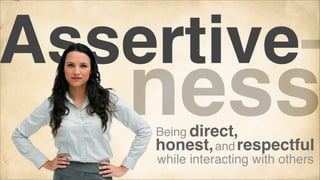
Being direct,
honest, and respectful

while interacting with others
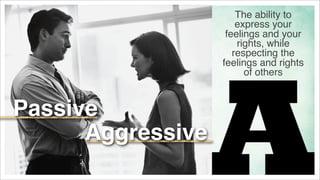
The ability to
express your
feelings and your
rights, while
respecting the
feelings and rights
of others
The ability to
express your
feelings and your
rights, while
respecting the
feelings and rights
of others

Passive
Aggressive
100
80
60
40
20
100
80
60
40
20
100
80
60
40
20
100
80
60
40
20
100
80
60
40
20
100
80
60
40
20
The
of Assertive Communication
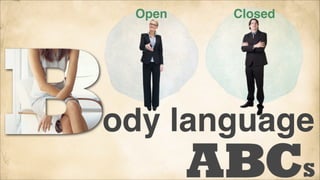
ody language
Open

ody language
Open

Closed

ody language
Generation
Generation
Good Communication

one of the

is

keys
to being

successful
in today’s job market.
Good Communication

one of the

is

keys
to being

successful
in today’s job market.
How
It’s Not What

It’s

How
You Say It
You Say,
It’s Not What

It’s

How
You Say It
You Say,

The 5 Hows
It’s Not What

It’s

How
You Say It
You Say,

The 5 Hows
It’s Not What

It’s

How
You Say It
You Say,

The 5 Hows
It’s Not What

It’s

How
You Say It
You Say,

The 5 Hows
It’s Not What

It’s

How
You Say It
You Say,

The 5 Hows
It’s Not What

It’s

How
You Say It
You Say,

The 5 Hows
Mumblitis
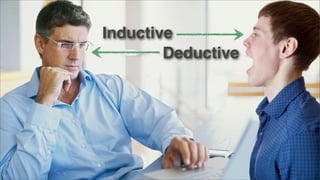
Inductive
Inductive
Deductive
Frame
Your Message
Use positive language.

Frame
Your Message
How to Deal With

Manipulative

People
How to Deal With

Manipulative

People
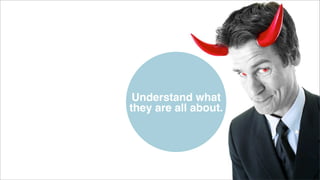
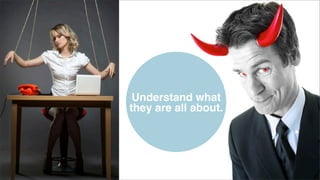
Understand what
they are all about.
Understand what
they are all about.
How do you

know when

you are being manipulated?
Listening
Listening
How well do you listen?
&

Know When to Give In

When to Hold Your Ground
Active & Reflective

evitcefleR

Listening
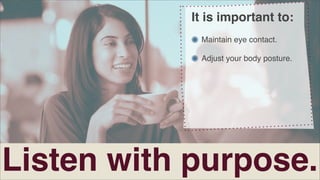
Listen with purpose.
It is important to:

Listen with purpose.
It is important to:
Maintain eye contact.

Listen with purpose.
It is important to:
Maintain eye contact.
Adjust your body posture.

Listen with purpose.
It is important to:
Maintain eye contact.
Adjust your body posture.
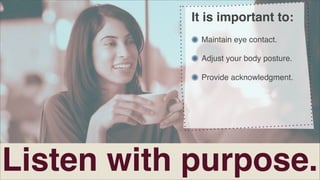
Provide acknowledgment.

Listen with purpose.
It is important to:
Maintain eye contact.
Adjust your body posture.
Provide acknowledgment.
Clear your mind.

Listen with purpose.
It is important to:
Maintain eye contact.
Adjust your body posture.
Provide acknowledgment.
Clear your mind.
Avoid distracting behaviors.

Listen with purpose.
Constructive Alternatives


5

Communicate with flexibility that uses
persuasiveness and diplomacy.

1

Fear of speaking out
Eye Contact
Eye Contact
Eye Contact
Eye Contact
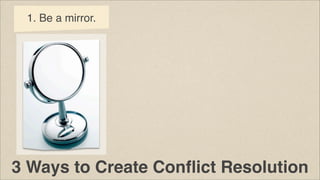
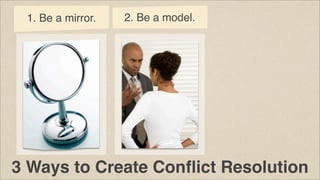
3 Ways to Create Conflict Resolution
1. Be a mirror.

3 Ways to Create Conflict Resolution
1. Be a mirror.

2. Be a model.

3 Ways to Create Conflict Resolution
1. Be a mirror.

2. Be a model.

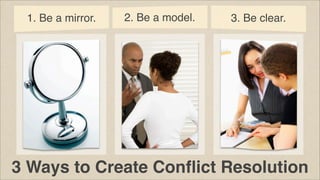
3. Be clear.

3 Ways to Create Conflict Resolution
The Essentials of
Making a Strong and
Memorable Introduction
2

Say the person’s name.

The Essentials of
Making a Strong and
Memorable Introduction
2

Say the person’s name.

The Essentials of
Making a Strong and
Memorable Introduction

Use his or her name
in conversation.
2

Say the person’s name.

The Essentials of
Making a Strong and
Memorable Introduction

Use his or her name
in conversation.
Connect his or her name
to a rhyming word.
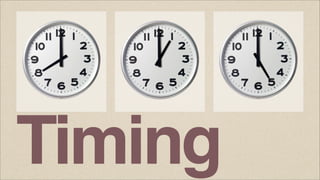
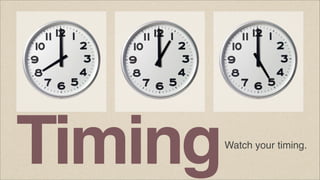
Timing
Timing

Watch your timing.
Timing

Time to be seen
Timing

Time to be seen
Timing

Time to be heard
Timing

Time to be heard
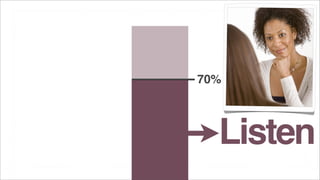
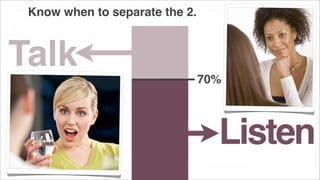
70%

Listen
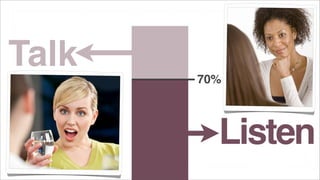
Talk

70%

Listen
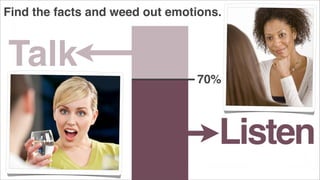
Find the facts and weed out emotions.

Talk

70%

Listen
Know when to separate the 2.

Talk

70%

Listen
Focus on the big picture.
Acknowledge:
Acknowledge:
How I feel or see

1
Acknowledge:
How I feel or see
The other person’s side

2
Acknowledge:
How I feel or see
The other person’s side
The move to resolve

3
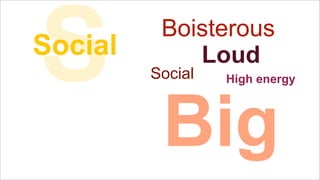
S

Social
S

Social
High energy
S

Social

Boisterous
High energy
S

Social

Boisterous
High energy

Big
S

Social

Boisterous
Loud
High energy

Big
S

Social

Boisterous
Loud

Social

High energy

Big
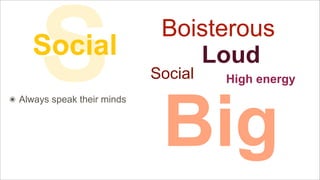
S

Social
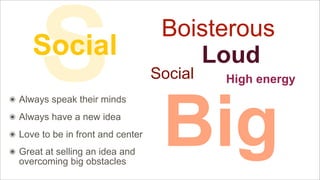
๏ Always speak their minds

Boisterous
Loud

Social

High energy

Big
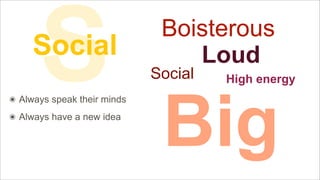
S

Social
๏ Always speak their minds
๏ Always have a new idea

Boisterous
Loud

Social

High energy

Big
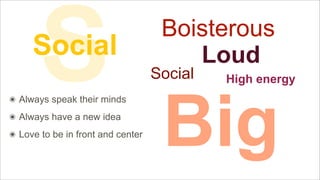
S

Social
๏ Always speak their minds
๏ Always have a new idea
๏ Love to be in front and center

Boisterous
Loud

Social

High energy

Big
S

Social
๏ Always speak their minds
๏ Always have a new idea
๏ Love to be in front and center
๏ Great at selling an idea and
overcoming big obstacles

Boisterous
Loud

Social

High energy

Big
S

Social
๏ Always speak their minds
๏ Always have a new idea
๏ Love to be in front and center
๏ Great at selling an idea and
overcoming big obstacles
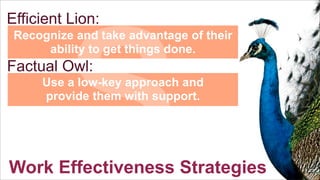
Work Effectiveness Strategies
S

Work Effectiveness Strategies
S

Efficient Lion:

Work Effectiveness Strategies
S

Efficient Lion:

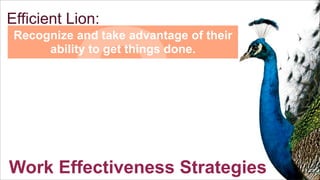
Recognize and take advantage of their
ability to get things done.

Work Effectiveness Strategies
S

Efficient Lion:

Recognize and take advantage of their
ability to get things done.

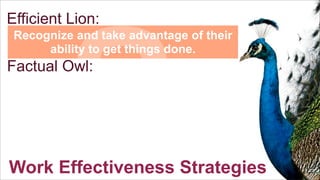
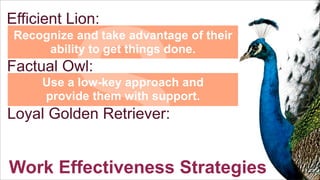
Factual Owl:

Work Effectiveness Strategies
S

Efficient Lion:

Recognize and take advantage of their
ability to get things done.

Factual Owl:

Use a low-key approach and
provide them with support.

Work Effectiveness Strategies
S

Efficient Lion:

Recognize and take advantage of their
ability to get things done.

Factual Owl:

Use a low-key approach and
provide them with support.

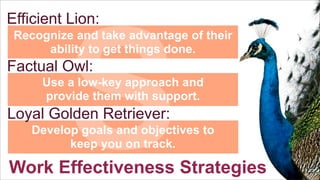
Loyal Golden Retriever:

Work Effectiveness Strategies
S

Efficient Lion:

Recognize and take advantage of their
ability to get things done.

Factual Owl:

Use a low-key approach and
provide them with support.

Loyal Golden Retriever:

Develop goals and objectives to
keep you on track.

Work Effectiveness Strategies
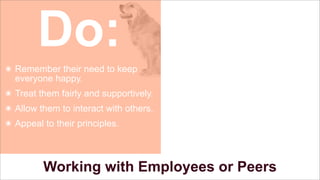
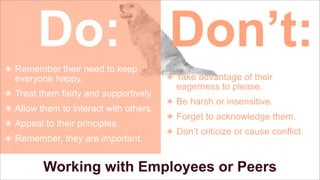
Working with Employees or Peers
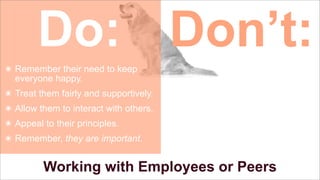
Do:
Working with Employees or Peers
Do:
๏ Remember their need to keep
everyone happy.

Working with Employees or Peers
Do:
๏ Remember their need to keep
everyone happy.
๏ Treat them fairly and supportively.

Working with Employees or Peers
Do:
๏ Remember their need to keep
everyone happy.
๏ Treat them fairly and supportively.
๏ Allow them to interact with others.

Working with Employees or Peers
Do:
๏ Remember their need to keep
everyone happy.
๏ Treat them fairly and supportively.
๏ Allow them to interact with others.
๏ Appeal to their principles.

Working with Employees or Peers
Do:
๏ Remember their need to keep
everyone happy.
๏ Treat them fairly and supportively.
๏ Allow them to interact with others.
๏ Appeal to their principles.
๏ Remember, they are important.

Working with Employees or Peers
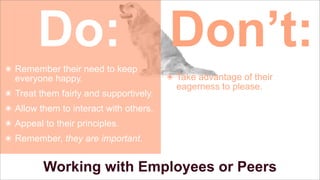
Do: Don’t:
๏ Remember their need to keep
everyone happy.
๏ Treat them fairly and supportively.
๏ Allow them to interact with others.
๏ Appeal to their principles.
๏ Remember, they are important.

Working with Employees or Peers
Do: Don’t:
๏ Remember their need to keep
everyone happy.
๏ Treat them fairly and supportively.

๏ Take advantage of their
eagerness to please.

๏ Allow them to interact with others.
๏ Appeal to their principles.
๏ Remember, they are important.

Working with Employees or Peers
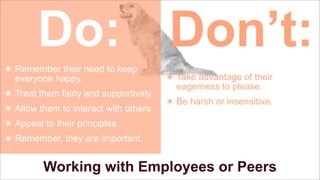
Do: Don’t:
๏ Remember their need to keep
everyone happy.
๏ Treat them fairly and supportively.
๏ Allow them to interact with others.

๏ Take advantage of their
eagerness to please.
๏ Be harsh or insensitive.

๏ Appeal to their principles.
๏ Remember, they are important.

Working with Employees or Peers
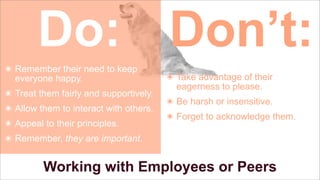
Do: Don’t:
๏ Remember their need to keep
everyone happy.
๏ Treat them fairly and supportively.
๏ Allow them to interact with others.
๏ Appeal to their principles.

๏ Take advantage of their
eagerness to please.
๏ Be harsh or insensitive.
๏ Forget to acknowledge them.

๏ Remember, they are important.

Working with Employees or Peers
Do: Don’t:
๏ Remember their need to keep
everyone happy.
๏ Treat them fairly and supportively.
๏ Allow them to interact with others.
๏ Appeal to their principles.
๏ Remember, they are important.

๏ Take advantage of their
eagerness to please.
๏ Be harsh or insensitive.
๏ Forget to acknowledge them.
๏ Don’t criticize or cause conflict.

Working with Employees or Peers
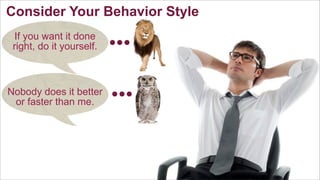
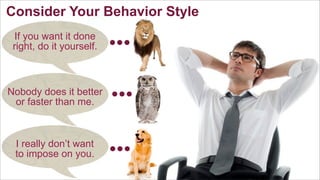
Consider Your Behavior Style
If you want it done
right, do it yourself.
Consider Your Behavior Style
If you want it done
right, do it yourself.

Nobody does it better
or faster than me.
Consider Your Behavior Style
If you want it done
right, do it yourself.

Nobody does it better
or faster than me.

I really don’t want
to impose on you.
Know What You’re Missing
Cast of Characters
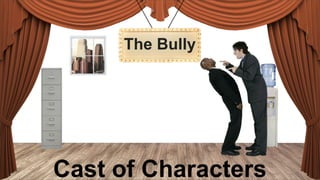
The Bully

Cast of Characters
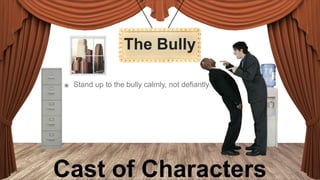
The Bully
๏ Stand up to the bully calmly, not defiantly.

Cast of Characters
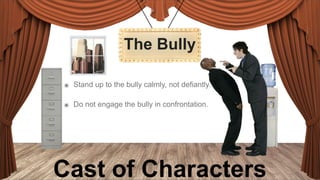
The Bully
๏ Stand up to the bully calmly, not defiantly.
๏ Do not engage the bully in confrontation.

Cast of Characters
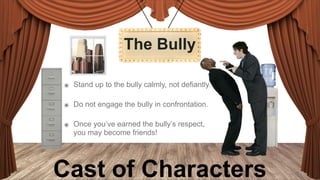
The Bully
๏ Stand up to the bully calmly, not defiantly.
๏ Do not engage the bully in confrontation.
๏ Once you’ve earned the bully’s respect,
you may become friends!

Cast of Characters
Alternative Responses
to Hot Situations
Alternative Responses
to Hot Situations
Alternative Responses
to Hot Situations
Stay present and acknowledge that
you heard them.
Alternative Responses
to Hot Situations
Stay present and acknowledge that
you heard them.

De-escalate the conflict.
Alternative Responses
to Hot Situations
Stay present and acknowledge that
you heard them.

De-escalate the conflict.

Try to warm-up to the part of the
person you can respect.
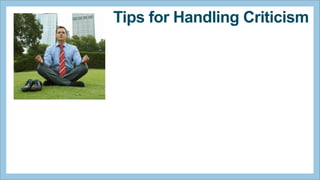
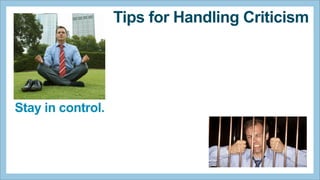
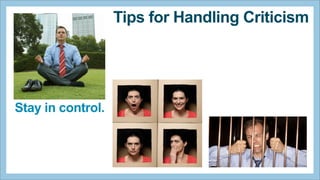
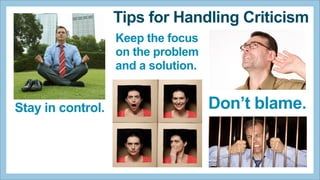
Tips for Handling Criticism

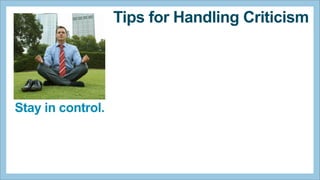
Stay in control.
Tips for Handling Criticism

Stay in control.
Tips for Handling Criticism

Stay in control.
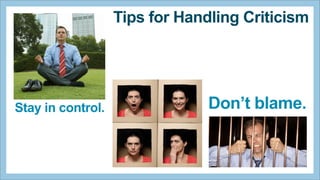
Tips for Handling Criticism

Stay in control.

Don’t blame.
Tips for Handling Criticism

Stay in control.

Don’t blame.
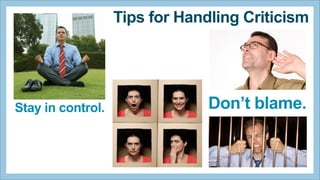
Tips for Handling Criticism
Keep the focus
on the problem
and a solution.

Stay in control.

Don’t blame.
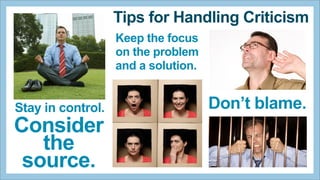
Tips for Handling Criticism
Keep the focus
on the problem
and a solution.

Stay in control.

Consider
the
source.

Don’t blame.
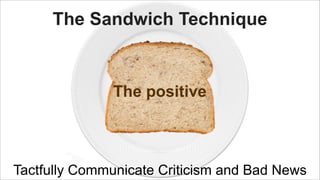
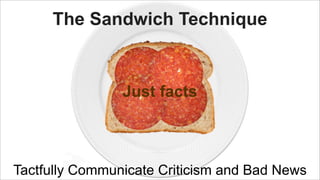
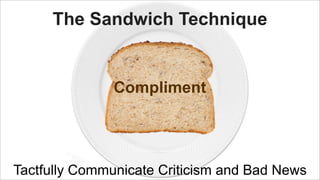
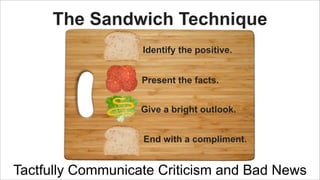
Tactfully Communicate Criticism and Bad News
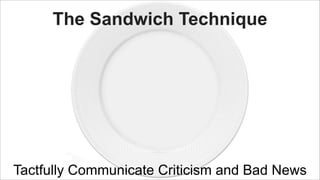
The Sandwich Technique

Tactfully Communicate Criticism and Bad News
The Sandwich Technique

The positive

Tactfully Communicate Criticism and Bad News
The Sandwich Technique

Just facts

Tactfully Communicate Criticism and Bad News
The Sandwich Technique

Compliment
Just facts

Tactfully Communicate Criticism and Bad News
The Sandwich Technique

Tactfully Communicate Criticism and Bad News
The Sandwich Technique

Tactfully Communicate Criticism and Bad News
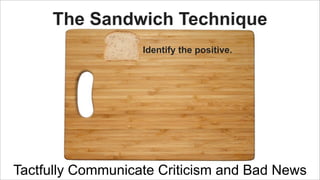
The Sandwich Technique
Identify the positive.

Tactfully Communicate Criticism and Bad News
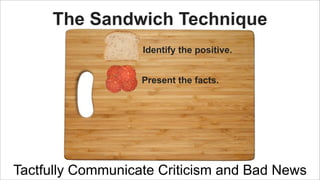
The Sandwich Technique
Identify the positive.
Present the facts.

Tactfully Communicate Criticism and Bad News
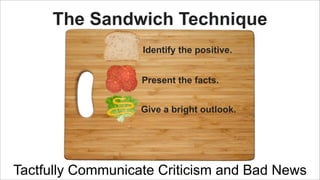
The Sandwich Technique
Identify the positive.
Present the facts.
Give a bright outlook.

Tactfully Communicate Criticism and Bad News
The Sandwich Technique
Identify the positive.
Present the facts.
Give a bright outlook.
End with a compliment.

Tactfully Communicate Criticism and Bad News
Planning Steps
Planning Steps
Brainstorm and write out points.
Planning Steps
Anticipate your listener’s response.
Planning Steps
Organize your points.
Planning Steps
Plan how to focus on the topic.
Planning Steps
Rehearse your thoughts before.
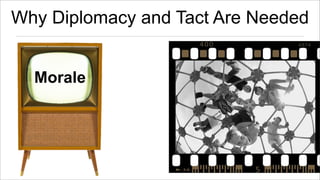
Why Diplomacy and Tact Are Needed
Morale
Why Diplomacy and Tact Are Needed
Team work
Why Diplomacy and Tact Are Needed
Creativity
Why Diplomacy and Tact Are Needed
Productivity
Why Diplomacy and Tact Are Needed
Harassment
Why Diplomacy and Tact Are Needed
Employee
retention
Why Diplomacy and Tact Are Needed
Civility
SELF
Email
Email

4

Don’t forward jokes or other types of junk messages.
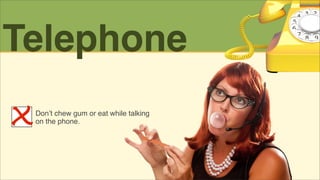
Telephone
Telephone
Don’t chew gum or eat while talking
on the phone.
When you arrive at the event:
1. Enter the room with enthusiasm.
When you arrive at the event:
1. Enter the room with enthusiasm.
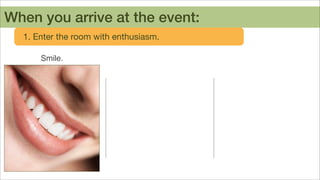
Smile.
When you arrive at the event:
1. Enter the room with enthusiasm.
Smile.

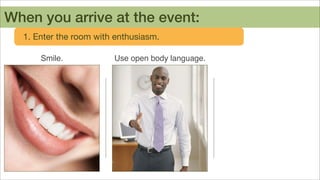
Use open body language.
When you arrive at the event:
1. Enter the room with enthusiasm.
Smile.

Use open body language.

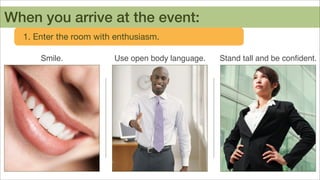
Stand tall and be confident.
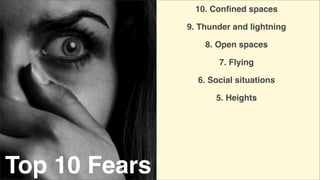
Top 10 Fears
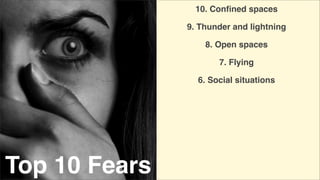
10. Confined spaces

Top 10 Fears
10. Confined spaces
9. Thunder and lightning

Top 10 Fears
10. Confined spaces
9. Thunder and lightning
8. Open spaces

Top 10 Fears
10. Confined spaces
9. Thunder and lightning
8. Open spaces
7. Flying

Top 10 Fears
10. Confined spaces
9. Thunder and lightning
8. Open spaces
7. Flying
6. Social situations

Top 10 Fears
10. Confined spaces
9. Thunder and lightning
8. Open spaces
7. Flying
6. Social situations
5. Heights

Top 10 Fears
10. Confined spaces
9. Thunder and lightning
8. Open spaces
7. Flying
6. Social situations
5. Heights
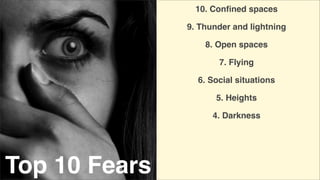
4. Darkness

Top 10 Fears
10. Confined spaces
9. Thunder and lightning
8. Open spaces
7. Flying
6. Social situations
5. Heights
4. Darkness
3. Spiders

Top 10 Fears
10. Confined spaces
9. Thunder and lightning
8. Open spaces
7. Flying
6. Social situations
5. Heights
4. Darkness
3. Spiders

Top 10 Fears

2. Death
10. Confined spaces
9. Thunder and lightning
8. Open spaces
7. Flying
6. Social situations
5. Heights
4. Darkness
3. Spiders

Top 10 Fears

2. Death
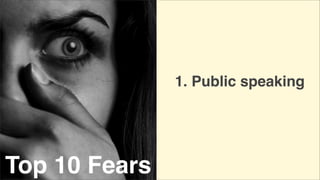
1. Public speaking
1. Public speaking

Top 10 Fears

Communication skills