

LISTEN MORE, WORRY LESS
Camille Stell
Director of Client Services
Lawyers Mutual
AGENDA
โ€ข Develop โ€œactive listeningโ€ skills to tune in to
coworkers and cultivate productive relationships
โ€ข Use communication skills to build a team
approach that motivates others and facilitates
change
โ€ข Use questions to open thinking
โ€ข Discuss effective methods of managing conflict
ADVANTAGES OF EFFECTIVE COMMUNICATION
โ€ข Increase productivity
โ€ข Better understand what others are saying
โ€ข Better understand how to get your message
across
โ€ข Enhance relationships
โ€ข Reduce work place stress
โ€ข Save time and money
WHAT IS EFFECTIVE COMMUNICATION?
โ€ข Is ease in communication a given?: Talking is easy. True communication
is an exchange with another and this requires greater skill.
Communication demands that we listen and speak skillfully, not just talk
mindlessly.
โ€ข Challenges to effective communication: Interacting with fearful, angry,
or frustrated people (whether our clients, our peers, or our bosses) can
be difficult, because we're less skillful when caught up in such emotions.
โ€ข Proven Success: Don't resign yourself to a lifetime of miscommunication
at work because of these challenges. Tips for success follow.
โ€ข Result: Good communicators can be taught as well as born.
YOUR ROLE AS COMMUNICATOR
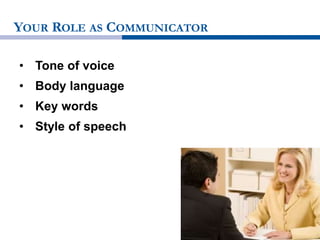
โ€ข Tone of voice
โ€ข Body language
โ€ข Key words
โ€ข Style of speech
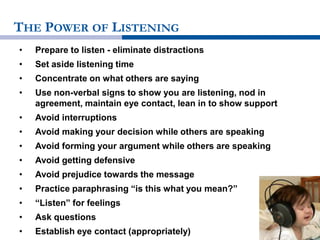
THE POWER OF LISTENING
โ€ข Prepare to listen - eliminate distractions
โ€ข Set aside listening time
โ€ข Concentrate on what others are saying
โ€ข Use non-verbal signs to show you are listening, nod in
agreement, maintain eye contact, lean in to show support
โ€ข Avoid interruptions
โ€ข Avoid making your decision while others are speaking
โ€ข Avoid forming your argument while others are speaking
โ€ข Avoid getting defensive
โ€ข Avoid prejudice towards the message
โ€ข Practice paraphrasing โ€œis this what you mean?โ€
โ€ข โ€œListenโ€ for feelings
โ€ข Ask questions
โ€ข Establish eye contact (appropriately)
ACTIVE LISTENING CANโ€ฆ
โ€ข reduce threat
โ€ข clarify the speakerโ€™s point of view
โ€ข build trust
USE ACTIVE LISTENING WHENโ€ฆ
โ€ข the other person becomes angry or
agitated
โ€ข there are arguments
โ€ข you need a catalyst for dialogue
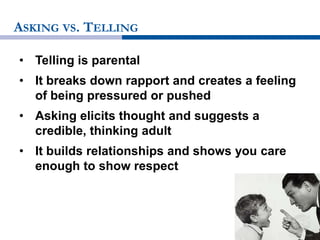
ASKING VS. TELLING
โ€ข Telling is parental
โ€ข It breaks down rapport and creates a feeling
of being pressured or pushed
โ€ข Asking elicits thought and suggests a
credible, thinking adult
โ€ข It builds relationships and shows you care
enough to show respect
THE POWER OF QUESTIONS
Why ask questions:
โ€ข Questions demand answers
โ€ข Questions stimulate thinking
โ€ข Questions provide valuable information
โ€ข Questions allow you to start the dialogue
โ€ข Questions get people to open up
โ€ข Questions lead to effective listening
Helpful questions to ask:
โ€ข Can you clarify that?
โ€ข What specific results are you looking for?
โ€ข What do you want to accomplish?
โ€ข What are your priorities?
โ€ข How can I help?
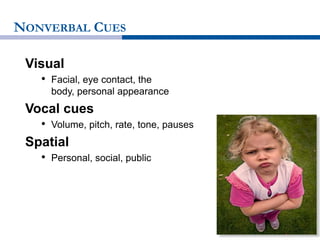
NONVERBAL CUES
Visual
โ€ข Facial, eye contact, the
body, personal appearance
Vocal cues
โ€ข Volume, pitch, rate, tone, pauses
Spatial
โ€ข Personal, social, public
TO IMPROVE YOUR PERCEPTION
โ€ข Keep openness and skepticism
balanced
โ€ข Listen and ask for feedback
โ€ข Become an observer
โ€ข Convey feelings as well as content
โ€ข Be flexible
THE POWER OF YOUR WORDS
โ€ข Follow through on your promises and commitments
โ€ข Manage conflict
โ€ข Respond rather than react
โ€ข Provide feedback and ask for feedback
โ€ข Keep your team up-to-date
โ€ข Deliver bad news when necessary
LOST IN TRANSLATION โ€“ EMAIL
Email has become our primary form of communication.
Email makes it harder to build rapport - people hide behind e-mail.
Until now, most complaints have focused e-mail overload or embarrassment
when sending to the wrong people. However, new research indicates that
over-reliance on e-mail can degrade an organization's interpersonal
communications. If it's not used properly, instead of making your company
quicker and more efficient, too much text-based communicating can work in
the reverse. One study by UCLA psychology professor Albert Mehrabian
found that 55% of meaning in an interaction comes from facial and body
language, 38% comes from vocal inflection, and only 7% of an interaction's
meaning is derived from the words themselves. Yet, Iโ€™m sure all of you have
been offended or have offended others by your email โ€œtoneโ€.
EMAIL TIPS
โ€ข Avoid communicating anything sensitive, important, or
complicated in email.
โ€ข Refrain from combining multiple themes and requests in
a single e-mail, make sure the e-mail subject line clearly
reflects both the topic and urgency of the message.
โ€ข Do not overburden colleagues with unnecessary e-mail,
especially one word replies such as "Thanks!" or
"Great!" and use "reply to all" only when absolutely
necessary.
SURVEY SAYS . . .
โ€ข Lack of Communication
โ€ข Ability to air grievances without repercussions
โ€ข Understand the role of paralegal (helps with dealing with
issues related to them โ€“ billable hours, certification, CLE
requirements, team assignments)
โ€ข Administrators balance many different things โ€“ can any
work be shared during down times with staff not as busy
โ€ข Communicate changes in firm such as hirings, firings, lay-
offs, office moves, insurance, salaries, as well as procedural
changes โ€“ balance with confidentiality
โ€ข Technology (or lack of) and equipment issues
โ€ข Clear expectations - evaluation process and job
descriptions
โ€ข Involve staff through staff
meetings, committees, discussions
MANAGE CONFLICT THROUGH
EFFECTIVE COMMUNICATION
โ€ข Recognize that disagreements may result from different
perceptions
โ€ข Recognize when someone disagrees with you, they are not
inept
โ€ข Discover the cause for the differing viewpoints
โ€ข Understand the other personโ€™s โ€œframe of referenceโ€
โ€ข Recognize your own bias
โ€ข Take into account your own emotions
โ€ข Take into account otherโ€™s emotions and biases
โ€ข Discuss observable behavior and performance
โ€ข Use concrete words vs. abstract words
โ€ข Use examples to enhance meaning
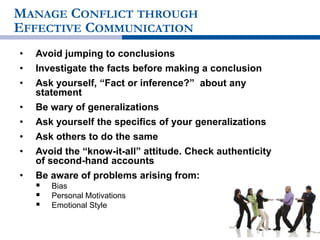
MANAGE CONFLICT THROUGH
EFFECTIVE COMMUNICATION
โ€ข Avoid jumping to conclusions
โ€ข Investigate the facts before making a conclusion
โ€ข Ask yourself, โ€œFact or inference?โ€ about any
statement
โ€ข Be wary of generalizations
โ€ข Ask yourself the specifics of your generalizations
โ€ข Ask others to do the same
โ€ข Avoid the โ€œknow-it-allโ€ attitude. Check authenticity
of second-hand accounts
โ€ข Be aware of problems arising from:
๏‚ง Bias
๏‚ง Personal Motivations
๏‚ง Emotional Style
BUILD A TEAM: ESTABLISH COMMON GOALS
โ€ข Think about the other person and his/her goals
โ€ข Build the bridge from the other side
โ€ข If you donโ€™t know, ask. Then listen and sincerely
care
โ€ข Help by asking questions to clarify their goals
โ€ข Solve problems together
ACTION PLAN
โ€ข What are you going to take action on?
โ€ข List specific behaviors
โ€ข Be as systematic as possible
โ€ข Break difficult behavior into several smaller
behaviors
โ€ข Repeat specific behavior until mastered
โ€ข Measure and evaluate
โ€ข Keep records (preferably visual)
โ€ข Use visual reminders (pictures, charts, etc.)
โ€ข Remember: ("A small goal is enough!")
ADDITIONAL RESOURCES
โ€ข Never Eat Alone by Keith Ferrazzi
โ€ข The 7 Habits of Highly Effective People by Stephen Covey
โ€ข Influence: The Psychology of Persuasion by Robert B.
Cialdini, Ph.D.
โ€ข Crucial Conversations: Tools for Talking When Stakes Are High by
Ron McMillan, Kerry Patterson, Joseph Grenny, and Al Switzer. Sign
up for email newsletter at www.vitalsmarts.com.
โ€ข We Got Fired by Harvey Mackey
โ€ข Famous Failures by Joey Green
โ€ข Tough Choices: A Memoir by Carly Fiorina
โ€ข Strengths Finder 2.0 by Tom Rath
โ€ข 250 Job Interview Questions by Peter Veruki
ADDITIONAL RESOURCES
โ€ข NCBA Member Services - whitney@ncbar.org or call
1-800-662-7407 or 919-657-1554
โ€ข BarCARES Plus โ€“ Anne Arbert, Program Manager
800.640.0735 (mental health counseling and career
counseling)
โ€ข LinkedIn.com
โ€ข Martindale-Hubbell Connected
โ€ข Monster.com
CONTACT INFORMATION
Camille Stell
Director of Client Services
Lawyers Mutual Liability Insurance Company Of North Carolina
P.O. Box 1929, Cary, NC 27512-1929
Tele: 919.677.8900 | 800.662.8843
camille@lawyersmutualnc.com
www.lawyersmutualnc.com
Follow us on Twitter: @LawyersMutualNC, @CamilleStell,
@MarkScruggsEsq, @ WarrenSavage1 and @Troy_Crawford

Listen more worry less

  • 1.
    LISTEN MORE, WORRYLESS Camille Stell Director of Client Services Lawyers Mutual
  • 2.
    AGENDA โ€ข Develop โ€œactivelisteningโ€ skills to tune in to coworkers and cultivate productive relationships โ€ข Use communication skills to build a team approach that motivates others and facilitates change โ€ข Use questions to open thinking โ€ข Discuss effective methods of managing conflict
  • 3.
    ADVANTAGES OF EFFECTIVECOMMUNICATION โ€ข Increase productivity โ€ข Better understand what others are saying โ€ข Better understand how to get your message across โ€ข Enhance relationships โ€ข Reduce work place stress โ€ข Save time and money
  • 4.
    WHAT IS EFFECTIVECOMMUNICATION? โ€ข Is ease in communication a given?: Talking is easy. True communication is an exchange with another and this requires greater skill. Communication demands that we listen and speak skillfully, not just talk mindlessly. โ€ข Challenges to effective communication: Interacting with fearful, angry, or frustrated people (whether our clients, our peers, or our bosses) can be difficult, because we're less skillful when caught up in such emotions. โ€ข Proven Success: Don't resign yourself to a lifetime of miscommunication at work because of these challenges. Tips for success follow. โ€ข Result: Good communicators can be taught as well as born.
  • 5.
    YOUR ROLE ASCOMMUNICATOR โ€ข Tone of voice โ€ข Body language โ€ข Key words โ€ข Style of speech
  • 6.
    THE POWER OFLISTENING โ€ข Prepare to listen - eliminate distractions โ€ข Set aside listening time โ€ข Concentrate on what others are saying โ€ข Use non-verbal signs to show you are listening, nod in agreement, maintain eye contact, lean in to show support โ€ข Avoid interruptions โ€ข Avoid making your decision while others are speaking โ€ข Avoid forming your argument while others are speaking โ€ข Avoid getting defensive โ€ข Avoid prejudice towards the message โ€ข Practice paraphrasing โ€œis this what you mean?โ€ โ€ข โ€œListenโ€ for feelings โ€ข Ask questions โ€ข Establish eye contact (appropriately)
  • 7.
    ACTIVE LISTENING CANโ€ฆ โ€ขreduce threat โ€ข clarify the speakerโ€™s point of view โ€ข build trust
  • 8.
    USE ACTIVE LISTENINGWHENโ€ฆ โ€ข the other person becomes angry or agitated โ€ข there are arguments โ€ข you need a catalyst for dialogue
  • 9.
    ASKING VS. TELLING โ€ขTelling is parental โ€ข It breaks down rapport and creates a feeling of being pressured or pushed โ€ข Asking elicits thought and suggests a credible, thinking adult โ€ข It builds relationships and shows you care enough to show respect
  • 10.
    THE POWER OFQUESTIONS Why ask questions: โ€ข Questions demand answers โ€ข Questions stimulate thinking โ€ข Questions provide valuable information โ€ข Questions allow you to start the dialogue โ€ข Questions get people to open up โ€ข Questions lead to effective listening Helpful questions to ask: โ€ข Can you clarify that? โ€ข What specific results are you looking for? โ€ข What do you want to accomplish? โ€ข What are your priorities? โ€ข How can I help?
  • 11.
    NONVERBAL CUES Visual โ€ข Facial,eye contact, the body, personal appearance Vocal cues โ€ข Volume, pitch, rate, tone, pauses Spatial โ€ข Personal, social, public
  • 12.
    TO IMPROVE YOURPERCEPTION โ€ข Keep openness and skepticism balanced โ€ข Listen and ask for feedback โ€ข Become an observer โ€ข Convey feelings as well as content โ€ข Be flexible
  • 13.
    THE POWER OFYOUR WORDS โ€ข Follow through on your promises and commitments โ€ข Manage conflict โ€ข Respond rather than react โ€ข Provide feedback and ask for feedback โ€ข Keep your team up-to-date โ€ข Deliver bad news when necessary
  • 14.
    LOST IN TRANSLATIONโ€“ EMAIL Email has become our primary form of communication. Email makes it harder to build rapport - people hide behind e-mail. Until now, most complaints have focused e-mail overload or embarrassment when sending to the wrong people. However, new research indicates that over-reliance on e-mail can degrade an organization's interpersonal communications. If it's not used properly, instead of making your company quicker and more efficient, too much text-based communicating can work in the reverse. One study by UCLA psychology professor Albert Mehrabian found that 55% of meaning in an interaction comes from facial and body language, 38% comes from vocal inflection, and only 7% of an interaction's meaning is derived from the words themselves. Yet, Iโ€™m sure all of you have been offended or have offended others by your email โ€œtoneโ€.
  • 15.
    EMAIL TIPS โ€ข Avoidcommunicating anything sensitive, important, or complicated in email. โ€ข Refrain from combining multiple themes and requests in a single e-mail, make sure the e-mail subject line clearly reflects both the topic and urgency of the message. โ€ข Do not overburden colleagues with unnecessary e-mail, especially one word replies such as "Thanks!" or "Great!" and use "reply to all" only when absolutely necessary.
  • 16.
    SURVEY SAYS .. . โ€ข Lack of Communication โ€ข Ability to air grievances without repercussions โ€ข Understand the role of paralegal (helps with dealing with issues related to them โ€“ billable hours, certification, CLE requirements, team assignments) โ€ข Administrators balance many different things โ€“ can any work be shared during down times with staff not as busy โ€ข Communicate changes in firm such as hirings, firings, lay- offs, office moves, insurance, salaries, as well as procedural changes โ€“ balance with confidentiality โ€ข Technology (or lack of) and equipment issues โ€ข Clear expectations - evaluation process and job descriptions โ€ข Involve staff through staff meetings, committees, discussions
  • 17.
    MANAGE CONFLICT THROUGH EFFECTIVECOMMUNICATION โ€ข Recognize that disagreements may result from different perceptions โ€ข Recognize when someone disagrees with you, they are not inept โ€ข Discover the cause for the differing viewpoints โ€ข Understand the other personโ€™s โ€œframe of referenceโ€ โ€ข Recognize your own bias โ€ข Take into account your own emotions โ€ข Take into account otherโ€™s emotions and biases โ€ข Discuss observable behavior and performance โ€ข Use concrete words vs. abstract words โ€ข Use examples to enhance meaning
  • 18.
    MANAGE CONFLICT THROUGH EFFECTIVECOMMUNICATION โ€ข Avoid jumping to conclusions โ€ข Investigate the facts before making a conclusion โ€ข Ask yourself, โ€œFact or inference?โ€ about any statement โ€ข Be wary of generalizations โ€ข Ask yourself the specifics of your generalizations โ€ข Ask others to do the same โ€ข Avoid the โ€œknow-it-allโ€ attitude. Check authenticity of second-hand accounts โ€ข Be aware of problems arising from: ๏‚ง Bias ๏‚ง Personal Motivations ๏‚ง Emotional Style
  • 19.
    BUILD A TEAM:ESTABLISH COMMON GOALS โ€ข Think about the other person and his/her goals โ€ข Build the bridge from the other side โ€ข If you donโ€™t know, ask. Then listen and sincerely care โ€ข Help by asking questions to clarify their goals โ€ข Solve problems together
  • 20.
    ACTION PLAN โ€ข Whatare you going to take action on? โ€ข List specific behaviors โ€ข Be as systematic as possible โ€ข Break difficult behavior into several smaller behaviors โ€ข Repeat specific behavior until mastered โ€ข Measure and evaluate โ€ข Keep records (preferably visual) โ€ข Use visual reminders (pictures, charts, etc.) โ€ข Remember: ("A small goal is enough!")
  • 21.
    ADDITIONAL RESOURCES โ€ข NeverEat Alone by Keith Ferrazzi โ€ข The 7 Habits of Highly Effective People by Stephen Covey โ€ข Influence: The Psychology of Persuasion by Robert B. Cialdini, Ph.D. โ€ข Crucial Conversations: Tools for Talking When Stakes Are High by Ron McMillan, Kerry Patterson, Joseph Grenny, and Al Switzer. Sign up for email newsletter at www.vitalsmarts.com. โ€ข We Got Fired by Harvey Mackey โ€ข Famous Failures by Joey Green โ€ข Tough Choices: A Memoir by Carly Fiorina โ€ข Strengths Finder 2.0 by Tom Rath โ€ข 250 Job Interview Questions by Peter Veruki
  • 22.
    ADDITIONAL RESOURCES โ€ข NCBAMember Services - whitney@ncbar.org or call 1-800-662-7407 or 919-657-1554 โ€ข BarCARES Plus โ€“ Anne Arbert, Program Manager 800.640.0735 (mental health counseling and career counseling) โ€ข LinkedIn.com โ€ข Martindale-Hubbell Connected โ€ข Monster.com
  • 23.
    CONTACT INFORMATION Camille Stell Directorof Client Services Lawyers Mutual Liability Insurance Company Of North Carolina P.O. Box 1929, Cary, NC 27512-1929 Tele: 919.677.8900 | 800.662.8843 camille@lawyersmutualnc.com www.lawyersmutualnc.com Follow us on Twitter: @LawyersMutualNC, @CamilleStell, @MarkScruggsEsq, @ WarrenSavage1 and @Troy_Crawford