Communication concepts
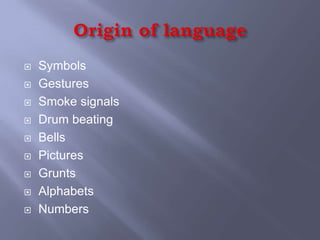
   Symbols
   Gestures
   Smoke signals
   Drum beating
   Bells
   Pictures
   Grunts
   Alphabets
   Numbers
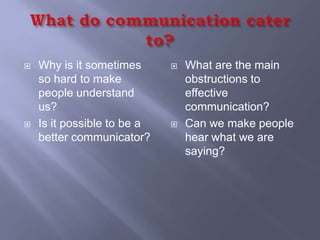
   Why is it sometimes         What are the main
    so hard to make              obstructions to
    people understand            effective
    us?                          communication?
   Is it possible to be a      Can we make people
    better communicator?         hear what we are
                                 saying?
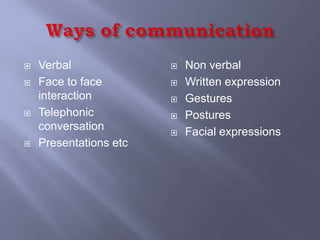
   Verbal                 Non verbal
   Face to face           Written expression
    interaction            Gestures
   Telephonic             Postures
    conversation           Facial expressions
   Presentations etc
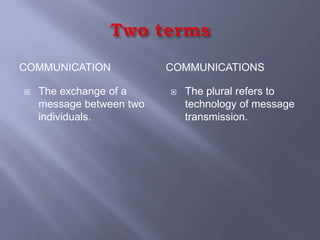
COMMUNICATION             COMMUNICATIONS

   The exchange of a        The plural refers to
    message between two       technology of message
    individuals.              transmission.
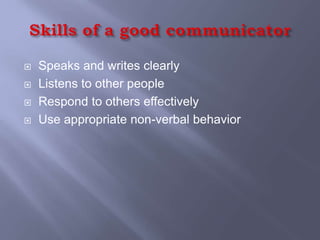
   Speaks and writes clearly
   Listens to other people
   Respond to others effectively
   Use appropriate non-verbal behavior
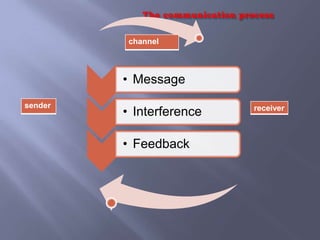
The communication process

          channel


         • Message
sender
         • Interference           receiver


         • Feedback
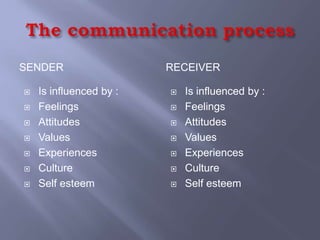
SENDER                   RECEIVER

   Is influenced by :      Is influenced by :
   Feelings                Feelings
   Attitudes               Attitudes
   Values                  Values
   Experiences             Experiences
   Culture                 Culture
   Self esteem             Self esteem
   The difference between the sender and
    receiver lies in the channel.
SENDER                 RECEIVER

   Speak clearly         Pay attention
   Ask for feedback      Give feedback
Interference:
Rank , status, power,
Equipment failure
Wrong channel
Ambiguity
Emotional state
Fear of change
Denial
   Be confident.            Do not ask “did you
   Be very clear about       understand?”
    what you want.           Always repeat your
   Set your goals.           instructions.
                             Look for a feedback.
   Eye contact
   Facial expressions
   Posture
   Gestures
   Distance
   Paralinguistic's
   Eye is the most effective and direct part of
    communication.
   Direct eye contact shows confidence.
   Smile covers most part of your facial
    expression.
   Smiling is a powerful cue that transmits:
   Happiness
   Friendliness
   Warmth
   Liking
   Affiliation
   Without gestures you’d be taken as stiff and
    boring!
   Be lively, animated while talking.
   Nod your head while giving feedback.
   Stand erect , not rigid
   Lean a bit forward to display warmth.
   Walk and talk
   Be vigilant
   Distance
   Tone
   Pitch
   Rhythm
   Intonation
   Loudness
Be pleasant, confident, tend to listen
    carefully, and speak clearly.
Conceived,
presented and
made by:
Ms . Wardah Azhar
Total time required:
10-15 mints
References:
Slideshare.net
Interpersonal skills
The world book
encyclopedia
volume P & S.

Communication skills

  • 1.
  • 2.
    Symbols  Gestures  Smoke signals  Drum beating  Bells  Pictures  Grunts  Alphabets  Numbers
  • 3.
    Why is it sometimes  What are the main so hard to make obstructions to people understand effective us? communication?  Is it possible to be a  Can we make people better communicator? hear what we are saying?
  • 5.
    Verbal  Non verbal  Face to face  Written expression interaction  Gestures  Telephonic  Postures conversation  Facial expressions  Presentations etc
  • 6.
    COMMUNICATION COMMUNICATIONS  The exchange of a  The plural refers to message between two technology of message individuals. transmission.
  • 7.
    Speaks and writes clearly  Listens to other people  Respond to others effectively  Use appropriate non-verbal behavior
  • 8.
    The communication process channel • Message sender • Interference receiver • Feedback
  • 9.
    SENDER RECEIVER  Is influenced by :  Is influenced by :  Feelings  Feelings  Attitudes  Attitudes  Values  Values  Experiences  Experiences  Culture  Culture  Self esteem  Self esteem
  • 10.
    The difference between the sender and receiver lies in the channel.
  • 11.
    SENDER RECEIVER  Speak clearly  Pay attention  Ask for feedback  Give feedback
  • 12.
    Interference: Rank , status,power, Equipment failure Wrong channel Ambiguity Emotional state Fear of change Denial
  • 13.
    Be confident.  Do not ask “did you  Be very clear about understand?” what you want.  Always repeat your  Set your goals. instructions.  Look for a feedback.
  • 14.
    Eye contact  Facial expressions  Posture  Gestures  Distance  Paralinguistic's
  • 15.
    Eye is the most effective and direct part of communication.  Direct eye contact shows confidence.
  • 16.
    Smile covers most part of your facial expression.  Smiling is a powerful cue that transmits:  Happiness  Friendliness  Warmth  Liking  Affiliation
  • 17.
    Without gestures you’d be taken as stiff and boring!  Be lively, animated while talking.  Nod your head while giving feedback.
  • 18.
    Stand erect , not rigid  Lean a bit forward to display warmth.  Walk and talk  Be vigilant  Distance
  • 19.
    Tone  Pitch  Rhythm  Intonation  Loudness
  • 20.
    Be pleasant, confident,tend to listen carefully, and speak clearly.
  • 21.
    Conceived, presented and made by: Ms. Wardah Azhar Total time required: 10-15 mints References: Slideshare.net Interpersonal skills The world book encyclopedia volume P & S.