Speech Communication 
Process and Levels 
By Michelle Buere
Communication as a Process 
• Human communication is interpersonal, it is 
purposive and it is a process.
• Question: What do we mean by process?
• Answer: By process we mean that steps have 
to be taken and in a set/particular order to 
achieve a desired result/goal.
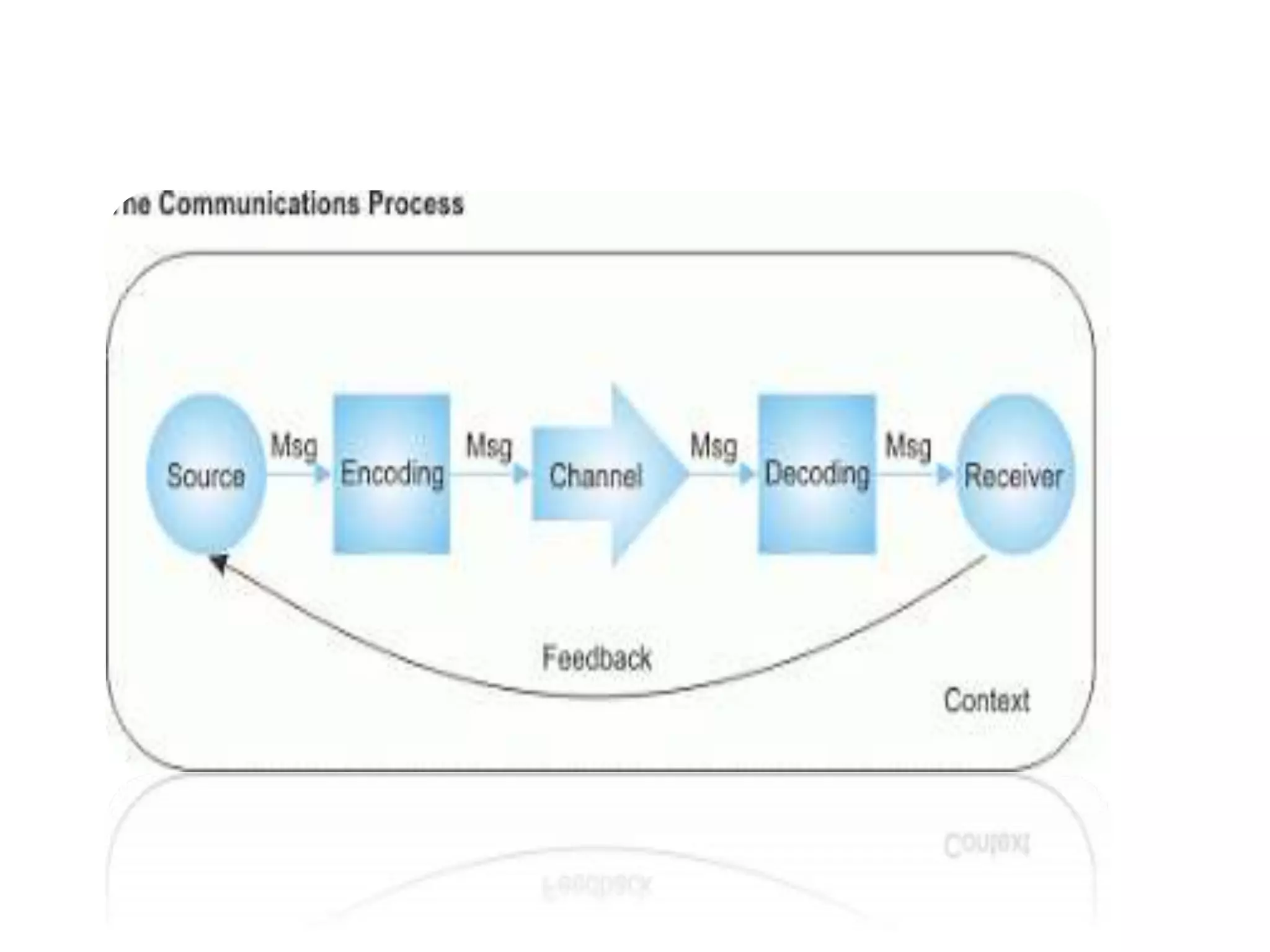
. SENDER/ENCODER 
• The sender also known as the encoder 
decides on the message to be sent, the 
best/most effective way that it can be sent.
• The sender may want to ask him/herself 
questions like: What words will I use? Do I 
need signs or pictures?
MEDIUM 
• The medium is the immediate form which a 
message takes.
CHANNEL 
• The channel is that which is responsible for 
the delivery of the chosen message form.
RECEIVER 
• The receiver or the decoder is responsible for 
extracting/decoding meaning from the 
message.
• The receiver is also responsible for providing 
feedback to the sender.
FEEDBACK 
• This is important as it determines whether or 
not the decoder grasped the intended 
meaning and whether communication was 
successful.
CONTEXT 
• The context of any communication act is the 
environment surrounding it.
NOISE (also called interference) 
• This is any factor that inhibits the conveyance 
of a message.
Two types of Noise 
• (internal noise) 
A student worrying about an incomplete 
assignment may not be attentive in class
Two types of Noise 
• external noise 
The sounds of heavy rain on a galvanized 
roof may inhibit the reading of a storybook to 
second graders
Levels of Communication 
• 1st stage: Thinking 
This stage starts with the birth of an idea 
of the speaker. The
• 2nd stage: Symbolizing 
The speaker is now ready to share to his 
audience orally through the use of words.
• 3rd stage: Expressing 
The speaker is now ready to his ideas in an 
audible speech using appropriate gestures.
• 4th stage: Transmitting 
• The ideas and feelings are transmitted into the ears of 
the listeners. The surroundings must be conducive for 
the audience.
• 5th stage: Receiving 
• As the sound waves that carry the ideas of the speaker 
reach the ears of the listeners, a series of movements 
takes place.
• 6th stage: Decoding 
• This stage will lead the listeners to understand what the 
speaker wants to convey.
• 7th stage: Reaction or “Feedback” 
– It is normal situation to see listeners giving responses to what 
was heard from the speakers.
• 8th stage: Monitoring 
• The speaker should be sensitive in giving the needs of 
his audience.
Speech communication ( Process and Levels)

Speech communication ( Process and Levels)

  • 1.
    Speech Communication Processand Levels By Michelle Buere
  • 2.
    Communication as aProcess • Human communication is interpersonal, it is purposive and it is a process.
  • 3.
    • Question: Whatdo we mean by process?
  • 4.
    • Answer: Byprocess we mean that steps have to be taken and in a set/particular order to achieve a desired result/goal.
  • 6.
    . SENDER/ENCODER •The sender also known as the encoder decides on the message to be sent, the best/most effective way that it can be sent.
  • 7.
    • The sendermay want to ask him/herself questions like: What words will I use? Do I need signs or pictures?
  • 8.
    MEDIUM • Themedium is the immediate form which a message takes.
  • 9.
    CHANNEL • Thechannel is that which is responsible for the delivery of the chosen message form.
  • 10.
    RECEIVER • Thereceiver or the decoder is responsible for extracting/decoding meaning from the message.
  • 11.
    • The receiveris also responsible for providing feedback to the sender.
  • 12.
    FEEDBACK • Thisis important as it determines whether or not the decoder grasped the intended meaning and whether communication was successful.
  • 13.
    CONTEXT • Thecontext of any communication act is the environment surrounding it.
  • 14.
    NOISE (also calledinterference) • This is any factor that inhibits the conveyance of a message.
  • 15.
    Two types ofNoise • (internal noise) A student worrying about an incomplete assignment may not be attentive in class
  • 16.
    Two types ofNoise • external noise The sounds of heavy rain on a galvanized roof may inhibit the reading of a storybook to second graders
  • 17.
    Levels of Communication • 1st stage: Thinking This stage starts with the birth of an idea of the speaker. The
  • 18.
    • 2nd stage:Symbolizing The speaker is now ready to share to his audience orally through the use of words.
  • 19.
    • 3rd stage:Expressing The speaker is now ready to his ideas in an audible speech using appropriate gestures.
  • 20.
    • 4th stage:Transmitting • The ideas and feelings are transmitted into the ears of the listeners. The surroundings must be conducive for the audience.
  • 21.
    • 5th stage:Receiving • As the sound waves that carry the ideas of the speaker reach the ears of the listeners, a series of movements takes place.
  • 22.
    • 6th stage:Decoding • This stage will lead the listeners to understand what the speaker wants to convey.
  • 23.
    • 7th stage:Reaction or “Feedback” – It is normal situation to see listeners giving responses to what was heard from the speakers.
  • 24.
    • 8th stage:Monitoring • The speaker should be sensitive in giving the needs of his audience.