COMMUNICATION COMMUNICATION COMMUNICATION COMMUNICATION
SUBMITTED BY:-
HARPREET SINGH
1758 B.COM
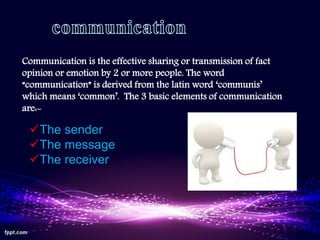
Communication is the effective sharing or transmission of fact
opinion or emotion by 2 or more people. The word
“communication” is derived from the latin word ‘communis’
which means ‘common’. The 3 basic elements of communication
are:-
The sender
The message
The receiver
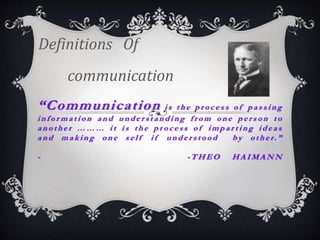
“Communication i s t h e p r o c e s s o f p a s s i n g
i n f o r m a t i o n a n d u n d e r s t a n d i n g f r o m o n e p e r s o n t o
a n o t h e r … … … i t i s t h e p r o c e s s o f i m p a r t i n g i d e a s
a n d m a k i n g o n e s e l f i f u n d e r s t o o d b y o t h e r. ”
- - T H E O H A I M A N N
Definitions Of
communication
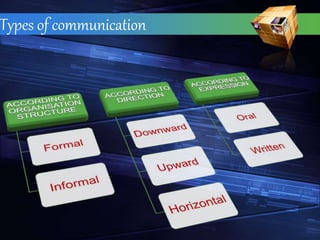
Types of communication
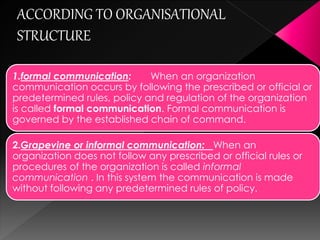
1.formal communication: When an organization
communication occurs by following the prescribed or official or
predetermined rules, policy and regulation of the organization is
called formal communication. Formal communication is governed
by the established chain of command.
2.Grapevine or informal communication: When an
organization does not follow any prescribed or official rules
or procedures of the organization is called informal
communication . In this system the communication is made
without following any predetermined rules of policy.
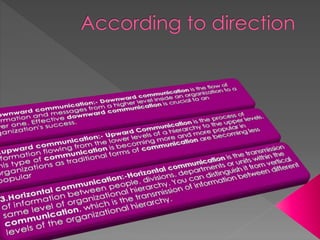
1.downward communication:- Downward communication is the
flow of information and messages from a higher level inside an
organization to a lower one. Effective downward communication is
crucial to an organization's success.
2.upward communication:- Upward Communication is the process
of information flowing from the lower levels of a hierarchy to the upper
levels. This type of communication is becoming more and more
popular in organizations as traditional forms of communication are
becoming less popular
3.Horizontal communication:-Horizontal communication is the
transmission of information between people, divisions, departments or
units within the same level of organizational hierarchy. You can
distinguish it from vertical communication, which is the transmission
of information between different levels of the organizational hierarchy.
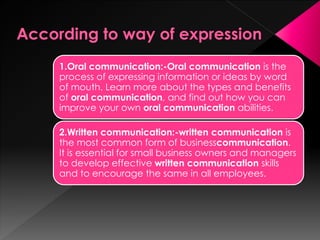
1.Oral communication:-Oral communication is the process
of expressing information or ideas by word of mouth. Learn
more about the types and benefits of oral communication, and
find out how you can improve your own oral
communication abilities.
2.Written communication:-written communication is the
most common form of business communication. It is essential
for small business owners and managers to develop
effective written communication skills and to encourage the
same in all employees.
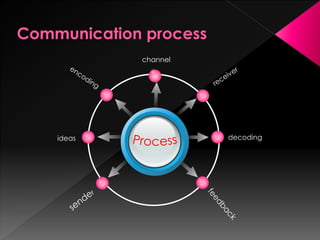
ideas decoding
channel
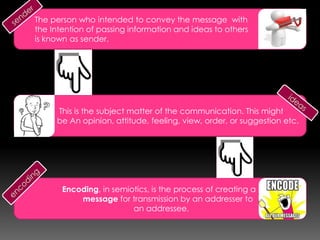
The person who intended to convey the message with
the Intention of passing information and ideas to others
is known as sender.
This is the subject matter of the communication. This might
be An opinion, attitude, feeling, view, order, or suggestion etc.
Encoding, in semiotics, is the process of creating a
message for transmission by an addresser
to an addressee.
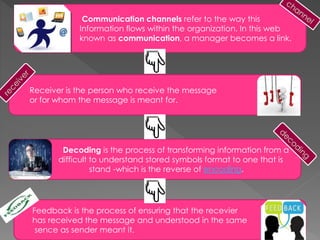
Communication channels refer to the way this
Information flows within the organization. In this web
known as communication, a manager becomes a link.
Receiver is the person who receive the message
or for whom the message is meant for.
Decoding is the process of transforming information from a
difficult to understand stored symbols format to one that is to under
stand -which is the reverse of encoding.
Feedback is the process of ensuring that the receiver
has received the message and understood in the same
sense as sender meant it.
Speaking skills include an ability to communicate fluently
on topics of general nature. The communication should be
accurate. A person should be able to develop conversation,
elaborate on the topic by asking questions and have a wide
range of vocabulary. A good speaker should have a good
pronunciation. His spoken word should be intelligible. A
person with above-mentioned abilities is said to be a good
speaker. Speaking skills are an acquired art.
Some have a inborn ability to speak or the gift of the gab as
it is called.
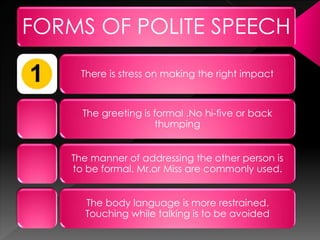
FORMS OF POLITE SPEECH
There is stress on making the right impact
The greeting is formal .No hi-five or back
thumping
The manner of addressing the other person is to
be formal. Mr.or Miss are commonly used.
The body language is more restrained. Touching
while talking is to be avoided
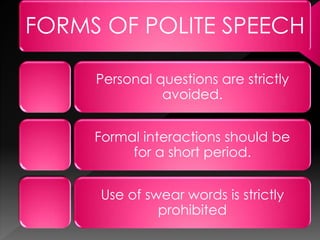
FORMS OF POLITE SPEECH
Personal questions are strictly
avoided.
Formal interactions should be for a
short period.
Use of swear words is strictly
prohibited
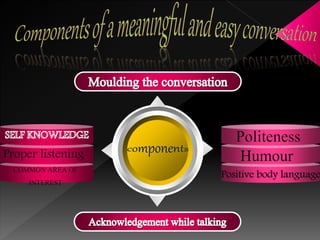
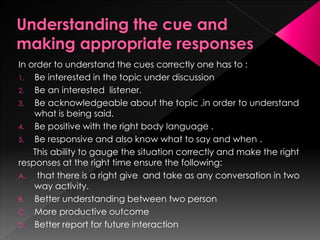
In order to understand the cues correctly one has to :
1. Be interested in the topic under discussion
2. Be an interested listener.
3. Be acknowledgeable about the topic ,in order to understand what is being
said.
4. Be positive with the right body language .
5. Be responsive and also know what to say and when .
This ability to gauge the situation correctly and make the right
responses at the right time ensure the following:
A. that there is a right give and take as any conversation in two way activity.
B. Better understanding between two person
C. More productive outcome
D. Better report for future interaction
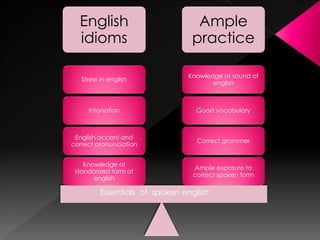
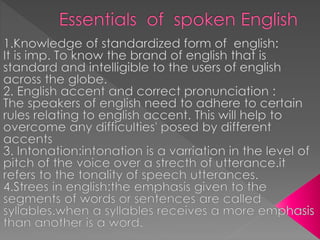
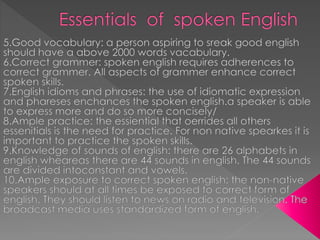
English idioms Ample practice
Ample exposure to
correct spoken form
Correct
grammar
Good
vocabulary
Knowledge of
sound of english
Knowledge of
standardized form of
English
English accent and
correct pronunciation
Intonation
Stress in english
Essentials of spoken English
communication and speaking skills

communication and speaking skills

  • 1.
    COMMUNICATION COMMUNICATION COMMUNICATIONCOMMUNICATION SUBMITTED BY:- HARPREET SINGH 1758 B.COM
  • 2.
    Communication is theeffective sharing or transmission of fact opinion or emotion by 2 or more people. The word “communication” is derived from the latin word ‘communis’ which means ‘common’. The 3 basic elements of communication are:- The sender The message The receiver
  • 3.
    “Communication i st h e p r o c e s s o f p a s s i n g i n f o r m a t i o n a n d u n d e r s t a n d i n g f r o m o n e p e r s o n t o a n o t h e r … … … i t i s t h e p r o c e s s o f i m p a r t i n g i d e a s a n d m a k i n g o n e s e l f i f u n d e r s t o o d b y o t h e r. ” - - T H E O H A I M A N N Definitions Of communication
  • 4.
  • 5.
    1.formal communication: Whenan organization communication occurs by following the prescribed or official or predetermined rules, policy and regulation of the organization is called formal communication. Formal communication is governed by the established chain of command. 2.Grapevine or informal communication: When an organization does not follow any prescribed or official rules or procedures of the organization is called informal communication . In this system the communication is made without following any predetermined rules of policy.
  • 6.
    1.downward communication:- Downwardcommunication is the flow of information and messages from a higher level inside an organization to a lower one. Effective downward communication is crucial to an organization's success. 2.upward communication:- Upward Communication is the process of information flowing from the lower levels of a hierarchy to the upper levels. This type of communication is becoming more and more popular in organizations as traditional forms of communication are becoming less popular 3.Horizontal communication:-Horizontal communication is the transmission of information between people, divisions, departments or units within the same level of organizational hierarchy. You can distinguish it from vertical communication, which is the transmission of information between different levels of the organizational hierarchy.
  • 7.
    1.Oral communication:-Oral communicationis the process of expressing information or ideas by word of mouth. Learn more about the types and benefits of oral communication, and find out how you can improve your own oral communication abilities. 2.Written communication:-written communication is the most common form of business communication. It is essential for small business owners and managers to develop effective written communication skills and to encourage the same in all employees.
  • 8.
  • 9.
    The person whointended to convey the message with the Intention of passing information and ideas to others is known as sender. This is the subject matter of the communication. This might be An opinion, attitude, feeling, view, order, or suggestion etc. Encoding, in semiotics, is the process of creating a message for transmission by an addresser to an addressee.
  • 10.
    Communication channels referto the way this Information flows within the organization. In this web known as communication, a manager becomes a link. Receiver is the person who receive the message or for whom the message is meant for. Decoding is the process of transforming information from a difficult to understand stored symbols format to one that is to under stand -which is the reverse of encoding. Feedback is the process of ensuring that the receiver has received the message and understood in the same sense as sender meant it.
  • 11.
    Speaking skills includean ability to communicate fluently on topics of general nature. The communication should be accurate. A person should be able to develop conversation, elaborate on the topic by asking questions and have a wide range of vocabulary. A good speaker should have a good pronunciation. His spoken word should be intelligible. A person with above-mentioned abilities is said to be a good speaker. Speaking skills are an acquired art. Some have a inborn ability to speak or the gift of the gab as it is called.
  • 13.
    FORMS OF POLITESPEECH There is stress on making the right impact The greeting is formal .No hi-five or back thumping The manner of addressing the other person is to be formal. Mr.or Miss are commonly used. The body language is more restrained. Touching while talking is to be avoided
  • 14.
    FORMS OF POLITESPEECH Personal questions are strictly avoided. Formal interactions should be for a short period. Use of swear words is strictly prohibited
  • 15.
    In order tounderstand the cues correctly one has to : 1. Be interested in the topic under discussion 2. Be an interested listener. 3. Be acknowledgeable about the topic ,in order to understand what is being said. 4. Be positive with the right body language . 5. Be responsive and also know what to say and when . This ability to gauge the situation correctly and make the right responses at the right time ensure the following: A. that there is a right give and take as any conversation in two way activity. B. Better understanding between two person C. More productive outcome D. Better report for future interaction
  • 16.
    English idioms Amplepractice Ample exposure to correct spoken form Correct grammar Good vocabulary Knowledge of sound of english Knowledge of standardized form of English English accent and correct pronunciation Intonation Stress in english Essentials of spoken English