


Communicating Changes
And
Receiving Feedback
By
Anil Kumar
Sharad Kumar
Akanksha Singh
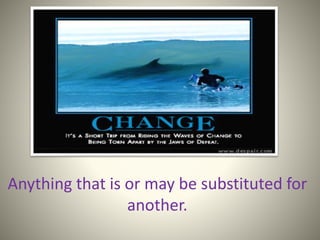
Anything that is or may be substituted for
another.
Sources of change
• The demand for change can arise from:
- the internal environment (e.g.
employees and departments)
- the external environment (e.g.
competition, markets and
customers)
Types of change
• Types of change include alterations to size,
structure, culture, leadership, tasks and
activities
• The organisation can be reactive or proactive
towards change
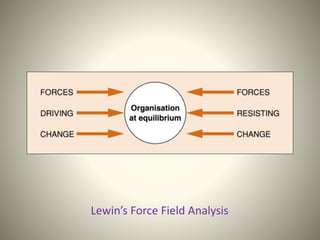
Lewin’s Force Field Analysis
• Change is the outcome of the impact of
driving forces upon restraining forces
• Driving forces are often economic in
nature
• Change invokes uncertainty in the
existing workforce
• Managers involved need to communicate
strong justification for changes
The process of change
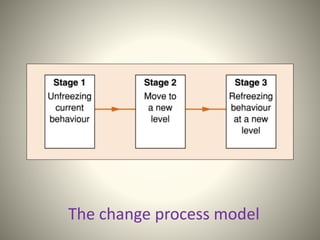
The change process model
Stage 1
• Unfreezing of current attitudes
and behaviour
• Organisational anticipation
The change process model
Stage 2
• Moving to a new level
• Organisational flux
• Information building
• Experimentation
The change process model
Stage 3
• Refreezing attitudes and behaviour
at the new level
• Highlight the positive outcomes of
the changes
Communicating change
• In communicating change consider:
- the information which needs to be imparted
- the best media to use
• For communicating routine or minor change use:
- circulars or newsletters
- announcements on noticeboards
- letters, memos and e-mail
Cont…
• For communicating routine or minor change
use:
- circulars or newsletters
- announcements on
noticeboards
- letters, memos and e-mail
Communicating change
• In communicating change aim to:
- involve organisation
members in planning and
implementing the change
Communicating change
- have a two-way dialogue with those
affected by the change
- counter informal communication,
such as rumours and gossip
Greiner’s model
• Greiner’s model can be used to highlight
the need:
– for structural change
– for development of key skills
– to manage transfer from one phase to the next
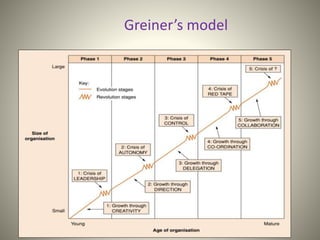
Greiner’s model
Five dimensions of organisational
development
• Age
• Size
• Stages of evolution
• Stages of revolution
• Industry growth rate
Phase 1 - Growth through
creativity
• Focus is product development and selling
• Crisis of leadership:
– informal management style becomes
inadequate
– more expertise is needed
Phase 2 - Growth through
direction
• Crisis of leadership is resolved by:
–specialisation
–functional structure
–implementing control systems
–formal communication
–Decision Making expands up the hierarchy
Phase 2 - Growth through
direction
• Crisis of autonomy
– over centralisation
– no opportunity to exercise initiative
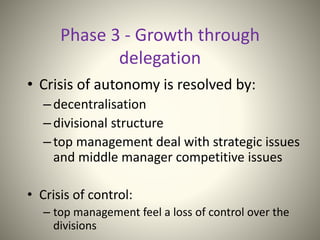
Phase 3 - Growth through
delegation
• Crisis of autonomy is resolved by:
–decentralisation
–divisional structure
–top management deal with strategic issues
and middle manager competitive issues
• Crisis of control:
– top management feel a loss of control over the
divisions
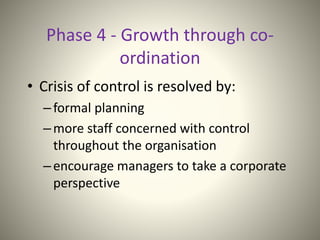
Phase 4 - Growth through co-
ordination
• Crisis of control is resolved by:
–formal planning
–more staff concerned with control
throughout the organisation
–encourage managers to take a corporate
perspective
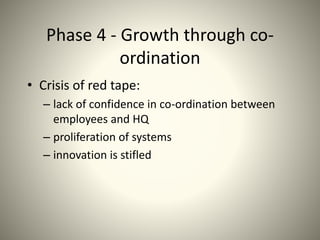
Phase 4 - Growth through co-
ordination
• Crisis of red tape:
– lack of confidence in co-ordination between
employees and HQ
– proliferation of systems
– innovation is stifled
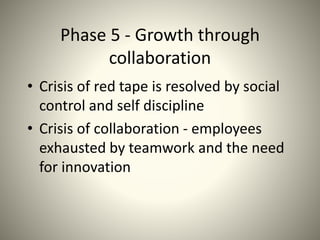
Phase 5 - Growth through
collaboration
• Crisis of red tape is resolved by social
control and self discipline
• Crisis of collaboration - employees
exhausted by teamwork and the need
for innovation
Feedback is:
information
about performance or behaviour
that leads to action to affirm or develop that
performance or behaviour.
Purpose of Feedback
How can we expect people to change and
develop if they don’t know what they need to
change?
Unless they get feedback, how do they know
what they do well so they can continue doing
it?
Feedback Reality vs Perceptions
Most people really want to know how they are
doing. They want to know if other people like
what they’re doing.
They also want to know if something could be
done more effectively or if boundaries are
being overstepped.
Feedback is NOT:
• an end in itself
• a solution to performance problems or issues
• praise or blame, approval or disapproval. Evaluation means to
place value on a performance or piece of work. But feedback
is value neutral. It merely describes what you did or did not
accomplish, given a standard or intent.
• Derived from tests, exercises or simulations. The activity
being assessed is your normal work. You cannot get closer to
real life than real life itself.
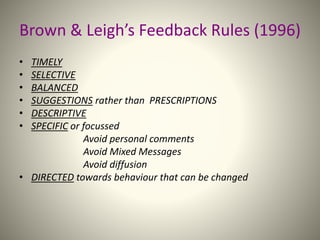
Brown & Leigh’s Feedback Rules (1996)
• TIMELY
• SELECTIVE
• BALANCED
• SUGGESTIONS rather than PRESCRIPTIONS
• DESCRIPTIVE
• SPECIFIC or focussed
Avoid personal comments
Avoid Mixed Messages
Avoid diffusion
• DIRECTED towards behaviour that can be changed
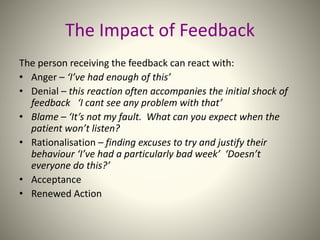
The Impact of Feedback
The person receiving the feedback can react with:
• Anger – ‘I’ve had enough of this’
• Denial – this reaction often accompanies the initial shock of
feedback ‘I cant see any problem with that’
• Blame – ‘It’s not my fault. What can you expect when the
patient won’t listen?
• Rationalisation – finding excuses to try and justify their
behaviour ‘I’ve had a particularly bad week’ ‘Doesn’t
everyone do this?’
• Acceptance
• Renewed Action
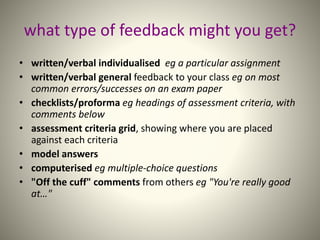
what type of feedback might you get?
• written/verbal individualised eg a particular assignment
• written/verbal general feedback to your class eg on most
common errors/successes on an exam paper
• checklists/proforma eg headings of assessment criteria, with
comments below
• assessment criteria grid, showing where you are placed
against each criteria
• model answers
• computerised eg multiple-choice questions
• "Off the cuff" comments from others eg "You're really good
at…"
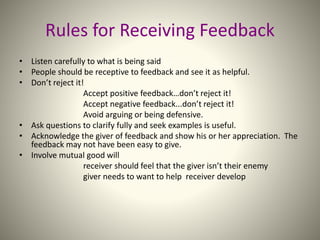
Rules for Receiving Feedback
• Listen carefully to what is being said
• People should be receptive to feedback and see it as helpful.
• Don’t reject it!
Accept positive feedback…don’t reject it!
Accept negative feedback...don’t reject it!
Avoid arguing or being defensive.
• Ask questions to clarify fully and seek examples is useful.
• Acknowledge the giver of feedback and show his or her appreciation. The
feedback may not have been easy to give.
• Involve mutual good will
receiver should feel that the giver isn’t their enemy
giver needs to want to help receiver develop
what to do with the feedback?
It is up to you
• Read or listen
• Understand; Clarification: examples and alternatives; Keep
notes
• Give it time to sink in and get into perspective
• Try to keep feedback sheets/information together
• Address areas for improvement. Identify, Action Plan
• Try not to
feel devastated by small criticisms and
try not to be defensive and make excuses
Communicating changes (1)

Communicating changes (1)

  • 2.
  • 3.
    Anything that isor may be substituted for another.
  • 4.
    Sources of change •The demand for change can arise from: - the internal environment (e.g. employees and departments) - the external environment (e.g. competition, markets and customers)
  • 5.
    Types of change •Types of change include alterations to size, structure, culture, leadership, tasks and activities • The organisation can be reactive or proactive towards change
  • 6.
  • 7.
    • Change isthe outcome of the impact of driving forces upon restraining forces • Driving forces are often economic in nature • Change invokes uncertainty in the existing workforce • Managers involved need to communicate strong justification for changes The process of change
  • 8.
  • 9.
    The change processmodel Stage 1 • Unfreezing of current attitudes and behaviour • Organisational anticipation
  • 10.
    The change processmodel Stage 2 • Moving to a new level • Organisational flux • Information building • Experimentation
  • 11.
    The change processmodel Stage 3 • Refreezing attitudes and behaviour at the new level • Highlight the positive outcomes of the changes
  • 12.
    Communicating change • Incommunicating change consider: - the information which needs to be imparted - the best media to use • For communicating routine or minor change use: - circulars or newsletters - announcements on noticeboards - letters, memos and e-mail
  • 13.
    Cont… • For communicatingroutine or minor change use: - circulars or newsletters - announcements on noticeboards - letters, memos and e-mail
  • 14.
    Communicating change • Incommunicating change aim to: - involve organisation members in planning and implementing the change
  • 15.
    Communicating change - havea two-way dialogue with those affected by the change - counter informal communication, such as rumours and gossip
  • 16.
    Greiner’s model • Greiner’smodel can be used to highlight the need: – for structural change – for development of key skills – to manage transfer from one phase to the next
  • 17.
  • 18.
    Five dimensions oforganisational development • Age • Size • Stages of evolution • Stages of revolution • Industry growth rate
  • 19.
    Phase 1 -Growth through creativity • Focus is product development and selling • Crisis of leadership: – informal management style becomes inadequate – more expertise is needed
  • 20.
    Phase 2 -Growth through direction • Crisis of leadership is resolved by: –specialisation –functional structure –implementing control systems –formal communication –Decision Making expands up the hierarchy
  • 21.
    Phase 2 -Growth through direction • Crisis of autonomy – over centralisation – no opportunity to exercise initiative
  • 22.
    Phase 3 -Growth through delegation • Crisis of autonomy is resolved by: –decentralisation –divisional structure –top management deal with strategic issues and middle manager competitive issues • Crisis of control: – top management feel a loss of control over the divisions
  • 23.
    Phase 4 -Growth through co- ordination • Crisis of control is resolved by: –formal planning –more staff concerned with control throughout the organisation –encourage managers to take a corporate perspective
  • 24.
    Phase 4 -Growth through co- ordination • Crisis of red tape: – lack of confidence in co-ordination between employees and HQ – proliferation of systems – innovation is stifled
  • 25.
    Phase 5 -Growth through collaboration • Crisis of red tape is resolved by social control and self discipline • Crisis of collaboration - employees exhausted by teamwork and the need for innovation
  • 26.
    Feedback is: information about performanceor behaviour that leads to action to affirm or develop that performance or behaviour.
  • 27.
    Purpose of Feedback Howcan we expect people to change and develop if they don’t know what they need to change? Unless they get feedback, how do they know what they do well so they can continue doing it?
  • 28.
    Feedback Reality vsPerceptions Most people really want to know how they are doing. They want to know if other people like what they’re doing. They also want to know if something could be done more effectively or if boundaries are being overstepped.
  • 29.
    Feedback is NOT: •an end in itself • a solution to performance problems or issues • praise or blame, approval or disapproval. Evaluation means to place value on a performance or piece of work. But feedback is value neutral. It merely describes what you did or did not accomplish, given a standard or intent. • Derived from tests, exercises or simulations. The activity being assessed is your normal work. You cannot get closer to real life than real life itself.
  • 30.
    Brown & Leigh’sFeedback Rules (1996) • TIMELY • SELECTIVE • BALANCED • SUGGESTIONS rather than PRESCRIPTIONS • DESCRIPTIVE • SPECIFIC or focussed Avoid personal comments Avoid Mixed Messages Avoid diffusion • DIRECTED towards behaviour that can be changed
  • 31.
    The Impact ofFeedback The person receiving the feedback can react with: • Anger – ‘I’ve had enough of this’ • Denial – this reaction often accompanies the initial shock of feedback ‘I cant see any problem with that’ • Blame – ‘It’s not my fault. What can you expect when the patient won’t listen? • Rationalisation – finding excuses to try and justify their behaviour ‘I’ve had a particularly bad week’ ‘Doesn’t everyone do this?’ • Acceptance • Renewed Action
  • 32.
    what type offeedback might you get? • written/verbal individualised eg a particular assignment • written/verbal general feedback to your class eg on most common errors/successes on an exam paper • checklists/proforma eg headings of assessment criteria, with comments below • assessment criteria grid, showing where you are placed against each criteria • model answers • computerised eg multiple-choice questions • "Off the cuff" comments from others eg "You're really good at…"
  • 33.
    Rules for ReceivingFeedback • Listen carefully to what is being said • People should be receptive to feedback and see it as helpful. • Don’t reject it! Accept positive feedback…don’t reject it! Accept negative feedback...don’t reject it! Avoid arguing or being defensive. • Ask questions to clarify fully and seek examples is useful. • Acknowledge the giver of feedback and show his or her appreciation. The feedback may not have been easy to give. • Involve mutual good will receiver should feel that the giver isn’t their enemy giver needs to want to help receiver develop
  • 34.
    what to dowith the feedback? It is up to you • Read or listen • Understand; Clarification: examples and alternatives; Keep notes • Give it time to sink in and get into perspective • Try to keep feedback sheets/information together • Address areas for improvement. Identify, Action Plan • Try not to feel devastated by small criticisms and try not to be defensive and make excuses