Submitted By:- MANISH KUMAR(IMB2010022)
DILEEP KUMAR (IMB2010036)
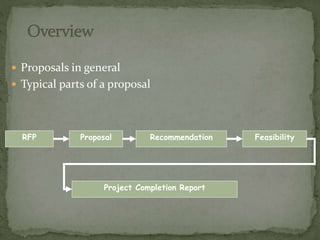
 Proposals in general
 Typical parts of a proposal
RFP Proposal Recommendation
Project Completion Report
Feasibility
 Written offer to . . .
 . . . perform work, do research, or solve problems
 . . . another person has—who says, “How do I solve
this problem of ‘Should I convert the Accounting
Department from PC-compatible computers to
Mac?’”
 . . . proposal writer has—who says, “I have this
problem of needing funding for my research project.”
 Directed toward
 Governmental agency or agencies
 Agency has a need—Request for Proposal =
RFP
 Foundation
 Agency has a need: RFP
 Company: Internal
 Department has a need: RFP
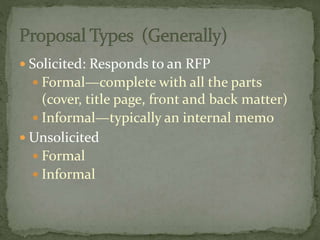
 Solicited: Responds to an RFP
 Formal—complete with all the parts
(cover, title page, front and back matter)
 Informal—typically an internal memo
 Unsolicited
 Formal
 Informal
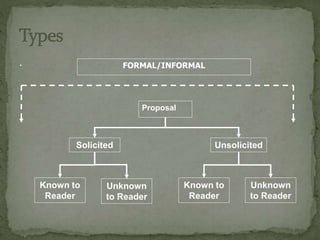
.
Proposal
Known to
Reader
Unknown
to Reader
Known to
Reader
Unknown
to Reader
Solicited Unsolicited
FORMAL/INFORMAL
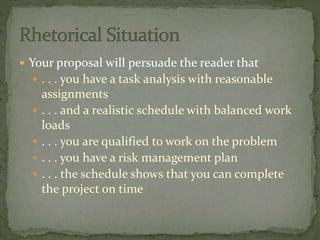
 Your proposal will persuade the reader that
 . . . you have a task analysis with reasonable
assignments
 . . . and a realistic schedule with balanced work
loads
 . . . you are qualified to work on the problem
 . . . you have a risk management plan
 . . . the schedule shows that you can complete
the project on time
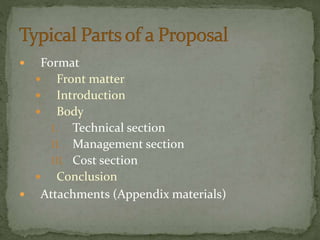
 Format
 Front matter
 Introduction
 Body
I. Technical section
II. Management section
III. Cost section
 Conclusion
 Attachments (Appendix materials)
I. Technical elements—the technical
solution to the problem
II. Management—proving that you can do
what you say you will do
III. Cost—how much the solution will cost
 Focus on client’s needs
 Understand the client’s . . .
 . . . limitations
 . . . capabilities
 Presents the problem(s)
 Does client know of problem? Determines . . .
 . . . amount of background
 . . . technical detail
 Technical details
 Must convince client of . . .
 . . . your understanding of the problem
 . . . the soundness of the technical solution
 Provides a plan (tasks and schedule) for solving
the problem
 Contains
 Project´s purpose/scope (limitations)
 Methods/procedures (steps) and rationale
 Resources (physical, personnel, literature,
etc.)
 Task breakdown (what will be done) and
timetable (when will it be done)
 Schedule
 Steps and tasks to solve the problem
 Time each task will take
 Start and end dates; relation to other tasks,
duration and dependencies
 Personnel working on the task
 Currently available
 Need to hire (justify)
Technical
proposal
 The introduction of the Technical Proposal should
provide an overview of the entire project.
 It should include a description of the proposed project,
including the details of the expected impact of the
completed project on clinical investigators and their
research team.
 The role of end user community throughout the project,
as well as in the implementation and evaluation
components should be included.
 This section of the Technical Proposal should provide a
well thought out and solid technical plan for applying
informatics and information technology to your
proposed project.
 This section should include a description of the
methodology that will be used to complete the project,
specific plan for implementation, approach to inter-
group collaboration; and best practices applied.
 This section of the Technical Proposal should include:
the approach to overall project management,
timelines, and deliverables.
 This section should also include a staffing plan that
clearly demonstrates the appropriate allocation of
personnel who are specifically qualified to achieve the
goals described in the proposal and their
responsibilities for deliverables.
 The approach and management of necessary
interdisciplinary team members and components
should be clearly articulated.
 This section of the Technical Proposal should
document the qualifications of the Offeror and all
proposed subcontractor and collaborator staff.
 The qualifications of the stated subcontractors and
collaborators should also be documented, including
relevant past experience.
 This section should include the plan for and
commitment of the Offeror and all affiliated
organizations to wide distribution and sharing of
tools/results of the proposed project.
 This should include clearly identifying and providing
information for obtaining/purchasing any required
components.
Attach all required
resume/biographical sketches.
THANK YOU

Technical proposal present

  • 1.
    Submitted By:- MANISHKUMAR(IMB2010022) DILEEP KUMAR (IMB2010036)
  • 2.
     Proposals ingeneral  Typical parts of a proposal RFP Proposal Recommendation Project Completion Report Feasibility
  • 3.
     Written offerto . . .  . . . perform work, do research, or solve problems  . . . another person has—who says, “How do I solve this problem of ‘Should I convert the Accounting Department from PC-compatible computers to Mac?’”  . . . proposal writer has—who says, “I have this problem of needing funding for my research project.”
  • 4.
     Directed toward Governmental agency or agencies  Agency has a need—Request for Proposal = RFP  Foundation  Agency has a need: RFP  Company: Internal  Department has a need: RFP
  • 5.
     Solicited: Respondsto an RFP  Formal—complete with all the parts (cover, title page, front and back matter)  Informal—typically an internal memo  Unsolicited  Formal  Informal
  • 6.
    . Proposal Known to Reader Unknown to Reader Knownto Reader Unknown to Reader Solicited Unsolicited FORMAL/INFORMAL
  • 7.
     Your proposalwill persuade the reader that  . . . you have a task analysis with reasonable assignments  . . . and a realistic schedule with balanced work loads  . . . you are qualified to work on the problem  . . . you have a risk management plan  . . . the schedule shows that you can complete the project on time
  • 8.
     Format  Frontmatter  Introduction  Body I. Technical section II. Management section III. Cost section  Conclusion  Attachments (Appendix materials)
  • 9.
    I. Technical elements—thetechnical solution to the problem II. Management—proving that you can do what you say you will do III. Cost—how much the solution will cost
  • 10.
     Focus onclient’s needs  Understand the client’s . . .  . . . limitations  . . . capabilities  Presents the problem(s)  Does client know of problem? Determines . . .  . . . amount of background  . . . technical detail
  • 11.
     Technical details Must convince client of . . .  . . . your understanding of the problem  . . . the soundness of the technical solution  Provides a plan (tasks and schedule) for solving the problem
  • 12.
     Contains  Project´spurpose/scope (limitations)  Methods/procedures (steps) and rationale  Resources (physical, personnel, literature, etc.)  Task breakdown (what will be done) and timetable (when will it be done)
  • 13.
     Schedule  Stepsand tasks to solve the problem  Time each task will take  Start and end dates; relation to other tasks, duration and dependencies  Personnel working on the task  Currently available  Need to hire (justify)
  • 14.
  • 15.
     The introductionof the Technical Proposal should provide an overview of the entire project.  It should include a description of the proposed project, including the details of the expected impact of the completed project on clinical investigators and their research team.  The role of end user community throughout the project, as well as in the implementation and evaluation components should be included.
  • 16.
     This sectionof the Technical Proposal should provide a well thought out and solid technical plan for applying informatics and information technology to your proposed project.  This section should include a description of the methodology that will be used to complete the project, specific plan for implementation, approach to inter- group collaboration; and best practices applied.
  • 17.
     This sectionof the Technical Proposal should include: the approach to overall project management, timelines, and deliverables.  This section should also include a staffing plan that clearly demonstrates the appropriate allocation of personnel who are specifically qualified to achieve the goals described in the proposal and their responsibilities for deliverables.  The approach and management of necessary interdisciplinary team members and components should be clearly articulated.
  • 18.
     This sectionof the Technical Proposal should document the qualifications of the Offeror and all proposed subcontractor and collaborator staff.  The qualifications of the stated subcontractors and collaborators should also be documented, including relevant past experience.
  • 19.
     This sectionshould include the plan for and commitment of the Offeror and all affiliated organizations to wide distribution and sharing of tools/results of the proposed project.  This should include clearly identifying and providing information for obtaining/purchasing any required components.
  • 20.
  • 21.