Things I Have LearnedIn My Online Course So FarJoni Dunlap Storm GloorPatrick LowenthalEllen StevensBrian YuhnkeUniversity of Colorado Denver
Our list of the things we’ve learned in our online coursesso far…
Brian’s lessons…
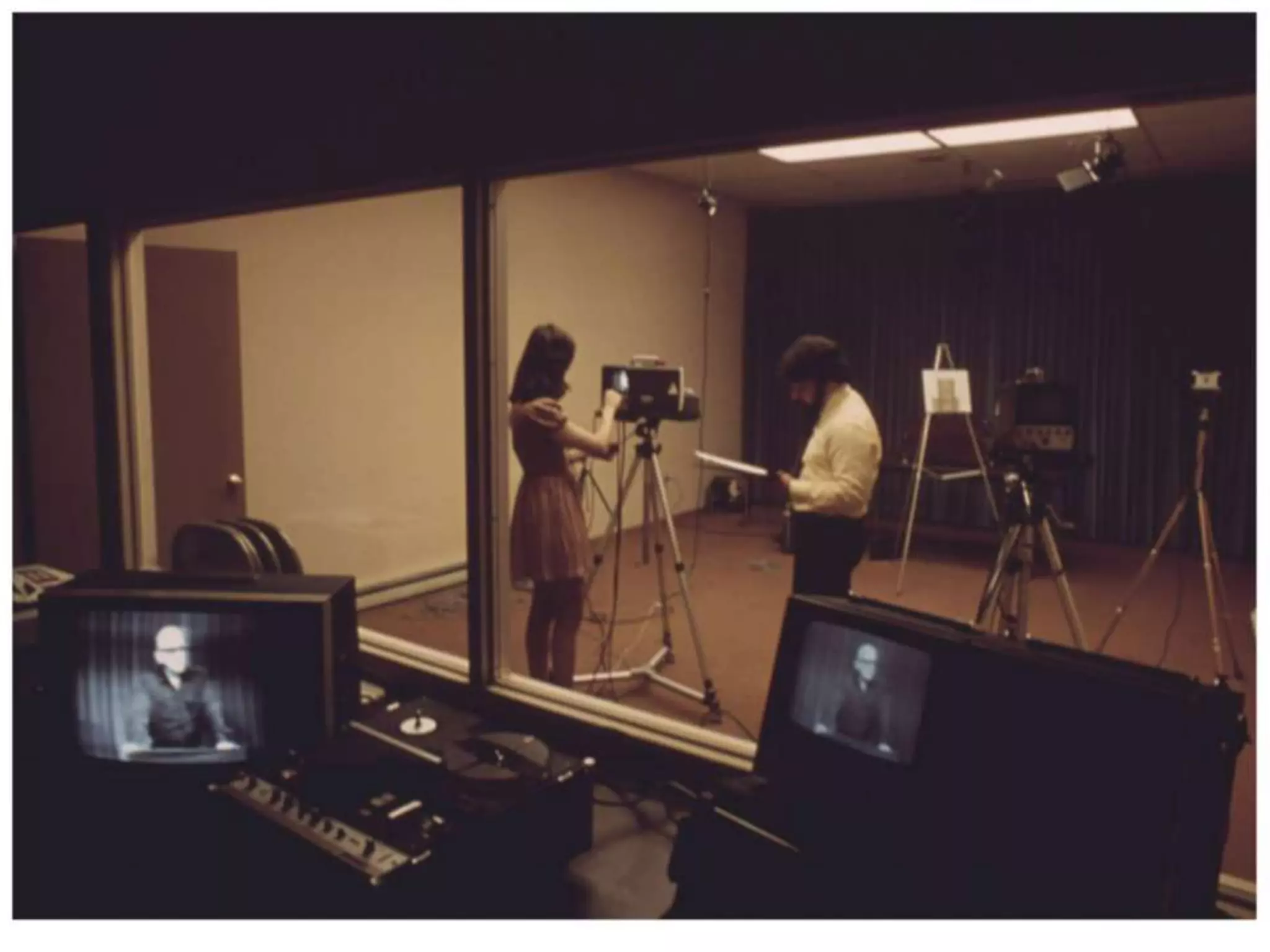
1.If it's boring you,it's boring them
P.M.I.Plus MinusInteresting
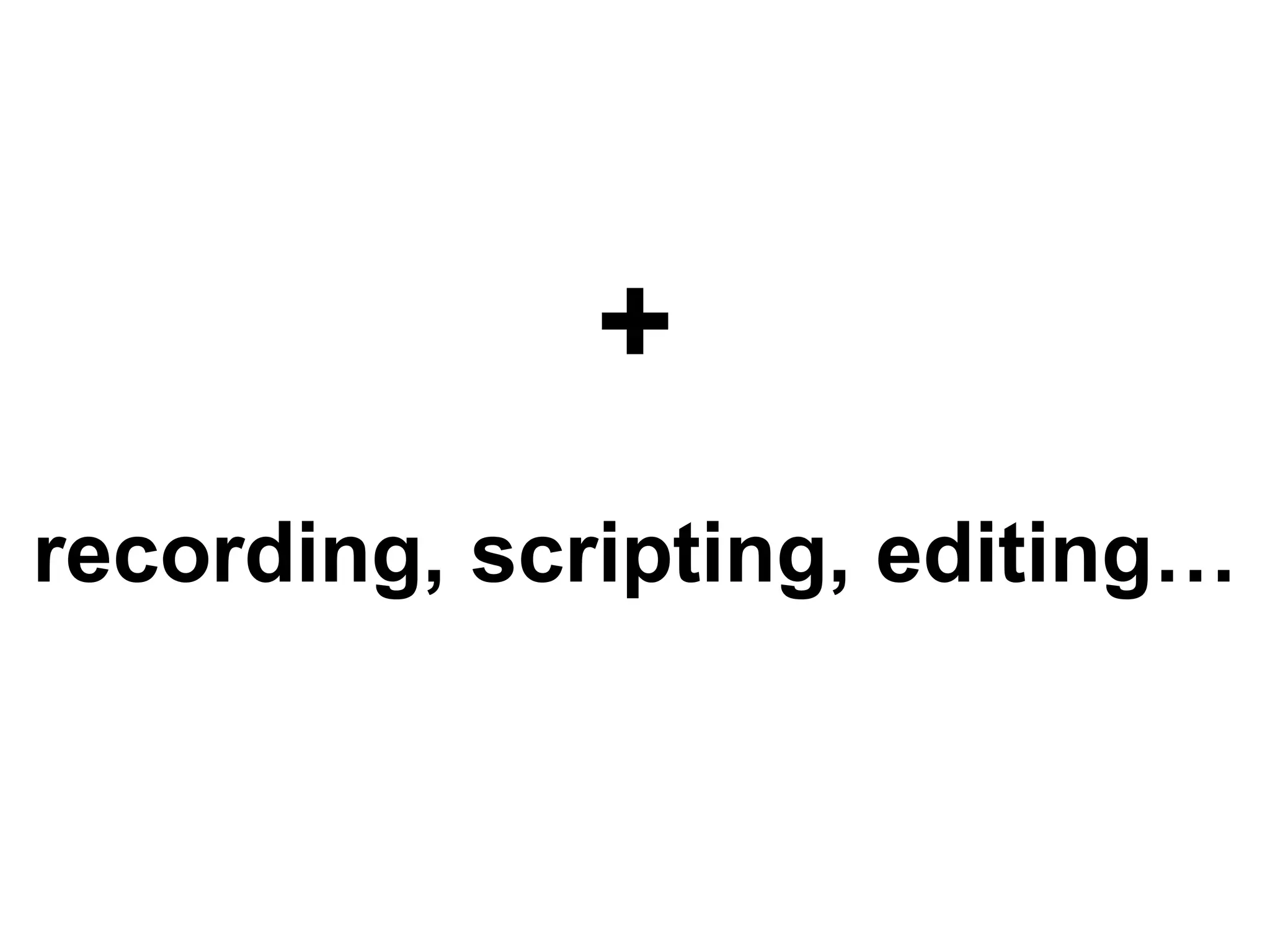
+shooting, scripting, editing…
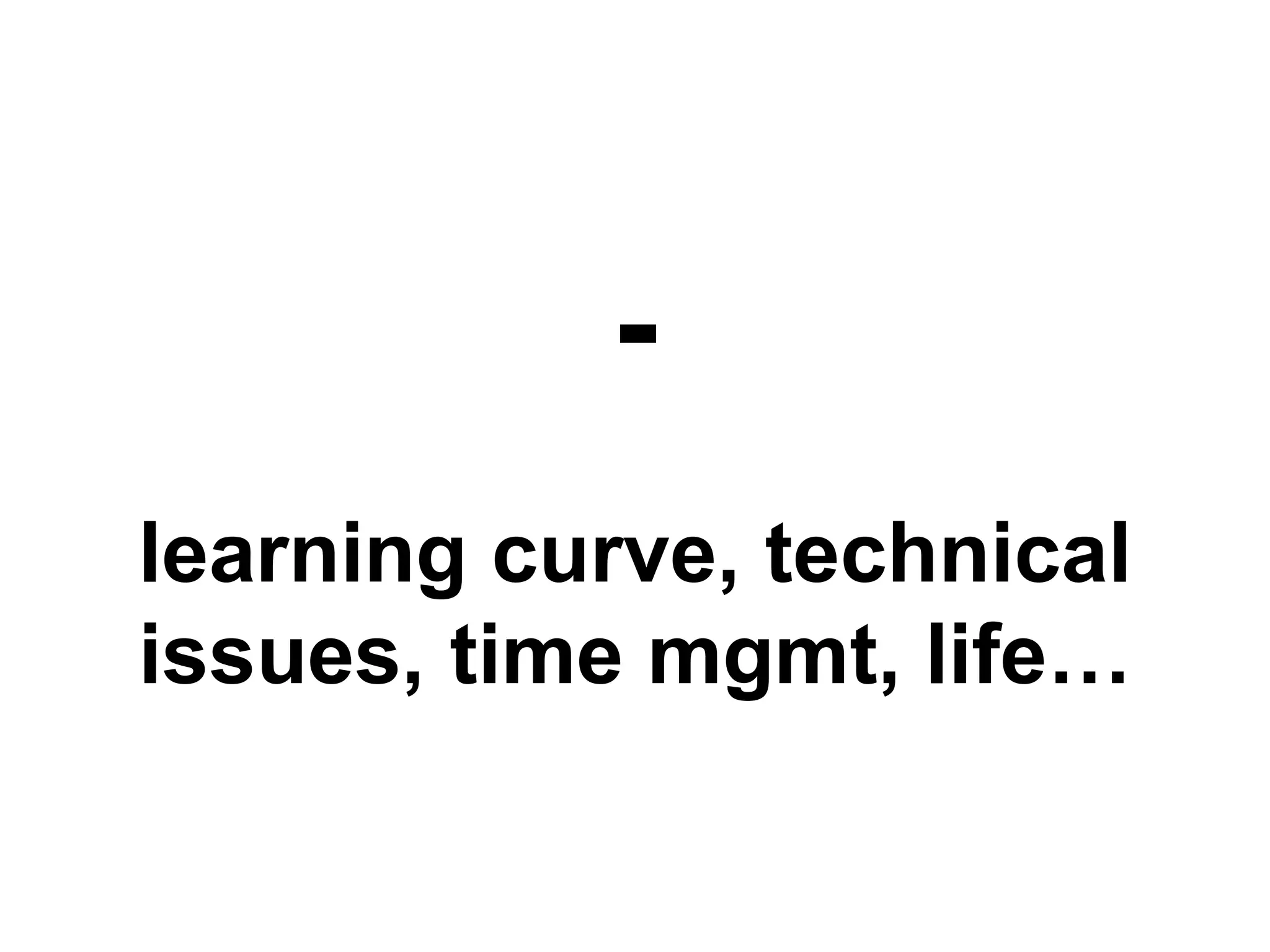
-learning curve, technical issues, time mgmt, life…
2.Provide a canvas and they'll create a masterpiece
+recording, scripting, editing…
-learning curve, technical issues, time mgmt, life…
Ellen’s lessons…
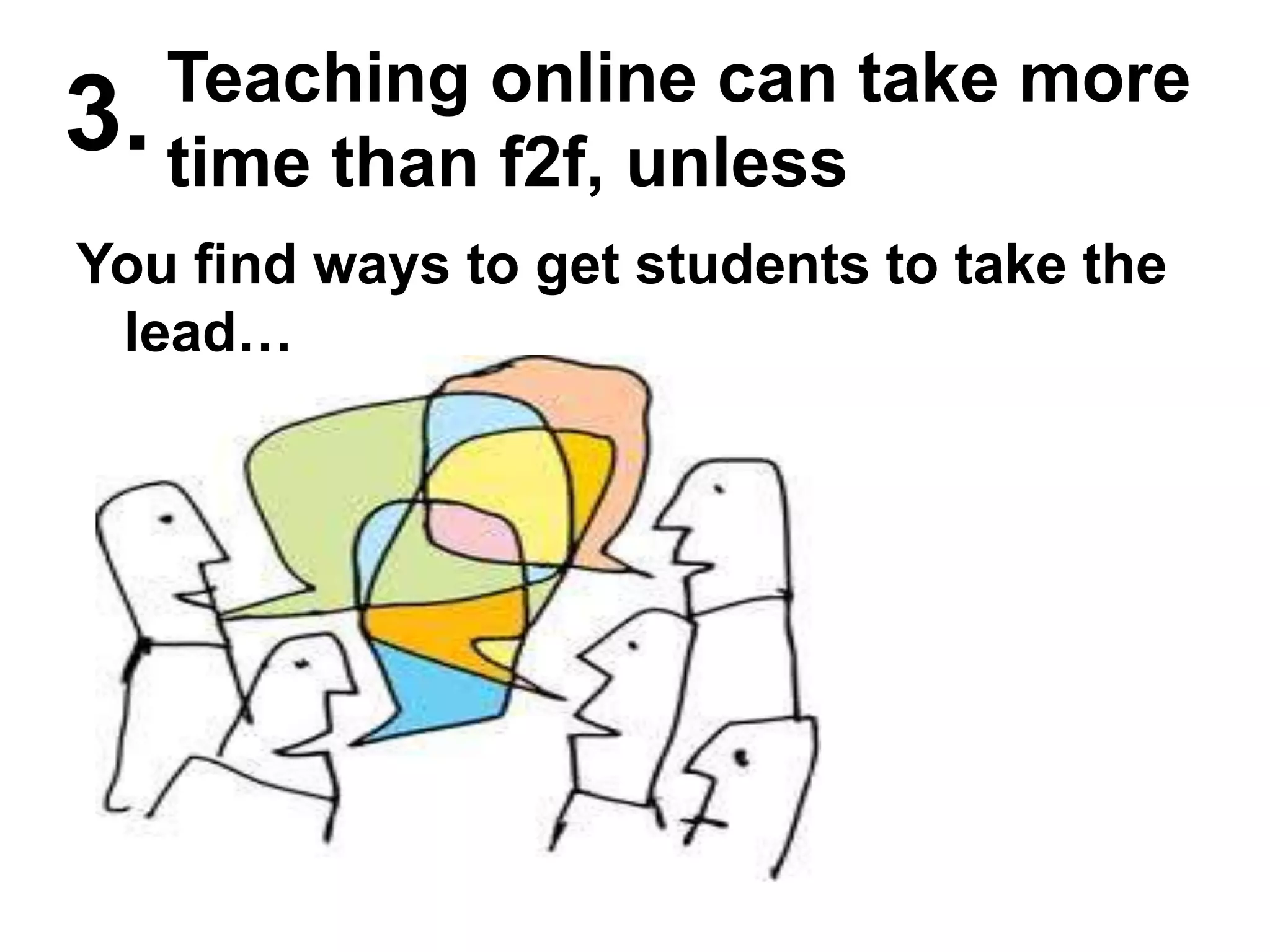
Teaching online can take more time than f2f, unlessYou find ways to get students to take the lead…3.
Warm fuzzies work better than prickly pickles    4.
Patrick’s lessons…
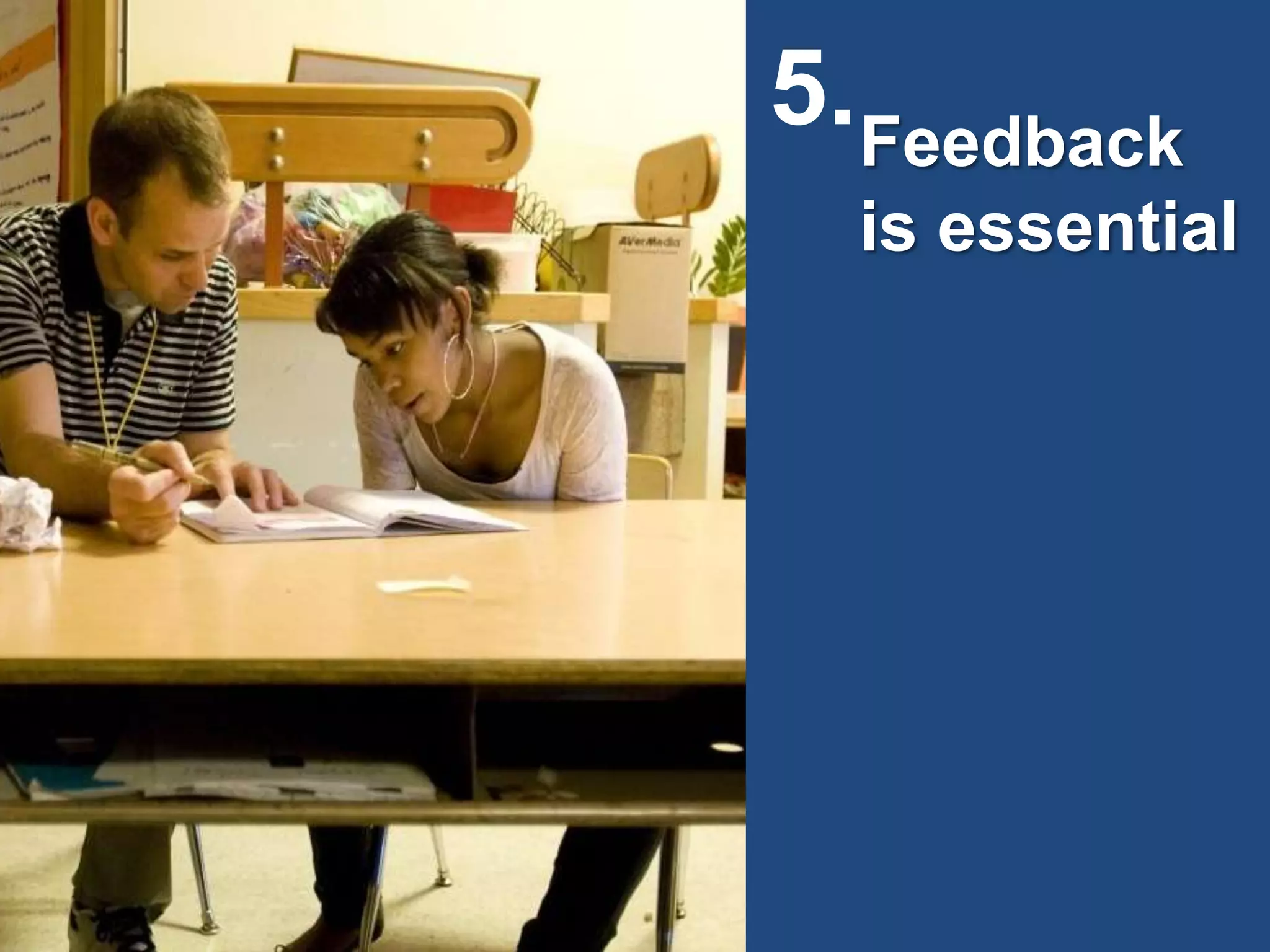
5.Feedback is essential
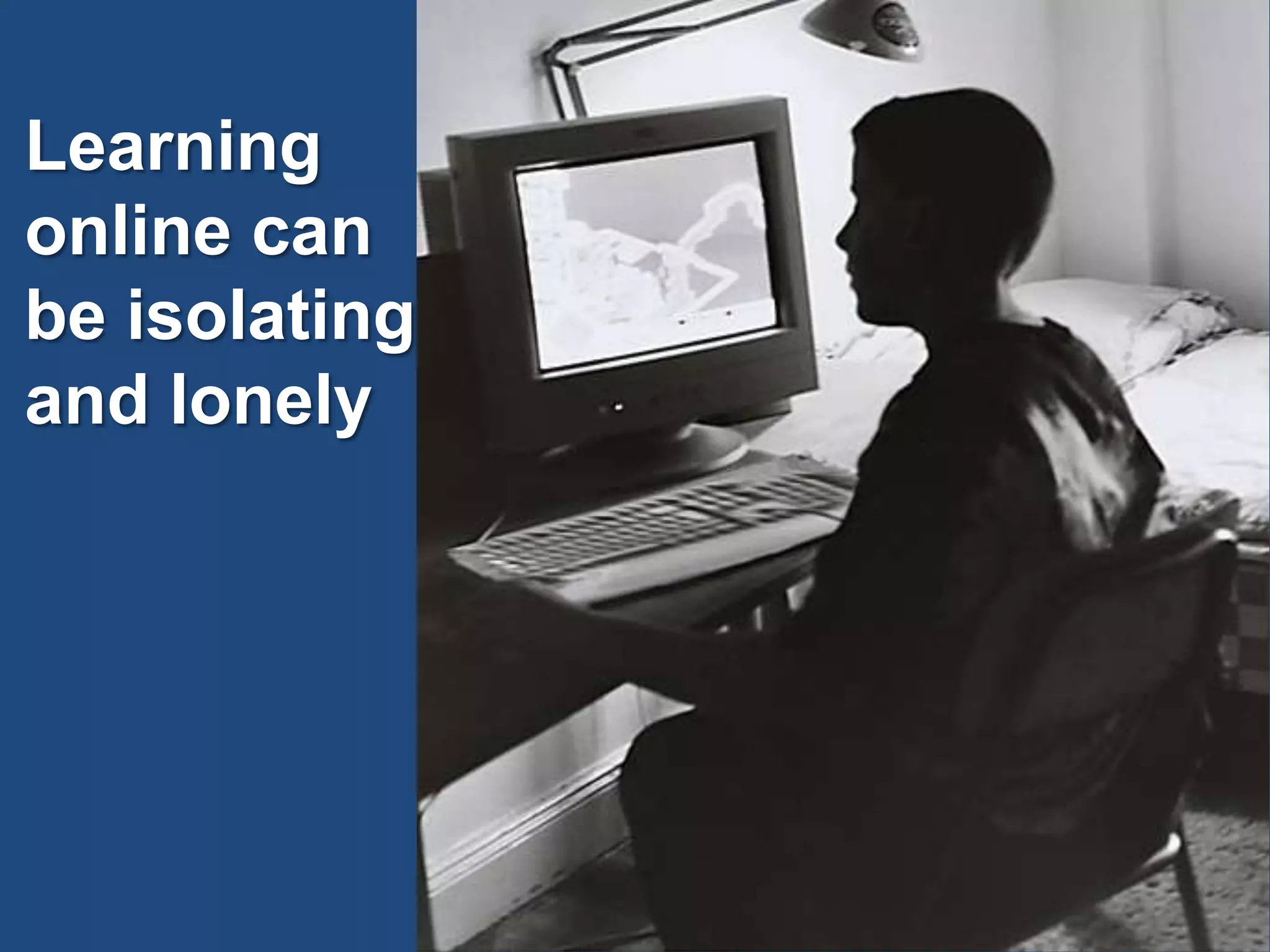
Learning online can be isolating and lonely
Need to dig deep
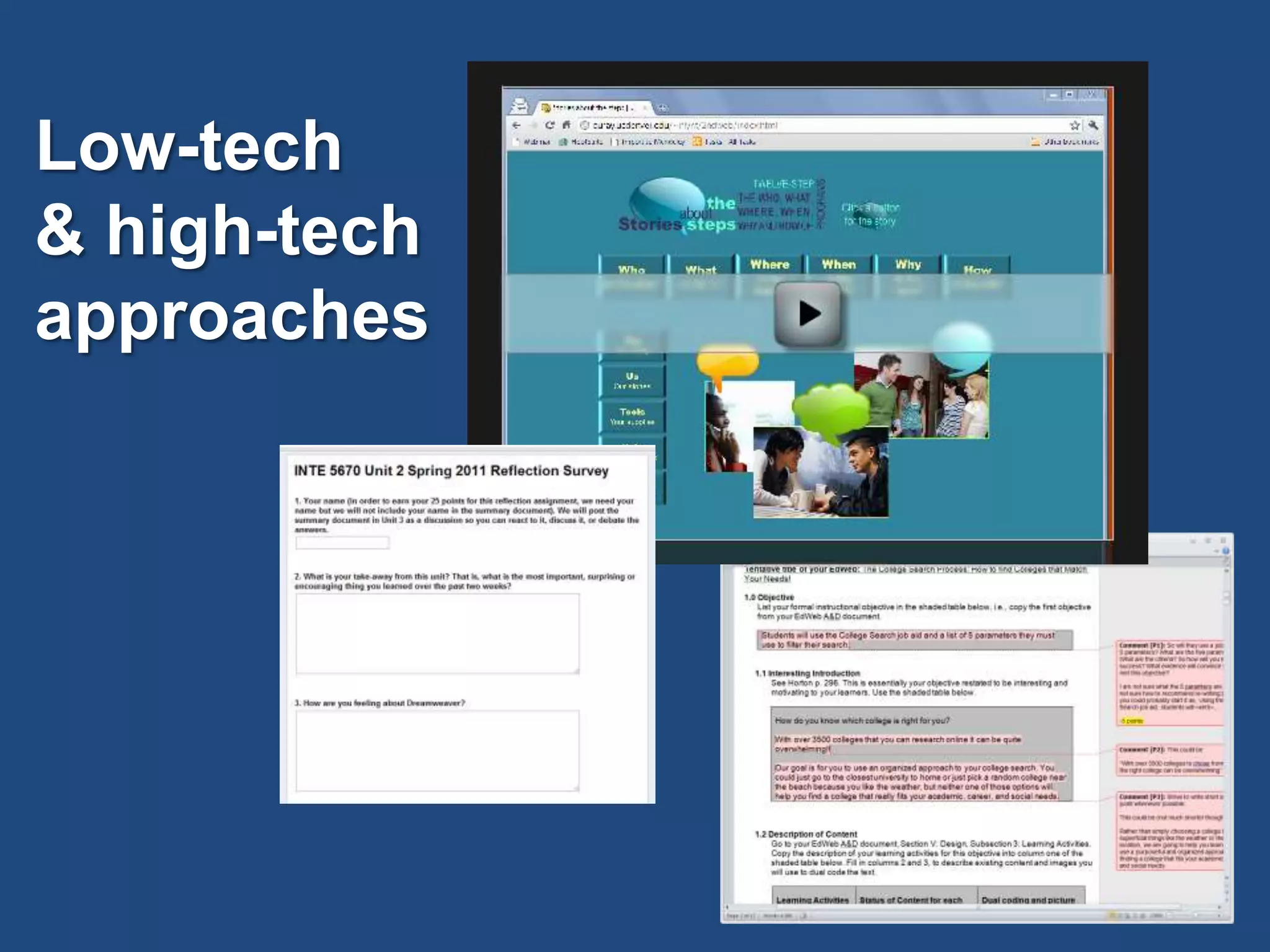
Low-tech & high-tech approaches
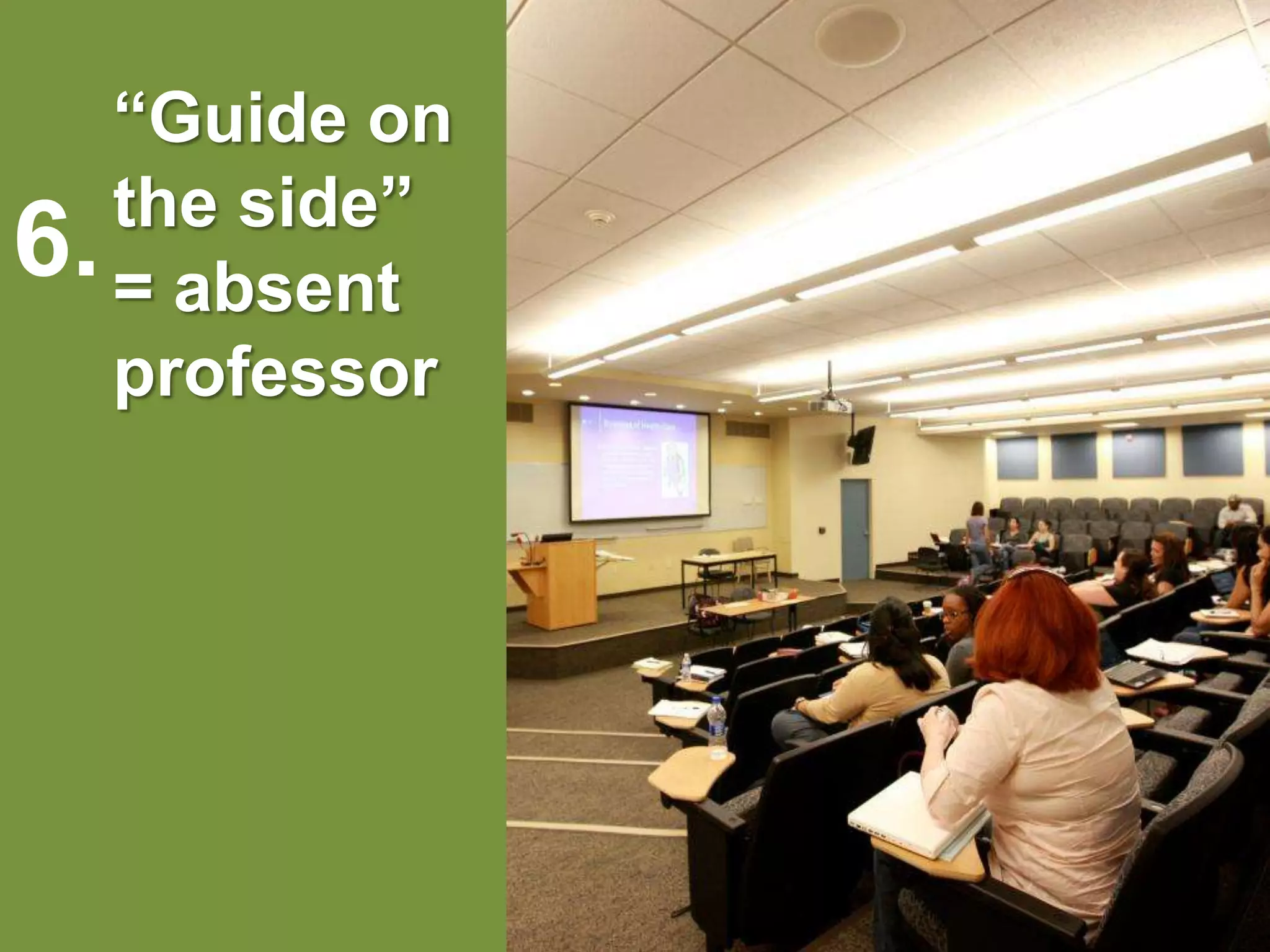
“Guide on the side” = absent professor 6.
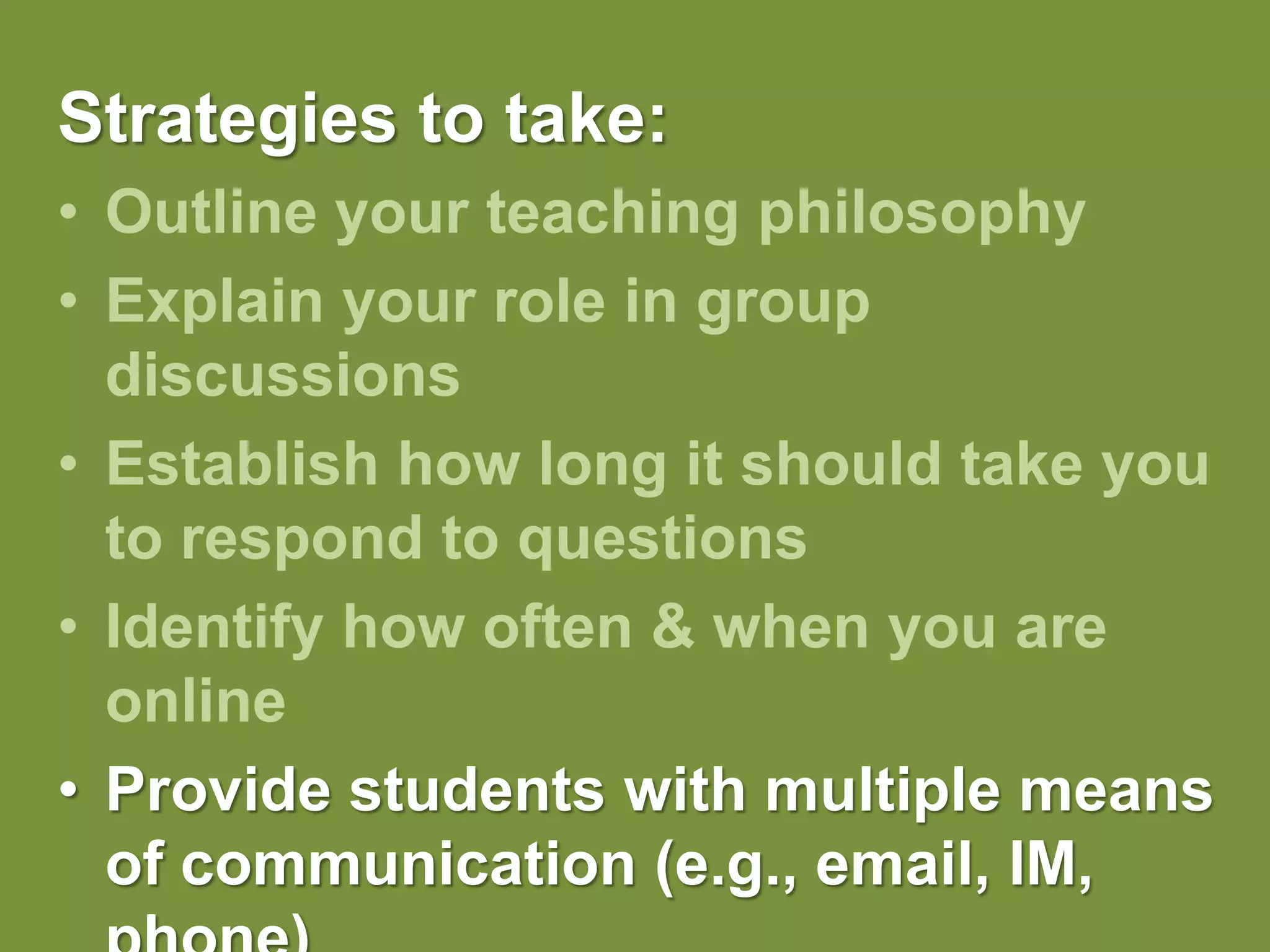
Strategies to take:Outline your teaching philosophy Explain your role in group discussionsEstablish how long it should take you to respond to questionsIdentify how often & when you are onlineProvide students with multiple means of communication (e.g., email, IM, phone)
Storm’s lessons…
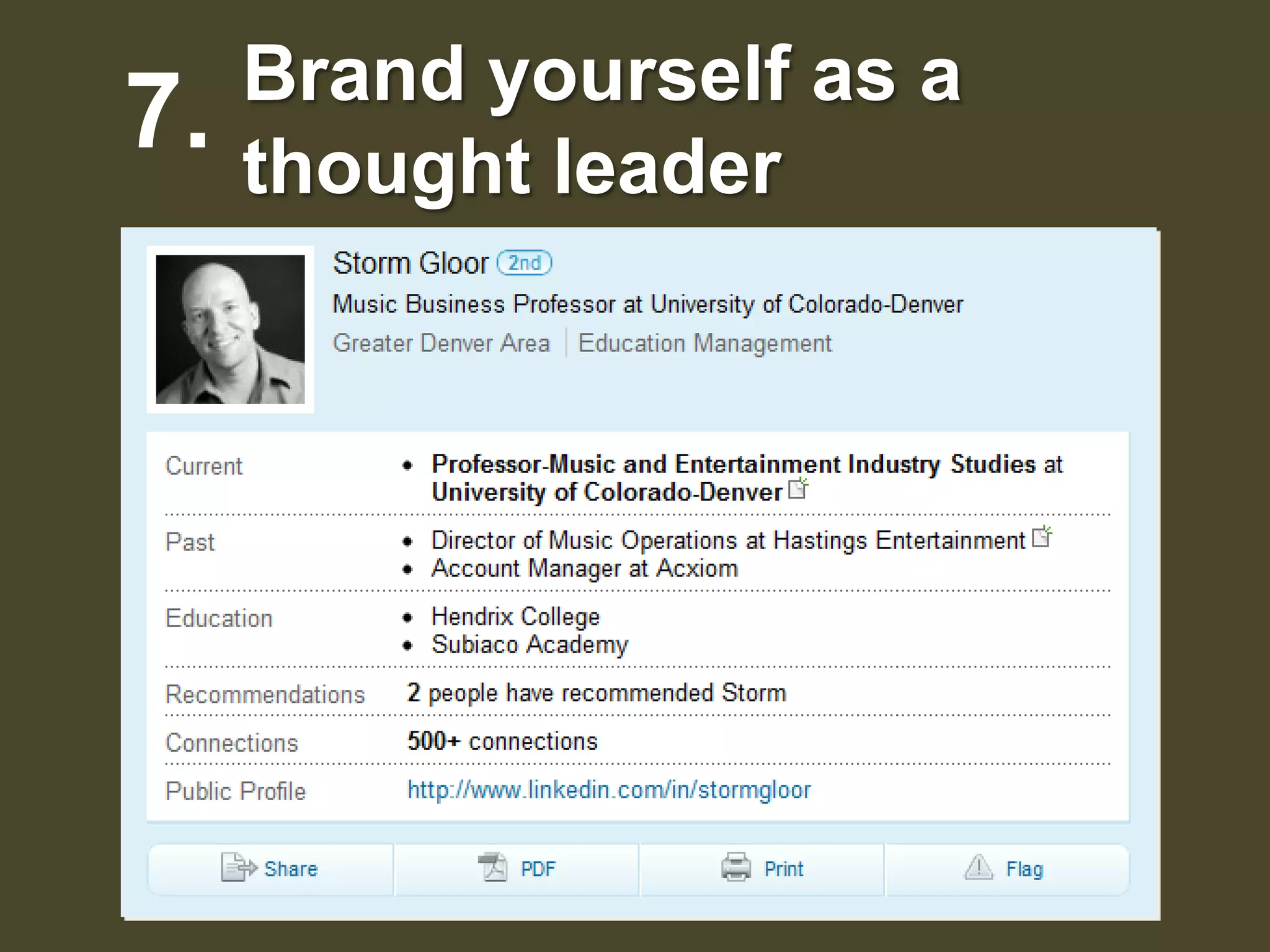
7. Brand yourself as a thought leader
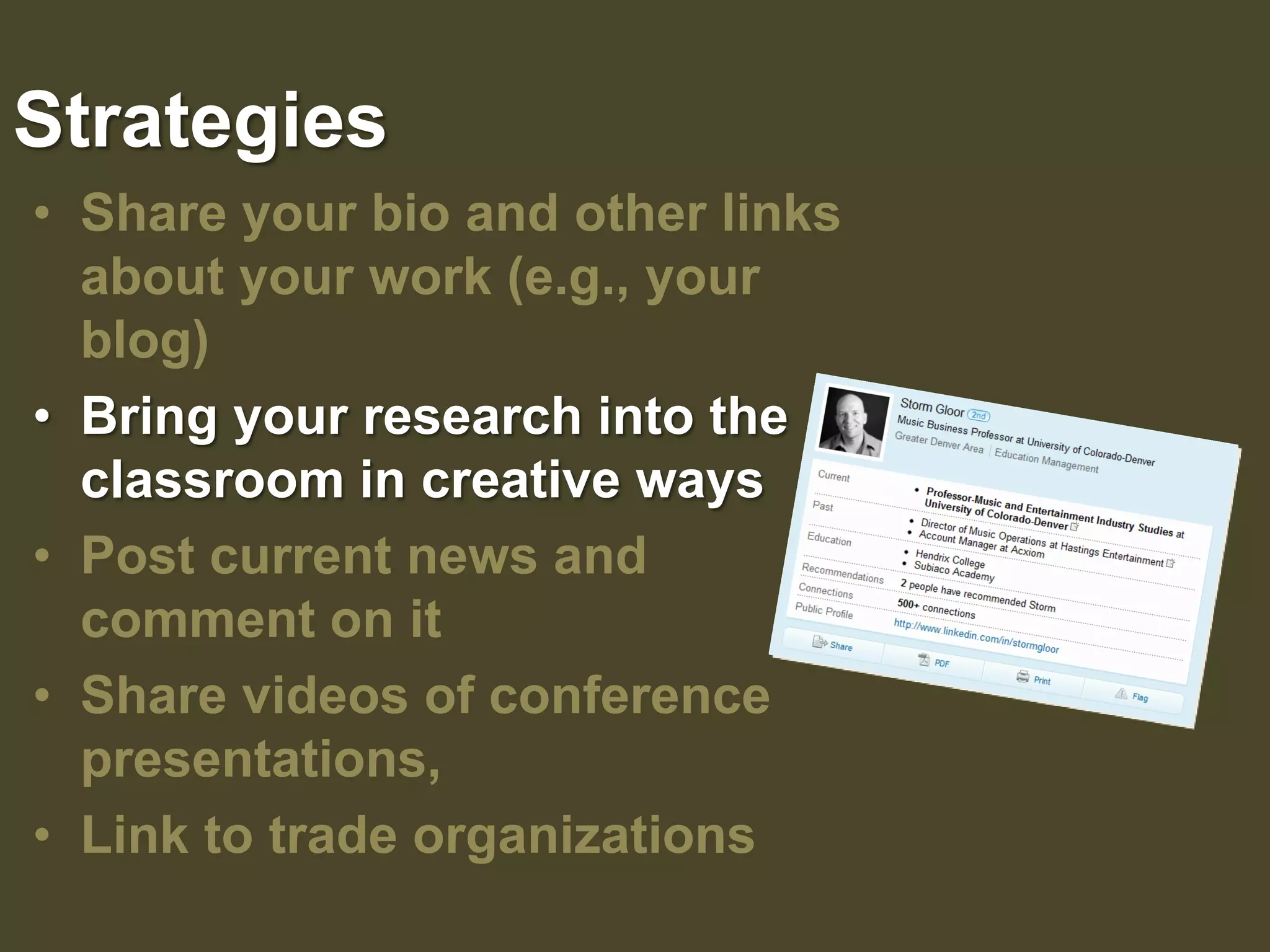
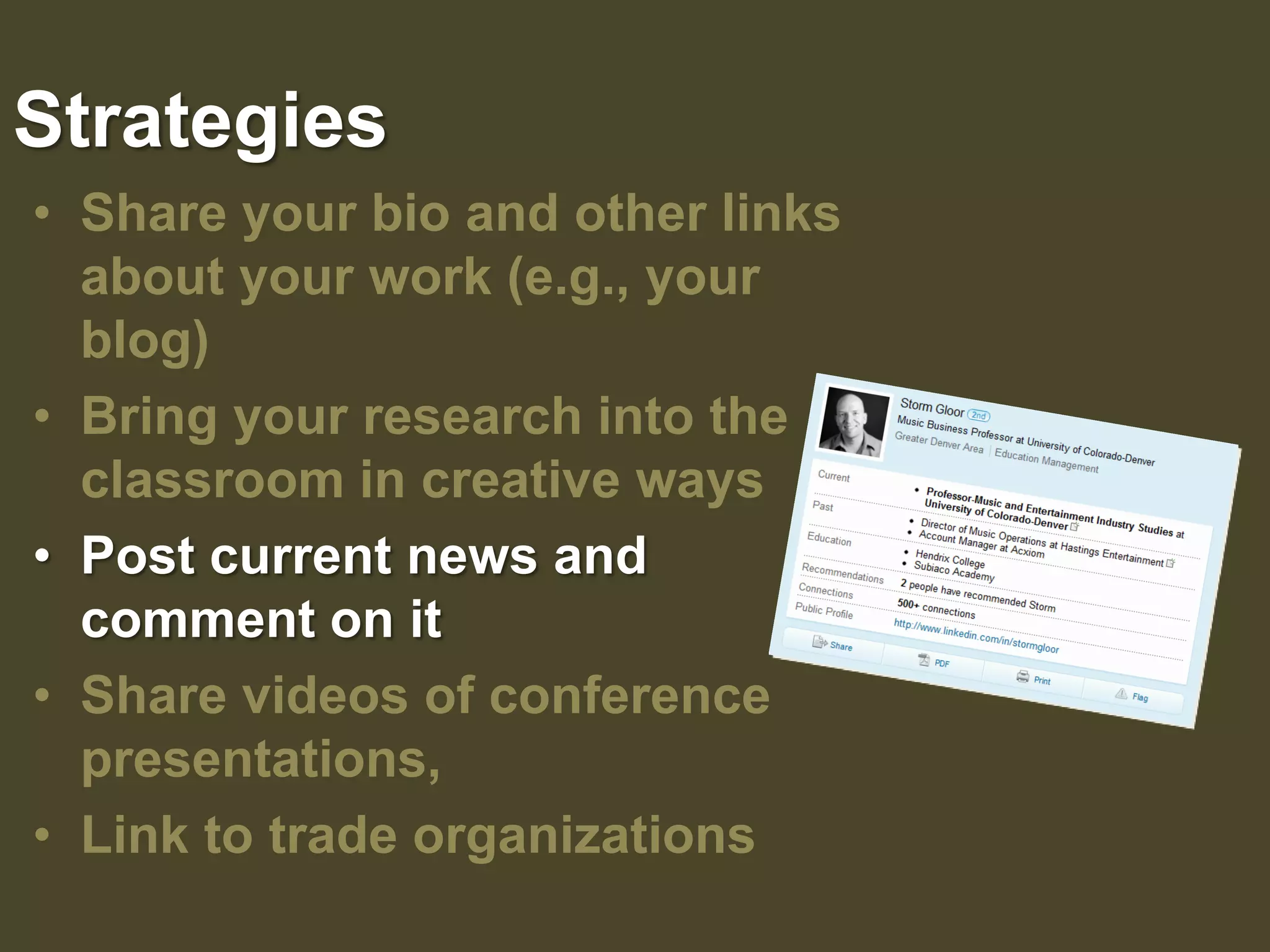
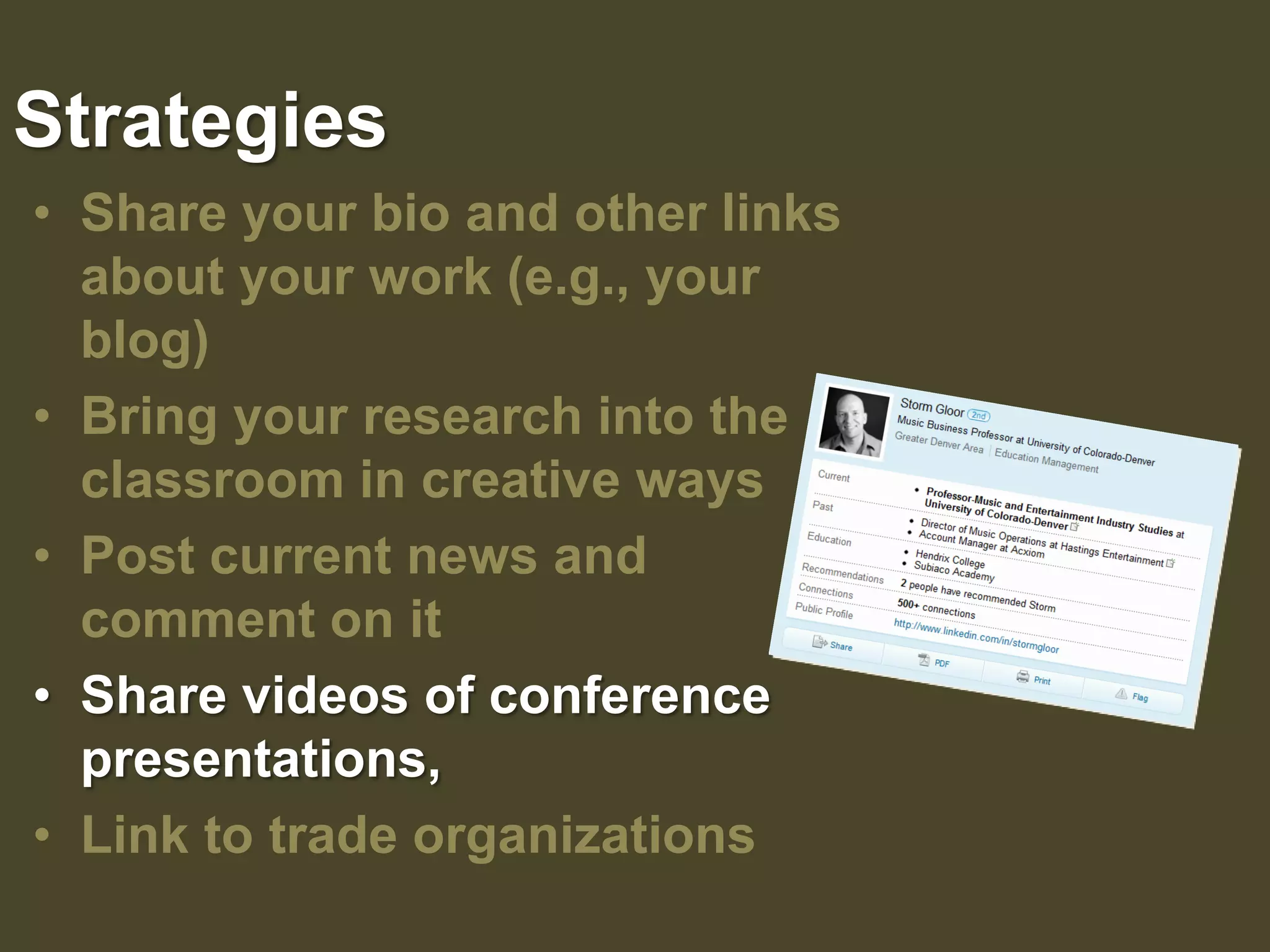
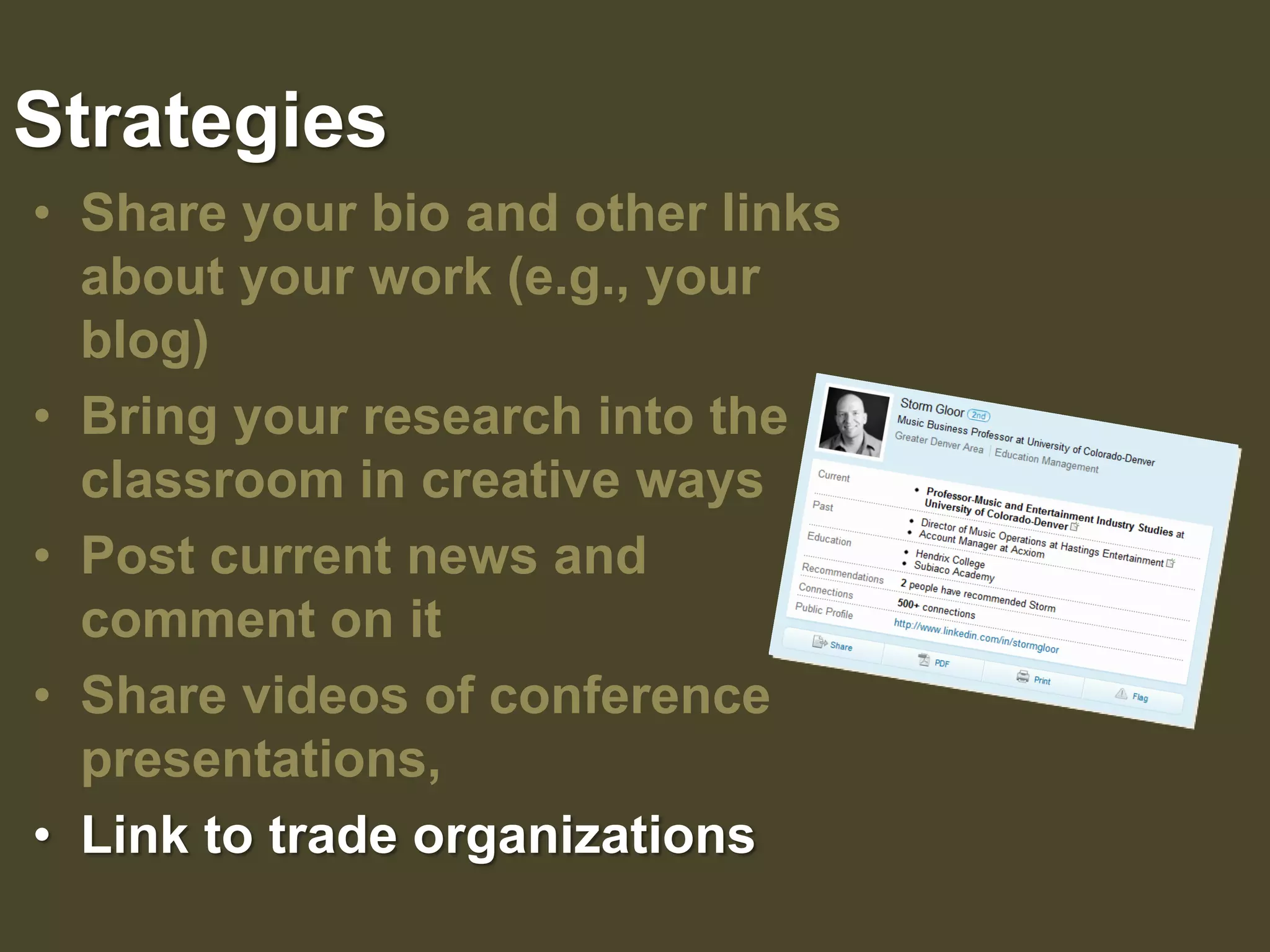
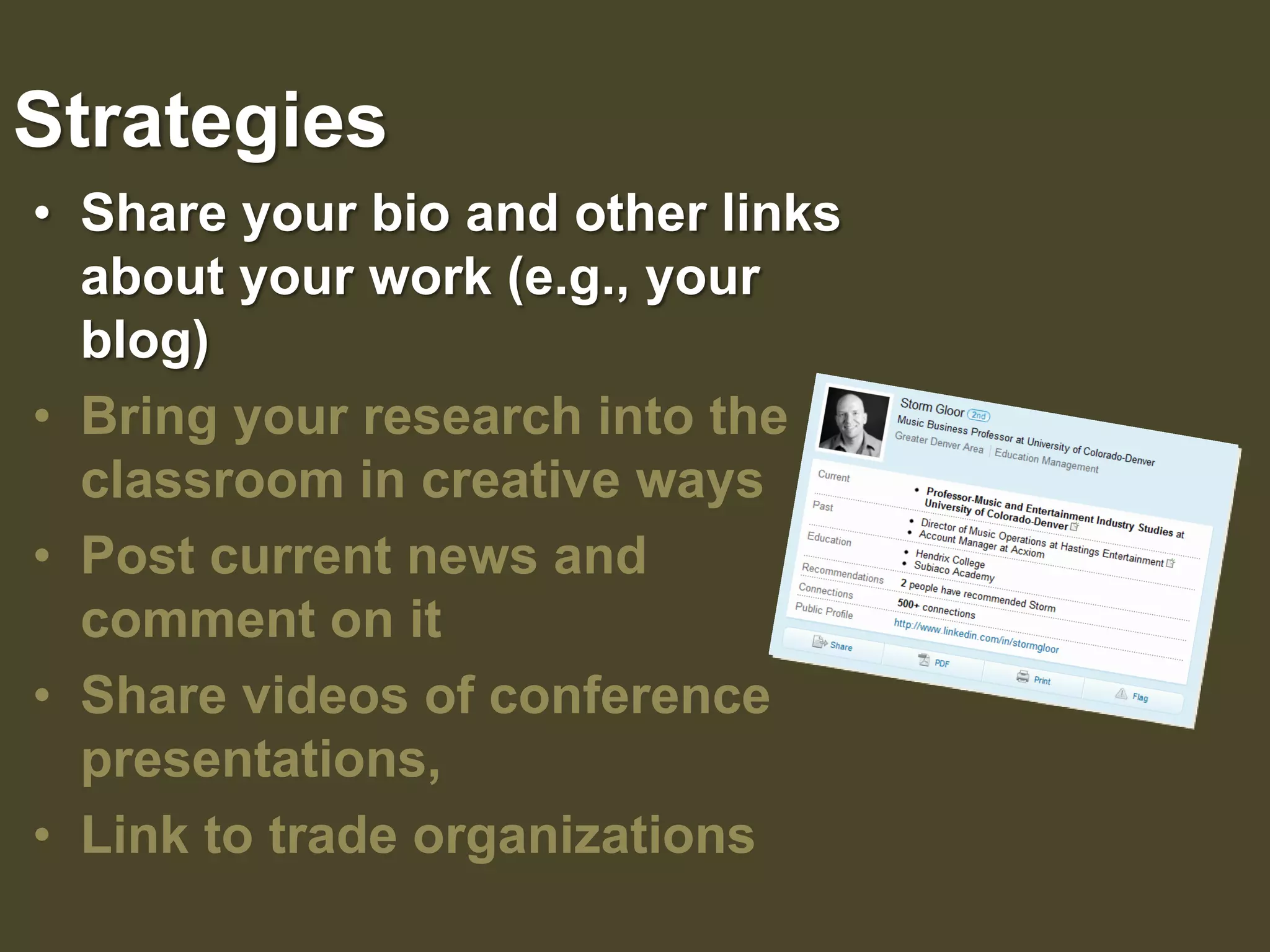
StrategiesShare your bio and other links about your work (e.g., your blog) Bring your research into the classroom in creative waysPost current news and     comment on itShare videos of conference presentations, Link to trade organizations
StrategiesShare your bio and other links about your work (e.g., your blog) Bring your research into the classroom in creative waysPost current news and      comment on itShare videos of conference presentations, Link to trade organizations
StrategiesShare your bio and other links about your work (e.g., your blog) Bring your research into the classroom in creative waysPost current news and     comment on itShare videos of conference presentations, Link to trade organizations
Learn while they learn8.
StrategiesTry new tools (let them know you are trying) & get their feedback Share optional articles on teaching & learning demonstrating your commitment to teachingQuick 1-2 question surveys ("Rate the Exam”)Have a discussion about how to keep up w/ news in their field
StrategiesTry new tools (let them know you are trying) & get their feedbackShare optional articles on teaching & learning demonstrating your commitment to teachingQuick 1-2 question surveys ("Rate the Exam”)Have a discussion about how to keep up w/ news in their field
Joni’s lessons…
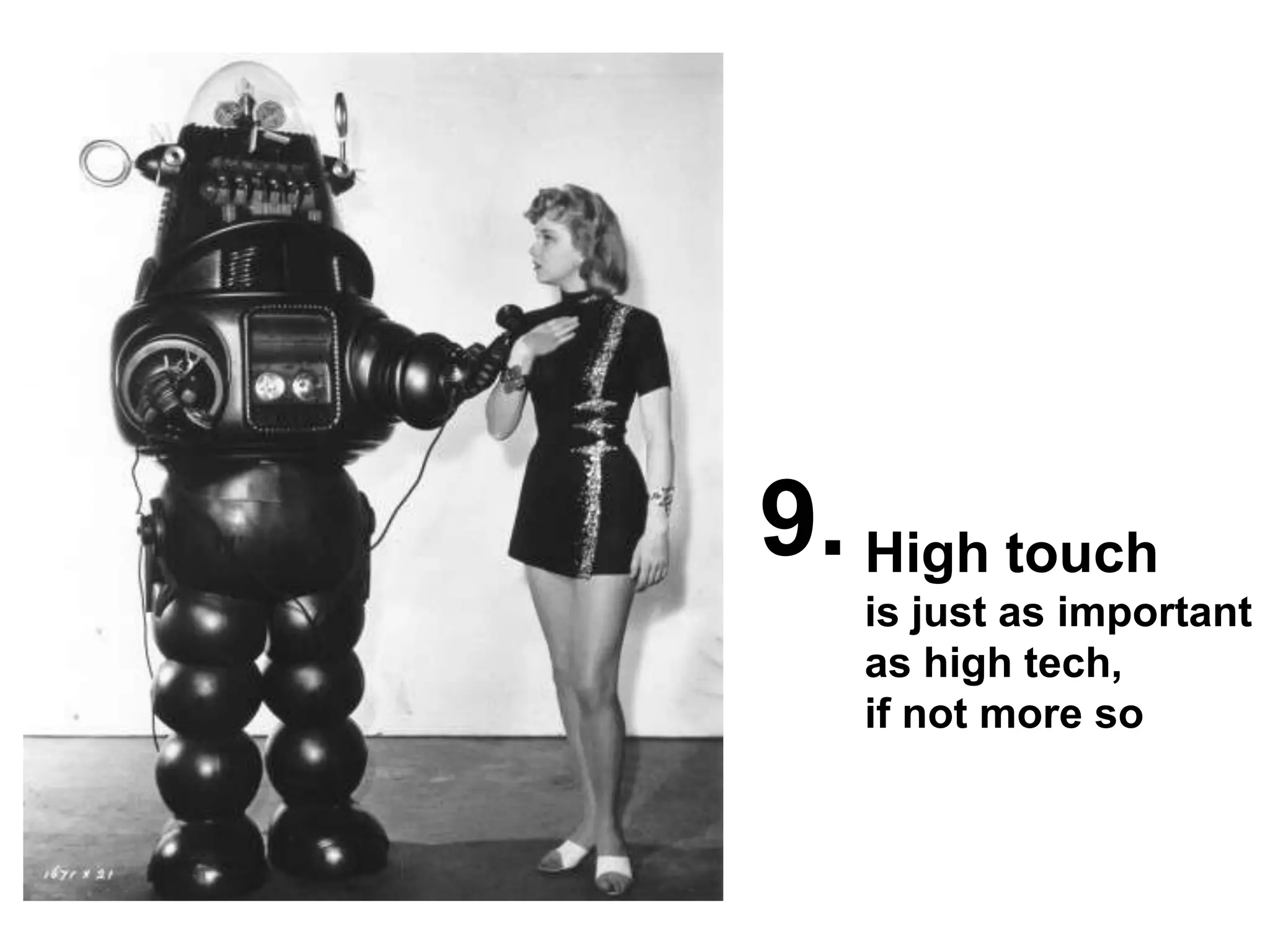
High touch is just as important as high tech, if not more so9.
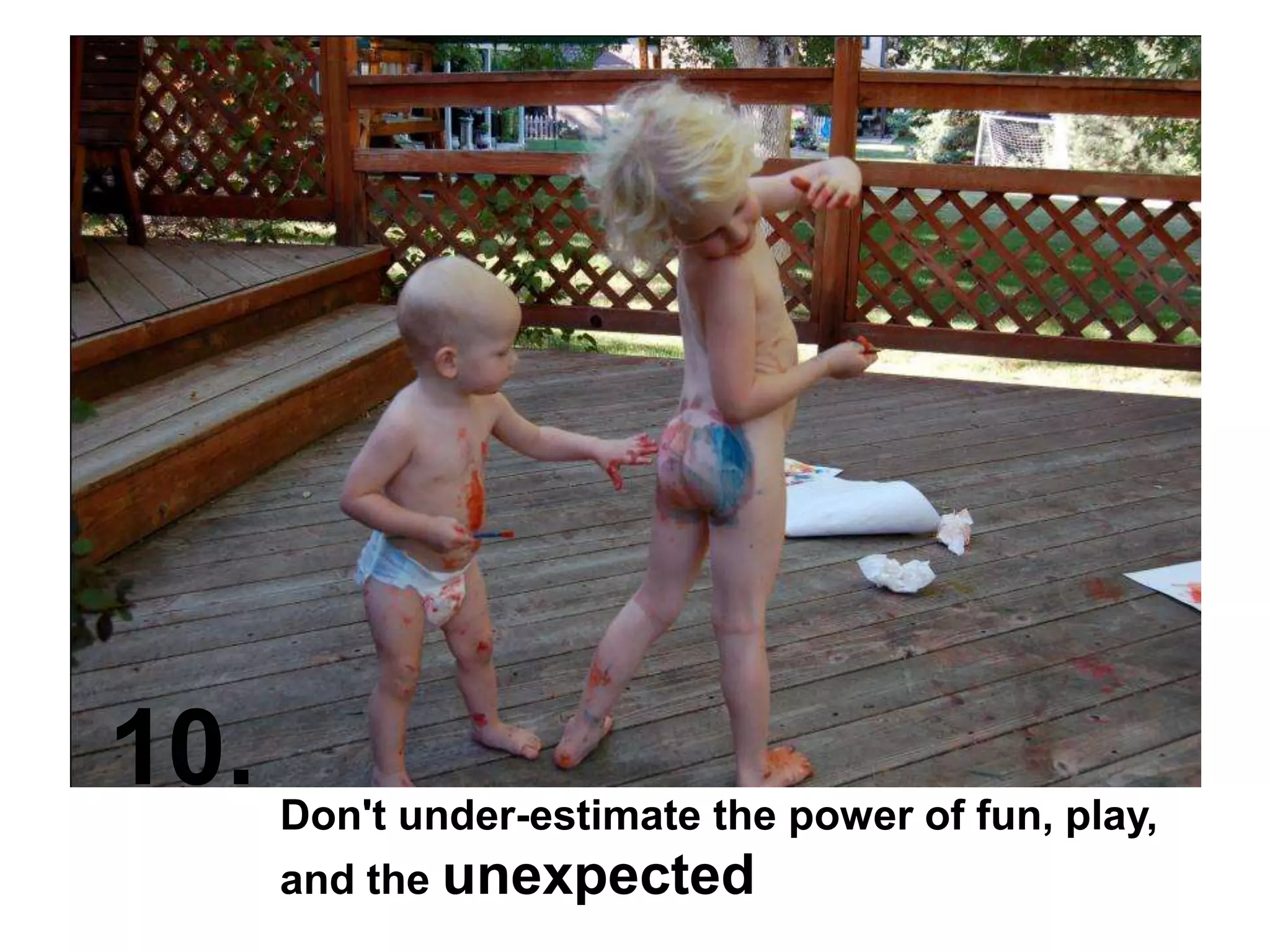
10.Don't under-estimate the power of fun, play, and the unexpected
People don’t pay attention to boring things.Emotional arousal helps the brain learn.Audiences check out after 10 minutes, but you  can keep grabbing them back by telling    narratives or creating events rich in emotion.                              ~ Medina (2008), Brain Rules, pg. 94
Your lessons…Now it’s your turn!We need 10 more lessons…What are your ideas?Please go to http://tinyurl.com/3hgswvb

COLTT 2011 Things I Have Learned In My Online Course So Far

  • 1.
    Things I HaveLearnedIn My Online Course So FarJoni Dunlap Storm GloorPatrick LowenthalEllen StevensBrian YuhnkeUniversity of Colorado Denver
  • 6.
    Our list ofthe things we’ve learned in our online coursesso far…
  • 7.
  • 8.
    1.If it's boringyou,it's boring them
  • 12.
  • 14.
  • 15.
    -learning curve, technicalissues, time mgmt, life…
  • 17.
    2.Provide a canvasand they'll create a masterpiece
  • 19.
  • 20.
    -learning curve, technicalissues, time mgmt, life…
  • 23.
  • 24.
    Teaching online cantake more time than f2f, unlessYou find ways to get students to take the lead…3.
  • 25.
    Warm fuzzies workbetter than prickly pickles 4.
  • 26.
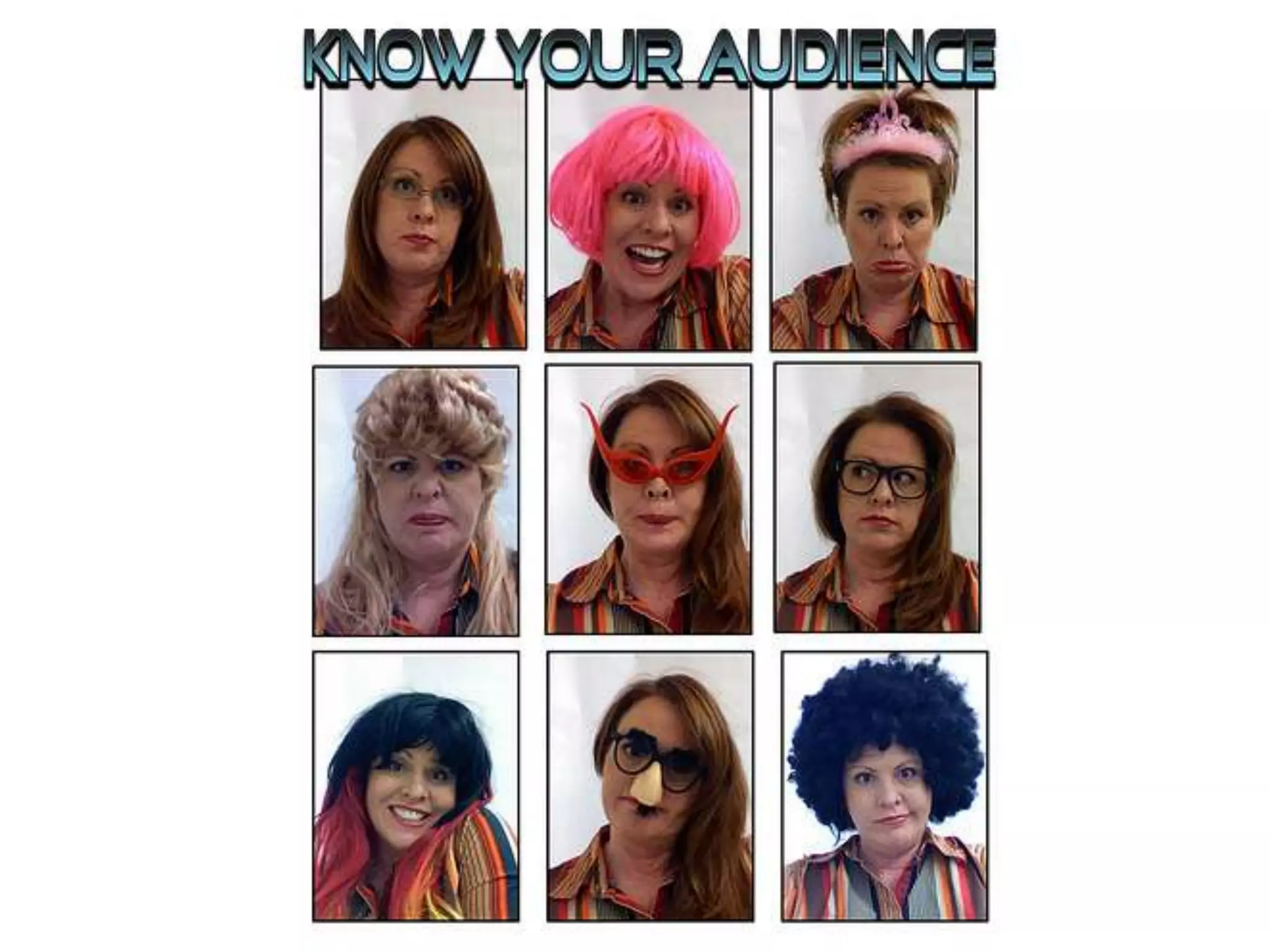
  • 27.
  • 28.
    Learning online canbe isolating and lonely
  • 29.
  • 30.
  • 31.
    “Guide on theside” = absent professor 6.
  • 32.
    Strategies to take:Outlineyour teaching philosophy Explain your role in group discussionsEstablish how long it should take you to respond to questionsIdentify how often & when you are onlineProvide students with multiple means of communication (e.g., email, IM, phone)
  • 33.
    Strategies to take:Outlineyour teaching philosophy Explain your role in group discussionsEstablish how long it should take you to respond to questionsIdentify how often & when you are onlineProvide students with multiple means of communication (e.g., email, IM, phone)
  • 34.
    Strategies to take:Outlineyour teaching philosophy Explain your role in group discussionsEstablish how long it should take you to respond to questionsIdentify how often & when you are onlineProvide students with multiple means of communication (e.g., email, IM, phone)
  • 35.
    Strategies to take:Outlineyour teaching philosophy Explain your role in group discussionsEstablish how long it should take you to respond to questionsIdentify how often & when you are onlineProvide students with multiple means of communication (e.g., email, IM, phone)
  • 36.
    Strategies to take:Outlineyour teaching philosophy Explain your role in group discussionsEstablish how long it should take you to respond to questionsIdentify how often & when you are onlineProvide students with multiple means of communication (e.g., email, IM, phone)
  • 37.
  • 38.
    7. Brand yourselfas a thought leader
  • 39.
    StrategiesShare your bioand other links about your work (e.g., your blog) Bring your research into the classroom in creative waysPost current news and comment on itShare videos of conference presentations, Link to trade organizations
  • 40.
    StrategiesShare your bioand other links about your work (e.g., your blog) Bring your research into the classroom in creative waysPost current news and comment on itShare videos of conference presentations, Link to trade organizations
  • 41.
    StrategiesShare your bioand other links about your work (e.g., your blog) Bring your research into the classroom in creative waysPost current news and comment on itShare videos of conference presentations, Link to trade organizations
  • 42.
    StrategiesShare your bioand other links about your work (e.g., your blog) Bring your research into the classroom in creative waysPost current news and comment on itShare videos of conference presentations, Link to trade organizations
  • 43.
    StrategiesShare your bioand other links about your work (e.g., your blog) Bring your research into the classroom in creative waysPost current news and comment on itShare videos of conference presentations, Link to trade organizations
  • 44.
  • 45.
    StrategiesTry new tools(let them know you are trying) & get their feedback Share optional articles on teaching & learning demonstrating your commitment to teachingQuick 1-2 question surveys ("Rate the Exam”)Have a discussion about how to keep up w/ news in their field
  • 46.
    StrategiesTry new tools(let them know you are trying) & get their feedbackShare optional articles on teaching & learning demonstrating your commitment to teachingQuick 1-2 question surveys ("Rate the Exam”)Have a discussion about how to keep up w/ news in their field
  • 47.
    StrategiesTry new tools(let them know you are trying) & get their feedbackShare optional articles on teaching & learning demonstrating your commitment to teachingQuick 1-2 question surveys ("Rate the Exam”)Have a discussion about how to keep up w/ news in their field
  • 48.
    StrategiesTry new tools(let them know you are trying) & get their feedbackShare optional articles on teaching & learning demonstrating your commitment to teachingQuick 1-2 question surveys ("Rate the Exam”)Have a discussion about how to keep up w/ news in their field
  • 49.
  • 50.
    High touch isjust as important as high tech, if not more so9.
  • 52.
    10.Don't under-estimate thepower of fun, play, and the unexpected
  • 53.
    People don’t payattention to boring things.Emotional arousal helps the brain learn.Audiences check out after 10 minutes, but you can keep grabbing them back by telling narratives or creating events rich in emotion. ~ Medina (2008), Brain Rules, pg. 94
  • 60.
    Your lessons…Now it’syour turn!We need 10 more lessons…What are your ideas?Please go to http://tinyurl.com/3hgswvb

Editor's Notes

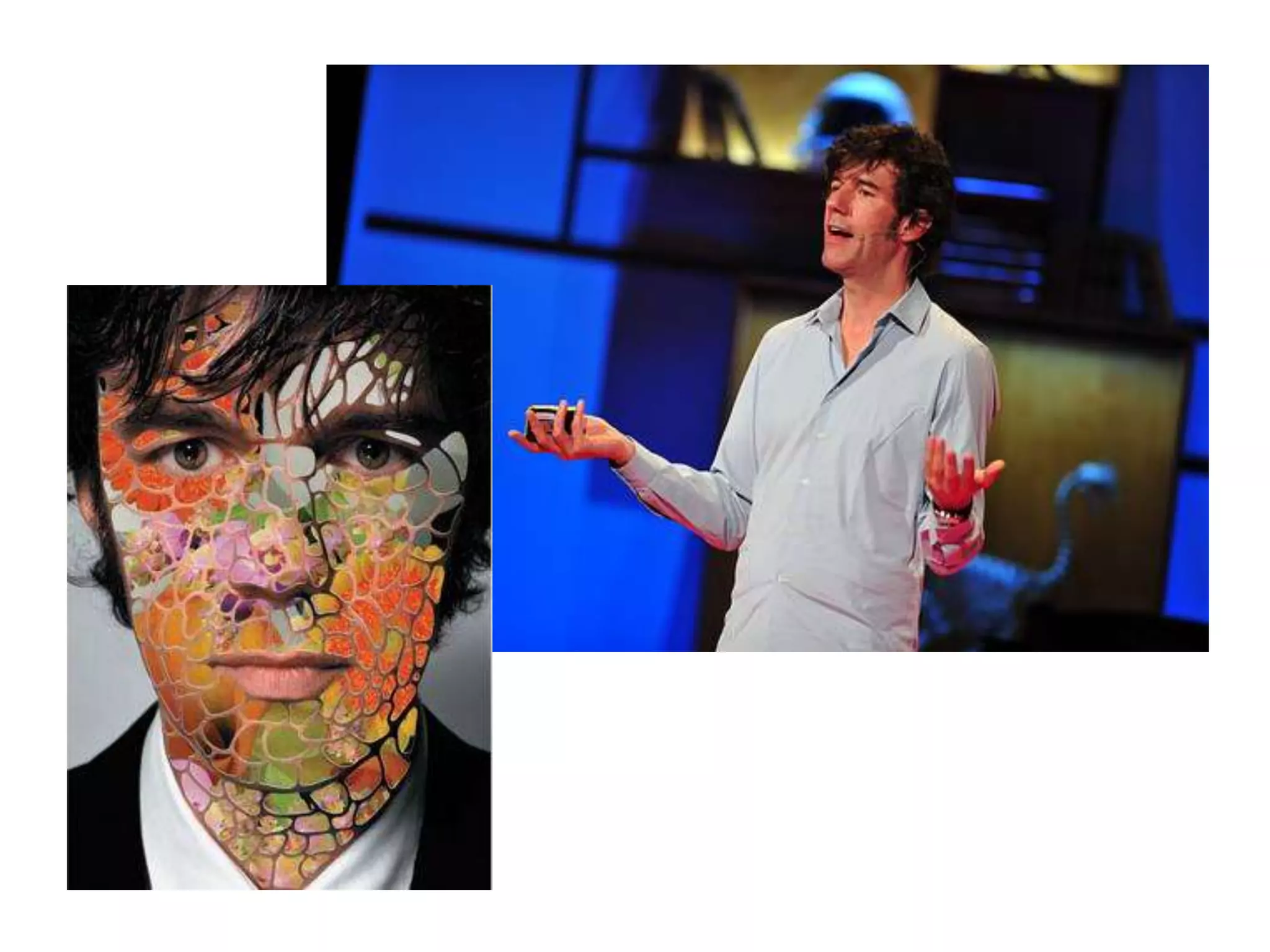
  • #3 Background on Stefan Sagmeister: designer, TED Talks, his Things I’ve Learned in My Life So Far project.StefanSagmeister’s List:Helping other people helps me.2. Having guts always works out for me.3. Thinking that life will be better in the future is stupid. I have to live now.4. Organising a charity group is surprisingly easy.5. Being not truthful always works against me.6. Everything I do always comes back to me.7. Assuming is stifling.8. Drugs feel great in the beginning and become a drag later on.9. Over time I get used to everything and start taking for granted.10. Money does not make me happy.11. My dreams have no meaning.12. Keeping a diary supports personal development.13. Trying to look good limits my life.14. Material luxuries are best enjoyed in small doses.15. Worrying solves nothing.16. Complaining is silly. Either act or forget.17. Everybody thinks they are right.18. If I want to explore a new direction professionally, it is helpful to try it out for myself first.19. Low expectations are a good strategy.20. Everybody who is honest is interesting.Image source: http://blog.ted.com/2009/07/21/twitter_snapsho_15/
  • #4 http://www.thingsihavelearnedinmylife.com/http://www.amazon.com/Things-Have-Learned-Life-Far/dp/0810995298/ref=sr_1_1?ie=UTF8&qid=1292876013&sr=8-1
  • #5 http://www.thingsihavelearnedinmylife.com/http://www.amazon.com/Things-Have-Learned-Life-Far/dp/0810995298/ref=sr_1_1?ie=UTF8&qid=1292876013&sr=8-1
  • #6 http://www.thingsihavelearnedinmylife.com/http://www.amazon.com/Things-Have-Learned-Life-Far/dp/0810995298/ref=sr_1_1?ie=UTF8&qid=1292876013&sr=8-1
  • #7 We were inspired by Stefan’s work, so decided to come up with our own list of things we’d learned about teaching online.
  • #25 Talk about students facilitating discussions….faciltation rubric..
  • #26 E-cards to groups that do a great job.
  • #28 But over the years, I have found that feedback is perhaps one of the best ways to establish this connection with students.So I am thinking of feedback in very general terms here as things like the feedback given on student projects, feedback given to students discussion postings (w/in the threaded discussion), and general feedback given to students about how they are doing in the class.There are multiple ways I give students feedback.
  • #29 Learning online can be isolating and lonely for students. Staring at a computer screen for ours at a time can be difficult. In my experience, students long for contact from their instructor and that social presence and immediacy they often get in a face-to-face classroom. Sure there are multiple ways that you can establish and maintain this immediacy.
  • #30 When it comes to giving feedback on students work, I have to provide as much as possible (at least on major assignments) in-depth feedback. So it isn’t really about assigning a grade as much is it is about letting students know how they are doing in my courses.
  • #31 When it comes to assignments, I do this either by using the comment tool in MS Word or by using a Screencasting tool to give / audio feedback. There are pros and cons to using each and often my use is dictated by the type and importance of the assignment. I also use regular reflection surveys to get feedback from students which I then look for themes and provide feedback to the class on the results.
  • #32 So another thing I have learned, not only from teaching online but also from supporting faculty who teach online is that the “guide-on-the-side” concept can often lead students to assume that their professor is absent from the course. This is not to say that faculty should adopt a “teacher-centered” approach every time they teach online but to say that the optimum level role of an online faculty is often somewhere between the guide-on-the-side and the sage on the stage. Further, faculty can take a very learner-centered approach while still being very active and “present” in the course.
  • #39 Share your bio, links, etc. about your academic pursuits, your blog, etc.-Bring your research into the classroom in a creative way ( on a discussion board let them critique something you've published?)Link to your blog, or create a unit where you post current news and comment on itPost videos of conference presentations, etc. you've done, related or only slightly. - Link to trade organizations, etc. that you're a part of
  • #40 Share your bio, links, etc. about your academic pursuits, your blog, etc.-Bring your research into the classroom in a creative way ( on a discussion board let them critique something you've published?)Link to your blog, or create a unit where you post current news and comment on itPost videos of conference presentations, etc. you've done, related or only slightly. - Link to trade organizations, etc. that you're a part of
  • #41 Share your bio, links, etc. about your academic pursuits, your blog, etc.-Bring your research into the classroom in a creative way ( on a discussion board let them critique something you've published?)Link to your blog, or create a unit where you post current news and comment on itPost videos of conference presentations, etc. you've done, related or only slightly. - Link to trade organizations, etc. that you're a part of
  • #42 Share your bio, links, etc. about your academic pursuits, your blog, etc.-Bring your research into the classroom in a creative way ( on a discussion board let them critique something you've published?)Link to your blog, or create a unit where you post current news and comment on itPost videos of conference presentations, etc. you've done, related or only slightly. - Link to trade organizations, etc. that you're a part of
  • #43 Share your bio, links, etc. about your academic pursuits, your blog, etc.-Bring your research into the classroom in a creative way ( on a discussion board let them critique something you've published?)Link to your blog, or create a unit where you post current news and comment on itPost videos of conference presentations, etc. you've done, related or only slightly. - Link to trade organizations, etc. that you're a part of
  • #44 Share your bio, links, etc. about your academic pursuits, your blog, etc.-Bring your research into the classroom in a creative way ( on a discussion board let them critique something you've published?)Link to your blog, or create a unit where you post current news and comment on itPost videos of conference presentations, etc. you've done, related or only slightly. - Link to trade organizations, etc. that you're a part of
  • #45 Try new tools (let them know you are trying), integrate them and get their feedback. E.g., try a lecture in Second Life and engage them in the experiment, try a new site for sharing music and make it a fun activity, etc.Post in a separate unit articles on teaching an learning, purely optional but interesting but demonstrating your continued improvement of teaching.Quick 1-2 question surveys ("Rate the Exam”)Discussion board about how they keep up with news in the field.
  • #46 Try new tools (let them know you are trying), integrate them and get their feedback. E.g., try a lecture in Second Life and engage them in the experiment, try a new site for sharing music and make it a fun activity, etc.Post in a separate unit articles on teaching an learning, purely optional but interesting but demonstrating your continued improvement of teaching.Quick 1-2 question surveys ("Rate the Exam”)Discussion board about how they keep up with news in the field.
  • #47 Try new tools (let them know you are trying), integrate them and get their feedback. E.g., try a lecture in Second Life and engage them in the experiment, try a new site for sharing music and make it a fun activity, etc.Post in a separate unit articles on teaching an learning, purely optional but interesting but demonstrating your continued improvement of teaching.Quick 1-2 question surveys ("Rate the Exam”)Discussion board about how they keep up with news in the field.
  • #48 Try new tools (let them know you are trying), integrate them and get their feedback. E.g., try a lecture in Second Life and engage them in the experiment, try a new site for sharing music and make it a fun activity, etc.Post in a separate unit articles on teaching an learning, purely optional but interesting but demonstrating your continued improvement of teaching.Quick 1-2 question surveys ("Rate the Exam”)Discussion board about how they keep up with news in the field.
  • #49 Try new tools (let them know you are trying), integrate them and get their feedback. E.g., try a lecture in Second Life and engage them in the experiment, try a new site for sharing music and make it a fun activity, etc.Post in a separate unit articles on teaching an learning, purely optional but interesting but demonstrating your continued improvement of teaching.Quick 1-2 question surveys ("Rate the Exam”)Discussion board about how they keep up with news in the field.
  • #51 Image source: http://3.bp.blogspot.com/_Q-7Wu98Kls8/TIcA9CUJlLI/AAAAAAAAAYs/t3cp_tH_w-Y/s1600/anne+francis+sci+fi+flick.jpg
  • #52 Phone, email.Image source: http://scifipulse.net/?p=29453For additional information, see http://www.educause.edu/EDUCAUSE+Quarterly/EDUCAUSEQuarterlyMagazineVolum/DefeatingtheKobayashiMaruSuppo/219103
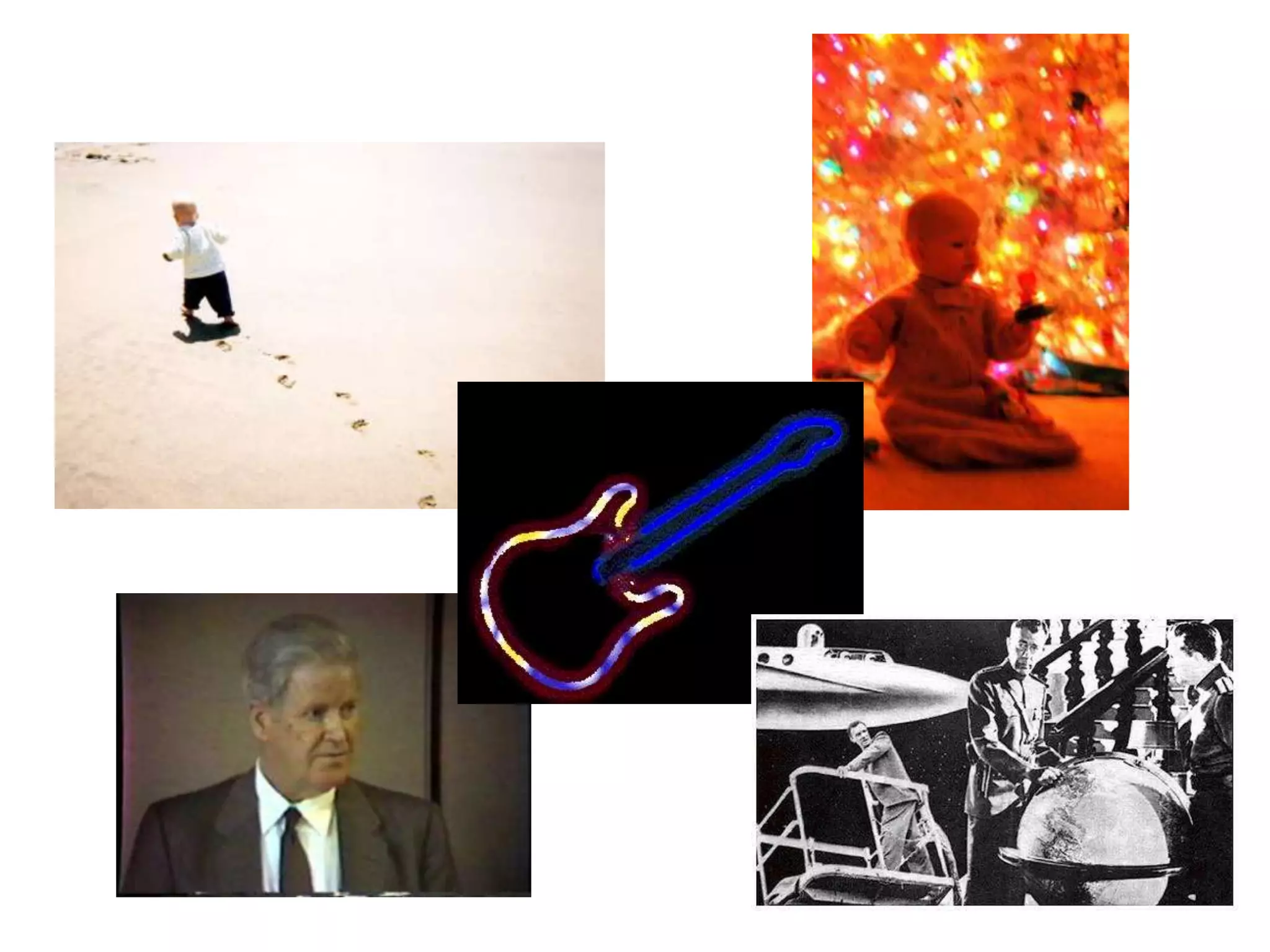
  • #56 Virtual Paper BagPart 1: Five photos in FlickrPart 2: 350 word storyPart 3: Musical score for the digital story (photos + words + music)
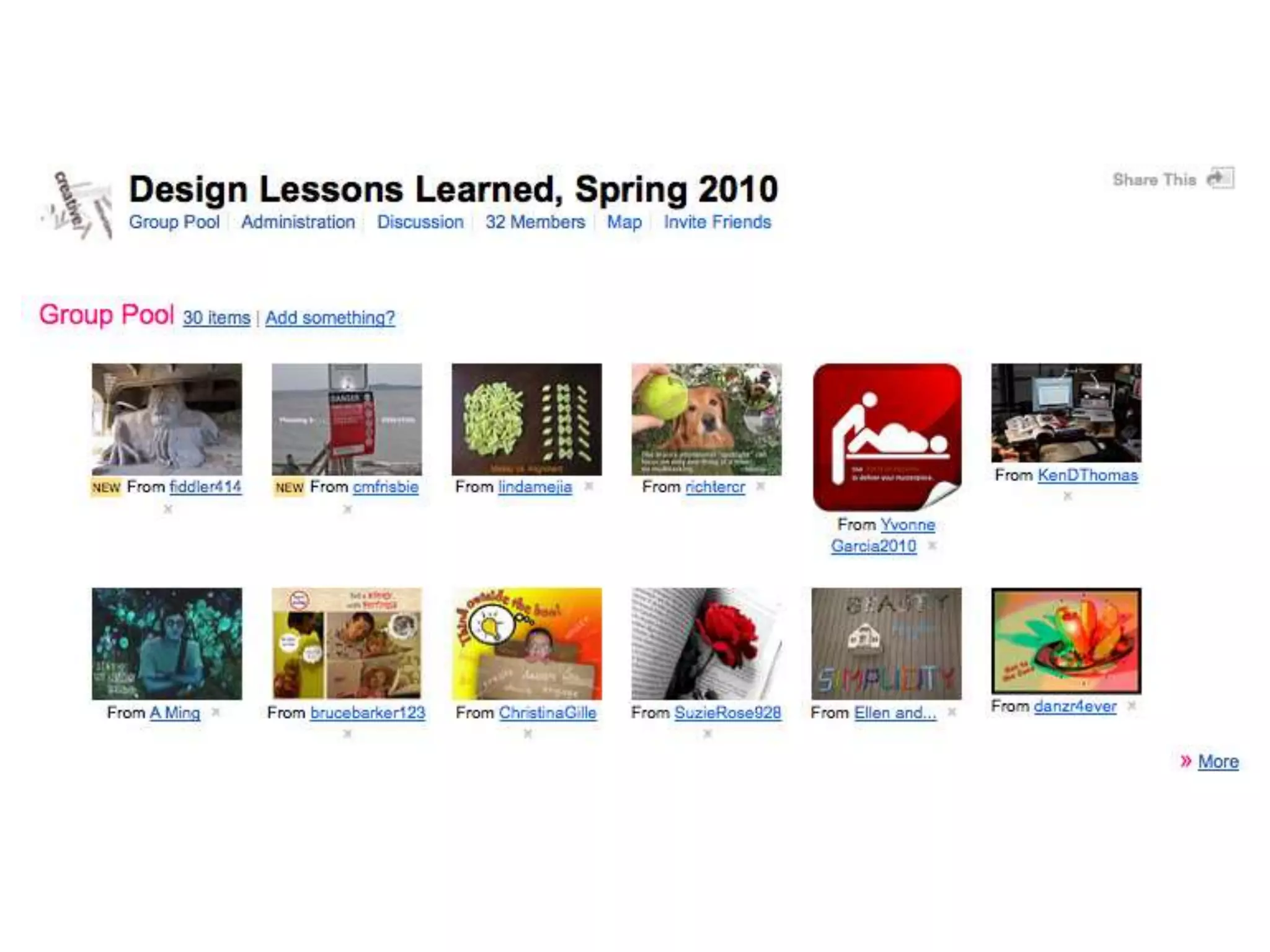
  • #57 Design Lessons Learnedhttp://www.flickr.com/groups/1448172@N21/http://www.flickr.com/groups/inte6710fall2010/http://www.flickr.com/groups/it6710spring2010/http://www.flickr.com/groups/it6710fall2009/
  • #61 Break room into 10 small groups. Each small group contributes one, and enters it in Google Docs.http://tinyurl.com/3hgswvb