Introduction to Interior Design: A Comprehensive
Guide for Bachelor of Design Students
Understanding Interior Design
Interior design is a multifaceted discipline that involves the art and science of enhancing the
interior of a building to achieve a healthier and more aesthetically pleasing environment for
the people using the space. This field combines creativity with technical knowledge, blending
aesthetics with functionality to transform spaces. For students pursuing a Bachelor of
Design, mastering interior design involves understanding various aspects, including space
planning, color theory, material selection, and the psychological impact of design.
The Evolution of Interior Design
Interior design as a profession has evolved significantly over the centuries. From ancient
civilizations, where design was deeply intertwined with cultural and religious beliefs, to the
modern era, where the focus is on individual expression and functionality, the field has
expanded and diversified.
1. Historical Perspectives:
○ Ancient Civilizations: In ancient Egypt, Greece, and Rome, interior design
was closely related to architectural practices and religious symbols. Homes
were adorned with intricate frescoes and mosaics.
○ Middle Ages: During the medieval period, interior design was influenced by
the feudal system. Homes were functional and modest, with limited
decoration.
○ Renaissance to Baroque: The Renaissance period saw a resurgence of
classical ideas, with a focus on symmetry, proportion, and geometry. The
Baroque period introduced opulence and dramatic effects.
○ 19th and 20th Centuries: The Industrial Revolution and subsequent design
movements, including Arts and Crafts, Art Nouveau, and Modernism,
introduced new materials and techniques, shaping contemporary design.
2. Modern Interior Design:
○ Post-World War II: The mid-20th century brought a focus on minimalism and
functionality. Designers like Charles and Ray Eames, and later, the influence
of Scandinavian design, emphasized simplicity and practicality.
○ Contemporary Trends: Today, interior design is influenced by technology,
sustainability, and global cultures. The integration of smart home technology,
eco-friendly materials, and diverse design styles reflects the dynamic nature
of modern interior design.
Core Principles of Interior Design
Understanding the fundamental principles of interior design is crucial for any aspiring
designer. These principles guide the creation of functional and aesthetically pleasing spaces.
1. Balance: Balance refers to the distribution of visual weight in a space. It can be
symmetrical (formal) or asymmetrical (informal). Achieving balance involves
arranging elements in a way that creates visual equilibrium.
2. Harmony and Unity: Harmony and unity ensure that all elements in a space work
together to create a cohesive look. This involves the use of a consistent color
scheme, style, and materials.
3. Proportion and Scale: Proportion deals with the size of objects in relation to each
other, while scale refers to the size of objects in relation to the space. Correct
proportion and scale create a sense of comfort and visual interest.
4. Rhythm: Rhythm in design involves creating patterns and repetition to guide the
viewer's eye through a space. This can be achieved through the repetition of colors,
shapes, or materials.
5. Emphasis: Emphasis is about creating focal points in a room. This can be achieved
through the use of contrasting colors, textures, or unique furniture pieces.
6. Contrast: Contrast is used to highlight differences between elements. It can add
visual interest and depth to a space. For instance, contrasting light and dark colors or
different textures can create dynamic effects.
Space Planning and Layout
Space planning is a crucial aspect of interior design that involves arranging furniture and
other elements to optimize the use of space. Effective space planning ensures functionality
and flow within a room.
1. Functionality: Understanding the intended use of a space is essential. For example,
a living room should facilitate relaxation and social interaction, while a home office
should promote productivity.
2. Traffic Flow: Traffic flow refers to how people move through a space. Proper space
planning involves creating clear pathways and avoiding obstacles.
3. Zoning: Zoning involves dividing a space into distinct areas based on their function.
For example, in an open-plan living area, zoning can help delineate the dining area
from the living area.
4. Ergonomics: Ergonomics is the study of how design can improve comfort and
efficiency. In interior design, this involves selecting furniture and layouts that support
good posture and ease of use.
Color Theory and Application
Color theory is a fundamental aspect of interior design that affects mood, perception, and the
overall atmosphere of a space.
1. Color Wheel: The color wheel is a tool that helps designers understand color
relationships. It includes primary, secondary, and tertiary colors, and their
complementary and analogous counterparts.
2. Color Schemes: Color schemes are combinations of colors used in a space.
Common schemes include monochromatic (variations of a single color), analogous
(colors next to each other on the wheel), and complementary (colors opposite each
other on the wheel).
3. Psychological Effects: Colors can influence emotions and behavior. For instance,
blue is often associated with calmness and productivity, while red can evoke
excitement or energy.
4. Application in Spaces: Choosing the right colors for walls, furniture, and
accessories is crucial. For example, light colors can make a small space appear
larger, while dark colors can create a cozy, intimate feel.
Materials and Finishes
The selection of materials and finishes plays a significant role in interior design. These
choices affect both the aesthetics and functionality of a space.
1. Materials: Common materials used in interior design include wood, metal, glass,
stone, and textiles. Each material has unique properties and contributes differently to
the overall design.
2. Finishes: Finishes refer to the surface treatment of materials. They can range from
glossy to matte, smooth to textured. The choice of finish impacts the look and feel of
surfaces.
3. Sustainability: There is a growing emphasis on sustainable materials and practices
in interior design. Designers are increasingly selecting eco-friendly materials and
incorporating energy-efficient solutions.
Lighting Design
Lighting is a crucial element in interior design that affects both the functionality and
ambiance of a space.
1. Types of Lighting:
○ Ambient Lighting: Provides overall illumination for a room. Examples include
ceiling fixtures and recessed lighting.
○ Task Lighting: Focuses on specific areas for activities such as reading or
cooking. Examples include desk lamps and under-cabinet lighting.
○ Accent Lighting: Highlights particular features or objects in a room, such as
artwork or architectural details. Examples include spotlights and LED strips.
2. Lighting Design Principles: Effective lighting design involves layering different
types of lighting, controlling brightness levels, and considering the color temperature
of light.
3. Lighting Technology: Advances in lighting technology, such as LED and smart
lighting systems, offer new possibilities for design and energy efficiency.
Furniture and Accessories
Furniture and accessories are integral to interior design, providing both functionality and
style.
1. Furniture Selection: Choosing the right furniture involves considering scale,
proportion, and style. Furniture should complement the overall design while meeting
the needs of the occupants.
2. Accessories: Accessories, such as rugs, curtains, and artwork, add personality and
visual interest to a space. They should enhance the design theme and create a
cohesive look.
3. Customization: Custom furniture and accessories allow for personalized design
solutions and can address specific functional or aesthetic requirements.
The Role of Technology in Interior Design
Technology has transformed interior design, offering new tools and possibilities for
designers.
1. Design Software: Tools such as AutoCAD, SketchUp, and Revit enable designers to
create detailed floor plans, 3D models, and virtual tours.
2. Smart Home Technology: Integration of smart home systems, including automated
lighting, climate control, and security, enhances convenience and energy efficiency.
3. Virtual and Augmented Reality: Virtual and augmented reality technologies allow
clients to experience designs in immersive ways, improving decision-making and
communication.
Professional Practice and Ethics
As students prepare to enter the field of interior design, understanding professional practice
and ethics is essential.
1. Client Relations: Building strong client relationships involves effective
communication, understanding client needs, and delivering on promises.
Professionalism and respect are key to successful interactions.
2. Project Management: Interior designers often manage multiple aspects of a project,
including budgeting, scheduling, and coordination with contractors and suppliers.
3. Ethical Considerations: Designers must adhere to ethical standards, including
honesty, integrity, and respect for cultural and environmental considerations.
Conclusion
Interior design is a dynamic and rewarding field that requires a blend of creativity, technical
skills, and an understanding of human behavior. For students pursuing a Bachelor of Design,
mastering interior design involves exploring historical and contemporary practices, applying
core principles, and staying abreast of technological advancements. By focusing on aspects
such as space planning, color theory, materials, lighting, and professional practice, future
designers can create innovative and functional spaces that enhance the quality of life for
their clients.
As the field continues to evolve, interior designers will play a crucial role in shaping
environments that reflect personal and cultural values, respond to changing needs, and
embrace sustainable practices. With a solid foundation in design principles and a
commitment to ongoing learning, Bachelor of Design students are well-positioned to make
meaningful contributions to the world of interior design.
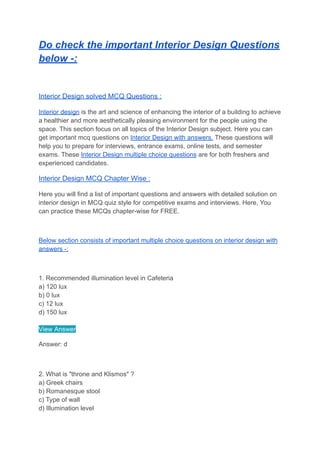
Do check the important Interior Design Questions
below -:
Interior Design solved MCQ Questions :
Interior design is the art and science of enhancing the interior of a building to achieve
a healthier and more aesthetically pleasing environment for the people using the
space. This section focus on all topics of the Interior Design subject. Here you can
get important mcq questions on Interior Design with answers. These questions will
help you to prepare for interviews, entrance exams, online tests, and semester
exams. These Interior Design multiple choice questions are for both freshers and
experienced candidates.
Interior Design MCQ Chapter Wise :
Here you will find a list of important questions and answers with detailed solution on
interior design in MCQ quiz style for competitive exams and interviews. Here, You
can practice these MCQs chapter-wise for FREE.
Below section consists of important multiple choice questions on interior design with
answers -:
1. Recommended illumination level in Cafeteria
a) 120 lux
b) 0 lux
c) 12 lux
d) 150 lux
View Answer
Answer: d
2. What is "throne and Klismos" ?
a) Greek chairs
b) Romanesque stool
c) Type of wall
d) Illumination level
View Answer
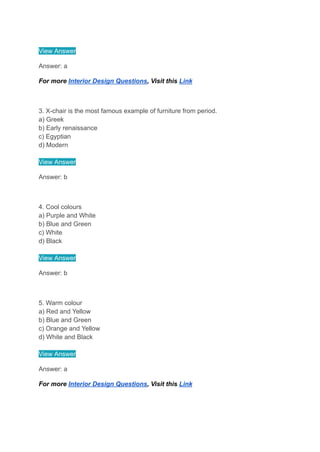
Answer: a
For more Interior Design Questions, Visit this Link
3. X-chair is the most famous example of furniture from period.
a) Greek
b) Early renaissance
c) Egyptian
d) Modern
View Answer
Answer: b
4. Cool colours
a) Purple and White
b) Blue and Green
c) White
d) Black
View Answer
Answer: b
5. Warm colour
a) Red and Yellow
b) Blue and Green
c) Orange and Yellow
d) White and Black
View Answer
Answer: a
For more Interior Design Questions, Visit this Link
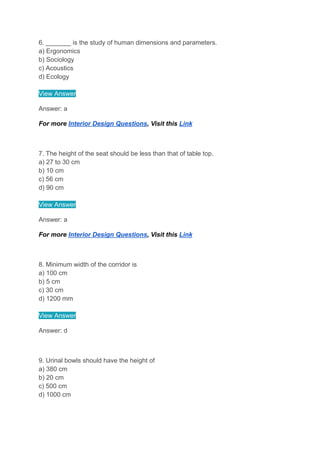
6. _______ is the study of human dimensions and parameters.
a) Ergonomics
b) Sociology
c) Acoustics
d) Ecology
View Answer
Answer: a
For more Interior Design Questions, Visit this Link
7. The height of the seat should be less than that of table top.
a) 27 to 30 cm
b) 10 cm
c) 56 cm
d) 90 cm
View Answer
Answer: a
For more Interior Design Questions, Visit this Link
8. Minimum width of the corridor is
a) 100 cm
b) 5 cm
c) 30 cm
d) 1200 mm
View Answer
Answer: d
9. Urinal bowls should have the height of
a) 380 cm
b) 20 cm
c) 500 cm
d) 1000 cm
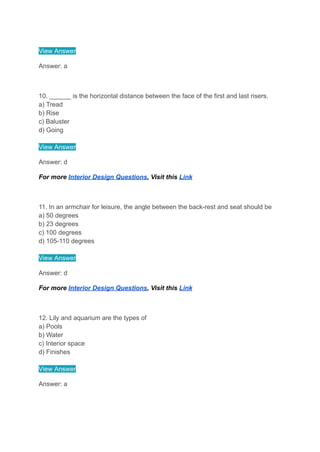
View Answer
Answer: a
10. ______ is the horizontal distance between the face of the first and last risers.
a) Tread
b) Rise
c) Baluster
d) Going
View Answer
Answer: d
For more Interior Design Questions, Visit this Link
11. In an armchair for leisure, the angle between the back-rest and seat should be
a) 50 degrees
b) 23 degrees
c) 100 degrees
d) 105-110 degrees
View Answer
Answer: d
For more Interior Design Questions, Visit this Link
12. Lily and aquarium are the types of
a) Pools
b) Water
c) Interior space
d) Finishes
View Answer
Answer: a
13. Asphalt tile and vinyl tile are
a) Resilient floorings
b) Wooden
c) Draperies
d) Ordinary floor
View Answer
Answer: a
For more Interior Design Questions, Visit this Link
14. The vertical portion between each tread on the stair is called
a) Winder
b) Riser
c) Going
d) Nosing
View Answer
Answer: b
15. Brown and Beige are the examples of what colour scheme ?
a) Neutral
b) Complimentary
c) Opposite
d) Like
View Answer
Answer: a
For more Interior Design Questions, Visit this Link
16. According to standards maximum number of steps between landings is
a) 18
b) 20
c) 12
d) 16
View Answer
Answer: c
17. List of primary colours
a) Red, Blue, Yellow
b) Green, Blue, White
c) Grey, Black, White
d) Purple, Violet, Pink
View Answer
Answer: a
18. The middle horizontal member of the shutter is called
a) Median rail
b) Lock rail
c) Sill rail
d) Mid rail
View Answer
Answer: b
For more Interior Design Questions, Visit this Link
19. A paint normally consists of components.
a) 3
b) 5
c) 4
d) 6
View Answer
Answer: d
20. Flaking is the defects of
a) Painting
b) Plastering
c) Timber
d) Interior
View Answer
Answer: a
For more Interior Design Questions, Visit this
Link

Interior Design Questions and Answers.pdf

  • 1.
    Introduction to InteriorDesign: A Comprehensive Guide for Bachelor of Design Students Understanding Interior Design Interior design is a multifaceted discipline that involves the art and science of enhancing the interior of a building to achieve a healthier and more aesthetically pleasing environment for the people using the space. This field combines creativity with technical knowledge, blending aesthetics with functionality to transform spaces. For students pursuing a Bachelor of Design, mastering interior design involves understanding various aspects, including space planning, color theory, material selection, and the psychological impact of design. The Evolution of Interior Design Interior design as a profession has evolved significantly over the centuries. From ancient civilizations, where design was deeply intertwined with cultural and religious beliefs, to the modern era, where the focus is on individual expression and functionality, the field has expanded and diversified. 1. Historical Perspectives: ○ Ancient Civilizations: In ancient Egypt, Greece, and Rome, interior design was closely related to architectural practices and religious symbols. Homes were adorned with intricate frescoes and mosaics. ○ Middle Ages: During the medieval period, interior design was influenced by the feudal system. Homes were functional and modest, with limited decoration. ○ Renaissance to Baroque: The Renaissance period saw a resurgence of classical ideas, with a focus on symmetry, proportion, and geometry. The Baroque period introduced opulence and dramatic effects. ○ 19th and 20th Centuries: The Industrial Revolution and subsequent design movements, including Arts and Crafts, Art Nouveau, and Modernism, introduced new materials and techniques, shaping contemporary design. 2. Modern Interior Design: ○ Post-World War II: The mid-20th century brought a focus on minimalism and functionality. Designers like Charles and Ray Eames, and later, the influence of Scandinavian design, emphasized simplicity and practicality. ○ Contemporary Trends: Today, interior design is influenced by technology, sustainability, and global cultures. The integration of smart home technology, eco-friendly materials, and diverse design styles reflects the dynamic nature of modern interior design. Core Principles of Interior Design Understanding the fundamental principles of interior design is crucial for any aspiring designer. These principles guide the creation of functional and aesthetically pleasing spaces.
  • 2.
    1. Balance: Balancerefers to the distribution of visual weight in a space. It can be symmetrical (formal) or asymmetrical (informal). Achieving balance involves arranging elements in a way that creates visual equilibrium. 2. Harmony and Unity: Harmony and unity ensure that all elements in a space work together to create a cohesive look. This involves the use of a consistent color scheme, style, and materials. 3. Proportion and Scale: Proportion deals with the size of objects in relation to each other, while scale refers to the size of objects in relation to the space. Correct proportion and scale create a sense of comfort and visual interest. 4. Rhythm: Rhythm in design involves creating patterns and repetition to guide the viewer's eye through a space. This can be achieved through the repetition of colors, shapes, or materials. 5. Emphasis: Emphasis is about creating focal points in a room. This can be achieved through the use of contrasting colors, textures, or unique furniture pieces. 6. Contrast: Contrast is used to highlight differences between elements. It can add visual interest and depth to a space. For instance, contrasting light and dark colors or different textures can create dynamic effects. Space Planning and Layout Space planning is a crucial aspect of interior design that involves arranging furniture and other elements to optimize the use of space. Effective space planning ensures functionality and flow within a room. 1. Functionality: Understanding the intended use of a space is essential. For example, a living room should facilitate relaxation and social interaction, while a home office should promote productivity. 2. Traffic Flow: Traffic flow refers to how people move through a space. Proper space planning involves creating clear pathways and avoiding obstacles. 3. Zoning: Zoning involves dividing a space into distinct areas based on their function. For example, in an open-plan living area, zoning can help delineate the dining area from the living area. 4. Ergonomics: Ergonomics is the study of how design can improve comfort and efficiency. In interior design, this involves selecting furniture and layouts that support good posture and ease of use. Color Theory and Application Color theory is a fundamental aspect of interior design that affects mood, perception, and the overall atmosphere of a space. 1. Color Wheel: The color wheel is a tool that helps designers understand color relationships. It includes primary, secondary, and tertiary colors, and their complementary and analogous counterparts. 2. Color Schemes: Color schemes are combinations of colors used in a space. Common schemes include monochromatic (variations of a single color), analogous (colors next to each other on the wheel), and complementary (colors opposite each other on the wheel).
  • 3.
    3. Psychological Effects:Colors can influence emotions and behavior. For instance, blue is often associated with calmness and productivity, while red can evoke excitement or energy. 4. Application in Spaces: Choosing the right colors for walls, furniture, and accessories is crucial. For example, light colors can make a small space appear larger, while dark colors can create a cozy, intimate feel. Materials and Finishes The selection of materials and finishes plays a significant role in interior design. These choices affect both the aesthetics and functionality of a space. 1. Materials: Common materials used in interior design include wood, metal, glass, stone, and textiles. Each material has unique properties and contributes differently to the overall design. 2. Finishes: Finishes refer to the surface treatment of materials. They can range from glossy to matte, smooth to textured. The choice of finish impacts the look and feel of surfaces. 3. Sustainability: There is a growing emphasis on sustainable materials and practices in interior design. Designers are increasingly selecting eco-friendly materials and incorporating energy-efficient solutions. Lighting Design Lighting is a crucial element in interior design that affects both the functionality and ambiance of a space. 1. Types of Lighting: ○ Ambient Lighting: Provides overall illumination for a room. Examples include ceiling fixtures and recessed lighting. ○ Task Lighting: Focuses on specific areas for activities such as reading or cooking. Examples include desk lamps and under-cabinet lighting. ○ Accent Lighting: Highlights particular features or objects in a room, such as artwork or architectural details. Examples include spotlights and LED strips. 2. Lighting Design Principles: Effective lighting design involves layering different types of lighting, controlling brightness levels, and considering the color temperature of light. 3. Lighting Technology: Advances in lighting technology, such as LED and smart lighting systems, offer new possibilities for design and energy efficiency. Furniture and Accessories Furniture and accessories are integral to interior design, providing both functionality and style. 1. Furniture Selection: Choosing the right furniture involves considering scale, proportion, and style. Furniture should complement the overall design while meeting the needs of the occupants.
  • 4.
    2. Accessories: Accessories,such as rugs, curtains, and artwork, add personality and visual interest to a space. They should enhance the design theme and create a cohesive look. 3. Customization: Custom furniture and accessories allow for personalized design solutions and can address specific functional or aesthetic requirements. The Role of Technology in Interior Design Technology has transformed interior design, offering new tools and possibilities for designers. 1. Design Software: Tools such as AutoCAD, SketchUp, and Revit enable designers to create detailed floor plans, 3D models, and virtual tours. 2. Smart Home Technology: Integration of smart home systems, including automated lighting, climate control, and security, enhances convenience and energy efficiency. 3. Virtual and Augmented Reality: Virtual and augmented reality technologies allow clients to experience designs in immersive ways, improving decision-making and communication. Professional Practice and Ethics As students prepare to enter the field of interior design, understanding professional practice and ethics is essential. 1. Client Relations: Building strong client relationships involves effective communication, understanding client needs, and delivering on promises. Professionalism and respect are key to successful interactions. 2. Project Management: Interior designers often manage multiple aspects of a project, including budgeting, scheduling, and coordination with contractors and suppliers. 3. Ethical Considerations: Designers must adhere to ethical standards, including honesty, integrity, and respect for cultural and environmental considerations. Conclusion Interior design is a dynamic and rewarding field that requires a blend of creativity, technical skills, and an understanding of human behavior. For students pursuing a Bachelor of Design, mastering interior design involves exploring historical and contemporary practices, applying core principles, and staying abreast of technological advancements. By focusing on aspects such as space planning, color theory, materials, lighting, and professional practice, future designers can create innovative and functional spaces that enhance the quality of life for their clients. As the field continues to evolve, interior designers will play a crucial role in shaping environments that reflect personal and cultural values, respond to changing needs, and embrace sustainable practices. With a solid foundation in design principles and a commitment to ongoing learning, Bachelor of Design students are well-positioned to make meaningful contributions to the world of interior design.
  • 5.
    Do check theimportant Interior Design Questions below -: Interior Design solved MCQ Questions : Interior design is the art and science of enhancing the interior of a building to achieve a healthier and more aesthetically pleasing environment for the people using the space. This section focus on all topics of the Interior Design subject. Here you can get important mcq questions on Interior Design with answers. These questions will help you to prepare for interviews, entrance exams, online tests, and semester exams. These Interior Design multiple choice questions are for both freshers and experienced candidates. Interior Design MCQ Chapter Wise : Here you will find a list of important questions and answers with detailed solution on interior design in MCQ quiz style for competitive exams and interviews. Here, You can practice these MCQs chapter-wise for FREE. Below section consists of important multiple choice questions on interior design with answers -: 1. Recommended illumination level in Cafeteria a) 120 lux b) 0 lux c) 12 lux d) 150 lux View Answer Answer: d 2. What is "throne and Klismos" ? a) Greek chairs b) Romanesque stool c) Type of wall d) Illumination level
  • 6.
    View Answer Answer: a Formore Interior Design Questions, Visit this Link 3. X-chair is the most famous example of furniture from period. a) Greek b) Early renaissance c) Egyptian d) Modern View Answer Answer: b 4. Cool colours a) Purple and White b) Blue and Green c) White d) Black View Answer Answer: b 5. Warm colour a) Red and Yellow b) Blue and Green c) Orange and Yellow d) White and Black View Answer Answer: a For more Interior Design Questions, Visit this Link
  • 7.
    6. _______ isthe study of human dimensions and parameters. a) Ergonomics b) Sociology c) Acoustics d) Ecology View Answer Answer: a For more Interior Design Questions, Visit this Link 7. The height of the seat should be less than that of table top. a) 27 to 30 cm b) 10 cm c) 56 cm d) 90 cm View Answer Answer: a For more Interior Design Questions, Visit this Link 8. Minimum width of the corridor is a) 100 cm b) 5 cm c) 30 cm d) 1200 mm View Answer Answer: d 9. Urinal bowls should have the height of a) 380 cm b) 20 cm c) 500 cm d) 1000 cm
  • 8.
    View Answer Answer: a 10.______ is the horizontal distance between the face of the first and last risers. a) Tread b) Rise c) Baluster d) Going View Answer Answer: d For more Interior Design Questions, Visit this Link 11. In an armchair for leisure, the angle between the back-rest and seat should be a) 50 degrees b) 23 degrees c) 100 degrees d) 105-110 degrees View Answer Answer: d For more Interior Design Questions, Visit this Link 12. Lily and aquarium are the types of a) Pools b) Water c) Interior space d) Finishes View Answer Answer: a
  • 9.
    13. Asphalt tileand vinyl tile are a) Resilient floorings b) Wooden c) Draperies d) Ordinary floor View Answer Answer: a For more Interior Design Questions, Visit this Link 14. The vertical portion between each tread on the stair is called a) Winder b) Riser c) Going d) Nosing View Answer Answer: b 15. Brown and Beige are the examples of what colour scheme ? a) Neutral b) Complimentary c) Opposite d) Like View Answer Answer: a For more Interior Design Questions, Visit this Link 16. According to standards maximum number of steps between landings is a) 18 b) 20 c) 12 d) 16
  • 10.
    View Answer Answer: c 17.List of primary colours a) Red, Blue, Yellow b) Green, Blue, White c) Grey, Black, White d) Purple, Violet, Pink View Answer Answer: a 18. The middle horizontal member of the shutter is called a) Median rail b) Lock rail c) Sill rail d) Mid rail View Answer Answer: b For more Interior Design Questions, Visit this Link 19. A paint normally consists of components. a) 3 b) 5 c) 4 d) 6 View Answer Answer: d 20. Flaking is the defects of a) Painting
  • 11.
    b) Plastering c) Timber d)Interior View Answer Answer: a For more Interior Design Questions, Visit this Link