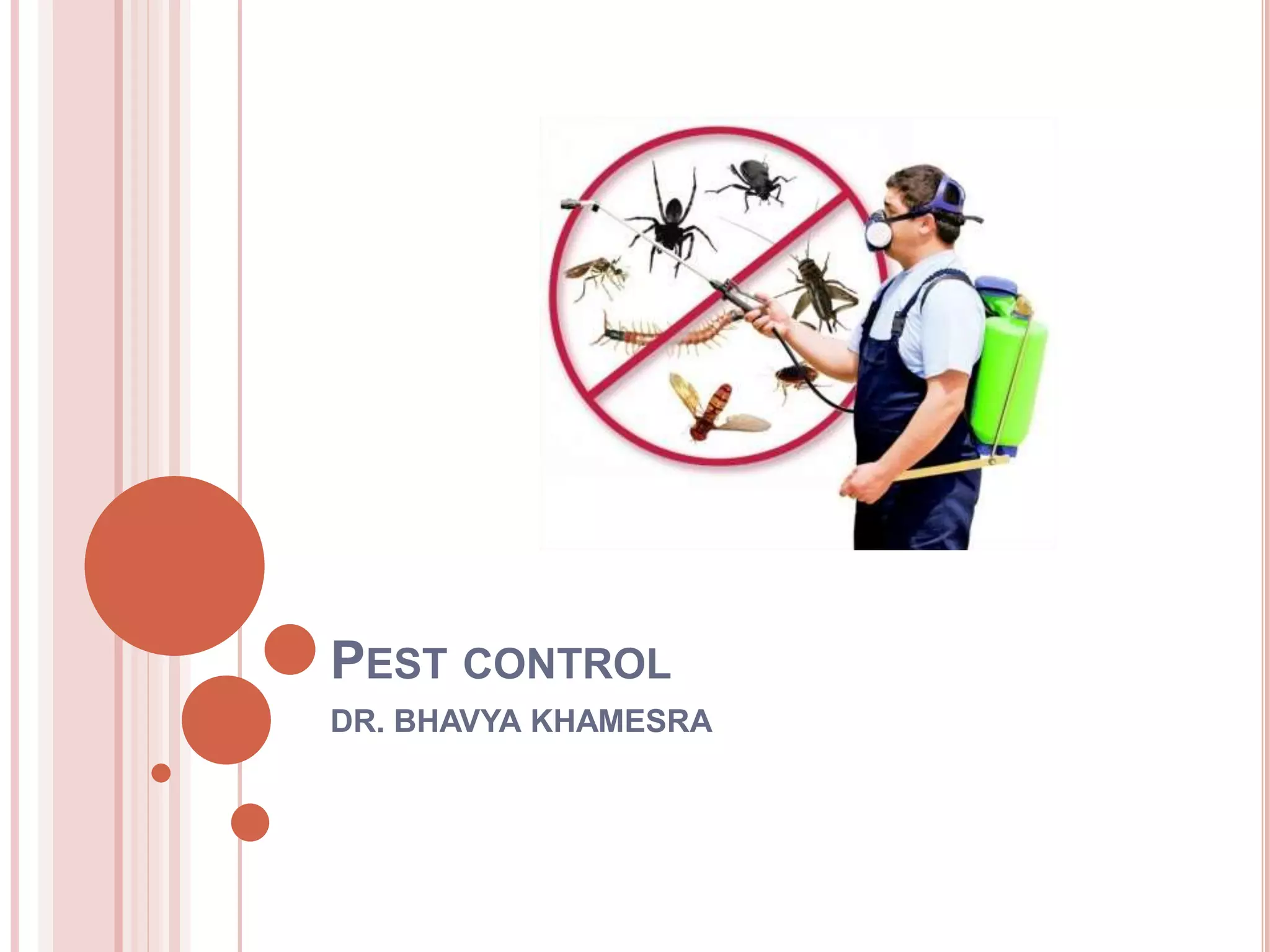
PEST CONTROL
DR. BHAVYA KHAMESRA
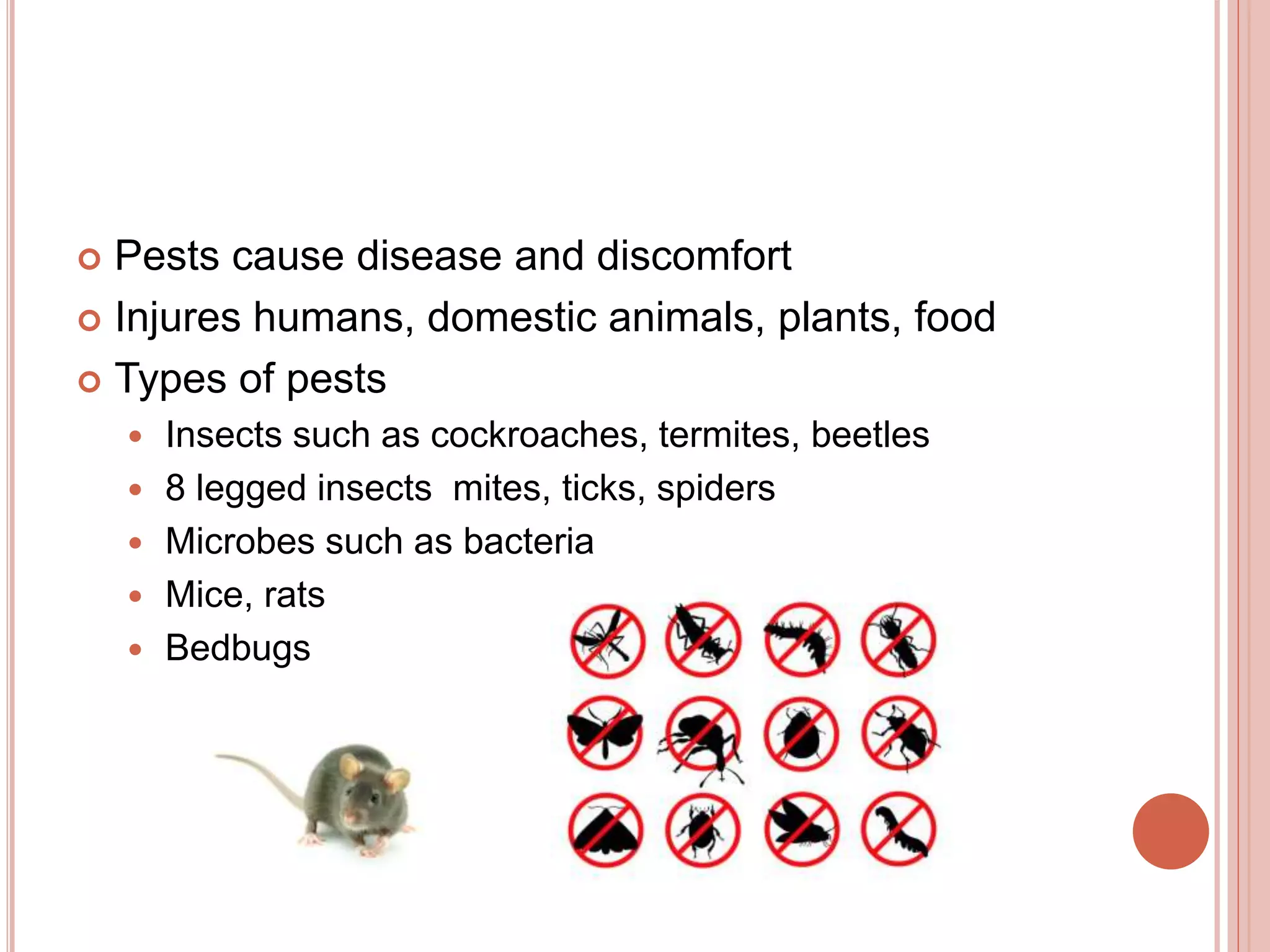
 Pests cause disease and discomfort
 Injures humans, domestic animals, plants, food
 Types of pests
 Insects such as cockroaches, termites, beetles
 8 legged insects mites, ticks, spiders
 Microbes such as bacteria
 Mice, rats
 Bedbugs
PEST CONTROL GOALS
1. Prevention : To prevent the occurrence of pests
2. Suppression : reduce the number of pest
population and then prevent them from further
growth
3. Eradication : to clear and destroy the population.
Indoor and outdoor control are necessary
Pest Harm and control
Bedbugs feed on blood of humans , cause iritation
Fumigate the area, apply kerosene in furniture
Beetles In carpet, wood, furniture
Spray insecticide,
Silverfish Silvery grey in colour, in moist areas, paper, cotton.
Keep sodium fluoride crystals to prevent
Cockroaches Found in drains, cracks, . Nocturnal animal
Cause food poisoning, keep boric powder balls
Moths Damage cloth, carpets,furnishings.foodstuffs.
Improve sanitation, cleanliness, vacuum the area
Ants Attracted to sweet food,
spread borax powder, carbon disulphide
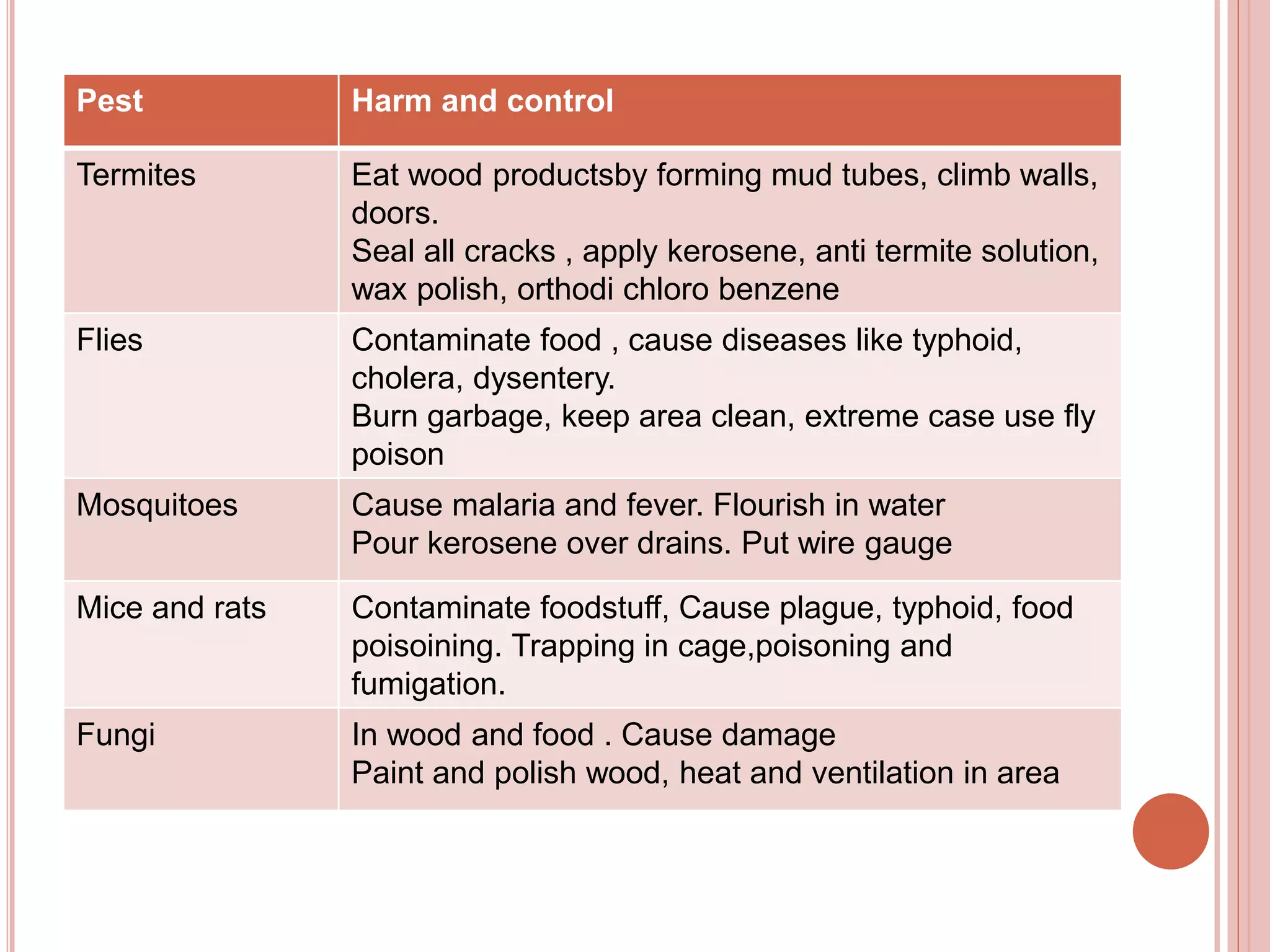
Pest Harm and control
Termites Eat wood productsby forming mud tubes, climb walls,
doors.
Seal all cracks , apply kerosene, anti termite solution,
wax polish, orthodi chloro benzene
Flies Contaminate food , cause diseases like typhoid,
cholera, dysentery.
Burn garbage, keep area clean, extreme case use fly
poison
Mosquitoes Cause malaria and fever. Flourish in water
Pour kerosene over drains. Put wire gauge
Mice and rats Contaminate foodstuff, Cause plague, typhoid, food
poisoining. Trapping in cage,poisoning and
fumigation.
Fungi In wood and food . Cause damage
Paint and polish wood, heat and ventilation in area
METHODS OF PEST CONTROL
 Natural control: climate, extreme tempratures,
predatory birds, eliminating water and food supply
 Biological control: introduction of natural enemies
like parasites, apathogens and predators. Eg. Cat
can control mice
 Mechanical control: devices , machines, traps,
screens, fences, radiation, electricity
 Sanitation : keep area clean, hygenic
CHEMICAL CONTROL BY PESTICIDES
Pesticide can be classified in 4 types
 Insecticides : for insects , mosquitoes,ants, flies,
moths , cockroaches and termites.
 Herbicides : to control weeds and unwanted
plants, grass etc
 Fungicides : to control fungus and bacteria. In
fabrics, sprayed or dusted
 Rodenticides : to control rats, in kitchen and stores
GUIDELINE TO USE PESTICIDES
Pesticides are harmful to humans .
 Read instructions carefully
 Store away from children and foodstuffs
 Always wear rubber gloves
 Wear mask while fumigation
 Wash your hands after usage
 Most consumed pesticides in the country (during 2005-06 to 2009-10)
 Sl. No.Pesticide (Technical Grade)Quantity consumed (metric
tonnes)1Sulphur (fungicide)
 Endosulfan (insecticide)155373
 Mancozeb (fungicide)110674
 Phorate (insecticide)107635
 Methyl Parathion (insecticide)084086
 Monocrotophos (insecticide)082097
 Cypermethrin (insecticide)073098
 Isoproturon (herbicide)071639
 Chlorpyrifos (insecticide)0716310
 Malathion (insecticide)0710311
 Carbendazim (fungicide)0676712
 Butachlor (herbicide)0675013
 Quinalphos (insecticide)0632914
 Copper oxychloride0605515
 Dichlorvos (insecticide)05833

Pest control

  • 1.
  • 2.
     Pests causedisease and discomfort  Injures humans, domestic animals, plants, food  Types of pests  Insects such as cockroaches, termites, beetles  8 legged insects mites, ticks, spiders  Microbes such as bacteria  Mice, rats  Bedbugs
  • 3.
    PEST CONTROL GOALS 1.Prevention : To prevent the occurrence of pests 2. Suppression : reduce the number of pest population and then prevent them from further growth 3. Eradication : to clear and destroy the population. Indoor and outdoor control are necessary
  • 4.
    Pest Harm andcontrol Bedbugs feed on blood of humans , cause iritation Fumigate the area, apply kerosene in furniture Beetles In carpet, wood, furniture Spray insecticide, Silverfish Silvery grey in colour, in moist areas, paper, cotton. Keep sodium fluoride crystals to prevent Cockroaches Found in drains, cracks, . Nocturnal animal Cause food poisoning, keep boric powder balls Moths Damage cloth, carpets,furnishings.foodstuffs. Improve sanitation, cleanliness, vacuum the area Ants Attracted to sweet food, spread borax powder, carbon disulphide
  • 5.
    Pest Harm andcontrol Termites Eat wood productsby forming mud tubes, climb walls, doors. Seal all cracks , apply kerosene, anti termite solution, wax polish, orthodi chloro benzene Flies Contaminate food , cause diseases like typhoid, cholera, dysentery. Burn garbage, keep area clean, extreme case use fly poison Mosquitoes Cause malaria and fever. Flourish in water Pour kerosene over drains. Put wire gauge Mice and rats Contaminate foodstuff, Cause plague, typhoid, food poisoining. Trapping in cage,poisoning and fumigation. Fungi In wood and food . Cause damage Paint and polish wood, heat and ventilation in area
  • 6.
    METHODS OF PESTCONTROL  Natural control: climate, extreme tempratures, predatory birds, eliminating water and food supply  Biological control: introduction of natural enemies like parasites, apathogens and predators. Eg. Cat can control mice  Mechanical control: devices , machines, traps, screens, fences, radiation, electricity  Sanitation : keep area clean, hygenic
  • 7.
    CHEMICAL CONTROL BYPESTICIDES Pesticide can be classified in 4 types  Insecticides : for insects , mosquitoes,ants, flies, moths , cockroaches and termites.  Herbicides : to control weeds and unwanted plants, grass etc  Fungicides : to control fungus and bacteria. In fabrics, sprayed or dusted  Rodenticides : to control rats, in kitchen and stores
  • 8.
    GUIDELINE TO USEPESTICIDES Pesticides are harmful to humans .  Read instructions carefully  Store away from children and foodstuffs  Always wear rubber gloves  Wear mask while fumigation  Wash your hands after usage
  • 9.
     Most consumedpesticides in the country (during 2005-06 to 2009-10)  Sl. No.Pesticide (Technical Grade)Quantity consumed (metric tonnes)1Sulphur (fungicide)  Endosulfan (insecticide)155373  Mancozeb (fungicide)110674  Phorate (insecticide)107635  Methyl Parathion (insecticide)084086  Monocrotophos (insecticide)082097  Cypermethrin (insecticide)073098  Isoproturon (herbicide)071639  Chlorpyrifos (insecticide)0716310  Malathion (insecticide)0710311  Carbendazim (fungicide)0676712  Butachlor (herbicide)0675013  Quinalphos (insecticide)0632914  Copper oxychloride0605515  Dichlorvos (insecticide)05833