The Role of Color in
Design
Just FACS
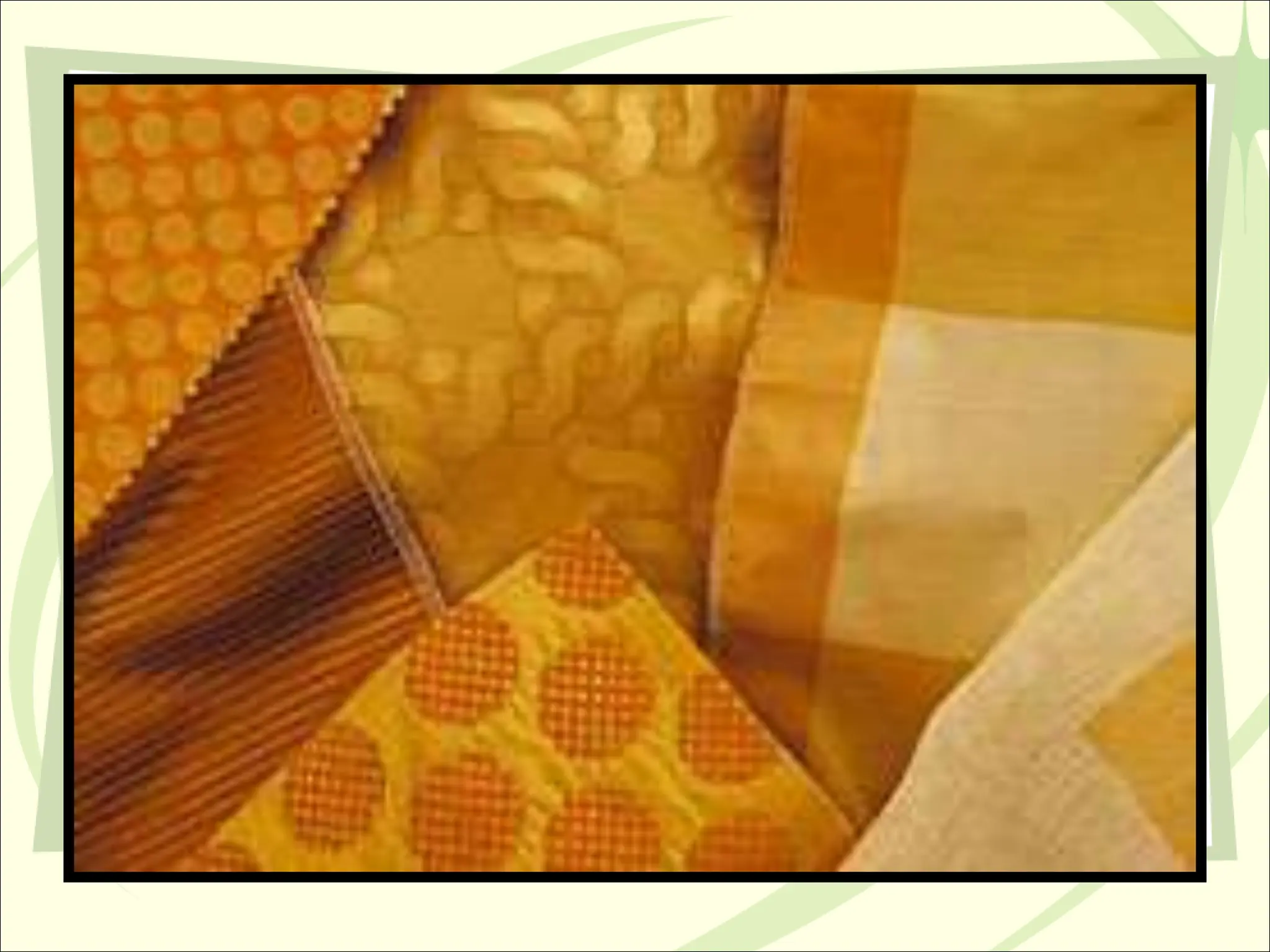
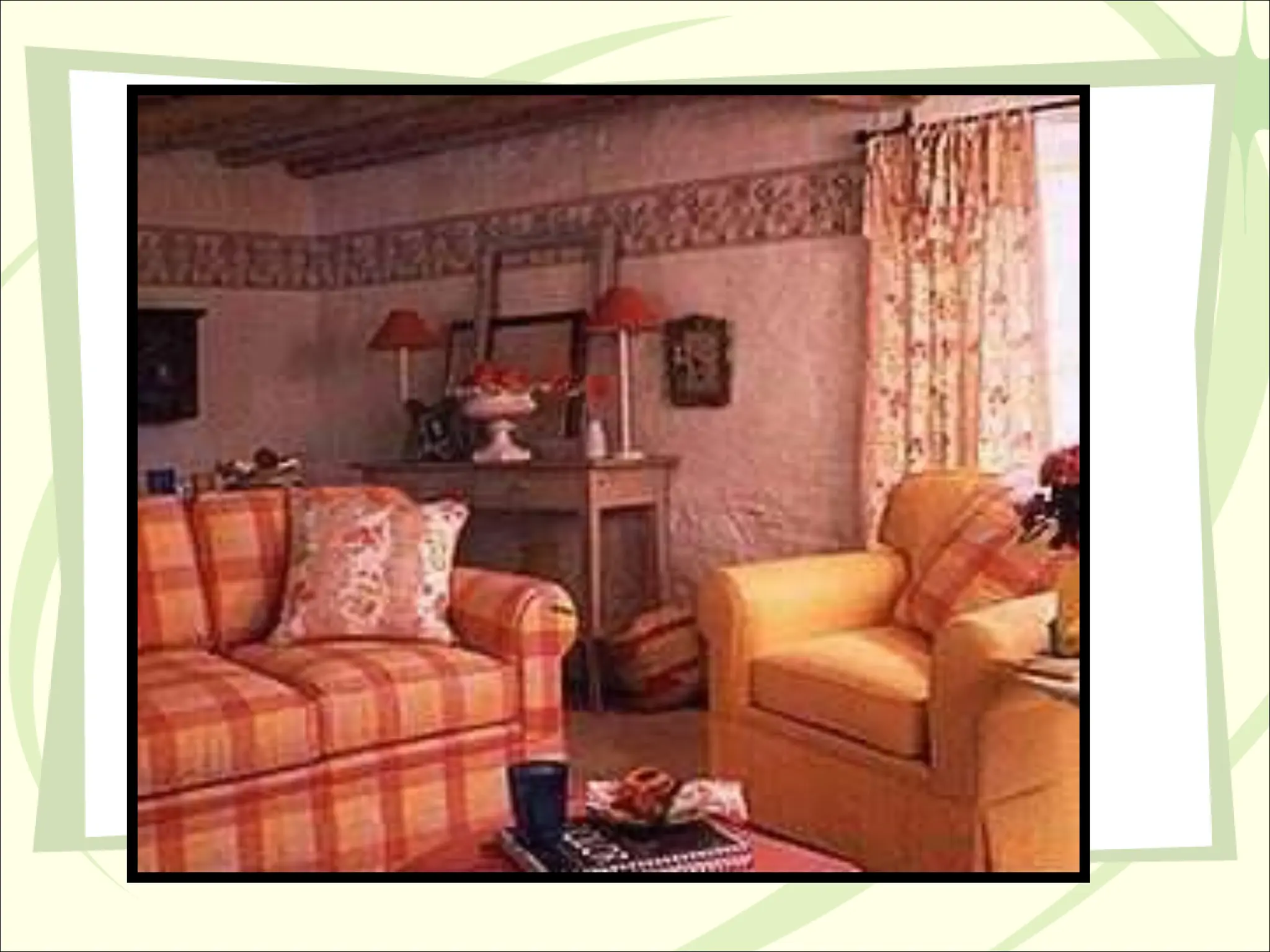
Warm Colors
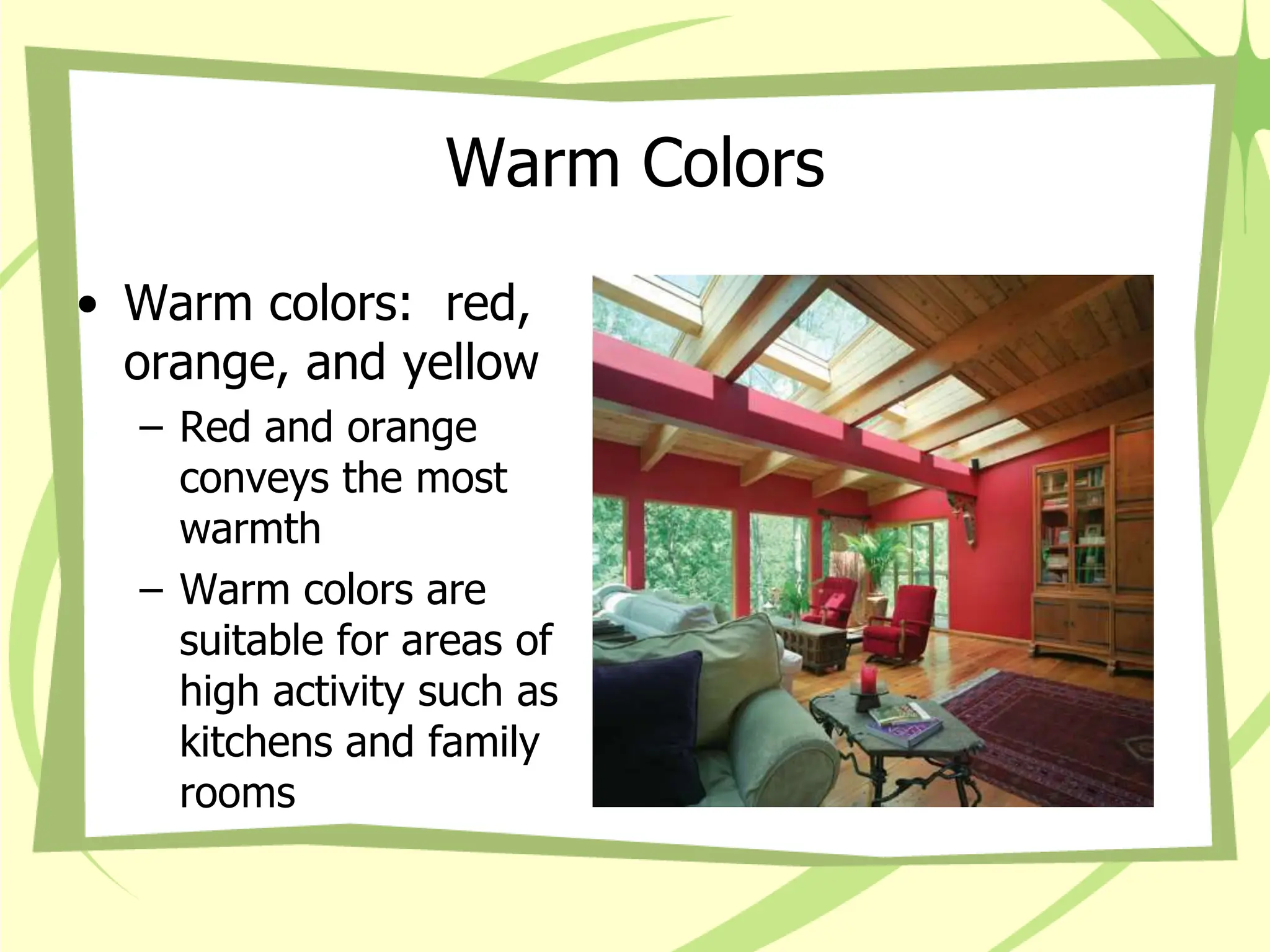
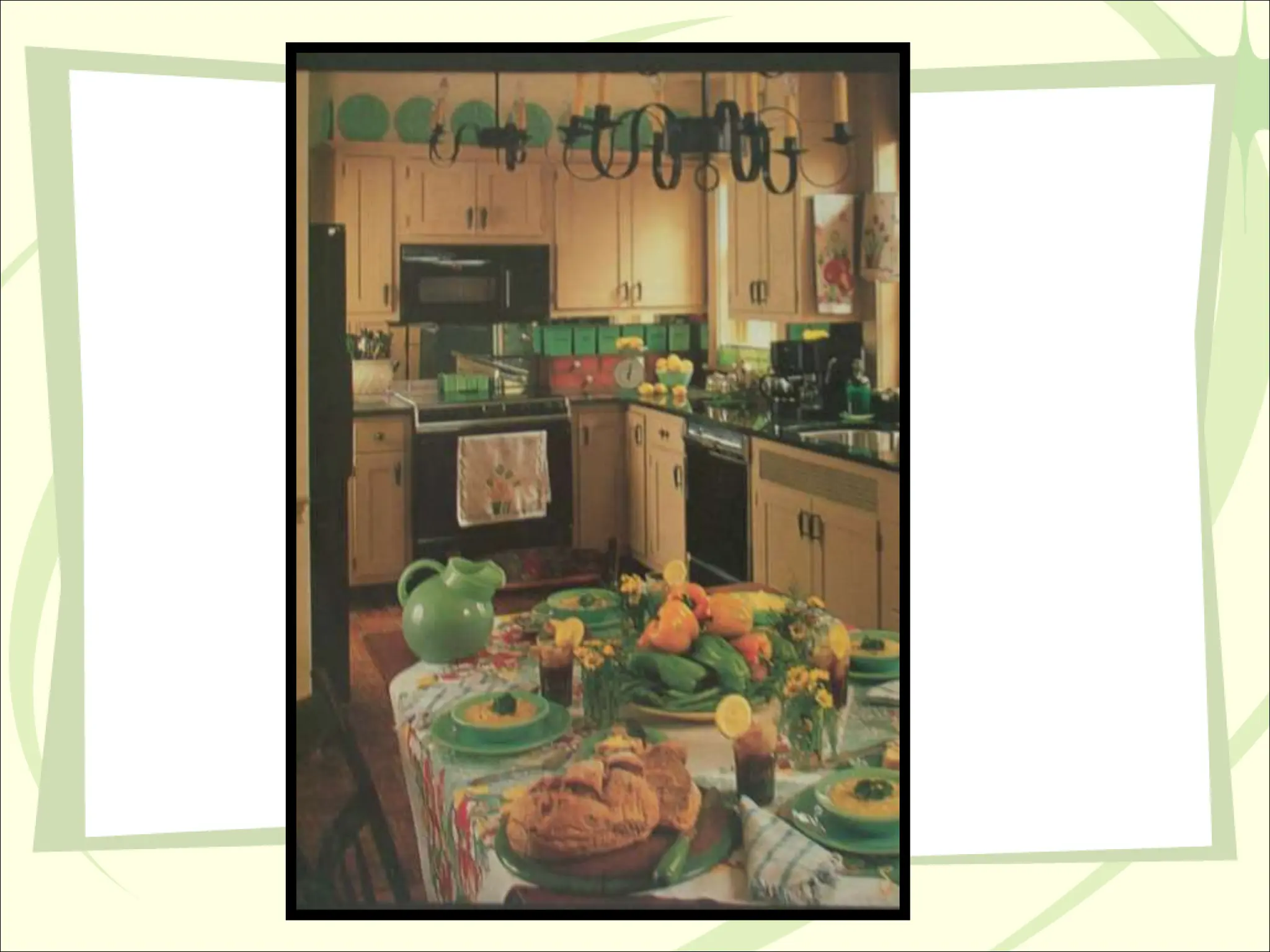
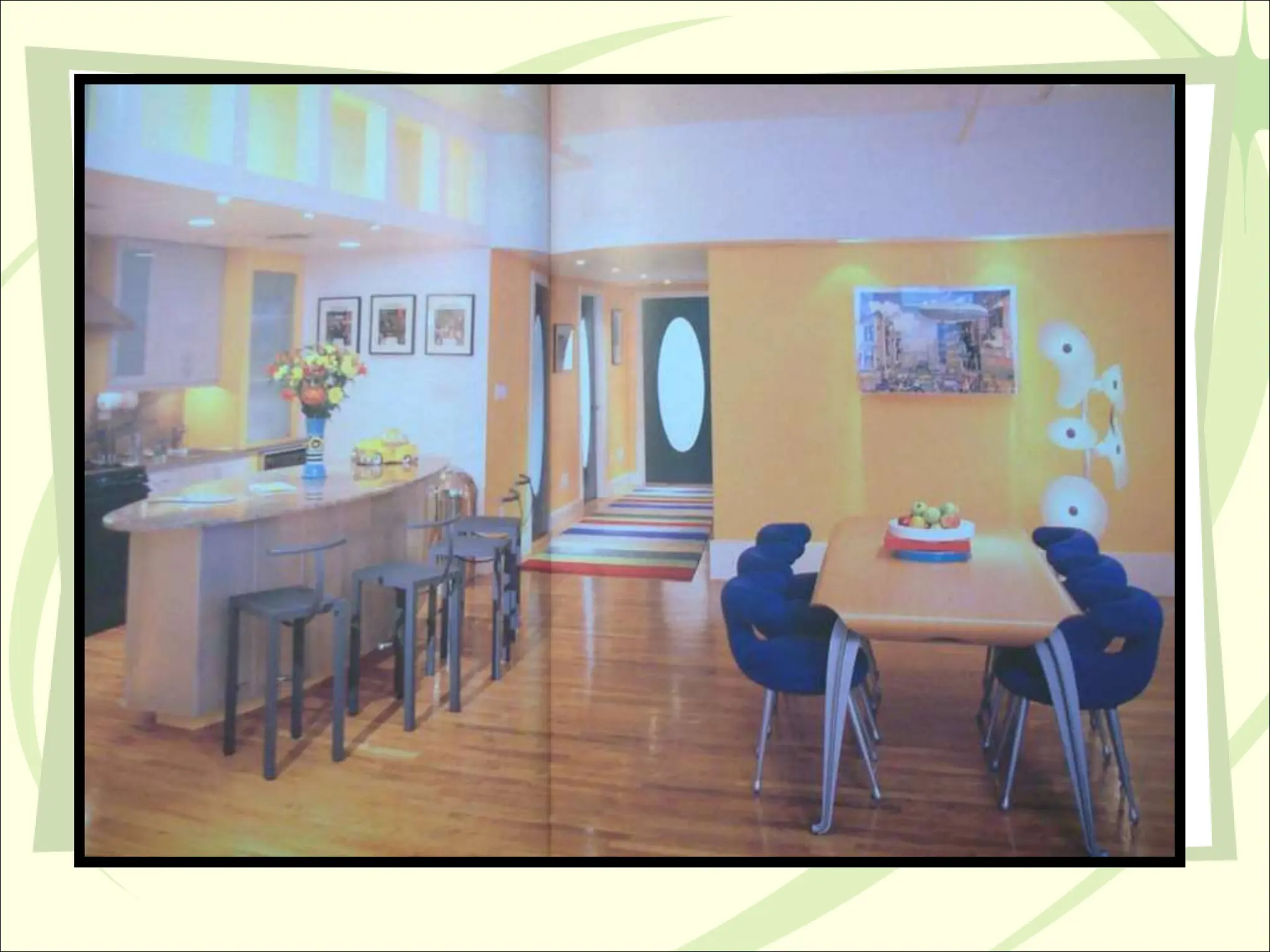
• Warm colors: red,
orange, and yellow
– Red and orange
conveys the most
warmth
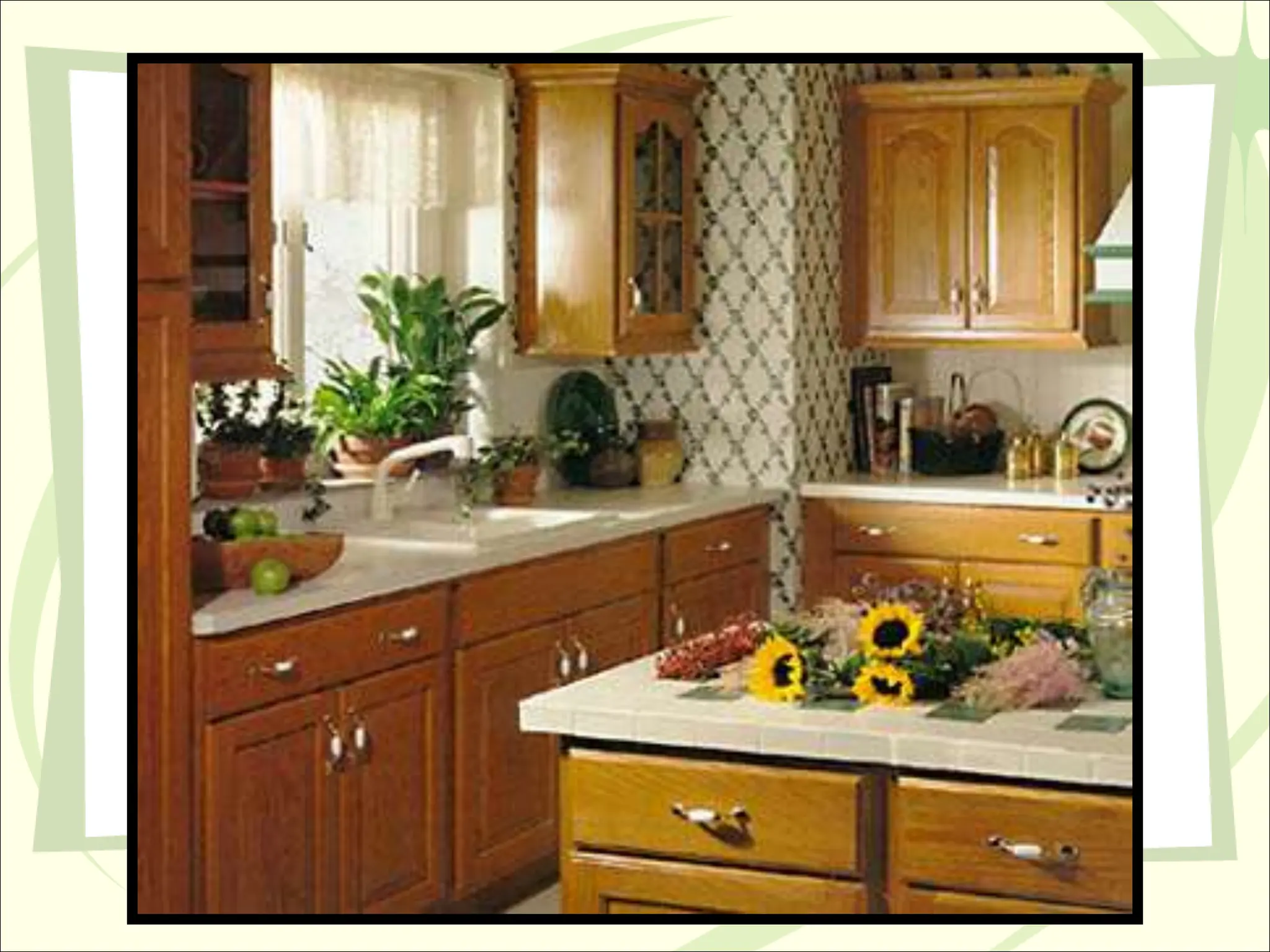
– Warm colors are
suitable for areas of
high activity such as
kitchens and family
rooms
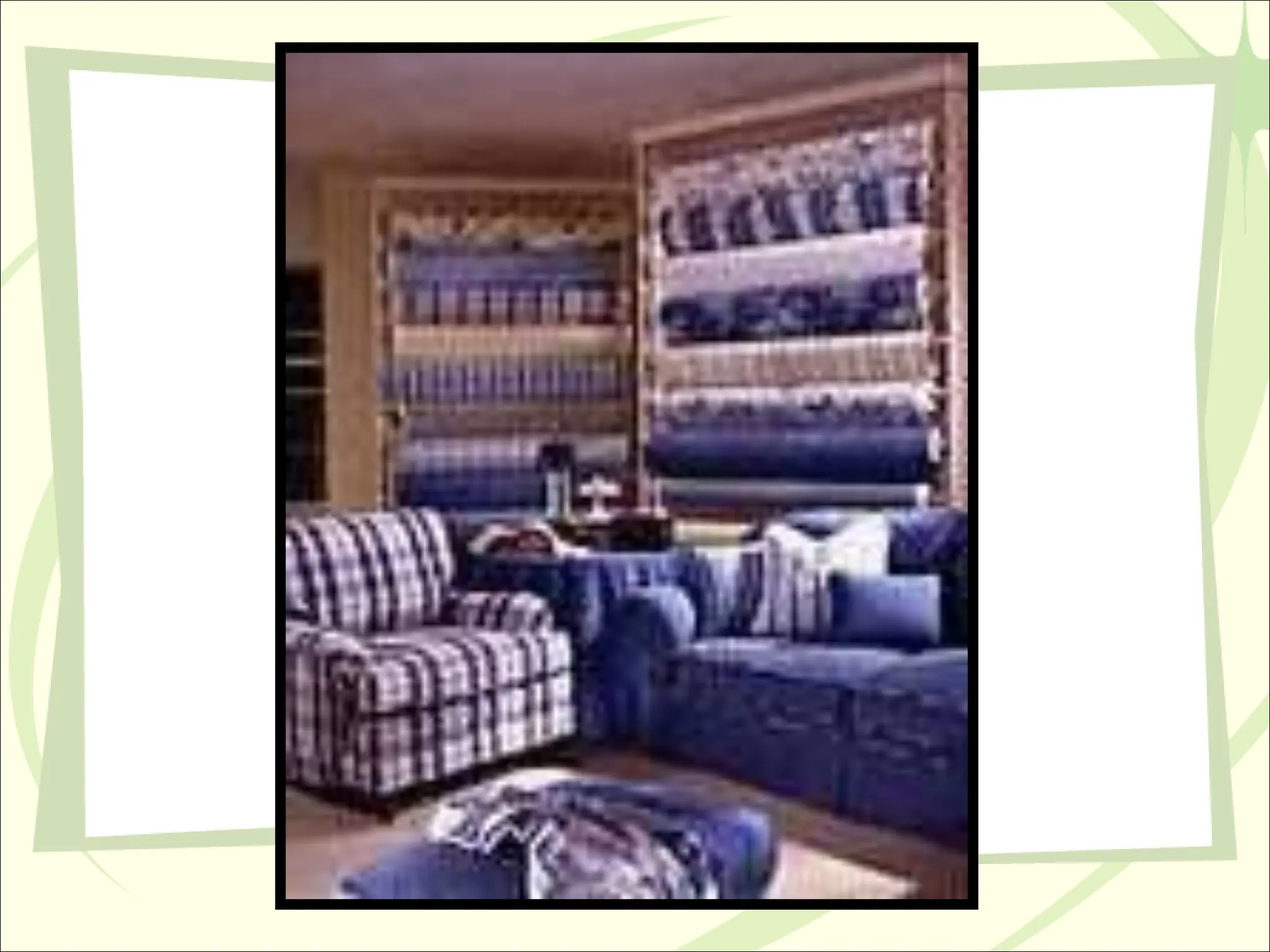
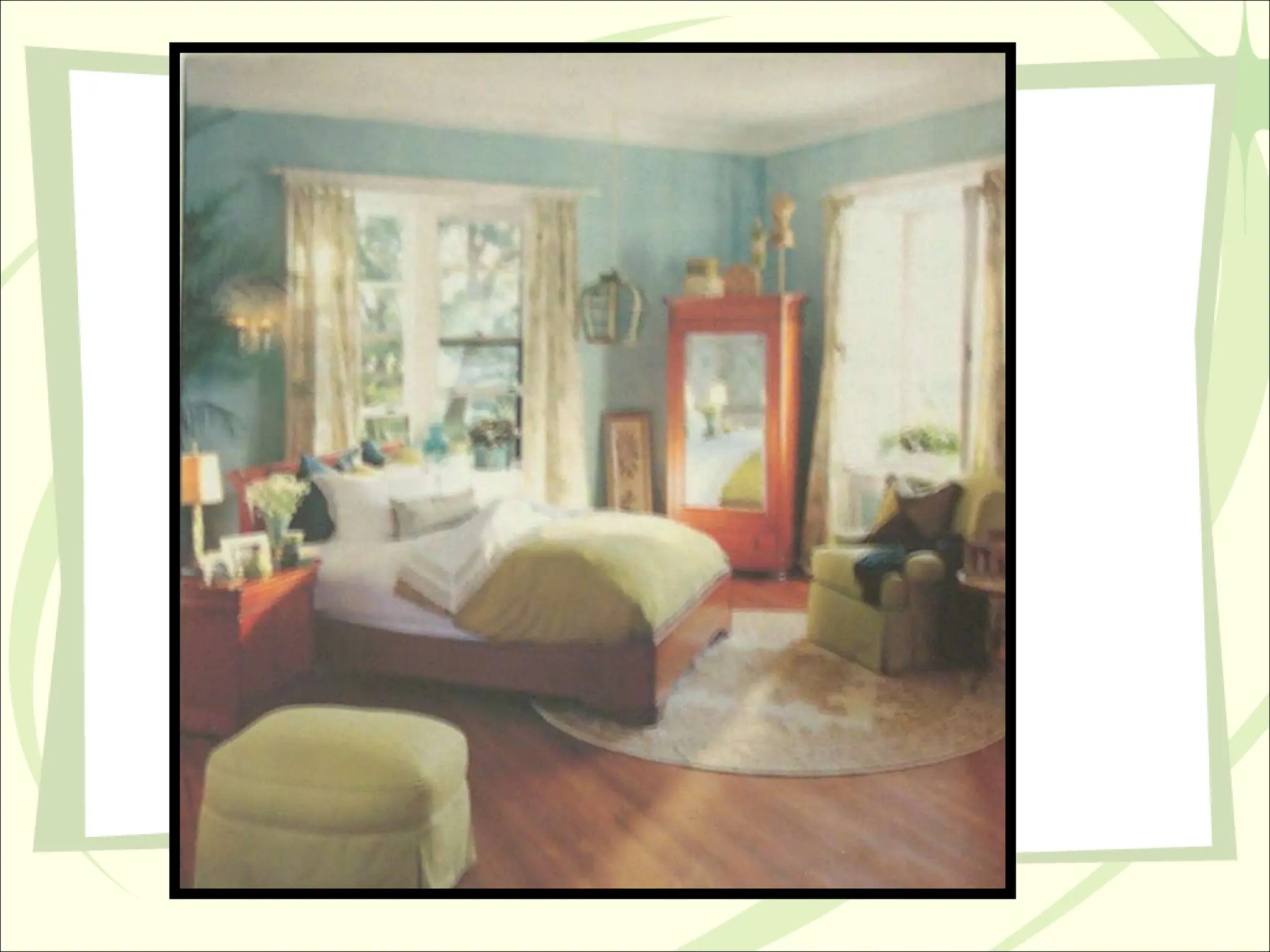
Cool Colors
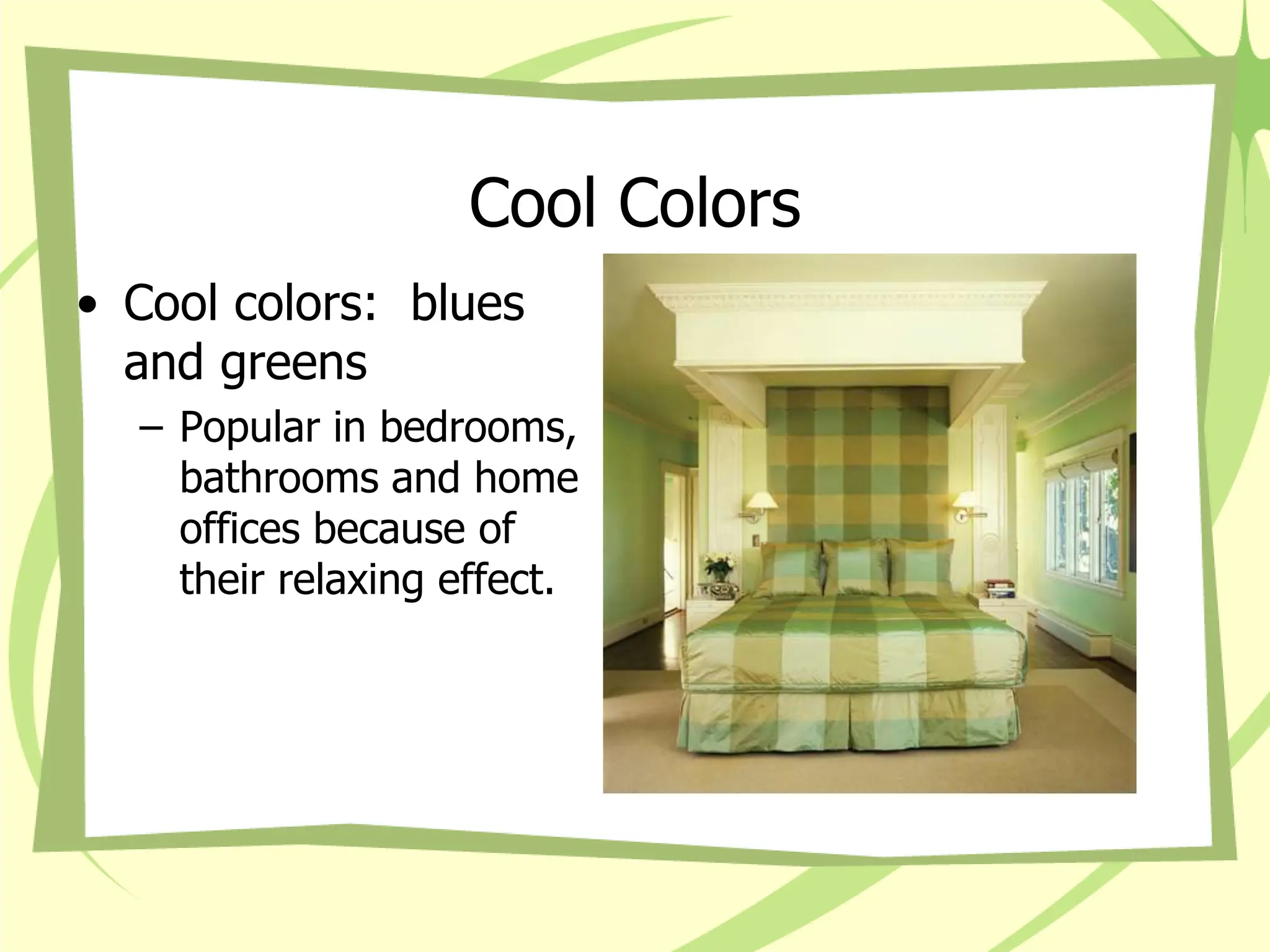
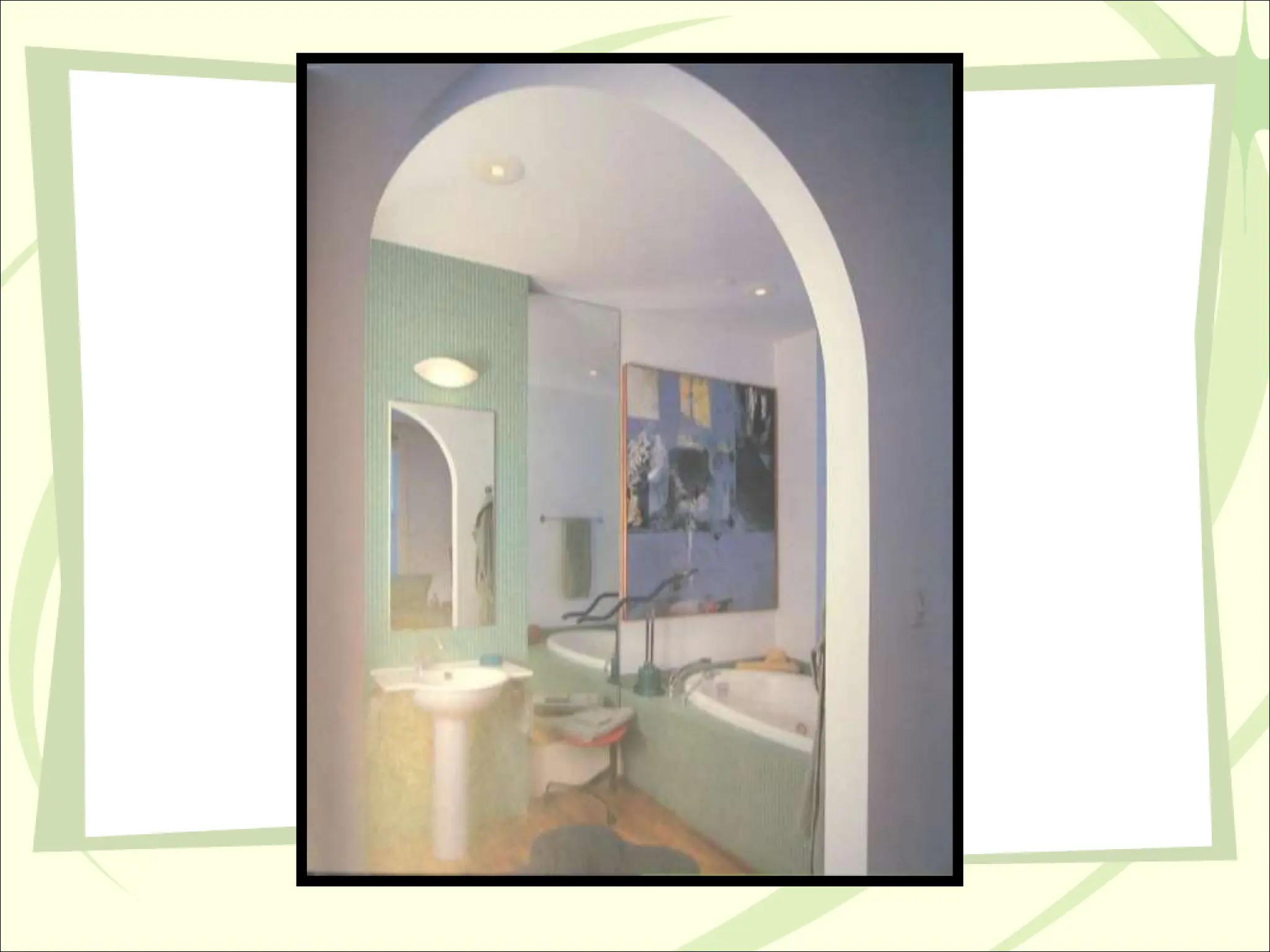
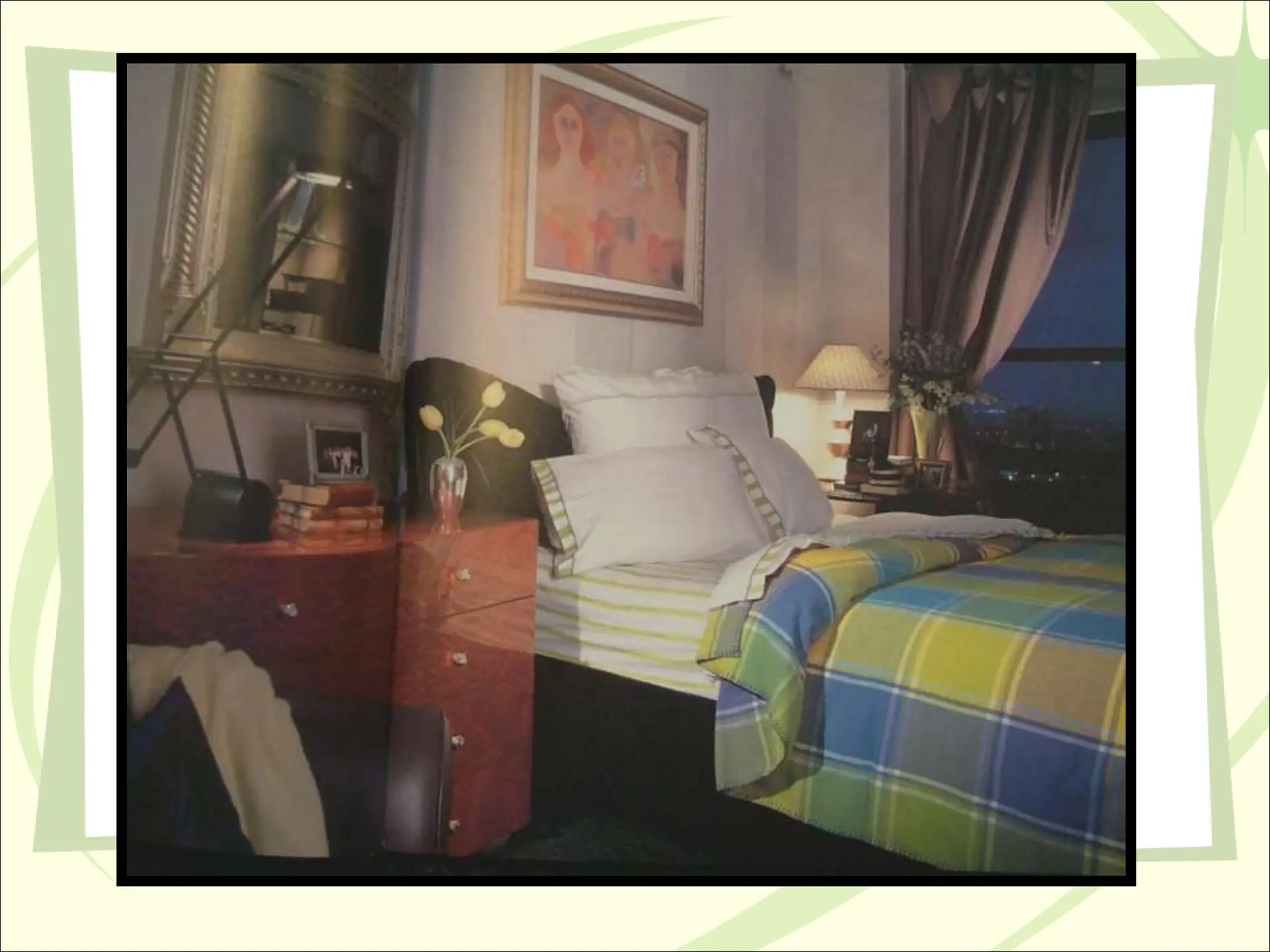
• Cool colors: blues
and greens
– Popular in bedrooms,
bathrooms and home
offices because of
their relaxing effect.
Illusions with Color
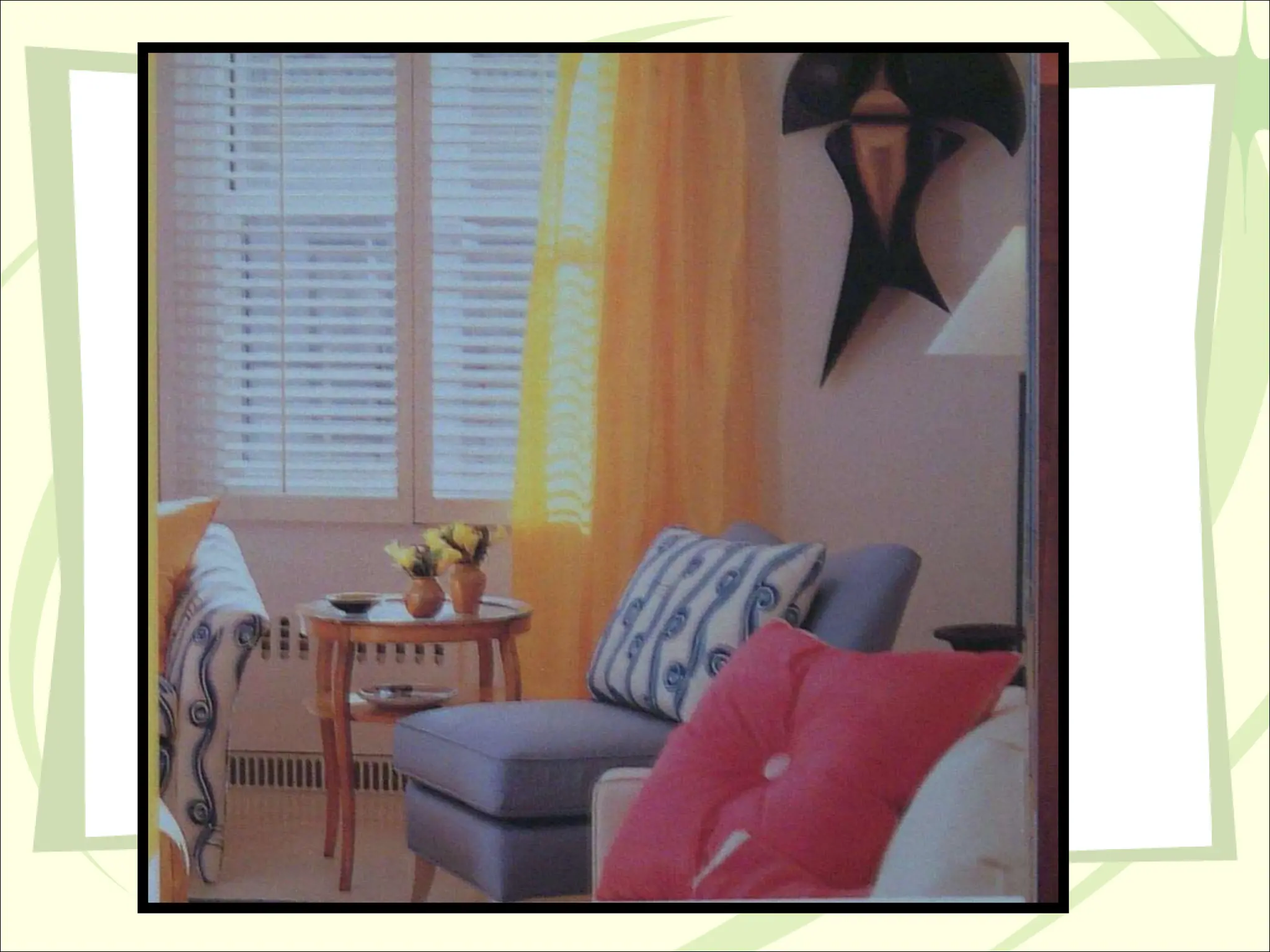
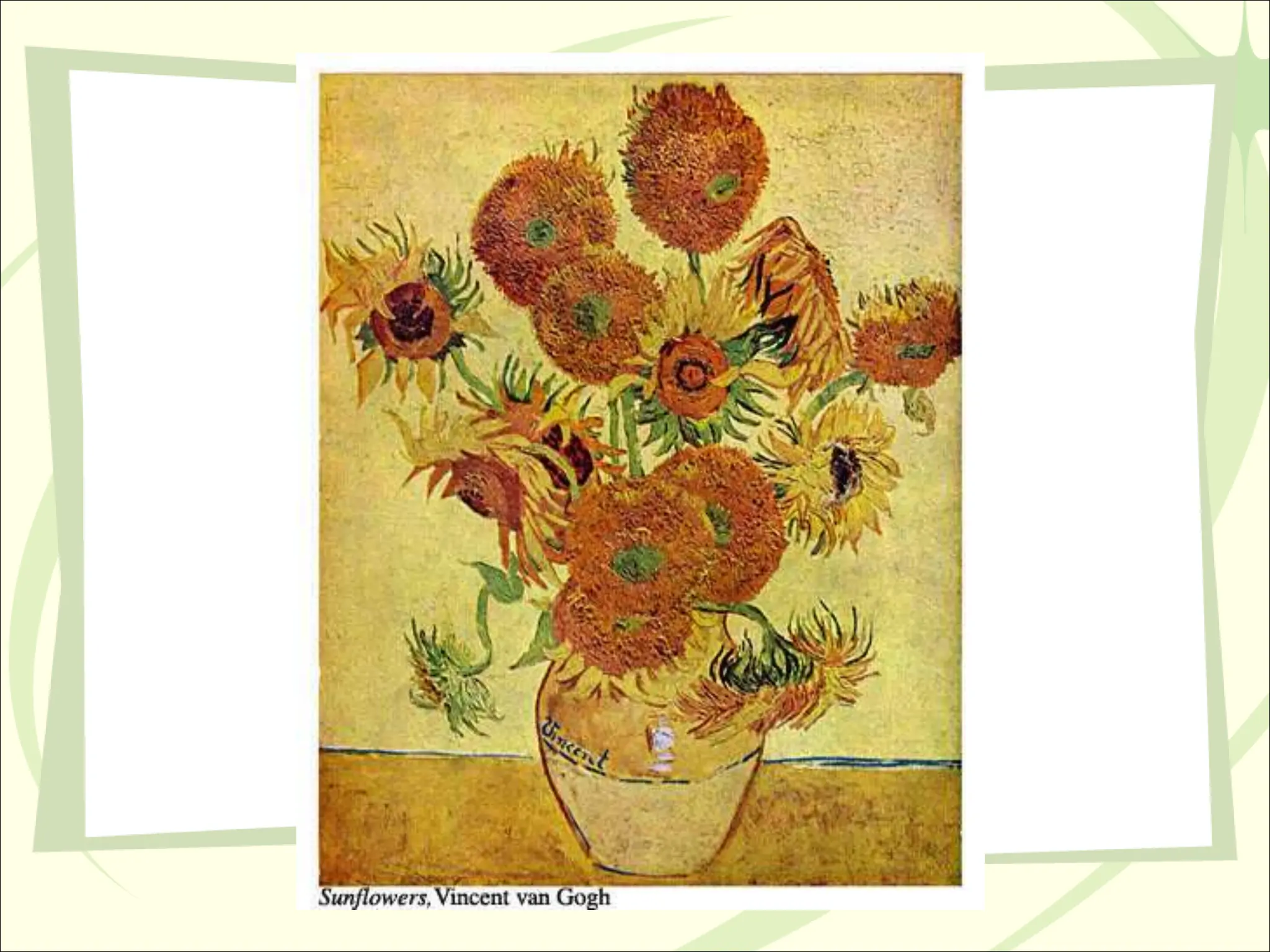
• Warm colored objects appear closer than cool
colored ones.
• You can visually enlarge a room by painting
the walls a cool color.
• High ceilings painted dark colors appear
lower and a light color will allow a ceiling to
seem higher.
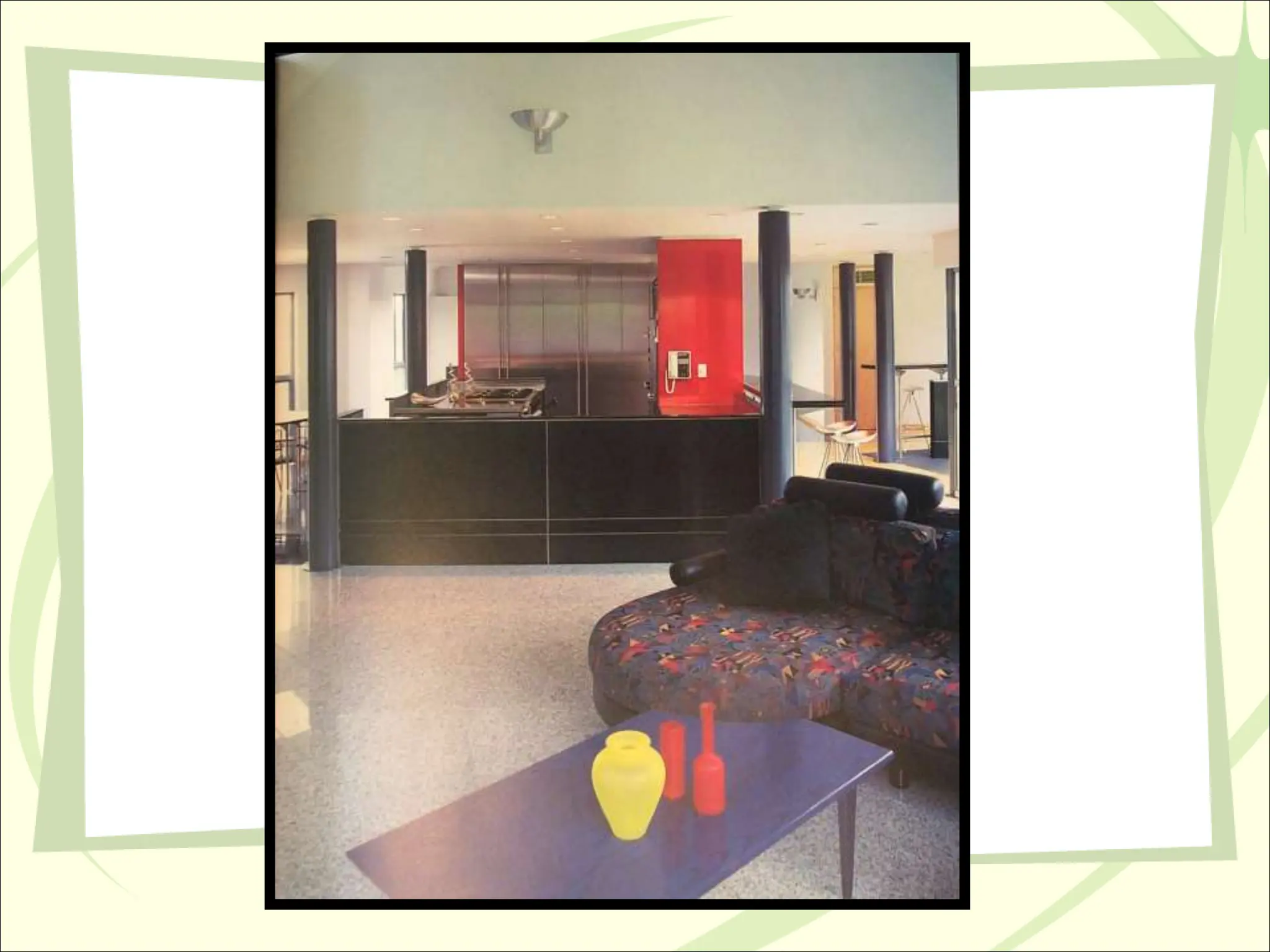
• Bold, bright colors make objects stand out.
Components of Color
• Pigments- substances that
absorb some light rays and
reflect others.
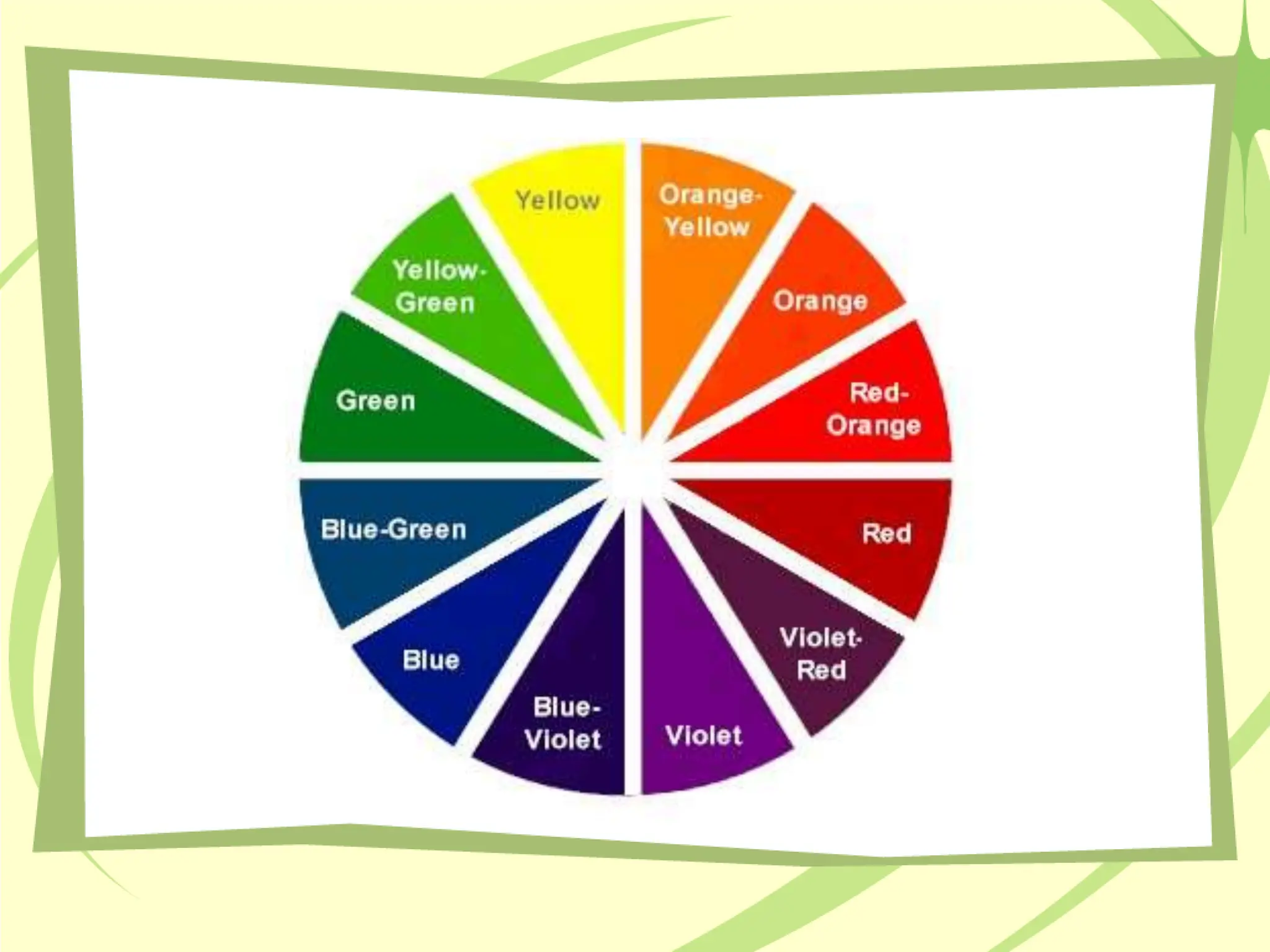
• Hue is the color feature that
makes one color different from
others.
• Intensity is the brightness or
dullness of a color.
• Complement color is the color
opposite it on the color wheel.
• Value is the lightness or
darkness of a color.
• Adding white to a hue creates a
tint.
– Ex. Pink is a tint of red.
• Adding black to a he creates a
shade.
– Lowers the value and darkens
it.
• Adding gray to a color creates a
tone.
Color Scheme
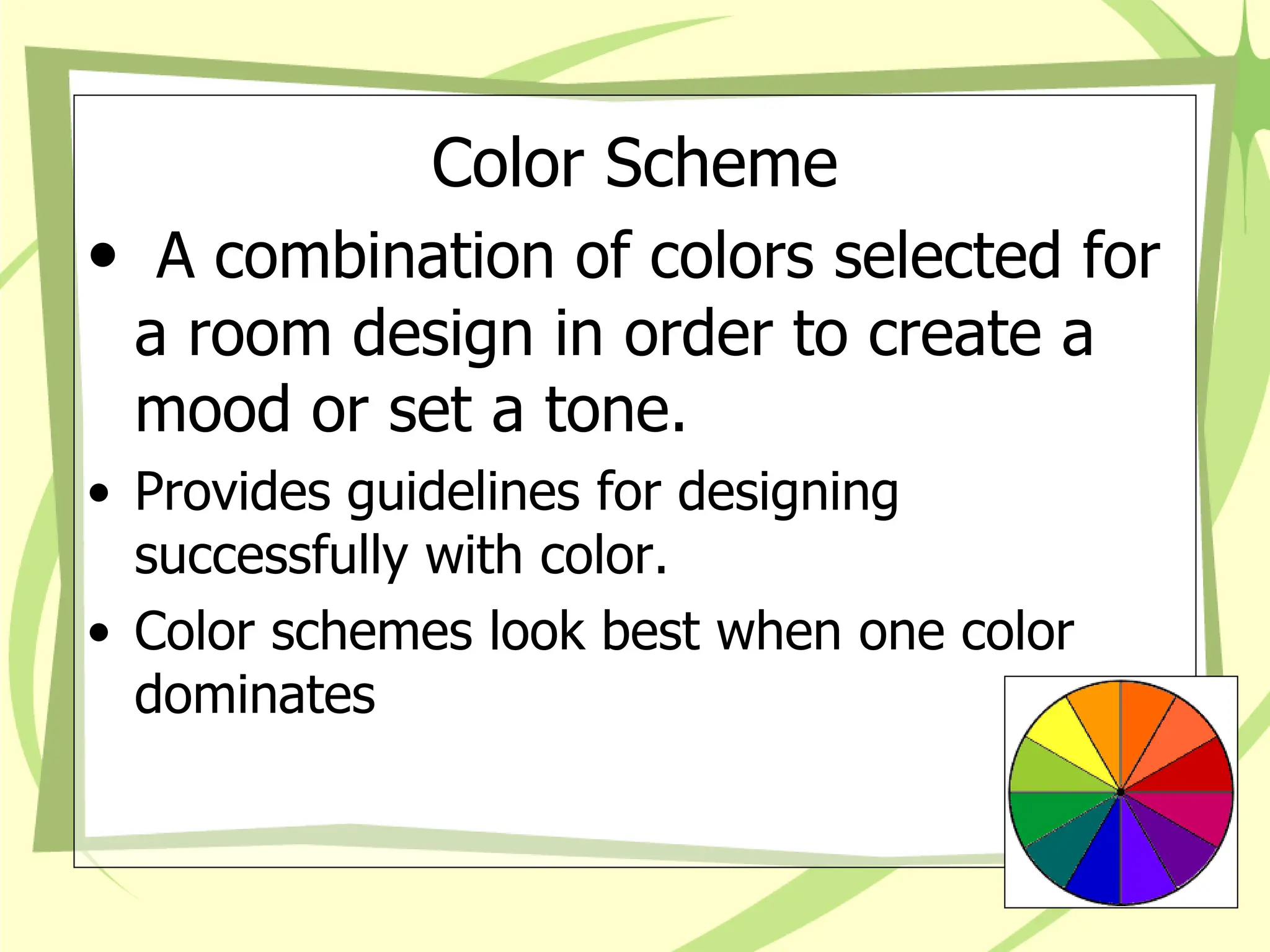
• A combination of colors selected for
a room design in order to create a
mood or set a tone.
• Provides guidelines for designing
successfully with color.
• Color schemes look best when one color
dominates
Types of Color
Schemes
1. Neutral
2. Monochromatic
3. Analogous
4. Complementary
5. Split-Complementary
6. Triad
Neutral
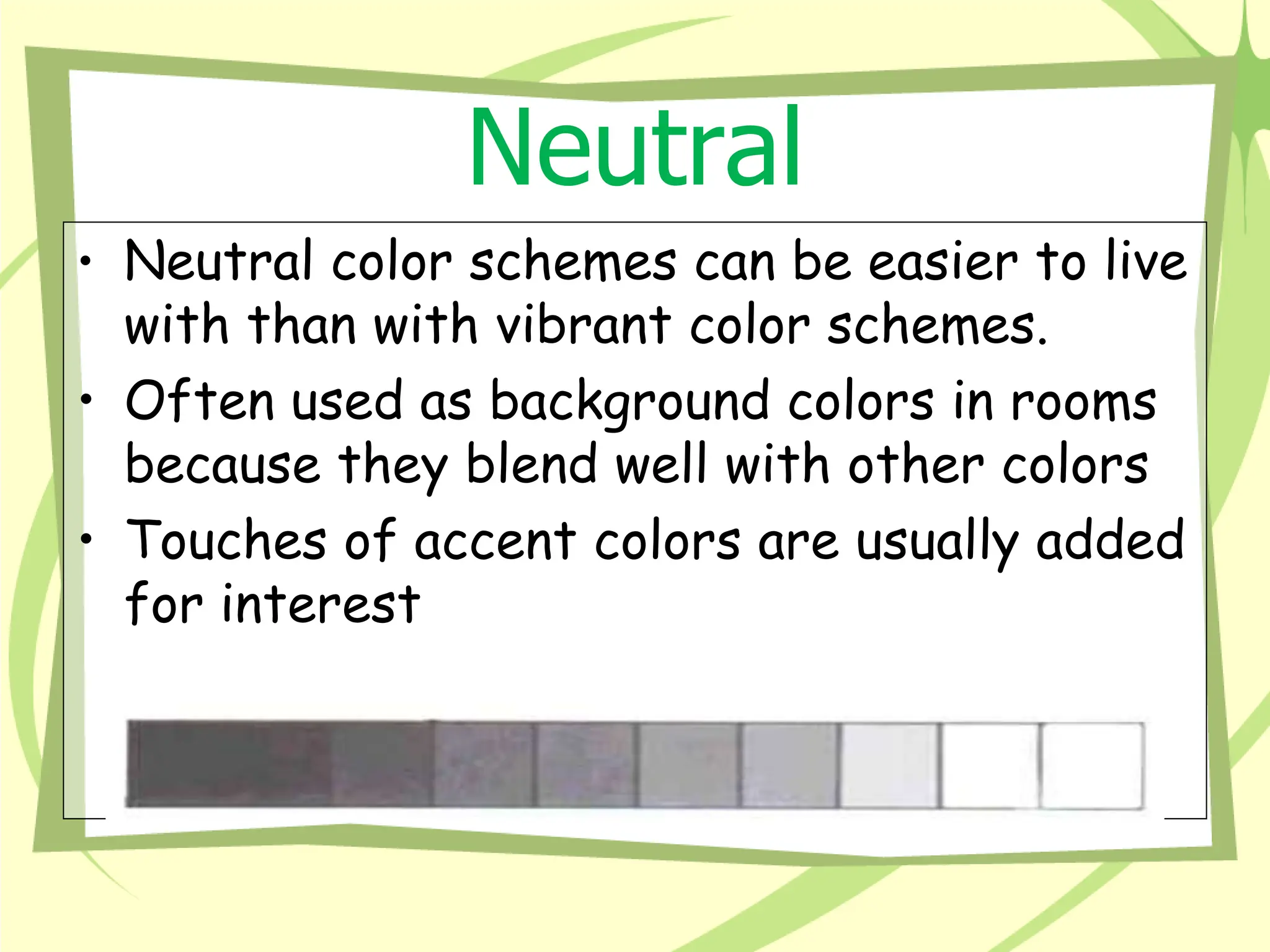
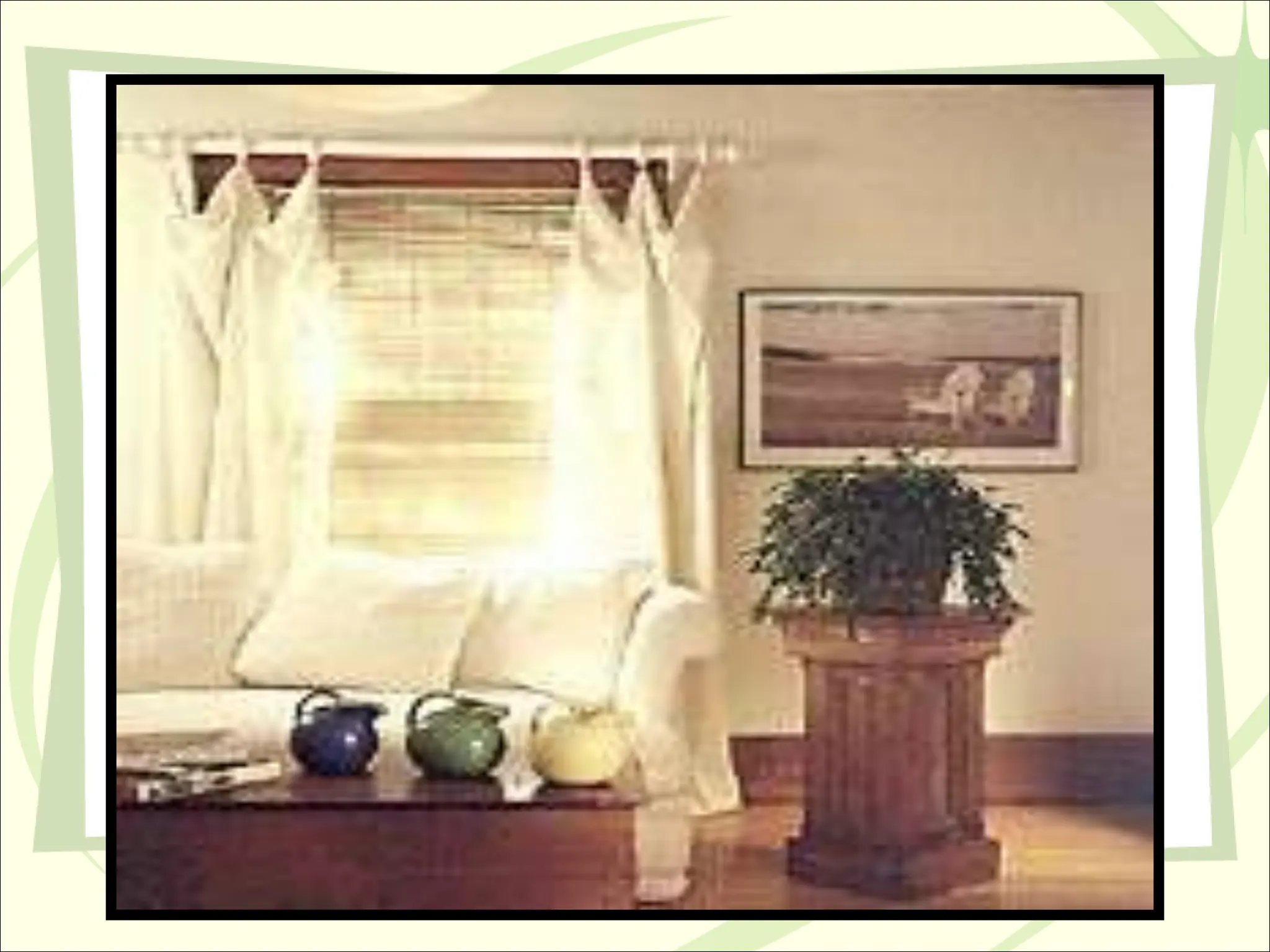
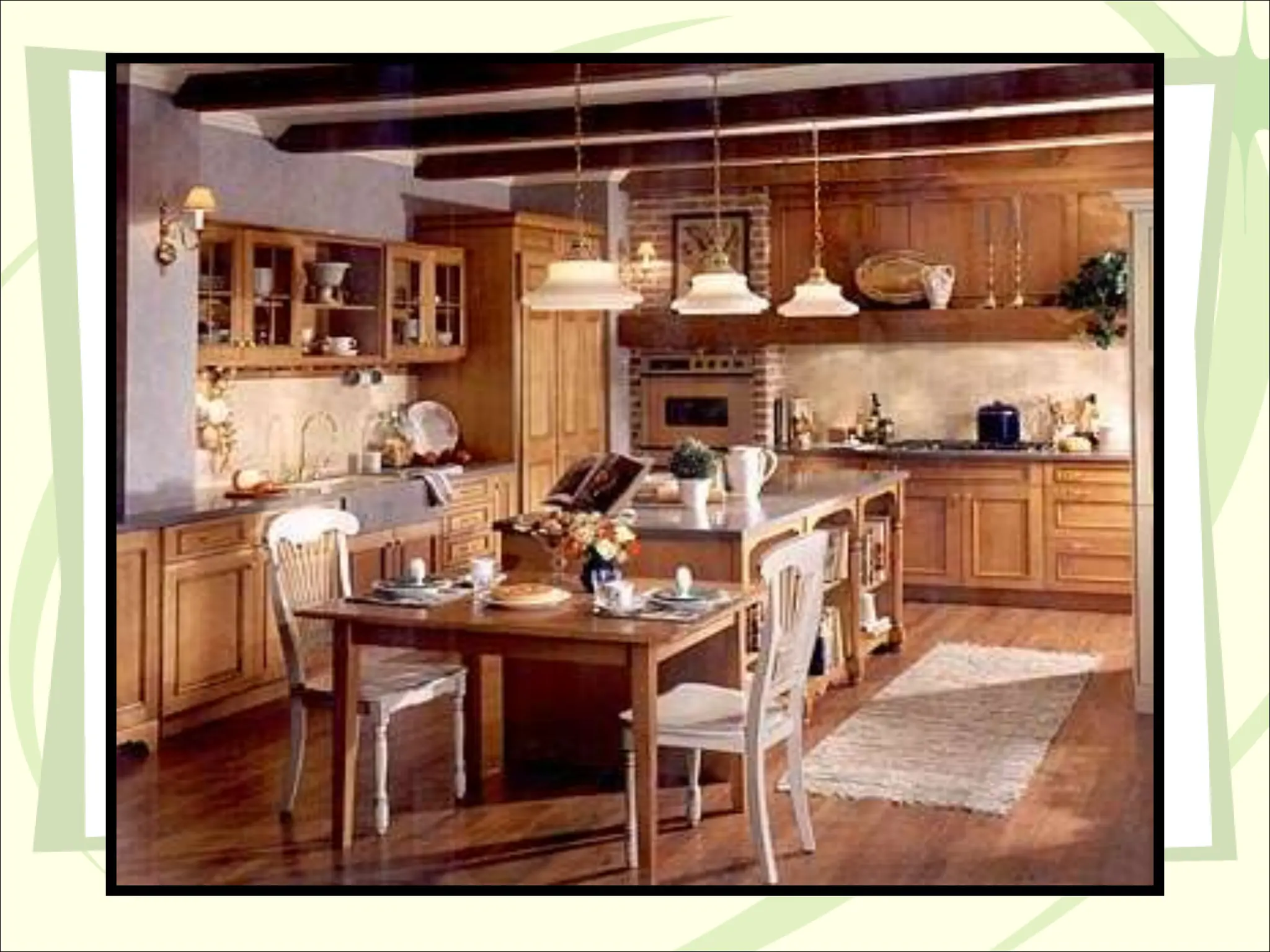
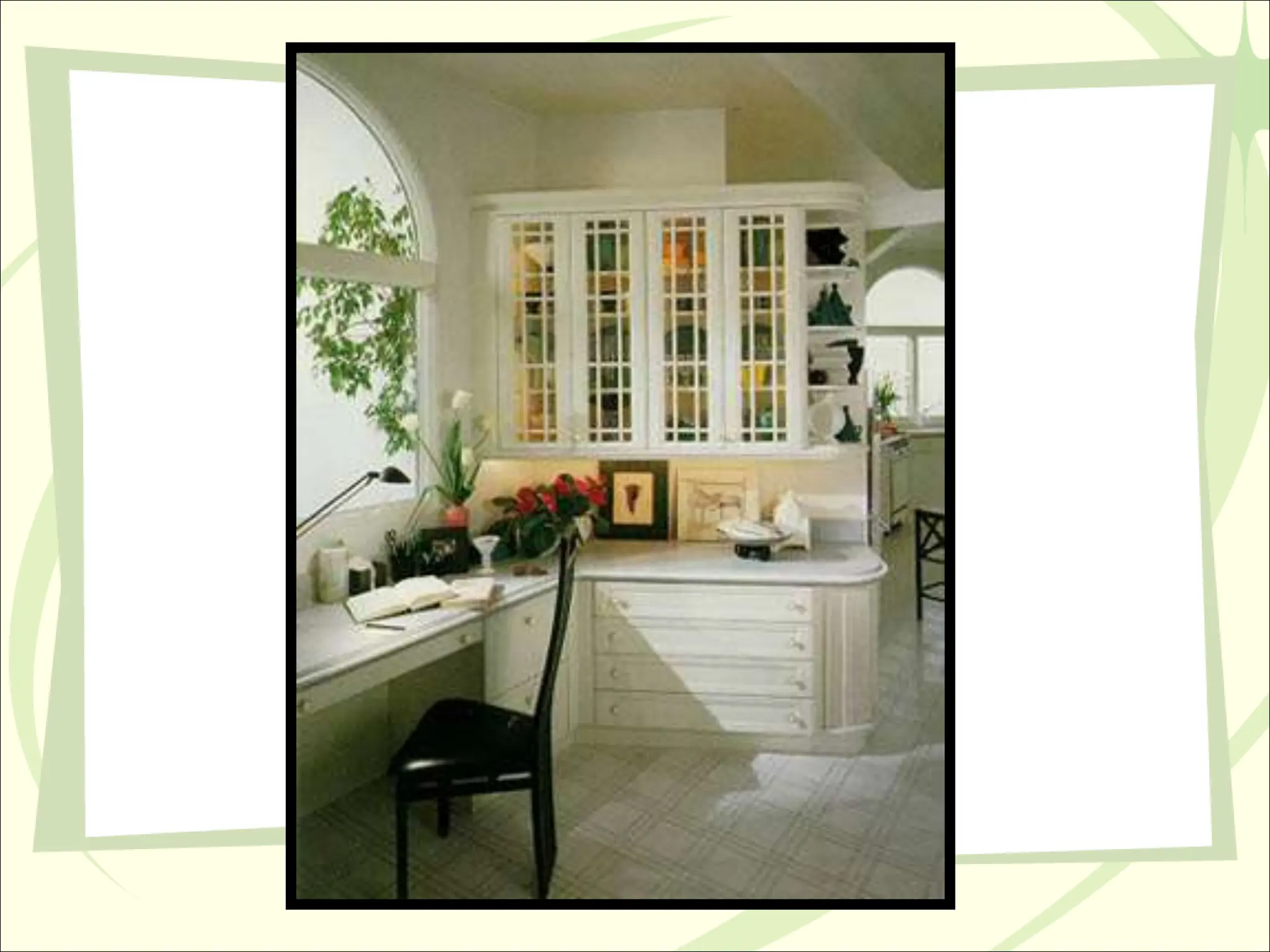
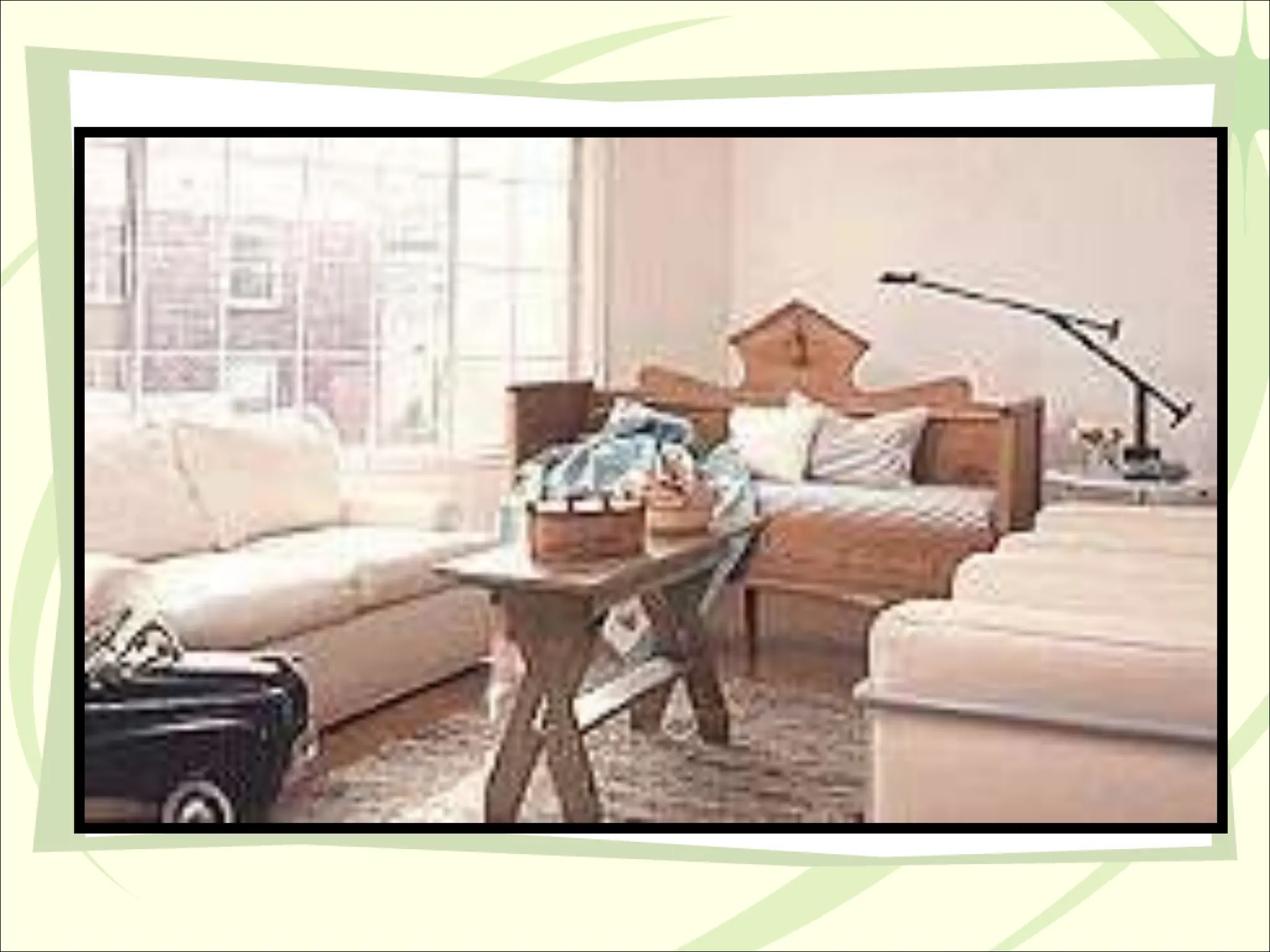
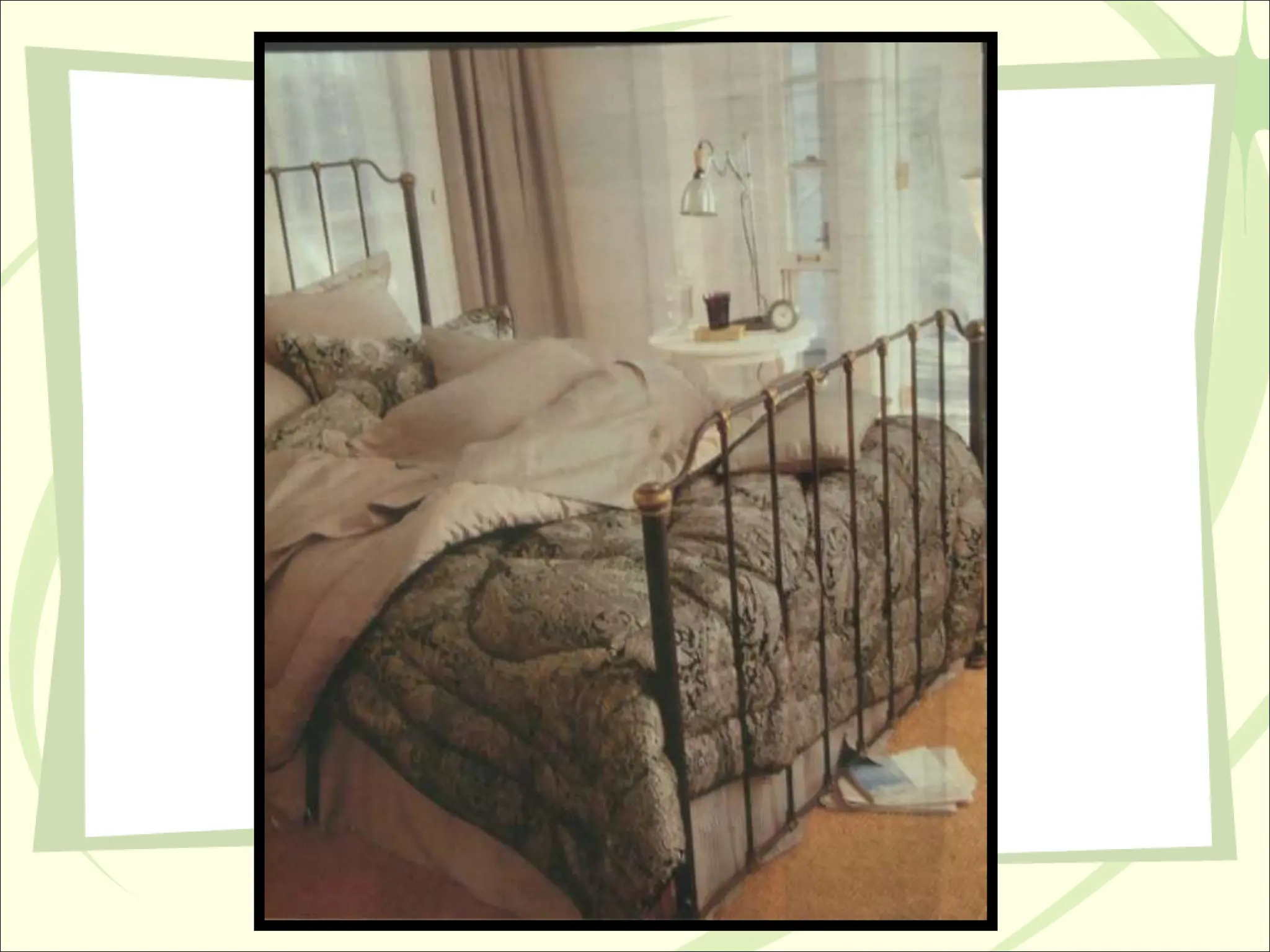
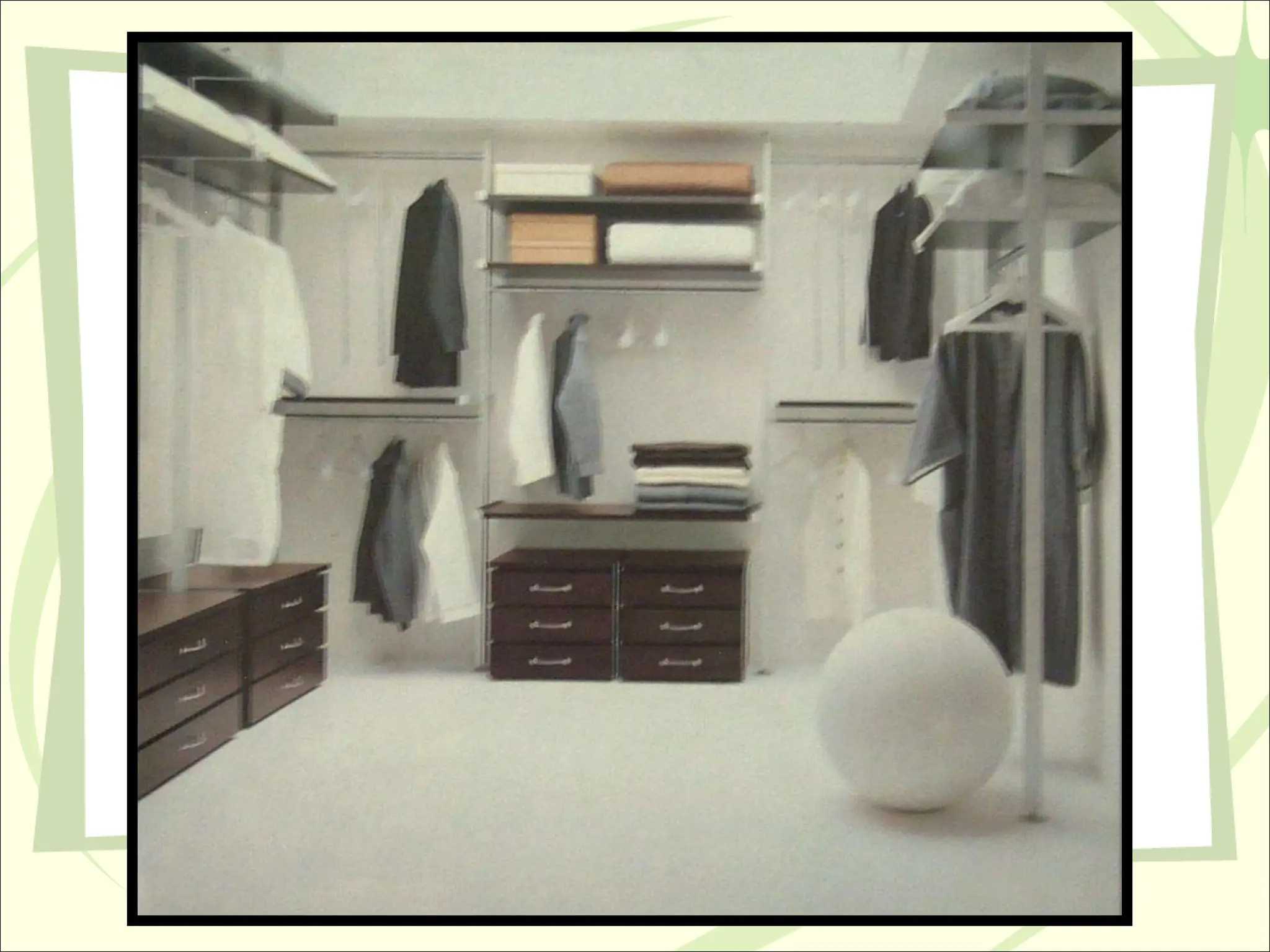
• Neutral color schemes can be easier to live
with than with vibrant color schemes.
• Often used as background colors in rooms
because they blend well with other colors
• Touches of accent colors are usually added
for interest
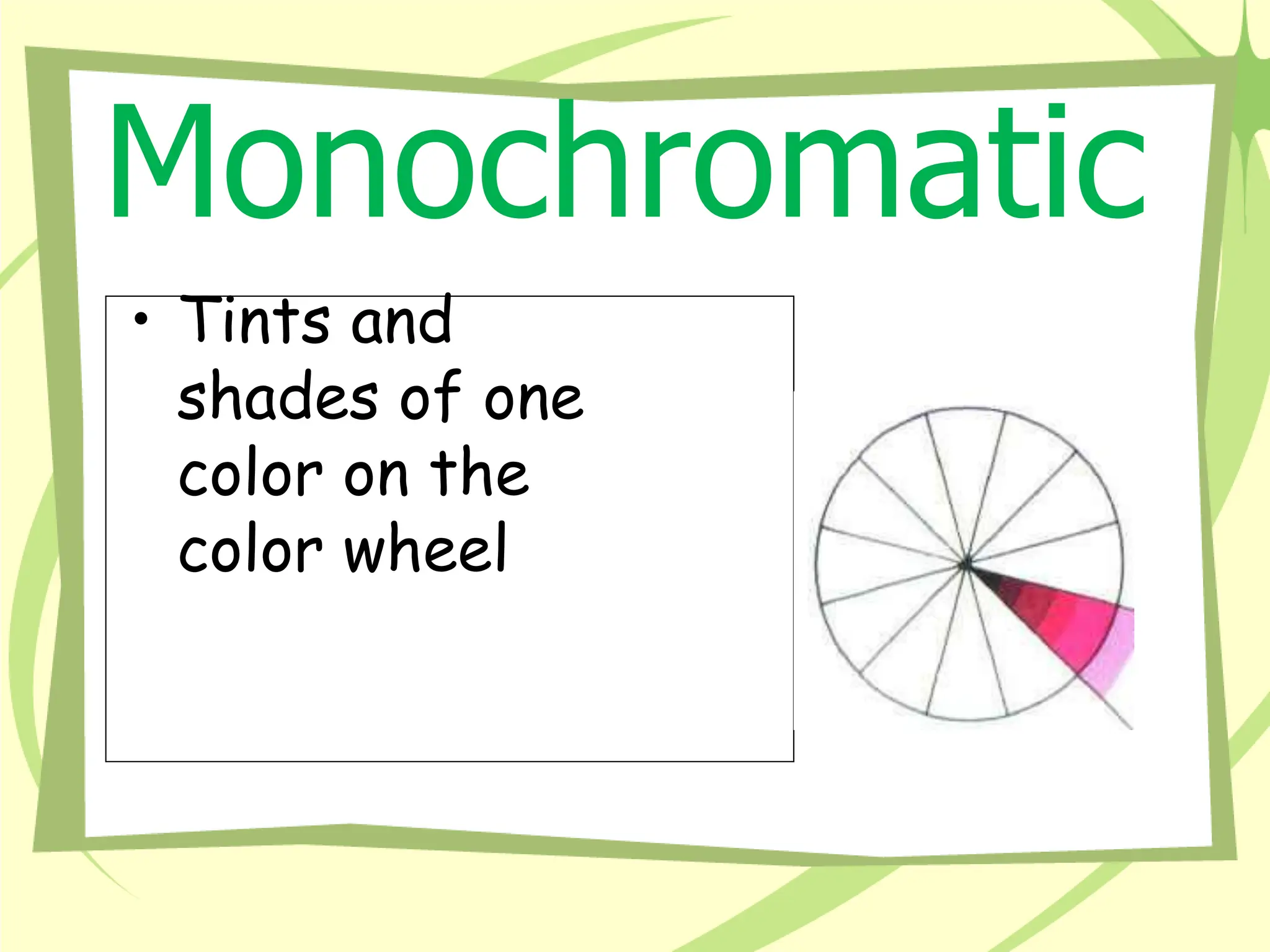
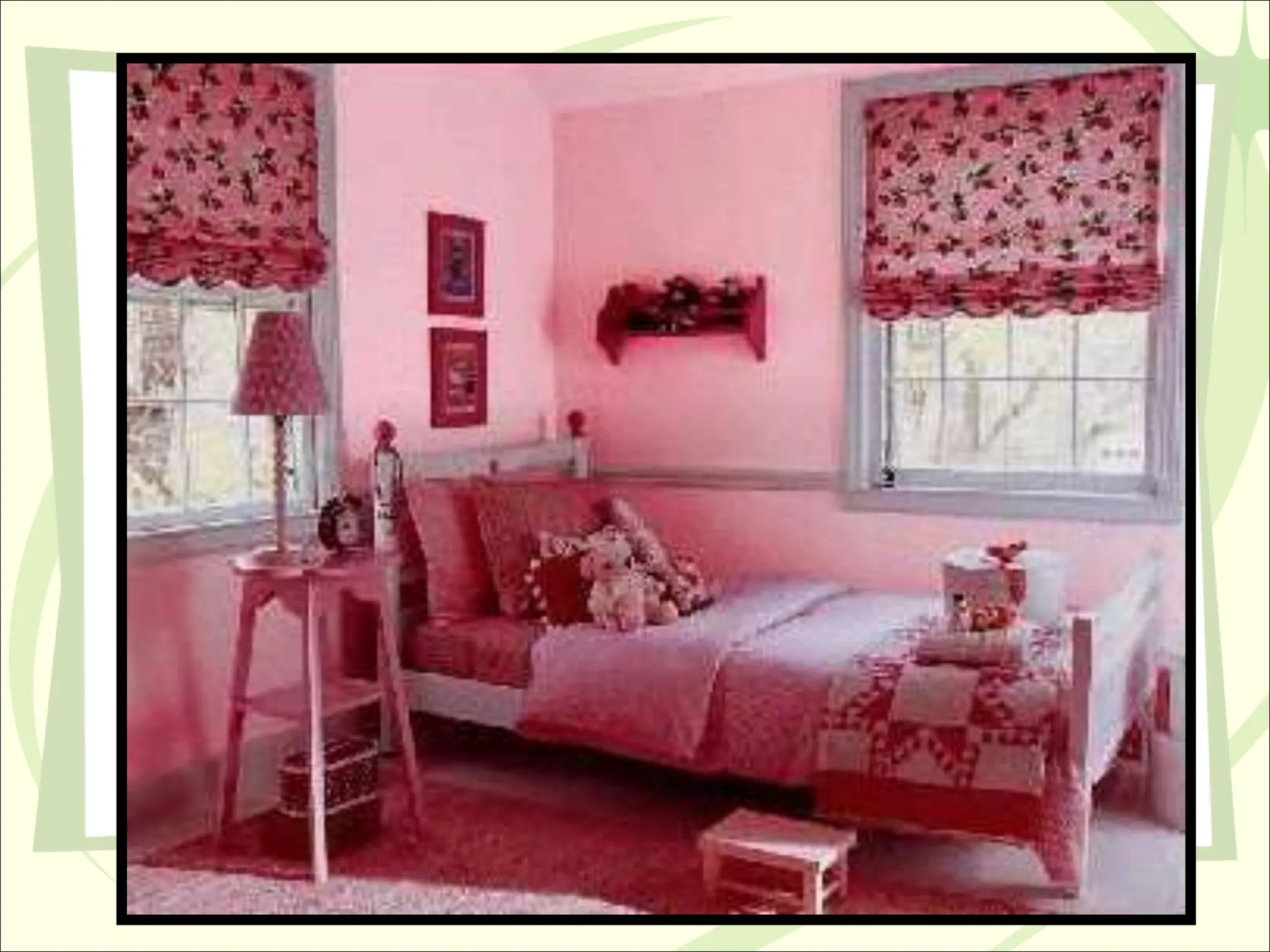
Monochromatic
• Tints and
shades of one
color on the
color wheel
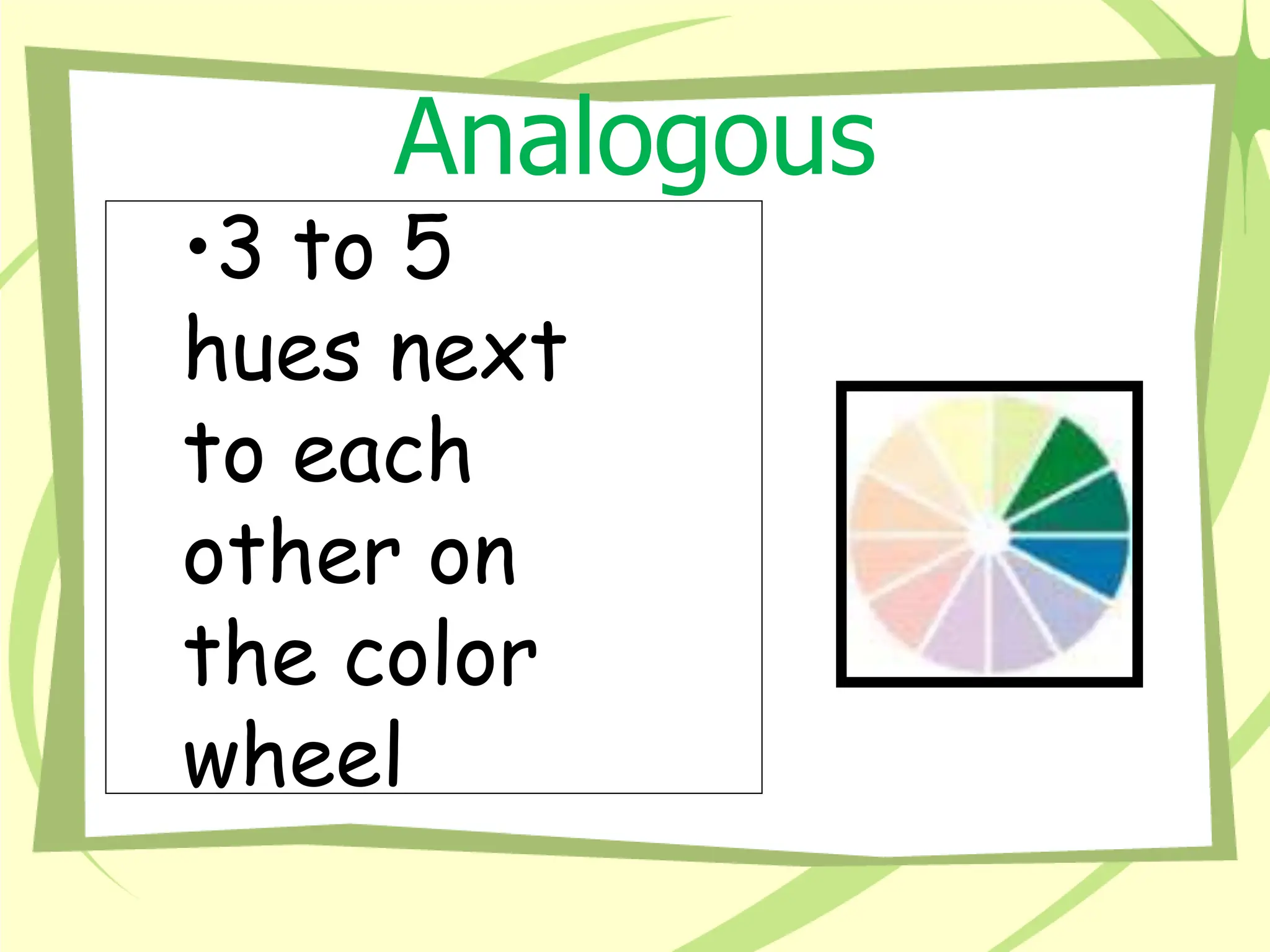
Analogous
•3 to 5
hues next
to each
other on
the color
wheel
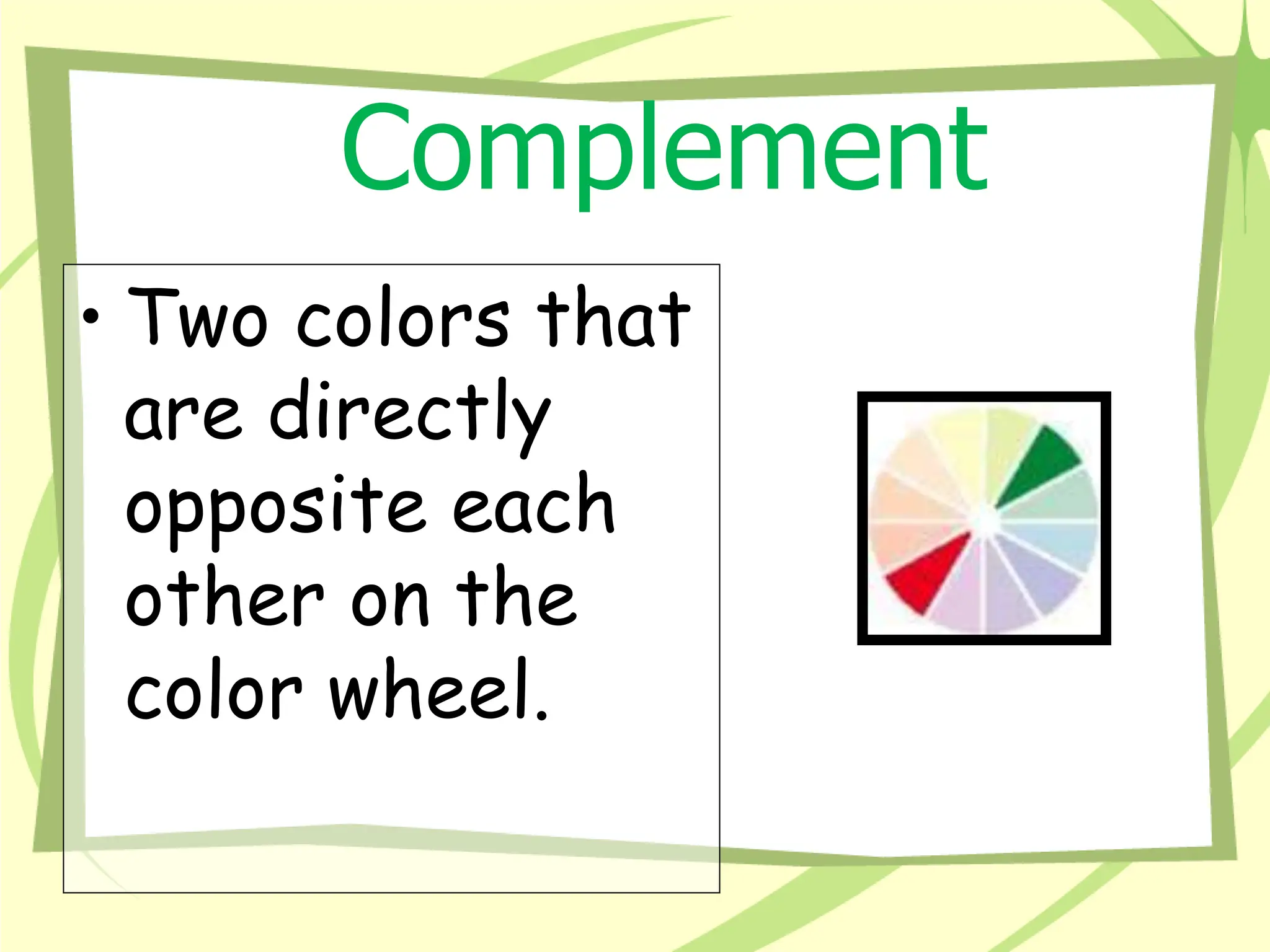
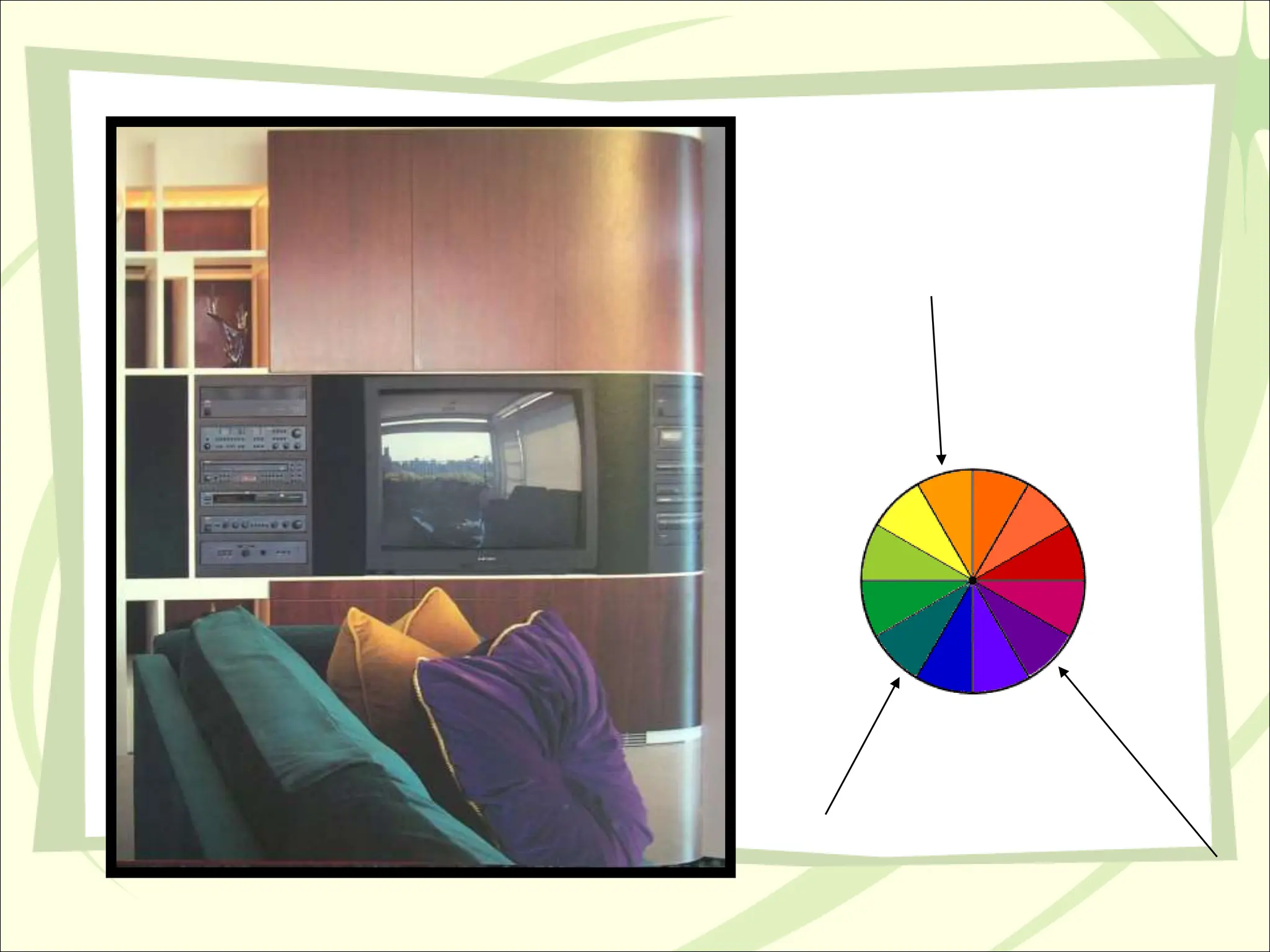
Complement
• Two colors that
are directly
opposite each
other on the
color wheel.
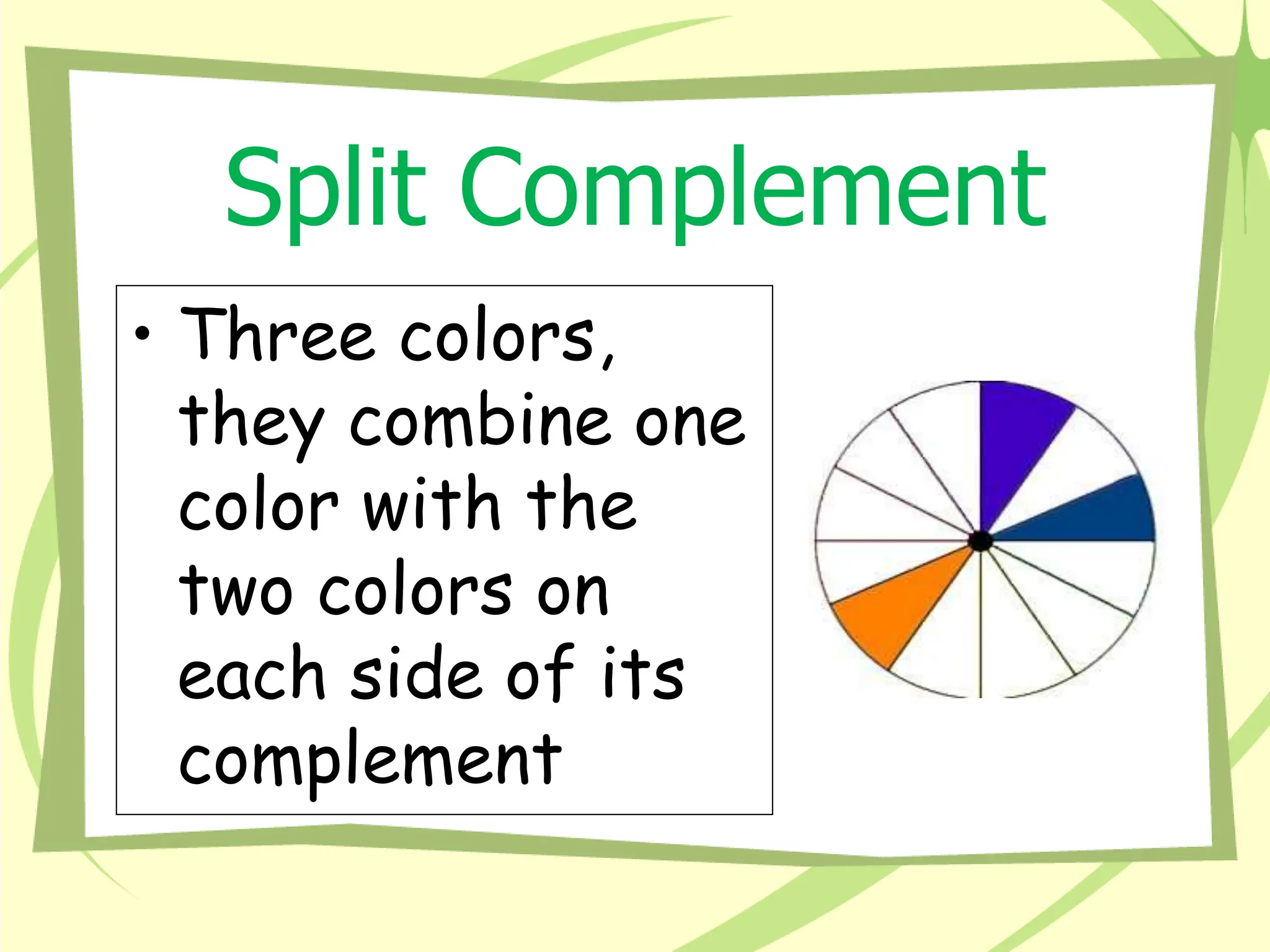
Split Complement
• Three colors,
they combine one
color with the
two colors on
each side of its
complement
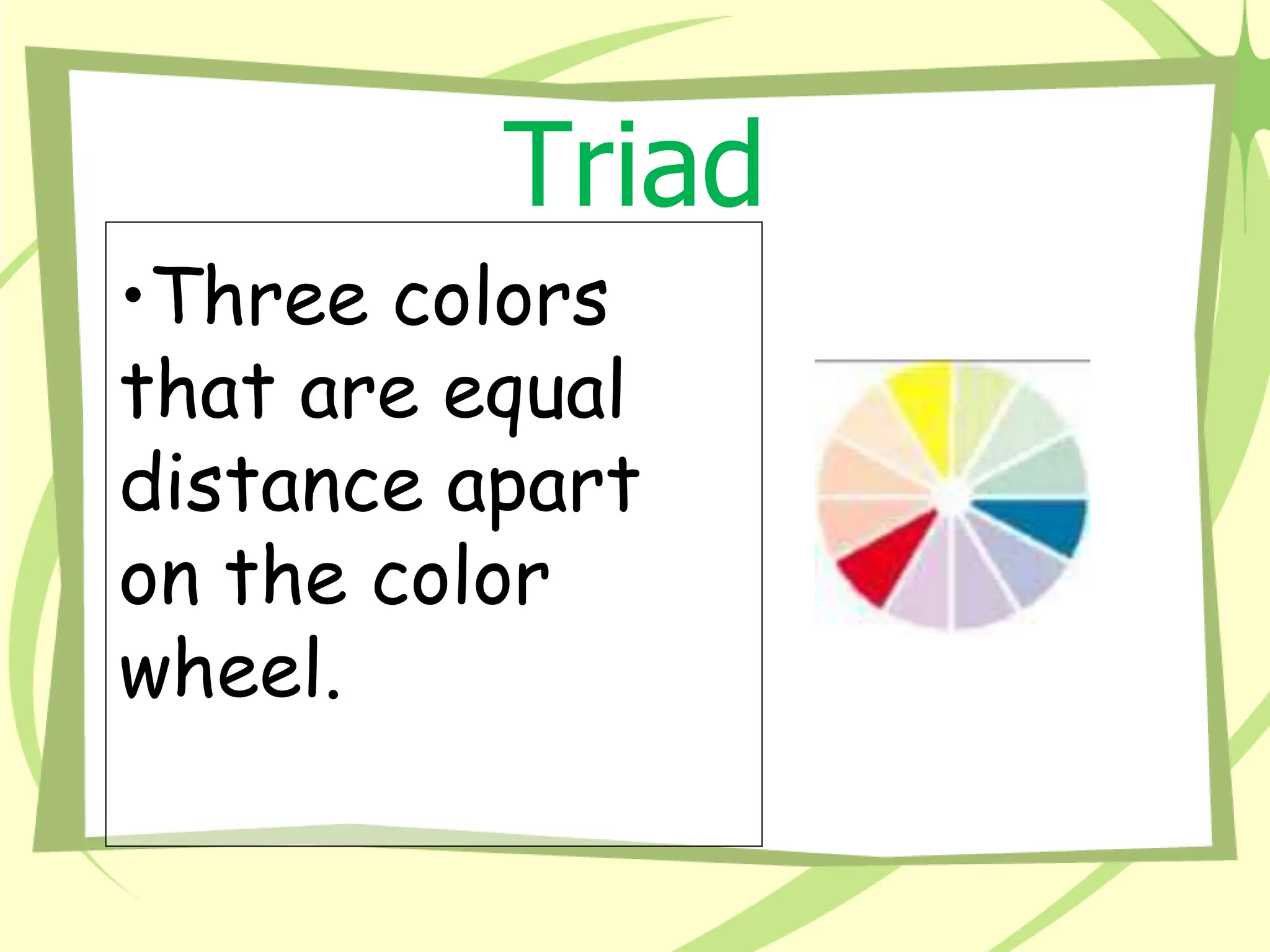
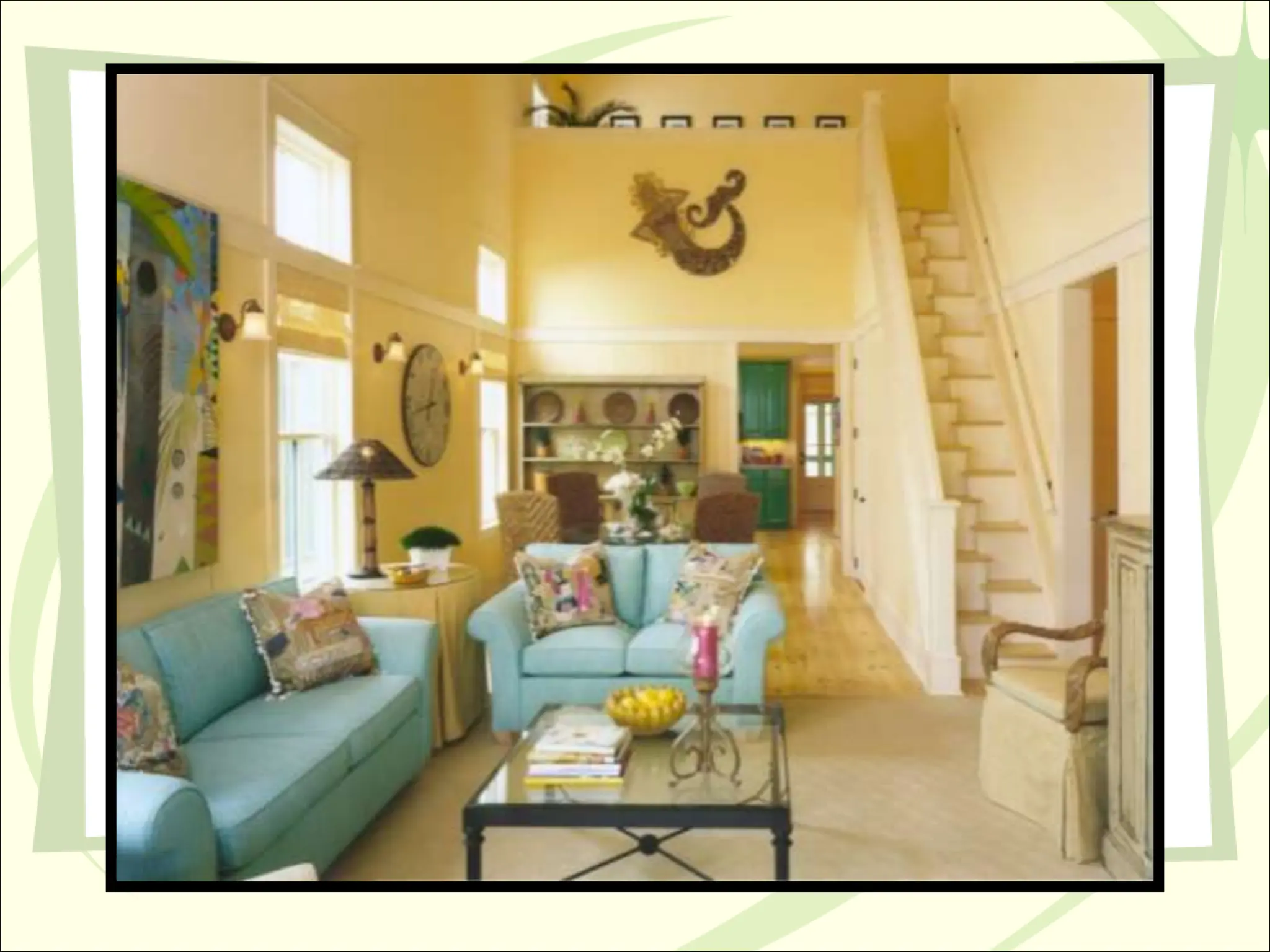
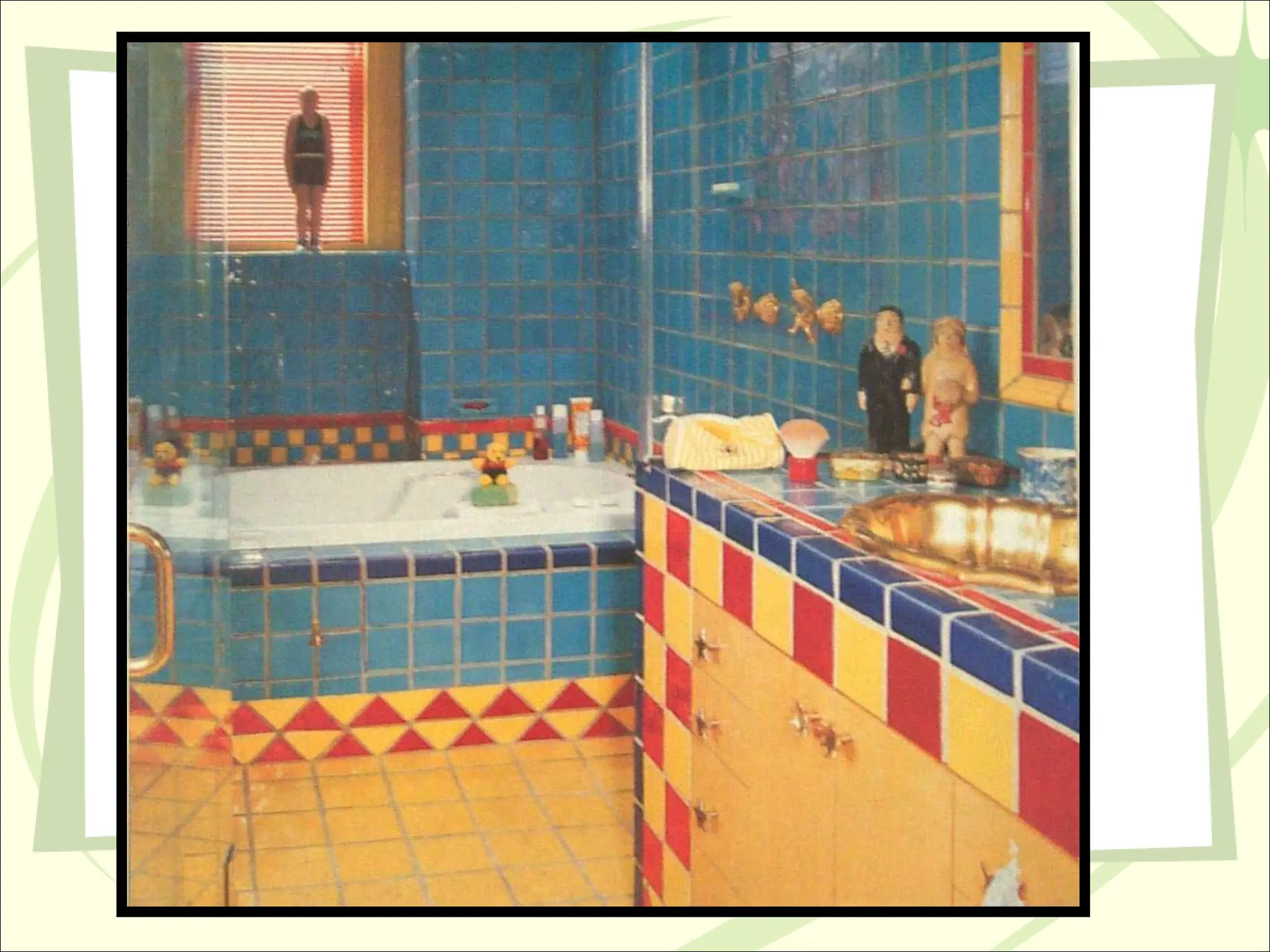
Triad
•Three colors
that are equal
distance apart
on the color
wheel.
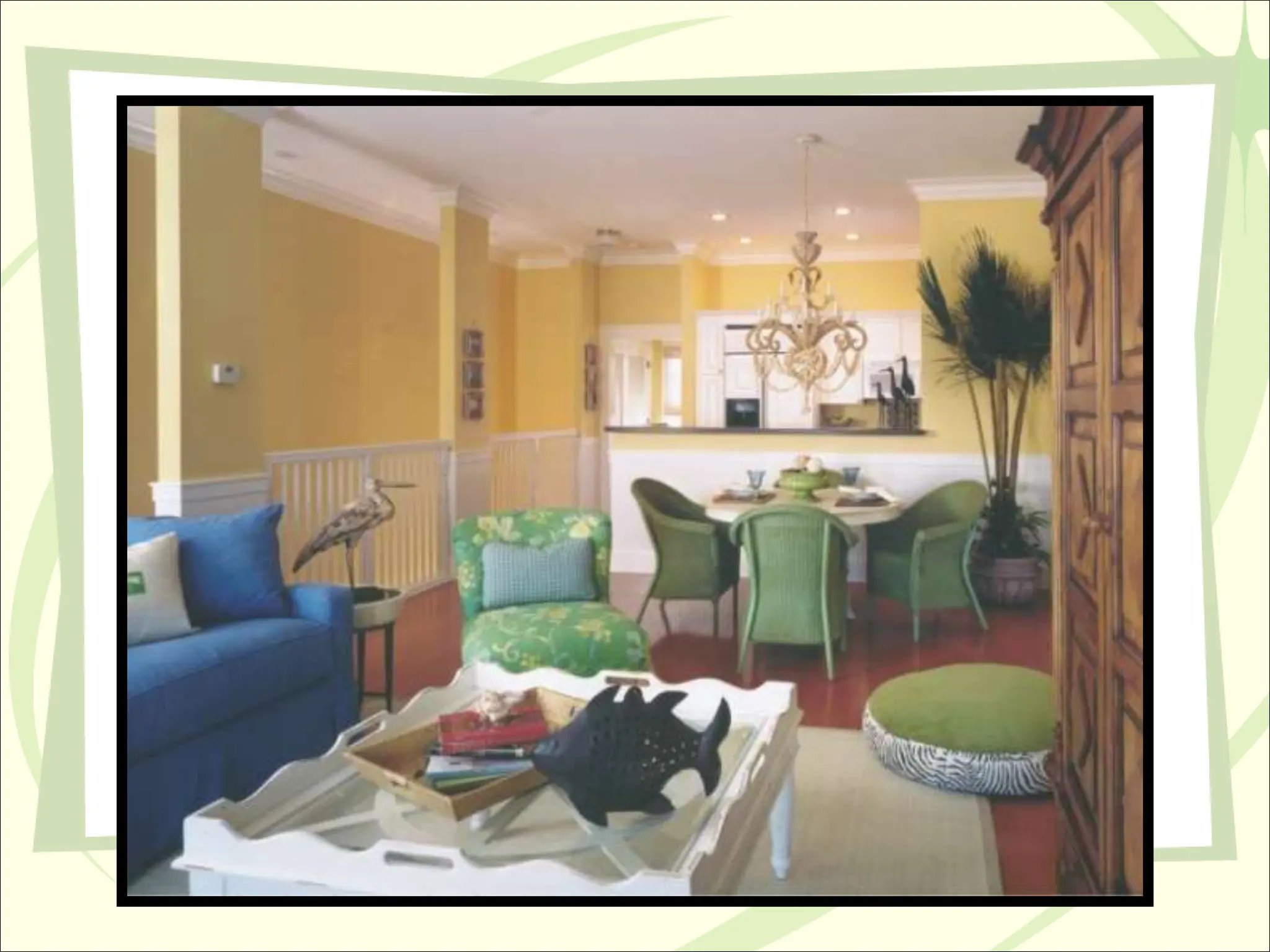
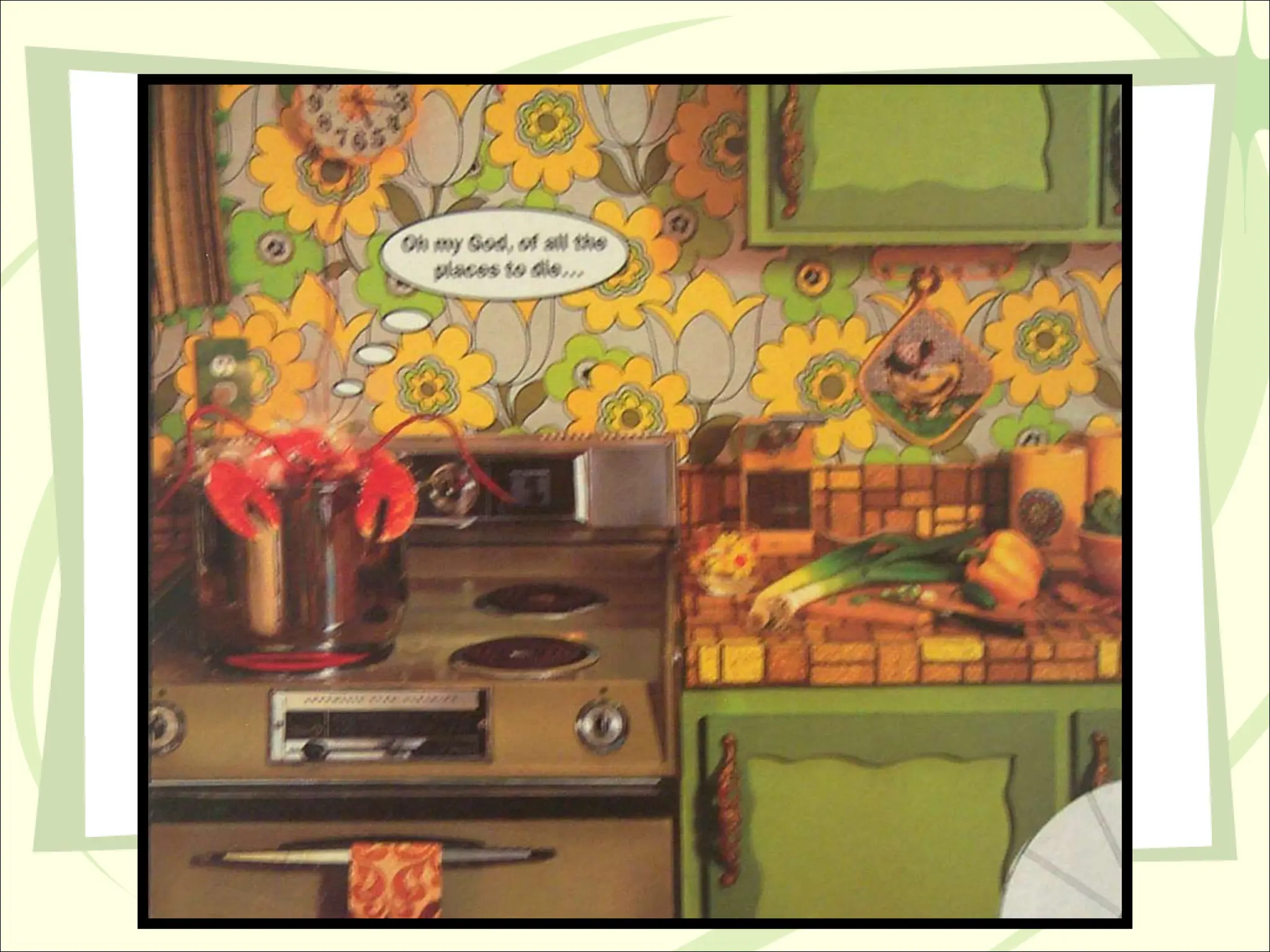
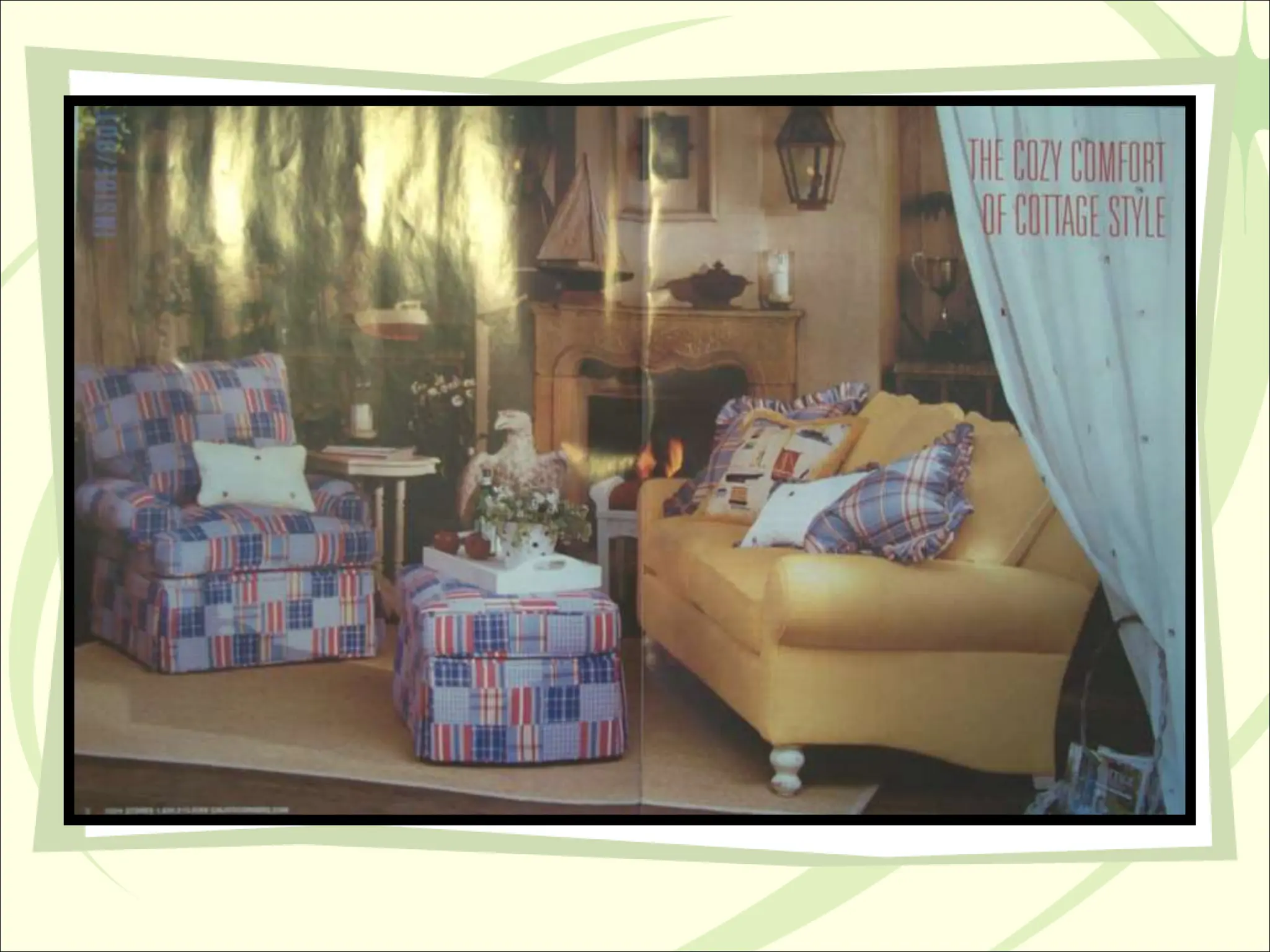
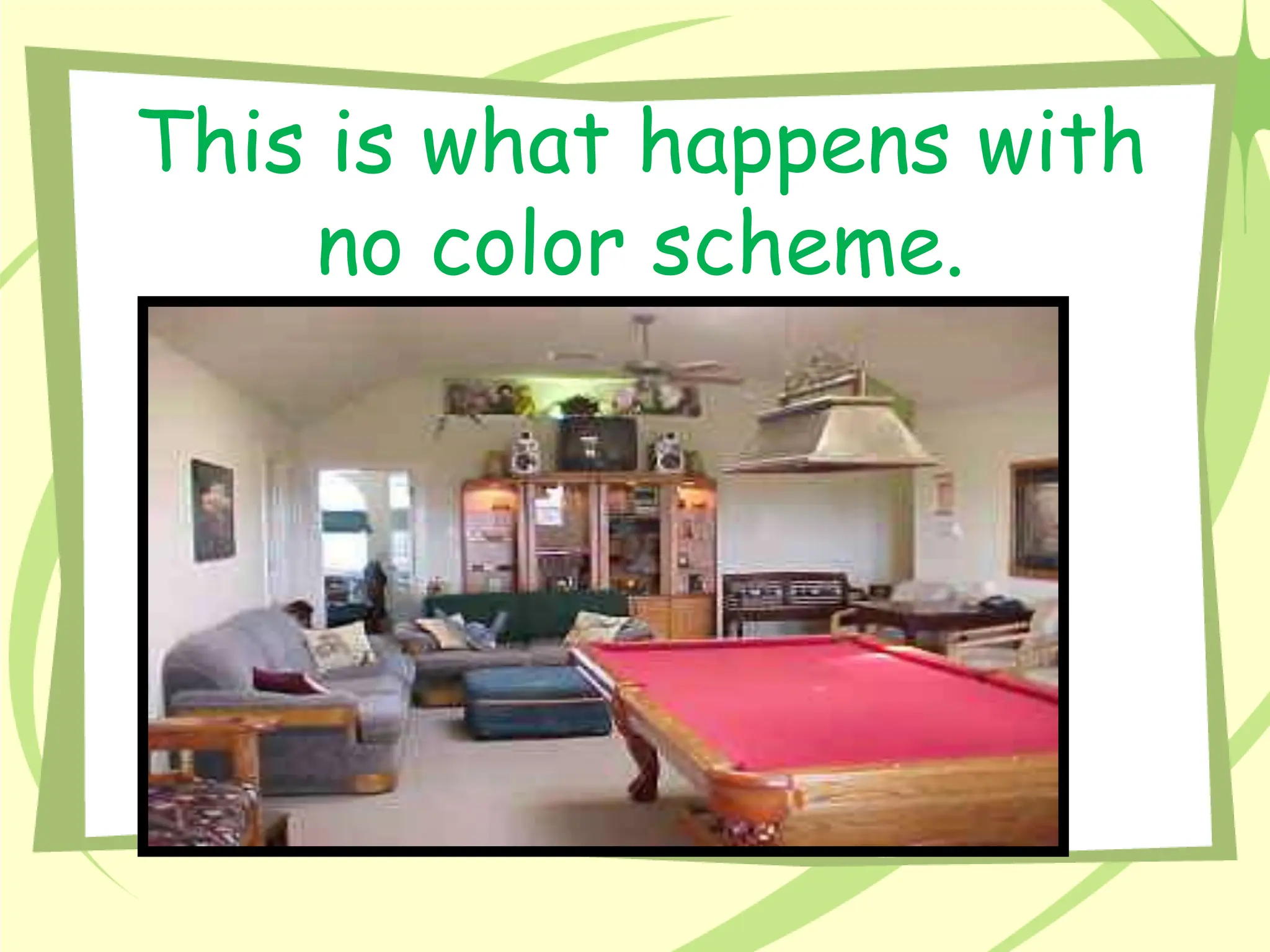
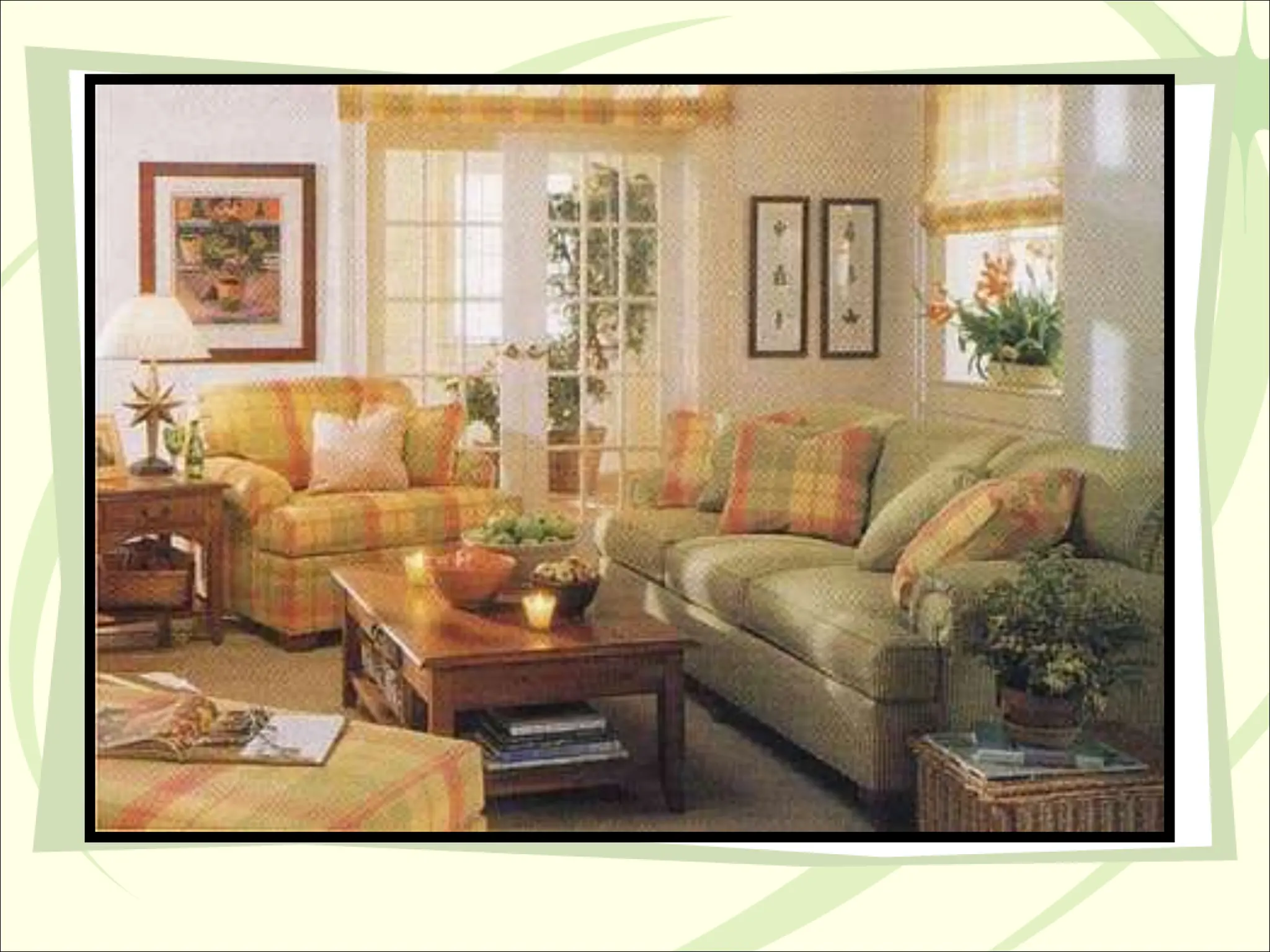
This is what happens with
no color scheme.
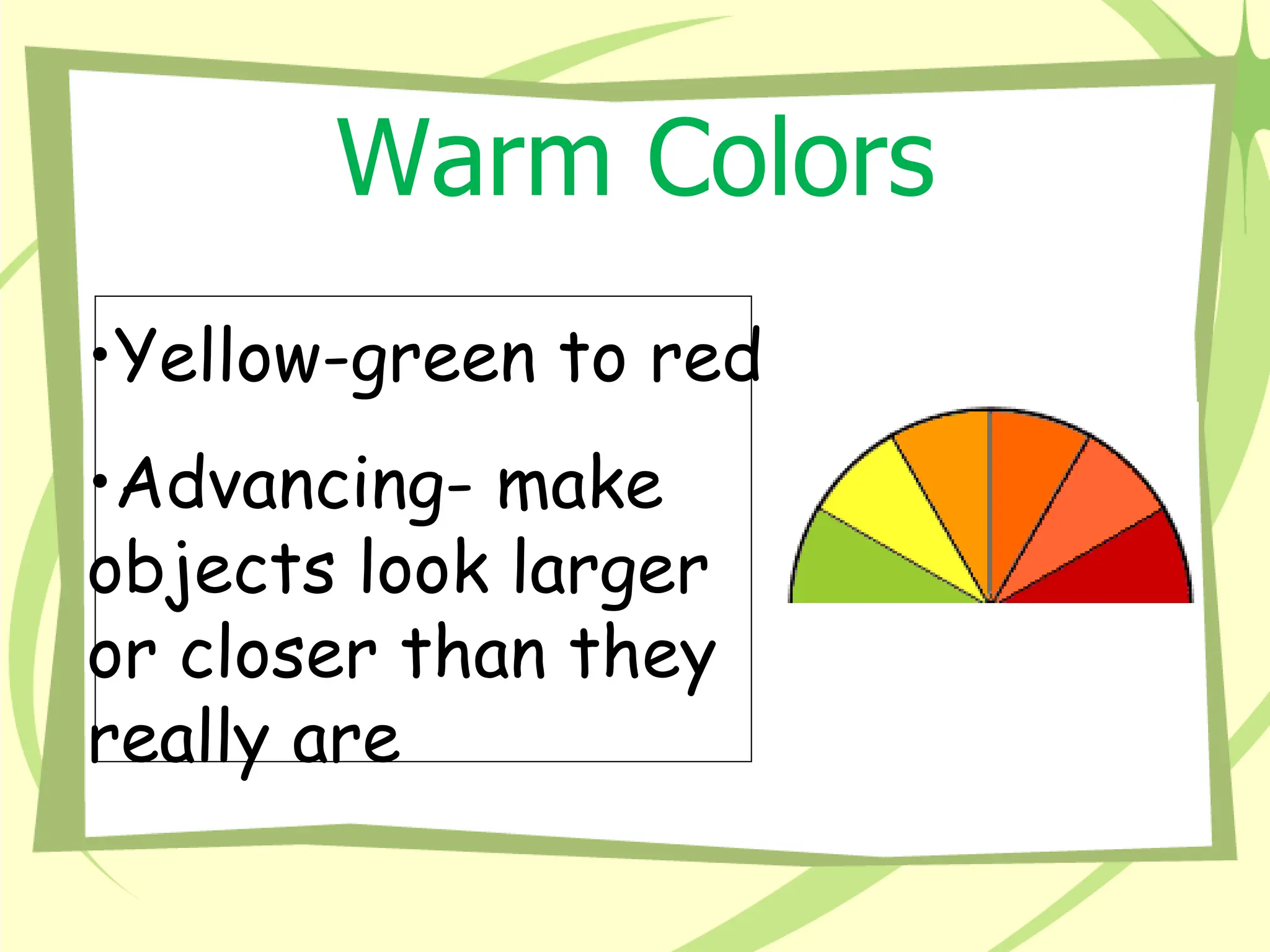
Warm Colors
•Yellow-green to red
•Advancing- make
objects look larger
or closer than they
really are
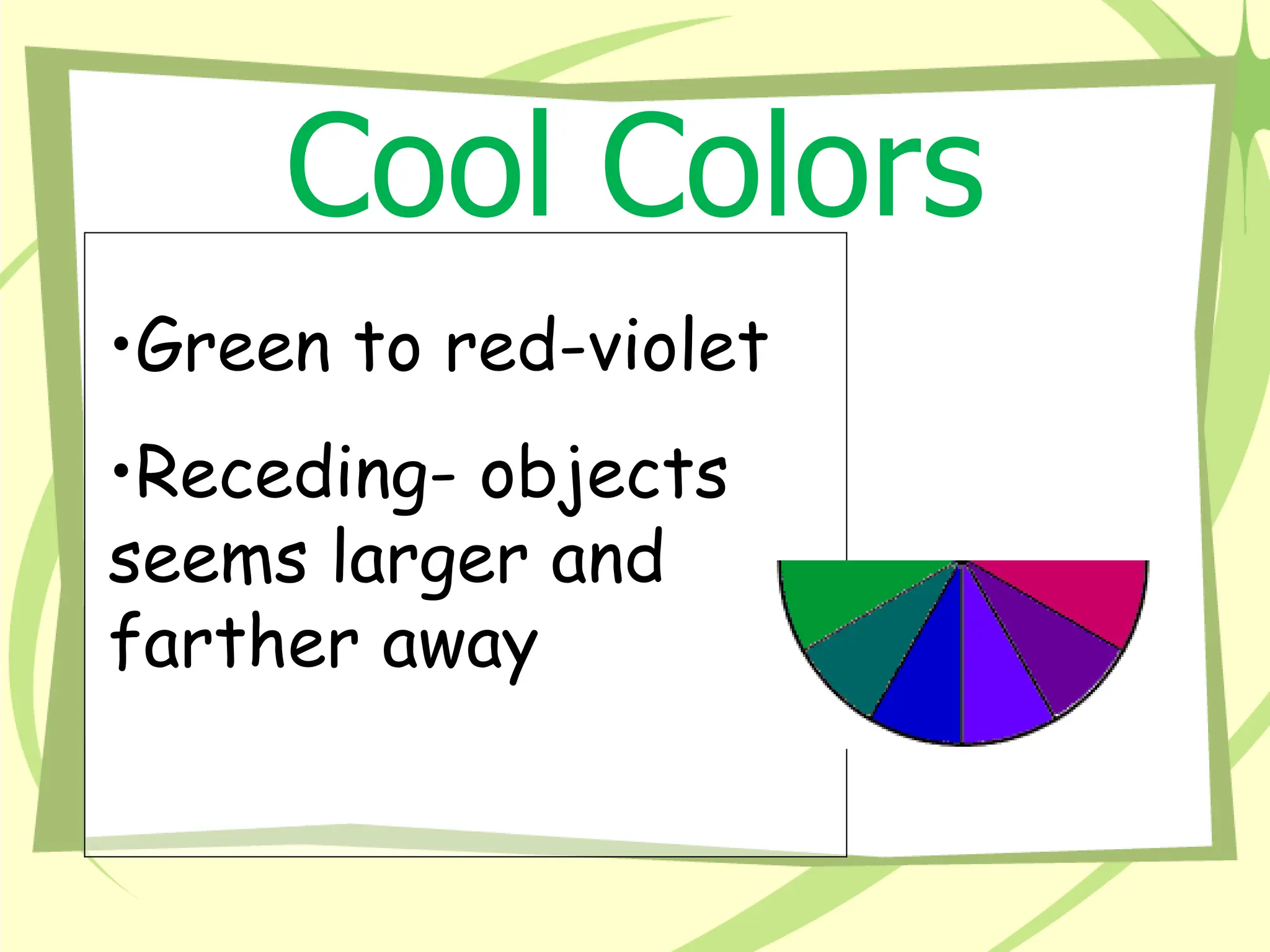
Cool Colors
•Green to red-violet
•Receding- objects
seems larger and
farther away
The role of colour in design - the fundamental significance of color in shaping

The role of colour in design - the fundamental significance of color in shaping

  • 1.
    The Role ofColor in Design Just FACS
  • 3.
    Warm Colors • Warmcolors: red, orange, and yellow – Red and orange conveys the most warmth – Warm colors are suitable for areas of high activity such as kitchens and family rooms
  • 4.
    Cool Colors • Coolcolors: blues and greens – Popular in bedrooms, bathrooms and home offices because of their relaxing effect.
  • 5.
    Illusions with Color •Warm colored objects appear closer than cool colored ones. • You can visually enlarge a room by painting the walls a cool color. • High ceilings painted dark colors appear lower and a light color will allow a ceiling to seem higher. • Bold, bright colors make objects stand out.
  • 6.
    Components of Color •Pigments- substances that absorb some light rays and reflect others. • Hue is the color feature that makes one color different from others. • Intensity is the brightness or dullness of a color. • Complement color is the color opposite it on the color wheel. • Value is the lightness or darkness of a color. • Adding white to a hue creates a tint. – Ex. Pink is a tint of red. • Adding black to a he creates a shade. – Lowers the value and darkens it. • Adding gray to a color creates a tone.
  • 7.
    Color Scheme • Acombination of colors selected for a room design in order to create a mood or set a tone. • Provides guidelines for designing successfully with color. • Color schemes look best when one color dominates
  • 8.
    Types of Color Schemes 1.Neutral 2. Monochromatic 3. Analogous 4. Complementary 5. Split-Complementary 6. Triad
  • 9.
    Neutral • Neutral colorschemes can be easier to live with than with vibrant color schemes. • Often used as background colors in rooms because they blend well with other colors • Touches of accent colors are usually added for interest
  • 16.
    Monochromatic • Tints and shadesof one color on the color wheel
  • 24.
    Analogous •3 to 5 huesnext to each other on the color wheel
  • 32.
    Complement • Two colorsthat are directly opposite each other on the color wheel.
  • 42.
    Split Complement • Threecolors, they combine one color with the two colors on each side of its complement
  • 43.
    Triad •Three colors that areequal distance apart on the color wheel.
  • 52.
    This is whathappens with no color scheme.
  • 53.
    Warm Colors •Yellow-green tored •Advancing- make objects look larger or closer than they really are
  • 58.
    Cool Colors •Green tored-violet •Receding- objects seems larger and farther away