Color Wheel
 Color Values
Color Schemes
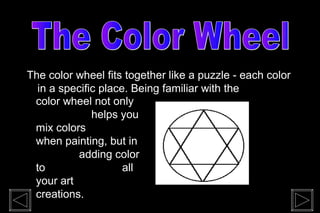
The color wheel fits together like a puzzle - each color
  in a specific place. Being familiar with the
 color wheel not only
              helps you
 mix colors
 when painting, but in
           adding color
 to                  all
 your art
 creations.
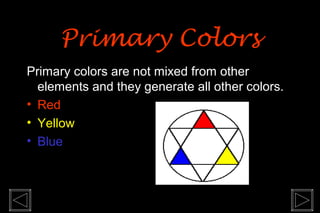
Primary Colors
Primary colors are not mixed from other
  elements and they generate all other colors.
• Red
• Yellow
• Blue
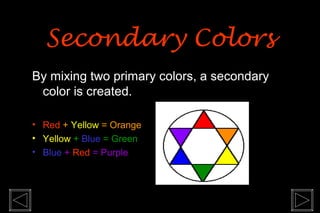
Secondary Colors
By mixing two primary colors, a secondary
 color is created.

• Red + Yellow = Orange
• Yellow + Blue = Green
• Blue + Red = Purple
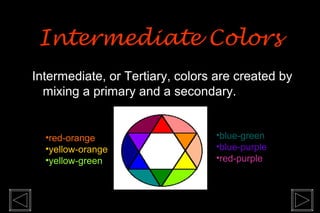
Intermediate Colors
Intermediate, or Tertiary, colors are created by
  mixing a primary and a secondary.


  •red-orange                    •blue-green
  •yellow-orange                 •blue-purple
  •yellow-green                  •red-purple
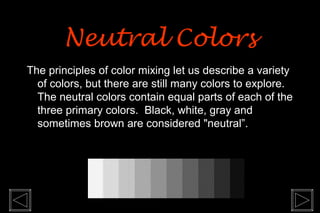
Neutral Colors
The principles of color mixing let us describe a variety
  of colors, but there are still many colors to explore.
  The neutral colors contain equal parts of each of the
  three primary colors. Black, white, gray and
  sometimes brown are considered "neutral”.
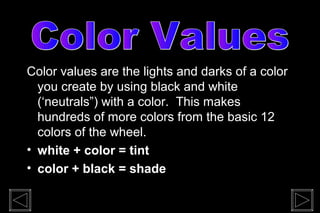
Color values are the lights and darks of a color
  you create by using black and white
  (‘neutrals”) with a color. This makes
  hundreds of more colors from the basic 12
  colors of the wheel.
• white + color = tint
• color + black = shade
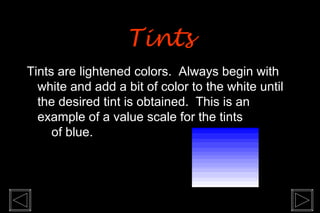
Tints
Tints are lightened colors. Always begin with
  white and add a bit of color to the white until
  the desired tint is obtained. This is an
  example of a value scale for the tints
     of blue.
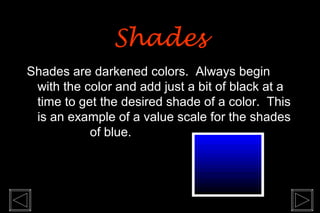
Shades
Shades are darkened colors. Always begin
 with the color and add just a bit of black at a
 time to get the desired shade of a color. This
 is an example of a value scale for the shades
           of blue.
Color Schemes are a systematic way of using
 the color wheel to put colors together… in
 your art work, putting together the clothes
 you wear, deciding what colors to paint your
 room…..

   monochromatic, complementary,
     analogous, warm and cool.
Monochromatic
“Mono” means “one”, “chroma” means
  “color”… monochromatic color schemes have
  only one color and its values. The following
  slide shows a painting done in a
  monochromatic color scheme.
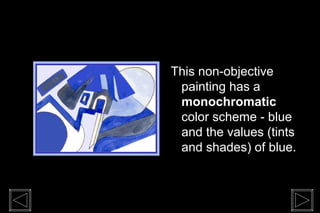
This non-objective
 painting has a
 monochromatic
 color scheme - blue
 and the values (tints
 and shades) of blue.
Complementary
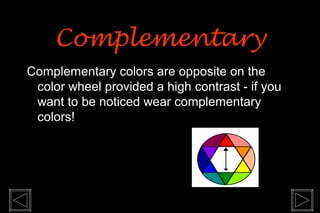
Complementary colors are opposite on the
 color wheel provided a high contrast - if you
 want to be noticed wear complementary
 colors!
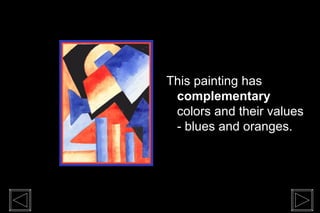
This painting has
 complementary
 colors and their values
 - blues and oranges.
Analogous
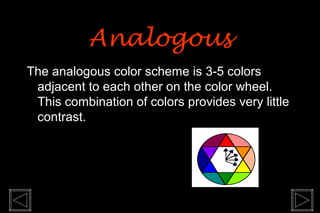
The analogous color scheme is 3-5 colors
 adjacent to each other on the color wheel.
 This combination of colors provides very little
 contrast.
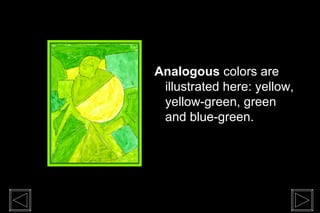
Analogous colors are
 illustrated here: yellow,
 yellow-green, green
 and blue-green.
Warm
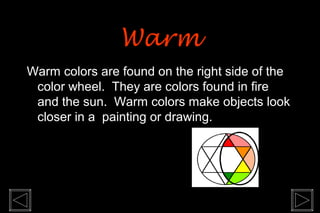
Warm colors are found on the right side of the
 color wheel. They are colors found in fire
 and the sun. Warm colors make objects look
 closer in a painting or drawing.
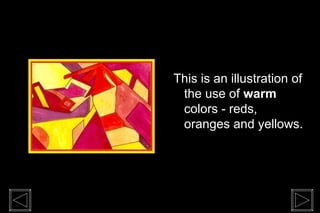
This is an illustration of
 the use of warm
 colors - reds,
 oranges and yellows.
Cool
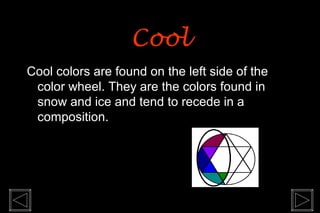
Cool colors are found on the left side of the
 color wheel. They are the colors found in
 snow and ice and tend to recede in a
 composition.
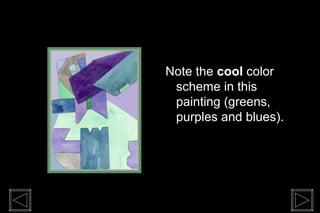
Note the cool color
 scheme in this
 painting (greens,
 purples and blues).
• All illustrations in this presentation are scanned original
  paintings or graphics by Lazzelle Parker.


       PowerPoint Presentation © Lazzelle Parker 2000
                Cave Spring Middle School
                 Roanoke County Schools
                       Roanoke VA
• Please click       to return to the first slide
  or…

• Click     to exit this presentation.

Colortheory2

  • 2.
    Color Wheel ColorValues Color Schemes
  • 3.
    The color wheelfits together like a puzzle - each color in a specific place. Being familiar with the color wheel not only helps you mix colors when painting, but in adding color to all your art creations.
  • 4.
    Primary Colors Primary colorsare not mixed from other elements and they generate all other colors. • Red • Yellow • Blue
  • 5.
    Secondary Colors By mixingtwo primary colors, a secondary color is created. • Red + Yellow = Orange • Yellow + Blue = Green • Blue + Red = Purple
  • 6.
    Intermediate Colors Intermediate, orTertiary, colors are created by mixing a primary and a secondary. •red-orange •blue-green •yellow-orange •blue-purple •yellow-green •red-purple
  • 7.
    Neutral Colors The principlesof color mixing let us describe a variety of colors, but there are still many colors to explore. The neutral colors contain equal parts of each of the three primary colors. Black, white, gray and sometimes brown are considered "neutral”.
  • 8.
    Color values arethe lights and darks of a color you create by using black and white (‘neutrals”) with a color. This makes hundreds of more colors from the basic 12 colors of the wheel. • white + color = tint • color + black = shade
  • 9.
    Tints Tints are lightenedcolors. Always begin with white and add a bit of color to the white until the desired tint is obtained. This is an example of a value scale for the tints of blue.
  • 10.
    Shades Shades are darkenedcolors. Always begin with the color and add just a bit of black at a time to get the desired shade of a color. This is an example of a value scale for the shades of blue.
  • 11.
    Color Schemes area systematic way of using the color wheel to put colors together… in your art work, putting together the clothes you wear, deciding what colors to paint your room….. monochromatic, complementary, analogous, warm and cool.
  • 12.
    Monochromatic “Mono” means “one”,“chroma” means “color”… monochromatic color schemes have only one color and its values. The following slide shows a painting done in a monochromatic color scheme.
  • 13.
    This non-objective paintinghas a monochromatic color scheme - blue and the values (tints and shades) of blue.
  • 14.
    Complementary Complementary colors areopposite on the color wheel provided a high contrast - if you want to be noticed wear complementary colors!
  • 15.
    This painting has complementary colors and their values - blues and oranges.
  • 16.
    Analogous The analogous colorscheme is 3-5 colors adjacent to each other on the color wheel. This combination of colors provides very little contrast.
  • 17.
    Analogous colors are illustrated here: yellow, yellow-green, green and blue-green.
  • 18.
    Warm Warm colors arefound on the right side of the color wheel. They are colors found in fire and the sun. Warm colors make objects look closer in a painting or drawing.
  • 19.
    This is anillustration of the use of warm colors - reds, oranges and yellows.
  • 20.
    Cool Cool colors arefound on the left side of the color wheel. They are the colors found in snow and ice and tend to recede in a composition.
  • 21.
    Note the coolcolor scheme in this painting (greens, purples and blues).
  • 22.
    • All illustrationsin this presentation are scanned original paintings or graphics by Lazzelle Parker. PowerPoint Presentation © Lazzelle Parker 2000 Cave Spring Middle School Roanoke County Schools Roanoke VA
  • 23.
    • Please click to return to the first slide or… • Click to exit this presentation.