COLON TARGETED DRUG
DELIVERY SYSTEM
Ravish Yadav
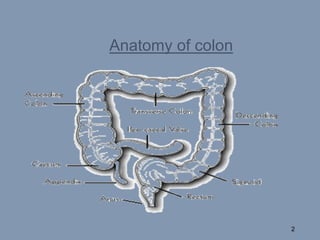
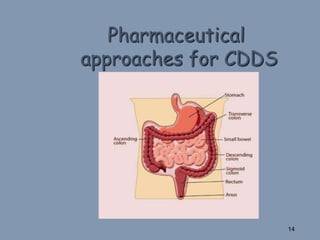
Anatomy of colon
2
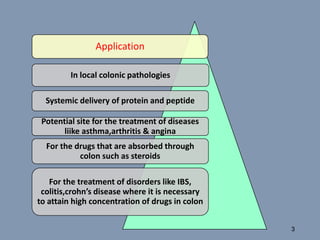
Application
In local colonic pathologies
Systemic delivery of protein and peptide
Potential site for the treatment of diseases
liike asthma,arthritis & angina
For the drugs that are absorbed through
colon such as steroids
For the treatment of disorders like IBS,
colitis,crohn’s disease where it is necessary
to attain high concentration of drugs in colon
3
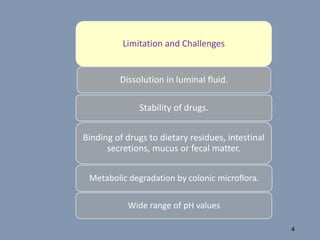
Limitation and Challenges
Dissolution in luminal fluid.
Stability of drugs.
Binding of drugs to dietary residues, intestinal
secretions, mucus or fecal matter.
Metabolic degradation by colonic microflora.
Wide range of pH values
4
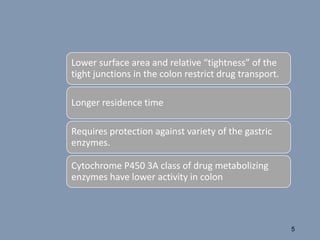
Lower surface area and relative “tightness” of the
tight junctions in the colon restrict drug transport.
Longer residence time
Requires protection against variety of the gastric
enzymes.
Cytochrome P450 3A class of drug metabolizing
enzymes have lower activity in colon
5
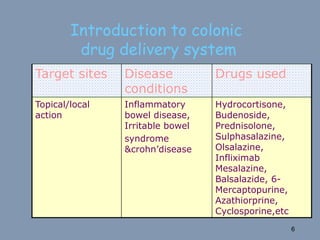
Target sites Disease
conditions
Drugs used
Topical/local
action
Inflammatory
bowel disease,
Irritable bowel
syndrome
&crohn’disease
Hydrocortisone,
Budenoside,
Prednisolone,
Sulphasalazine,
Olsalazine,
Infliximab
Mesalazine,
Balsalazide, 6-
Mercaptopurine,
Azathiorprine,
Cyclosporine,etc
Introduction to colonic
drug delivery system
6
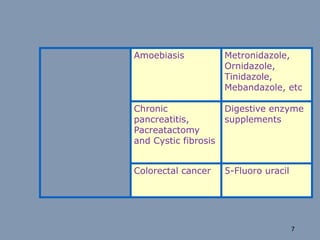
Amoebiasis Metronidazole,
Ornidazole,
Tinidazole,
Mebandazole, etc
Chronic
pancreatitis,
Pacreatactomy
and Cystic fibrosis
Digestive enzyme
supplements
Colorectal cancer 5-Fluoro uracil
7
8
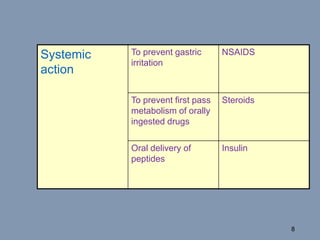
Systemic
action
To prevent gastric
irritation
NSAIDS
To prevent first pass
metabolism of orally
ingested drugs
Steroids
Oral delivery of
peptides
Insulin
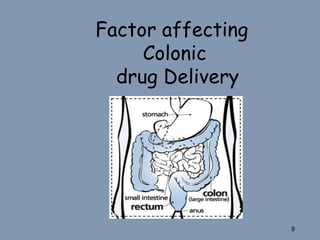
Factor affecting
Colonic
drug Delivery
9
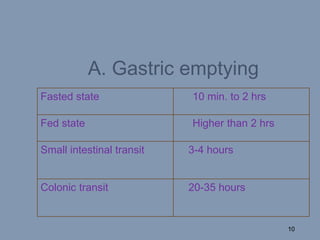
A. Gastric emptying
Fasted state 10 min. to 2 hrs
Fed state Higher than 2 hrs
Small intestinal transit 3-4 hours
Colonic transit 20-35 hours
10
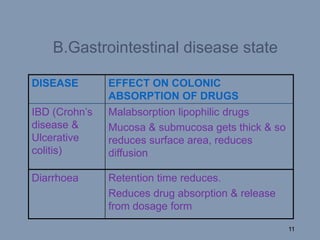
DISEASE EFFECT ON COLONIC
ABSORPTION OF DRUGS
IBD (Crohn’s
disease &
Ulcerative
colitis)
Malabsorption lipophilic drugs
Mucosa & submucosa gets thick & so
reduces surface area, reduces
diffusion
Diarrhoea Retention time reduces.
Reduces drug absorption & release
from dosage form
B.Gastrointestinal disease state
11
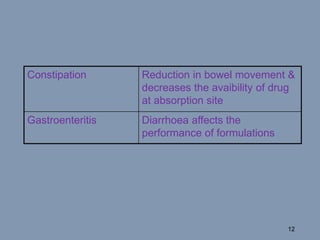
Constipation Reduction in bowel movement &
decreases the avaibility of drug
at absorption site
Gastroenteritis Diarrhoea affects the
performance of formulations
12
13
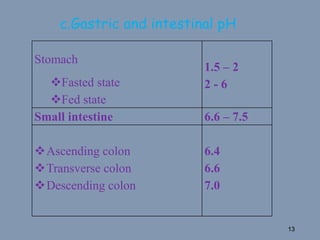
Stomach
Fasted state
Fed state
1.5 – 2
2 - 6
Small intestine 6.6 – 7.5
Ascending colon
Transverse colon
Descending colon
6.4
6.6
7.0
c.Gastric and intestinal pH
Pharmaceutical
approaches for CDDS
14
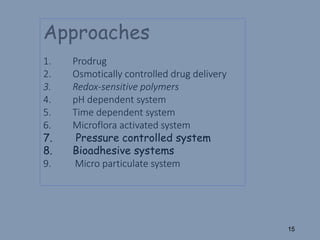
Approaches
1. Prodrug
2. Osmotically controlled drug delivery
3. Redox-sensitive polymers
4. pH dependent system
5. Time dependent system
6. Microflora activated system
7. Pressure controlled system
8. Bioadhesive systems
9. Micro particulate system
15
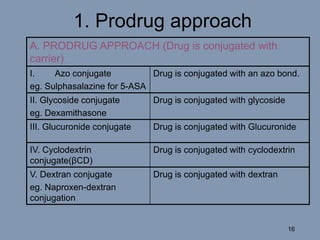
A. PRODRUG APPROACH (Drug is conjugated with
carrier)
I. Azo conjugate
eg. Sulphasalazine for 5-ASA
Drug is conjugated with an azo bond.
II. Glycoside conjugate
eg. Dexamithasone
Drug is conjugated with glycoside
III. Glucuronide conjugate Drug is conjugated with Glucuronide
IV. Cyclodextrin
conjugate(βCD)
Drug is conjugated with cyclodextrin
V. Dextran conjugate
eg. Naproxen-dextran
conjugation
Drug is conjugated with dextran
1. Prodrug approach
16
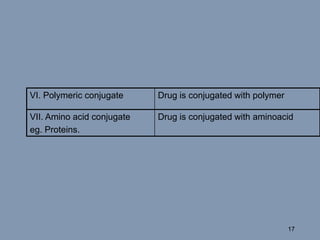
VI. Polymeric conjugate Drug is conjugated with polymer
VII. Amino acid conjugate
eg. Proteins.
Drug is conjugated with aminoacid
17
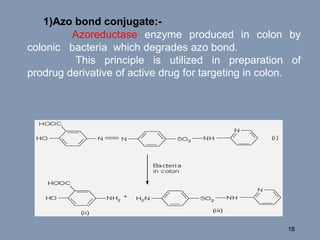
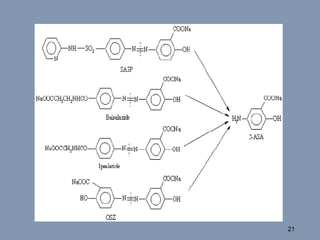
1)Azo bond conjugate:-
Azoreductase enzyme produced in colon by
colonic bacteria which degrades azo bond.
This principle is utilized in preparation of
prodrug derivative of active drug for targeting in colon.
18
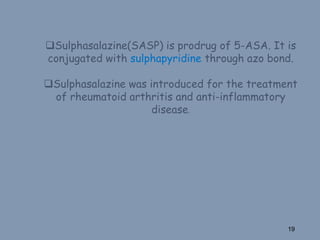
Sulphasalazine(SASP) is prodrug of 5-ASA. It is
conjugated with sulphapyridine through azo bond.
Sulphasalazine was introduced for the treatment
of rheumatoid arthritis and anti-inflammatory
disease.
19
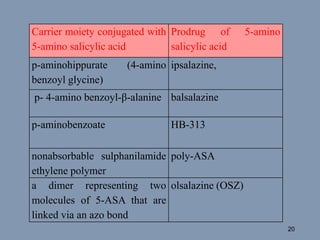
Carrier moiety conjugated with
5-amino salicylic acid
Prodrug of 5-amino
salicylic acid
p-aminohippurate (4-amino
benzoyl glycine)
ipsalazine,
p- 4-amino benzoyl-β-alanine balsalazine
p-aminobenzoate HB-313
nonabsorbable sulphanilamide
ethylene polymer
poly-ASA
a dimer representing two
molecules of 5-ASA that are
linked via an azo bond
olsalazine (OSZ)
20
21
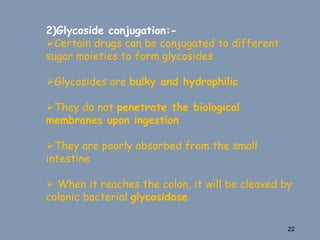
2)Glycoside conjugation:-
Certain drugs can be conjugated to different
sugar moieties to form glycosides
Glycosides are bulky and hydrophilic
They do not penetrate the biological
membranes upon ingestion
They are poorly absorbed from the small
intestine
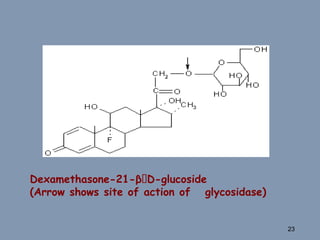
 When it reaches the colon, it will be cleaved by
colonic bacterial glycosidase
22
Dexamethasone-21-β D-glucoside
(Arrow shows site of action of glycosidase)
23
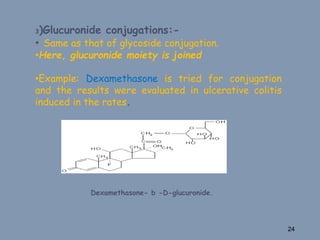
3)Glucuronide conjugations:-
• Same as that of glycoside conjugation.
•Here, glucuronide moiety is joined
•Example: Dexamethasone is tried for conjugation
and the results were evaluated in ulcerative colitis
induced in the rates.
Dexamethasone- b -D-glucuronide.
24
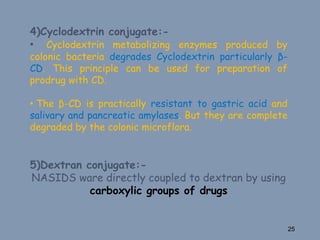
4)Cyclodextrin conjugate:-
• Cyclodextrin metabolizing enzymes produced by
colonic bacteria degrades Cyclodextrin particularly β-
CD. This principle can be used for preparation of
prodrug with CD.
• The β-CD is practically resistant to gastric acid and
salivary and pancreatic amylases. But they are complete
degraded by the colonic microflora.
5)Dextran conjugate:-
NASIDS ware directly coupled to dextran by using
carboxylic groups of drugs
25
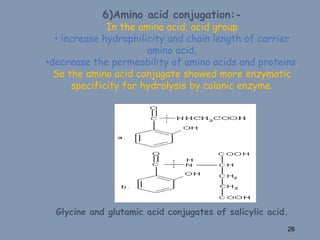
6)Amino acid conjugation:-
In the amino acid, acid group
• increase hydrophilicity and chain length of carrier
amino acid,
•decrease the permeability of amino acids and proteins.
So the amino acid conjugate showed more enzymatic
specificity for hydrolysis by colonic enzyme.
Glycine and glutamic acid conjugates of salicylic acid.
26
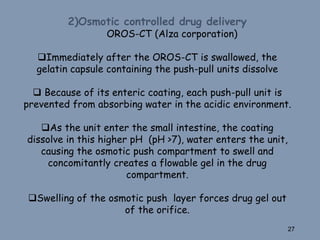
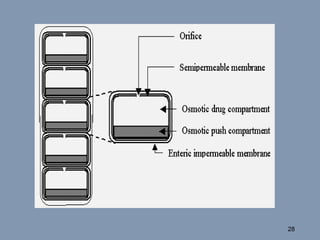
2)Osmotic controlled drug delivery
OROS-CT (Alza corporation)
Immediately after the OROS-CT is swallowed, the
gelatin capsule containing the push-pull units dissolve
 Because of its enteric coating, each push-pull unit is
prevented from absorbing water in the acidic environment.
As the unit enter the small intestine, the coating
dissolve in this higher pH (pH >7), water enters the unit,
causing the osmotic push compartment to swell and
concomitantly creates a flowable gel in the drug
compartment.
Swelling of the osmotic push layer forces drug gel out
of the orifice.
27
28
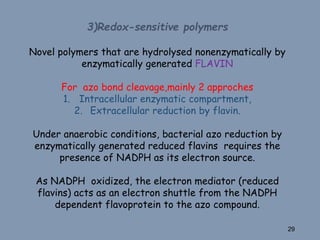
3)Redox-sensitive polymers
Novel polymers that are hydrolysed nonenzymatically by
enzymatically generated FLAVIN
For azo bond cleavage,mainly 2 approches
1. Intracellular enzymatic compartment,
2. Extracellular reduction by flavin.
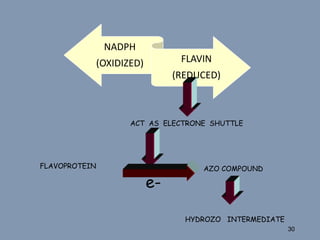
Under anaerobic conditions, bacterial azo reduction by
enzymatically generated reduced flavins requires the
presence of NADPH as its electron source.
As NADPH oxidized, the electron mediator (reduced
flavins) acts as an electron shuttle from the NADPH
dependent flavoprotein to the azo compound.
29
30
NADPH
(OXIDIZED) FLAVIN
(REDUCED)
ACT AS ELECTRONE SHUTTLE
FLAVOPROTEIN AZO COMPOUND
HYDROZO INTERMEDIATE
e-
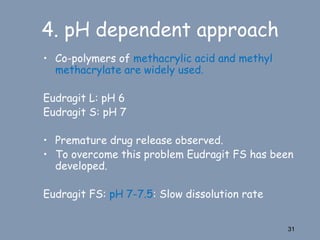
• Co-polymers of methacrylic acid and methyl
methacrylate are widely used.
Eudragit L: pH 6
Eudragit S: pH 7
• Premature drug release observed.
• To overcome this problem Eudragit FS has been
developed.
Eudragit FS: pH 7-7.5: Slow dissolution rate
31
4. pH dependent approach
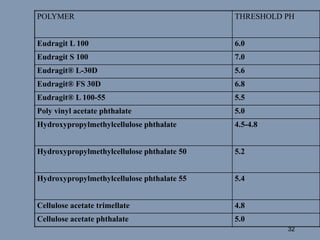
POLYMER THRESHOLD PH
Eudragit L 100 6.0
Eudragit S 100 7.0
Eudragit® L-30D 5.6
Eudragit® FS 30D 6.8
Eudragit® L 100-55 5.5
Poly vinyl acetate phthalate 5.0
Hydroxypropylmethylcellulose phthalate 4.5-4.8
Hydroxypropylmethylcellulose phthalate 50 5.2
Hydroxypropylmethylcellulose phthalate 55 5.4
Cellulose acetate trimellate 4.8
Cellulose acetate phthalate 5.0
32
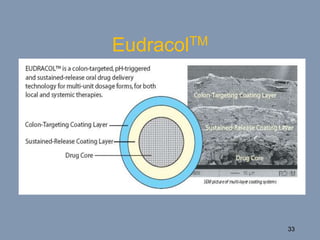
EudracolTM
33
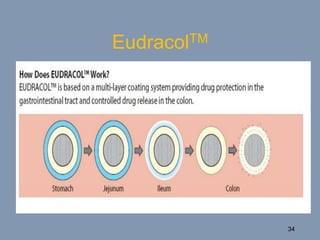
EudracolTM
34
5.Time dependent
delivery
• Difficult to predict in advance.
• The strategy is to resist the drug release
in acidic & intestinal environment
• In this approch, specific lag time is
previously determined.
35
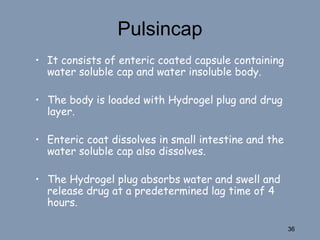
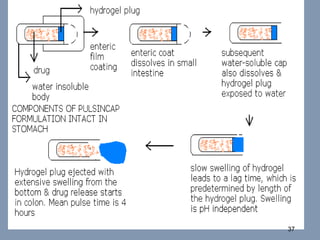
Pulsincap
• It consists of enteric coated capsule containing
water soluble cap and water insoluble body.
• The body is loaded with Hydrogel plug and drug
layer.
• Enteric coat dissolves in small intestine and the
water soluble cap also dissolves.
• The Hydrogel plug absorbs water and swell and
release drug at a predetermined lag time of 4
hours.
36
37
Time clock
The Time Clock system consists of a solid dosage
form coated with lipidic barriers containing
carnuba wax and bee’s wax along with surfactants,
such as polyoxyethylene sorbitan mono oleate.
This coat erodes or emulsifies in the aqueous
environment in a time proportional to the thickness
of the film, and the core is then available for
dispersion.
38
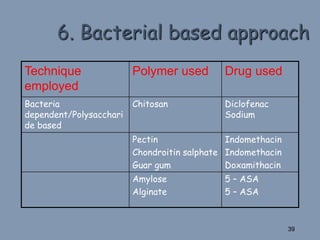
Technique
employed
Polymer used Drug used
Bacteria
dependent/Polysacchari
de based
Chitosan Diclofenac
Sodium
Pectin
Chondroitin salphate
Guar gum
Indomethacin
Indomethacin
Doxamithacin
Amylose
Alginate
5 – ASA
5 – ASA
6. Bacterial based approach
39
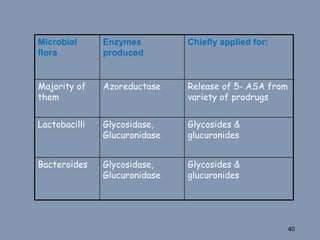
Microbial
flora
Enzymes
produced
Chiefly applied for:
Majority of
them
Azoreductase Release of 5- ASA from
variety of prodrugs
Lactobacilli Glycosidase,
Glucuronidase
Glycosides &
glucuronides
Bacteroides Glycosidase,
Glucuronidase
Glycosides &
glucuronides
40
7. Pressure-controlled
drug-delivery systems
 Muscular contraction of the gut wall generate
pressure
 Colon has higher luminal pressure
 System can be developed which withstand the
pressure in intestine and ruptures in response
to raised pressure in colon.
 Ethyl cellulose capsules have been used for
this purpose.
41
8. Bioadhesive systems:-
 Oral administration of some drugs requires high
local concentration in the large intestine for
optimum therapeutic effects.
 Bioadhesion is a process by which a dosage
form remains in contact with particular organ for an
augmented period of time.
 This longer residence time of drug would
have high local concentration or improved absorption
 Various polymers including polycarbophils,
polyurethanes and polyethylene oxide-polypropyline
oxide copolymers have been investigated for colon.
42
9. Multiparticulate system
Pellets
Granular matrix
Beads
Microspheres
Nano particles
43
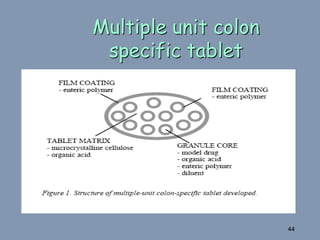
Multiple unit colon
specific tablet
44
Microbially controlled system
• Microsphere containing different natural
polysaccharide
• Chitosan
• Guar gum
• Pectin
• Dextran
• Chondroitin sulphate
45
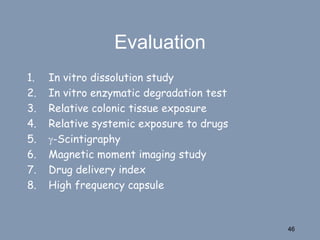
Evaluation
1. In vitro dissolution study
2. In vitro enzymatic degradation test
3. Relative colonic tissue exposure
4. Relative systemic exposure to drugs
5. -Scintigraphy
6. Magnetic moment imaging study
7. Drug delivery index
8. High frequency capsule
46
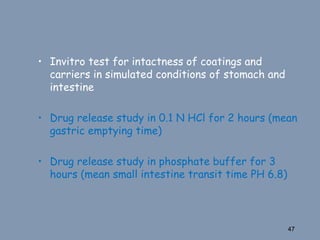
• Invitro test for intactness of coatings and
carriers in simulated conditions of stomach and
intestine
• Drug release study in 0.1 N HCl for 2 hours (mean
gastric emptying time)
• Drug release study in phosphate buffer for 3
hours (mean small intestine transit time PH 6.8)
47
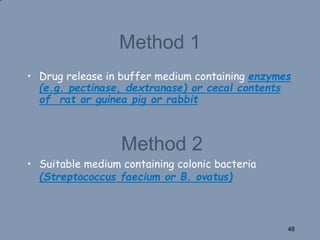
Method 1
• Drug release in buffer medium containing enzymes
(e.g. pectinase, dextranase) or cecal contents
of rat or guinea pig or rabbit
Method 2
• Suitable medium containing colonic bacteria
(Streptococcus faecium or B. ovatus)
48
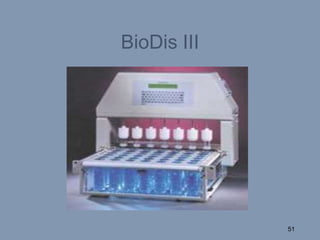
BioDis-III (Apparatus III)
• Ideal for the dissolution profiling of extended
release dosage forms.
• It is designed to meet or exceed current USP
specification.
• It used a reciprocating motion to dip the inner
tube into media.
• At the designated time, the entire row of inner
tubes raises and moves to the next row of
media.
49
Bio-Dis III
• Capable of running unattended upto 6 days and can
store upto 25 programms.
• 7 sample tubes which automatically traverse upto
6 rows of corresponding outer tubes filled with
different media.
• With accessories, the appropriate media volume
can vary from 100, 300 ml (USP) or 1000 ml.
50
BioDis III
51
References
…
52
1)http://www.pharmainfo.net/pppc05/colon-
specific-drug-delivery-recent-techniques
2) http://jpronline.info/article/view/1943/1132
3)http://www.ncbi.nlm.nih.gov/pubmed/12753729
4)http://www.ualberta.ca/~csps/JPPS6(1)/S.Chour
asia/colon.htm
53
5)http:/www.aapspharmscitech.org
6)www.elsevier.com/international journal of
pharmaceutics/ 298(2005)91-97

Colon targeted drug delivery system

  • 1.
    COLON TARGETED DRUG DELIVERYSYSTEM Ravish Yadav
  • 2.
  • 3.
    Application In local colonicpathologies Systemic delivery of protein and peptide Potential site for the treatment of diseases liike asthma,arthritis & angina For the drugs that are absorbed through colon such as steroids For the treatment of disorders like IBS, colitis,crohn’s disease where it is necessary to attain high concentration of drugs in colon 3
  • 4.
    Limitation and Challenges Dissolutionin luminal fluid. Stability of drugs. Binding of drugs to dietary residues, intestinal secretions, mucus or fecal matter. Metabolic degradation by colonic microflora. Wide range of pH values 4
  • 5.
    Lower surface areaand relative “tightness” of the tight junctions in the colon restrict drug transport. Longer residence time Requires protection against variety of the gastric enzymes. Cytochrome P450 3A class of drug metabolizing enzymes have lower activity in colon 5
  • 6.
    Target sites Disease conditions Drugsused Topical/local action Inflammatory bowel disease, Irritable bowel syndrome &crohn’disease Hydrocortisone, Budenoside, Prednisolone, Sulphasalazine, Olsalazine, Infliximab Mesalazine, Balsalazide, 6- Mercaptopurine, Azathiorprine, Cyclosporine,etc Introduction to colonic drug delivery system 6
  • 7.
    Amoebiasis Metronidazole, Ornidazole, Tinidazole, Mebandazole, etc Chronic pancreatitis, Pacreatactomy andCystic fibrosis Digestive enzyme supplements Colorectal cancer 5-Fluoro uracil 7
  • 8.
    8 Systemic action To prevent gastric irritation NSAIDS Toprevent first pass metabolism of orally ingested drugs Steroids Oral delivery of peptides Insulin
  • 9.
  • 10.
    A. Gastric emptying Fastedstate 10 min. to 2 hrs Fed state Higher than 2 hrs Small intestinal transit 3-4 hours Colonic transit 20-35 hours 10
  • 11.
    DISEASE EFFECT ONCOLONIC ABSORPTION OF DRUGS IBD (Crohn’s disease & Ulcerative colitis) Malabsorption lipophilic drugs Mucosa & submucosa gets thick & so reduces surface area, reduces diffusion Diarrhoea Retention time reduces. Reduces drug absorption & release from dosage form B.Gastrointestinal disease state 11
  • 12.
    Constipation Reduction inbowel movement & decreases the avaibility of drug at absorption site Gastroenteritis Diarrhoea affects the performance of formulations 12
  • 13.
    13 Stomach Fasted state Fed state 1.5– 2 2 - 6 Small intestine 6.6 – 7.5 Ascending colon Transverse colon Descending colon 6.4 6.6 7.0 c.Gastric and intestinal pH
  • 14.
  • 15.
    Approaches 1. Prodrug 2. Osmoticallycontrolled drug delivery 3. Redox-sensitive polymers 4. pH dependent system 5. Time dependent system 6. Microflora activated system 7. Pressure controlled system 8. Bioadhesive systems 9. Micro particulate system 15
  • 16.
    A. PRODRUG APPROACH(Drug is conjugated with carrier) I. Azo conjugate eg. Sulphasalazine for 5-ASA Drug is conjugated with an azo bond. II. Glycoside conjugate eg. Dexamithasone Drug is conjugated with glycoside III. Glucuronide conjugate Drug is conjugated with Glucuronide IV. Cyclodextrin conjugate(βCD) Drug is conjugated with cyclodextrin V. Dextran conjugate eg. Naproxen-dextran conjugation Drug is conjugated with dextran 1. Prodrug approach 16
  • 17.
    VI. Polymeric conjugateDrug is conjugated with polymer VII. Amino acid conjugate eg. Proteins. Drug is conjugated with aminoacid 17
  • 18.
    1)Azo bond conjugate:- Azoreductaseenzyme produced in colon by colonic bacteria which degrades azo bond. This principle is utilized in preparation of prodrug derivative of active drug for targeting in colon. 18
  • 19.
    Sulphasalazine(SASP) is prodrugof 5-ASA. It is conjugated with sulphapyridine through azo bond. Sulphasalazine was introduced for the treatment of rheumatoid arthritis and anti-inflammatory disease. 19
  • 20.
    Carrier moiety conjugatedwith 5-amino salicylic acid Prodrug of 5-amino salicylic acid p-aminohippurate (4-amino benzoyl glycine) ipsalazine, p- 4-amino benzoyl-β-alanine balsalazine p-aminobenzoate HB-313 nonabsorbable sulphanilamide ethylene polymer poly-ASA a dimer representing two molecules of 5-ASA that are linked via an azo bond olsalazine (OSZ) 20
  • 21.
  • 22.
    2)Glycoside conjugation:- Certain drugscan be conjugated to different sugar moieties to form glycosides Glycosides are bulky and hydrophilic They do not penetrate the biological membranes upon ingestion They are poorly absorbed from the small intestine  When it reaches the colon, it will be cleaved by colonic bacterial glycosidase 22
  • 23.
    Dexamethasone-21-β D-glucoside (Arrow showssite of action of glycosidase) 23
  • 24.
    3)Glucuronide conjugations:- • Sameas that of glycoside conjugation. •Here, glucuronide moiety is joined •Example: Dexamethasone is tried for conjugation and the results were evaluated in ulcerative colitis induced in the rates. Dexamethasone- b -D-glucuronide. 24
  • 25.
    4)Cyclodextrin conjugate:- • Cyclodextrinmetabolizing enzymes produced by colonic bacteria degrades Cyclodextrin particularly β- CD. This principle can be used for preparation of prodrug with CD. • The β-CD is practically resistant to gastric acid and salivary and pancreatic amylases. But they are complete degraded by the colonic microflora. 5)Dextran conjugate:- NASIDS ware directly coupled to dextran by using carboxylic groups of drugs 25
  • 26.
    6)Amino acid conjugation:- Inthe amino acid, acid group • increase hydrophilicity and chain length of carrier amino acid, •decrease the permeability of amino acids and proteins. So the amino acid conjugate showed more enzymatic specificity for hydrolysis by colonic enzyme. Glycine and glutamic acid conjugates of salicylic acid. 26
  • 27.
    2)Osmotic controlled drugdelivery OROS-CT (Alza corporation) Immediately after the OROS-CT is swallowed, the gelatin capsule containing the push-pull units dissolve  Because of its enteric coating, each push-pull unit is prevented from absorbing water in the acidic environment. As the unit enter the small intestine, the coating dissolve in this higher pH (pH >7), water enters the unit, causing the osmotic push compartment to swell and concomitantly creates a flowable gel in the drug compartment. Swelling of the osmotic push layer forces drug gel out of the orifice. 27
  • 28.
  • 29.
    3)Redox-sensitive polymers Novel polymersthat are hydrolysed nonenzymatically by enzymatically generated FLAVIN For azo bond cleavage,mainly 2 approches 1. Intracellular enzymatic compartment, 2. Extracellular reduction by flavin. Under anaerobic conditions, bacterial azo reduction by enzymatically generated reduced flavins requires the presence of NADPH as its electron source. As NADPH oxidized, the electron mediator (reduced flavins) acts as an electron shuttle from the NADPH dependent flavoprotein to the azo compound. 29
  • 30.
    30 NADPH (OXIDIZED) FLAVIN (REDUCED) ACT ASELECTRONE SHUTTLE FLAVOPROTEIN AZO COMPOUND HYDROZO INTERMEDIATE e-
  • 31.
    • Co-polymers ofmethacrylic acid and methyl methacrylate are widely used. Eudragit L: pH 6 Eudragit S: pH 7 • Premature drug release observed. • To overcome this problem Eudragit FS has been developed. Eudragit FS: pH 7-7.5: Slow dissolution rate 31 4. pH dependent approach
  • 32.
    POLYMER THRESHOLD PH EudragitL 100 6.0 Eudragit S 100 7.0 Eudragit® L-30D 5.6 Eudragit® FS 30D 6.8 Eudragit® L 100-55 5.5 Poly vinyl acetate phthalate 5.0 Hydroxypropylmethylcellulose phthalate 4.5-4.8 Hydroxypropylmethylcellulose phthalate 50 5.2 Hydroxypropylmethylcellulose phthalate 55 5.4 Cellulose acetate trimellate 4.8 Cellulose acetate phthalate 5.0 32
  • 33.
  • 34.
  • 35.
    5.Time dependent delivery • Difficultto predict in advance. • The strategy is to resist the drug release in acidic & intestinal environment • In this approch, specific lag time is previously determined. 35
  • 36.
    Pulsincap • It consistsof enteric coated capsule containing water soluble cap and water insoluble body. • The body is loaded with Hydrogel plug and drug layer. • Enteric coat dissolves in small intestine and the water soluble cap also dissolves. • The Hydrogel plug absorbs water and swell and release drug at a predetermined lag time of 4 hours. 36
  • 37.
  • 38.
    Time clock The TimeClock system consists of a solid dosage form coated with lipidic barriers containing carnuba wax and bee’s wax along with surfactants, such as polyoxyethylene sorbitan mono oleate. This coat erodes or emulsifies in the aqueous environment in a time proportional to the thickness of the film, and the core is then available for dispersion. 38
  • 39.
    Technique employed Polymer used Drugused Bacteria dependent/Polysacchari de based Chitosan Diclofenac Sodium Pectin Chondroitin salphate Guar gum Indomethacin Indomethacin Doxamithacin Amylose Alginate 5 – ASA 5 – ASA 6. Bacterial based approach 39
  • 40.
    Microbial flora Enzymes produced Chiefly applied for: Majorityof them Azoreductase Release of 5- ASA from variety of prodrugs Lactobacilli Glycosidase, Glucuronidase Glycosides & glucuronides Bacteroides Glycosidase, Glucuronidase Glycosides & glucuronides 40
  • 41.
    7. Pressure-controlled drug-delivery systems Muscular contraction of the gut wall generate pressure  Colon has higher luminal pressure  System can be developed which withstand the pressure in intestine and ruptures in response to raised pressure in colon.  Ethyl cellulose capsules have been used for this purpose. 41
  • 42.
    8. Bioadhesive systems:- Oral administration of some drugs requires high local concentration in the large intestine for optimum therapeutic effects.  Bioadhesion is a process by which a dosage form remains in contact with particular organ for an augmented period of time.  This longer residence time of drug would have high local concentration or improved absorption  Various polymers including polycarbophils, polyurethanes and polyethylene oxide-polypropyline oxide copolymers have been investigated for colon. 42
  • 43.
    9. Multiparticulate system Pellets Granularmatrix Beads Microspheres Nano particles 43
  • 44.
  • 45.
    Microbially controlled system •Microsphere containing different natural polysaccharide • Chitosan • Guar gum • Pectin • Dextran • Chondroitin sulphate 45
  • 46.
    Evaluation 1. In vitrodissolution study 2. In vitro enzymatic degradation test 3. Relative colonic tissue exposure 4. Relative systemic exposure to drugs 5. -Scintigraphy 6. Magnetic moment imaging study 7. Drug delivery index 8. High frequency capsule 46
  • 47.
    • Invitro testfor intactness of coatings and carriers in simulated conditions of stomach and intestine • Drug release study in 0.1 N HCl for 2 hours (mean gastric emptying time) • Drug release study in phosphate buffer for 3 hours (mean small intestine transit time PH 6.8) 47
  • 48.
    Method 1 • Drugrelease in buffer medium containing enzymes (e.g. pectinase, dextranase) or cecal contents of rat or guinea pig or rabbit Method 2 • Suitable medium containing colonic bacteria (Streptococcus faecium or B. ovatus) 48
  • 49.
    BioDis-III (Apparatus III) •Ideal for the dissolution profiling of extended release dosage forms. • It is designed to meet or exceed current USP specification. • It used a reciprocating motion to dip the inner tube into media. • At the designated time, the entire row of inner tubes raises and moves to the next row of media. 49
  • 50.
    Bio-Dis III • Capableof running unattended upto 6 days and can store upto 25 programms. • 7 sample tubes which automatically traverse upto 6 rows of corresponding outer tubes filled with different media. • With accessories, the appropriate media volume can vary from 100, 300 ml (USP) or 1000 ml. 50
  • 51.
  • 52.
  • 53.