How does thatwork then?
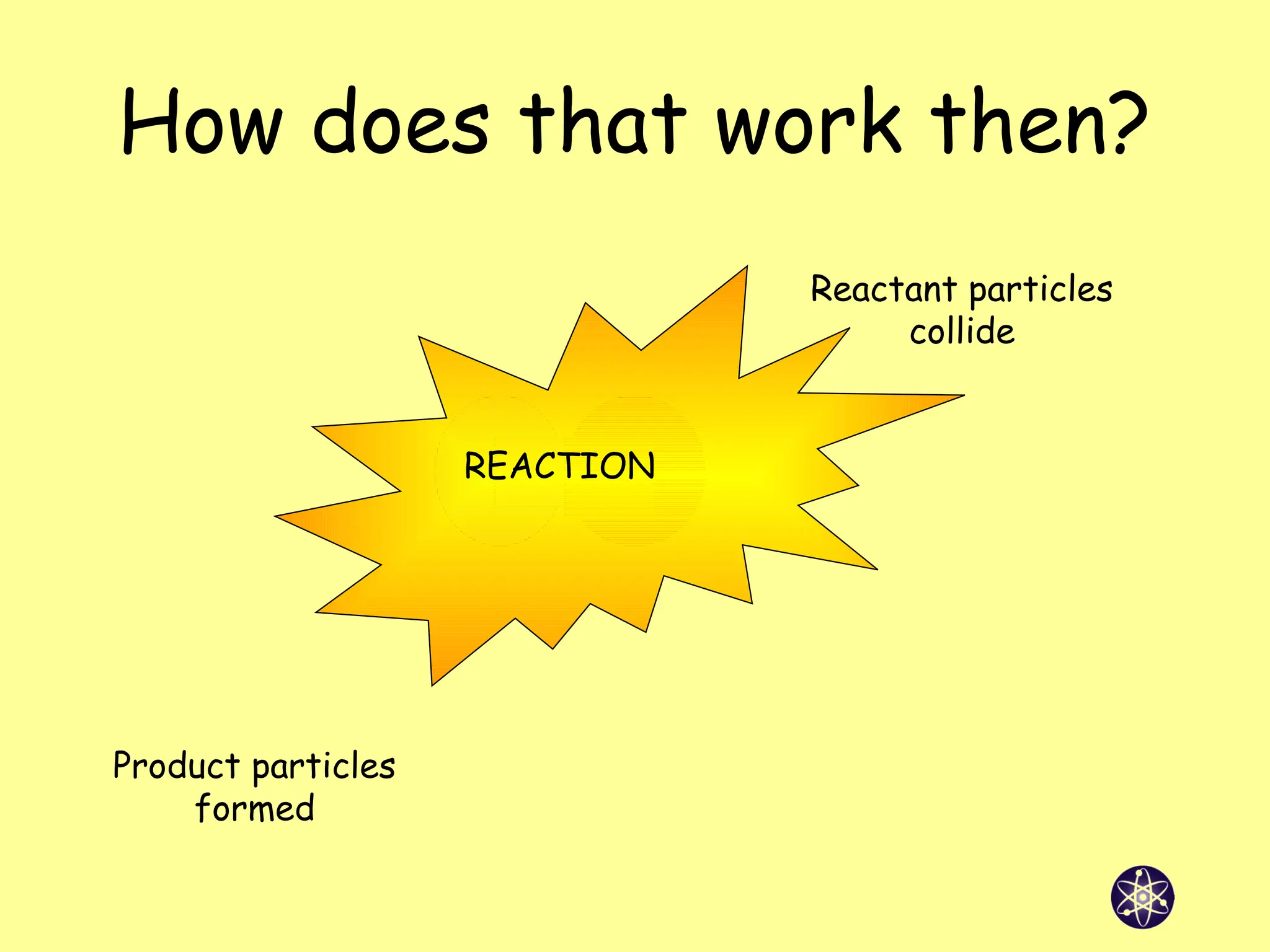
Reactant particles
collide
Product particles
formed
REACTION
5.
Is it reallythat simple?
Yes
Well, sort of.
not really.
OK, not quite!
6.
Not all collisionsare effective
• Paper burns
• Paper + oxygen carbon dioxide + water + nitrogen
• The paper in this room isn’t burning.
• It doesn’t have enough energy to burn.
• If we make it hotter it will catch fire.
• Paper burns on its own at 250 ºC
7.
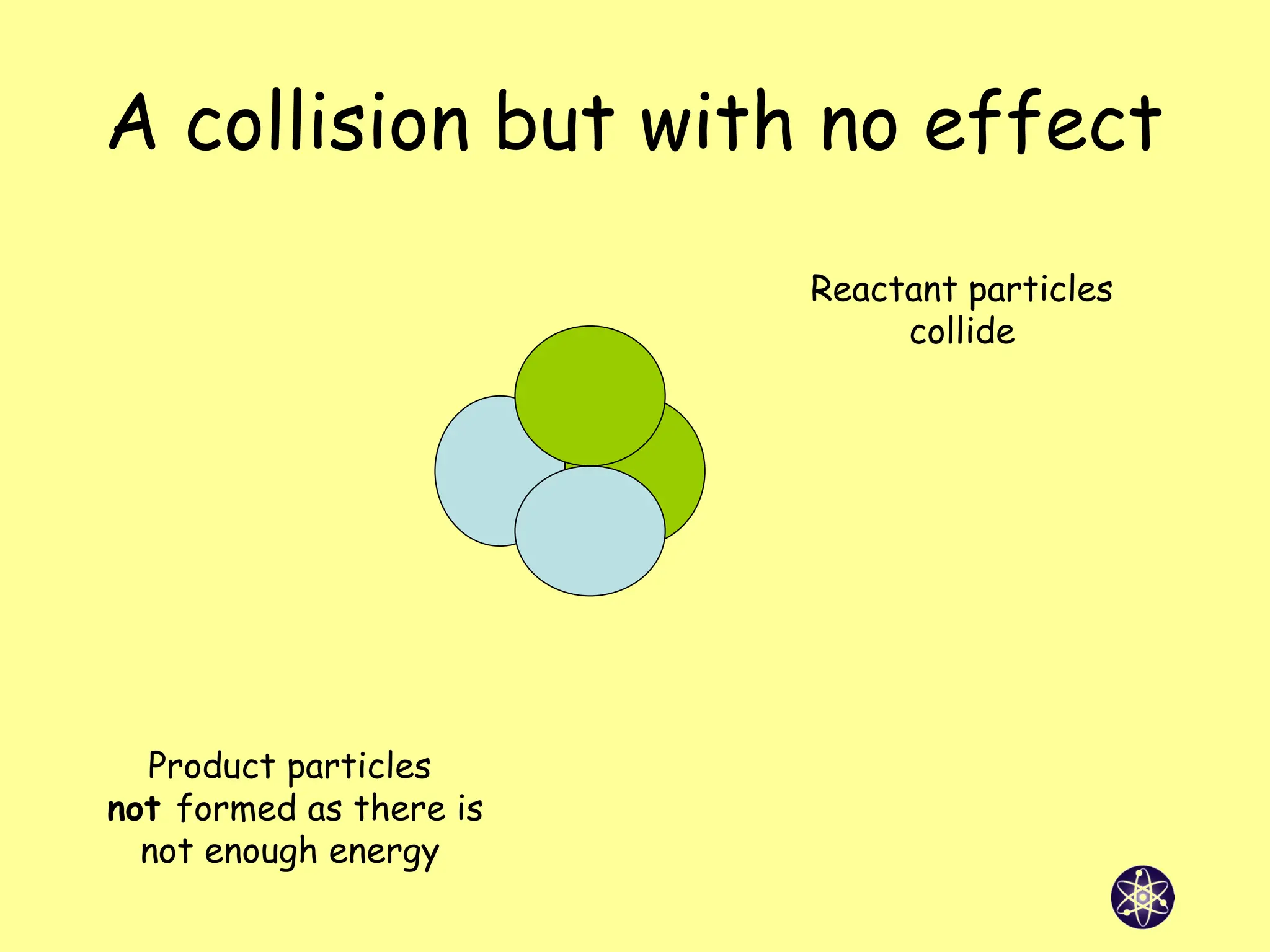
A collision butwith no effect
Reactant particles
collide
Product particles
not formed as there is
not enough energy
8.
The Collision Theory
•Particles are constantly moving
• For a chemical reaction to take place the reactant
particles must collide first
• For the collision to be effective the particles must
have the right amount of energy
• The minimum amount of energy required for an
effective collision is called the activation energy
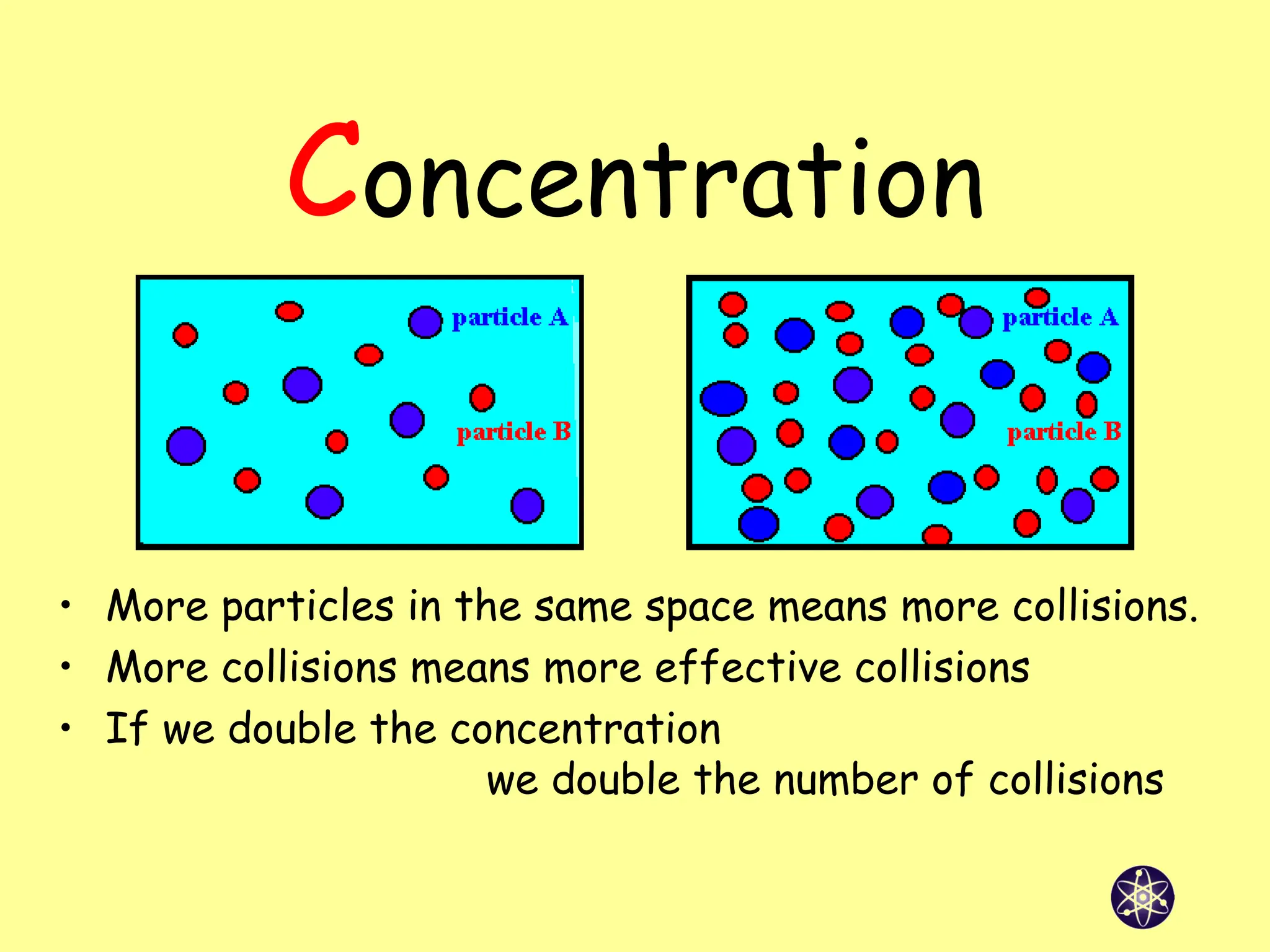
Concentration
• More particlesin the same space means more collisions.
• More collisions means more effective collisions
• If we double the concentration
we double the number of collisions
11.
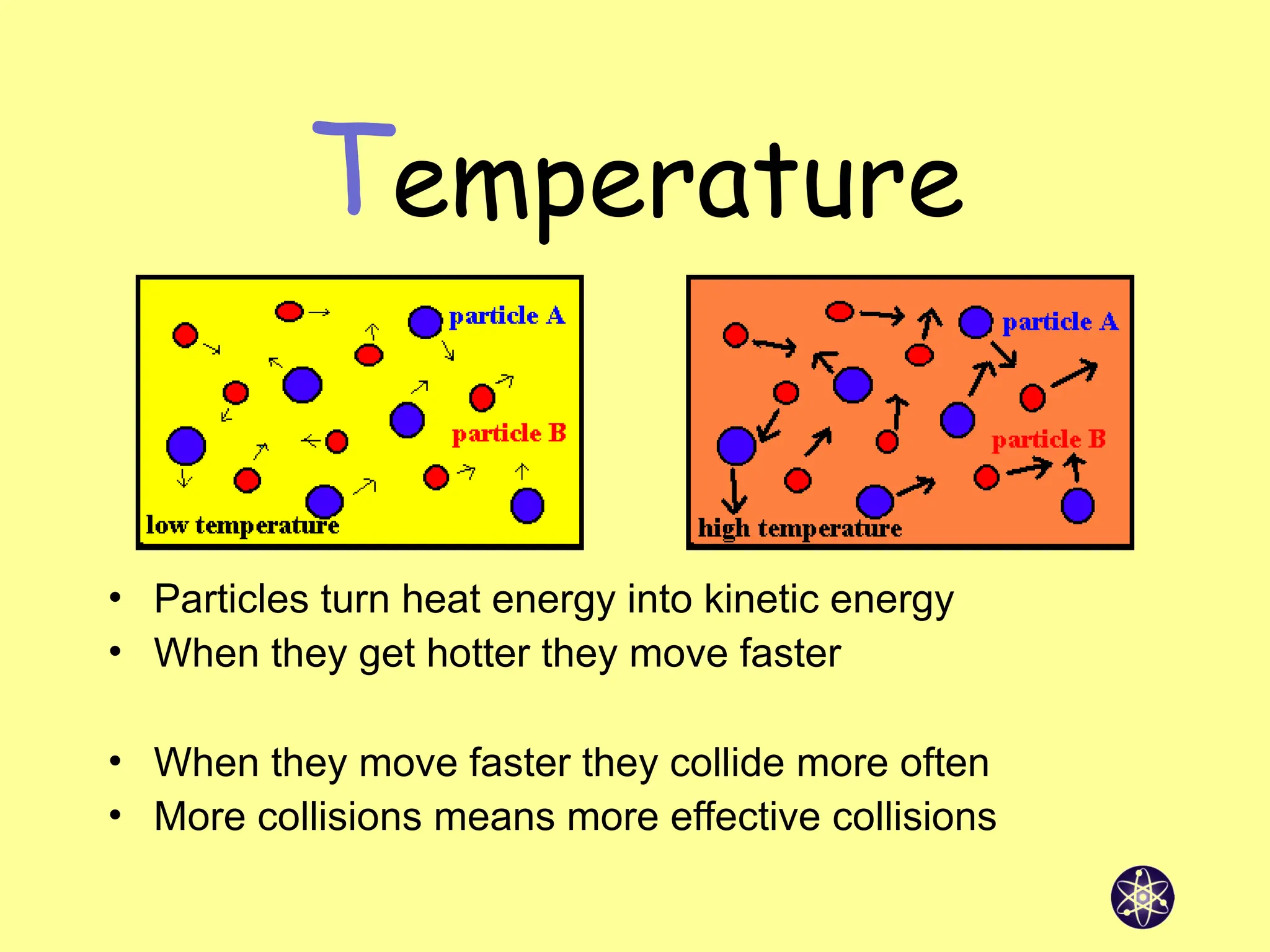
Temperature
• Particles turnheat energy into kinetic energy
• When they get hotter they move faster
• When they move faster they collide more often
• More collisions means more effective collisions
12.
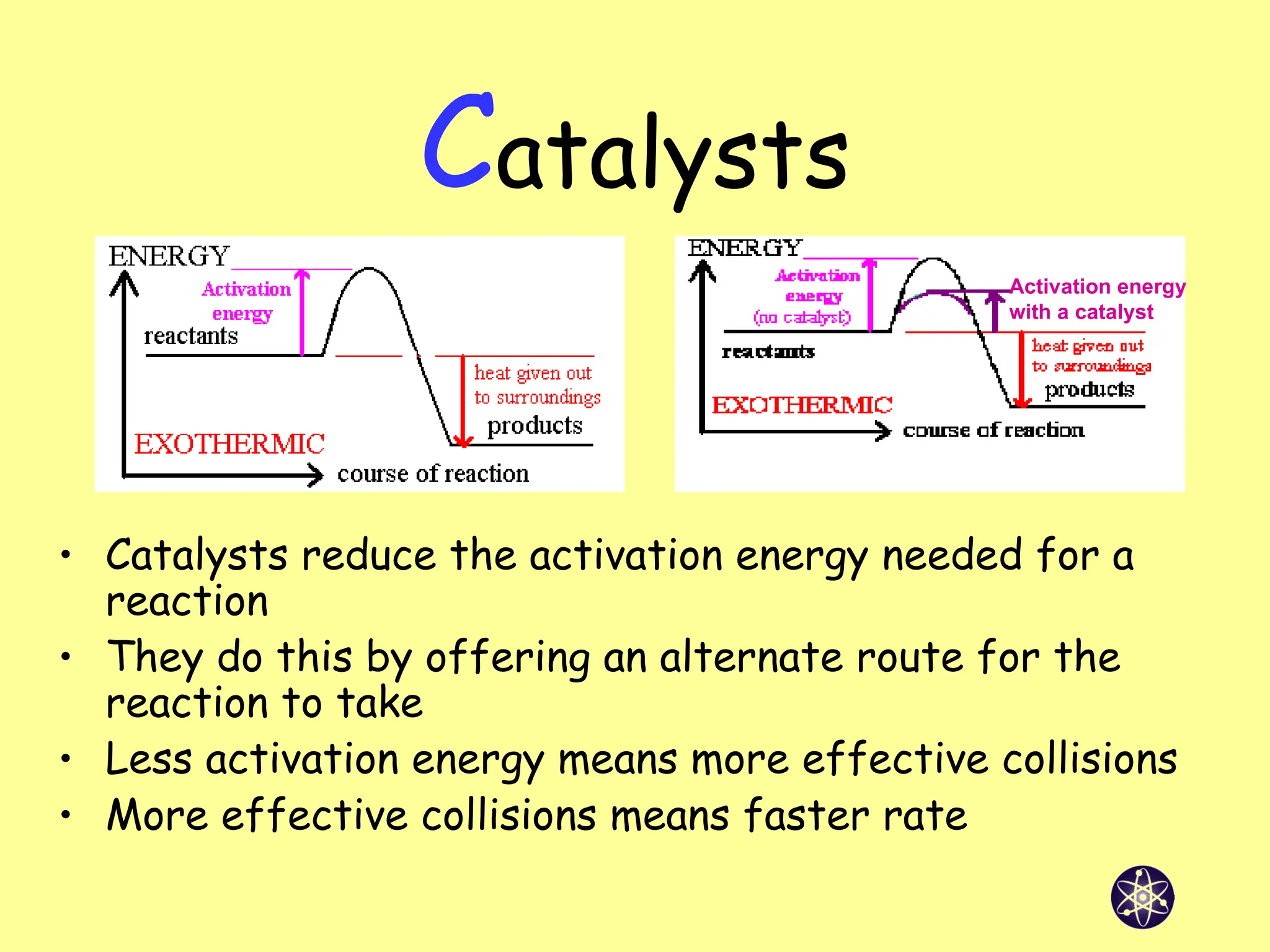
Catalysts
• Catalysts reducethe activation energy needed for a
reaction
• They do this by offering an alternate route for the
reaction to take
• Less activation energy means more effective collisions
• More effective collisions means faster rate
Activation energy
with a catalyst
13.
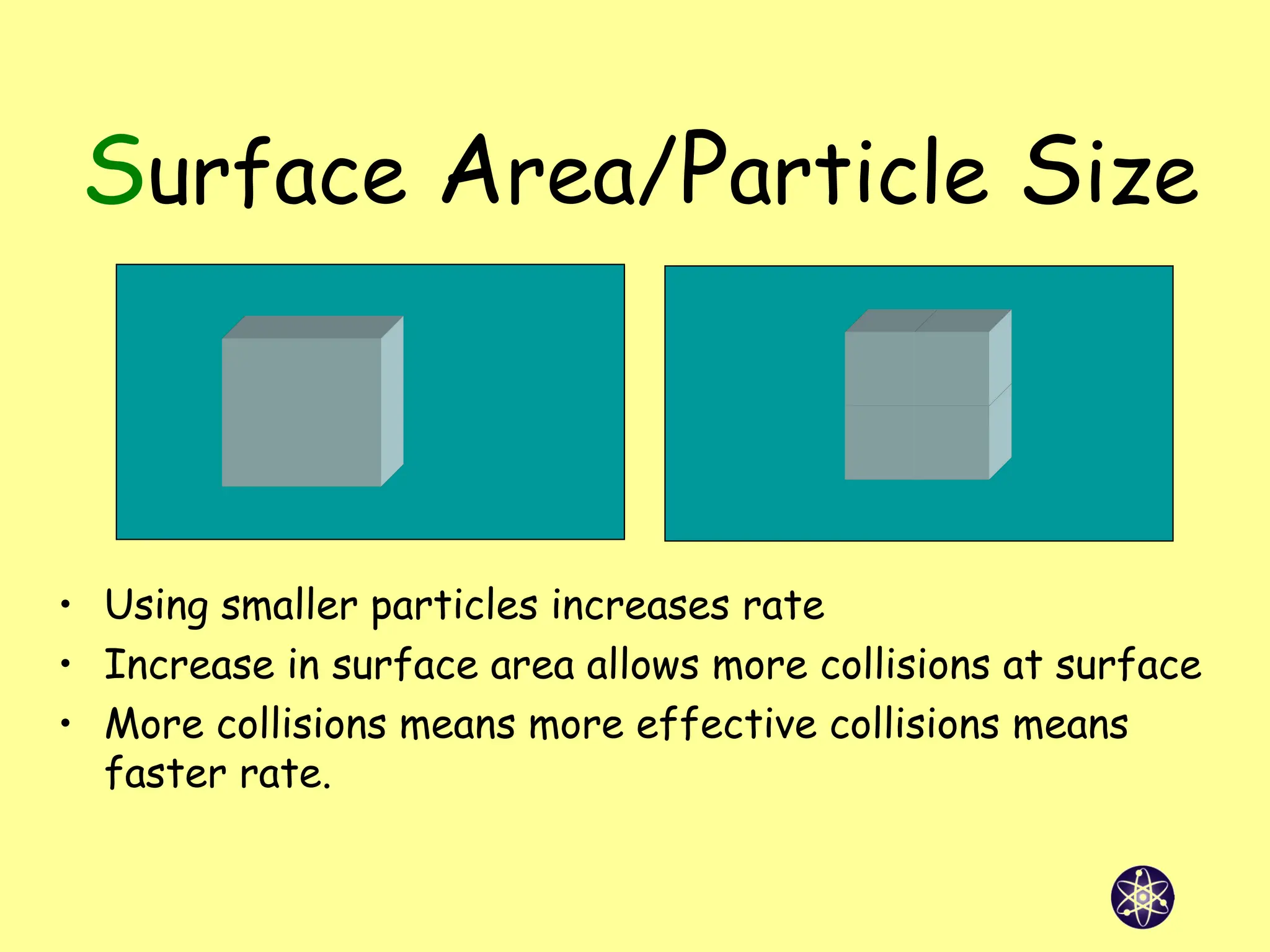
Surface Area/Particle Size
•Using smaller particles increases rate
• Increase in surface area allows more collisions at surface
• More collisions means more effective collisions means
faster rate.