By Devesh Prajapati- deveshprajapatinvs@gmail.com
NOTE --The purpose of collection of data is to show evidence for reaching a sound and clear solution to an economic problem. 
Statistical enquiry :-it means a search conducted by using statistical methods. 
Or we can say that statistical enquiry means statistical investigation. 
By Devesh Prajapati- deveshprajapatinvs@gmail.com
The person who conducts this investigation is called an investigator. 
The investigator needs help of enumerator( who collect information). 
And respondents( who provide the information) for statistical enquiry. 
By Devesh Prajapati- deveshprajapatinvs@gmail.com
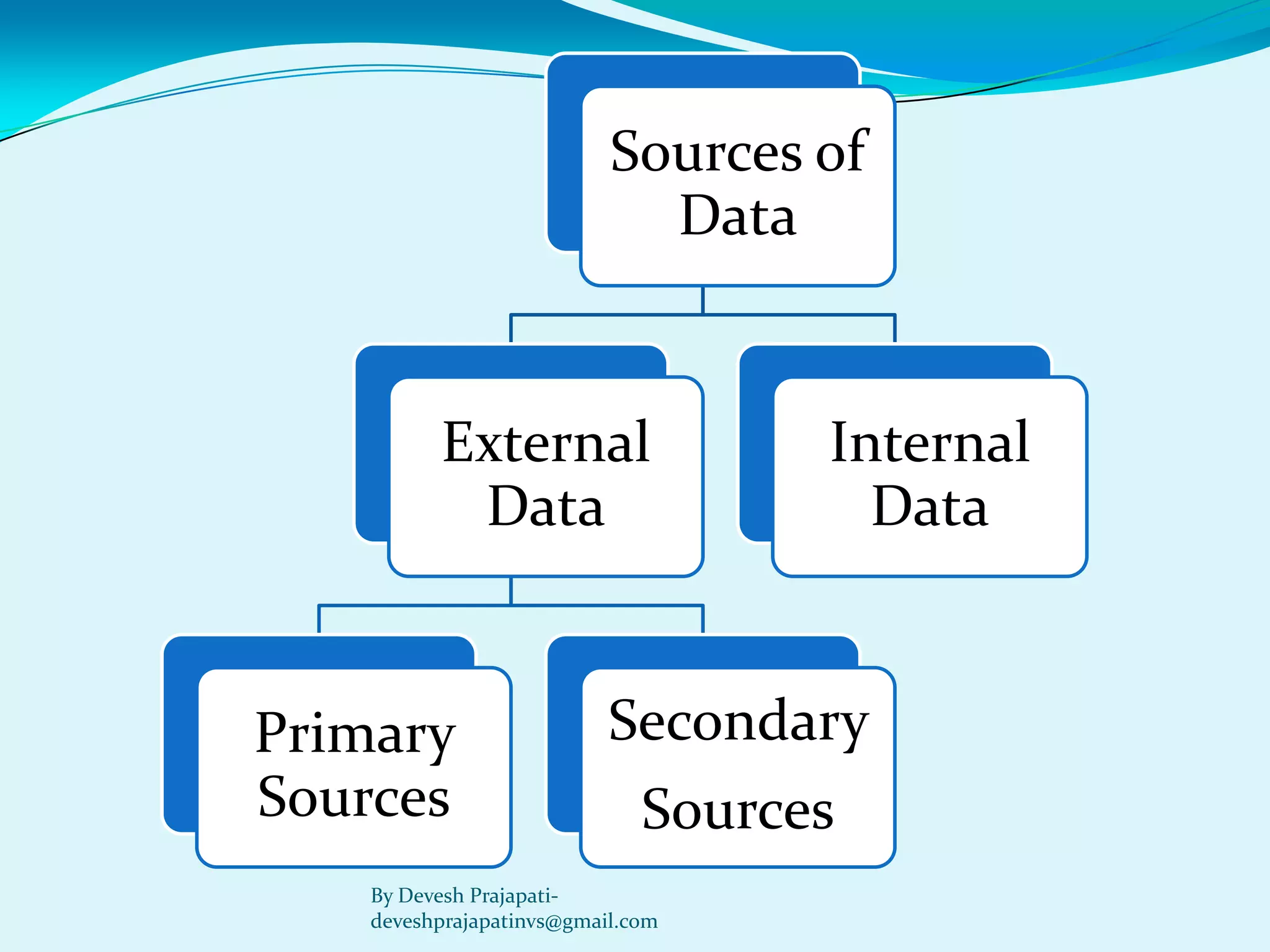
Sources of Data 
External Data 
Primary Sources 
Secondary 
Sources 
Internal Data 
By Devesh Prajapati- deveshprajapatinvs@gmail.com
Internal sources of Data 
oDefinition –information created by the operation of an organization that include sale, profit etc. 
oDifferent organisations and government. 
oInternal data may be available in the organisation about sale, production, interest etc 
oSuch data are compiled and used for future planning. 
By Devesh Prajapati- deveshprajapatinvs@gmail.com
External sources of Data 
Definition –External sources refer to that data collected from outside the organization 
Information collected from outside organisations and institutions is called external data. 
External data can be obtained by primary and secondary sources. 
By Devesh Prajapati- deveshprajapatinvs@gmail.com
Primary sources 
Meaning-data collected by the investigator for his own purpose , for the first time , from beginning to end , are called primary data. 
Methods of collection of primary Data 
1.Direct personal investigation 
2.Indirect oral investigation 
3.Information from local sources 
4.Information through filling questionnaires and schedules – 
(a)Mailing method 
(b)Numerator`s Method 
By Devesh Prajapati- deveshprajapatinvs@gmail.com
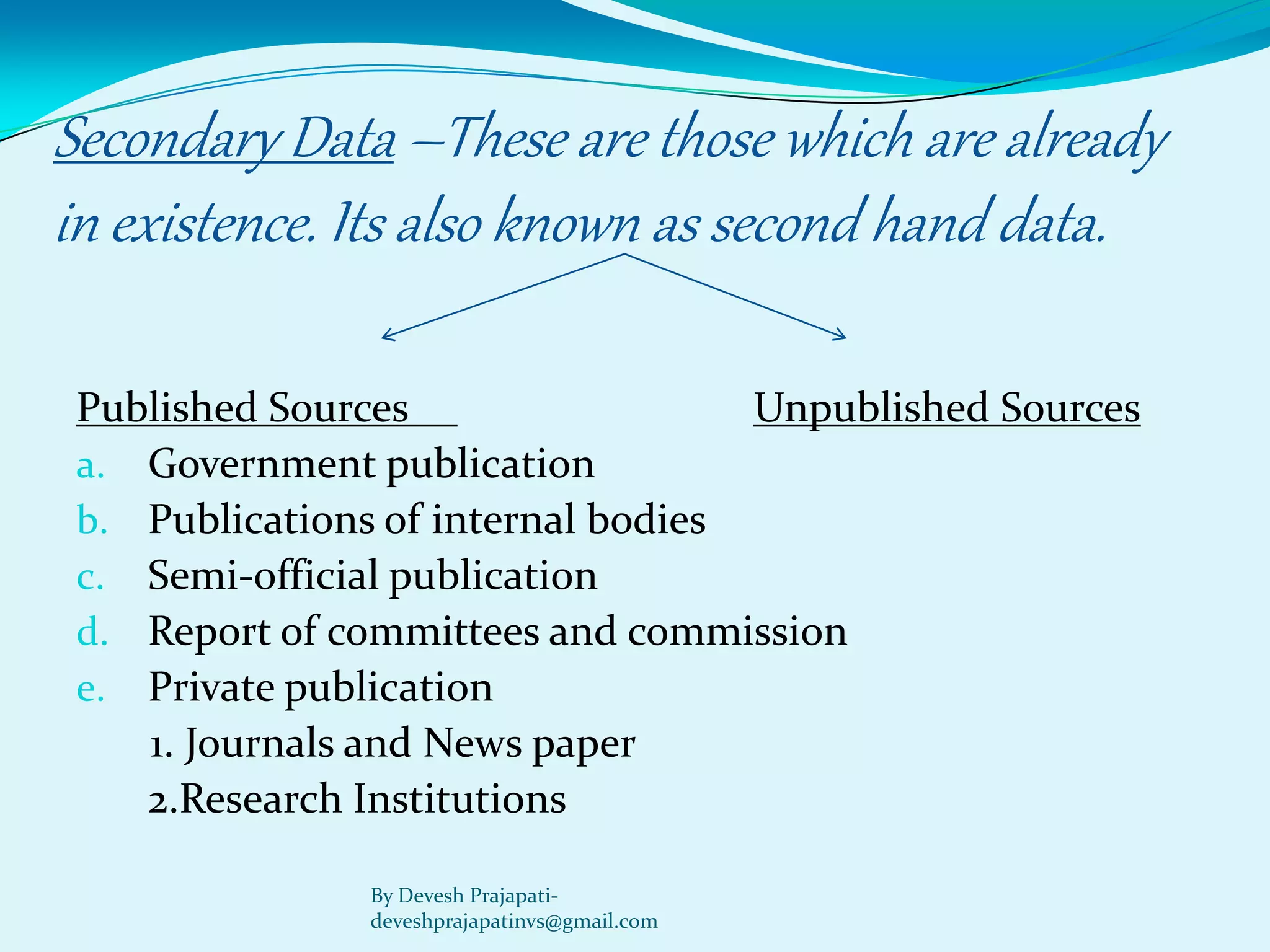
Secondary Data–These are those which are already in existence. Its also known as second hand data. 
Published SourcesUnpublished Sources 
a.Government publication 
b.Publications of internal bodies 
c.Semi-official publication 
d.Report of committees and commission 
e.Private publication 
1. Journals and News paper 
2.Research Institutions 
By Devesh Prajapati- deveshprajapatinvs@gmail.com
Census and Sampling investigation 
Census Method –when a statistical investigation is conducted wherein , the data is collected from each and every element of the population , it is known as census method. 
1. This method is generally adopted when area of investigation is limited. 
2. High trained investigators are needed to maintain a high degree of accuracy. 
By Devesh Prajapati- deveshprajapatinvs@gmail.com
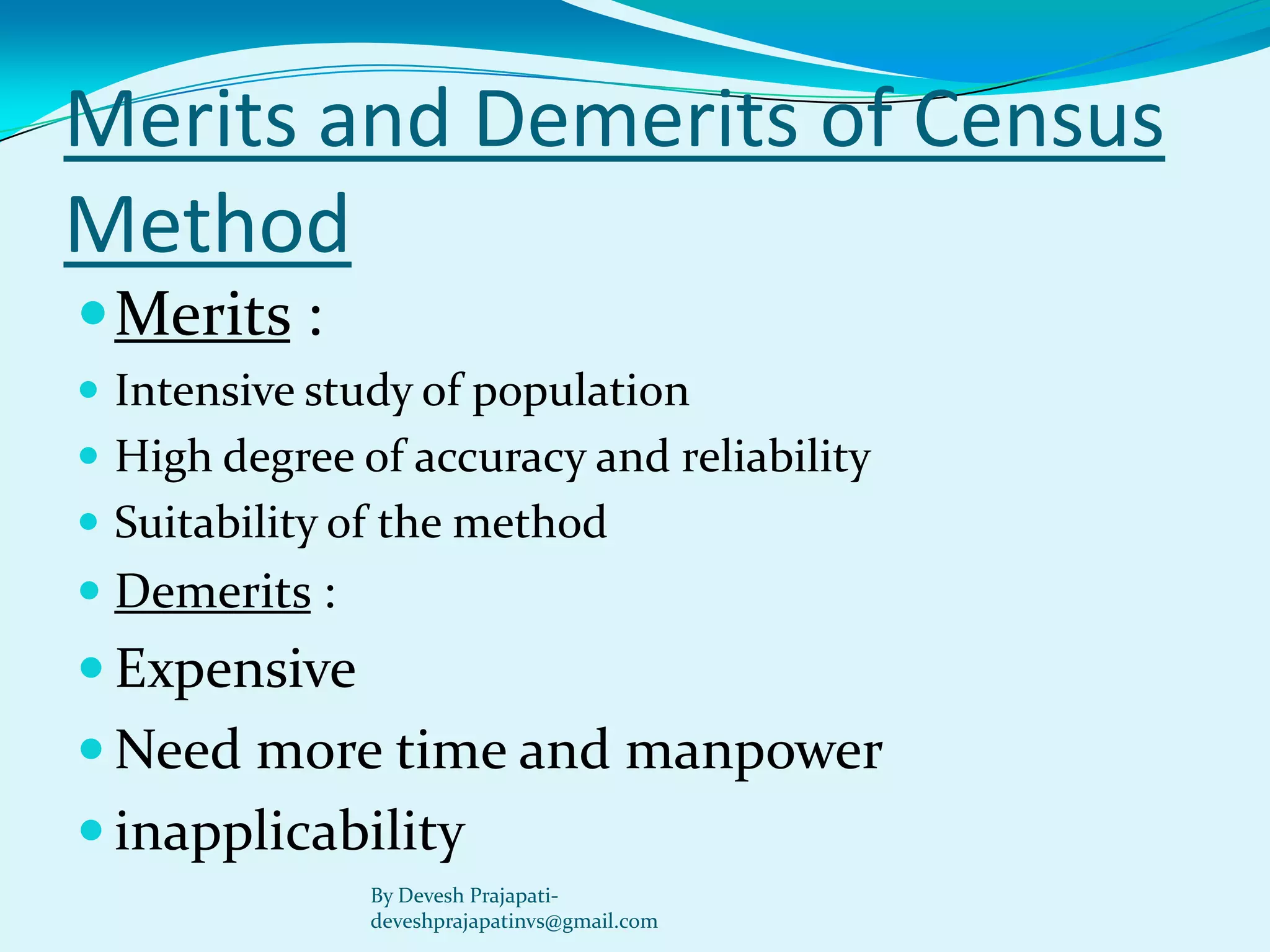
Merits and Demerits of Census Method 
Merits: 
Intensive study of population 
High degree of accuracy and reliability 
Suitability of the method 
Demerits: 
Expensive 
Need more time and manpower 
inapplicability 
By Devesh Prajapati- deveshprajapatinvs@gmail.com
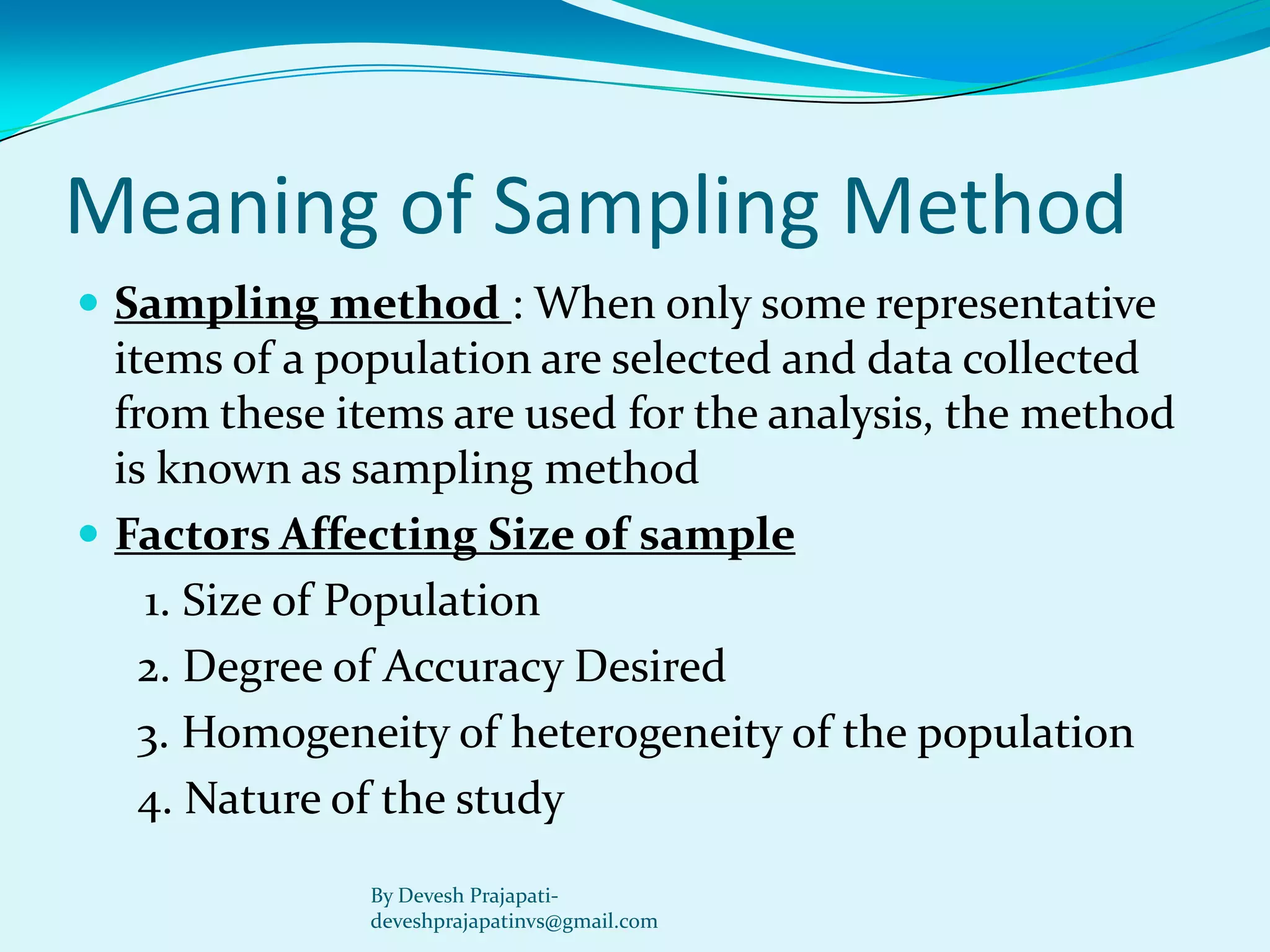
Meaning of Sampling Method 
Sampling method : When only some representative items of a population are selected and data collected from these items are used for the analysis, the method is known as sampling method 
Factors Affecting Size of sample 
1. Size of Population 
2. Degree of Accuracy Desired 
3. Homogeneity of heterogeneity of the population 
4. Nature of the study 
By Devesh Prajapati- deveshprajapatinvs@gmail.com
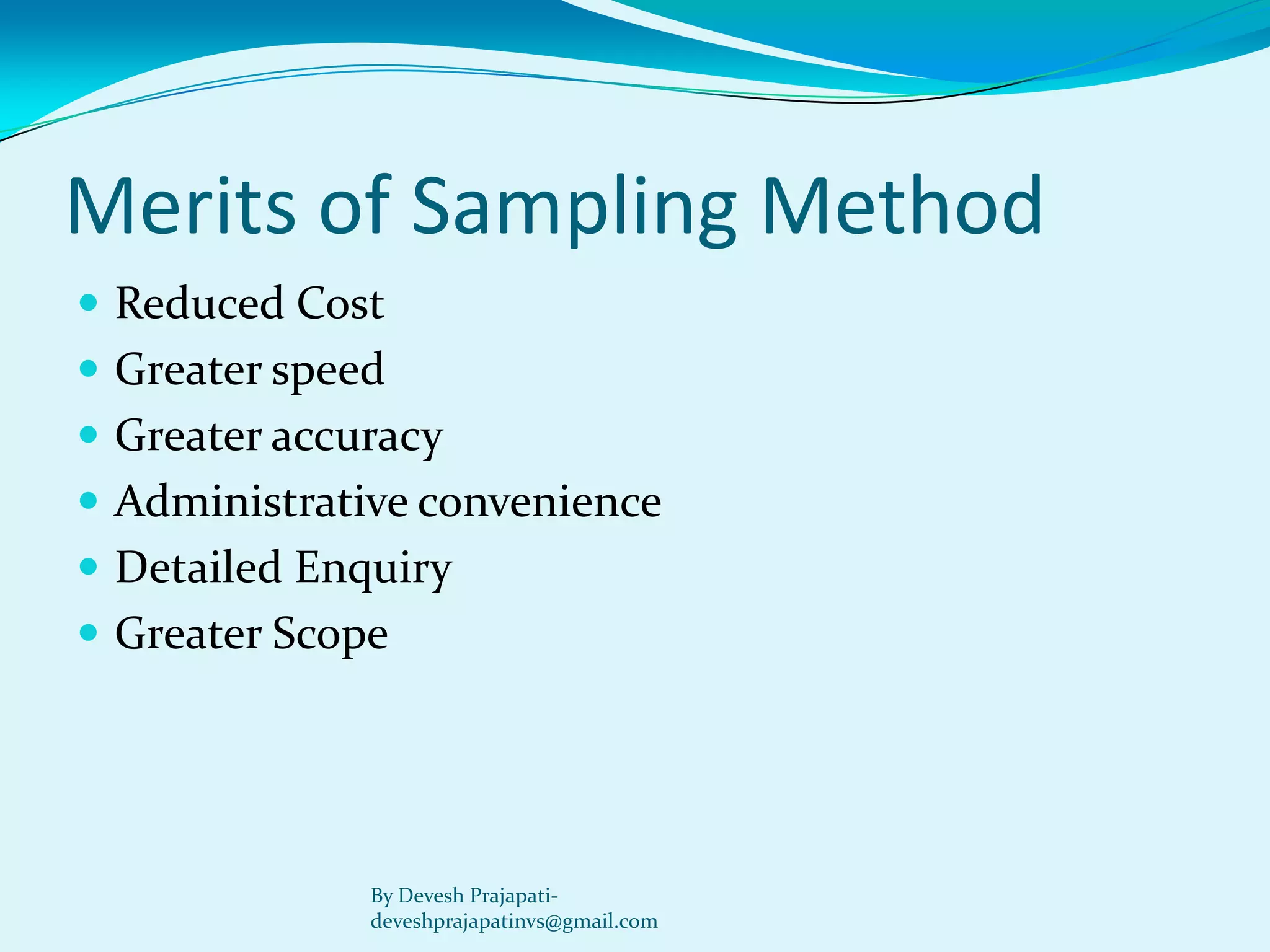
Merits of Sampling Method 
Reduced Cost 
Greater speed 
Greater accuracy 
Administrative convenience 
Detailed Enquiry 
Greater Scope 
By Devesh Prajapati- deveshprajapatinvs@gmail.com
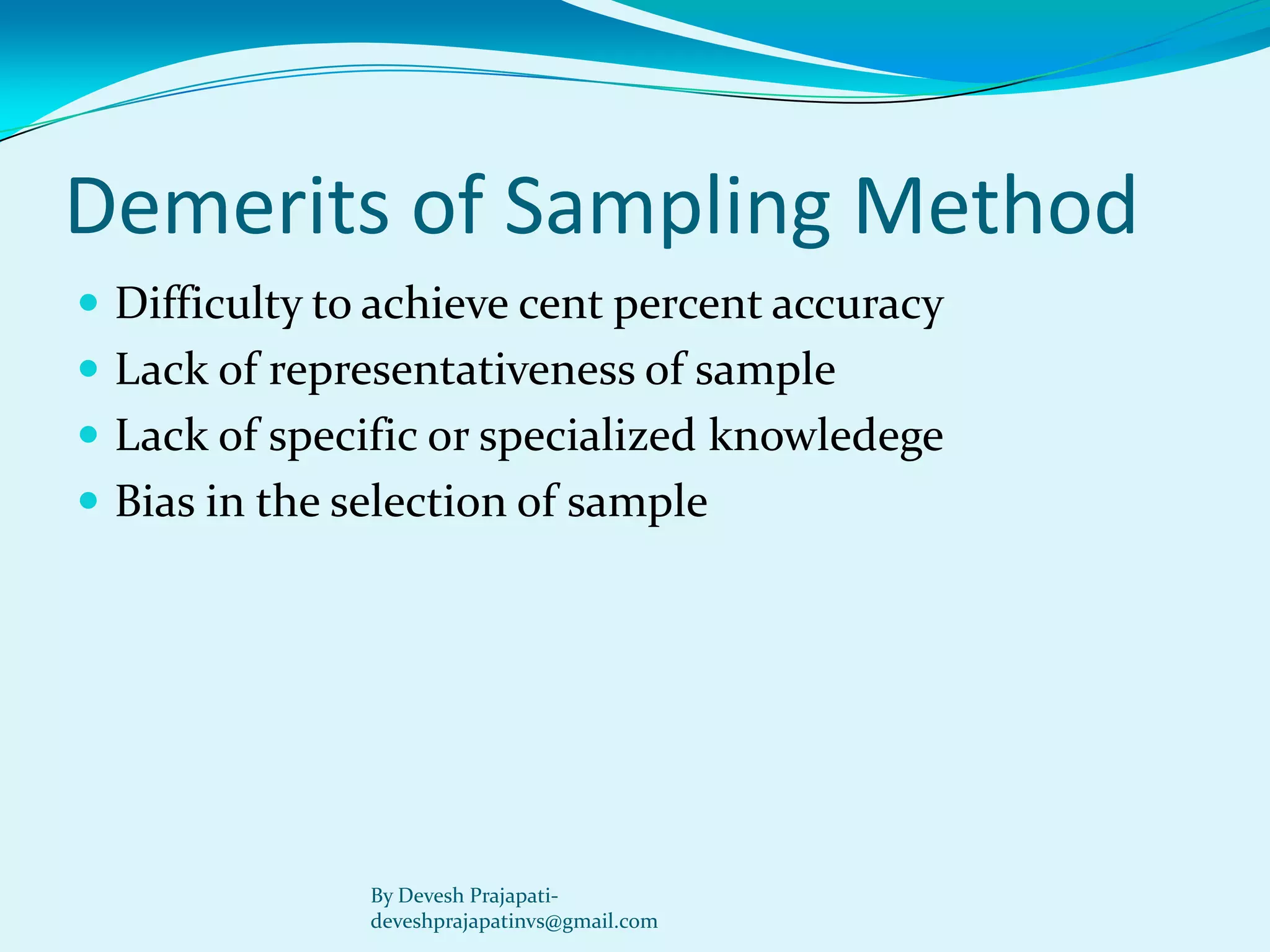
Demerits of Sampling Method 
Difficulty to achieve cent percent accuracy 
Lack of representativeness of sample 
Lack of specific or specialized knowledege 
Bias in the selection of sample 
By Devesh Prajapati- deveshprajapatinvs@gmail.com
Types of sampling 
Random sampling 
Purposive sampling 
Systematic sampling 
Quota sampling 
By Devesh Prajapati- deveshprajapatinvs@gmail.com
Random Sampling 
Meaning :-Method in which each and every item of the universe has an equal chance of being selected in the sample is called Random sampling. 
Like as lottery method 
Merits: 1) Free from bias 
2) Equality 
3) Representative of the population 
Demerits: 1)Ignores important items 
2) No proportionate representative 
By Devesh Prajapati- deveshprajapatinvs@gmail.com
Purposive sampling 
Method in which the investigator himself collect or chooses the samples from the universe, which in his opinion are the best representatives of the population is purposive or deliberate sampling. 
Merits :-1) Flexible 
2) Facilitates purpose of study. 
3) Simple 
Demerits :-1) Biased 
2) Not reliable 
3) Inaccurate 
By Devesh Prajapati- deveshprajapatinvs@gmail.com
Systematic Sampling 
Method in which items of the universe are arranged numerically , alphabetically and geographically and every nth items of the numbered items is selected as a sample items is called systematic sampling. 
Merits :-1) Simple 
2) Not Biased 
3) Less time consuming 
4) Satisfactory conclusions 
Demerits :-1) Unfair 
2) Unsuitable if items are homogeneous 
3) Unsuitable if size of universe is large 
By Devesh Prajapati- deveshprajapatinvs@gmail.com
Quota sampling 
Meaning –Method in which population is divided into different groups or classes according to different characteristics of the population, is called Quota sampling. 
Merits :-1) Economical 
2) Reliable 
Demerits :-1) Personal bias 
2) Impossible to detect sample error. 
By Devesh Prajapati- deveshprajapatinvs@gmail.com
Statistical Errors 
In the statistical terms, the difference between the collected data and actual value of facts is termed as statistical errors. 
In other words , the difference between estimated value and the actual value is called statistical error. 
By Devesh Prajapati- deveshprajapatinvs@gmail.com

Collection of data

  • 1.
    By Devesh Prajapati-deveshprajapatinvs@gmail.com
  • 2.
    NOTE --The purposeof collection of data is to show evidence for reaching a sound and clear solution to an economic problem. Statistical enquiry :-it means a search conducted by using statistical methods. Or we can say that statistical enquiry means statistical investigation. By Devesh Prajapati- deveshprajapatinvs@gmail.com
  • 3.
    The person whoconducts this investigation is called an investigator. The investigator needs help of enumerator( who collect information). And respondents( who provide the information) for statistical enquiry. By Devesh Prajapati- deveshprajapatinvs@gmail.com
  • 4.
    Sources of Data External Data Primary Sources Secondary Sources Internal Data By Devesh Prajapati- deveshprajapatinvs@gmail.com
  • 5.
    Internal sources ofData oDefinition –information created by the operation of an organization that include sale, profit etc. oDifferent organisations and government. oInternal data may be available in the organisation about sale, production, interest etc oSuch data are compiled and used for future planning. By Devesh Prajapati- deveshprajapatinvs@gmail.com
  • 6.
    External sources ofData Definition –External sources refer to that data collected from outside the organization Information collected from outside organisations and institutions is called external data. External data can be obtained by primary and secondary sources. By Devesh Prajapati- deveshprajapatinvs@gmail.com
  • 7.
    Primary sources Meaning-datacollected by the investigator for his own purpose , for the first time , from beginning to end , are called primary data. Methods of collection of primary Data 1.Direct personal investigation 2.Indirect oral investigation 3.Information from local sources 4.Information through filling questionnaires and schedules – (a)Mailing method (b)Numerator`s Method By Devesh Prajapati- deveshprajapatinvs@gmail.com
  • 8.
    Secondary Data–These arethose which are already in existence. Its also known as second hand data. Published SourcesUnpublished Sources a.Government publication b.Publications of internal bodies c.Semi-official publication d.Report of committees and commission e.Private publication 1. Journals and News paper 2.Research Institutions By Devesh Prajapati- deveshprajapatinvs@gmail.com
  • 9.
    Census and Samplinginvestigation Census Method –when a statistical investigation is conducted wherein , the data is collected from each and every element of the population , it is known as census method. 1. This method is generally adopted when area of investigation is limited. 2. High trained investigators are needed to maintain a high degree of accuracy. By Devesh Prajapati- deveshprajapatinvs@gmail.com
  • 10.
    Merits and Demeritsof Census Method Merits: Intensive study of population High degree of accuracy and reliability Suitability of the method Demerits: Expensive Need more time and manpower inapplicability By Devesh Prajapati- deveshprajapatinvs@gmail.com
  • 11.
    Meaning of SamplingMethod Sampling method : When only some representative items of a population are selected and data collected from these items are used for the analysis, the method is known as sampling method Factors Affecting Size of sample 1. Size of Population 2. Degree of Accuracy Desired 3. Homogeneity of heterogeneity of the population 4. Nature of the study By Devesh Prajapati- deveshprajapatinvs@gmail.com
  • 12.
    Merits of SamplingMethod Reduced Cost Greater speed Greater accuracy Administrative convenience Detailed Enquiry Greater Scope By Devesh Prajapati- deveshprajapatinvs@gmail.com
  • 13.
    Demerits of SamplingMethod Difficulty to achieve cent percent accuracy Lack of representativeness of sample Lack of specific or specialized knowledege Bias in the selection of sample By Devesh Prajapati- deveshprajapatinvs@gmail.com
  • 14.
    Types of sampling Random sampling Purposive sampling Systematic sampling Quota sampling By Devesh Prajapati- deveshprajapatinvs@gmail.com
  • 15.
    Random Sampling Meaning:-Method in which each and every item of the universe has an equal chance of being selected in the sample is called Random sampling. Like as lottery method Merits: 1) Free from bias 2) Equality 3) Representative of the population Demerits: 1)Ignores important items 2) No proportionate representative By Devesh Prajapati- deveshprajapatinvs@gmail.com
  • 16.
    Purposive sampling Methodin which the investigator himself collect or chooses the samples from the universe, which in his opinion are the best representatives of the population is purposive or deliberate sampling. Merits :-1) Flexible 2) Facilitates purpose of study. 3) Simple Demerits :-1) Biased 2) Not reliable 3) Inaccurate By Devesh Prajapati- deveshprajapatinvs@gmail.com
  • 17.
    Systematic Sampling Methodin which items of the universe are arranged numerically , alphabetically and geographically and every nth items of the numbered items is selected as a sample items is called systematic sampling. Merits :-1) Simple 2) Not Biased 3) Less time consuming 4) Satisfactory conclusions Demerits :-1) Unfair 2) Unsuitable if items are homogeneous 3) Unsuitable if size of universe is large By Devesh Prajapati- deveshprajapatinvs@gmail.com
  • 18.
    Quota sampling Meaning–Method in which population is divided into different groups or classes according to different characteristics of the population, is called Quota sampling. Merits :-1) Economical 2) Reliable Demerits :-1) Personal bias 2) Impossible to detect sample error. By Devesh Prajapati- deveshprajapatinvs@gmail.com
  • 19.
    Statistical Errors Inthe statistical terms, the difference between the collected data and actual value of facts is termed as statistical errors. In other words , the difference between estimated value and the actual value is called statistical error. By Devesh Prajapati- deveshprajapatinvs@gmail.com