Political Parties
Class 10 Political Science
Chapter 6
By-
Riya Gautam
Political parties
• A political party is a group of people who come together to
contest elections and hold power in the government. They
agree on some policies and programmes for the society
with a view to promote the collective good.
• parties reflect fundamental political divisions in a society.
Parties are about a part of the society and thus involve
PARTISANSHIP. Thus a party is known by which part it
stands for, which policies it supports and whose interests it
upholds. A political party has three components:
1.The Leaders
2.The Active Members and
3.The Followers
Necessity of the political parties
• If there were no political party, then each and every
candidate would be independent. Current strength of the
Lok Sabha is 543. Imagine a situation when none of the 543
members can be brought to think alike on a particular issue.
This would lead to a total chaos. An independent candidate
would always be more interested in the specific needs of his
constituency and would seldom think about the larger
interest of the nation. A political party is necessary to bring
diverse people on a common platform, so that bigger issues
can be taken care of.
• The democracy which is being practiced all over the world is
called representative democracy. In this system, governance
is done through people’s representative because it is
impossible for each citizen to directly participate in
governance. The need for representative democracy has
given rise to political parties.
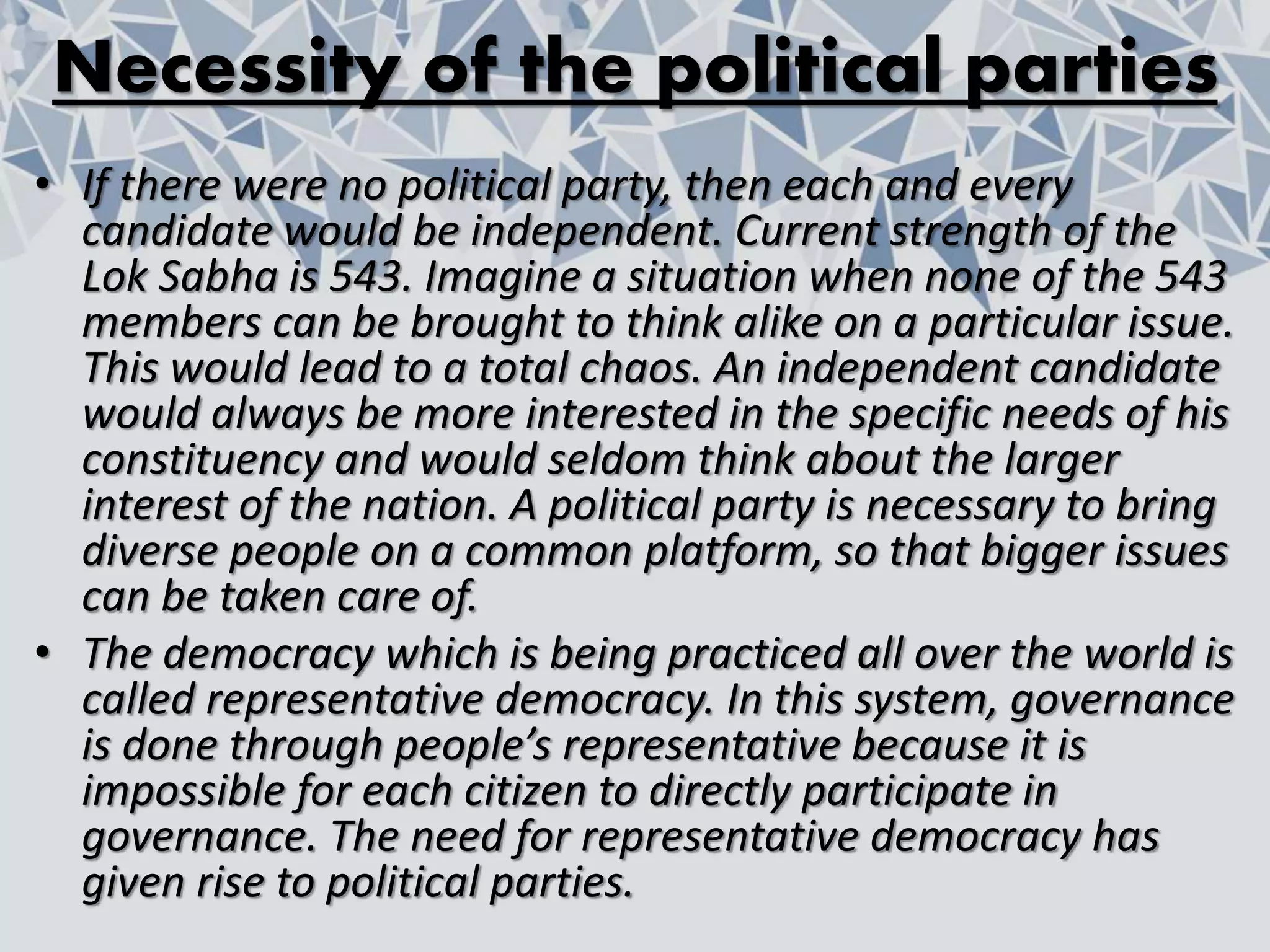
Functions of a
Political Party.
1. Contesting Elections: Political parties contest
elections. A political party nominates its candidate for
the electoral contest in various constituencies.
2. Policies: Political parties put forward different policies
and programmes so that the voters can choose from
them. A political party brings a large number of
similar opinions under one umbrella. These opinions
are channelized to form policies and programmes. The
policies and programmes of the RULING PARTY are
expected to be followed by the government.
3. Making Law: Political parties play a decisive role in
making laws for the country. You may be aware that it
is the legislature which passes a law after proper
debate. As most of the members belong to political
parties, so a political party has direct say in law
making for the country.
4. Formation of Government: Political parties form and run
governments. The executive body is formed by people
from the ruling party. Various political leaders are assigned
different ministries to carry out the task of governance.
5. Playing Opposition: A party which does not get majority or
come under the majority coalition, needs to play the role
of opposition.
6. Shaping Public Opinion: Political parties shape public
opinion. They do so by raising and highlighting issues in
the legislature and in the media.
7. Access to government machinery and welfare schemes:
parties provide people access to government machinery
and welfare schemes since it is easy to approach local
party leader than government officers.
Different Party
Systems
One party system
• In some countries, only one party I s allowed
to control and run the government. These are
called one party systems.
• For example, in China, only the Communist
Party is allowed to rule.
Two-party system
• In some countries, power is shared between
two main parties. Such party system is called
two party system. The United States of
America and the United Kingdom are
examples of two party system.
United States of America
United Kingdom
Multi party system
• If several parties compete for power, and more
than two parties have reasonable chance of
winning, we call it a multi party system. In
India we have a multi party system.
Since multi party system tend to offer more
choices to the voters, it is often considered
better than the other party systems.
Comparison between two party
and multiple party system
Two party system Multi party system
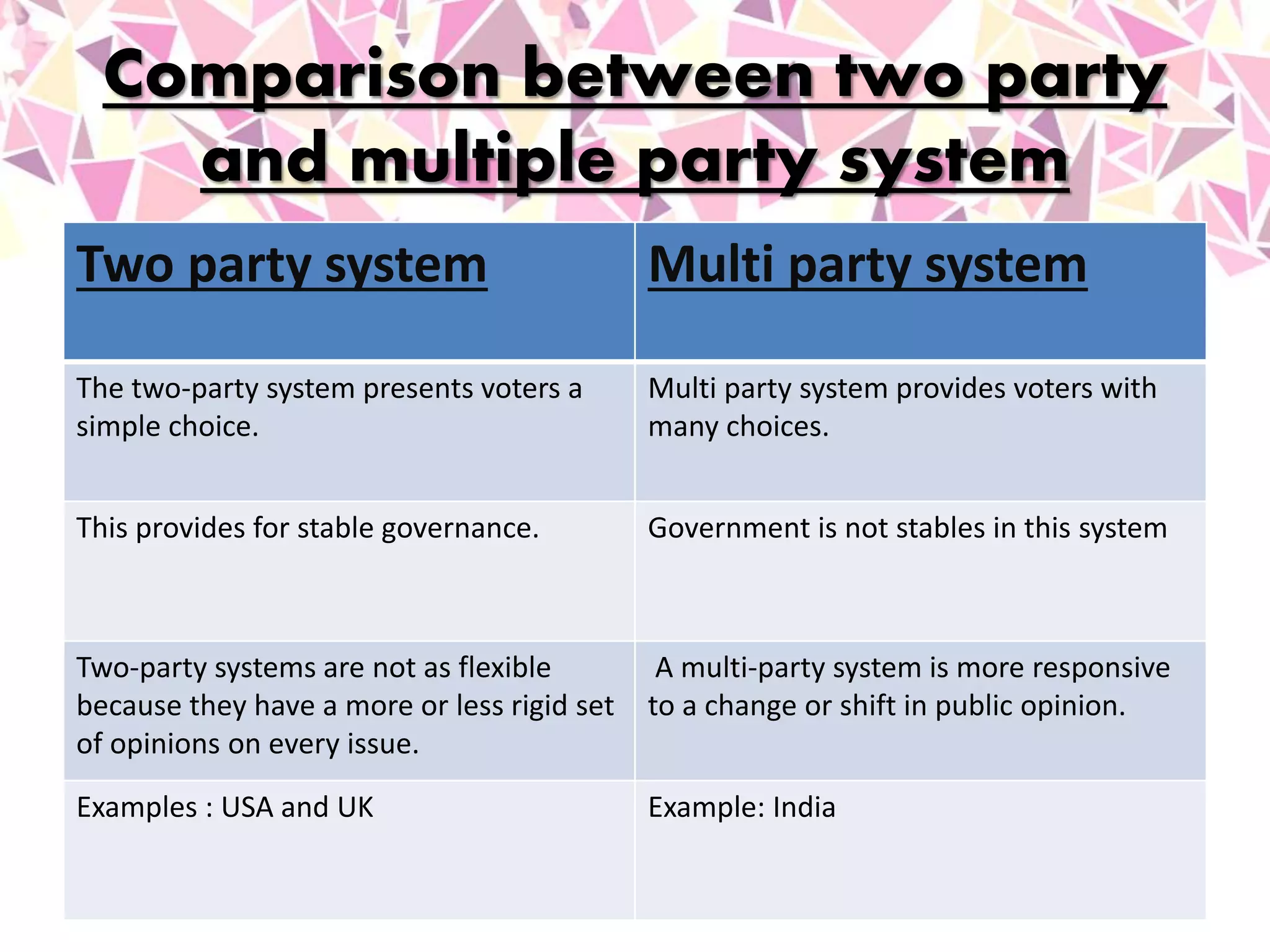
The two-party system presents voters a
simple choice.
Multi party system provides voters with
many choices.
This provides for stable governance. Government is not stables in this system
Two-party systems are not as flexible
because they have a more or less rigid set
of opinions on every issue.
A multi-party system is more responsive
to a change or shift in public opinion.
Examples : USA and UK Example: India
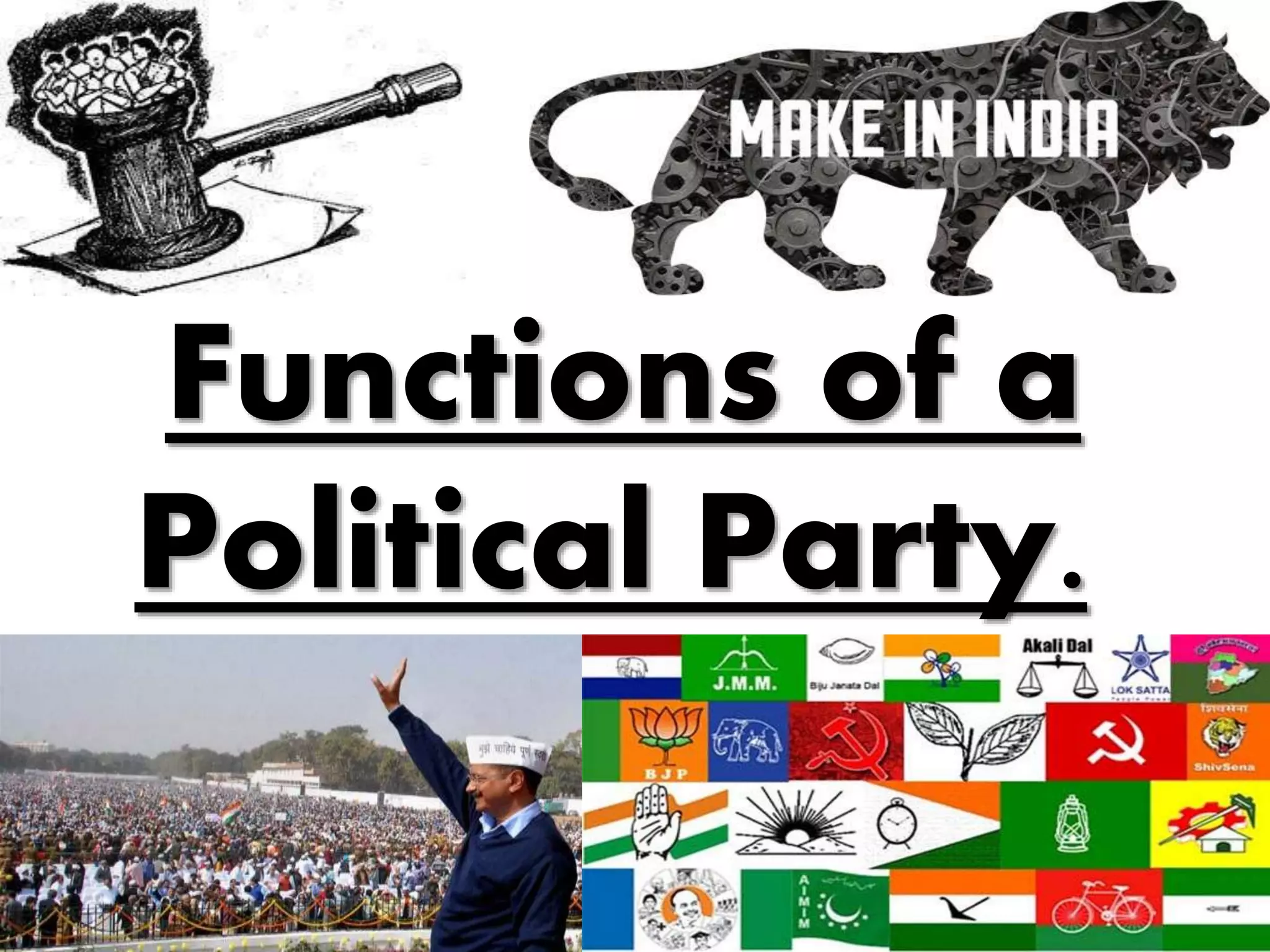
National parties
• A party that secures at least six per cent of
total votes in Lok Sabha elections or
Assembly elections in four States and wins at
least four seats in the Lok Sabha is recognized
as a national party.
Recognized national parties in India
State parties
• A party that secures at least 6 per cent of the
total votes in an election to the Legislative
Assembly of a State and wins at least two
seats is recognized as a State party.
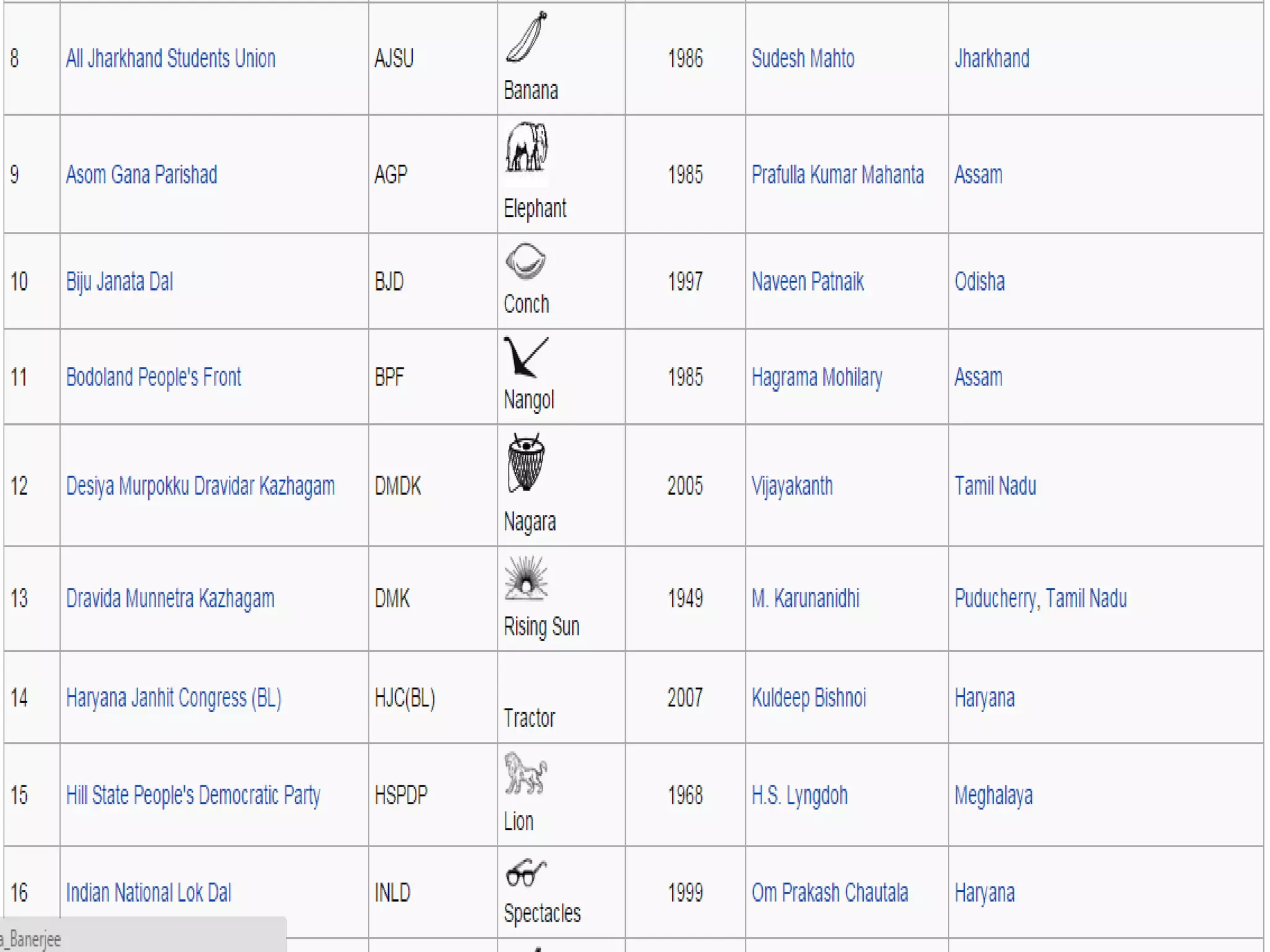
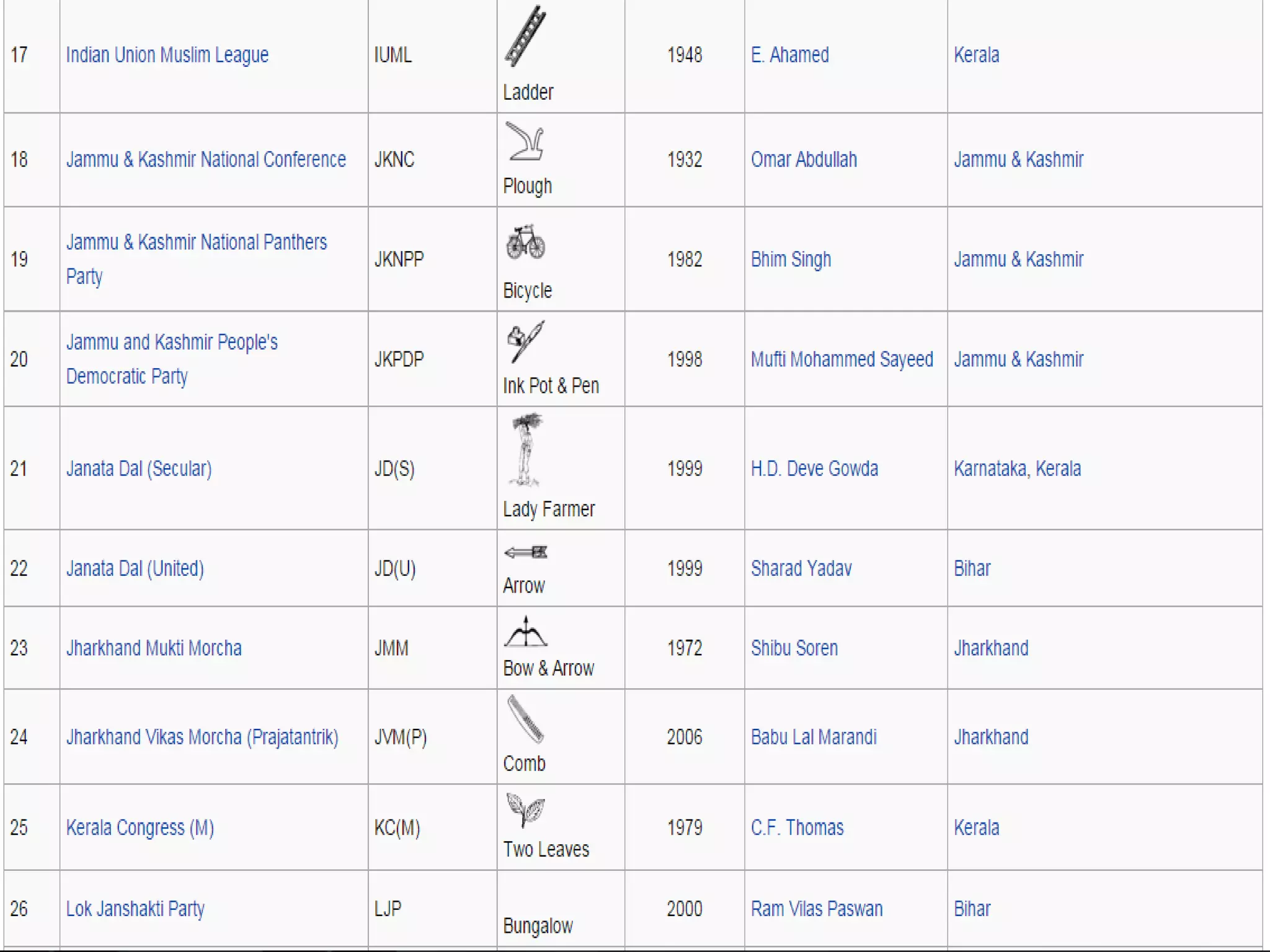
Recognized state parties in India
Challenges to a
Political Party.
• Lack of internal democracy: there is a tendency in political
parties towards the concentration of power in on or few
leaders at the top. Parties do not conduct internal election
and ordinary members do not get sufficient information on
what happens inside the party.
• Dynastic successions: Those who happen to be the leaders
are in a position of unfair advantage to favor people close
to them or even their family members.
• Money and muscle power: The parties tend to nominate
those candidates who have or can raise lots of money. In
some cases parties support criminals.
• Lack of meaningful choices: in order to offer meaningful
choices to the voters, parties must be significantly
different.
Reforming
the
Political
Parties
• The constitution was amended to prevent elected members
from changing parties. This was done because many elected
representatives were indulging in defection in order to
become minister or for cash rewards.
• The supreme court passed an order to reduce the influence
of money and criminals. Now, it is mandatory for every
candidate who contests election to file affidavit giving
details of his property and criminal cases pending against
him.
• The election commission passed an order making it
necessary for political parties to hold their organizational
elections and file their income tax returns.
• A law should be made to regulate the internal affairs of
political parties.
• It should be made mandatory for political parties to give
minimum number of tickets, about one third of tickets, to
women candidates.
• There should be state funding of elections. The
government should give parties money to support their
election expenses.
Thank
You !

Political Parties class 10 civics PPT

  • 1.
    Political Parties Class 10Political Science Chapter 6 By- Riya Gautam
  • 2.
    Political parties • Apolitical party is a group of people who come together to contest elections and hold power in the government. They agree on some policies and programmes for the society with a view to promote the collective good. • parties reflect fundamental political divisions in a society. Parties are about a part of the society and thus involve PARTISANSHIP. Thus a party is known by which part it stands for, which policies it supports and whose interests it upholds. A political party has three components: 1.The Leaders 2.The Active Members and 3.The Followers
  • 3.
    Necessity of thepolitical parties • If there were no political party, then each and every candidate would be independent. Current strength of the Lok Sabha is 543. Imagine a situation when none of the 543 members can be brought to think alike on a particular issue. This would lead to a total chaos. An independent candidate would always be more interested in the specific needs of his constituency and would seldom think about the larger interest of the nation. A political party is necessary to bring diverse people on a common platform, so that bigger issues can be taken care of. • The democracy which is being practiced all over the world is called representative democracy. In this system, governance is done through people’s representative because it is impossible for each citizen to directly participate in governance. The need for representative democracy has given rise to political parties.
  • 4.
  • 5.
    1. Contesting Elections:Political parties contest elections. A political party nominates its candidate for the electoral contest in various constituencies. 2. Policies: Political parties put forward different policies and programmes so that the voters can choose from them. A political party brings a large number of similar opinions under one umbrella. These opinions are channelized to form policies and programmes. The policies and programmes of the RULING PARTY are expected to be followed by the government. 3. Making Law: Political parties play a decisive role in making laws for the country. You may be aware that it is the legislature which passes a law after proper debate. As most of the members belong to political parties, so a political party has direct say in law making for the country.
  • 6.
    4. Formation ofGovernment: Political parties form and run governments. The executive body is formed by people from the ruling party. Various political leaders are assigned different ministries to carry out the task of governance. 5. Playing Opposition: A party which does not get majority or come under the majority coalition, needs to play the role of opposition. 6. Shaping Public Opinion: Political parties shape public opinion. They do so by raising and highlighting issues in the legislature and in the media. 7. Access to government machinery and welfare schemes: parties provide people access to government machinery and welfare schemes since it is easy to approach local party leader than government officers.
  • 7.
  • 8.
    One party system •In some countries, only one party I s allowed to control and run the government. These are called one party systems. • For example, in China, only the Communist Party is allowed to rule.
  • 9.
    Two-party system • Insome countries, power is shared between two main parties. Such party system is called two party system. The United States of America and the United Kingdom are examples of two party system. United States of America United Kingdom
  • 10.
    Multi party system •If several parties compete for power, and more than two parties have reasonable chance of winning, we call it a multi party system. In India we have a multi party system. Since multi party system tend to offer more choices to the voters, it is often considered better than the other party systems.
  • 11.
    Comparison between twoparty and multiple party system Two party system Multi party system The two-party system presents voters a simple choice. Multi party system provides voters with many choices. This provides for stable governance. Government is not stables in this system Two-party systems are not as flexible because they have a more or less rigid set of opinions on every issue. A multi-party system is more responsive to a change or shift in public opinion. Examples : USA and UK Example: India
  • 12.
    National parties • Aparty that secures at least six per cent of total votes in Lok Sabha elections or Assembly elections in four States and wins at least four seats in the Lok Sabha is recognized as a national party.
  • 13.
  • 14.
    State parties • Aparty that secures at least 6 per cent of the total votes in an election to the Legislative Assembly of a State and wins at least two seats is recognized as a State party.
  • 15.
  • 22.
  • 23.
    • Lack ofinternal democracy: there is a tendency in political parties towards the concentration of power in on or few leaders at the top. Parties do not conduct internal election and ordinary members do not get sufficient information on what happens inside the party. • Dynastic successions: Those who happen to be the leaders are in a position of unfair advantage to favor people close to them or even their family members. • Money and muscle power: The parties tend to nominate those candidates who have or can raise lots of money. In some cases parties support criminals. • Lack of meaningful choices: in order to offer meaningful choices to the voters, parties must be significantly different.
  • 24.
  • 25.
    • The constitutionwas amended to prevent elected members from changing parties. This was done because many elected representatives were indulging in defection in order to become minister or for cash rewards. • The supreme court passed an order to reduce the influence of money and criminals. Now, it is mandatory for every candidate who contests election to file affidavit giving details of his property and criminal cases pending against him. • The election commission passed an order making it necessary for political parties to hold their organizational elections and file their income tax returns. • A law should be made to regulate the internal affairs of political parties.
  • 26.
    • It shouldbe made mandatory for political parties to give minimum number of tickets, about one third of tickets, to women candidates. • There should be state funding of elections. The government should give parties money to support their election expenses.
  • 27.