BLOOD COLLECTION FOR VARIOUS
LABORATORY TESTS, ANTICOAGULATED
VACUTAINERS AND PREANALYTICAL
ERRORS
Presented by : Dr. Utkarsh Sharma
Under the guidance of : Dr. Ashish Bagaria
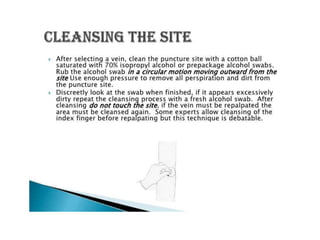
swab
• Sterile disposable syringes and needles should be
used for venepuncture.
• Needle size should be 19 to 21 gauge in adults
and 23-gauge in children.
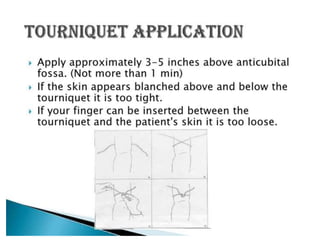
• Tourniquet should be released as soon as the
blood begins to flow into the syringe
• The needle is detached from the syringe after
withdrawal of blood to deliver it into appropriate
anticoagulant tube.
• Blood is mixed with the anticoagulant in the
container thoroughly by gently inverting the
container several times.
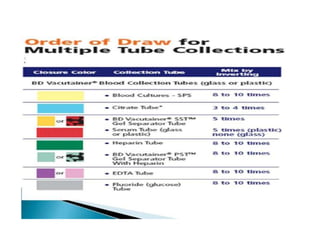
SEQUENCE OF FILLING OF TUBES
• First Container : blood culture
• First tube : Plain tube [serum]
• Second tube : Tube containing anticoagulant
citrate for PT.
• Third tube : anticoagulant like EDTA or Heparin
• Fourth tube : Tube containing additional
stablilizing agent like fluoride.
ANTICOAGULANT VACUTAINERS
• Anticoagulants used for hematological investigations
are EDTA [ Ethylene diamine tetra-acetic acid ],
heparin, double oxalate, and trisodium citrate.
• EDTA [1.5mg/ml], dried: also called SEQUESTRENE or
VERSENE. This is the recommended anticoagulant for
routine hematological investigations. EDTA is used for
CBC, blood smear, Hb electrophoresis, sickling test.
However it cannot be used for coagulation studies.
EDTA can cause pseudothrombocytopenia on
hematology analyser. Its mechanism of action is by
chelation of Calcium. Erythrocytes, leukocytes (white
blood cells) and thrombocytes (platelets) are stable
in EDTA anticoagulated blood for up to 24 hours.
Preparation of blood smears should be done within 3
hours after blood collection.
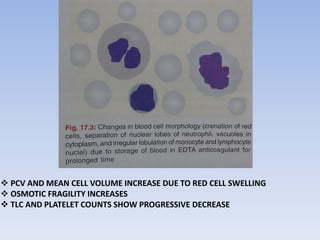
 PCV AND MEAN CELL VOLUME INCREASE DUE TO RED CELL SWELLING
 OSMOTIC FRAGILITY INCREASES
 TLC AND PLATELET COUNTS SHOW PROGRESSIVE DECREASE
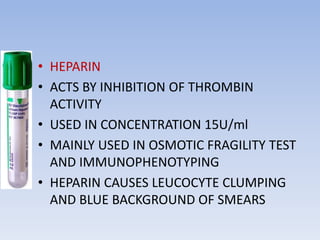
• HEPARIN
• ACTS BY INHIBITION OF THROMBIN
ACTIVITY
• USED IN CONCENTRATION 15U/ml
• MAINLY USED IN OSMOTIC FRAGILITY TEST
AND IMMUNOPHENOTYPING
• HEPARIN CAUSES LEUCOCYTE CLUMPING
AND BLUE BACKGROUND OF SMEARS
• DOUBLE OXALATE [WINTROBE MIXTURE]
CONTAINS AMMONIUM OXALATE AND
POTASSIUM OXALATE IN 3:2 PROPORTION.ACTS
BY REMOVING CALCIUM.
IT IS USED FOR ROUTINE HEMATOLOGICAL
TESTS AND FOR ESTIMATION OF ESR BY
WINTROBE METHOD. IT CAUSES CRENATION OF
RED CELLS AND MORPHOLOGIC ALTERATIONS IN
WBC ,IT CANNOT BE USED FOR MAKING BLOOD
FILMS.
TRISODIUM CITRATE [3.2 %]
• ANTICOAGULANT OF CHOICE FOR
COAGULATION STUDIES AND FOR
ESTIMATION OF ESR BY WESTERGREN
METHOD
• 1:9 [ANTICOAGULANT TO BLOOD ] IS
RECOMMENDED FOR COAGULATION
STUDIES, AND FOR ESR 1:4
PROPORTION IS RECOMMENDED.
• ESR SHOULD BE MEASURED WITHIN 4
HOURS AND COAGULATION STUDIES
SHOULD BE PERFORMED WITHIN 2
HOURS OF COLLECTION OF BLOOD.
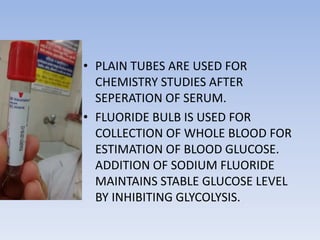
• PLAIN TUBES ARE USED FOR
CHEMISTRY STUDIES AFTER
SEPERATION OF SERUM.
• FLUORIDE BULB IS USED FOR
COLLECTION OF WHOLE BLOOD FOR
ESTIMATION OF BLOOD GLUCOSE.
ADDITION OF SODIUM FLUORIDE
MAINTAINS STABLE GLUCOSE LEVEL
BY INHIBITING GLYCOLYSIS.
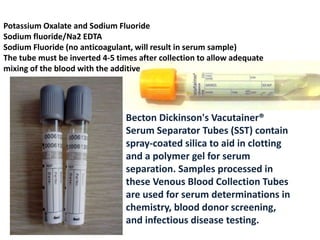
Becton Dickinson's Vacutainer®
Serum Separator Tubes (SST) contain
spray-coated silica to aid in clotting
and a polymer gel for serum
separation. Samples processed in
these Venous Blood Collection Tubes
are used for serum determinations in
chemistry, blood donor screening,
and infectious disease testing.
Potassium Oxalate and Sodium Fluoride
Sodium fluoride/Na2 EDTA
Sodium Fluoride (no anticoagulant, will result in serum sample)
The tube must be inverted 4-5 times after collection to allow adequate
mixing of the blood with the additive
• The whole testing process can be divided into 3
stages
• Pre-analytical : test request, patient and
specimen identification, specimen collection
,transport , accessioning and processing.
• Analytical: specimen testing
• Post analytical: reporting test results,
interpretation , follow up, storage, retesting if
needed.
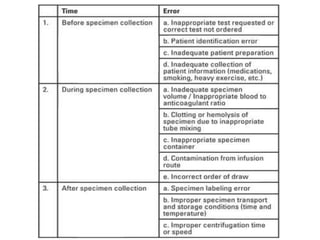
Types of preanalytical errors
• Patient misidentification [ incorrectly labelled tubes or
incorrectly filled forms ] .
Most common causes are :
1] inadequate data on test requisition form
2] missing patient identifiers
3] labelling specimen container away from bedside
Possible consequences include wrong blood transfusion
leading to acute hemolytic reaction.
Specimen collection from wrong patient leading to
delayed diagnosis or misdiagnosis
To minimize such errors, atleast 2 patient identifiers
should be used, specimen should be labelled immediately
after specimen collection
• Lipemic specimen
Causes:
*Test collection after heavy meals
*Pre-existing metabolic disorders
Possible consequences include:
*interference of fat with optical reading of
instruments, wrong electrolyte values
Hemolysis
• CAUSES
• Forcing blood through needle of syringe
• Collecting blood through IV line
• Vigorous shaking of specimen
• Centrifuging specimen before clotting
*TOURNIQUET SHOULD NOT BE APPLIED FOR MORE
THAN 1 MINUTE AS IT CAN CAUSE LOCAL STASIS AND
RUPTURE OF RBC
Clotted plasma specimen
• Results from inappropriate mixing of tubes
• Results in false leucopenia and aberrant red
cell indices.
• Manufacturers guidelines for tube mixing
should be followed.
THANK YOU

collection of blood sample and preanalytical errors

  • 1.
    BLOOD COLLECTION FORVARIOUS LABORATORY TESTS, ANTICOAGULATED VACUTAINERS AND PREANALYTICAL ERRORS Presented by : Dr. Utkarsh Sharma Under the guidance of : Dr. Ashish Bagaria
  • 3.
  • 20.
    • Sterile disposablesyringes and needles should be used for venepuncture. • Needle size should be 19 to 21 gauge in adults and 23-gauge in children. • Tourniquet should be released as soon as the blood begins to flow into the syringe • The needle is detached from the syringe after withdrawal of blood to deliver it into appropriate anticoagulant tube. • Blood is mixed with the anticoagulant in the container thoroughly by gently inverting the container several times.
  • 24.
    SEQUENCE OF FILLINGOF TUBES • First Container : blood culture • First tube : Plain tube [serum] • Second tube : Tube containing anticoagulant citrate for PT. • Third tube : anticoagulant like EDTA or Heparin • Fourth tube : Tube containing additional stablilizing agent like fluoride.
  • 25.
    ANTICOAGULANT VACUTAINERS • Anticoagulantsused for hematological investigations are EDTA [ Ethylene diamine tetra-acetic acid ], heparin, double oxalate, and trisodium citrate. • EDTA [1.5mg/ml], dried: also called SEQUESTRENE or VERSENE. This is the recommended anticoagulant for routine hematological investigations. EDTA is used for CBC, blood smear, Hb electrophoresis, sickling test. However it cannot be used for coagulation studies. EDTA can cause pseudothrombocytopenia on hematology analyser. Its mechanism of action is by chelation of Calcium. Erythrocytes, leukocytes (white blood cells) and thrombocytes (platelets) are stable in EDTA anticoagulated blood for up to 24 hours. Preparation of blood smears should be done within 3 hours after blood collection.
  • 26.
     PCV ANDMEAN CELL VOLUME INCREASE DUE TO RED CELL SWELLING  OSMOTIC FRAGILITY INCREASES  TLC AND PLATELET COUNTS SHOW PROGRESSIVE DECREASE
  • 27.
    • HEPARIN • ACTSBY INHIBITION OF THROMBIN ACTIVITY • USED IN CONCENTRATION 15U/ml • MAINLY USED IN OSMOTIC FRAGILITY TEST AND IMMUNOPHENOTYPING • HEPARIN CAUSES LEUCOCYTE CLUMPING AND BLUE BACKGROUND OF SMEARS
  • 28.
    • DOUBLE OXALATE[WINTROBE MIXTURE] CONTAINS AMMONIUM OXALATE AND POTASSIUM OXALATE IN 3:2 PROPORTION.ACTS BY REMOVING CALCIUM. IT IS USED FOR ROUTINE HEMATOLOGICAL TESTS AND FOR ESTIMATION OF ESR BY WINTROBE METHOD. IT CAUSES CRENATION OF RED CELLS AND MORPHOLOGIC ALTERATIONS IN WBC ,IT CANNOT BE USED FOR MAKING BLOOD FILMS.
  • 29.
    TRISODIUM CITRATE [3.2%] • ANTICOAGULANT OF CHOICE FOR COAGULATION STUDIES AND FOR ESTIMATION OF ESR BY WESTERGREN METHOD • 1:9 [ANTICOAGULANT TO BLOOD ] IS RECOMMENDED FOR COAGULATION STUDIES, AND FOR ESR 1:4 PROPORTION IS RECOMMENDED. • ESR SHOULD BE MEASURED WITHIN 4 HOURS AND COAGULATION STUDIES SHOULD BE PERFORMED WITHIN 2 HOURS OF COLLECTION OF BLOOD.
  • 30.
    • PLAIN TUBESARE USED FOR CHEMISTRY STUDIES AFTER SEPERATION OF SERUM. • FLUORIDE BULB IS USED FOR COLLECTION OF WHOLE BLOOD FOR ESTIMATION OF BLOOD GLUCOSE. ADDITION OF SODIUM FLUORIDE MAINTAINS STABLE GLUCOSE LEVEL BY INHIBITING GLYCOLYSIS.
  • 31.
    Becton Dickinson's Vacutainer® SerumSeparator Tubes (SST) contain spray-coated silica to aid in clotting and a polymer gel for serum separation. Samples processed in these Venous Blood Collection Tubes are used for serum determinations in chemistry, blood donor screening, and infectious disease testing. Potassium Oxalate and Sodium Fluoride Sodium fluoride/Na2 EDTA Sodium Fluoride (no anticoagulant, will result in serum sample) The tube must be inverted 4-5 times after collection to allow adequate mixing of the blood with the additive
  • 32.
    • The wholetesting process can be divided into 3 stages • Pre-analytical : test request, patient and specimen identification, specimen collection ,transport , accessioning and processing. • Analytical: specimen testing • Post analytical: reporting test results, interpretation , follow up, storage, retesting if needed.
  • 34.
    Types of preanalyticalerrors • Patient misidentification [ incorrectly labelled tubes or incorrectly filled forms ] . Most common causes are : 1] inadequate data on test requisition form 2] missing patient identifiers 3] labelling specimen container away from bedside Possible consequences include wrong blood transfusion leading to acute hemolytic reaction. Specimen collection from wrong patient leading to delayed diagnosis or misdiagnosis To minimize such errors, atleast 2 patient identifiers should be used, specimen should be labelled immediately after specimen collection
  • 35.
    • Lipemic specimen Causes: *Testcollection after heavy meals *Pre-existing metabolic disorders Possible consequences include: *interference of fat with optical reading of instruments, wrong electrolyte values
  • 36.
    Hemolysis • CAUSES • Forcingblood through needle of syringe • Collecting blood through IV line • Vigorous shaking of specimen • Centrifuging specimen before clotting *TOURNIQUET SHOULD NOT BE APPLIED FOR MORE THAN 1 MINUTE AS IT CAN CAUSE LOCAL STASIS AND RUPTURE OF RBC
  • 37.
    Clotted plasma specimen •Results from inappropriate mixing of tubes • Results in false leucopenia and aberrant red cell indices. • Manufacturers guidelines for tube mixing should be followed.
  • 39.