Imagineering Academy Master Class 2011 Celiane Camargo-Borges Research coordinator and lecturer Didactics of Imagineering
Imagineering didactic methodology THE HOW
Imagineering didactic methodology 1-  How those innovative ideas can be transformed into a curriculum? 2-  How those concepts can fit into a didactic learning programme for our students to be able to apply Imagineering within organizations?
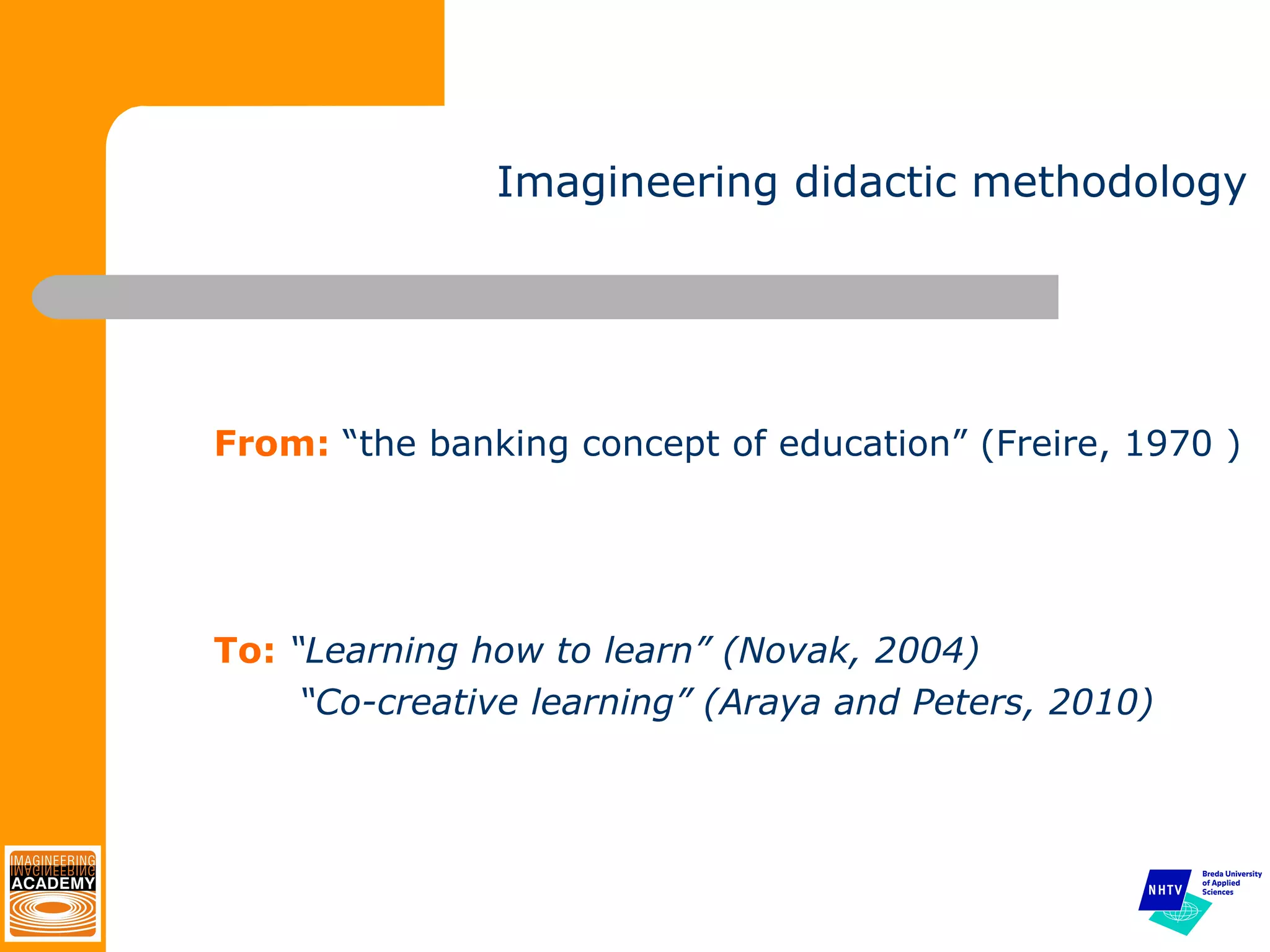
Imagineering didactic methodology From:  “the banking concept of education” (Freire, 1970 ) To:  “Learning how to learn” (Novak, 2004)   “ Co-creative learning” (Araya and Peters, 2010)
Collaborative learning methodology Collaborative learning refers to methodologies and environments in which learners engage in a common task where each individual depends on and is accountable to each other by sharing their experiences and taking on different roles.   1 -   Collaboration and engagement with all the involved; 2 -   Different levels and aspects of learning related to the topic.
Collaborative learning in the context of imagineering: 3 instruments PRACTICING It is NOT about re-teaching the content, but facilitating and activating the learning of the material previously given.  It is the creation of a participatory and interactive space where the students can collaboratively learn from each other.  It provides a space where the students can actively try out the tools they are learning with their fellows and also in the real world. PRACTICE It is about transforming the theoretical material into action. The students learn how to put the theory into their own context.   THEORY It is about providing a space for theoretical discussion, offering material to the students in order to promote the entrance into new knowledge in the field.
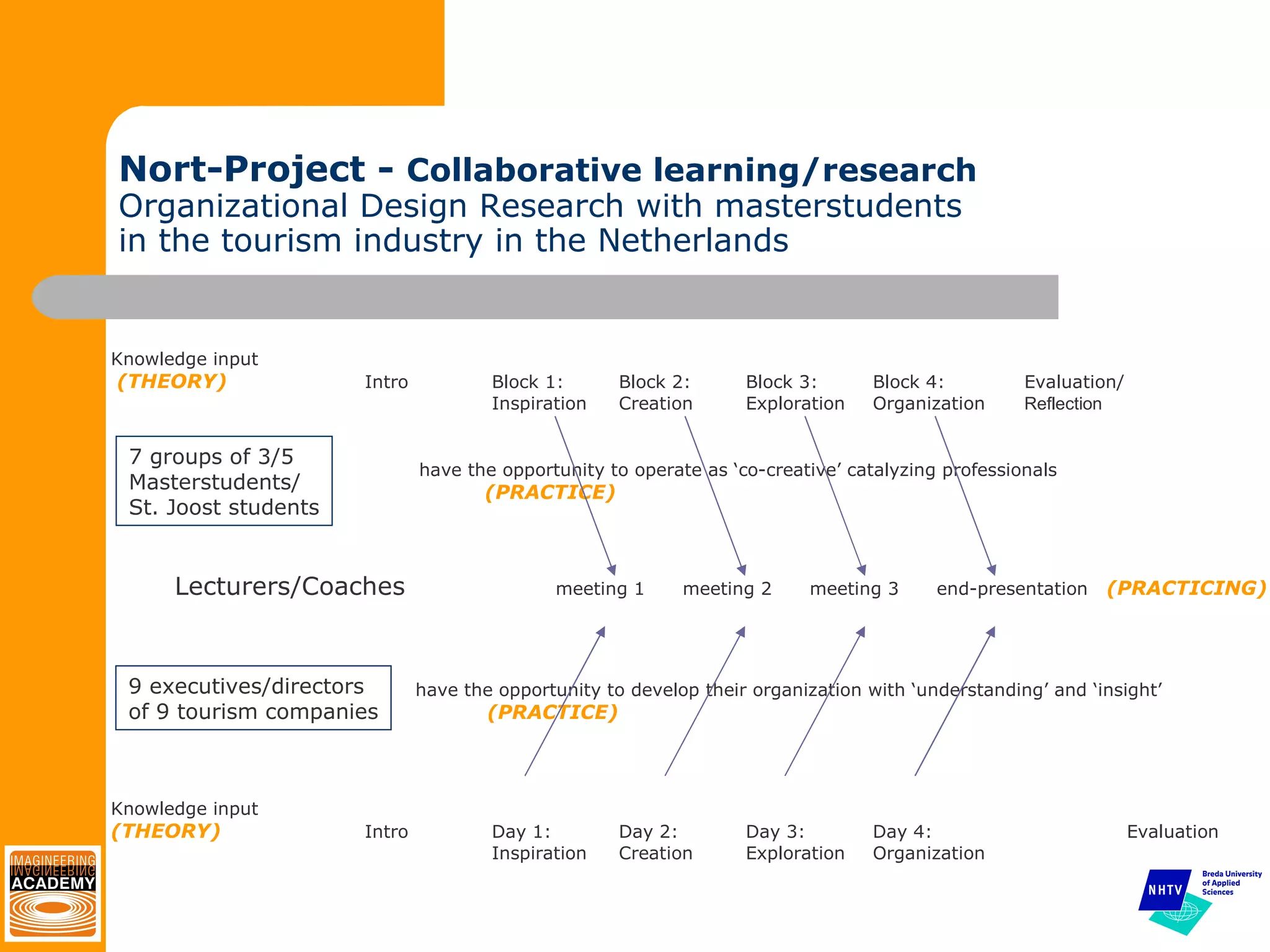
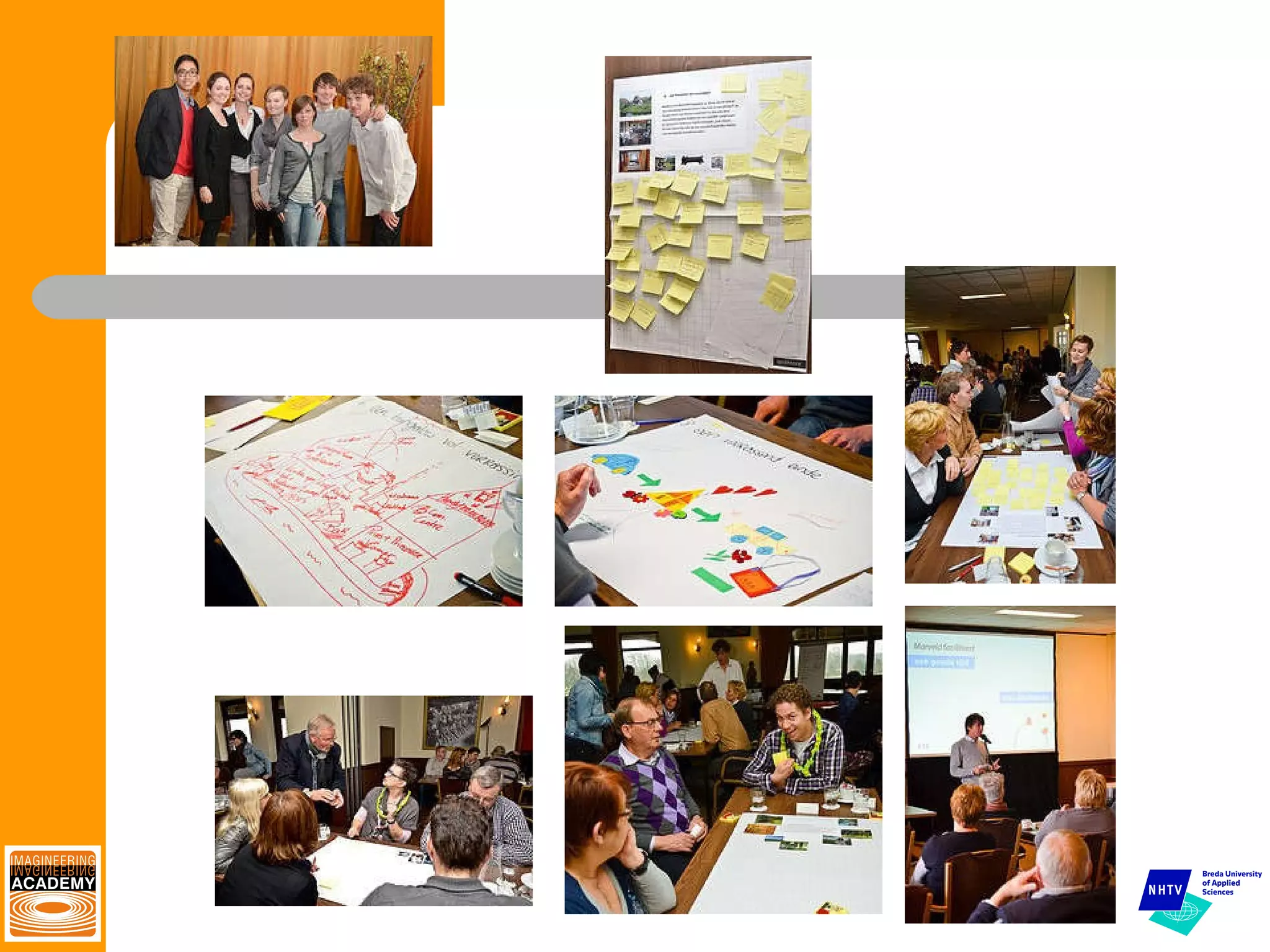
Nort-Project -  Collaborative learning/research   Organizational Design Research with masterstudents  in the tourism industry in the Netherlands Knowledge input (THEORY) Intro Day 1: Day 2: Day 3: Day 4: Evaluation Inspiration Creation Exploration Organization 7 groups of 3/5 Masterstudents/ St. Joost students 9 executives/directors of 9 tourism companies Knowledge input (THEORY) Intro Block 1: Block 2: Block 3: Block 4:   Evaluation/ Inspiration Creation Exploration Organization   Reflection Lecturers/Coaches meeting 1 meeting 2 meeting 3 end-presentation  (PRACTICING) have the opportunity to operate as ‘co-creative’ catalyzing professionals (PRACTICE) have the opportunity to develop their organization with ‘understanding’ and ‘insight’  (PRACTICE)
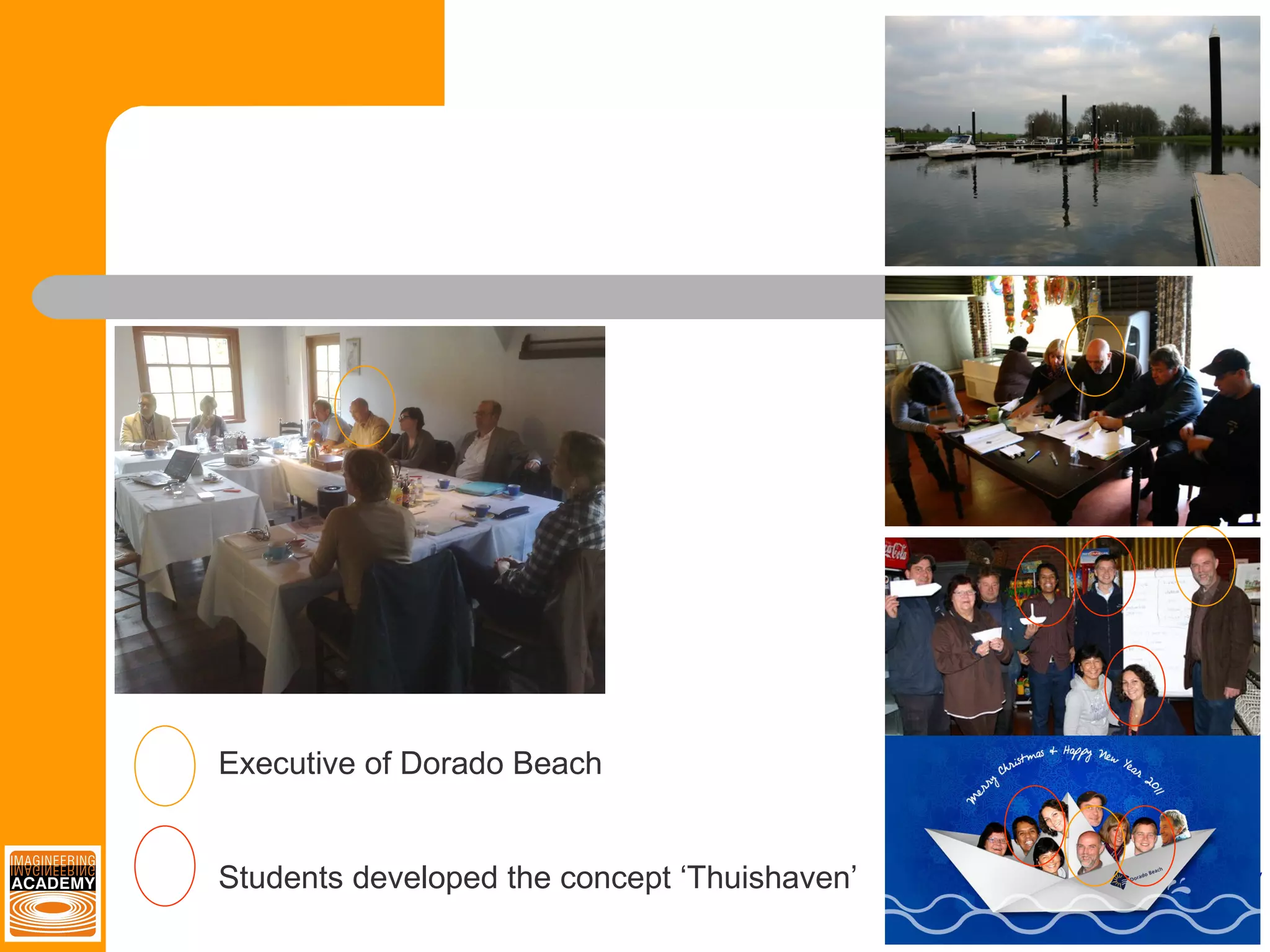
Executive of Dorado Beach Students developed the concept ‘Thuishaven’
 
Imagineering didactic methodology Development of an integrative professional
Thank you!!!!

Collaborative Learning Methodology. Master Class on Imagineering 2011

  • 1.
    Imagineering Academy MasterClass 2011 Celiane Camargo-Borges Research coordinator and lecturer Didactics of Imagineering
  • 2.
  • 3.
    Imagineering didactic methodology1- How those innovative ideas can be transformed into a curriculum? 2- How those concepts can fit into a didactic learning programme for our students to be able to apply Imagineering within organizations?
  • 4.
    Imagineering didactic methodologyFrom: “the banking concept of education” (Freire, 1970 ) To: “Learning how to learn” (Novak, 2004) “ Co-creative learning” (Araya and Peters, 2010)
  • 5.
    Collaborative learning methodologyCollaborative learning refers to methodologies and environments in which learners engage in a common task where each individual depends on and is accountable to each other by sharing their experiences and taking on different roles. 1 - Collaboration and engagement with all the involved; 2 - Different levels and aspects of learning related to the topic.
  • 6.
    Collaborative learning inthe context of imagineering: 3 instruments PRACTICING It is NOT about re-teaching the content, but facilitating and activating the learning of the material previously given. It is the creation of a participatory and interactive space where the students can collaboratively learn from each other. It provides a space where the students can actively try out the tools they are learning with their fellows and also in the real world. PRACTICE It is about transforming the theoretical material into action. The students learn how to put the theory into their own context. THEORY It is about providing a space for theoretical discussion, offering material to the students in order to promote the entrance into new knowledge in the field.
  • 7.
    Nort-Project - Collaborative learning/research Organizational Design Research with masterstudents in the tourism industry in the Netherlands Knowledge input (THEORY) Intro Day 1: Day 2: Day 3: Day 4: Evaluation Inspiration Creation Exploration Organization 7 groups of 3/5 Masterstudents/ St. Joost students 9 executives/directors of 9 tourism companies Knowledge input (THEORY) Intro Block 1: Block 2: Block 3: Block 4: Evaluation/ Inspiration Creation Exploration Organization Reflection Lecturers/Coaches meeting 1 meeting 2 meeting 3 end-presentation (PRACTICING) have the opportunity to operate as ‘co-creative’ catalyzing professionals (PRACTICE) have the opportunity to develop their organization with ‘understanding’ and ‘insight’ (PRACTICE)
  • 8.
    Executive of DoradoBeach Students developed the concept ‘Thuishaven’
  • 9.
  • 10.
    Imagineering didactic methodologyDevelopment of an integrative professional
  • 11.