Blended Learning in UWS
Overview
•   Drivers for change
•   Curriculum redesign
•   Technology
•   Space design
•   Projects
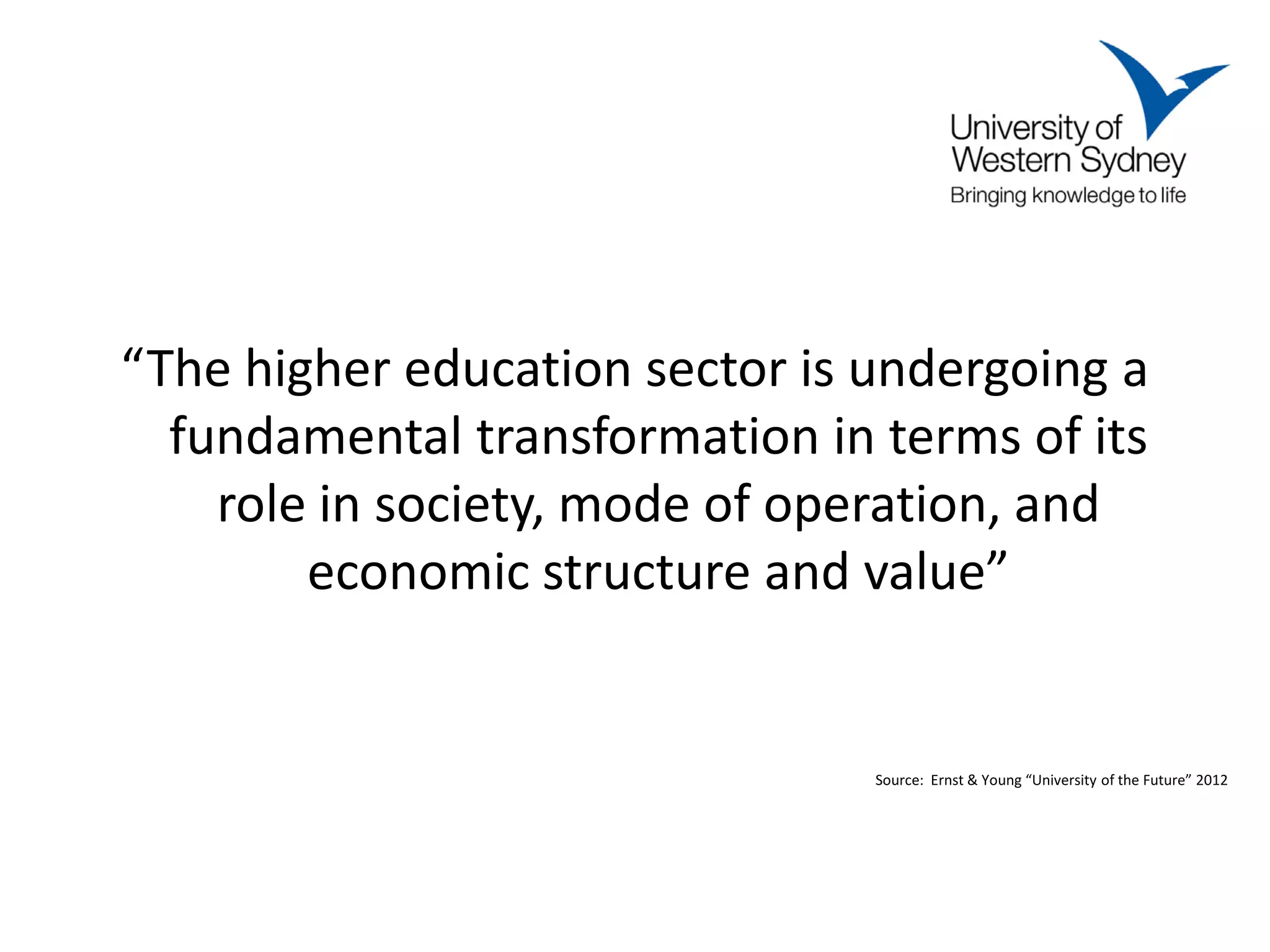
“The higher education sector is undergoing a
  fundamental transformation in terms of its
    role in society, mode of operation, and
        economic structure and value”


                                Source: Ernst & Young “University of the Future” 2012
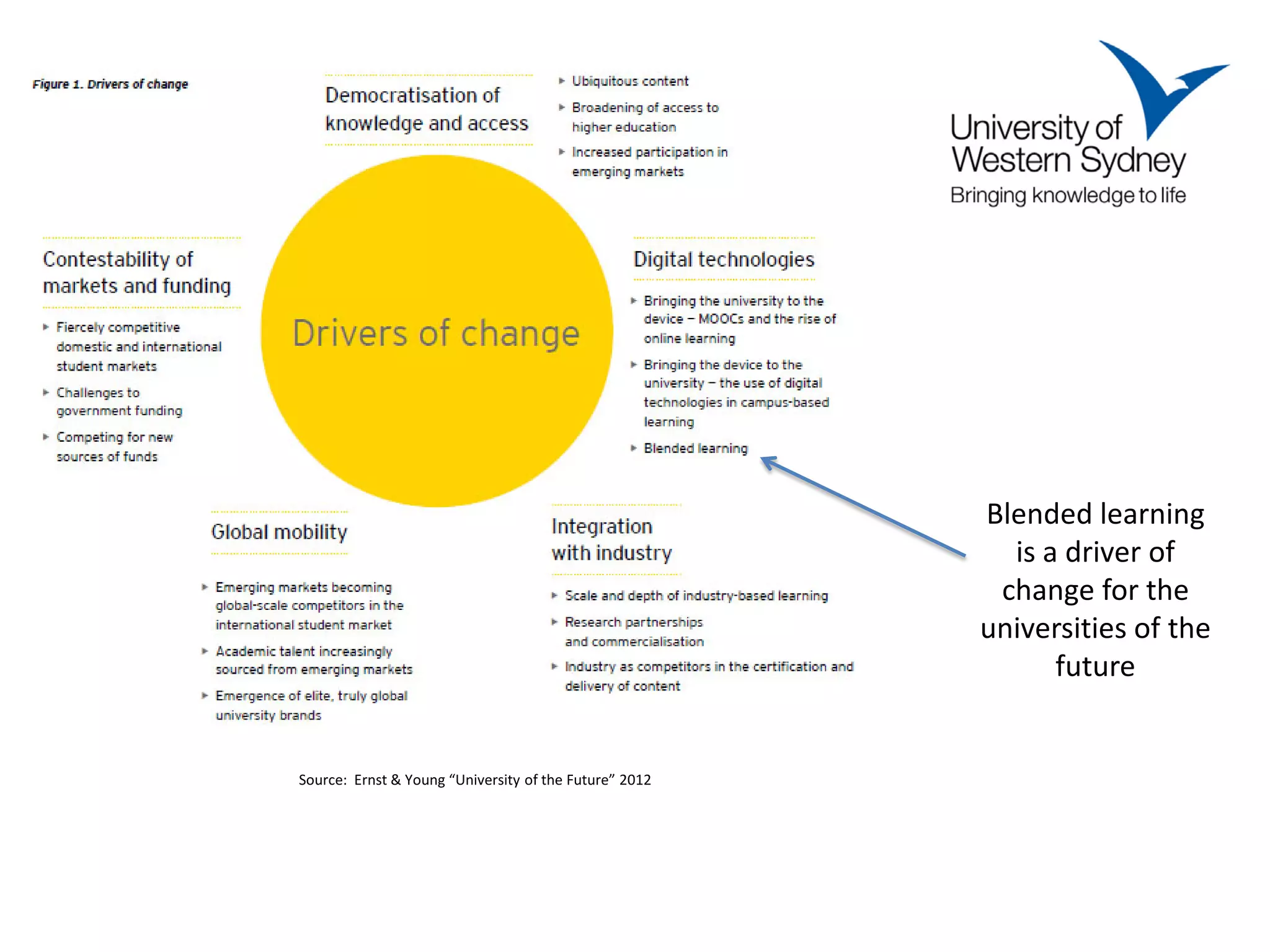
Blended learning
                                                          is a driver of
                                                         change for the
                                                        universities of the
                                                              future


Source: Ernst & Young “University of the Future” 2012
Blended learning at UWS refers to a strategic
 and systematic approach to combining times
  and modes of learning, integrating the best
aspects of face-to-face and online interactions
  for each discipline, using appropriate ICTs.
Drivers
• UWS responding to the needs of:
  – Students who work as well as study
  – Students who have children
  – Mature age students
  – Students who have to travel between campuses
  – School leavers
  – Students who are time poor
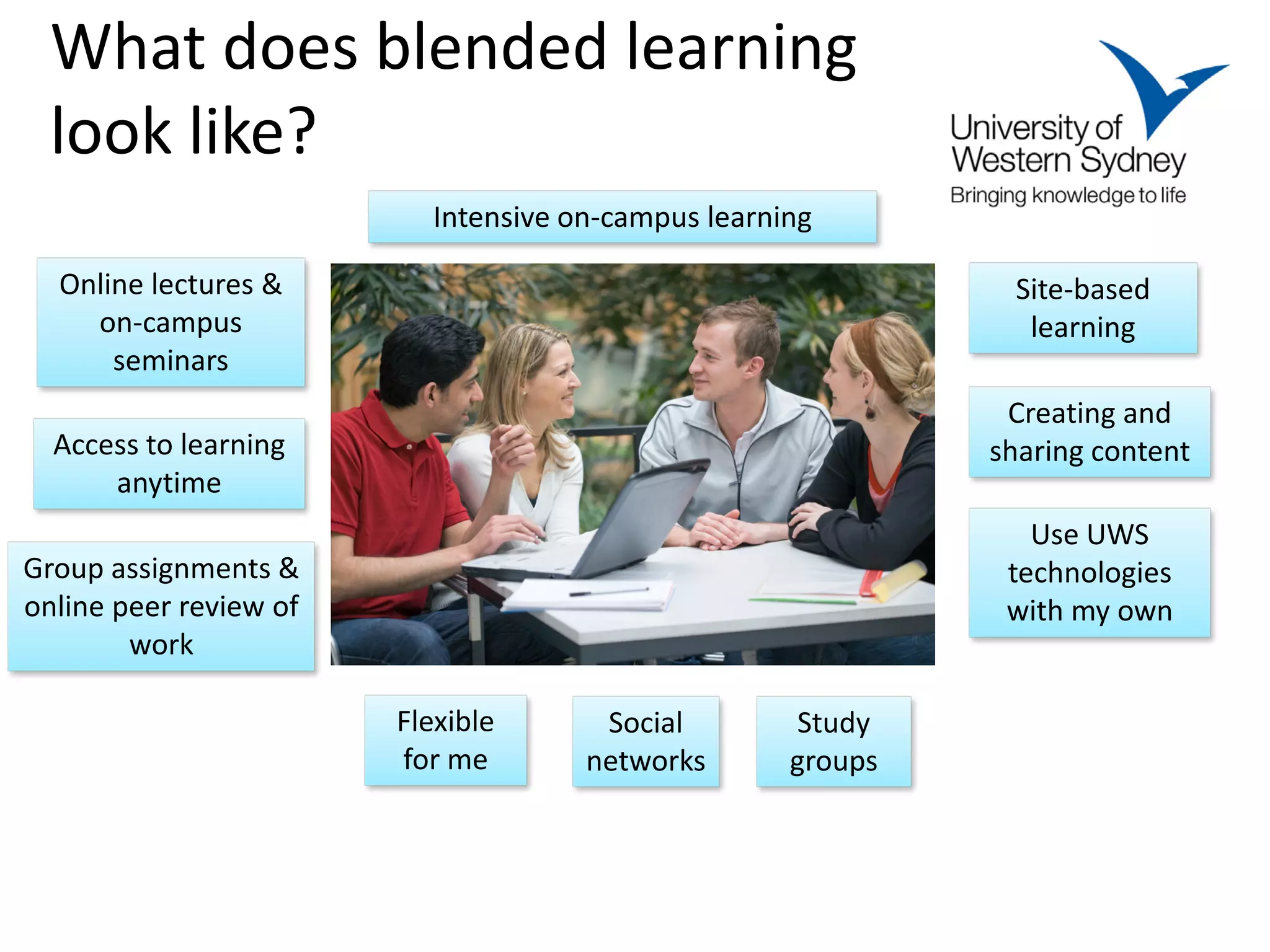
What does blended learning
  look like?
                          Intensive on-campus learning

  Online lectures &                                           Site-based
    on-campus                                                  learning
      seminars
                                                              Creating and
  Access to learning                                         sharing content
      anytime
                                                                Use UWS
Group assignments &                                           technologies
online peer review of                                         with my own
        work

                        Flexible      Social        Study
                        for me       networks       groups
The student experience
• Offers on campus experience
• Progressively prepares students for more blended
  learning
• Is discipline context specific
• Provides different avenues for interaction
• Offers fully off-campus as an option
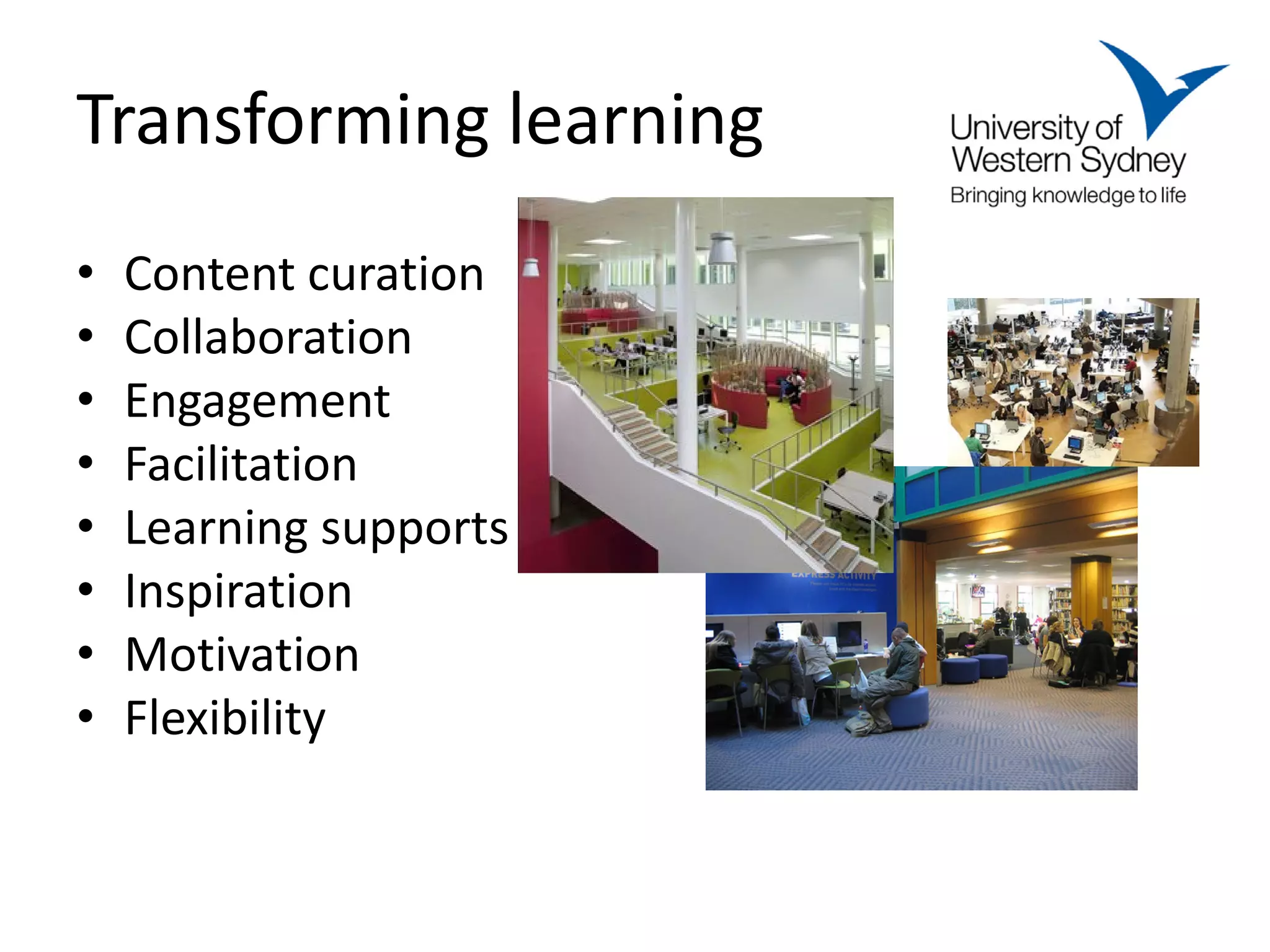
Transforming learning
•   Content curation
•   Collaboration
•   Engagement
•   Facilitation
•   Learning supports
•   Inspiration
•   Motivation
•   Flexibility
Blending it all
• Benefits of blended learning occur at the individual,
  social, activity, unit, course and university levels
• Paradigms of blended learning include enabling,
  enhancing, supporting and transforming
• Designing optimal learning spaces, virtual and
  physical, will be a key success factor for blended
  learning
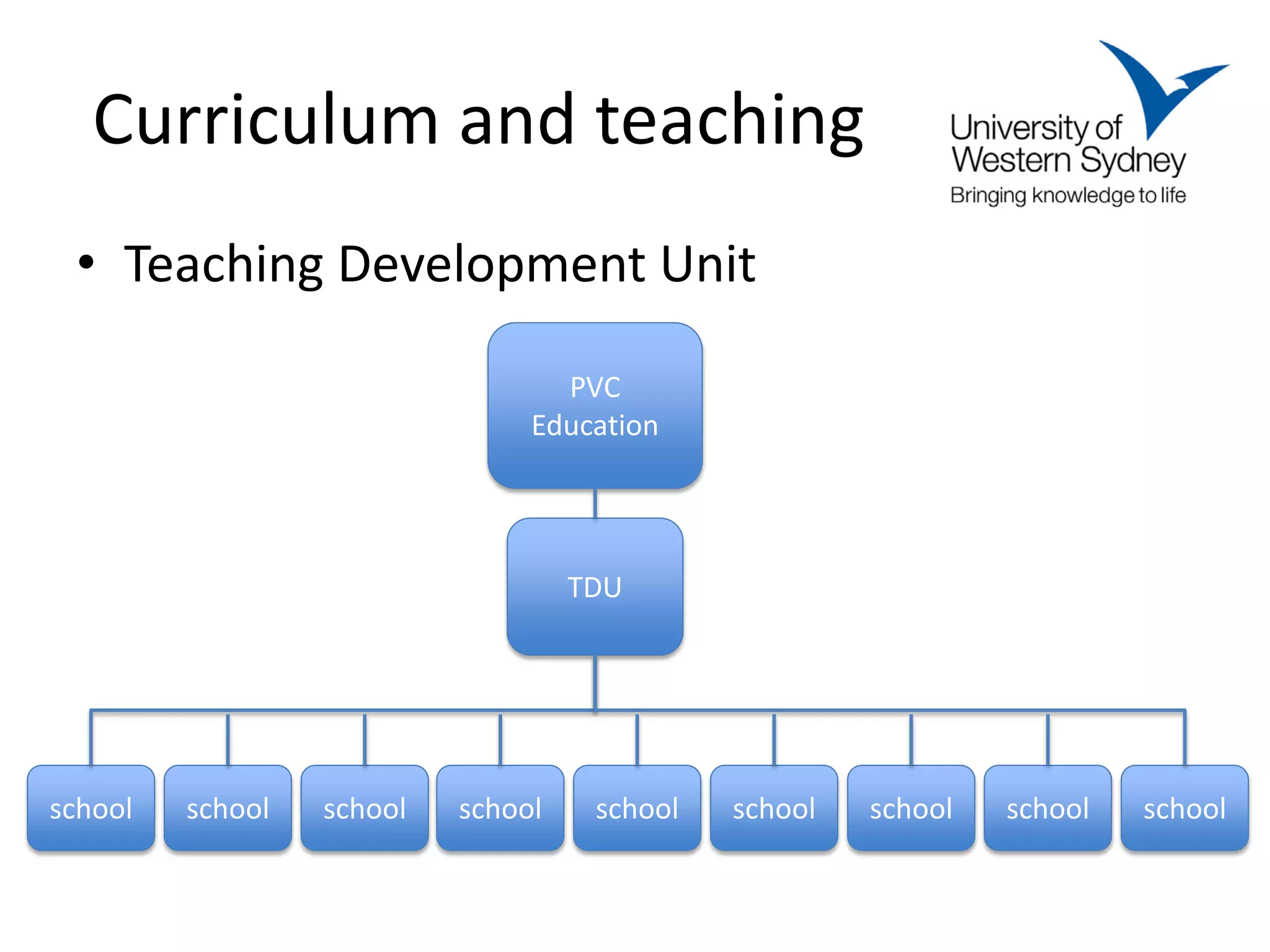
Curriculum and teaching
 • Teaching Development Unit

                                  PVC
                                Education


                                    TDU


school   school   school   school    school   school   school   school   school
Curriculum and teaching
• Creating options and opportunities in the
  curriculum for:
  – Face to face lectures / tutorials
  – On-line / flexible delivery
  – Interactive on-line delivery
Technologies
• Wireless integration of BYOD with AV systems
• Wireless integration of BYOD with central
  software systems
• Echo360 to support lecture capture
• vUWS – on-line teaching tool
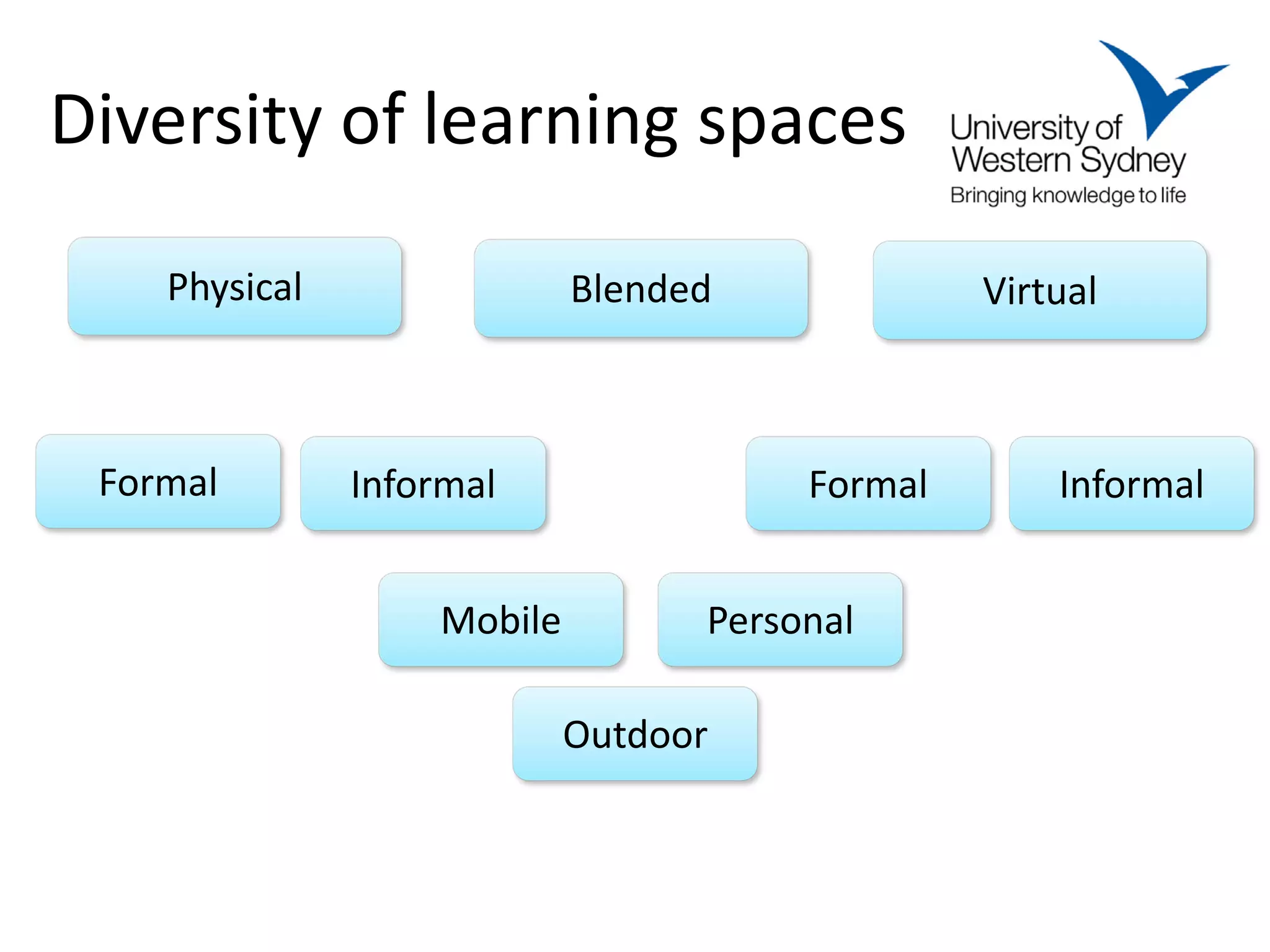
Diversity of learning spaces

    Physical                Blended             Virtual


 Formal        Informal                Formal       Informal


                   Mobile         Personal

                            Outdoor
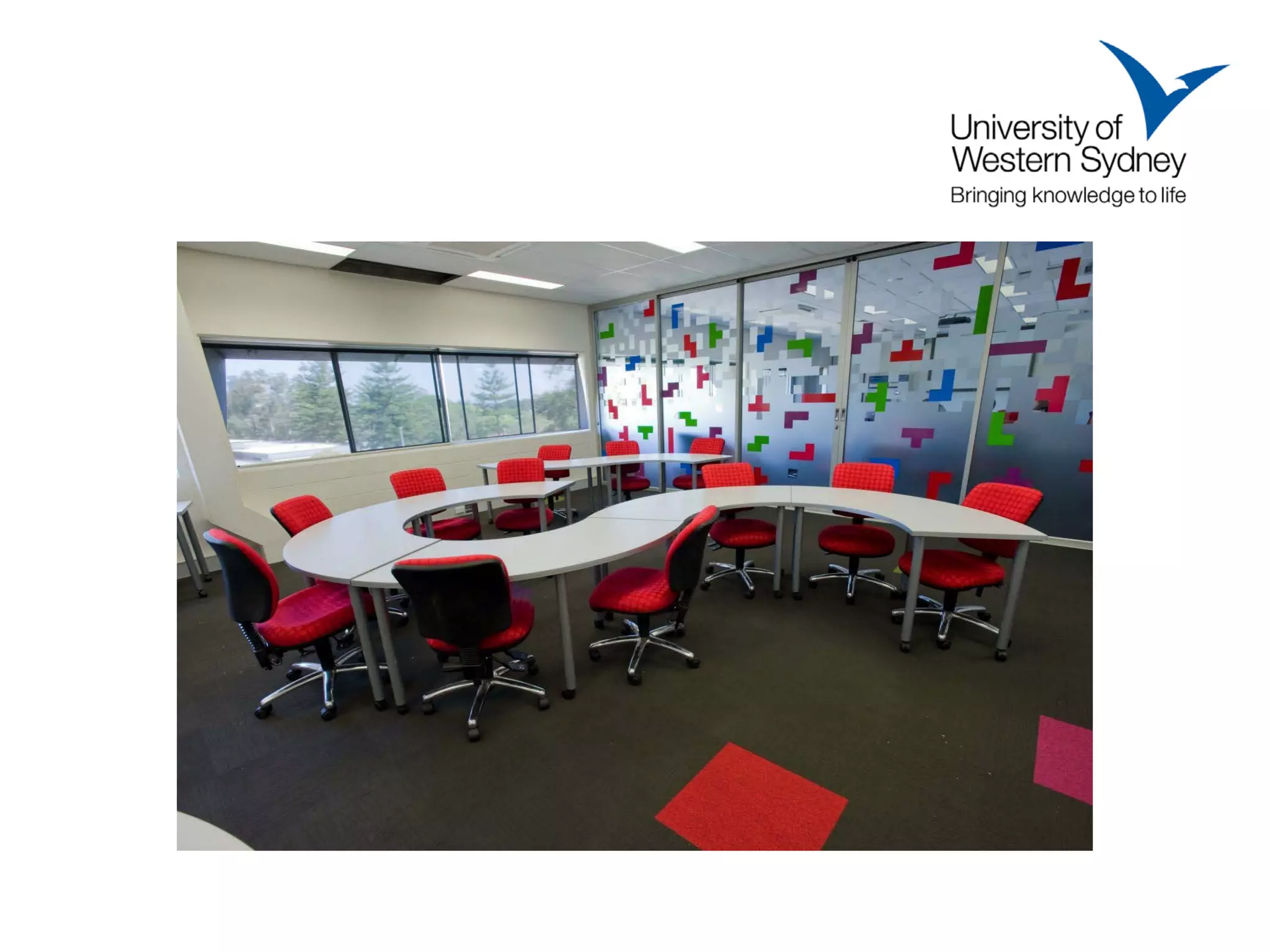
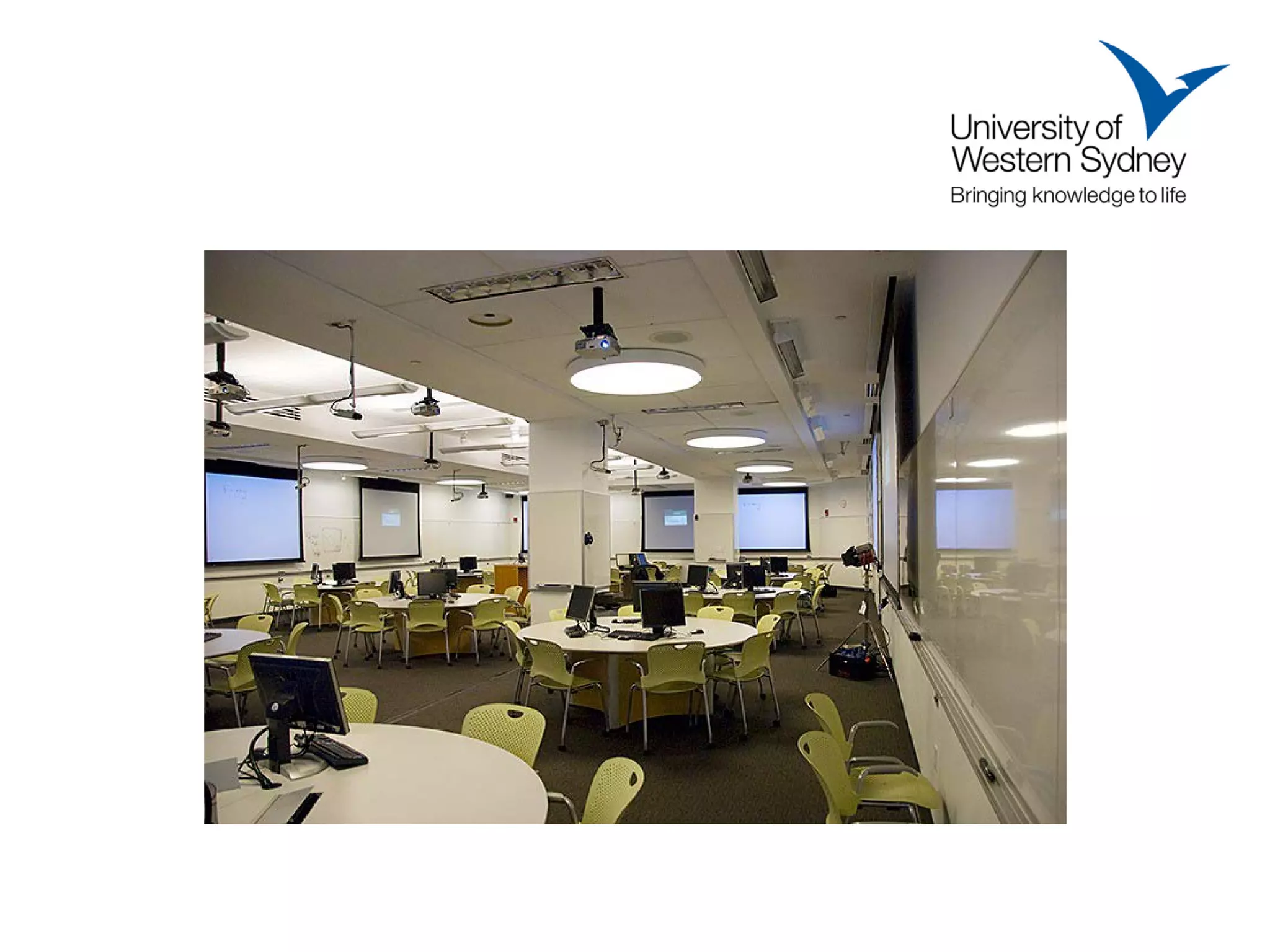
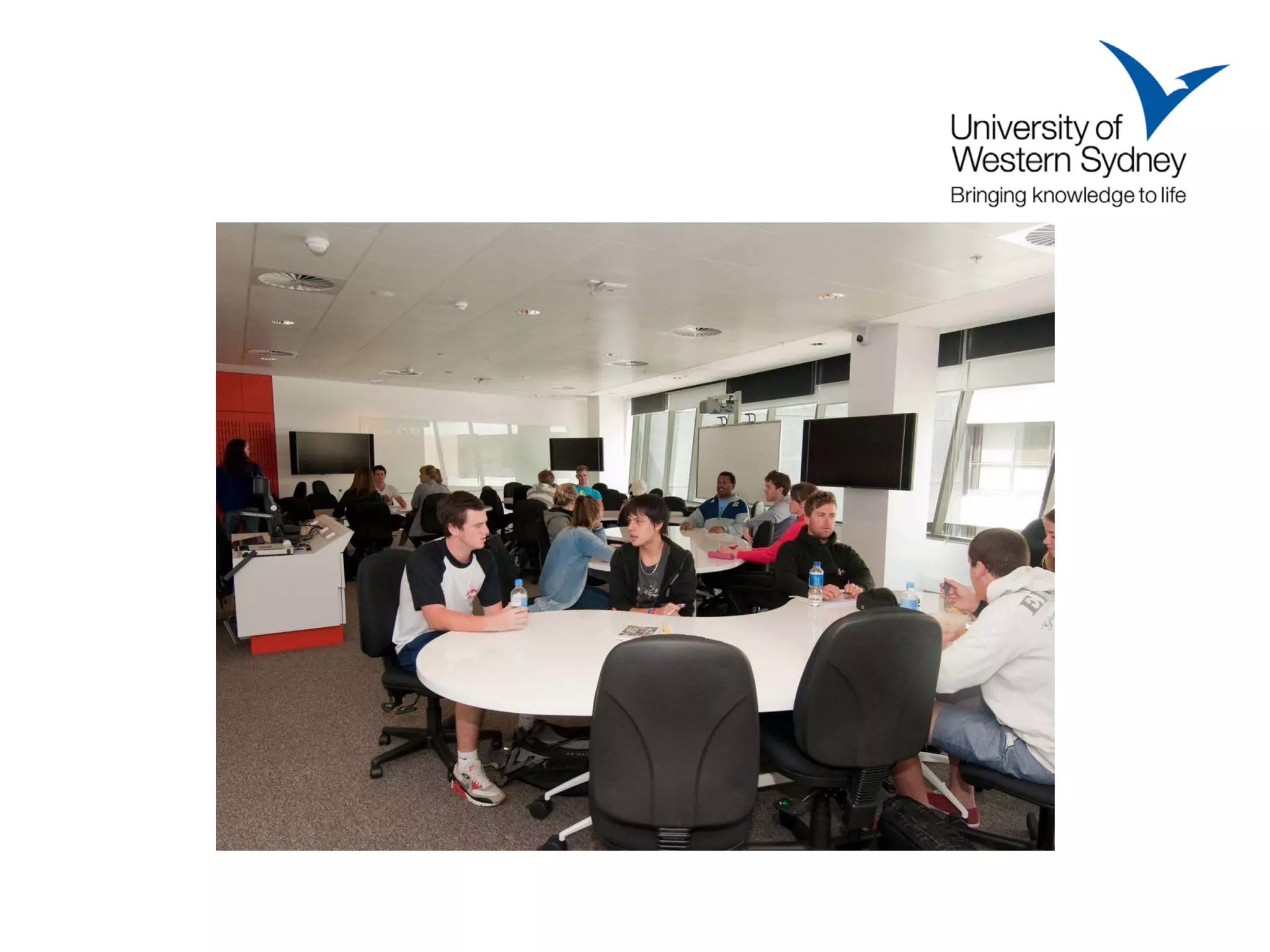
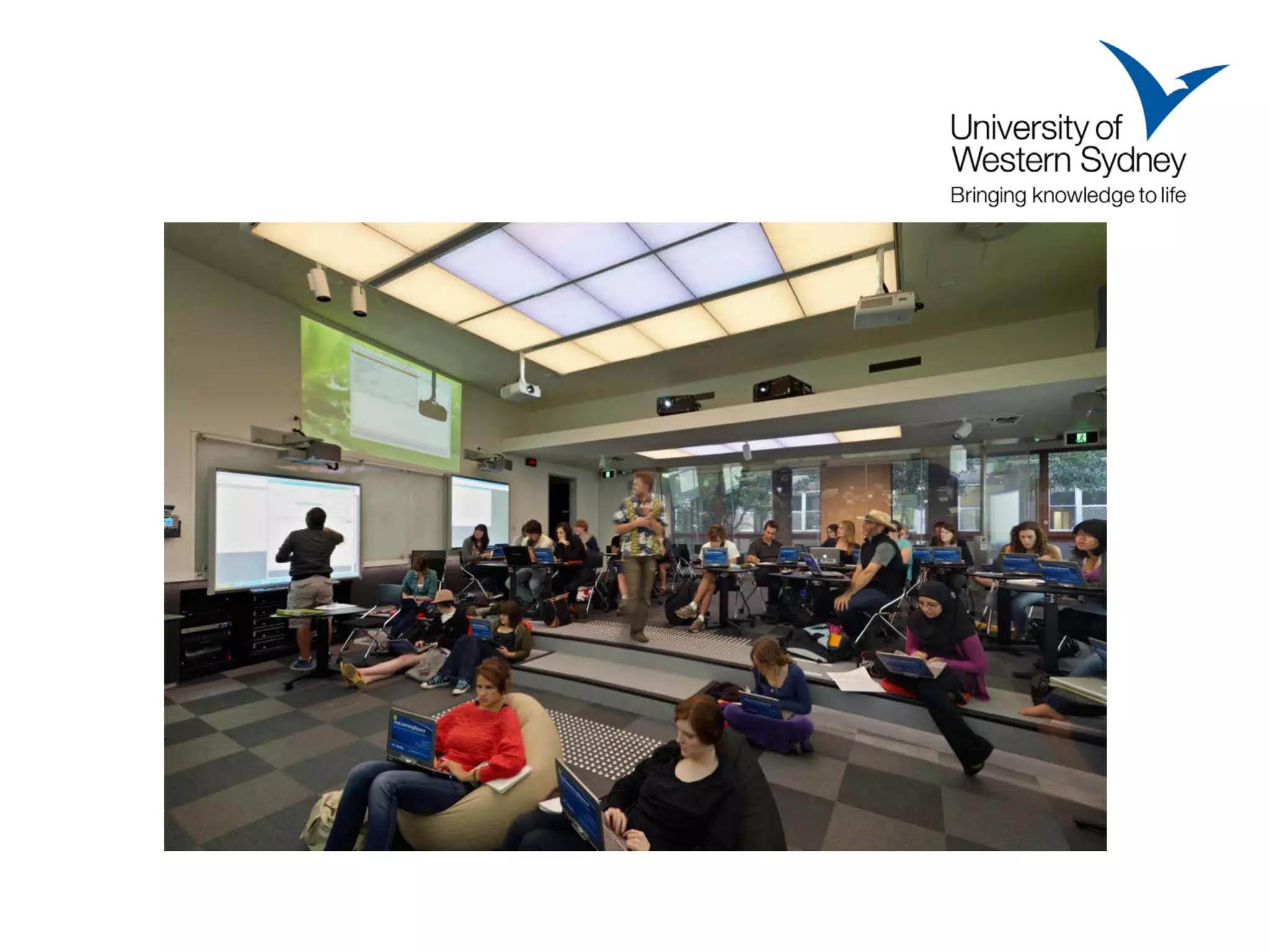
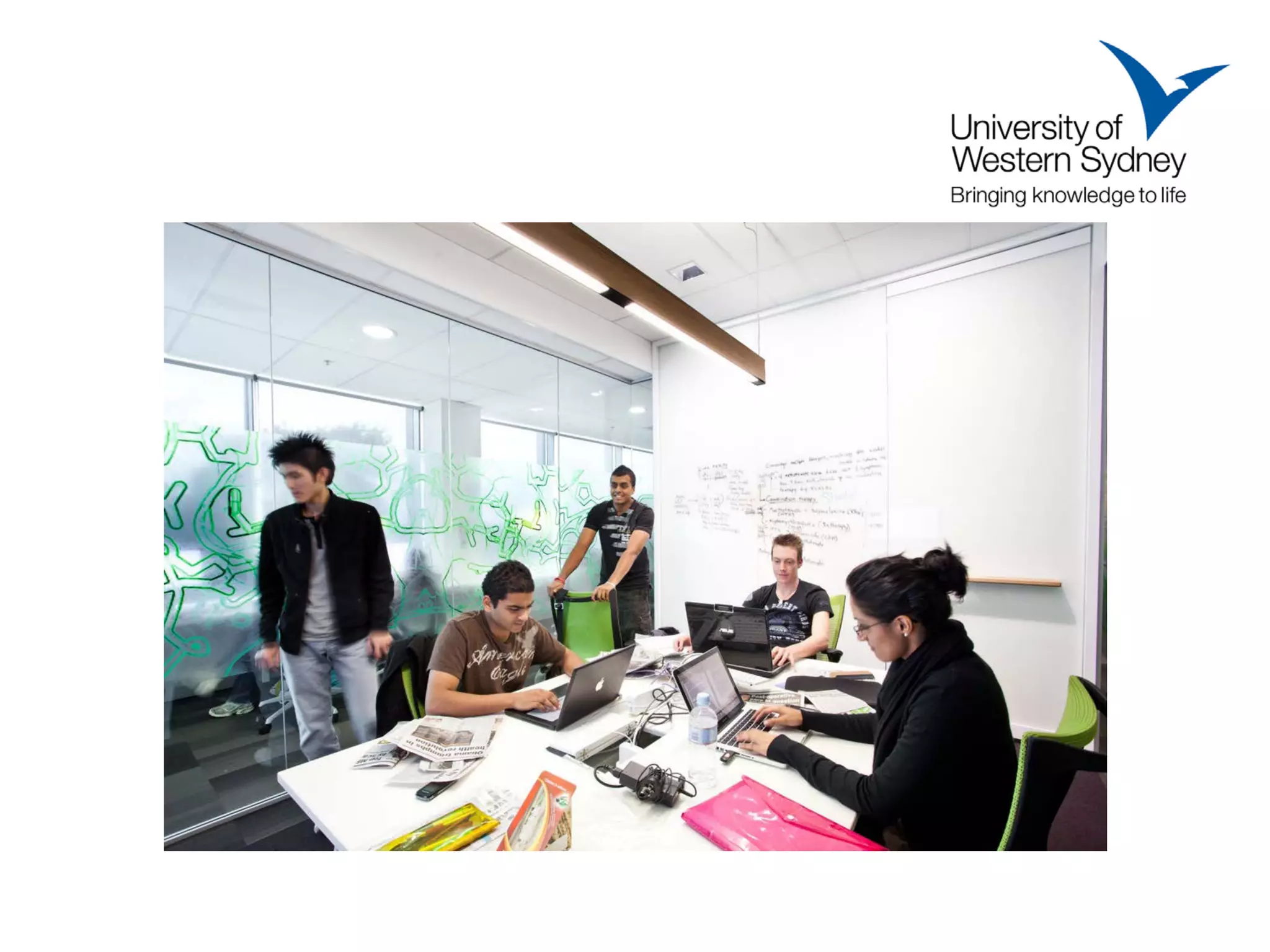
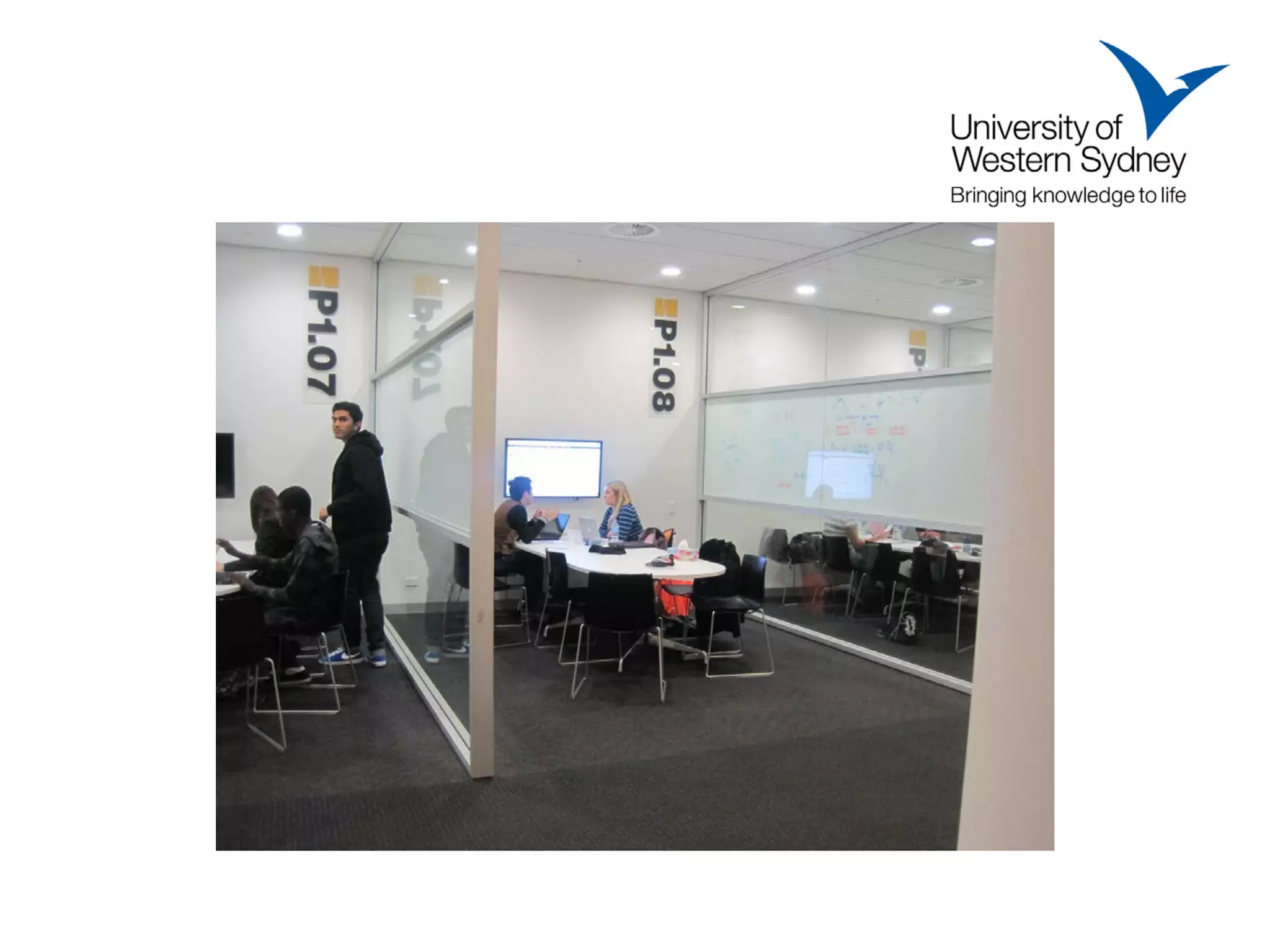
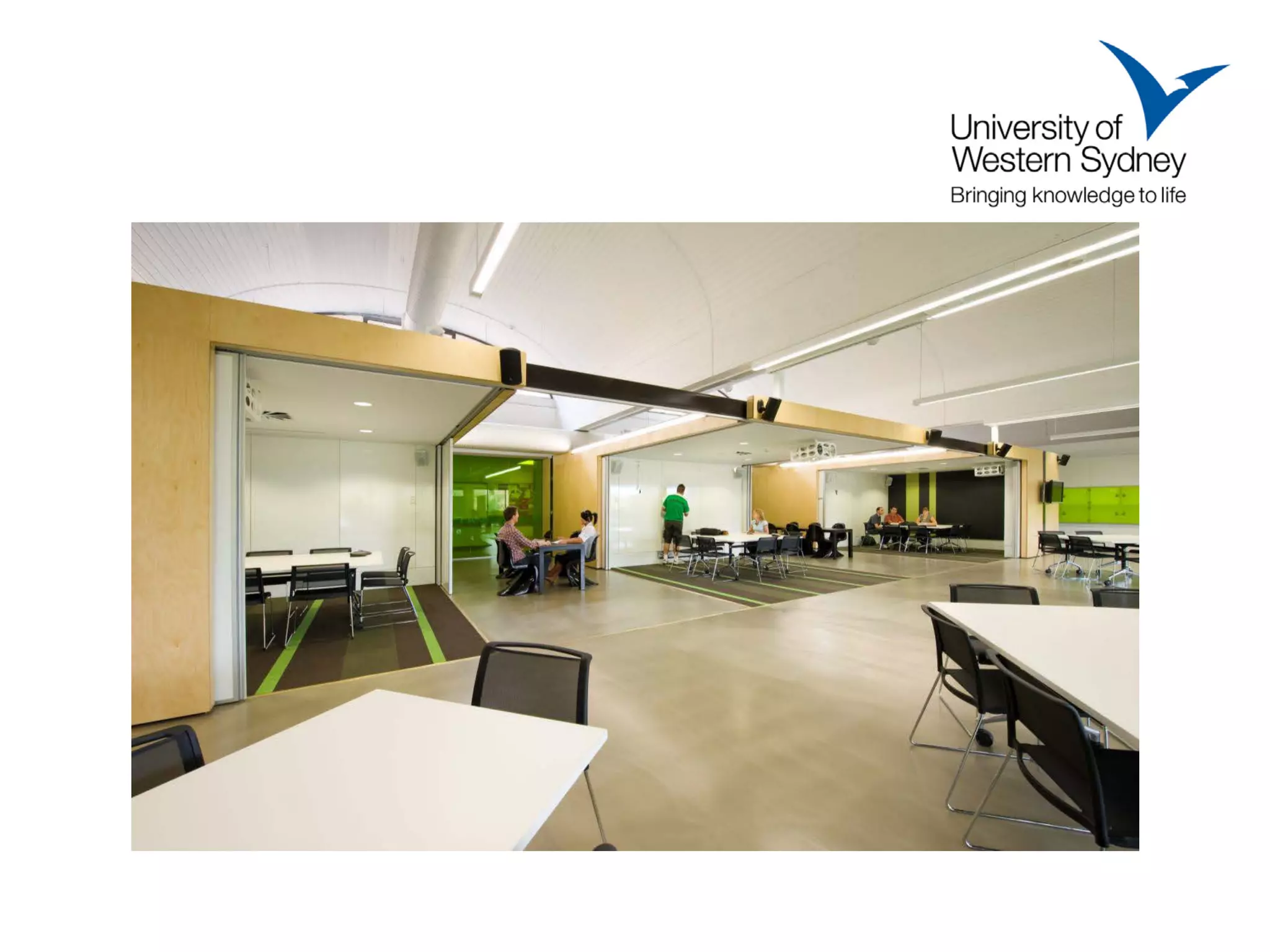
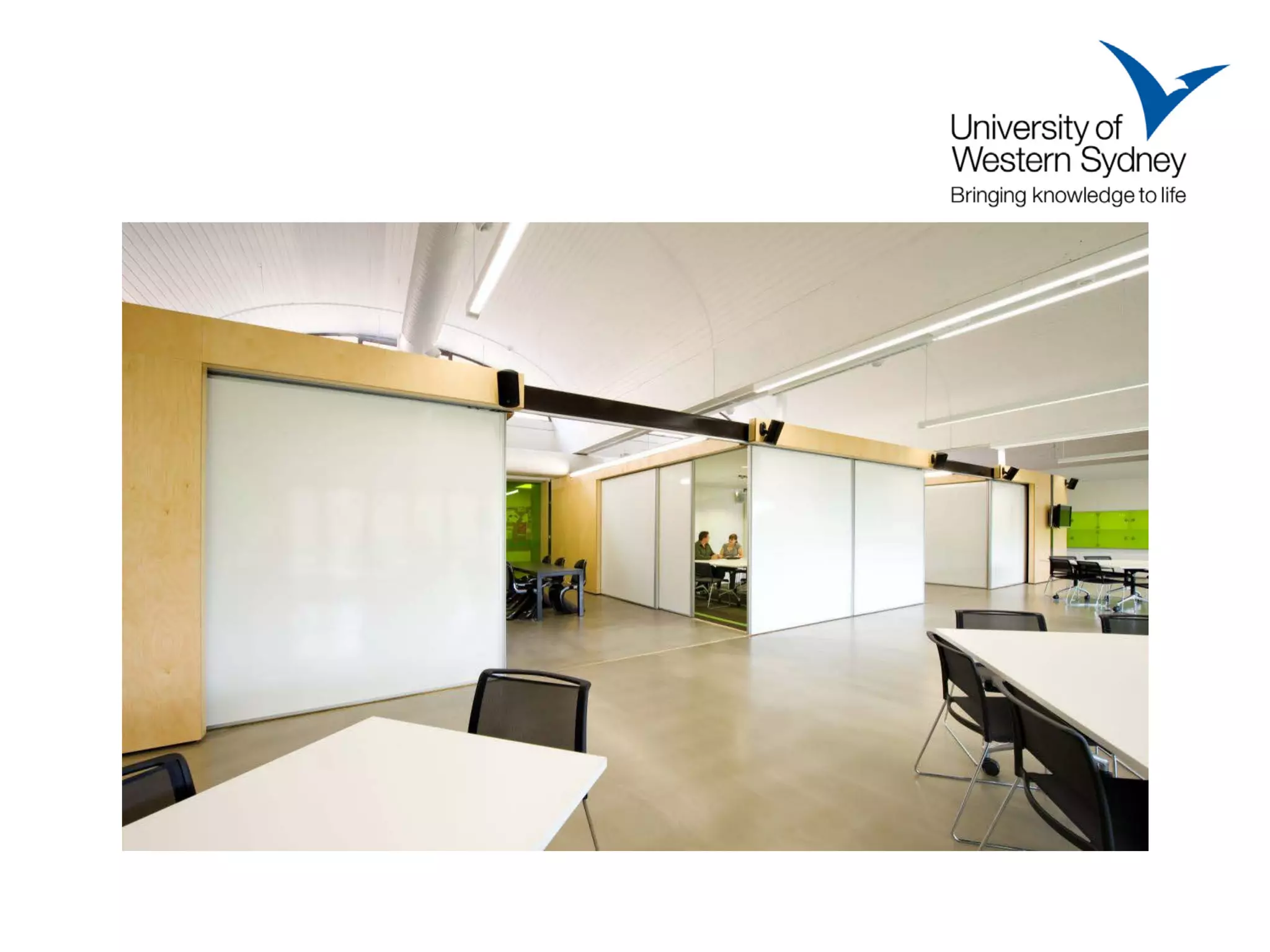
Teaching spaces
• Flexible and adaptable spaces for collaborative
  learning
• Mobile furniture
• Wireless technology
• Multiple AV projection screens
• Charging stations for electronic devices
• Writing surfaces on 4 walls
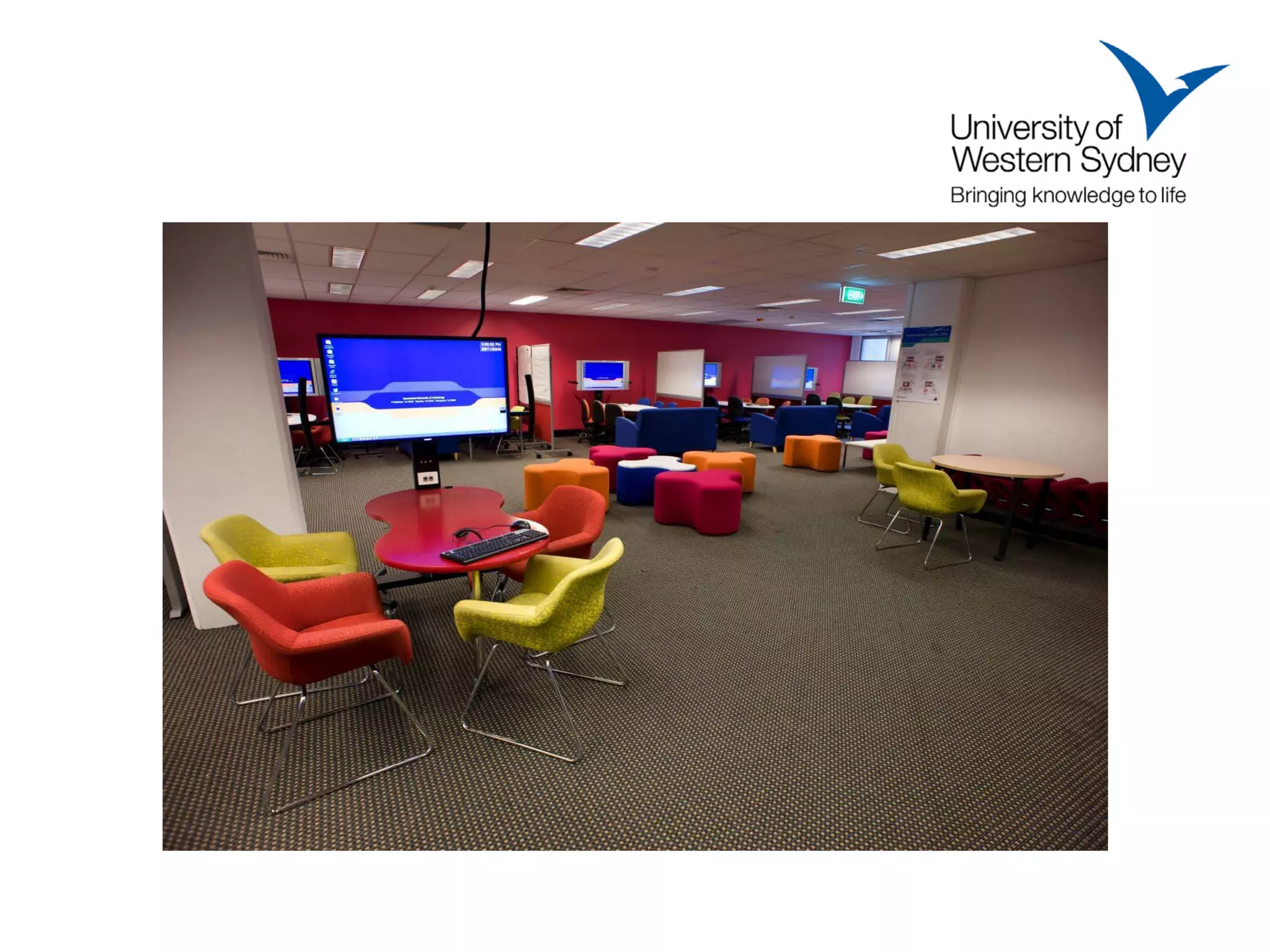
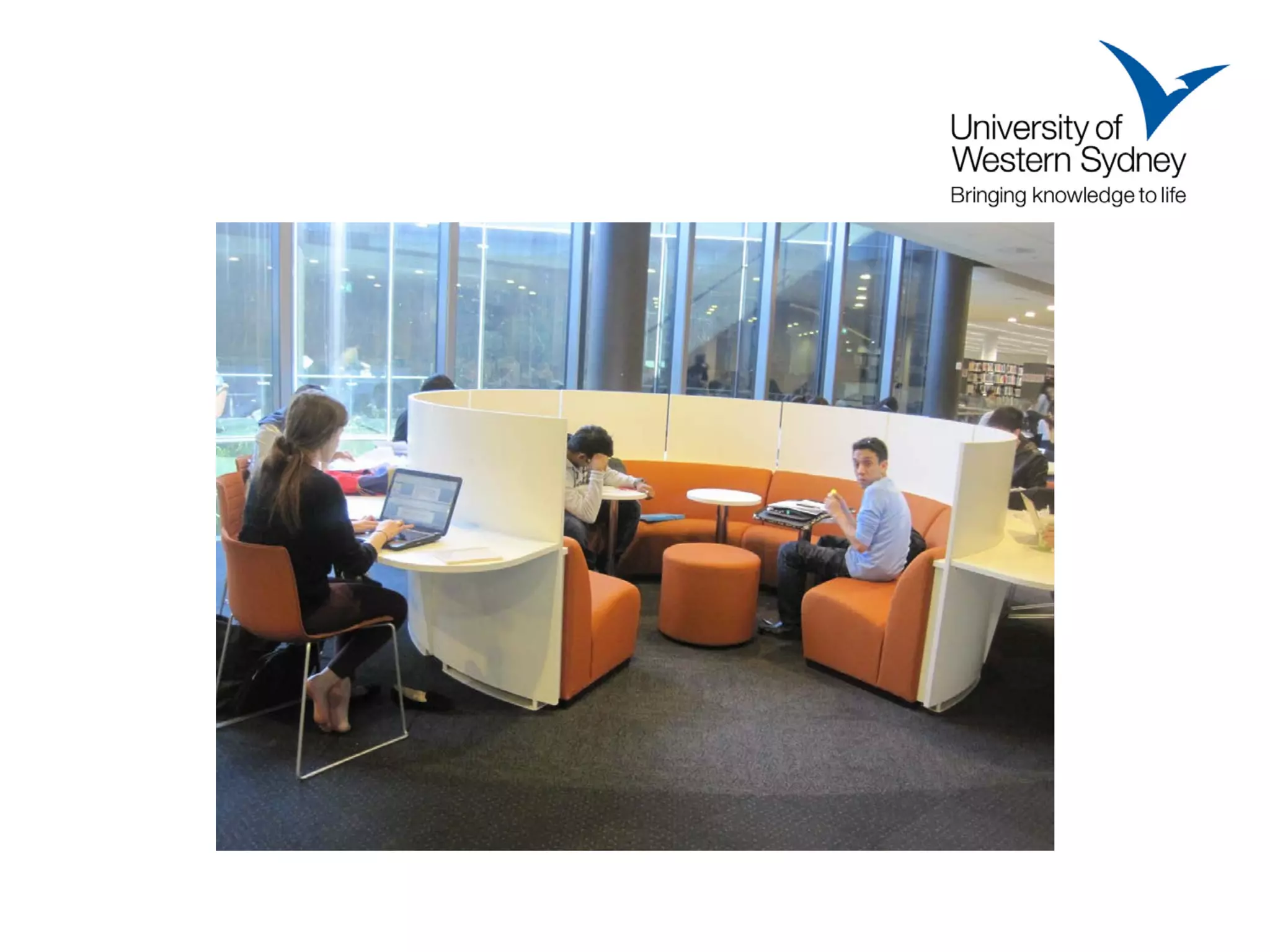
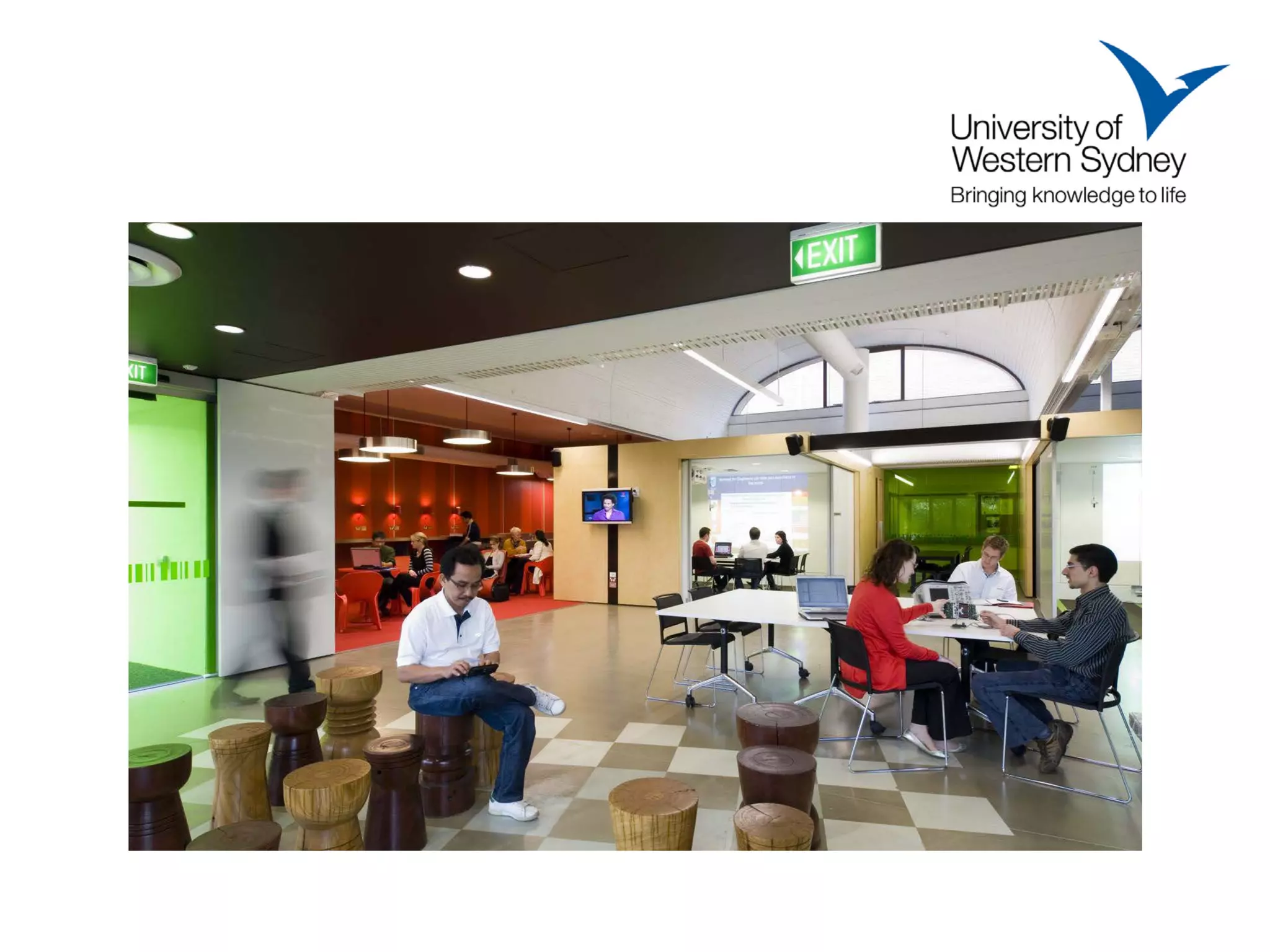
Learning commons
• Connected hot spots on the campus with the
  McDonald’s phenomenon
• Consistent in space, look and feel
• Meeting places / market places
• Large spaces with synergies with the library
• Hybrid of formal and informal spaces
• Flexible and adaptable learning spaces
• Spaces for students and teachers
Hot spots
• Connected by unifying principles that is
  recognisable through:
  – Function
  – Technology provided
  – Signage & graphics
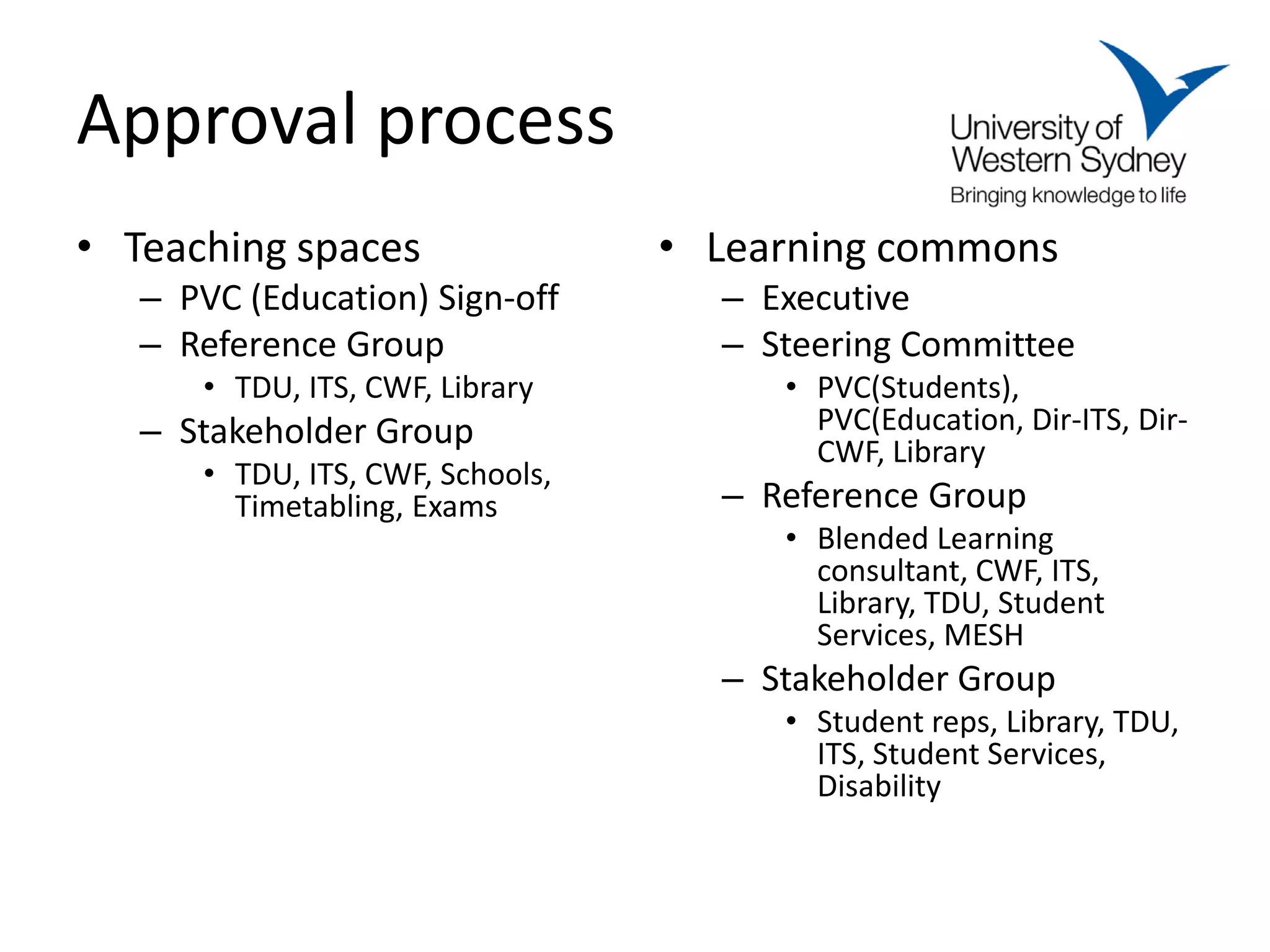
Approval process
• Teaching spaces                 • Learning commons
   – PVC (Education) Sign-off       – Executive
   – Reference Group                – Steering Committee
      • TDU, ITS, CWF, Library         • PVC(Students),
   – Stakeholder Group                   PVC(Education, Dir-ITS, Dir-
                                         CWF, Library
      • TDU, ITS, CWF, Schools,
        Timetabling, Exams          – Reference Group
                                       • Blended Learning
                                         consultant, CWF, ITS,
                                         Library, TDU, Student
                                         Services, MESH
                                    – Stakeholder Group
                                       • Student reps, Library, TDU,
                                         ITS, Student Services,
                                         Disability
Collaboration
                •   Students
                •   eLearning Team
                •   Academic Staff
                •   CW&F
                •   IT Services
                •   Library
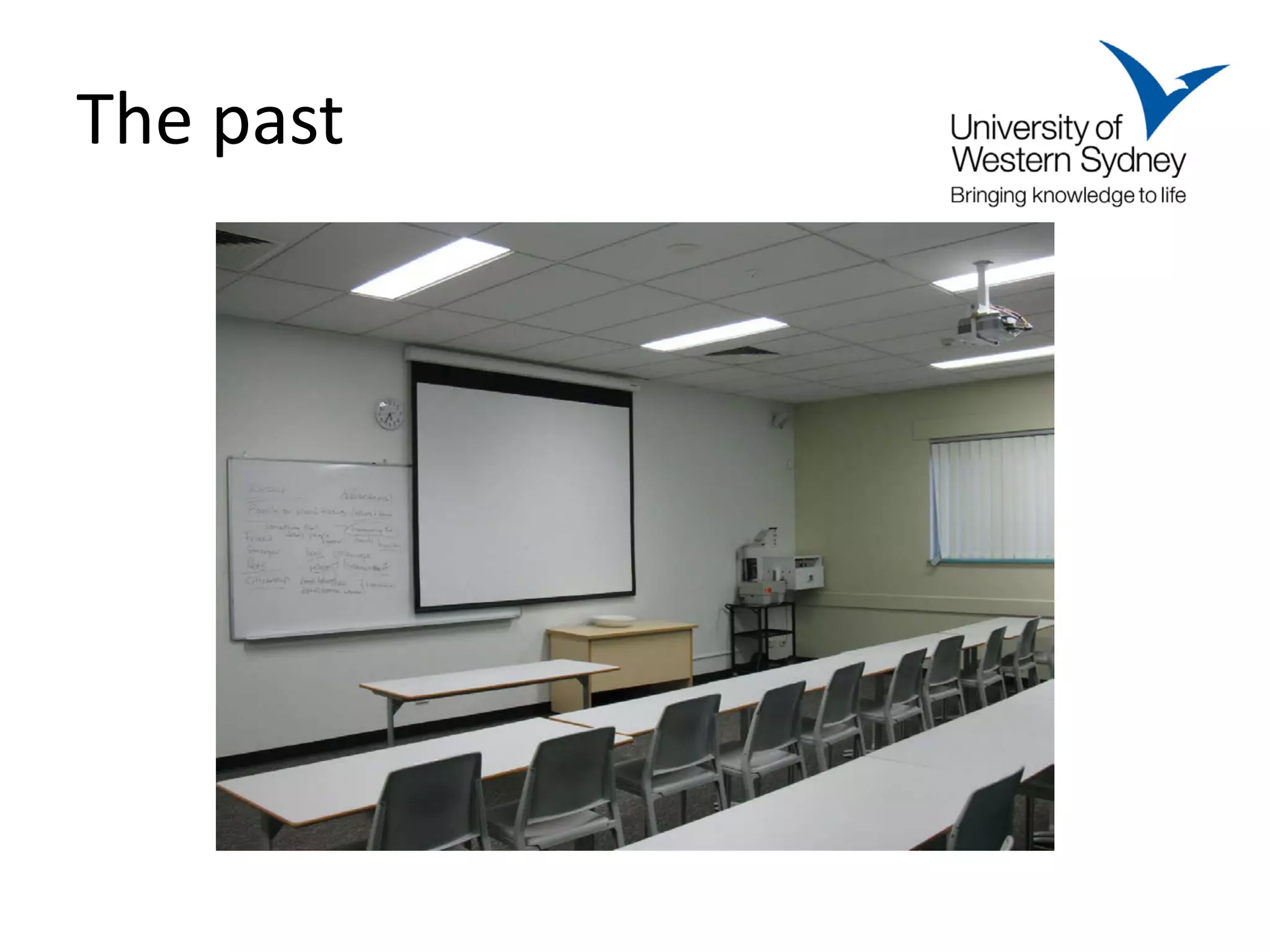
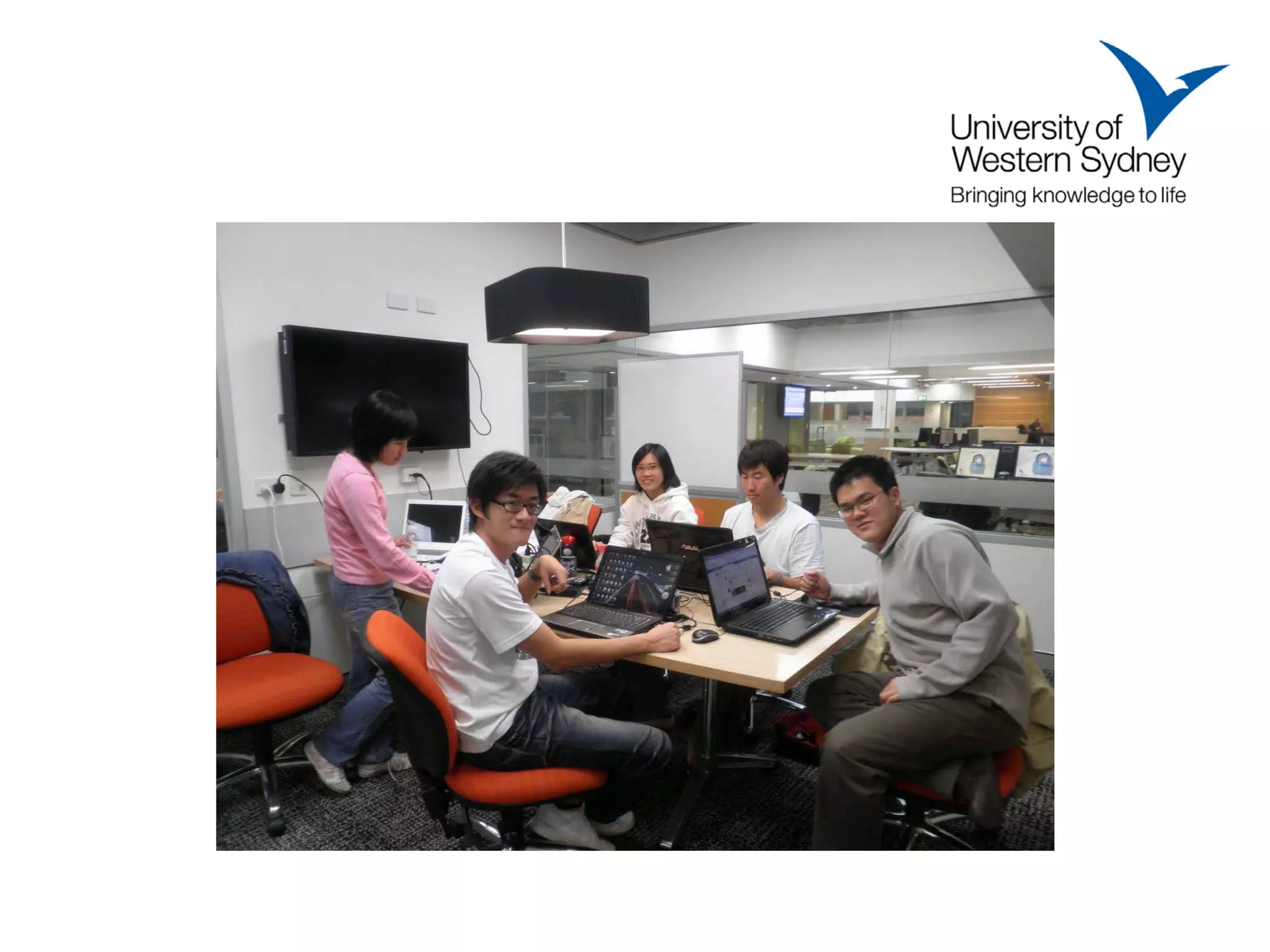
The past
Looking forward


         Teaching Spaces
Looking forward


        Learning Commons
Projects
• Teaching spaces
  – Campbelltown building 10
  – Bankstown building 20
  – Parramatta building EB
• Learning commons
  – Parramatta building EFa Pavilion
  – Bankstown building 1
  – Hawkesbury building G1
Positive Deviance
     “Somewhere in your
     organisation, groups of
    people are already doing
      things differently and
    better. To create lasting
      change, find areas of
      positive deviance and
        fan their flames.”

- Pascale and Sterin (Harvard Business Review, 2010)

Yuen Yuen Yip CAUDITpresentation

  • 1.
  • 2.
    Overview • Drivers for change • Curriculum redesign • Technology • Space design • Projects
  • 3.
    “The higher educationsector is undergoing a fundamental transformation in terms of its role in society, mode of operation, and economic structure and value” Source: Ernst & Young “University of the Future” 2012
  • 4.
    Blended learning is a driver of change for the universities of the future Source: Ernst & Young “University of the Future” 2012
  • 5.
    Blended learning atUWS refers to a strategic and systematic approach to combining times and modes of learning, integrating the best aspects of face-to-face and online interactions for each discipline, using appropriate ICTs.
  • 6.
    Drivers • UWS respondingto the needs of: – Students who work as well as study – Students who have children – Mature age students – Students who have to travel between campuses – School leavers – Students who are time poor
  • 7.
    What does blendedlearning look like? Intensive on-campus learning Online lectures & Site-based on-campus learning seminars Creating and Access to learning sharing content anytime Use UWS Group assignments & technologies online peer review of with my own work Flexible Social Study for me networks groups
  • 8.
    The student experience •Offers on campus experience • Progressively prepares students for more blended learning • Is discipline context specific • Provides different avenues for interaction • Offers fully off-campus as an option
  • 9.
    Transforming learning • Content curation • Collaboration • Engagement • Facilitation • Learning supports • Inspiration • Motivation • Flexibility
  • 10.
    Blending it all •Benefits of blended learning occur at the individual, social, activity, unit, course and university levels • Paradigms of blended learning include enabling, enhancing, supporting and transforming • Designing optimal learning spaces, virtual and physical, will be a key success factor for blended learning
  • 11.
    Curriculum and teaching • Teaching Development Unit PVC Education TDU school school school school school school school school school
  • 12.
    Curriculum and teaching •Creating options and opportunities in the curriculum for: – Face to face lectures / tutorials – On-line / flexible delivery – Interactive on-line delivery
  • 13.
    Technologies • Wireless integrationof BYOD with AV systems • Wireless integration of BYOD with central software systems • Echo360 to support lecture capture • vUWS – on-line teaching tool
  • 14.
    Diversity of learningspaces Physical Blended Virtual Formal Informal Formal Informal Mobile Personal Outdoor
  • 15.
    Teaching spaces • Flexibleand adaptable spaces for collaborative learning • Mobile furniture • Wireless technology • Multiple AV projection screens • Charging stations for electronic devices • Writing surfaces on 4 walls
  • 16.
    Learning commons • Connectedhot spots on the campus with the McDonald’s phenomenon • Consistent in space, look and feel • Meeting places / market places • Large spaces with synergies with the library • Hybrid of formal and informal spaces • Flexible and adaptable learning spaces • Spaces for students and teachers
  • 17.
    Hot spots • Connectedby unifying principles that is recognisable through: – Function – Technology provided – Signage & graphics
  • 18.
    Approval process • Teachingspaces • Learning commons – PVC (Education) Sign-off – Executive – Reference Group – Steering Committee • TDU, ITS, CWF, Library • PVC(Students), – Stakeholder Group PVC(Education, Dir-ITS, Dir- CWF, Library • TDU, ITS, CWF, Schools, Timetabling, Exams – Reference Group • Blended Learning consultant, CWF, ITS, Library, TDU, Student Services, MESH – Stakeholder Group • Student reps, Library, TDU, ITS, Student Services, Disability
  • 19.
    Collaboration • Students • eLearning Team • Academic Staff • CW&F • IT Services • Library
  • 20.
  • 21.
    Looking forward Teaching Spaces
  • 26.
    Looking forward Learning Commons
  • 35.
    Projects • Teaching spaces – Campbelltown building 10 – Bankstown building 20 – Parramatta building EB • Learning commons – Parramatta building EFa Pavilion – Bankstown building 1 – Hawkesbury building G1
  • 36.
    Positive Deviance “Somewhere in your organisation, groups of people are already doing things differently and better. To create lasting change, find areas of positive deviance and fan their flames.” - Pascale and Sterin (Harvard Business Review, 2010)