

Collaboration tools and patterns
for creative thinking
Christian Kohls
Cologone University of Applied Sciences
Computer Science, Socio-technical systems
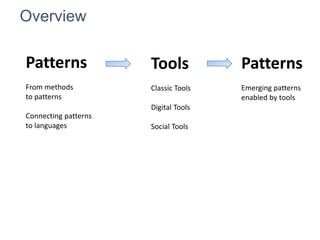
Patterns
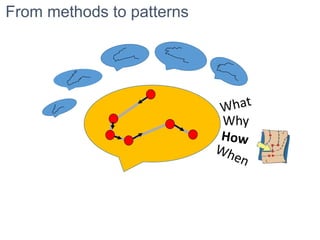
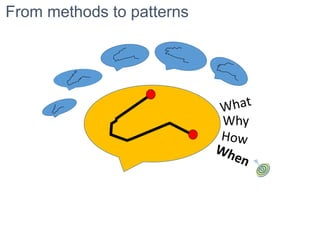
From methods
to patterns
Connecting patterns
to languages
Tools
Classic Tools
Digital Tools
Social Tools
Patterns
Emerging patterns
enabled by tools
Overview
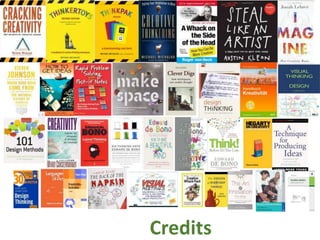
Credits
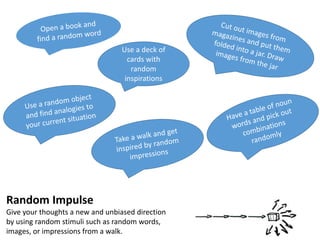
Use a deck of
cards with
random
inspirations
Random Impulse
Give your thoughts a new and unbiased direction
by using random stimuli such as random words,
images, or impressions from a walk.
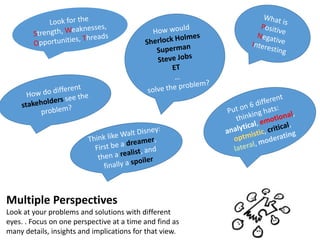
Multiple Perspectives
Look at your problems and solutions with different
eyes. . Focus on one perspective at a time and find as
many details, insights and implications for that view.
Why
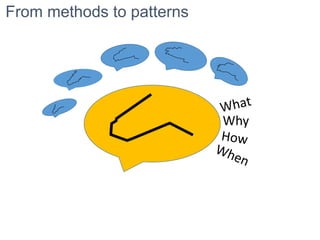
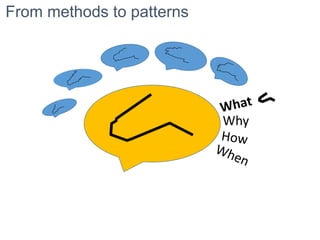
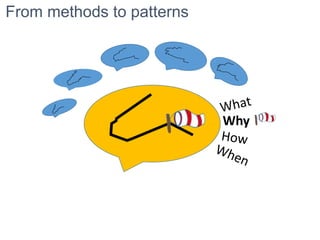
From methods to patterns
Why
From methods to patterns
Why
From methods to patterns
Why
From methods to patterns
Why
From methods to patterns
Why
From methods to patterns
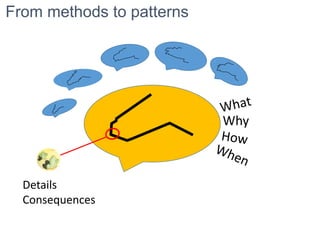
Details
Consequences
From methods to patterns
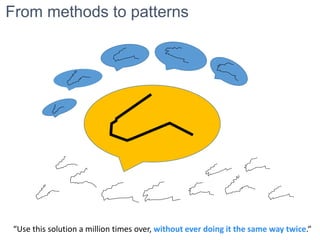
“Use this solution a million times over, without ever doing it the same way twice.“
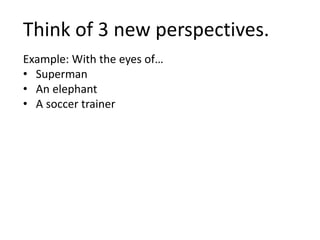
Think of 3 new perspectives.
Example: With the eyes of…
• Superman
• An elephant
• A soccer trainer
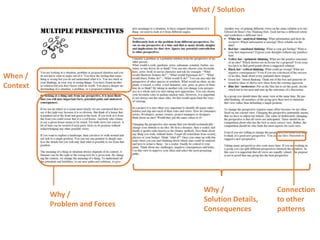
What / Solution
When /
Context
Why /
Problem and Forces
Why /
Solution Details,
Consequences
Connection
to other
patterns
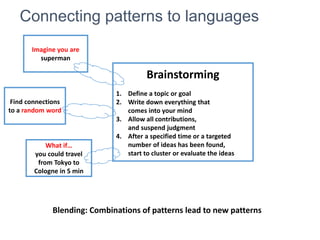
Brainstorming
1. Define a topic or goal
2. Write down everything that
comes into your mind
3. Allow all contributions,
and suspend judgment
4. After a specified time or a targeted
number of ideas has been found,
start to cluster or evaluate the ideas
Connecting patterns to languages
Imagine you are
superman
Find connections
to a random word
What if…
you could travel
from Tokyo to
Cologne in 5 min
Blending: Combinations of patterns lead to new patterns
Brainstorming
1. Define a topic or goal
2. Write down everything that
comes into your mind
3. Allow all contributions,
and suspend judgment
4. After a specified time or a targeted
number of ideas has been found,
start to cluster or evaluate the ideas
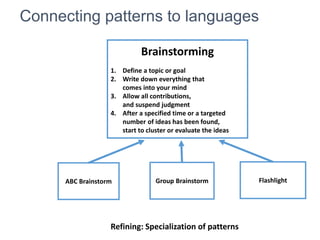
Connecting patterns to languages
Group BrainstormABC Brainstorm Flashlight
Refining: Specialization of patterns
Brainstorming
1. Define a topic or goal
2. Write down everything that
comes into your mind
3. Allow all contributions,
and suspend judgment
4. After a specified time or a targeted
number of ideas has been found,
start to cluster or evaluate the ideas
Connecting patterns to languages
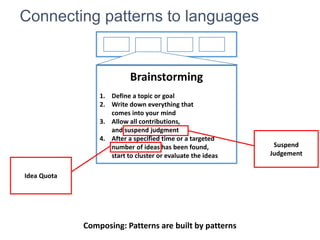
Suspend
Judgement
Idea Quota
Composing: Patterns are built by patterns
Brainstorming
1. Define a topic or goal
2. Write down everything that
comes into your mind
3. Allow all contributions,
and suspend judgment
4. After a specified time or a targeted
number of ideas has been found,
start to cluster or evaluate the ideas
Connecting patterns to languages
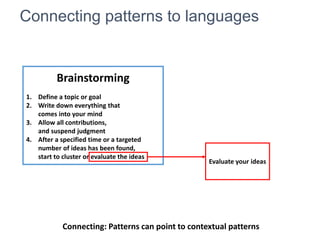
Evaluate your ideas
Connecting: Patterns can point to contextual patterns
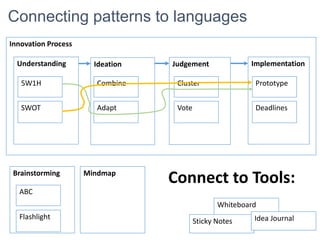
Innovation Process
Connecting patterns to languages
Understanding Ideation Judgement Implementation
Combine
Adapt
5W1H
SWOT
Cluster
Vote
Prototype
Deadlines
Brainstorming
ABC
Flashlight
Mindmap
Whiteboard
Sticky Notes Idea Journal
Connect to Tools:
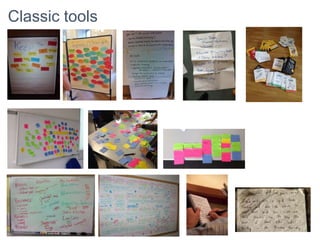
Classic tools
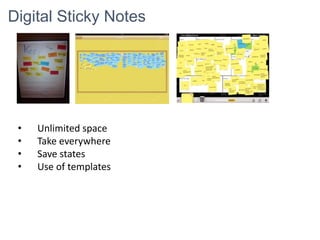
Digital Sticky Notes
• Unlimited space
• Take everywhere
• Save states
• Use of templates
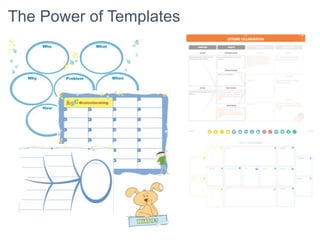
The Power of Templates
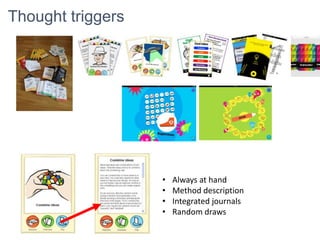
Thought triggers
• Always at hand
• Method description
• Integrated journals
• Random draws
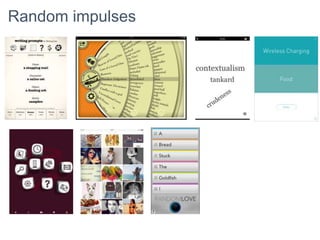
Random impulses
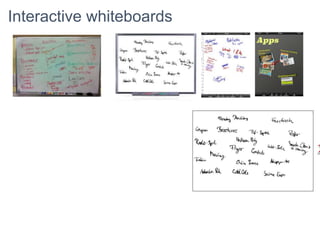
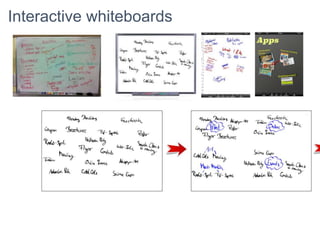
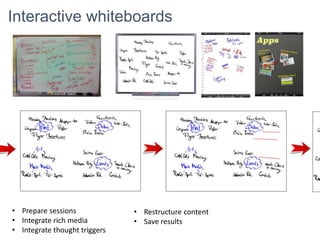
Interactive whiteboards
• Prepare sessions
• Integrate rich media
• Integrate thought triggers
• Restructure content
• Save results
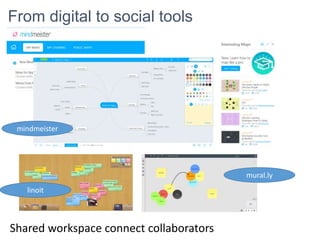
From digital to social tools
Shared workspace connect collaborators
mindmeister
linoit
mural.ly
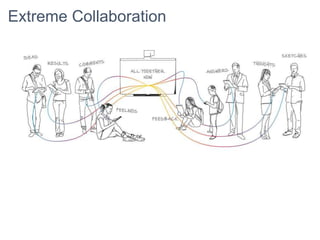
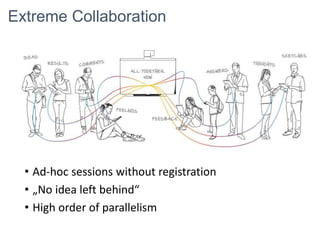
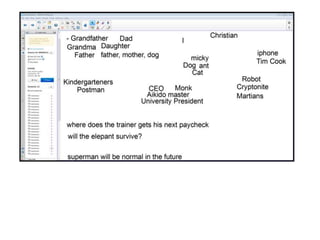
Extreme Collaboration
• Ad-hoc sessions without registration
• „No idea left behind“
• High order of parallelism
Outlook
• Measuring the performance increase:
• More ideas? Better ideas?
• Integration of methods
• Add random content
• Add thought triggers
• Randomizing contributions
• Sending huge number of contributions
• Visualization
• Filters
References
Backerra, H., Malorny, C., & Schwarz, W. (2007). Kreativitätstechniken: Kreative Prozesse anstossen, Innovationen fördern. München: Hanser.
Boos, E. (2007). Kreativitätstechniken. München: Compact Verlag.
Brunner, A. (2008). Kreativer denken: Konzepte und Methoden von A-Z. München: Oldenbourg.
Csikszentmihalyi, M. (1996). Creativity: Flow and the psychology of discovery and invention. New York: HarperCollinsPublishers.
De Bono, E. (1985). Six thinking hats. Boston: Little, Brown.
De Bono, E. (1990). Lateral Thinking. London: Penguin Books.
De Bono, E. (2004). How to have a beautiful mind. London: Vermillion.
De Bono, E. (2007). How to have creative ideas: 62 exercises to develop the mind. London: Vermilion.
De Bono, E. (2009). Think!: Before it's too late. London: Vermilion.
Doorley, S., & Witthoft, S. (2012). Make space: How to set the stage for creative collaboration. Hoboken, N.J: John Wiley & Sons.
Foster, J. (2007). How to get ideas. San Francisco: Berrett-Koehler Publishers, Inc.
Goodman, N. (1968). Languages of art: An approach to a theory of symbols. Indianapolis: Bobbs-Merrill.
Gürtler, J., Meyer, H. (2013). 30 Minuten Design Thinking. Offenbach: GABAL.
Hegarty, J. (2014). Hegarty on creativity: There are no rules.
Kelley, T., & Littman, J. (2001). The art of innovation: Lessons in creativity from IDEO, America's leading design firm. New York: Currency/Doubleday.
Kleon, A. (2012). Steal like an artist: 10 things nobody told you about being creative. New York: Workman Pub. Co.
Kumar, V. (2013). 101 design methods: A structured approach for driving innovation in your organization. Hoboken, N.J: Wiley.
Lehrer, J. (2012). Imagine: How creativity works. Boston: Houghton Mifflin Harcourt.
Michalko, M. (2001). Cracking creativity: The secrets of creative genius. Berkeley, Calif: Ten Speed Press. Press.
Michalko, M. (2006). Thinkertoys: A handbook of creative-thinking techniques. Berkeley, Calif: Ten Speed
Michalko, M. (2011). Creative thinkering: Putting your imagination to work. Novato, Calif: New World Library.
Plattner, H., Meinel, C., & Weinberg, U. (2009). Design Thinking: Innovation lernen, Ideenwelten öffnen. München: mi.
Roam, D. (2008). The back of the napkin: Solving problems and selling ideas with pictures. New York: Portfolio.
Quillien, J. (2012). Clever Digs. How Workspaces Can Enable Thought. Ames, IA: Culicidae Press.
Sibbet, D. (2010). Visual meetings: How graphics, sticky notes, & idea mapping can transform group productivity. Hoboken, N.J: John Wiley & Sons.
Straker, D. (1997). Rapid problem-solving with Post-it Notes. Tucson, Ariz: Fisher Books.
Ware, C. (2010). Visual Thininkin for Design. Morgan Kaufmann
Weidenmann, B. (2010). Handbuch Kreativität: Ein guter Einfall ist kein Zufall. (Handbuch Kreativität.) Weinheim: Beltz.
Young, J. W. (2003). A technique for producing ideas. New York: McGraw-Hill.

Collaboration Tools and Patterns for Creative Thinking

  • 1.
    Collaboration tools andpatterns for creative thinking Christian Kohls Cologone University of Applied Sciences Computer Science, Socio-technical systems
  • 2.
    Patterns From methods to patterns Connectingpatterns to languages Tools Classic Tools Digital Tools Social Tools Patterns Emerging patterns enabled by tools Overview
  • 3.
  • 4.
    Use a deckof cards with random inspirations Random Impulse Give your thoughts a new and unbiased direction by using random stimuli such as random words, images, or impressions from a walk.
  • 5.
    Multiple Perspectives Look atyour problems and solutions with different eyes. . Focus on one perspective at a time and find as many details, insights and implications for that view.
  • 6.
  • 7.
  • 8.
  • 9.
  • 10.
  • 11.
    Why From methods topatterns Details Consequences
  • 12.
    From methods topatterns “Use this solution a million times over, without ever doing it the same way twice.“
  • 13.
    Think of 3new perspectives. Example: With the eyes of… • Superman • An elephant • A soccer trainer
  • 14.
    What / Solution When/ Context Why / Problem and Forces Why / Solution Details, Consequences Connection to other patterns
  • 15.
    Brainstorming 1. Define atopic or goal 2. Write down everything that comes into your mind 3. Allow all contributions, and suspend judgment 4. After a specified time or a targeted number of ideas has been found, start to cluster or evaluate the ideas Connecting patterns to languages Imagine you are superman Find connections to a random word What if… you could travel from Tokyo to Cologne in 5 min Blending: Combinations of patterns lead to new patterns
  • 16.
    Brainstorming 1. Define atopic or goal 2. Write down everything that comes into your mind 3. Allow all contributions, and suspend judgment 4. After a specified time or a targeted number of ideas has been found, start to cluster or evaluate the ideas Connecting patterns to languages Group BrainstormABC Brainstorm Flashlight Refining: Specialization of patterns
  • 17.
    Brainstorming 1. Define atopic or goal 2. Write down everything that comes into your mind 3. Allow all contributions, and suspend judgment 4. After a specified time or a targeted number of ideas has been found, start to cluster or evaluate the ideas Connecting patterns to languages Suspend Judgement Idea Quota Composing: Patterns are built by patterns
  • 18.
    Brainstorming 1. Define atopic or goal 2. Write down everything that comes into your mind 3. Allow all contributions, and suspend judgment 4. After a specified time or a targeted number of ideas has been found, start to cluster or evaluate the ideas Connecting patterns to languages Evaluate your ideas Connecting: Patterns can point to contextual patterns
  • 19.
    Innovation Process Connecting patternsto languages Understanding Ideation Judgement Implementation Combine Adapt 5W1H SWOT Cluster Vote Prototype Deadlines Brainstorming ABC Flashlight Mindmap Whiteboard Sticky Notes Idea Journal Connect to Tools:
  • 20.
  • 21.
    Digital Sticky Notes •Unlimited space • Take everywhere • Save states • Use of templates
  • 22.
    The Power ofTemplates
  • 23.
    Thought triggers • Alwaysat hand • Method description • Integrated journals • Random draws
  • 24.
  • 25.
  • 26.
  • 27.
    Interactive whiteboards • Preparesessions • Integrate rich media • Integrate thought triggers • Restructure content • Save results
  • 28.
    From digital tosocial tools Shared workspace connect collaborators mindmeister linoit mural.ly
  • 29.
  • 30.
    Extreme Collaboration • Ad-hocsessions without registration • „No idea left behind“ • High order of parallelism
  • 32.
    Outlook • Measuring theperformance increase: • More ideas? Better ideas? • Integration of methods • Add random content • Add thought triggers • Randomizing contributions • Sending huge number of contributions • Visualization • Filters
  • 34.
    References Backerra, H., Malorny,C., & Schwarz, W. (2007). Kreativitätstechniken: Kreative Prozesse anstossen, Innovationen fördern. München: Hanser. Boos, E. (2007). Kreativitätstechniken. München: Compact Verlag. Brunner, A. (2008). Kreativer denken: Konzepte und Methoden von A-Z. München: Oldenbourg. Csikszentmihalyi, M. (1996). Creativity: Flow and the psychology of discovery and invention. New York: HarperCollinsPublishers. De Bono, E. (1985). Six thinking hats. Boston: Little, Brown. De Bono, E. (1990). Lateral Thinking. London: Penguin Books. De Bono, E. (2004). How to have a beautiful mind. London: Vermillion. De Bono, E. (2007). How to have creative ideas: 62 exercises to develop the mind. London: Vermilion. De Bono, E. (2009). Think!: Before it's too late. London: Vermilion. Doorley, S., & Witthoft, S. (2012). Make space: How to set the stage for creative collaboration. Hoboken, N.J: John Wiley & Sons. Foster, J. (2007). How to get ideas. San Francisco: Berrett-Koehler Publishers, Inc. Goodman, N. (1968). Languages of art: An approach to a theory of symbols. Indianapolis: Bobbs-Merrill. Gürtler, J., Meyer, H. (2013). 30 Minuten Design Thinking. Offenbach: GABAL. Hegarty, J. (2014). Hegarty on creativity: There are no rules. Kelley, T., & Littman, J. (2001). The art of innovation: Lessons in creativity from IDEO, America's leading design firm. New York: Currency/Doubleday. Kleon, A. (2012). Steal like an artist: 10 things nobody told you about being creative. New York: Workman Pub. Co. Kumar, V. (2013). 101 design methods: A structured approach for driving innovation in your organization. Hoboken, N.J: Wiley. Lehrer, J. (2012). Imagine: How creativity works. Boston: Houghton Mifflin Harcourt. Michalko, M. (2001). Cracking creativity: The secrets of creative genius. Berkeley, Calif: Ten Speed Press. Press. Michalko, M. (2006). Thinkertoys: A handbook of creative-thinking techniques. Berkeley, Calif: Ten Speed Michalko, M. (2011). Creative thinkering: Putting your imagination to work. Novato, Calif: New World Library. Plattner, H., Meinel, C., & Weinberg, U. (2009). Design Thinking: Innovation lernen, Ideenwelten öffnen. München: mi. Roam, D. (2008). The back of the napkin: Solving problems and selling ideas with pictures. New York: Portfolio. Quillien, J. (2012). Clever Digs. How Workspaces Can Enable Thought. Ames, IA: Culicidae Press. Sibbet, D. (2010). Visual meetings: How graphics, sticky notes, & idea mapping can transform group productivity. Hoboken, N.J: John Wiley & Sons. Straker, D. (1997). Rapid problem-solving with Post-it Notes. Tucson, Ariz: Fisher Books. Ware, C. (2010). Visual Thininkin for Design. Morgan Kaufmann Weidenmann, B. (2010). Handbuch Kreativität: Ein guter Einfall ist kein Zufall. (Handbuch Kreativität.) Weinheim: Beltz. Young, J. W. (2003). A technique for producing ideas. New York: McGraw-Hill.