Submitted by:
V.Rahul
DEPT of ECE
 Introduction.
 Emerging Issues-Spectrum Management.
 Characteristics of Cognitive Radio.
• Cognitive Capability.
• Reconfigurability.
 Advantages of CRN.
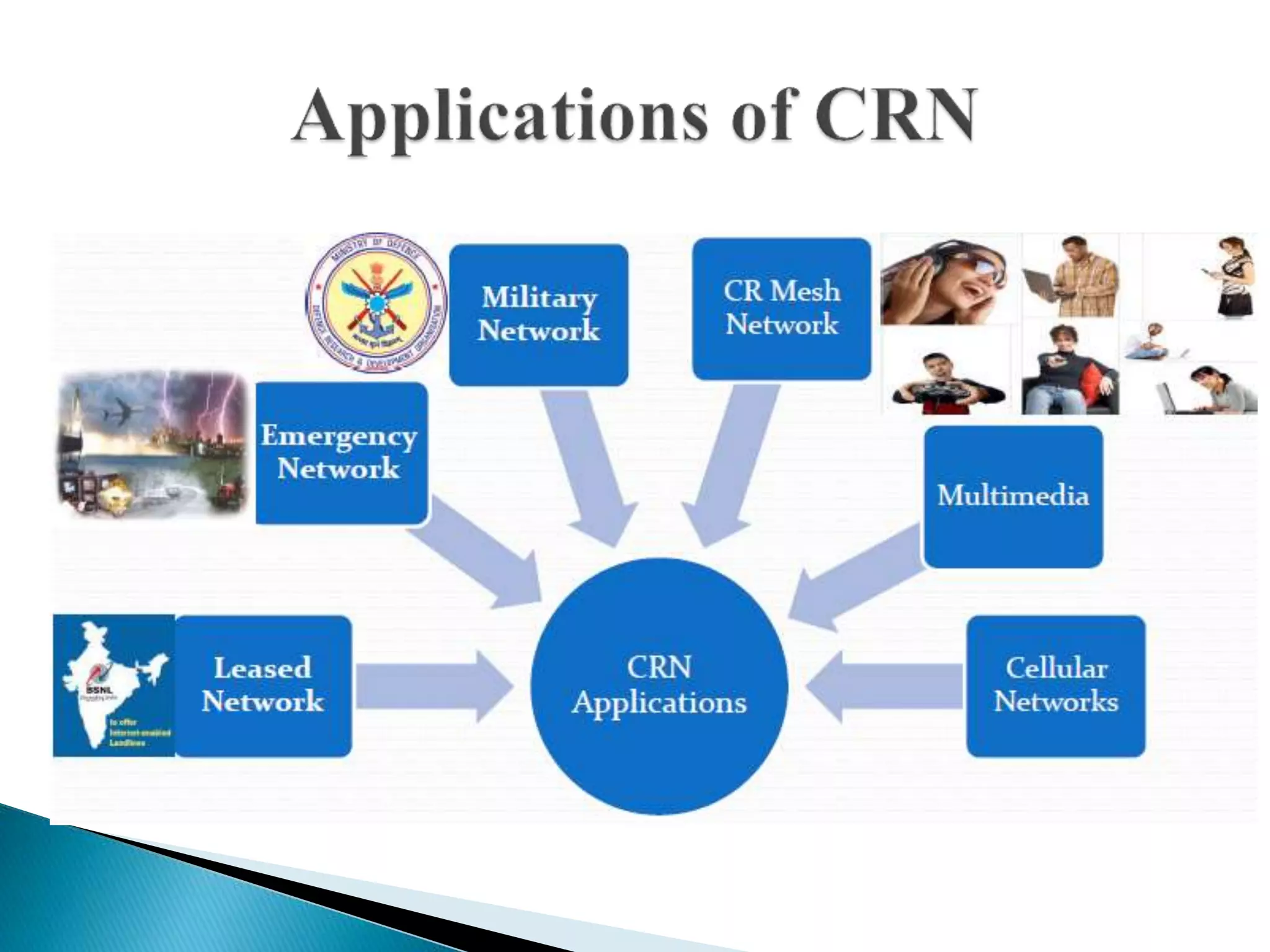
 Applications of CRN.
 Conclusion.
 References.
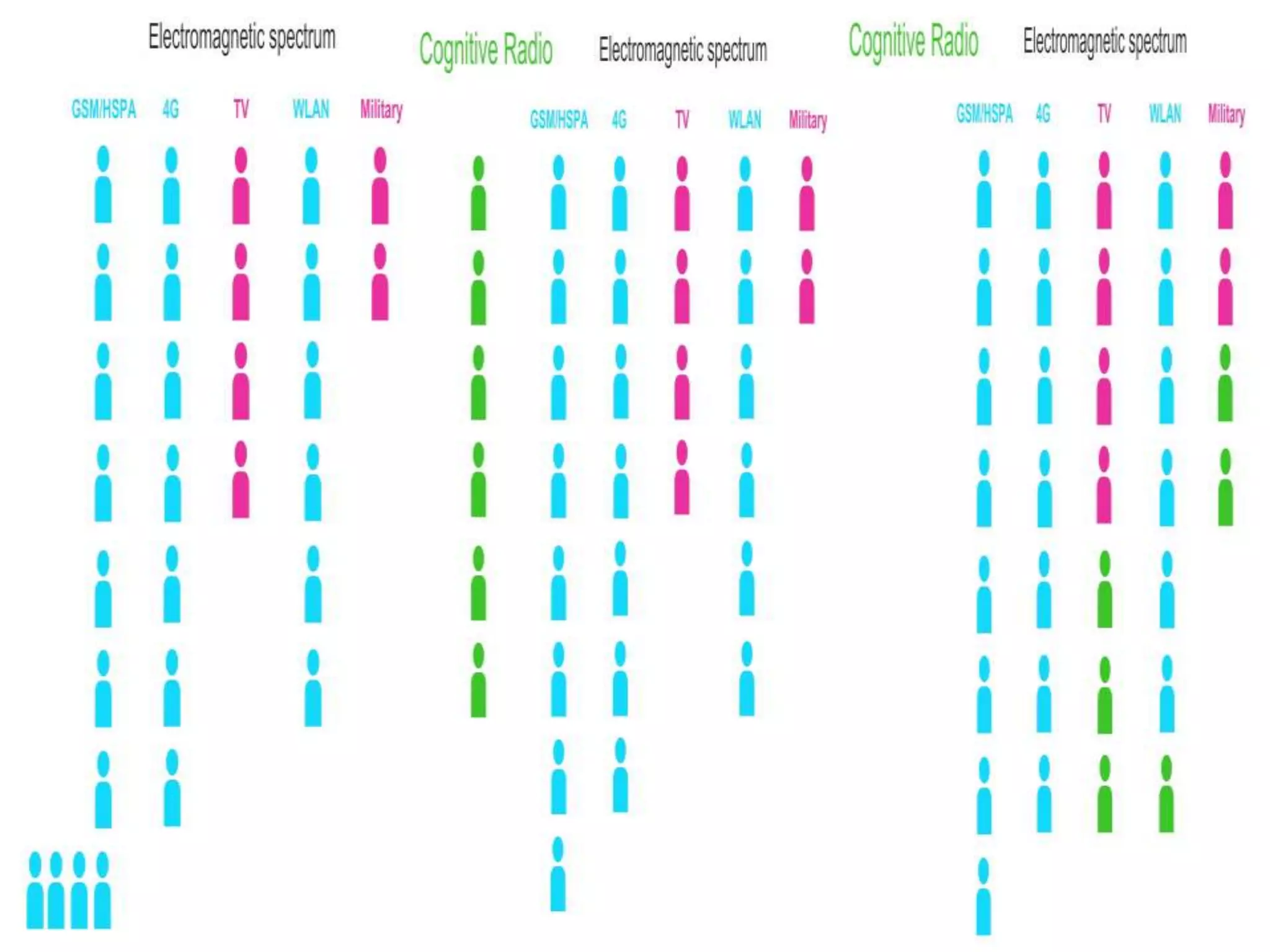
 A number of wireless applications have been growing
over the last decade. Most of the frequency spectrum
has already been licensed by government agencies,
such as Federal Communications Commission (FCC).
 Therefore, there exists an apparent spectrum scarcity
for new wireless applications and services. Hence
dynamic spectrum access techniques were recently
proposed to solve these spectrum inefficiency
problems.
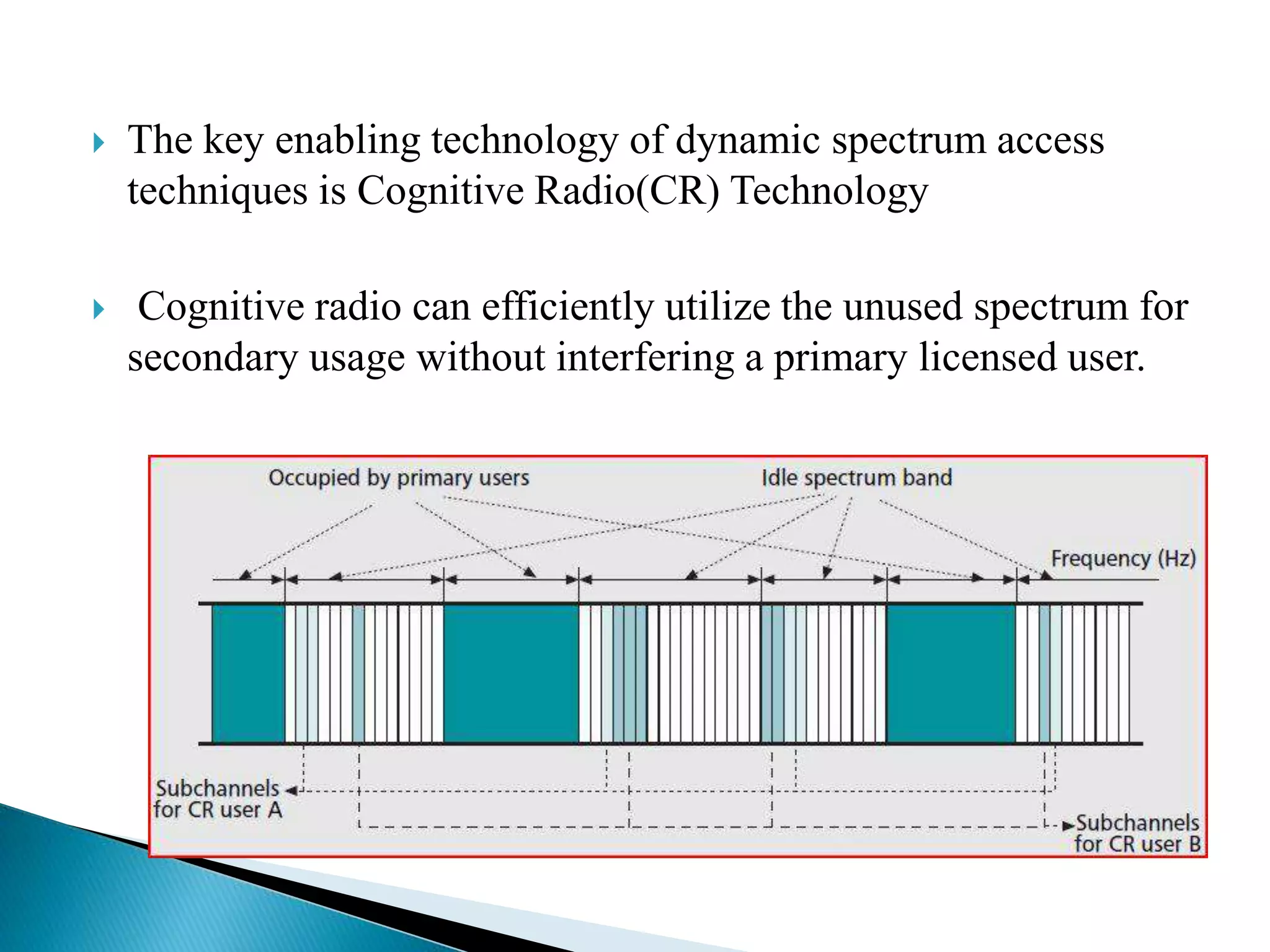
 The key enabling technology of dynamic spectrum access
techniques is Cognitive Radio(CR) Technology
 Cognitive radio can efficiently utilize the unused spectrum for
secondary usage without interfering a primary licensed user.
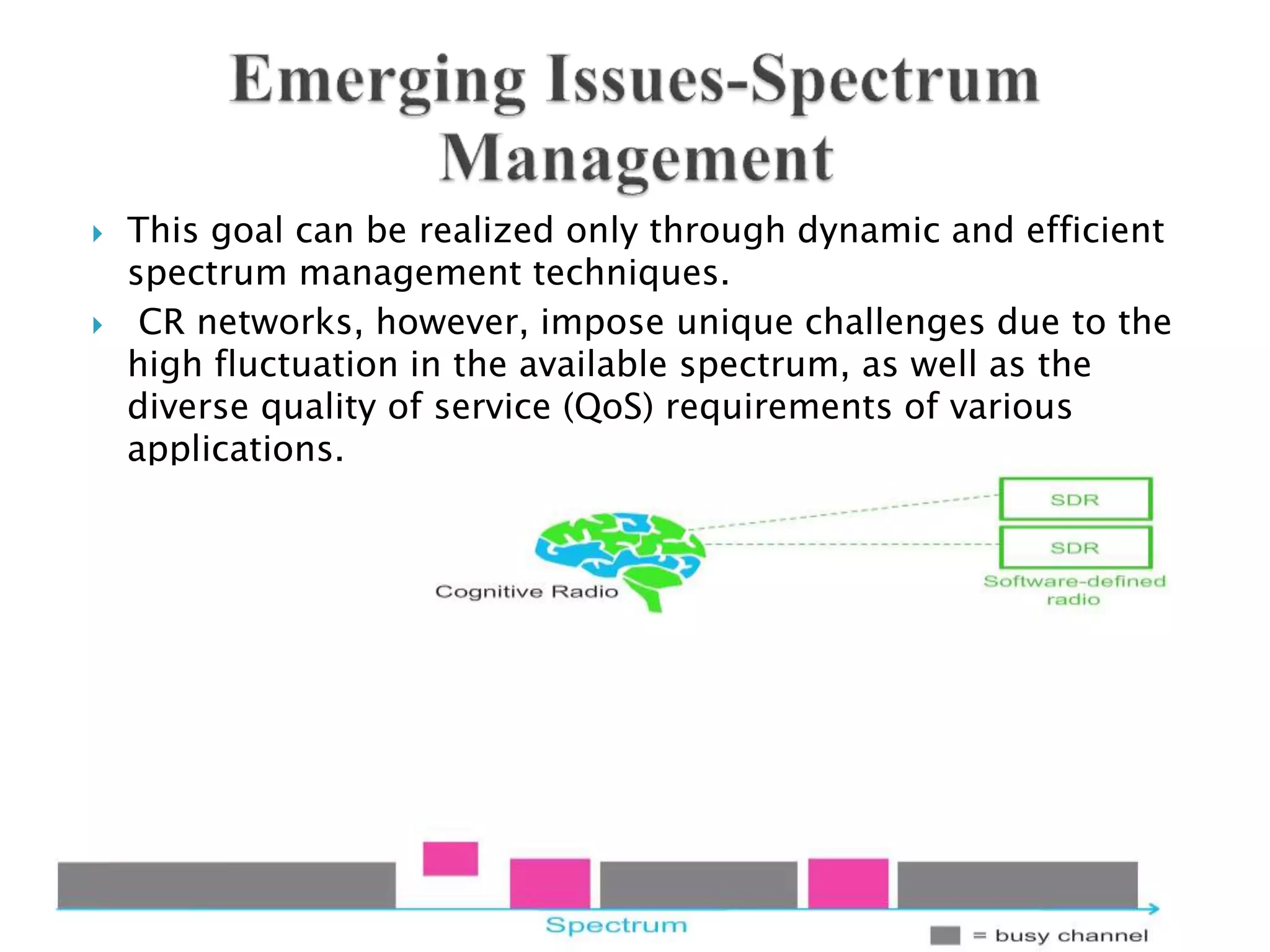
 This goal can be realized only through dynamic and efficient
spectrum management techniques.
 CR networks, however, impose unique challenges due to the
high fluctuation in the available spectrum, as well as the
diverse quality of service (QoS) requirements of various
applications.
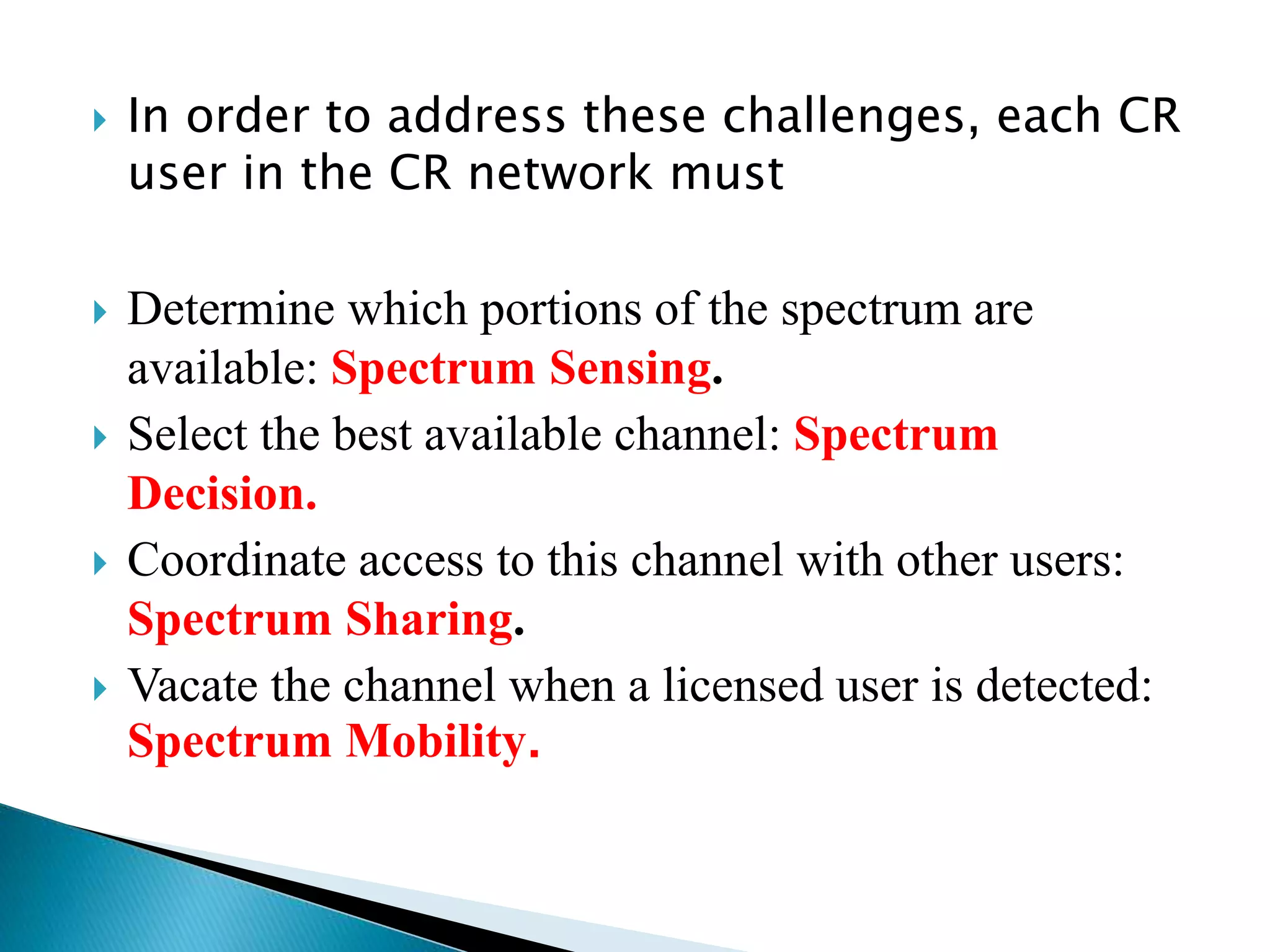
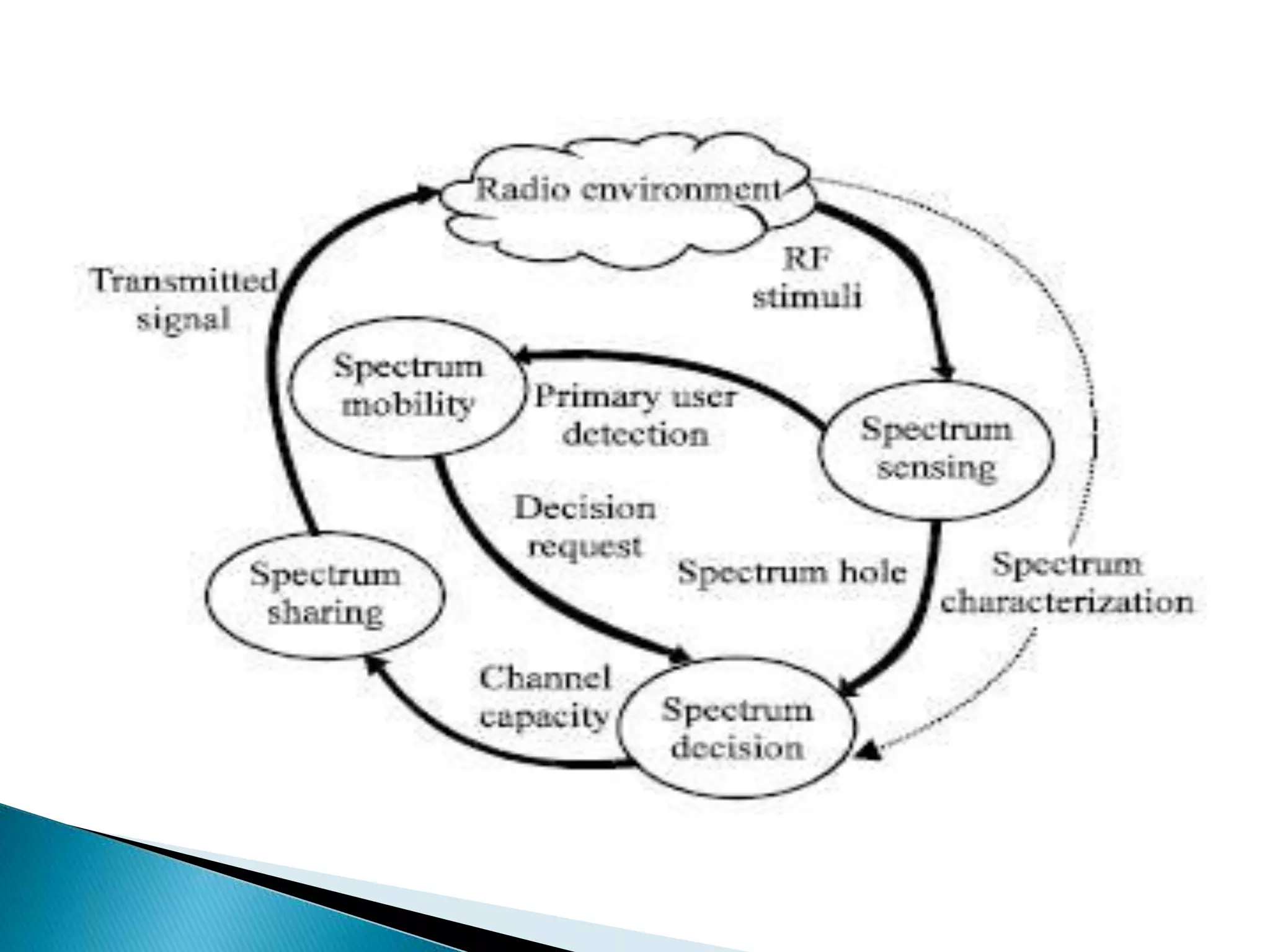
 In order to address these challenges, each CR
user in the CR network must
 Determine which portions of the spectrum are
available: Spectrum Sensing.
 Select the best available channel: Spectrum
Decision.
 Coordinate access to this channel with other users:
Spectrum Sharing.
 Vacate the channel when a licensed user is detected:
Spectrum Mobility.
 Cognitive Radio have two main characteristics:
• Cognitive Capability.
• Reconfigurability.
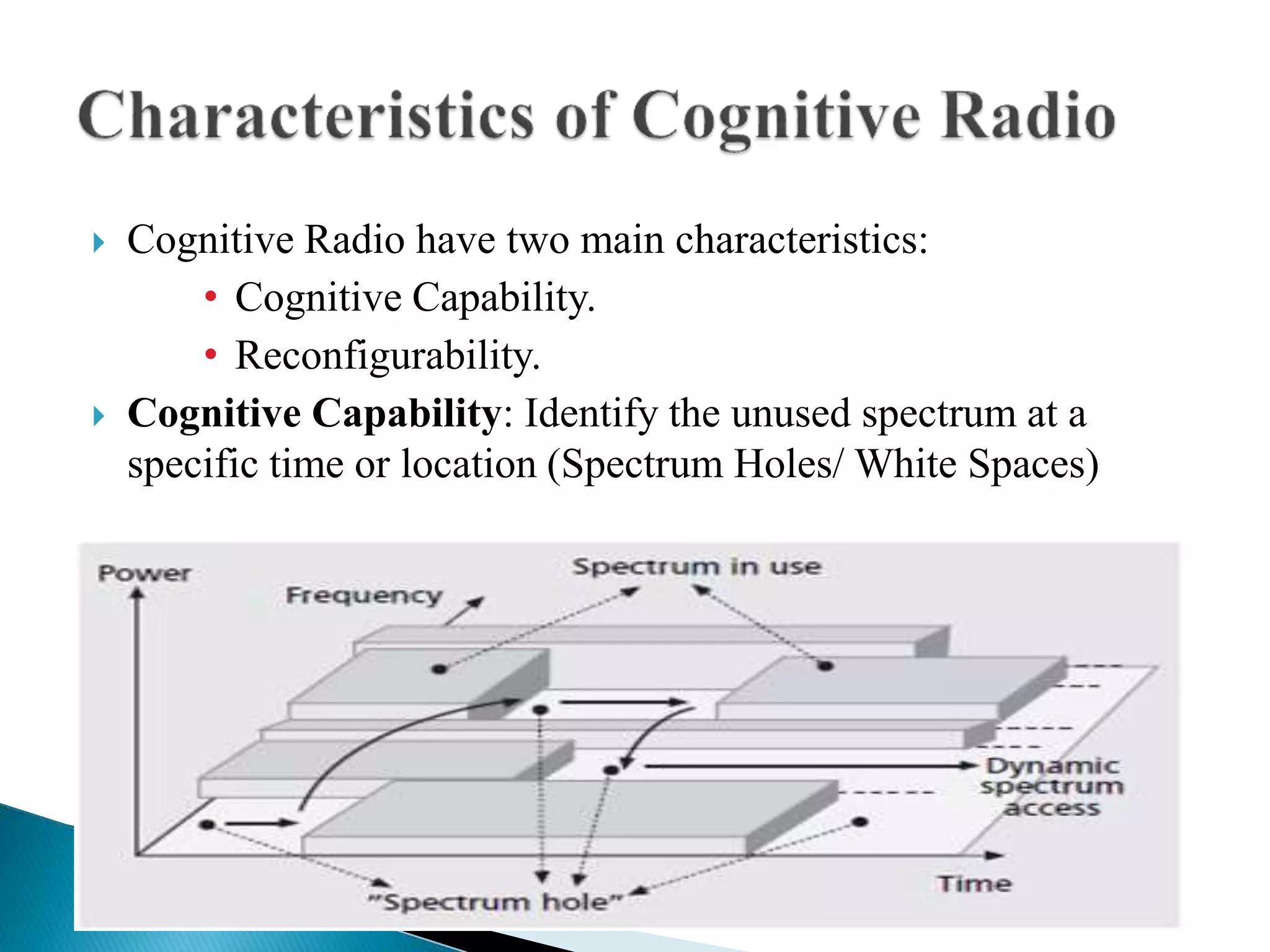
 Cognitive Capability: Identify the unused spectrum at a
specific time or location (Spectrum Holes/ White Spaces)
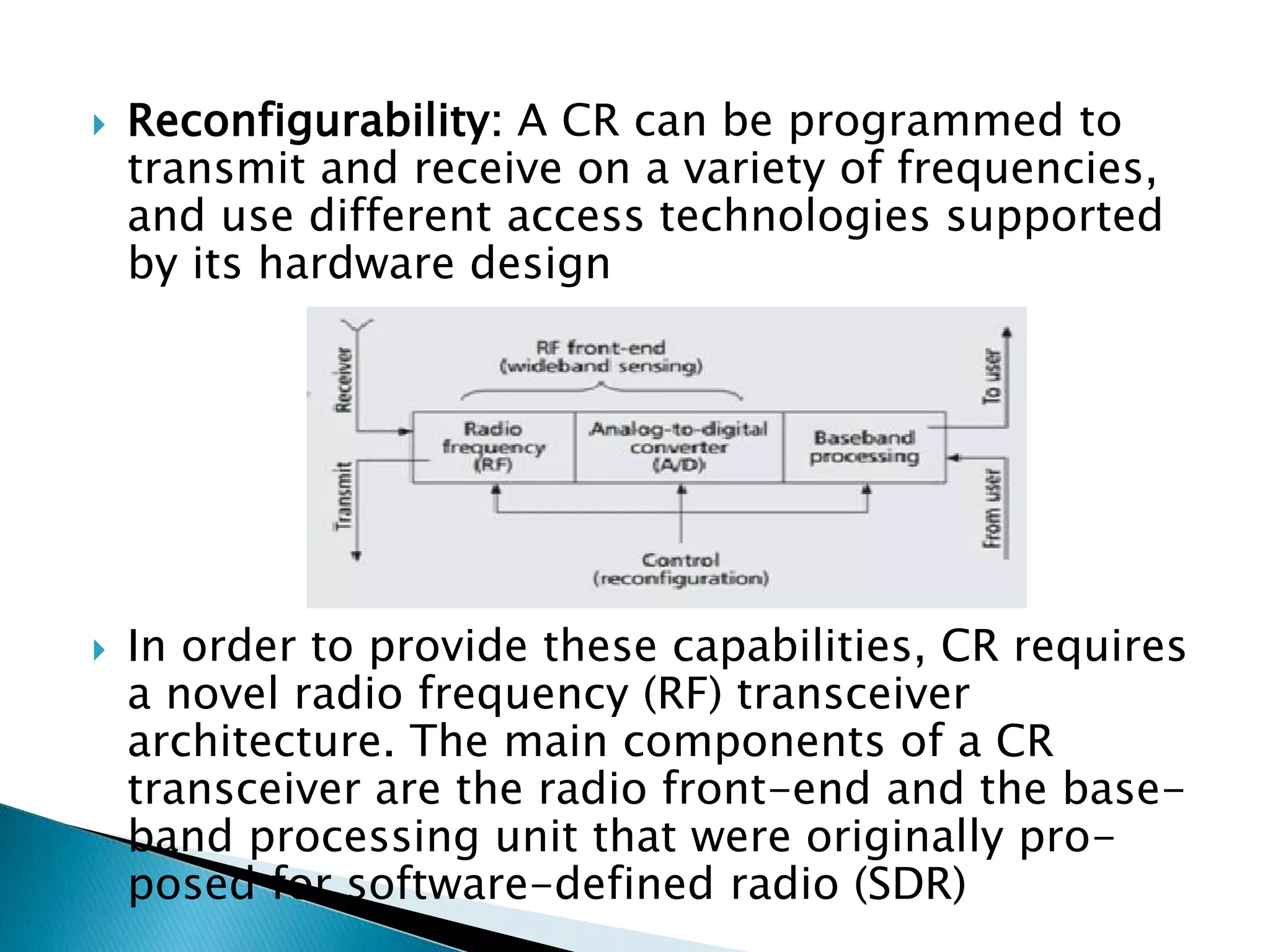
 Reconfigurability: A CR can be programmed to
transmit and receive on a variety of frequencies,
and use different access technologies supported
by its hardware design
 In order to provide these capabilities, CR requires
a novel radio frequency (RF) transceiver
architecture. The main components of a CR
transceiver are the radio front-end and the base-
band processing unit that were originally pro-
posed for software-defined radio (SDR)
1. Senses the radio frequensy environment for presence of white spaces
2. Manages the unused spectrum
3. Increase the efficiency of the spectrum utilization significantly
4. Improves the spectrum utilization by neglecting the over occupie
spectrum Channels and filling the unused spectrum channels
5. Improves the performance of the overall spectrum by increasing the
data Rate on good channels and moving away from the bad channels
6. Use the unused spectrum for a new business propositions, such as
providing High speed internet in the rural areas and high data rate
network application like video confrencing can be made
7. Automatically improves and accomplishes its progress and minimize
interference
 Spectrum Awareness concept.
 Spectrum sharing techniques can help us fill the
regulatory “gaps” in a particular interference
environment.
 A great deal of research still needs to be done on
simulating and explore these intelligent network
ideas.
 Cognitive radio technology can solve the problem of
spectrum underutilization.
 [1] FCC, ET Docket No 03-322 Notice of Proposed Rule Making and Order,
Dec 2003
 [2] I. F. Akyildiz et al., “NeXt Generation/Dynamic Spectrum Access/Cognitive
Radio Wireless Networks: A Survey,” Comp. Networks J., vol. 50, Sept. 2006,
pp. 2127–59.

 [3] S. Haykin, “Cognitive Radio: Brain-Empowered Wireless Communications,”
IEEE JSAC, vol. 23, no. 2, Feb. 2005, pp. 201–20.

 [4] F. K. Jondral, “Software-Defined Radio — Basic and Evolution to Cognitive
Radio,” EURASIP J. Wireless Commun. and Networking, 2005.
 [5] D. Cabric, S. M. Mishra, and R. W. Brodersen, “Imple-mentation Issues in
Spectrum Sensing for Cognitive Radios,” Proc. 38th Asilomar Conf. Sig., Sys.
and Comp. 2004, Nov. 2004, pp. 772–76.
 [6] O. Ileri, D. Samardzija, and N. B. Mandayam, “Demand Responsive Pricing
and Competitive Spectrum Alloca-tion via Spectrum Server,” Proc. IEEE
DySPAN 2005, Nov. 2005, pp. 194–202.
COGNITIVE RADIO

COGNITIVE RADIO

  • 1.
  • 2.
     Introduction.  EmergingIssues-Spectrum Management.  Characteristics of Cognitive Radio. • Cognitive Capability. • Reconfigurability.  Advantages of CRN.  Applications of CRN.  Conclusion.  References.
  • 3.
     A numberof wireless applications have been growing over the last decade. Most of the frequency spectrum has already been licensed by government agencies, such as Federal Communications Commission (FCC).  Therefore, there exists an apparent spectrum scarcity for new wireless applications and services. Hence dynamic spectrum access techniques were recently proposed to solve these spectrum inefficiency problems.
  • 4.
     The keyenabling technology of dynamic spectrum access techniques is Cognitive Radio(CR) Technology  Cognitive radio can efficiently utilize the unused spectrum for secondary usage without interfering a primary licensed user.
  • 6.
     This goalcan be realized only through dynamic and efficient spectrum management techniques.  CR networks, however, impose unique challenges due to the high fluctuation in the available spectrum, as well as the diverse quality of service (QoS) requirements of various applications.
  • 7.
     In orderto address these challenges, each CR user in the CR network must  Determine which portions of the spectrum are available: Spectrum Sensing.  Select the best available channel: Spectrum Decision.  Coordinate access to this channel with other users: Spectrum Sharing.  Vacate the channel when a licensed user is detected: Spectrum Mobility.
  • 9.
     Cognitive Radiohave two main characteristics: • Cognitive Capability. • Reconfigurability.  Cognitive Capability: Identify the unused spectrum at a specific time or location (Spectrum Holes/ White Spaces)
  • 10.
     Reconfigurability: ACR can be programmed to transmit and receive on a variety of frequencies, and use different access technologies supported by its hardware design  In order to provide these capabilities, CR requires a novel radio frequency (RF) transceiver architecture. The main components of a CR transceiver are the radio front-end and the base- band processing unit that were originally pro- posed for software-defined radio (SDR)
  • 11.
    1. Senses theradio frequensy environment for presence of white spaces 2. Manages the unused spectrum 3. Increase the efficiency of the spectrum utilization significantly 4. Improves the spectrum utilization by neglecting the over occupie spectrum Channels and filling the unused spectrum channels 5. Improves the performance of the overall spectrum by increasing the data Rate on good channels and moving away from the bad channels 6. Use the unused spectrum for a new business propositions, such as providing High speed internet in the rural areas and high data rate network application like video confrencing can be made 7. Automatically improves and accomplishes its progress and minimize interference
  • 13.
     Spectrum Awarenessconcept.  Spectrum sharing techniques can help us fill the regulatory “gaps” in a particular interference environment.  A great deal of research still needs to be done on simulating and explore these intelligent network ideas.  Cognitive radio technology can solve the problem of spectrum underutilization.
  • 14.
     [1] FCC,ET Docket No 03-322 Notice of Proposed Rule Making and Order, Dec 2003  [2] I. F. Akyildiz et al., “NeXt Generation/Dynamic Spectrum Access/Cognitive Radio Wireless Networks: A Survey,” Comp. Networks J., vol. 50, Sept. 2006, pp. 2127–59.   [3] S. Haykin, “Cognitive Radio: Brain-Empowered Wireless Communications,” IEEE JSAC, vol. 23, no. 2, Feb. 2005, pp. 201–20.   [4] F. K. Jondral, “Software-Defined Radio — Basic and Evolution to Cognitive Radio,” EURASIP J. Wireless Commun. and Networking, 2005.  [5] D. Cabric, S. M. Mishra, and R. W. Brodersen, “Imple-mentation Issues in Spectrum Sensing for Cognitive Radios,” Proc. 38th Asilomar Conf. Sig., Sys. and Comp. 2004, Nov. 2004, pp. 772–76.  [6] O. Ileri, D. Samardzija, and N. B. Mandayam, “Demand Responsive Pricing and Competitive Spectrum Alloca-tion via Spectrum Server,” Proc. IEEE DySPAN 2005, Nov. 2005, pp. 194–202.