Downloaded 56 times

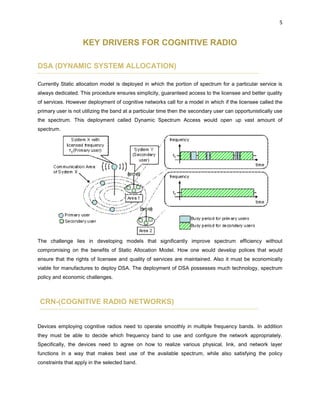
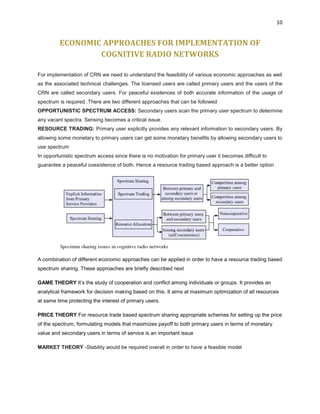
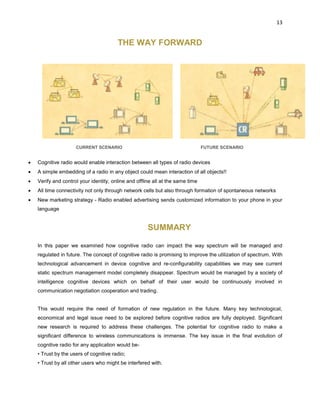

Cognitive radio promises to revolutionize wireless communication and spectrum management. It allows unlicensed users to opportunistically access licensed spectrum bands when the licensed users are not actively using it. This helps solve the problem of spectrum scarcity by improving utilization efficiency. However, realizing cognitive radio faces many technical, economic and legal challenges. Key challenges include developing sensing techniques to avoid interference, establishing spectrum sharing protocols, and reforming policies to allow dynamic spectrum access while protecting licensed users. Overcoming these challenges could provide benefits like ubiquitous connectivity and new wireless applications.


