COFFEE
RUST
1
Systematic position
• Class: Basidiomycetes
• Order: Uredinales
• Family: Pucciniaceae
• Hemileia - half smooth characteristic of the
spores
• vastatrix - the devastating nature of the
disease
2
History…
• The Dutch were the first major European
coffee importers
• Ceylon (now Sri Lanka), Java, and Sumatra
• During Napoleon's time, much of the coffee-
producing area was lost by the Dutch to the
English
3
• In 1825, the British began development of
their property in Ceylon
• By 1870, Ceylon was the world's greatest
producer of coffee
• In 1875, nearly 400,000 acres (160,000
hectares) were covered with coffee trees
4
• Most important coffee disease in the world
• The fungal parasite probably arose in southern
Ethiopia
• It was reported first by a British explorer from
regions of Kenya around Lake Victoria in 1861
from where it is believed to have spread to
Asia and the Americas
5
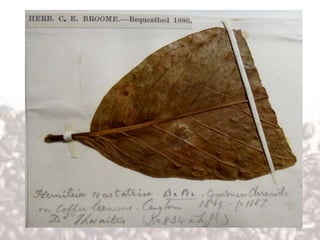
DISCOVERY
• First recorded by -
Reverend H. J. Berkeley and
Mr. Broome
• Who was sent a collection
from the Royal Botanical
Gardens at Peradenija
• Berkeley believed this to be
a new species and named
it Hemileia vastatrix and
published it in November
1869 -Gardeners Chronicle
6
7
• At this time it had affected three acres of
coffee plants
• Berkeley suggested immediate application of
sulfur
• Would be difficult to combat once it had been
allowed to spread
8
• In five years the coffee-leaf disease had
spread over the whole island and no
plantation was free of the disease
• By this time the disease had spread to
Southern India and Malaysia and was
menacing the entire coffee industry in the East
9
SPREAD
• No effective chemical fungicides were available to
protect the foliage
• The fungus was able to colonize the leaves until
nearly all the trees were defoliated
• The spores produced on the leaves are quite
resistant to desiccation
• They easily moved through the acres of coffee
trees, feasting on the banquet prepared by
unsuspecting plantation owners 10
DANIEL MORRIS
• Not trained in mycology and had little
understanding of fungi
• The superficial fungal growth that could be
observed on the coffee plant was eliminated by
sulfur and that the diseased plants looked better
• This effect was temporary and the disease soon
returned
11
H. MARSHALL WARD
• Was sent to Ceylon by the British government
to save the coffee plantations
• Even though he failed, he presented the infant
science of plant pathology with two important
concepts that are still fundamental to plant
protection
12
FINDINGS
• Studied the life cycle of the rust fungus
• Germinating spores represented a vulnerable
stage for attack
• To effectively protect the plant from invasion,
fungicides should be present as a protective
coating on the leaves before the spores arrived
• Once infection had occurred, the hyphae inside
the leaf tissue were no longer vulnerable to the
fungicide
13
• Ward also warned about the dangers of
monoculture
• Observed that the continuous plantings of coffee
trees over the island had created a perfect
environment for a fungus epidemic
• He found no less than 51 different fungal spores
on the coffee plant which he was able to
germinate and grow on a sugar gelatin substrate
14
• The actual coffee rust was largely an internal
parasite that grew through the stomata of the
leaves
• Sudden spread when the plantation owners
carved out their estate, they cut down many of
the tall trees that would have sheltered them
from the Monsoon winds and the rust spores that
were disseminated as well
• Spraying of sulfur during the germination of the
urediospore
15
16
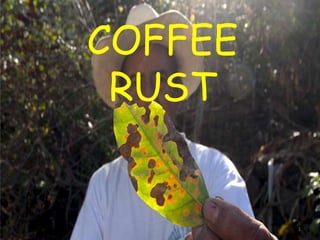
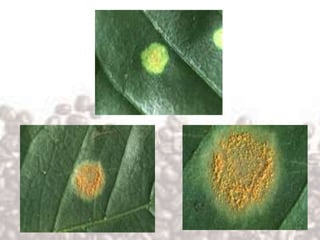
SYMPTOMS
• Small, pale yellow spots on the upper surfaces of
the leaves
• Gradually increase in diameter, masses of orange
urediniospores appear on the undersurfaces
• The fungus sporulates through the stomata
rather than breaking through the epidermis as
most rusts do
• Does not form the pustules typical of many rusts
• The powdery lesions on the undersides of the
leaves can be orange-yellow to red-orange in
colour
17
18
• While the lesions can develop on the leaf, they
tend to be concentrated around the margins
• The centers of the spots eventually dry and turn
brown, while the margins of the lesions continue
to expand and produce urediniospores
• Early in the season, the first lesions usually
appear on the lowermost leaves, and the
infection slowly progresses upward in the tree
• The infected leaves drop prematurely, leaving
long expanses of twigs devoid of leaves
19
20
Urediniospores
21
Hump-backed shape and
the conspicuously
roughened walls with a
distinct smooth area
• The dustlike spores easily carried on luggage,
people, plants, or airplanes that continuously
move between the continents
• Eradication of infected trees has failed to
eliminate the parasite, and the fungus has slowly
spread throughout the coffee-growing areas,
moving into Colombia and the countries of
Central America
• Recorded in India in 1870, Sumatra in 1876, Java
in 1878, and the Philippines in 1889
22
EPIDEMICS
• During 1913 it crossed the African continent from
Kenya to the Cong
• Ivory Coast (1954), Liberia (1955), Nigeria (1962–
63) and Angola (1966)
• In 1970 coffee rust was discovered in Brazil
• It is not completely clear how the fungus arrived
in Brazil, but intercontinental movement of the
rust spores from coffee plantations in East Africa
is a likely means 23
• Severe outbreaks were seen in Costa Rica in
1989 and Nicaragua in 1995
• In 2012 there was a major increase in coffee
rust across ten Latin American and Caribbean
countries
24
25
ECONOMIC IMPACT
• Estimates of yield loss vary by country and can
range anywhere between 15-80%. Worldwide
loss is estimated at 15%
• In 1870, Ceylon was exporting 100 million
pounds (45 million kilograms) of coffee per year
• By 1889, production was down to 5 million
pounds (2.3 million kilograms)
26
27
28

Coffee rust

  • 1.
  • 2.
    Systematic position • Class:Basidiomycetes • Order: Uredinales • Family: Pucciniaceae • Hemileia - half smooth characteristic of the spores • vastatrix - the devastating nature of the disease 2
  • 3.
    History… • The Dutchwere the first major European coffee importers • Ceylon (now Sri Lanka), Java, and Sumatra • During Napoleon's time, much of the coffee- producing area was lost by the Dutch to the English 3
  • 4.
    • In 1825,the British began development of their property in Ceylon • By 1870, Ceylon was the world's greatest producer of coffee • In 1875, nearly 400,000 acres (160,000 hectares) were covered with coffee trees 4
  • 5.
    • Most importantcoffee disease in the world • The fungal parasite probably arose in southern Ethiopia • It was reported first by a British explorer from regions of Kenya around Lake Victoria in 1861 from where it is believed to have spread to Asia and the Americas 5
  • 6.
    DISCOVERY • First recordedby - Reverend H. J. Berkeley and Mr. Broome • Who was sent a collection from the Royal Botanical Gardens at Peradenija • Berkeley believed this to be a new species and named it Hemileia vastatrix and published it in November 1869 -Gardeners Chronicle 6
  • 7.
  • 8.
    • At thistime it had affected three acres of coffee plants • Berkeley suggested immediate application of sulfur • Would be difficult to combat once it had been allowed to spread 8
  • 9.
    • In fiveyears the coffee-leaf disease had spread over the whole island and no plantation was free of the disease • By this time the disease had spread to Southern India and Malaysia and was menacing the entire coffee industry in the East 9
  • 10.
    SPREAD • No effectivechemical fungicides were available to protect the foliage • The fungus was able to colonize the leaves until nearly all the trees were defoliated • The spores produced on the leaves are quite resistant to desiccation • They easily moved through the acres of coffee trees, feasting on the banquet prepared by unsuspecting plantation owners 10
  • 11.
    DANIEL MORRIS • Nottrained in mycology and had little understanding of fungi • The superficial fungal growth that could be observed on the coffee plant was eliminated by sulfur and that the diseased plants looked better • This effect was temporary and the disease soon returned 11
  • 12.
    H. MARSHALL WARD •Was sent to Ceylon by the British government to save the coffee plantations • Even though he failed, he presented the infant science of plant pathology with two important concepts that are still fundamental to plant protection 12
  • 13.
    FINDINGS • Studied thelife cycle of the rust fungus • Germinating spores represented a vulnerable stage for attack • To effectively protect the plant from invasion, fungicides should be present as a protective coating on the leaves before the spores arrived • Once infection had occurred, the hyphae inside the leaf tissue were no longer vulnerable to the fungicide 13
  • 14.
    • Ward alsowarned about the dangers of monoculture • Observed that the continuous plantings of coffee trees over the island had created a perfect environment for a fungus epidemic • He found no less than 51 different fungal spores on the coffee plant which he was able to germinate and grow on a sugar gelatin substrate 14
  • 15.
    • The actualcoffee rust was largely an internal parasite that grew through the stomata of the leaves • Sudden spread when the plantation owners carved out their estate, they cut down many of the tall trees that would have sheltered them from the Monsoon winds and the rust spores that were disseminated as well • Spraying of sulfur during the germination of the urediospore 15
  • 16.
  • 17.
    SYMPTOMS • Small, paleyellow spots on the upper surfaces of the leaves • Gradually increase in diameter, masses of orange urediniospores appear on the undersurfaces • The fungus sporulates through the stomata rather than breaking through the epidermis as most rusts do • Does not form the pustules typical of many rusts • The powdery lesions on the undersides of the leaves can be orange-yellow to red-orange in colour 17
  • 18.
  • 19.
    • While thelesions can develop on the leaf, they tend to be concentrated around the margins • The centers of the spots eventually dry and turn brown, while the margins of the lesions continue to expand and produce urediniospores • Early in the season, the first lesions usually appear on the lowermost leaves, and the infection slowly progresses upward in the tree • The infected leaves drop prematurely, leaving long expanses of twigs devoid of leaves 19
  • 20.
  • 21.
    Urediniospores 21 Hump-backed shape and theconspicuously roughened walls with a distinct smooth area
  • 22.
    • The dustlikespores easily carried on luggage, people, plants, or airplanes that continuously move between the continents • Eradication of infected trees has failed to eliminate the parasite, and the fungus has slowly spread throughout the coffee-growing areas, moving into Colombia and the countries of Central America • Recorded in India in 1870, Sumatra in 1876, Java in 1878, and the Philippines in 1889 22
  • 23.
    EPIDEMICS • During 1913it crossed the African continent from Kenya to the Cong • Ivory Coast (1954), Liberia (1955), Nigeria (1962– 63) and Angola (1966) • In 1970 coffee rust was discovered in Brazil • It is not completely clear how the fungus arrived in Brazil, but intercontinental movement of the rust spores from coffee plantations in East Africa is a likely means 23
  • 24.
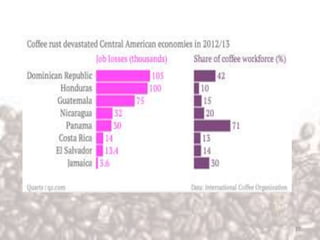
    • Severe outbreakswere seen in Costa Rica in 1989 and Nicaragua in 1995 • In 2012 there was a major increase in coffee rust across ten Latin American and Caribbean countries 24
  • 25.
  • 26.
    ECONOMIC IMPACT • Estimatesof yield loss vary by country and can range anywhere between 15-80%. Worldwide loss is estimated at 15% • In 1870, Ceylon was exporting 100 million pounds (45 million kilograms) of coffee per year • By 1889, production was down to 5 million pounds (2.3 million kilograms) 26
  • 27.
  • 28.