KHAIRA DISEASE OF RICE
STUDENT COURSE TEACHER
Krishna Kumar.R.V Dr.Parthasarathy.S
ID.NO:2015021066 Asst.Prof.,(Plant Pathology)
Disease Name:
Khaira disease of rice.
Causal agent:
• This disease occurs due to zinc deficiency.
• It is a non-parasitic and non-infectious disease.
History:
• First diagnosed in rice (Oryza sativa) on calcareous
soils of Tarai region of Uttar Pradesh of India (Nene,
1966).
• Widespread phenomenon in lowland rice growing
areas of Asia, next to nitrogen (N) and phosphorus (P)
deficiency.
• Yield loss may upto 25%.
Distribution:
• Neutral and calcareous soils.
• Intensively cropped soils.
• Poorly drained soils.
• Coarse textured soils.
• Soils with high available Phosphorus (P) and Silicon
(Si) status.
• Soils with a small concentration of Potassium (K),
Magnesium (Mg) and Calcium (Ca).
Role of zinc in plants:
• Zinc is an essential plant nutrient required for several
biochemical processes in the rice plant, including
chlorophyll production and membrane integrity.
• Zn deficiencies affect plant color and turgor.
• Zn is only slightly mobile in the plant and quite
immobile in soil.
Favorable conditions:
• Small amount of available Zn in the soil.
• Plants varieties are susceptible to Zn deficiency
(i.e., Zn-inefficient cultivars).
• Zn is precipitated as sparingly soluble Zn(OH)2 when
pH increases in soil.
• Depressed Zn uptake because of an increase in Fe,
Ca, Mg, Cu, Mn and P contents in soil after flooding.
• Formation of Zn-phosphates when large applications
of phosphatic fertilizer.
• Formation of complexes between Zn and organic
matter in soils because of large applications of
organic manures and crop residues.
• High magnesium (Mg) to Calcium (Ca) ratio.
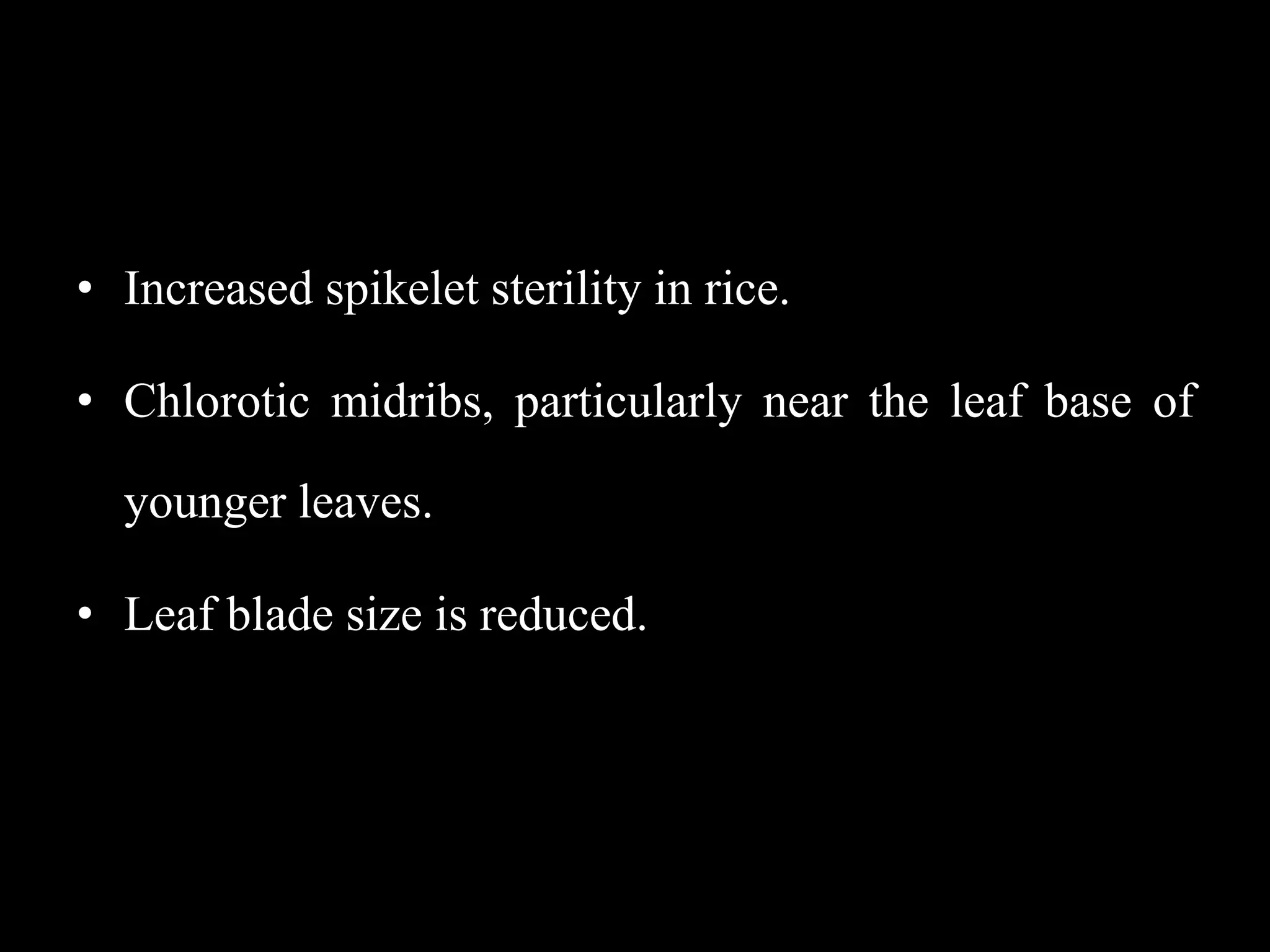
Symptoms:
• Symptoms appear both in nursery and in mainfield
between two to four weeks after transplanting.
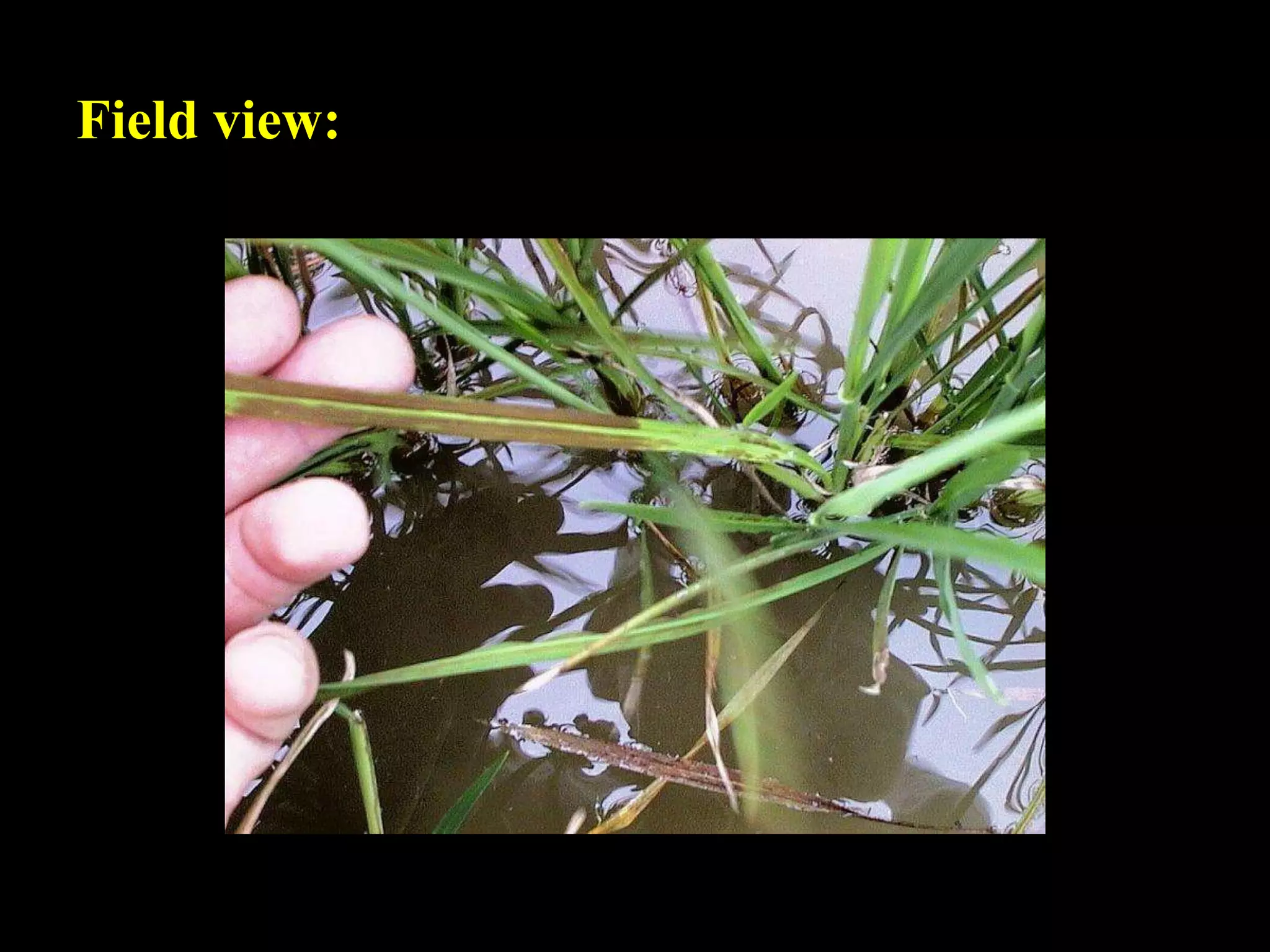
• Dusty brown spots on upper leaves of stunted plants.
• Uneven plant growth.
• Patches of poorly established hills in the field.
• Increased spikelet sterility in rice.
• Chlorotic midribs, particularly near the leaf base of
younger leaves.
• Leaf blade size is reduced.
Symptoms:
TNAU Agritech Portel
Field view:
TNAU Agritech Portel
Management:
• Grow Zn-efficient varieties.
• Use fertilizers that generate acidity (e.g., replace
some urea with ammonium sulphate).
• Apply organic manure before seeding in nursery or
transplanting of rice in mainfield.
• Monitor irrigation water quality.
• Broadcast ZnSo4 in nursery seedbed 5 days before
pulling out of seedlings.
• Dip seedlings or presoak seeds in a 2−4% ZnO
suspension.
• Zinc sulphate 25-30 kg/ha as soil application at the
time of puddling.
• Mix 5 kg ZnSo4 + 2.5 kg slaked lime + 1000 liters
water and sprayed it on 10 and 20 days after sowing
in nursery.

Khaira diease of rice

  • 1.
    KHAIRA DISEASE OFRICE STUDENT COURSE TEACHER Krishna Kumar.R.V Dr.Parthasarathy.S ID.NO:2015021066 Asst.Prof.,(Plant Pathology)
  • 2.
    Disease Name: Khaira diseaseof rice. Causal agent: • This disease occurs due to zinc deficiency. • It is a non-parasitic and non-infectious disease.
  • 3.
    History: • First diagnosedin rice (Oryza sativa) on calcareous soils of Tarai region of Uttar Pradesh of India (Nene, 1966). • Widespread phenomenon in lowland rice growing areas of Asia, next to nitrogen (N) and phosphorus (P) deficiency. • Yield loss may upto 25%.
  • 4.
    Distribution: • Neutral andcalcareous soils. • Intensively cropped soils. • Poorly drained soils. • Coarse textured soils. • Soils with high available Phosphorus (P) and Silicon (Si) status. • Soils with a small concentration of Potassium (K), Magnesium (Mg) and Calcium (Ca).
  • 5.
    Role of zincin plants: • Zinc is an essential plant nutrient required for several biochemical processes in the rice plant, including chlorophyll production and membrane integrity. • Zn deficiencies affect plant color and turgor. • Zn is only slightly mobile in the plant and quite immobile in soil.
  • 6.
    Favorable conditions: • Smallamount of available Zn in the soil. • Plants varieties are susceptible to Zn deficiency (i.e., Zn-inefficient cultivars). • Zn is precipitated as sparingly soluble Zn(OH)2 when pH increases in soil. • Depressed Zn uptake because of an increase in Fe, Ca, Mg, Cu, Mn and P contents in soil after flooding.
  • 7.
    • Formation ofZn-phosphates when large applications of phosphatic fertilizer. • Formation of complexes between Zn and organic matter in soils because of large applications of organic manures and crop residues. • High magnesium (Mg) to Calcium (Ca) ratio.
  • 8.
    Symptoms: • Symptoms appearboth in nursery and in mainfield between two to four weeks after transplanting. • Dusty brown spots on upper leaves of stunted plants. • Uneven plant growth. • Patches of poorly established hills in the field.
  • 9.
    • Increased spikeletsterility in rice. • Chlorotic midribs, particularly near the leaf base of younger leaves. • Leaf blade size is reduced.
  • 10.
  • 11.
  • 12.
  • 13.
    Management: • Grow Zn-efficientvarieties. • Use fertilizers that generate acidity (e.g., replace some urea with ammonium sulphate). • Apply organic manure before seeding in nursery or transplanting of rice in mainfield. • Monitor irrigation water quality.
  • 14.
    • Broadcast ZnSo4in nursery seedbed 5 days before pulling out of seedlings. • Dip seedlings or presoak seeds in a 2−4% ZnO suspension. • Zinc sulphate 25-30 kg/ha as soil application at the time of puddling. • Mix 5 kg ZnSo4 + 2.5 kg slaked lime + 1000 liters water and sprayed it on 10 and 20 days after sowing in nursery.