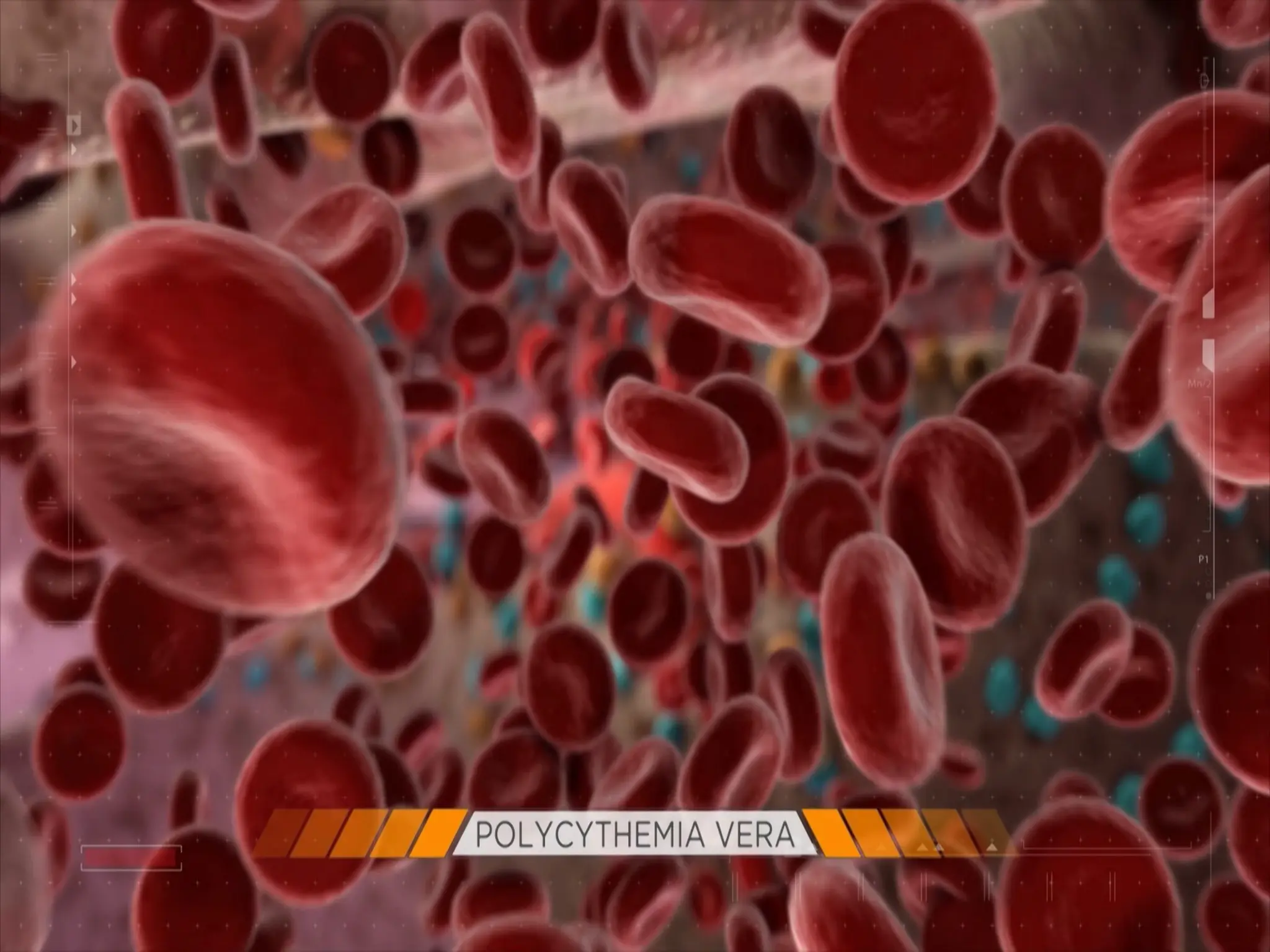
ERYTHROCYTOSIS
( POLYCYTHEMIA )
Presenter : Ghida mohammed monasar
Supervisor : prof. Abdullah al-alimi
Definition of Erythrocytosis
 Is over production of red blood cells (RBCs)
 Is increase in number of red blood cells and
increase in hemoglobin concentration upper
then normal ranges
 Hematocrit reach more then 60 - 65 %
 is the term used to refer to an increased
concentration of erythrocytes
(erythrocytosis) in the circulating blood that
is above normal for gender and age
Classification of Erythrocytosis
 1-Relative erythrocytosis ( relative
polycythemia)
 2-Absolute erythrocytosis ( absolute
polycythemia ) contains two types :
A- primary erythrocytosis (polycythemia
vera) ( low EPO )
B- Secondary erythrocytosis ( secondary
polycythemia ) ( high EPO )
Classification of Erythrocytosis
Relative Erythrocytosis
 Apparent polycythaemia
 Pseudopolycythaemia
 Gaisbock Syndrome (Stress Polycythemia)
 Spurious polycythemia
 Charactrized by (Normal red cell mass *
normal packed cell volume (hematocrit)*
but decreased in volume of plasma
 Causes duo to Dehydration (vomiting ,
diarrhea , fluid shift , burns, and others …)
Secondary Erythrocytosis
 State of increase red blood cells with normal
plasma volume
 Causes :
 A- duo to Hypoxia : ( low O2 ) with decreased
oxygen saturation lead to increased erythropoietin
as high altitude, chronic obstructive pulmonary
disease and heavy smoking.
 B- duo to Neoplasms : (pathologic production of
erythropoietin):
 renal cell carcinoma, hepatocellular carcinoma
and haemangioblastoma
Polycythemia vera ( PV )
 Polycythaemia rubra vera :
is one of myeloproliferative neoplasm ( over
production in B.M ) characterised by clonal
proliferation of trilineage over produaction
( erythroid ,granulocytic and megakaryocytic)
 hyperplasia in bone marrow with
predominant involvement of erythroid
series erythrocytosis
 ( increased red cell don’t dependent of
erythropoietin.)
The WHO classification of myeloproliferative
neoplasms (MPN) is presented :
 1. Chronic myelogenous leukemia (CML)
 2. Chronic neutrophilic leukemia (CNL)
 3. Polycythaemia vera (PV)
 4. myelofibrosis (MF)
 5. Essential thrombocythemia (ET)
 6. Chronic eosinophilc leukemia (CEL)
 7. chronic myelomonocytic leukemia (CMML)
 8. Myeloproliferative neoplasm, unclassifiable
Genetic problem of Polycythemia vera
 PV happen duo to JAK2 V617F a somatic mutation in
blood myeloid cells on chromosome band 9p24
 (Point mutation in which replaces guanine with thymine
at exon 14 of the gene, which changes the amino acid at
position 617 from valine to phenylalanine JAK2 V617F)
 Normally, JAK2 molecules Janus kinase 2 ( regulating gene ) are
associated with cytoplasmic domains of cell surface receptors
(e.g. erythropoietin receptors). After binding of ligand to its
receptor, the receptor-associated JAKs get phosphorylated and in
turn activate or phosphorylate tyrosine residues in receptor
cytoplasmic tail. Activation of various pathways and signalling
proteins send signals for survival, proliferation, and differentiation
of erythroid progenitors
 Role of JAK2V617F
Epidemiology of PV
 PV is uncommon disease
 The prevalence of PV has 22 case per 100,000 of
people.
 PV varies by country, with Japan reporting 2 cases
per million, Australia and Europe 13 cases per
million, and the United States averaging 8 to 10
cases per million
 The prevalence of PV in Egypt is 34.1 % of PV and
( 65.9% other PH negative MPN as ET and MF )
 Investigation of 11 case with PV from 78 carried out
MPN in Saudi Arabia
Incidence of PV
 usually a disease of older people
Occurring between 50 and 60 years of
age.
 Males are affected more commonly then
female with 2:1 ratio
 PV rarely occurs in children
 more often in whites than blacks
Clinical Features and symptoms
 There are two phases of PV:
 A) Proliferative or Polycythemic Phase:
 1.increase blood volume and dilatation of blood vessels
 Engorged and congestion
neck veins and plethoric face
 Blurring of vision
and congestion of conjunctiva
 Hypertension and heart failure
 Gout
 Engorged organs
Hepatosplenomegaly
 2.increase blood viscosity
 Thrombosis
 Erythromelalgia
(painful and burning
of hands and feet)
 Slow thinking and
vertigo duo to slow circulation , decrease blood flow
 Diminish platelets funaction * bleeding epistaxis and
gastrointestinal bleeding
3-Increase basophils
 Release histamine , sever itching
increased by warm bath
 peptic ulcer
 B) Spent Phase: progressive phase
 massive splenomegaly
 bone marrow fibrosis with peripheral
blood pancytopenia
 increase risk to leukemic transformation
specially AML
lab investigation of PV
 Complete blood count ( CBC ) show :
 Increase RBCs count 7 -10 × 1012
/ L are
common when patients with this disease are
first evaluated, and values as high as 12 -15 ×
1012
/ L have been recorded
 Increase HB approximately 18- 24 g/dL
 mild to moderate Increase WBCs count of 13
– 15 x109
L
 Increase platelet count of (500 – 1000 x 109
L
)
 Increase hematocrit approximately 60-65%
Peripheral Blood film Examination
- Red cells are normocytic and normochromic
- Mild to moderate leucocytosis with shift to left up
to myelocyte stage. Basophils, eosinophil and
monocytes increased.
- Platelet count is increased
Bone Marrow Examination
-bone marrow aspiration smears show hypercellular marrow with
trilineage hyperplasia especially involving erythroid series
-Megakaryocytes are increased and often occur in clusters and show
abnormal morphology such as giant forms
- With progression of the disease marked to myelofibrosis develops
(fibre network )
Other Investigations
 Normal arterial O2 saturation
 Decrease erythropoietin level
 Increase vit B12 duo to increase
transcobalamine
 Increase uric acid duo to turnover of cells
 Increase leukocyte alkaline phosphatase
.
Investigation Special
 1-Detection of JAK2V617F or JAK2 on exon
12 mutations by molecular tech such as PCR
Special investigation
 2-Spontaneous or endogenous erythroid
colony Erythroid Colony Culture (ECC)
in vitro tech without added erythropoietin
on erythroid progenitor cells permit the
study of their responsiveness to
erythropoietin
Diagnostic criteria
 Criteria for diagnosis of polycythaemia vera by World Health
Organization (2008) require presence of 2 major plus one minor OR
first major and two minor criteria given below
Criteria update for diagnosis of polycythaemia vera by WHO
(2016)
Course and Prognosis
 Without treatment patients with PV have a median
survival of about 18 months with death occurring
most commonly from thrombotic complications
(myocardial infarction, stroke, venous
thrombosis ).
 With recent modes of therapy, survival is
approximately 10 to 15 years
 Transformation to acute myeloid leukemia occurs
in about 5% of patients of PV
Treatment
 Phlebotomy repeated venesection to
decrease the number of RBC and decrease
blood viscosity
 Hydroxyurea * myelosuppressant * to
suppress the hyperactivity of bone marrow
 Aspirin for avoid thrombosis and
erythromelalgia
 Allopurinol and rasburicase to decrease
blood pressure and uric acid
 Antihistaminics to diminish pruritus
Can you get a blood transfusion
form polycythemic vera person ?
References
 1- Shirish M Kawthalkar , 2013 . Essentials of HAEMATOLOGY
, Jaypee . SECOND EDITION
 2- Mary L. Turgeon & Associates , Clinical Hematology Theory
and Procedures . Lippincott Williams. Fifth Edition
 3-A. Victor Hoffbrand , Hoffbrand’s Essential Haematology ,
Wiley-Blackwell . Seventh edition
 4-Marshall A. Lichtman, MD, Williams Manual of
Hematology, Ninth Edition . McGraw-Hill Education.
 5-www.mayoclinic proceeding .com polycythemia vera
comrehensive review and clinical recommendation
 6- www.national library of medicine .org
 Elaine M , catherine N , 2020 . Rodaks hematology ,
Elsevier .sixth edition
 Mervat M , Ashraf E , osama A . Myeloproliferative neoplasm in
Egypt , multicenter epidmiological study .
 Mamdooh G , fatin A , Farid A .Jack2 mutation in MPN and
treatments for Saudi patients .

Erythrocytosis (Polycythemia),,Ghidaa.pptx

  • 1.
    ERYTHROCYTOSIS ( POLYCYTHEMIA ) Presenter: Ghida mohammed monasar Supervisor : prof. Abdullah al-alimi
  • 2.
    Definition of Erythrocytosis Is over production of red blood cells (RBCs)  Is increase in number of red blood cells and increase in hemoglobin concentration upper then normal ranges  Hematocrit reach more then 60 - 65 %  is the term used to refer to an increased concentration of erythrocytes (erythrocytosis) in the circulating blood that is above normal for gender and age
  • 3.
    Classification of Erythrocytosis 1-Relative erythrocytosis ( relative polycythemia)  2-Absolute erythrocytosis ( absolute polycythemia ) contains two types : A- primary erythrocytosis (polycythemia vera) ( low EPO ) B- Secondary erythrocytosis ( secondary polycythemia ) ( high EPO )
  • 4.
  • 5.
    Relative Erythrocytosis  Apparentpolycythaemia  Pseudopolycythaemia  Gaisbock Syndrome (Stress Polycythemia)  Spurious polycythemia  Charactrized by (Normal red cell mass * normal packed cell volume (hematocrit)* but decreased in volume of plasma  Causes duo to Dehydration (vomiting , diarrhea , fluid shift , burns, and others …)
  • 6.
    Secondary Erythrocytosis  Stateof increase red blood cells with normal plasma volume  Causes :  A- duo to Hypoxia : ( low O2 ) with decreased oxygen saturation lead to increased erythropoietin as high altitude, chronic obstructive pulmonary disease and heavy smoking.  B- duo to Neoplasms : (pathologic production of erythropoietin):  renal cell carcinoma, hepatocellular carcinoma and haemangioblastoma
  • 9.
    Polycythemia vera (PV )  Polycythaemia rubra vera : is one of myeloproliferative neoplasm ( over production in B.M ) characterised by clonal proliferation of trilineage over produaction ( erythroid ,granulocytic and megakaryocytic)  hyperplasia in bone marrow with predominant involvement of erythroid series erythrocytosis  ( increased red cell don’t dependent of erythropoietin.)
  • 10.
    The WHO classificationof myeloproliferative neoplasms (MPN) is presented :  1. Chronic myelogenous leukemia (CML)  2. Chronic neutrophilic leukemia (CNL)  3. Polycythaemia vera (PV)  4. myelofibrosis (MF)  5. Essential thrombocythemia (ET)  6. Chronic eosinophilc leukemia (CEL)  7. chronic myelomonocytic leukemia (CMML)  8. Myeloproliferative neoplasm, unclassifiable
  • 11.
    Genetic problem ofPolycythemia vera  PV happen duo to JAK2 V617F a somatic mutation in blood myeloid cells on chromosome band 9p24  (Point mutation in which replaces guanine with thymine at exon 14 of the gene, which changes the amino acid at position 617 from valine to phenylalanine JAK2 V617F)  Normally, JAK2 molecules Janus kinase 2 ( regulating gene ) are associated with cytoplasmic domains of cell surface receptors (e.g. erythropoietin receptors). After binding of ligand to its receptor, the receptor-associated JAKs get phosphorylated and in turn activate or phosphorylate tyrosine residues in receptor cytoplasmic tail. Activation of various pathways and signalling proteins send signals for survival, proliferation, and differentiation of erythroid progenitors
  • 12.
     Role ofJAK2V617F
  • 13.
    Epidemiology of PV PV is uncommon disease  The prevalence of PV has 22 case per 100,000 of people.  PV varies by country, with Japan reporting 2 cases per million, Australia and Europe 13 cases per million, and the United States averaging 8 to 10 cases per million  The prevalence of PV in Egypt is 34.1 % of PV and ( 65.9% other PH negative MPN as ET and MF )  Investigation of 11 case with PV from 78 carried out MPN in Saudi Arabia
  • 14.
    Incidence of PV usually a disease of older people Occurring between 50 and 60 years of age.  Males are affected more commonly then female with 2:1 ratio  PV rarely occurs in children  more often in whites than blacks
  • 15.
    Clinical Features andsymptoms  There are two phases of PV:  A) Proliferative or Polycythemic Phase:  1.increase blood volume and dilatation of blood vessels  Engorged and congestion neck veins and plethoric face  Blurring of vision and congestion of conjunctiva  Hypertension and heart failure  Gout  Engorged organs Hepatosplenomegaly
  • 16.
     2.increase bloodviscosity  Thrombosis  Erythromelalgia (painful and burning of hands and feet)  Slow thinking and vertigo duo to slow circulation , decrease blood flow  Diminish platelets funaction * bleeding epistaxis and gastrointestinal bleeding
  • 17.
    3-Increase basophils  Releasehistamine , sever itching increased by warm bath  peptic ulcer
  • 18.
     B) SpentPhase: progressive phase  massive splenomegaly  bone marrow fibrosis with peripheral blood pancytopenia  increase risk to leukemic transformation specially AML
  • 19.
    lab investigation ofPV  Complete blood count ( CBC ) show :  Increase RBCs count 7 -10 × 1012 / L are common when patients with this disease are first evaluated, and values as high as 12 -15 × 1012 / L have been recorded  Increase HB approximately 18- 24 g/dL  mild to moderate Increase WBCs count of 13 – 15 x109 L  Increase platelet count of (500 – 1000 x 109 L )  Increase hematocrit approximately 60-65%
  • 20.
    Peripheral Blood filmExamination - Red cells are normocytic and normochromic - Mild to moderate leucocytosis with shift to left up to myelocyte stage. Basophils, eosinophil and monocytes increased. - Platelet count is increased
  • 21.
    Bone Marrow Examination -bonemarrow aspiration smears show hypercellular marrow with trilineage hyperplasia especially involving erythroid series -Megakaryocytes are increased and often occur in clusters and show abnormal morphology such as giant forms - With progression of the disease marked to myelofibrosis develops (fibre network )
  • 22.
    Other Investigations  Normalarterial O2 saturation  Decrease erythropoietin level  Increase vit B12 duo to increase transcobalamine  Increase uric acid duo to turnover of cells  Increase leukocyte alkaline phosphatase .
  • 23.
    Investigation Special  1-Detectionof JAK2V617F or JAK2 on exon 12 mutations by molecular tech such as PCR
  • 24.
    Special investigation  2-Spontaneousor endogenous erythroid colony Erythroid Colony Culture (ECC) in vitro tech without added erythropoietin on erythroid progenitor cells permit the study of their responsiveness to erythropoietin
  • 25.
    Diagnostic criteria  Criteriafor diagnosis of polycythaemia vera by World Health Organization (2008) require presence of 2 major plus one minor OR first major and two minor criteria given below
  • 26.
    Criteria update fordiagnosis of polycythaemia vera by WHO (2016)
  • 28.
    Course and Prognosis Without treatment patients with PV have a median survival of about 18 months with death occurring most commonly from thrombotic complications (myocardial infarction, stroke, venous thrombosis ).  With recent modes of therapy, survival is approximately 10 to 15 years  Transformation to acute myeloid leukemia occurs in about 5% of patients of PV
  • 29.
    Treatment  Phlebotomy repeatedvenesection to decrease the number of RBC and decrease blood viscosity  Hydroxyurea * myelosuppressant * to suppress the hyperactivity of bone marrow  Aspirin for avoid thrombosis and erythromelalgia  Allopurinol and rasburicase to decrease blood pressure and uric acid  Antihistaminics to diminish pruritus
  • 31.
    Can you geta blood transfusion form polycythemic vera person ?
  • 32.
    References  1- ShirishM Kawthalkar , 2013 . Essentials of HAEMATOLOGY , Jaypee . SECOND EDITION  2- Mary L. Turgeon & Associates , Clinical Hematology Theory and Procedures . Lippincott Williams. Fifth Edition  3-A. Victor Hoffbrand , Hoffbrand’s Essential Haematology , Wiley-Blackwell . Seventh edition  4-Marshall A. Lichtman, MD, Williams Manual of Hematology, Ninth Edition . McGraw-Hill Education.  5-www.mayoclinic proceeding .com polycythemia vera comrehensive review and clinical recommendation  6- www.national library of medicine .org  Elaine M , catherine N , 2020 . Rodaks hematology , Elsevier .sixth edition  Mervat M , Ashraf E , osama A . Myeloproliferative neoplasm in Egypt , multicenter epidmiological study .  Mamdooh G , fatin A , Farid A .Jack2 mutation in MPN and treatments for Saudi patients .