CODES AND
CONVENTIONS- FRONT
COVER
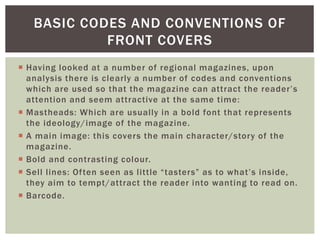
 Having looked at a number of regional magazines, upon
analysis there is clearly a number of codes and conventions
which are used so that the magazine can attract the reader’s
attention and seem attractive at the same time:
 Mastheads: Which are usually in a bold font that represents
the ideology/image of the magazine.
 A main image: this covers the main character/story of the
magazine.
 Bold and contrasting colour.
 Sell lines: Often seen as little “tasters” as to what’s inside,
they aim to tempt/attract the reader into wanting to read on.
 Barcode.
BASIC CODES AND CONVENTIONS OF
FRONT COVERS
BRIGHTON SOURCE MAGAZINE: ISSUE
NOVEMBER 2011
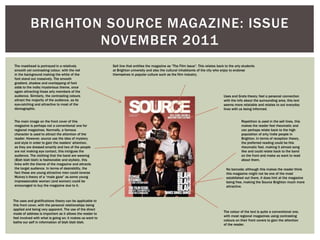
The masthead is portrayed in a relatively
smooth yet contrasting colour, with the red
in the background making the white of the
font stand out massively. The smooth
gradient, shadow and overlapping of font
adds to the indie/mysterious theme, once
again attracting those arty members of the
audience. Similarly, the contrasting colours
attract the majority of the audience, as its
eye-catching and attractive to most of the
demographic.
The main image on the front cover of this
magazine is perhaps not a conventional one for
regional magazines. Normally, a famous
character is used to attract the attention of the
reader. However, source use the idea of mystery
and style in order to gain the readers’ attention,
as they are dressed smartly and two of the people
are not making eye contact, this intrigues the
audience. The clothing that the band are wearing
(Blah blah blah) is fashionable and stylistic, this
links with the theme of the magazine and attracts
the target audience. In terms of desirability, the
fact these are young attractive men could reverse
Mulvey’s theory of a “male gaze” as some young
impressionable women (and women) could be
encouraged to buy the magazine due to it.
The uses and gratifications theory can be applicable to
this front cover, with the personal relationships being
applied and being very apparent. The use of the direct
mode of address is important as it allows the reader to
feel involved with what is going on; it makes us want to
bathe our self in information of blah blah blah.
The colour of the text is quite a conventional one,
with most regional magazines using contrasting
colours on their front covers to gain the attention
of the reader.
No barcode; although this makes the reader think
this magazine might not be one of the most
established out there, it does hint at the magazine
being free, making the Source Brighton much more
attractive.
Repetition is used in the sell lines, this
makes the reader feel rheumatic and
can perhaps relate back to the high
population of arty/indie people in
Brighton. In terms of reception theory,
the preferred reading could be this
rheumatic feel, making it almost song
like and could relate back to the band
on the front and make us want to read
about them.
Uses and Grats theory; feel a personal connection
with the info about the surrounding area, this text
seems more relatable and relates to out everyday
lives with us being informed.
Sell line that entitles the magazine as “The Film Issue”. This relates back to the arty students
at Brighton university and also the cultural inhabitants of the city who enjoy to endorse
themselves in popular culture such as the film industry.
ABSOLUTE BRIGHTON 100TH ISSUE-3RD
JUNE EDITION
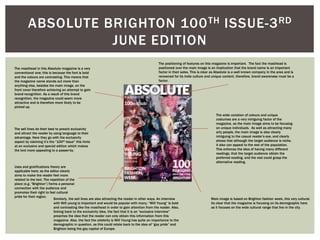
The masthead in this Absolute magazine is a very
conventional one; this is because the font is bold
and the colours are contrasting. This means that
the magazine name stands out more than
anything else, besides the main image, on the
front cover therefore achieving an attempt to gain
brand recognition. As a result of this brand
recognition, the magazine could seem more
attractive and is therefore more likely to be
picked up.
The sell lines do their best to preach exclusivity
and attract the reader by using language to their
advantage. Here they go with the exclusivity
aspect by claiming it’s the “100th Issue” this hints
at an exclusive and special edition which makes
the text more appealing to a passer-by.
Uses and gratifications theory are
applicable here; as the editor clearly
aims to make the reader feel more
related to the text. The repetition of the
place (e.g. “Brighton”) forms a personal
connection with the audience and
promotes their right to feel cultural
pride for their region.
Main image is based on Brighton fashion week, this very cultural.
Its clear that the magazine is focusing on its demographic here
as it focuses on the wide cultural range that live in the city.
Similarly, the sell lines are also attracting the reader in other ways. An interview
with Will young is important and would be popular with many, “Will Young” Is bold
and contrasting like the masthead in order to gain attention from the reader. Also,
linking back to the exclusivity idea, the fact that it is an “exclusive interview”
preaches the idea that the reader can only obtain this information from this
magazine. Also, the fact the celebrity is Will Young has quite an importance to the
demographic in question, as this could relate back to the idea of “gay pride” and
Brighton being the gay capital of Europe.
The wide variation of colours and unique
costumes are a very intriguing factor of the
magazine, as the main image aims to be focusing
on unique individuals. As well as attracting many
arty people, the main image is also clearly
intriguing to the casual reader’s eye, and clearly
shows that although the target audience is niche,
it also can appeal to the rest of the population.
This enforces the idea of having many different
readings, that the target audience obtain the
preferred reading, and the rest could grasp the
alternative reading.
The positioning of features on this magazine is important. The fact the masthead is
positioned over the main image is an implication that the brand name is an important
factor in their sales. This is clear as Absolute is a well known company in the area and is
renowned for its indie culture and unique content, therefore, brand awareness must be a
factor.
*INSERT IMAGE FROM SCHOOL HARD
DRIVE*
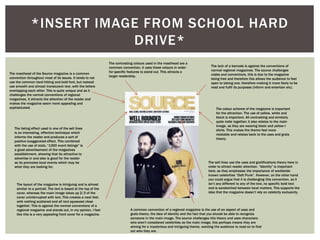
The masthead of the Source magazine is a common
convention throughout most of its issues. It tends to not
use the common hard hitting and bold font, but instead
use smooth and almost translucent text, with the letters
overlapping each other. This is quite unique and as it
challenges the normal conventions of regional
magazines, it attracts the attention of the reader and
makes the magazine seem more appealing and
sophisticated.
The contrasting colours used in the masthead are a
common convention, it uses these colours in order
for specific features to stand out. This attracts a
larger readership.
The listing effect used in one of the sell lines
is an interesting, effective technique which
informs the reader and produces a sort of
positive exaggerated effect. This combined
with the use of stats, “1300 event listings” is
a good advertisement of the magazines
establishment, showing that its attractive to
advertise in and also is good for the reader
as its promotes local events which may be
what they are looking for,
The layout of the magazine is intriguing and is almost
similar to a portrait. The text is based at the top of the
cover, whereas the main image takes up 2/3 of the
cover uninterrupted with text. This creates a neat feel,
with nothing scattered and all text squeezed close
together. This is against the normal conventions of a
regional magazine and stands out, in my opinion, I feel
like this is a very appealing front cover for a magazine.
A common convention of a regional magazine is the use of an aspect of uses and
grats theory; the idea of identity and the fact that you should be able to recognize
someone in the main image. The source challenges this theory and uses characters
who aren't considered celebrities as the main image, this perhaps means they are
aiming for a mysterious and intriguing theme, wanting the audience to read on to find
out who they are.
The sell lines use the uses and gratifications theory here in
order to attract reader attention. “Identity” is important
here, as they emphasise the importance of worldwide
known celebrities “Daft Punk”. However, on the other hand
you could argue that it is challenging this convention, as it
isn’t any different to any of the text, no specific bold text
and is sandwiched between local matters. This supports the
idea that the magazine doesn’t rely on celebrity exclusivity.
The colour scheme of the magazine is important
for the attraction. The use of yellow, white and
black is important. All contrasting and similarly
quite indie together; it also relates to the main
image, as they are wearing black and yellow t
shirts. This makes the theme feel more
relatable and relates back to the uses and grats
theory.
The lack of a barcode is against the conventions of
normal regional magazines. The source challenges
codes and conventions, this is due to the magazine
being free and therefore this allows the audience to feel
open to taking one, therefore making it more likely to be
read and fulfil its purposes (inform and entertain etc).

Codes and conventions front cover

  • 1.
  • 2.
     Having lookedat a number of regional magazines, upon analysis there is clearly a number of codes and conventions which are used so that the magazine can attract the reader’s attention and seem attractive at the same time:  Mastheads: Which are usually in a bold font that represents the ideology/image of the magazine.  A main image: this covers the main character/story of the magazine.  Bold and contrasting colour.  Sell lines: Often seen as little “tasters” as to what’s inside, they aim to tempt/attract the reader into wanting to read on.  Barcode. BASIC CODES AND CONVENTIONS OF FRONT COVERS
  • 3.
    BRIGHTON SOURCE MAGAZINE:ISSUE NOVEMBER 2011 The masthead is portrayed in a relatively smooth yet contrasting colour, with the red in the background making the white of the font stand out massively. The smooth gradient, shadow and overlapping of font adds to the indie/mysterious theme, once again attracting those arty members of the audience. Similarly, the contrasting colours attract the majority of the audience, as its eye-catching and attractive to most of the demographic. The main image on the front cover of this magazine is perhaps not a conventional one for regional magazines. Normally, a famous character is used to attract the attention of the reader. However, source use the idea of mystery and style in order to gain the readers’ attention, as they are dressed smartly and two of the people are not making eye contact, this intrigues the audience. The clothing that the band are wearing (Blah blah blah) is fashionable and stylistic, this links with the theme of the magazine and attracts the target audience. In terms of desirability, the fact these are young attractive men could reverse Mulvey’s theory of a “male gaze” as some young impressionable women (and women) could be encouraged to buy the magazine due to it. The uses and gratifications theory can be applicable to this front cover, with the personal relationships being applied and being very apparent. The use of the direct mode of address is important as it allows the reader to feel involved with what is going on; it makes us want to bathe our self in information of blah blah blah. The colour of the text is quite a conventional one, with most regional magazines using contrasting colours on their front covers to gain the attention of the reader. No barcode; although this makes the reader think this magazine might not be one of the most established out there, it does hint at the magazine being free, making the Source Brighton much more attractive. Repetition is used in the sell lines, this makes the reader feel rheumatic and can perhaps relate back to the high population of arty/indie people in Brighton. In terms of reception theory, the preferred reading could be this rheumatic feel, making it almost song like and could relate back to the band on the front and make us want to read about them. Uses and Grats theory; feel a personal connection with the info about the surrounding area, this text seems more relatable and relates to out everyday lives with us being informed. Sell line that entitles the magazine as “The Film Issue”. This relates back to the arty students at Brighton university and also the cultural inhabitants of the city who enjoy to endorse themselves in popular culture such as the film industry.
  • 4.
    ABSOLUTE BRIGHTON 100THISSUE-3RD JUNE EDITION The masthead in this Absolute magazine is a very conventional one; this is because the font is bold and the colours are contrasting. This means that the magazine name stands out more than anything else, besides the main image, on the front cover therefore achieving an attempt to gain brand recognition. As a result of this brand recognition, the magazine could seem more attractive and is therefore more likely to be picked up. The sell lines do their best to preach exclusivity and attract the reader by using language to their advantage. Here they go with the exclusivity aspect by claiming it’s the “100th Issue” this hints at an exclusive and special edition which makes the text more appealing to a passer-by. Uses and gratifications theory are applicable here; as the editor clearly aims to make the reader feel more related to the text. The repetition of the place (e.g. “Brighton”) forms a personal connection with the audience and promotes their right to feel cultural pride for their region. Main image is based on Brighton fashion week, this very cultural. Its clear that the magazine is focusing on its demographic here as it focuses on the wide cultural range that live in the city. Similarly, the sell lines are also attracting the reader in other ways. An interview with Will young is important and would be popular with many, “Will Young” Is bold and contrasting like the masthead in order to gain attention from the reader. Also, linking back to the exclusivity idea, the fact that it is an “exclusive interview” preaches the idea that the reader can only obtain this information from this magazine. Also, the fact the celebrity is Will Young has quite an importance to the demographic in question, as this could relate back to the idea of “gay pride” and Brighton being the gay capital of Europe. The wide variation of colours and unique costumes are a very intriguing factor of the magazine, as the main image aims to be focusing on unique individuals. As well as attracting many arty people, the main image is also clearly intriguing to the casual reader’s eye, and clearly shows that although the target audience is niche, it also can appeal to the rest of the population. This enforces the idea of having many different readings, that the target audience obtain the preferred reading, and the rest could grasp the alternative reading. The positioning of features on this magazine is important. The fact the masthead is positioned over the main image is an implication that the brand name is an important factor in their sales. This is clear as Absolute is a well known company in the area and is renowned for its indie culture and unique content, therefore, brand awareness must be a factor.
  • 5.
    *INSERT IMAGE FROMSCHOOL HARD DRIVE* The masthead of the Source magazine is a common convention throughout most of its issues. It tends to not use the common hard hitting and bold font, but instead use smooth and almost translucent text, with the letters overlapping each other. This is quite unique and as it challenges the normal conventions of regional magazines, it attracts the attention of the reader and makes the magazine seem more appealing and sophisticated. The contrasting colours used in the masthead are a common convention, it uses these colours in order for specific features to stand out. This attracts a larger readership. The listing effect used in one of the sell lines is an interesting, effective technique which informs the reader and produces a sort of positive exaggerated effect. This combined with the use of stats, “1300 event listings” is a good advertisement of the magazines establishment, showing that its attractive to advertise in and also is good for the reader as its promotes local events which may be what they are looking for, The layout of the magazine is intriguing and is almost similar to a portrait. The text is based at the top of the cover, whereas the main image takes up 2/3 of the cover uninterrupted with text. This creates a neat feel, with nothing scattered and all text squeezed close together. This is against the normal conventions of a regional magazine and stands out, in my opinion, I feel like this is a very appealing front cover for a magazine. A common convention of a regional magazine is the use of an aspect of uses and grats theory; the idea of identity and the fact that you should be able to recognize someone in the main image. The source challenges this theory and uses characters who aren't considered celebrities as the main image, this perhaps means they are aiming for a mysterious and intriguing theme, wanting the audience to read on to find out who they are. The sell lines use the uses and gratifications theory here in order to attract reader attention. “Identity” is important here, as they emphasise the importance of worldwide known celebrities “Daft Punk”. However, on the other hand you could argue that it is challenging this convention, as it isn’t any different to any of the text, no specific bold text and is sandwiched between local matters. This supports the idea that the magazine doesn’t rely on celebrity exclusivity. The colour scheme of the magazine is important for the attraction. The use of yellow, white and black is important. All contrasting and similarly quite indie together; it also relates to the main image, as they are wearing black and yellow t shirts. This makes the theme feel more relatable and relates back to the uses and grats theory. The lack of a barcode is against the conventions of normal regional magazines. The source challenges codes and conventions, this is due to the magazine being free and therefore this allows the audience to feel open to taking one, therefore making it more likely to be read and fulfil its purposes (inform and entertain etc).