
Cochlear Implantation Journey-
 candidacy to communication
      DR SHEELU SRINIVAS
    CONSULTANT ENT SURGEON
Cochlear Implant
• Bionic ear
• Hearing is the only special sense which is
  conquered
• Electronic device when implanted provides
  sense of sound
• The cochlear implant is the most significant
  technical advance in the treatment of hearing
  impairment since the development of the
  hearing aid around the turn of the century.
:
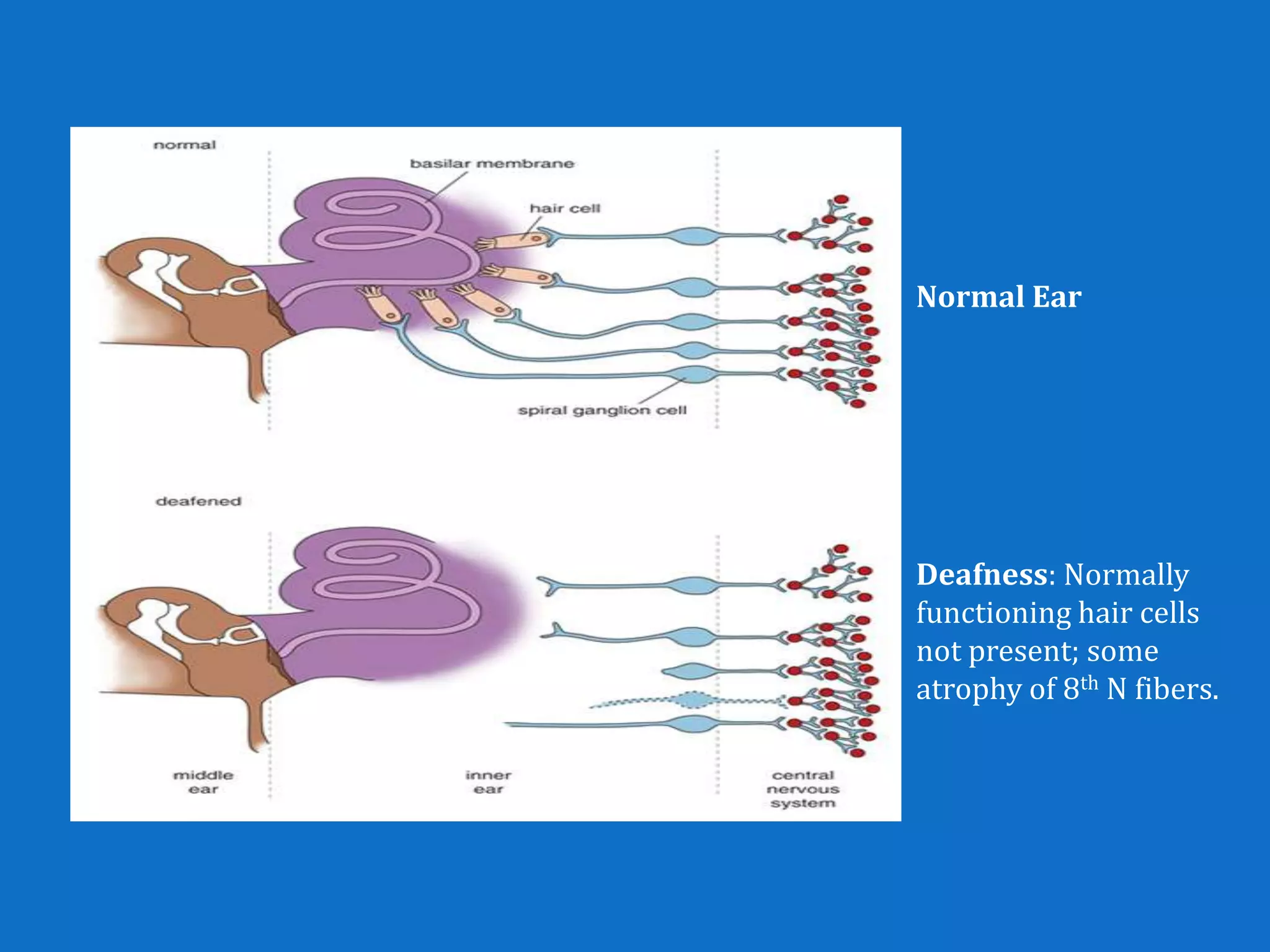
Normal Ear


Deafness: Normally
functioning hair cells
not present; some
atrophy of 8th N fibers.
What is the difference between CI &
            Hearing Aid?
• HA simply amplify sounds.CI on the other
  hand transforms speech sounds into
  electrical energy used to stimulate the
  surviving auditory nerve fibers in the inner
  ear.
• CI have internal & external parts & a
  surgical process is needed to place internal
  processor components
Candidacy
• Age: most important criteria
• Maximum Benefit in speech & language: in
  children born with bilateral sensorineural
  hearing loss is to be carried out before age
  of 3 years.
• Up to the age of 6 years good benefit
• Above 6 years limited benefit
2 groups
Pre lingual                Post lingual
• Lost hearing before      • Lost hearing after
  acquisition of speech      acquisition of speech
• Implant before 3 years   • Implant as soon as
• CEREBRAL PLASTICITY        possible
                           • Any age 6 months to 100
                             yrs
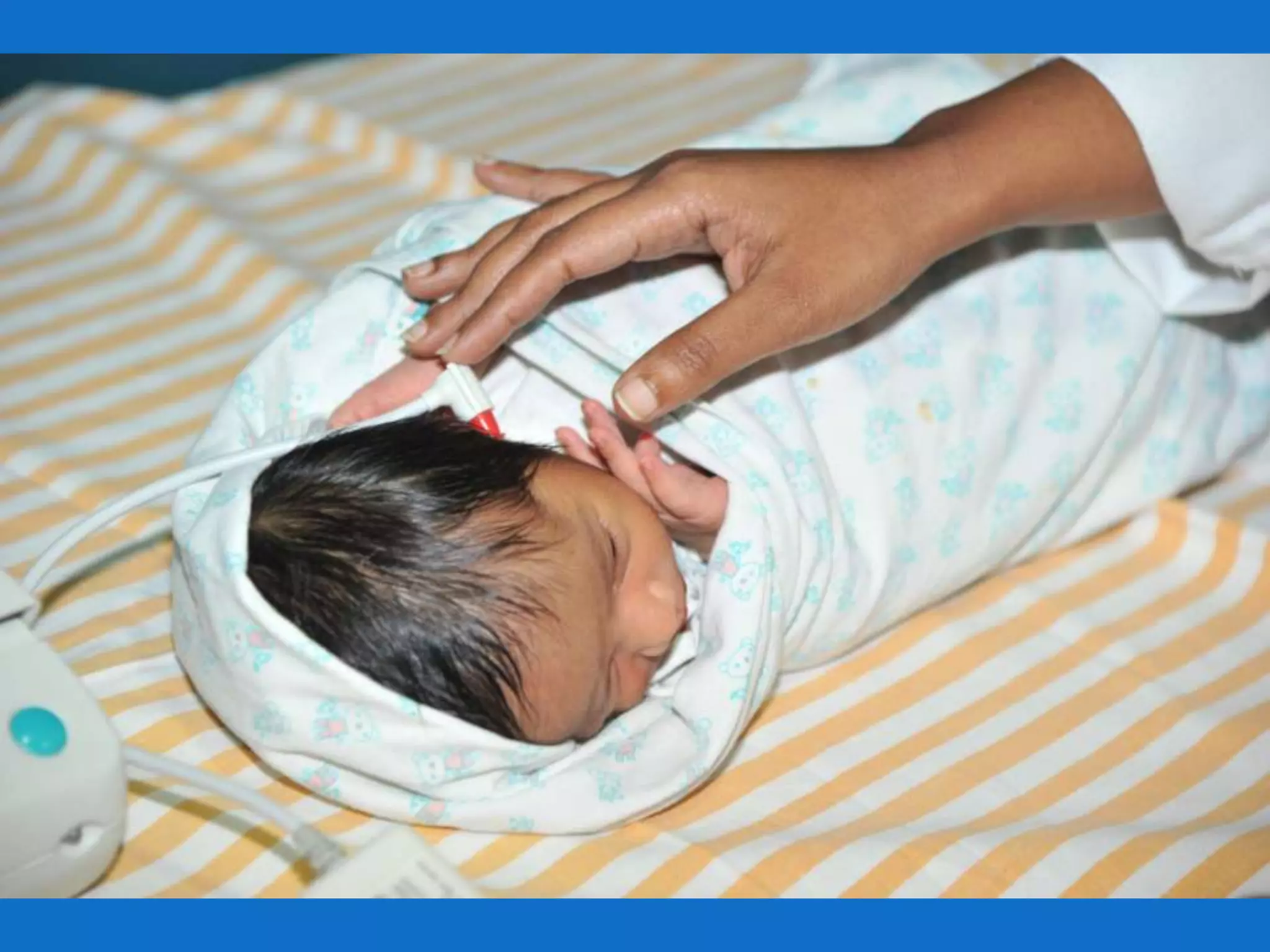
Newborn hearing screening
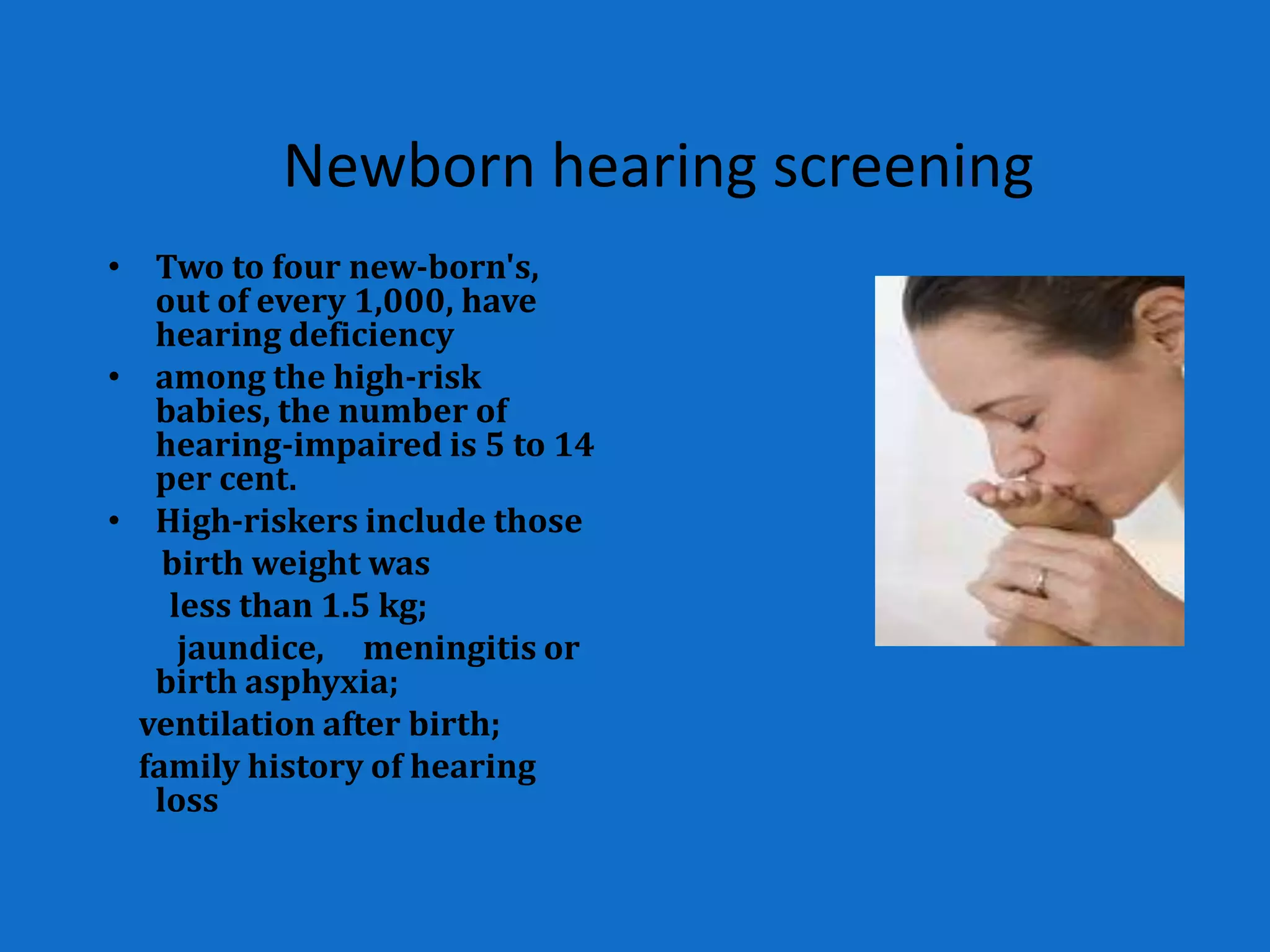
• Two to four new-born's,
   out of every 1,000, have
   hearing deficiency
• among the high-risk
   babies, the number of
   hearing-impaired is 5 to 14
   per cent.
• High-riskers include those
    birth weight was
    less than 1.5 kg;
     jaundice, meningitis or
   birth asphyxia;
  ventilation after birth;
  family history of hearing
   loss
Do we need a test?
• Initially, babies who are born with hearing loss do
  not look or behave any differently from babies
  who are hearing.
• However, undetected and untreated hearing loss
  has serious consequences on the acquisition of
  language skills as well as cognition and emotional
  and social development.
• The first 6 months of a baby’s life are very crucial
  for the development of speech and language.
Results
• Given immediately
• Either Pass/Refer
• Even though child passes if he is a high
  risker further assessment done
• Up to 3 years ,every 6 months
Audiological assessment
•   OAE-oto acoustic emission
•   ABR/BERA
•   Play Audiometry
•   Impedance audiometry
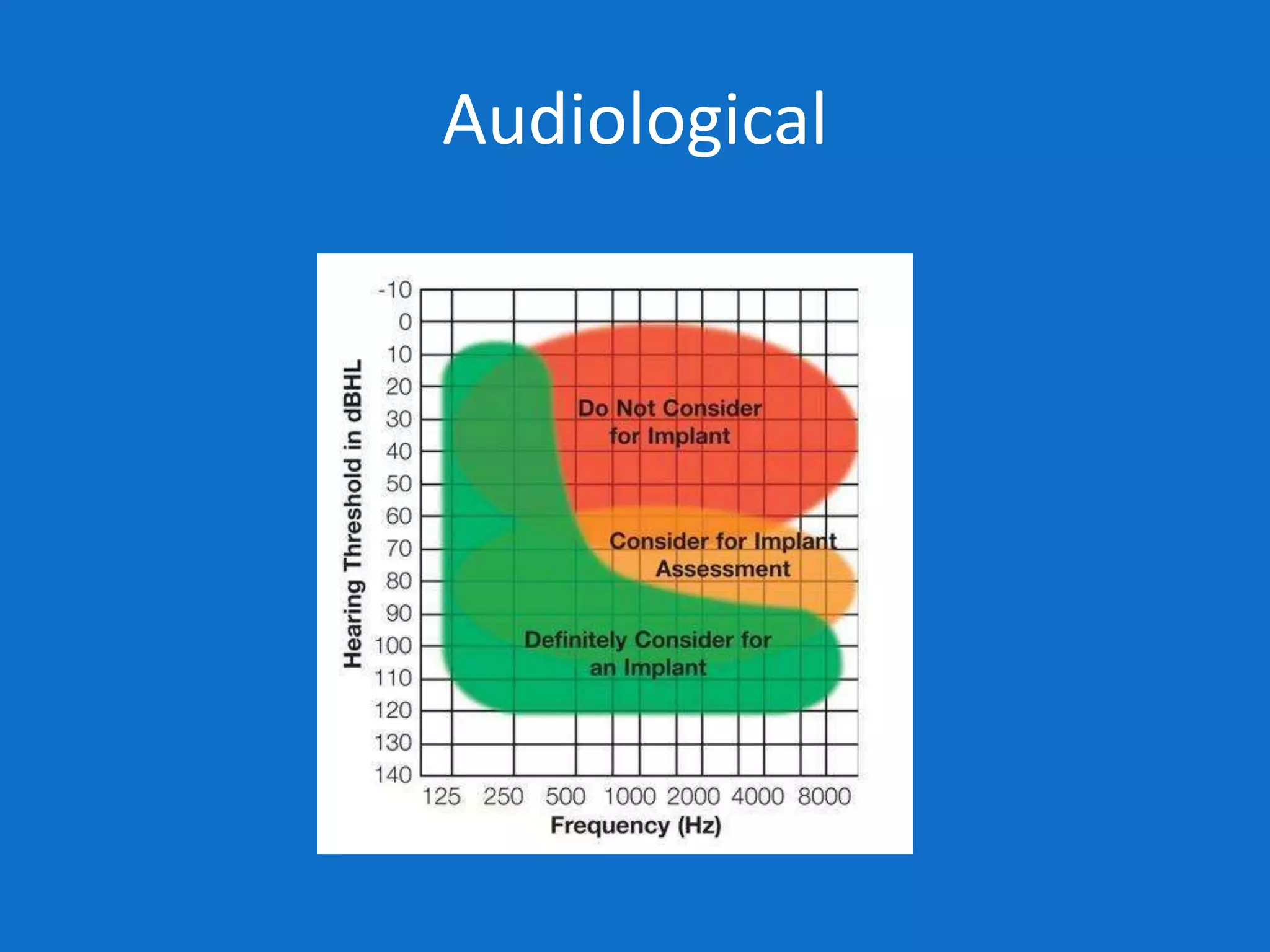
Audiological
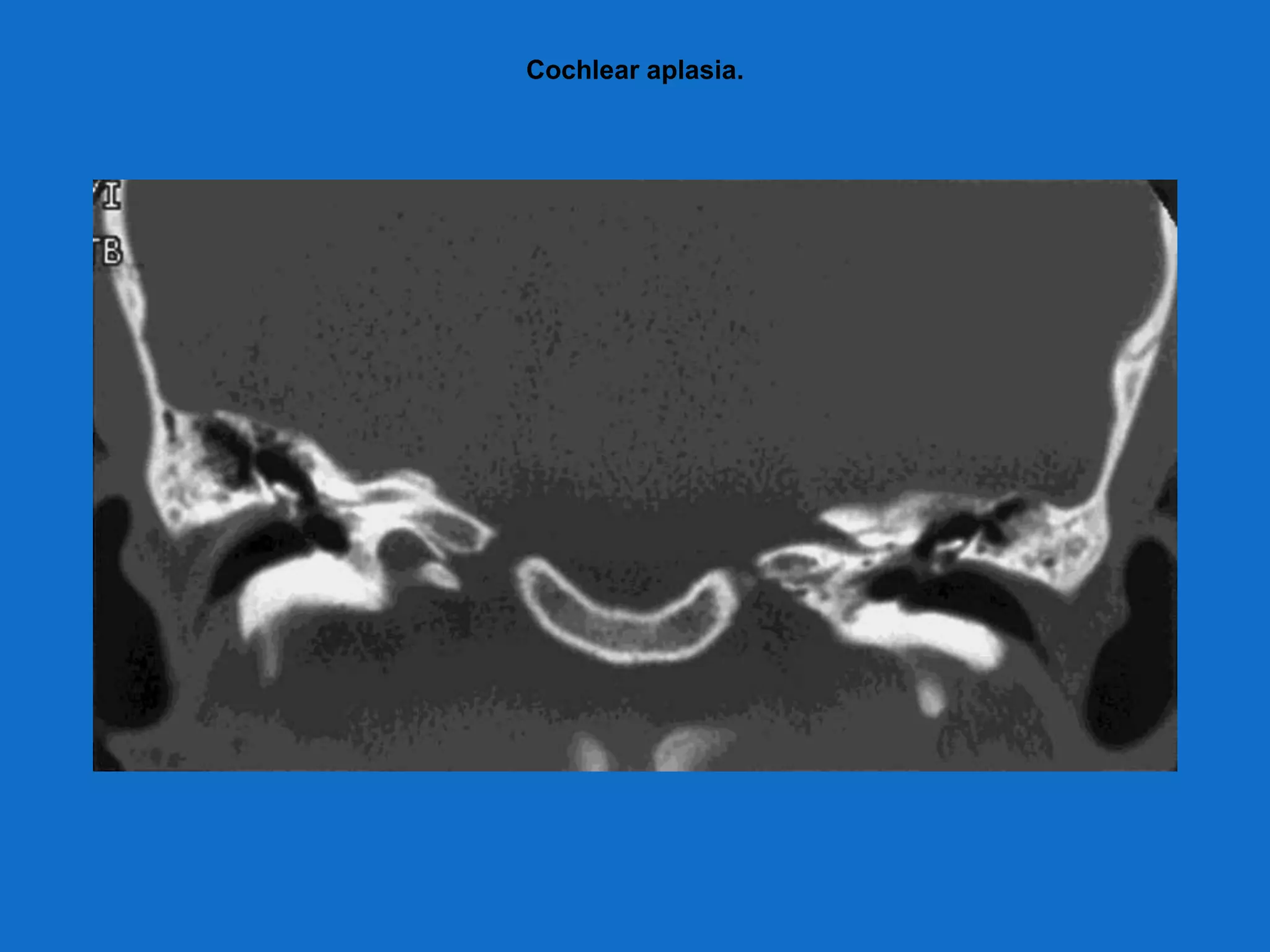
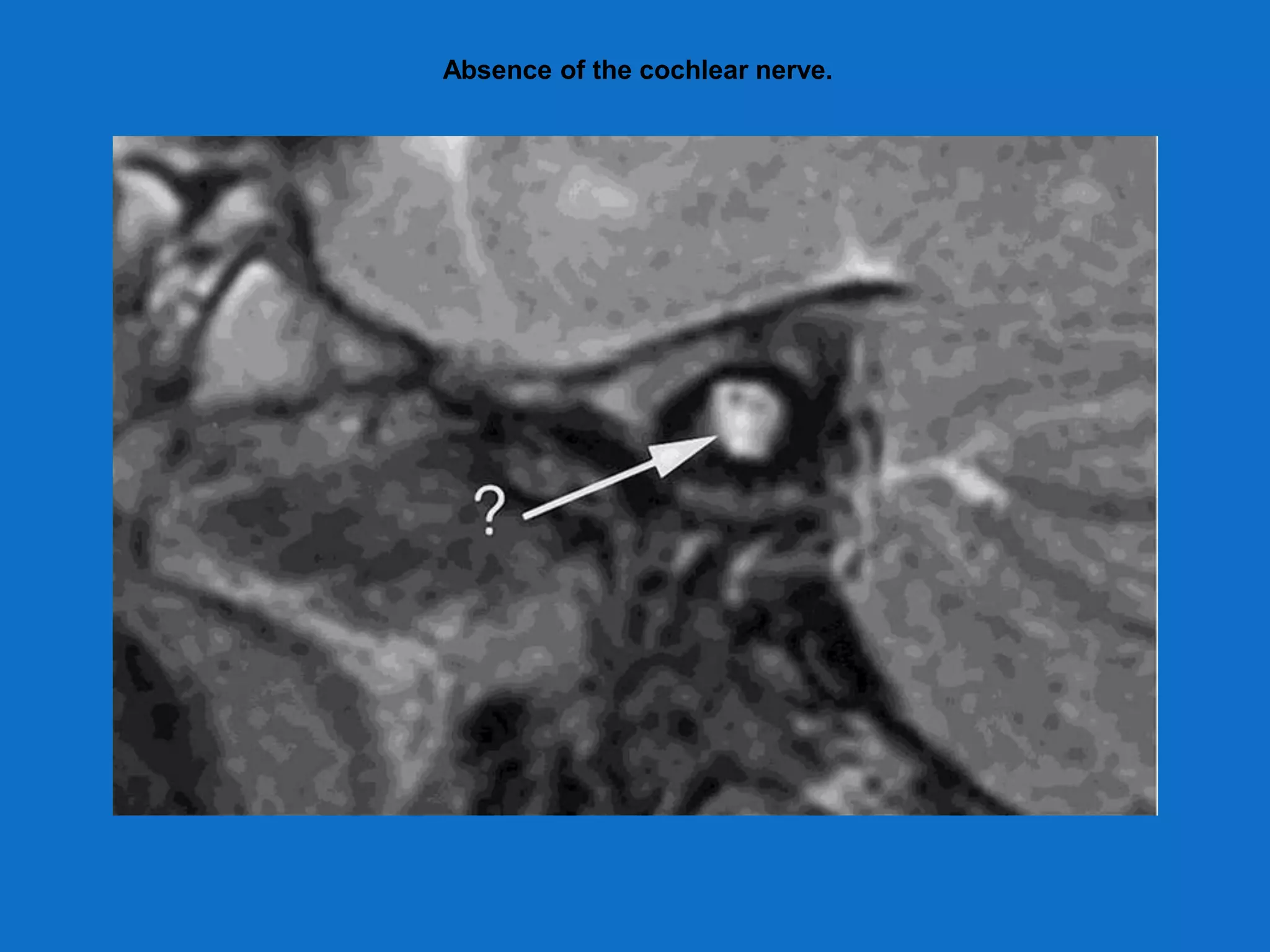
Radiology absolute requirements
• Presence of cochlea(either normal or
  malformed)
• Presence of auditory nerve
• Combination of CT/MRI is performed
Cochlear aplasia.
Absence of the cochlear nerve.
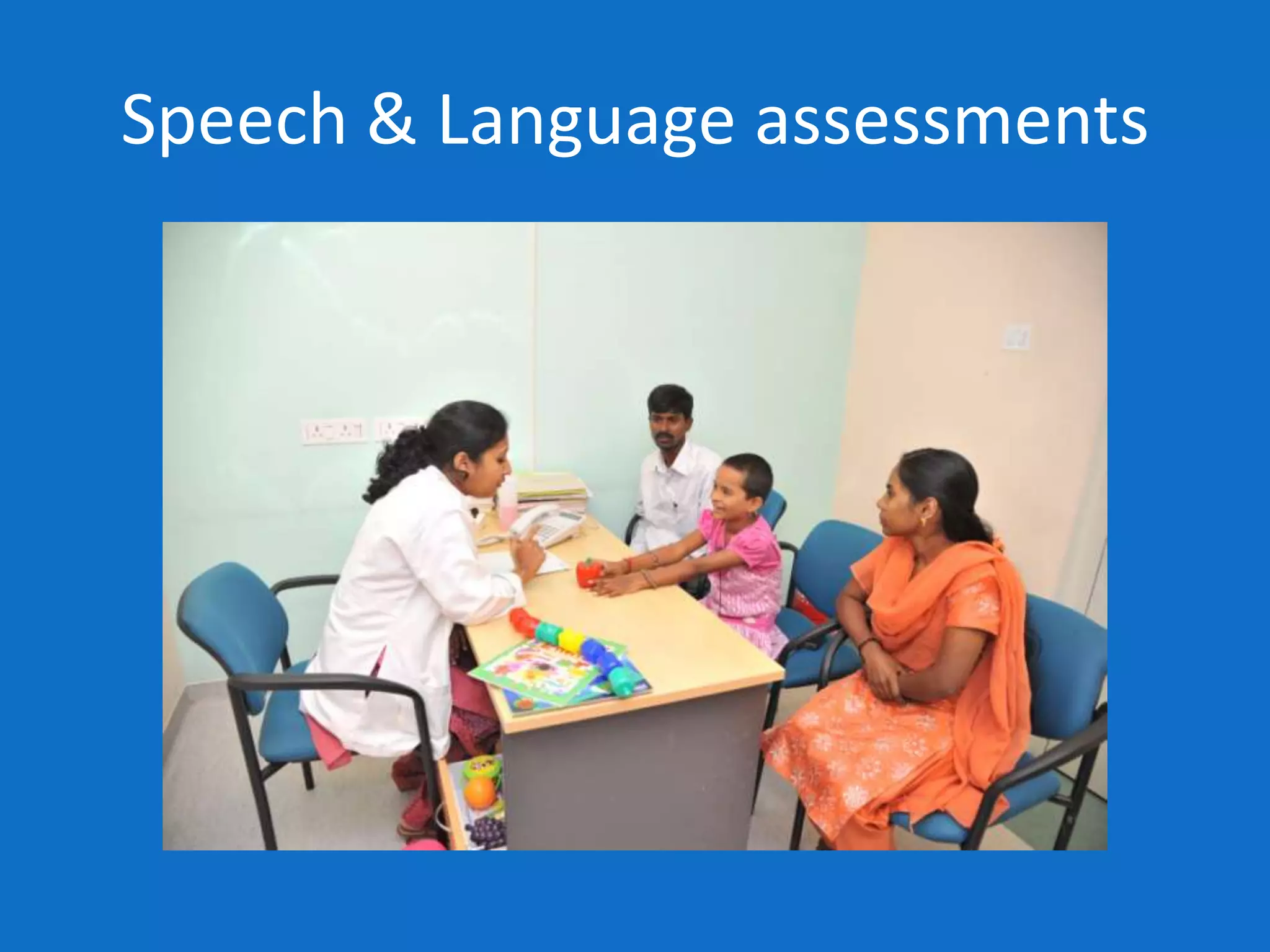
Speech & Language assessments
Psychological & IQ
Medical work up
•   Pediatric
•   Syndromes-Usher’s
•   Ophthalmology
•   Neurology
•   Psychology
•   Immunization:
    Prevenar(pneumococcal),Hib
Counseling/Expectations
• Factors affecting the performance of
  cochlear implantee
• Duration of deafness
• Age of onset of deafness
• Age at implantation
• Duration of hearing aid use
• Others: no. of surviving spiral ganglion cells,
  electrode placemt,signal processing strategy
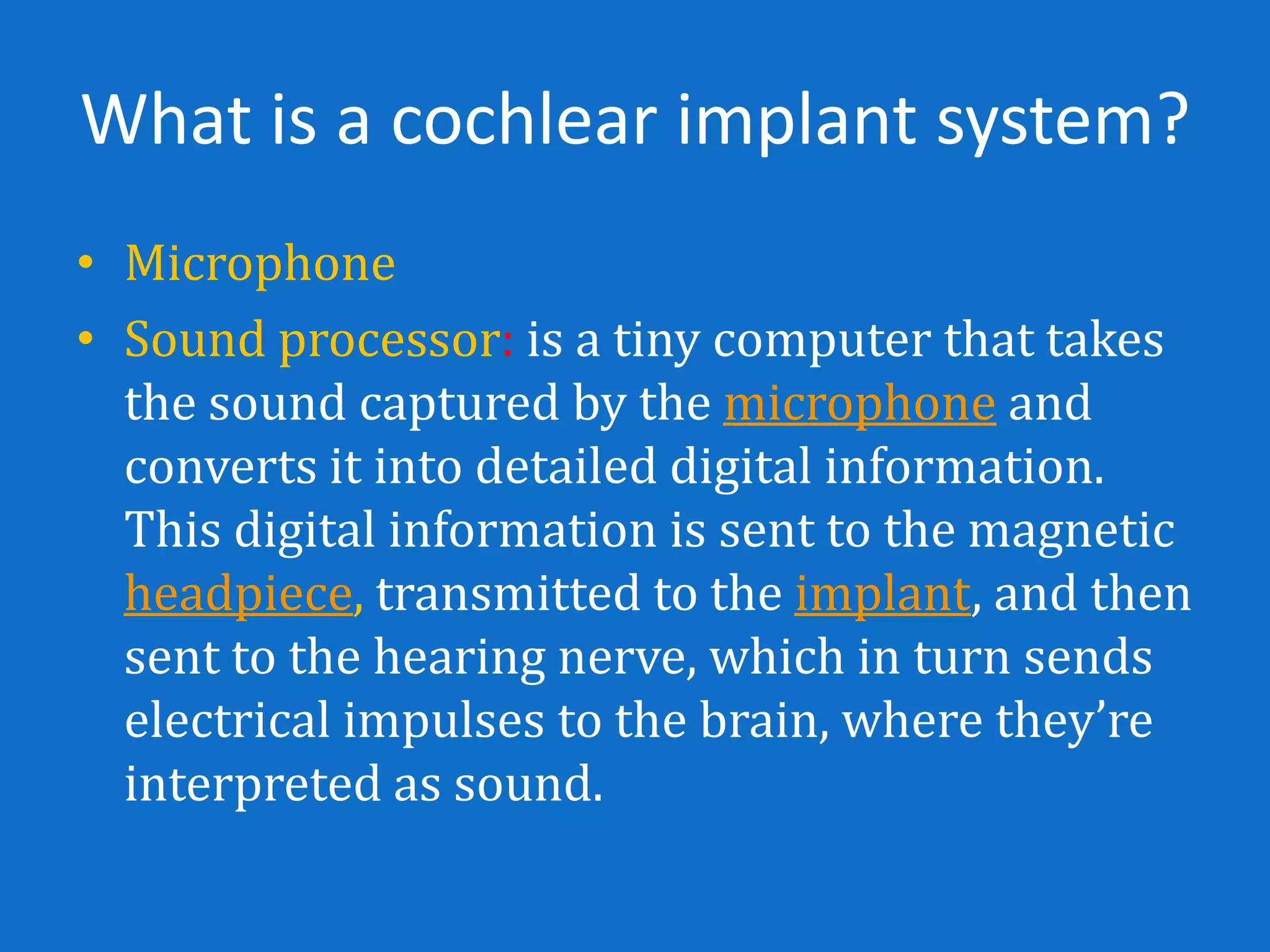
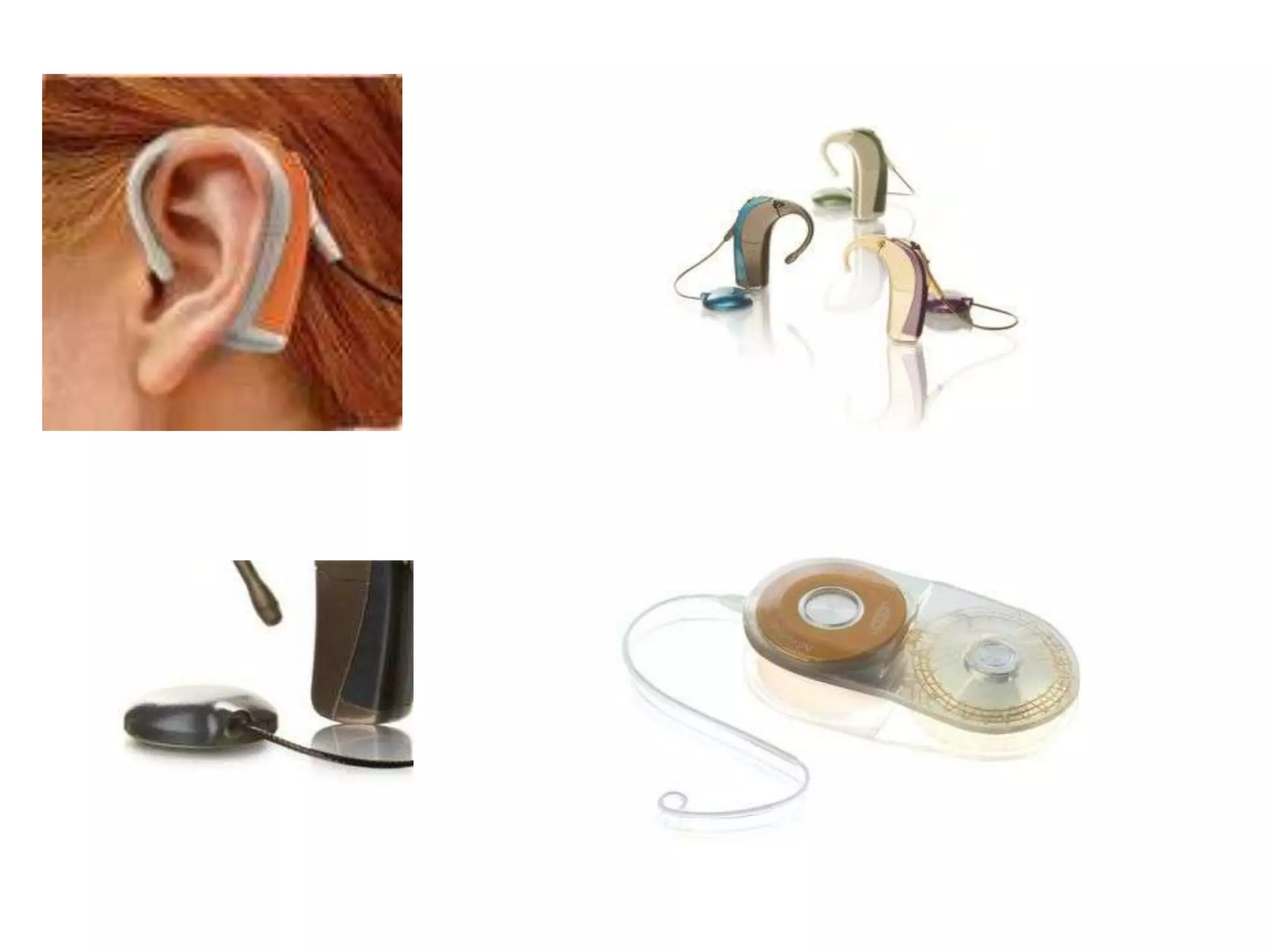
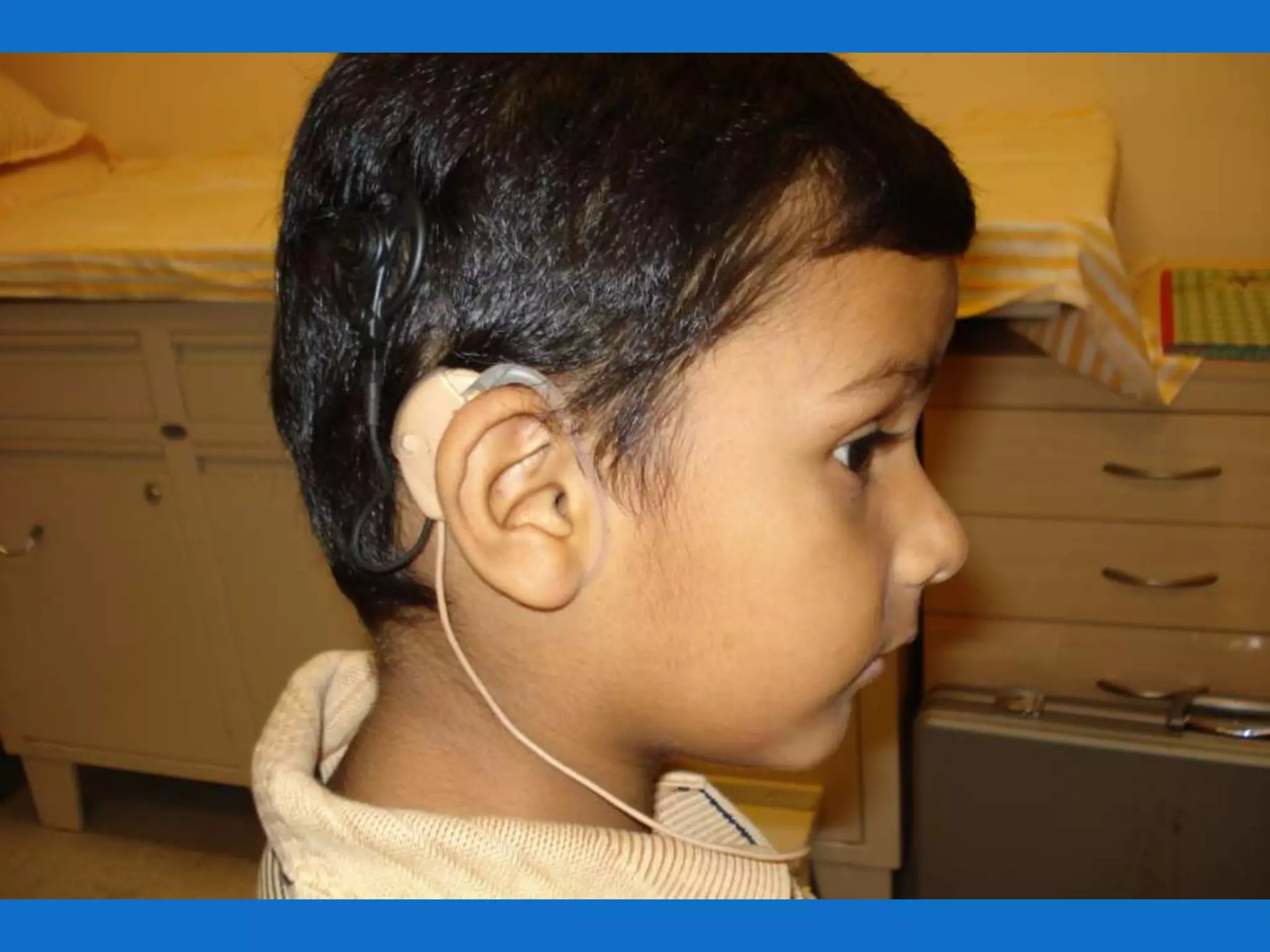
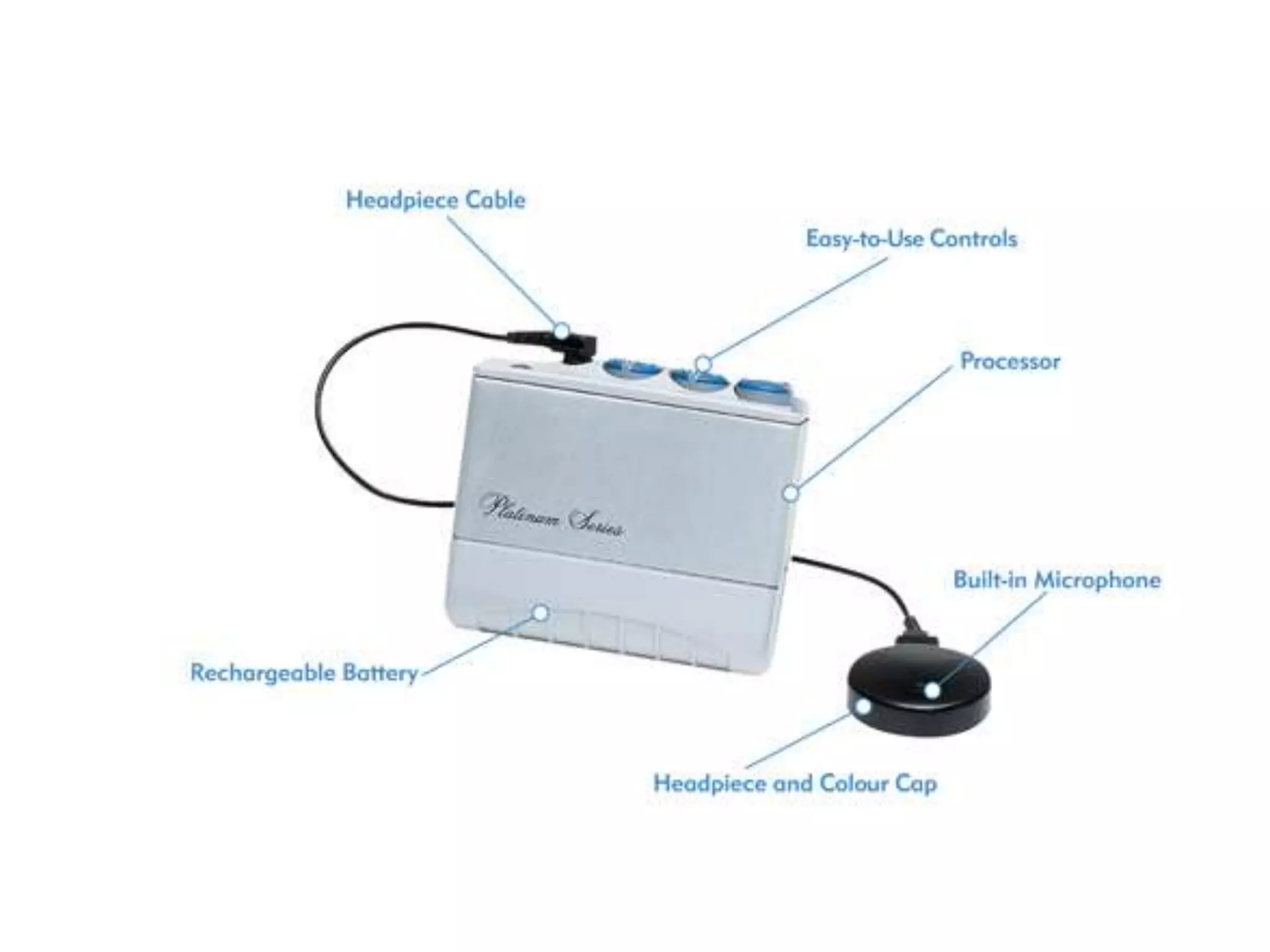
What is a cochlear implant system?
• Microphone
• Sound processor: is a tiny computer that takes
  the sound captured by the microphone and
  converts it into detailed digital information.
  This digital information is sent to the magnetic
  headpiece, transmitted to the implant, and then
  sent to the hearing nerve, which in turn sends
  electrical impulses to the brain, where they’re
  interpreted as sound.
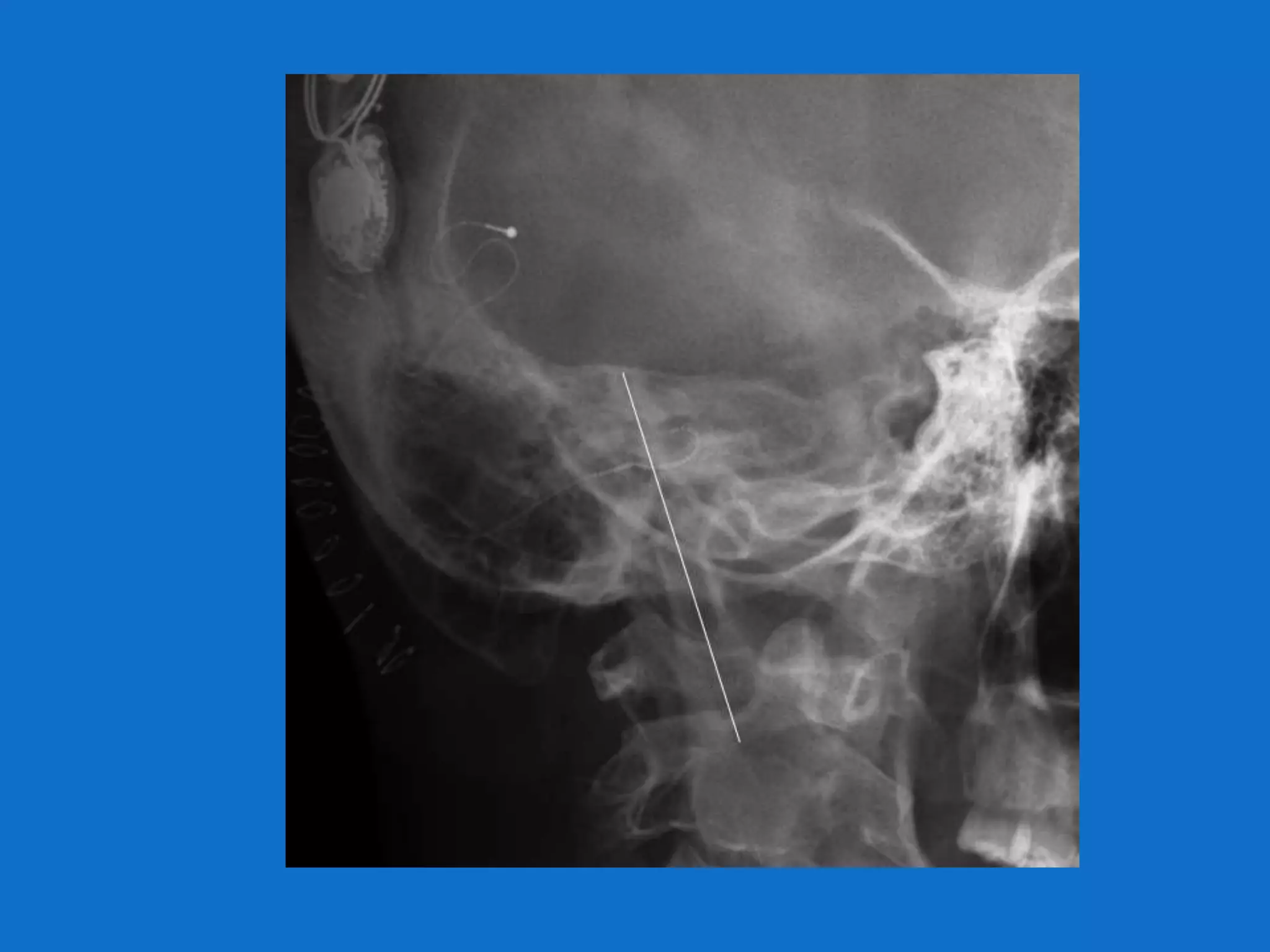
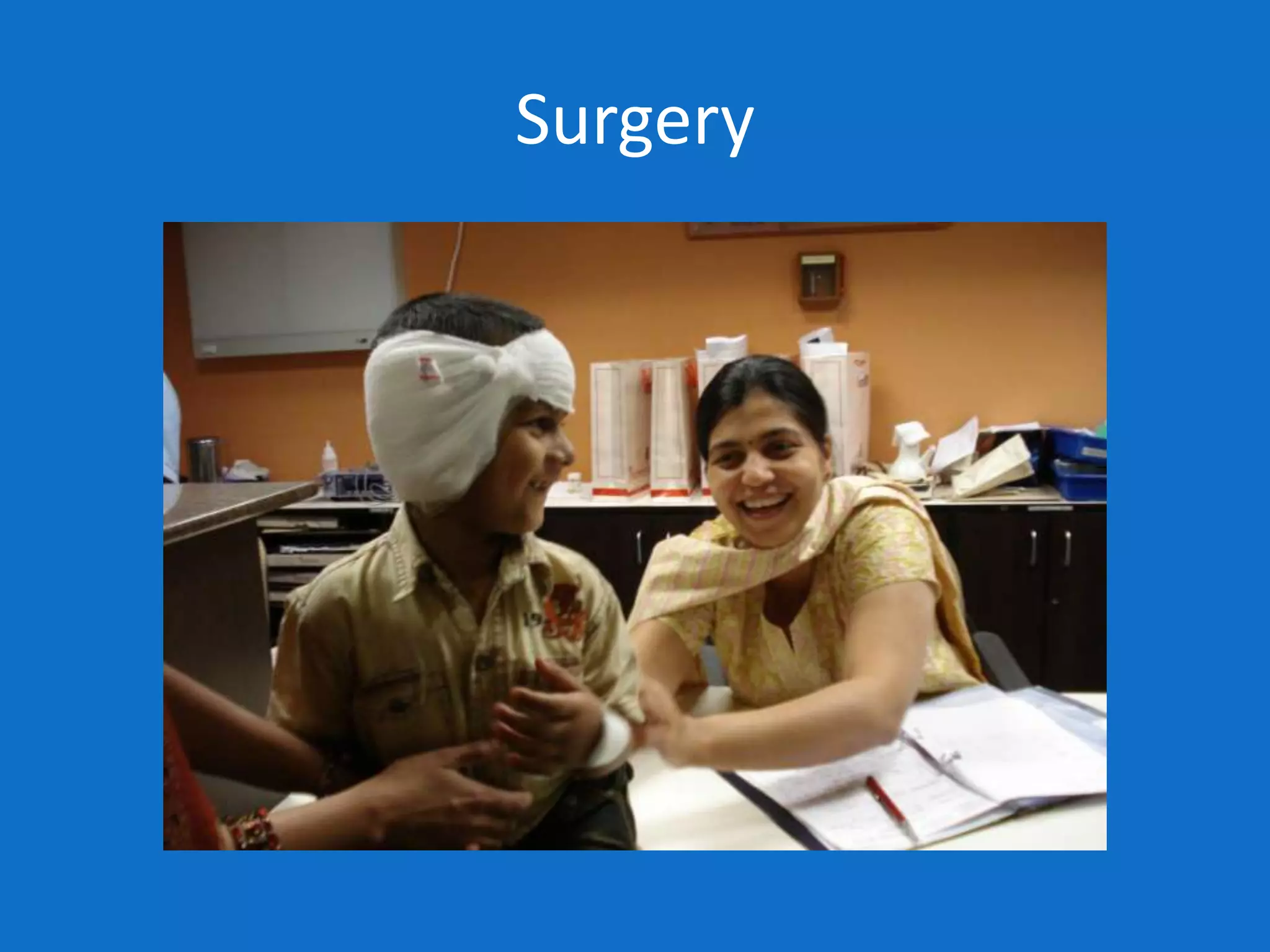
Surgery
Risks & complications of surgery
•   Injury to facial nerve
•   Meningitis
•   CSF leak
•   Skin infection
•   Flap hematoma
•   Extrusion of device
•   Tinnitus
•   Dizziness
Duration of AVT therapy & benefit in
               speech
• Compulsory therapy for 1 year
• However speech benefits go on for 4 years
  post implant
• Involvement of family-most crucial
Why are we not implanting all eligible
           candidates?
• COST FACTOR
• LATE PRESENTATION
• COMMITMENT FOR AVT

Cochlear implantation journey candidacy to communication (1)

  • 1.
    Cochlear Implantation Journey- candidacy to communication DR SHEELU SRINIVAS CONSULTANT ENT SURGEON
  • 2.
    Cochlear Implant • Bionicear • Hearing is the only special sense which is conquered • Electronic device when implanted provides sense of sound • The cochlear implant is the most significant technical advance in the treatment of hearing impairment since the development of the hearing aid around the turn of the century.
  • 3.
  • 4.
    Normal Ear Deafness: Normally functioninghair cells not present; some atrophy of 8th N fibers.
  • 5.
    What is thedifference between CI & Hearing Aid? • HA simply amplify sounds.CI on the other hand transforms speech sounds into electrical energy used to stimulate the surviving auditory nerve fibers in the inner ear. • CI have internal & external parts & a surgical process is needed to place internal processor components
  • 6.
    Candidacy • Age: mostimportant criteria • Maximum Benefit in speech & language: in children born with bilateral sensorineural hearing loss is to be carried out before age of 3 years. • Up to the age of 6 years good benefit • Above 6 years limited benefit
  • 7.
    2 groups Pre lingual Post lingual • Lost hearing before • Lost hearing after acquisition of speech acquisition of speech • Implant before 3 years • Implant as soon as • CEREBRAL PLASTICITY possible • Any age 6 months to 100 yrs
  • 8.
    Newborn hearing screening •Two to four new-born's, out of every 1,000, have hearing deficiency • among the high-risk babies, the number of hearing-impaired is 5 to 14 per cent. • High-riskers include those birth weight was less than 1.5 kg; jaundice, meningitis or birth asphyxia; ventilation after birth; family history of hearing loss
  • 9.
    Do we needa test? • Initially, babies who are born with hearing loss do not look or behave any differently from babies who are hearing. • However, undetected and untreated hearing loss has serious consequences on the acquisition of language skills as well as cognition and emotional and social development. • The first 6 months of a baby’s life are very crucial for the development of speech and language.
  • 11.
    Results • Given immediately •Either Pass/Refer • Even though child passes if he is a high risker further assessment done • Up to 3 years ,every 6 months
  • 12.
    Audiological assessment • OAE-oto acoustic emission • ABR/BERA • Play Audiometry • Impedance audiometry
  • 13.
  • 14.
    Radiology absolute requirements •Presence of cochlea(either normal or malformed) • Presence of auditory nerve • Combination of CT/MRI is performed
  • 15.
  • 16.
    Absence of thecochlear nerve.
  • 17.
    Speech & Languageassessments
  • 18.
  • 19.
    Medical work up • Pediatric • Syndromes-Usher’s • Ophthalmology • Neurology • Psychology • Immunization: Prevenar(pneumococcal),Hib
  • 20.
    Counseling/Expectations • Factors affectingthe performance of cochlear implantee • Duration of deafness • Age of onset of deafness • Age at implantation • Duration of hearing aid use • Others: no. of surviving spiral ganglion cells, electrode placemt,signal processing strategy
  • 21.
    What is acochlear implant system? • Microphone • Sound processor: is a tiny computer that takes the sound captured by the microphone and converts it into detailed digital information. This digital information is sent to the magnetic headpiece, transmitted to the implant, and then sent to the hearing nerve, which in turn sends electrical impulses to the brain, where they’re interpreted as sound.
  • 26.
  • 27.
    Risks & complicationsof surgery • Injury to facial nerve • Meningitis • CSF leak • Skin infection • Flap hematoma • Extrusion of device • Tinnitus • Dizziness
  • 28.
    Duration of AVTtherapy & benefit in speech • Compulsory therapy for 1 year • However speech benefits go on for 4 years post implant • Involvement of family-most crucial
  • 29.
    Why are wenot implanting all eligible candidates? • COST FACTOR • LATE PRESENTATION • COMMITMENT FOR AVT