
OFFICE BASED ENT PRACTISE IN CHILDREN:DIFFICULT SITUATIONS & RECENT TRENDS DR SHEELU SRINIVAS CONSULTANT ENT SURGEON
We Can Only Refine Our Therapeutics When We Refine Our Diagnostic Abilities


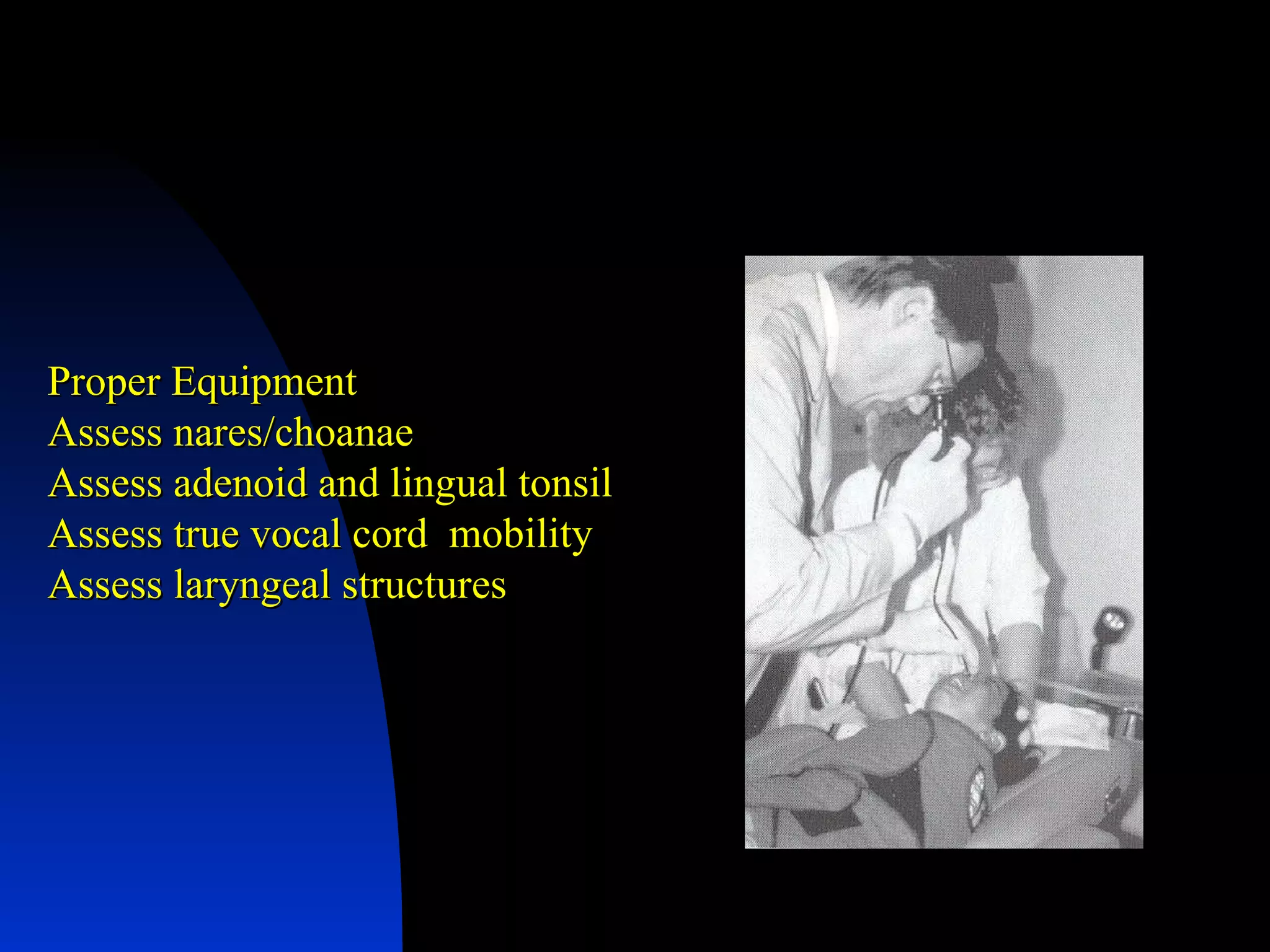
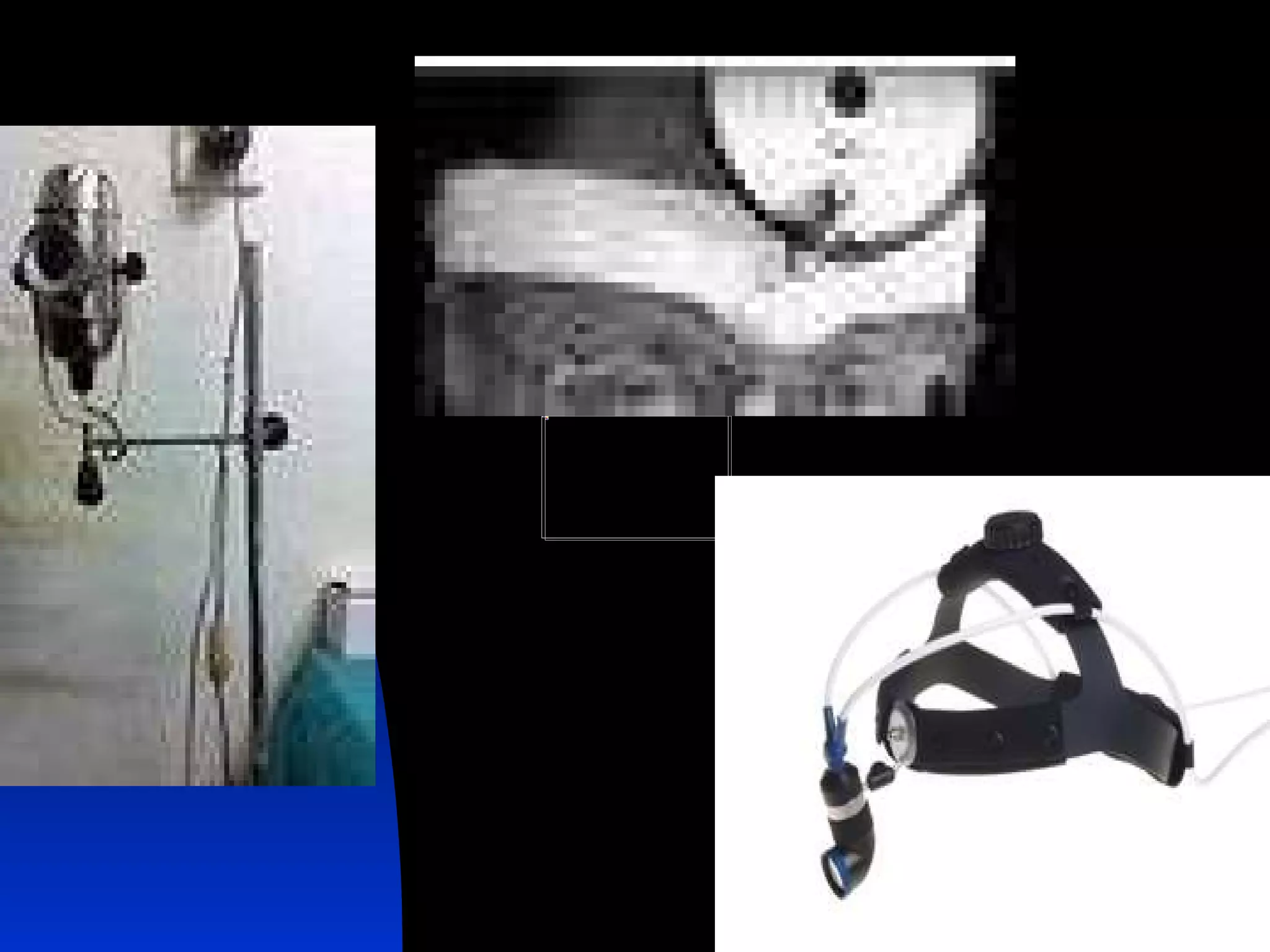
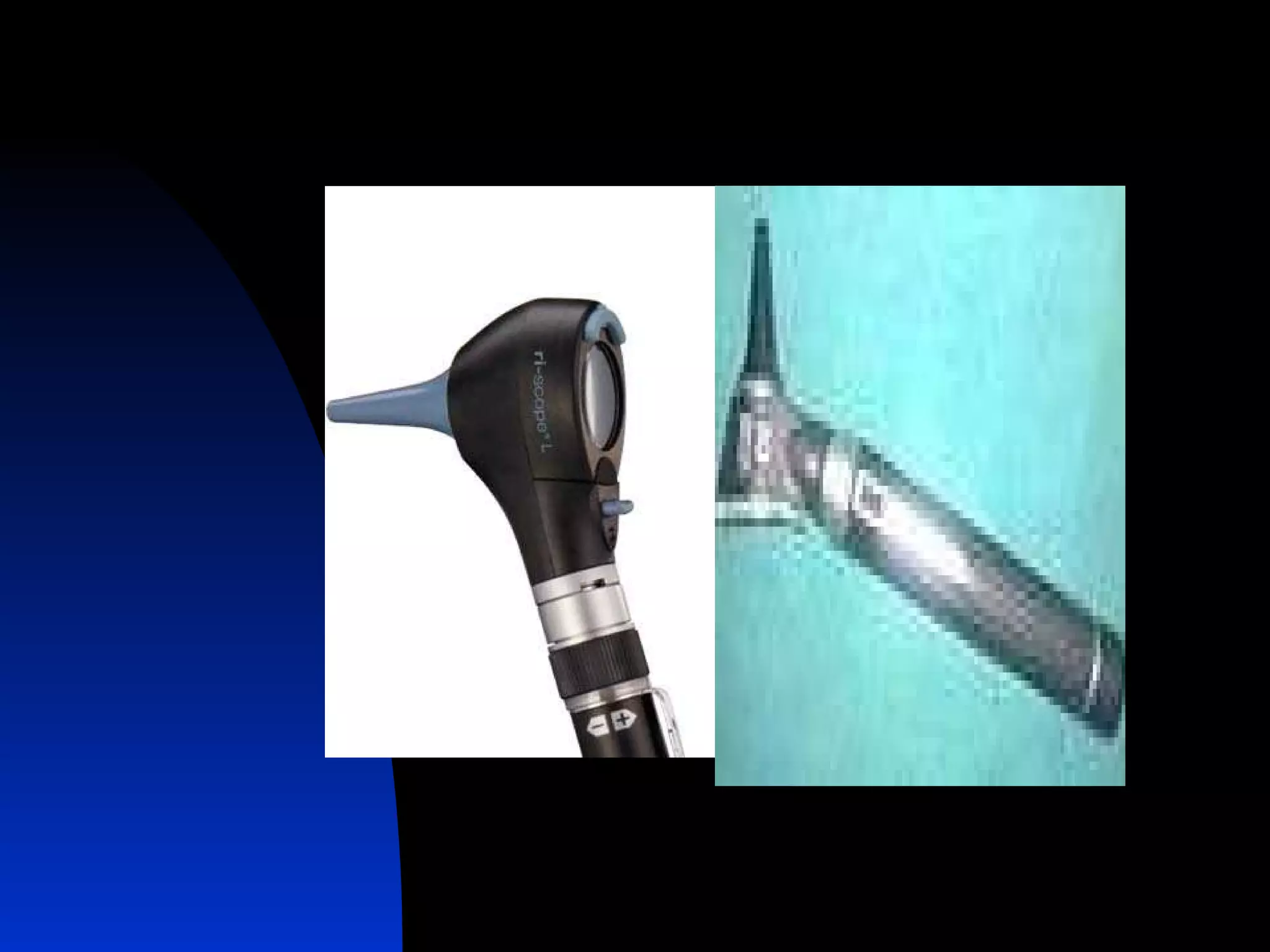
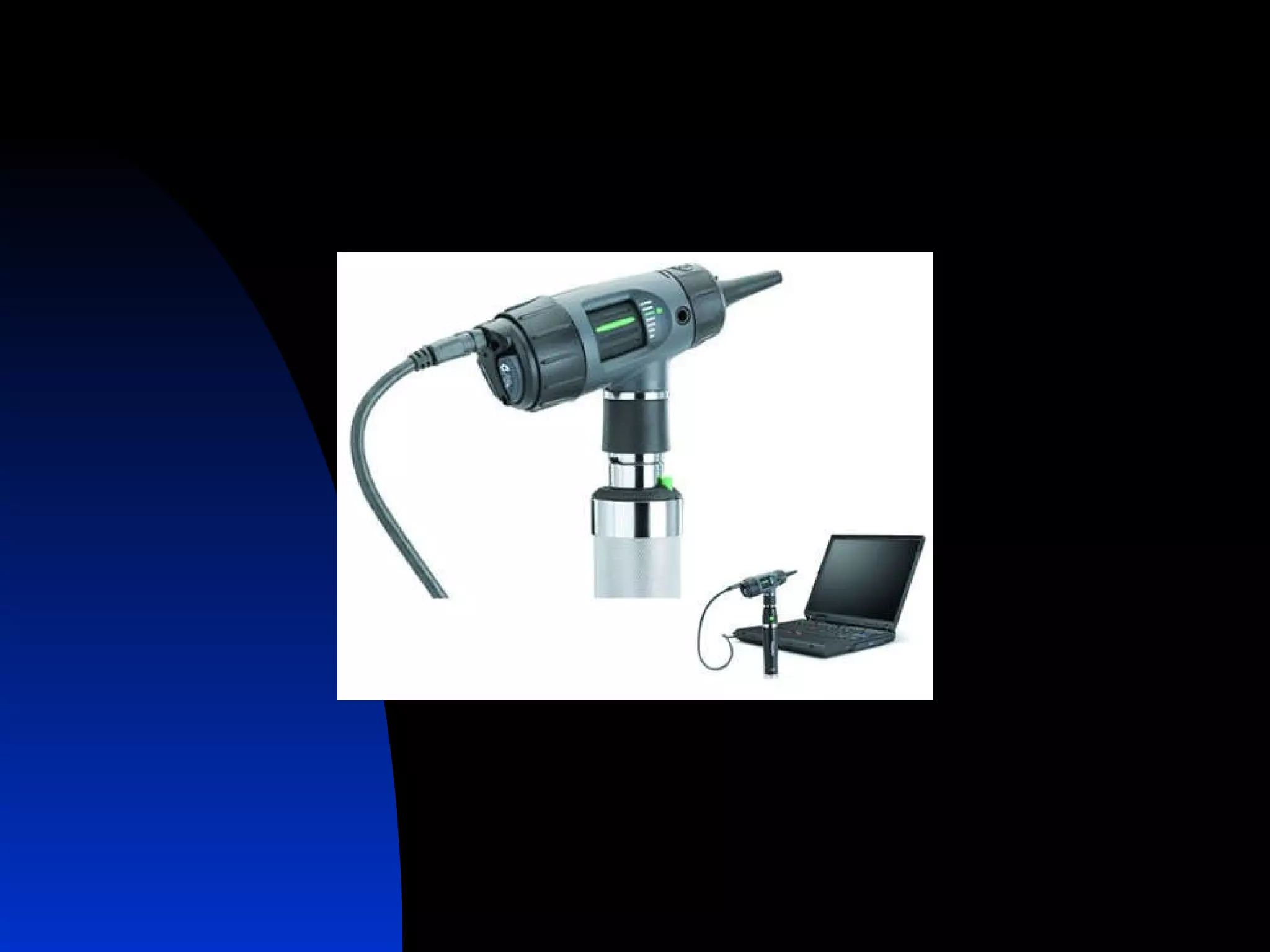
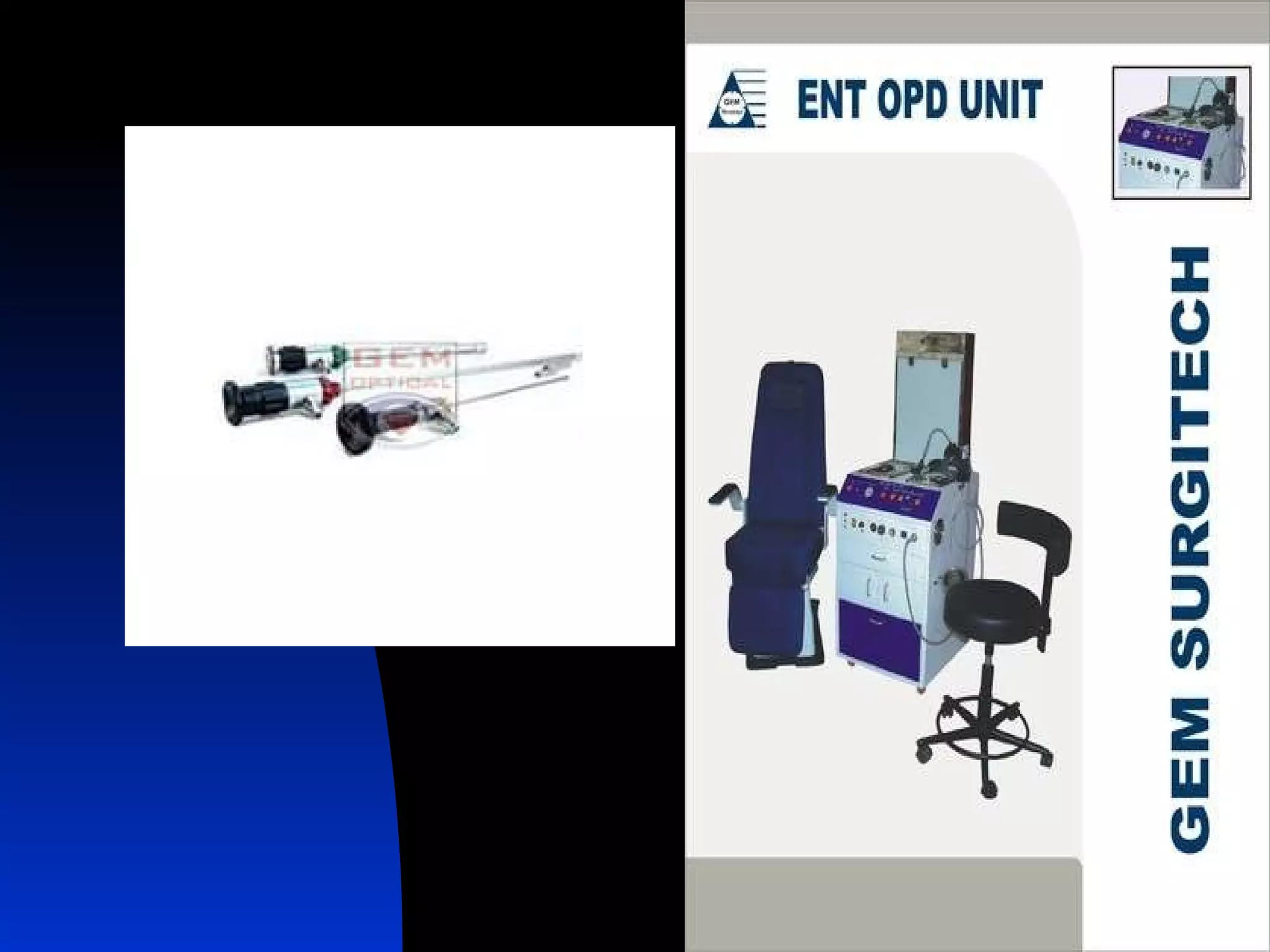
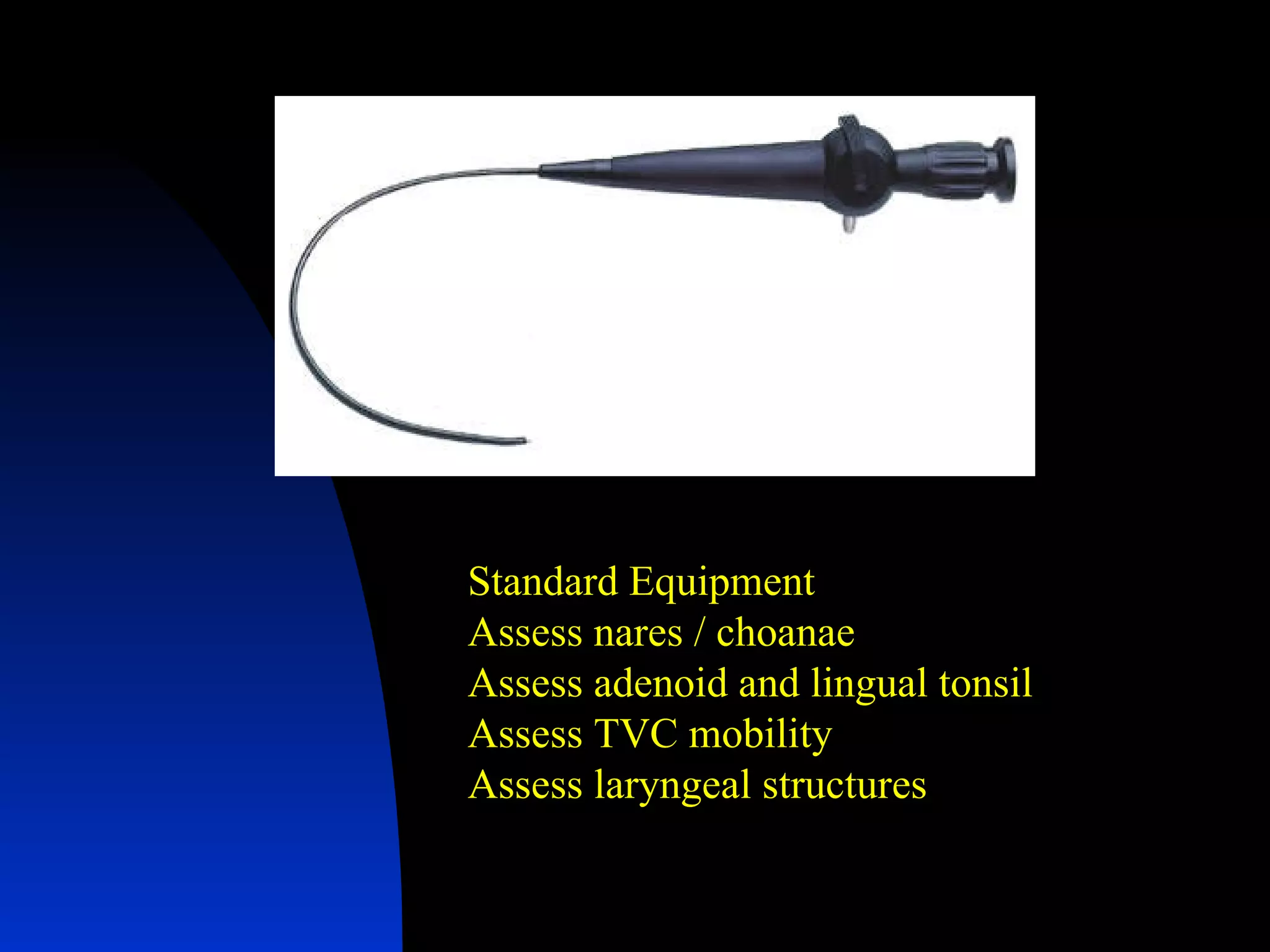
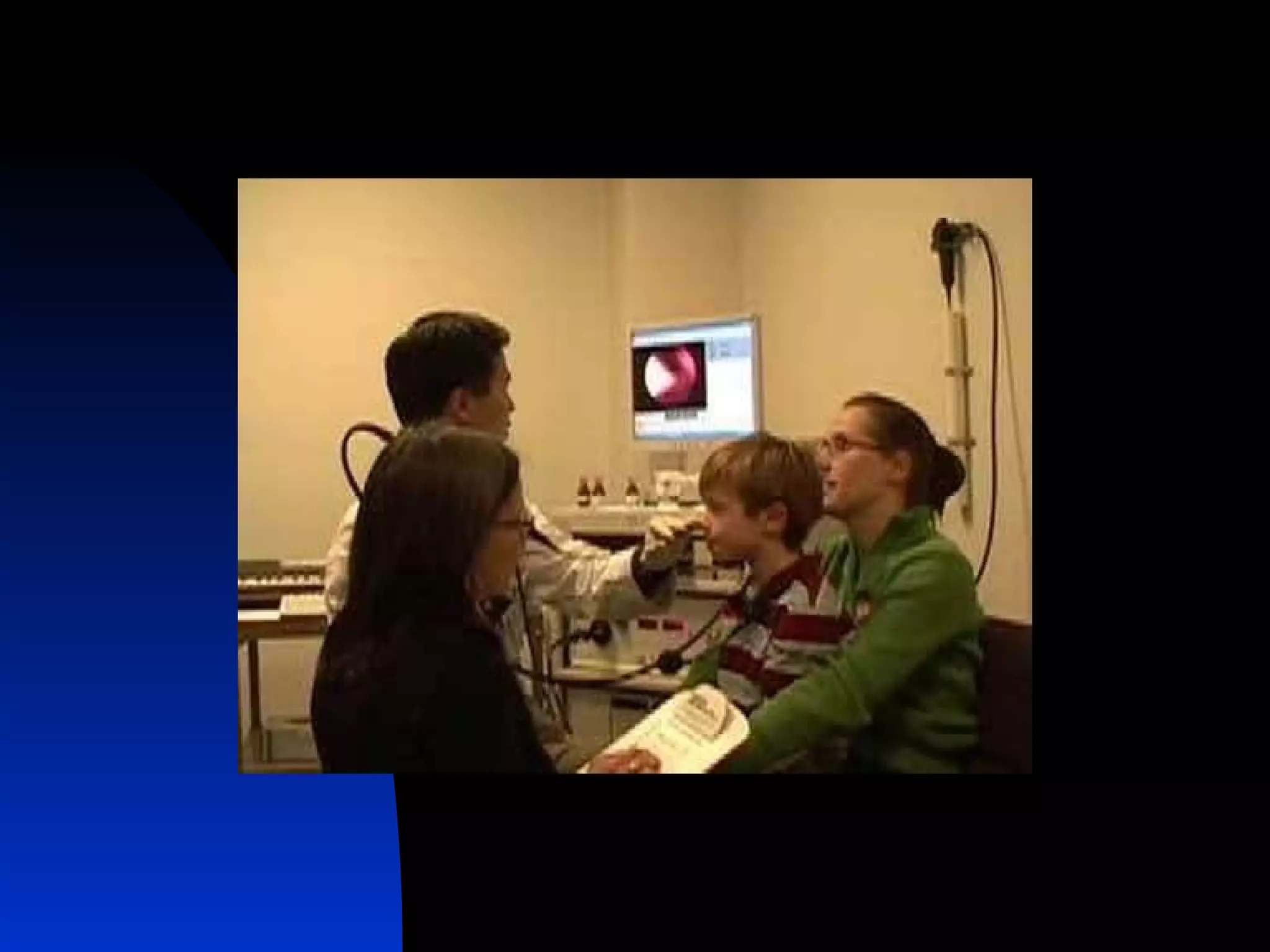
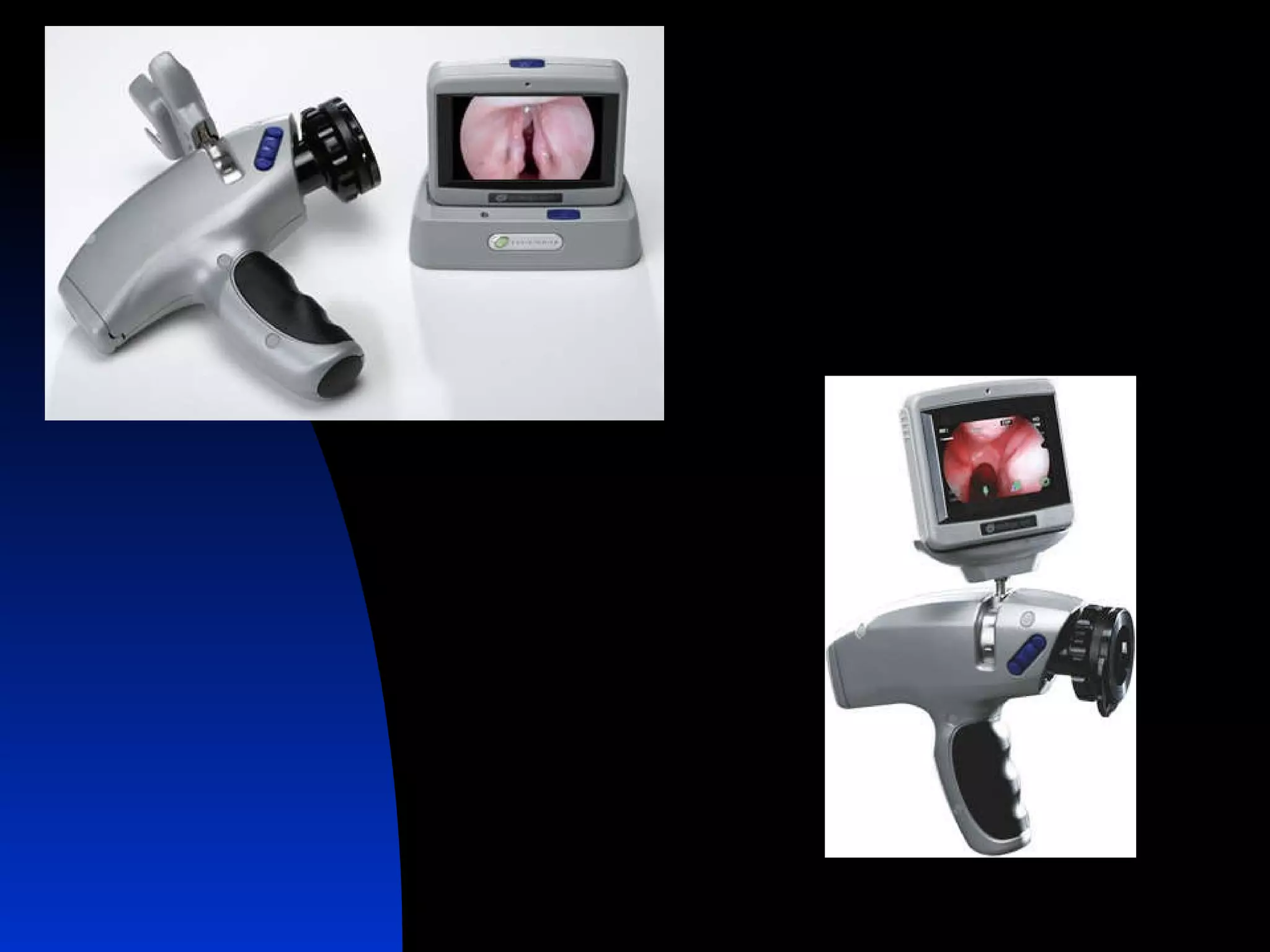
Standard Equipment Assess nares / choanae Assess adenoid and lingual tonsil Assess TVC mobility Assess laryngeal structures


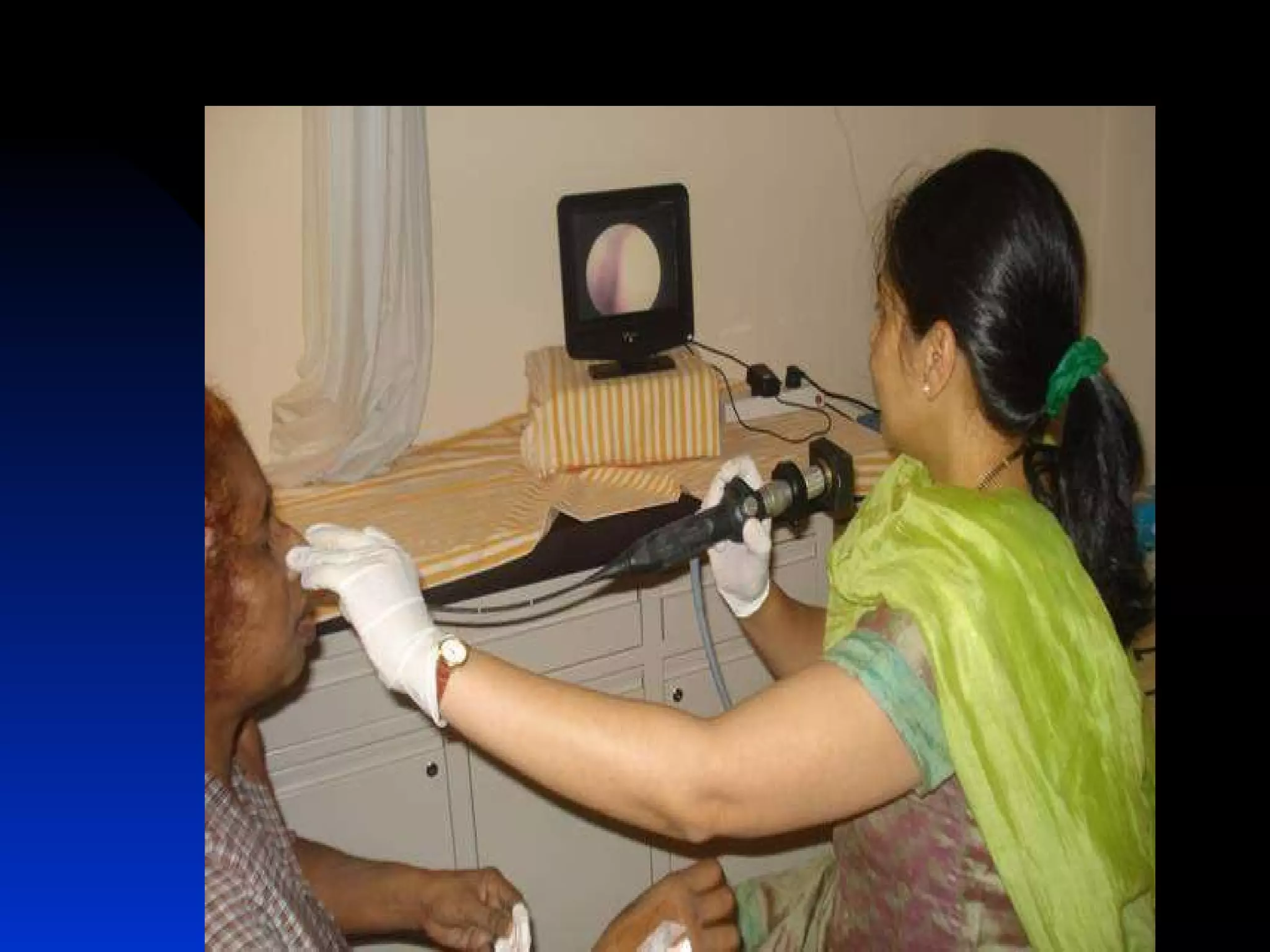
Nasoaryngoscopy video
Sleep disordered breathing in children 4-8 yr olds with variable clinical symptoms at various ages Infants- noisy breathing,disturbed nocturnal sleep Toddlers & preschoolers-snoring & mouth breathing School goers-behavioral & dental problems
Pathogenesis  Not properly understood Children with sleep-disordered breathing (SDB) can manifest a continuum from simple snoring and upper airway resistance syndrome to obstructive sleep apnea (OSA)  with secondary growth impairment, neurocognitive deficits, and less often cardiovascular sequelae.
Pathogenesis Adenotonsillar hypertrophy is the leading cause of OSA.  Other risk factors include allergic rhinitis, craniofacial anomalies, cleft palate following pharyngeal flap surgery, neuromuscular diseases, laryngomalacia, and obesity.
Symptoms   Symptoms of pediatric SDB vary and specialty referral is often done according to symptoms noted by parents.  For example,  a child with snoring and tonsillar hypertrophy is most likely to be referred to an otolaryngologist,  a child with growth impairment to a pediatrician, and  a sleepy child to a neurologist.
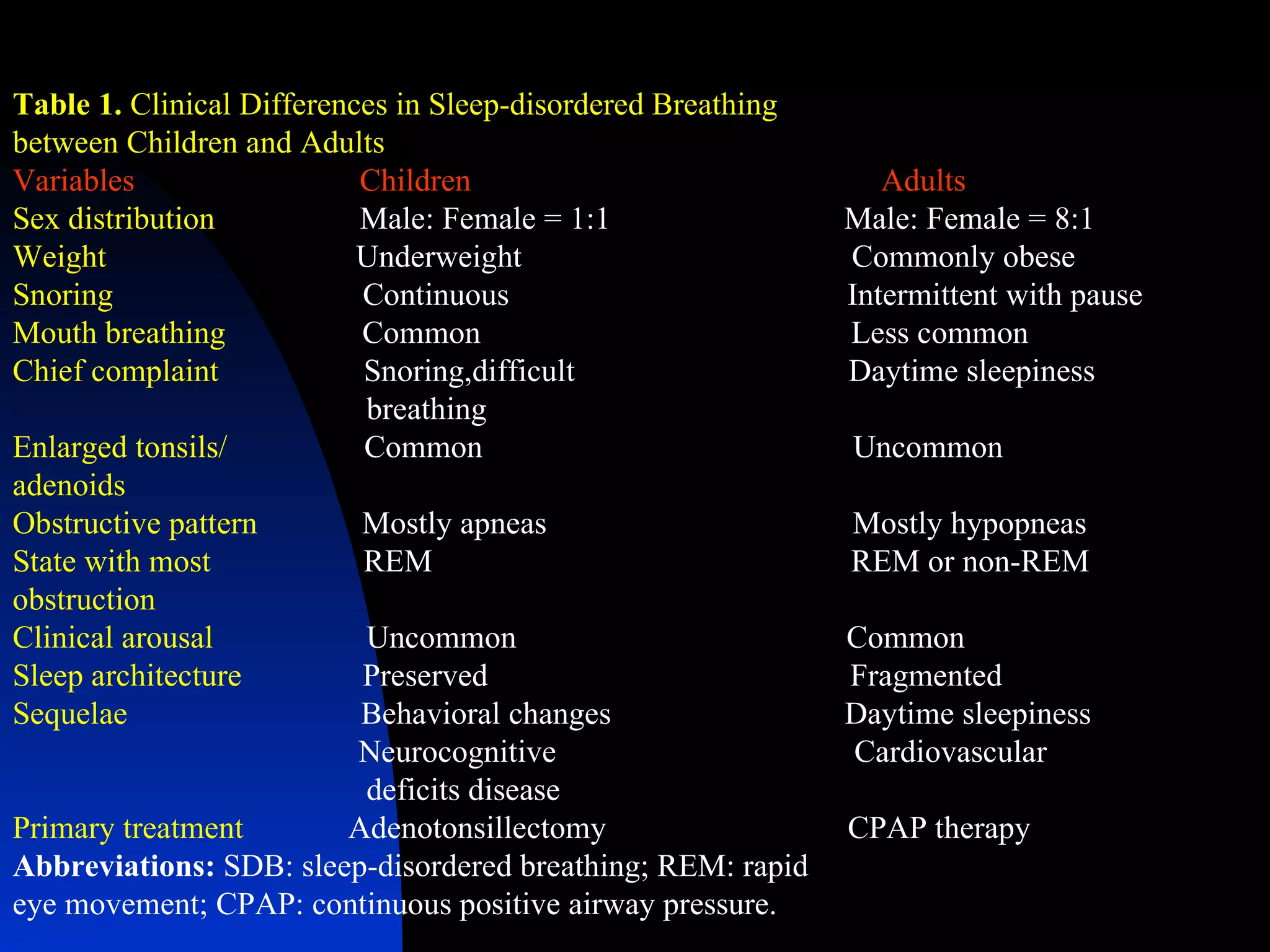
Table 1.  Clinical Differences in Sleep-disordered Breathing between Children and Adults Variables  Children  Adults Sex distribution   Male: Female = 1:1  Male: Female = 8:1 Weight  Underweight  Commonly obese Snoring  Continuous  Intermittent with pause Mouth breathing   Common  Less common Chief complaint   Snoring,difficult  Daytime sleepiness breathing Enlarged tonsils/   Common  Uncommon adenoids Obstructive pattern   Mostly apneas  Mostly hypopneas State with most   REM  REM or non-REM obstruction Clinical arousal   Uncommon  Common Sleep architecture   Preserved  Fragmented Sequelae  Behavioral changes  Daytime sleepiness Neurocognitive  Cardiovascular deficits disease Primary treatment   Adenotonsillectomy  CPAP therapy Abbreviations:  SDB: sleep-disordered breathing; REM: rapid eye movement; CPAP: continuous positive airway pressure.
Diagnostic tool Polysomnography PSG gold standard can be performed successfully in infants and children of all ages. An AHI > 1 event/h in children is considered abnormal
Apnea in children is defined as absence of airflow with continued chest wall and abdominal wall movement for a duration longer than 2 breaths,(9) whereas obstructive hypopnea is defined as a decrease in nasal flow between 30% and 80% from baseline with a corresponding decrease in oxygen saturation of 3% and /or arousal. differences in OSA between children and adults. 1.   Children with OSA frequently do not have cortical arousal associated with obstructive apnea and are less likely to have fragmented sleep than adults. Consequently, sleep architecture is preserved and daytime sleepiness is uncommon. 2.  In children, the majority of obstructive apneas occur during rapid eye movement (REM) sleep, particularly in later REM sleep. As a result, OSA may be missed if the REM stage is decreased or absent on screening studies, e.g. nap studies. 3.  Children may present with persistent obstructive hypoventilation, rather than cyclic obstructive apnea.Clinically, these children manifest constant snoring and labored breathing instead of breathing pauses or gasps.
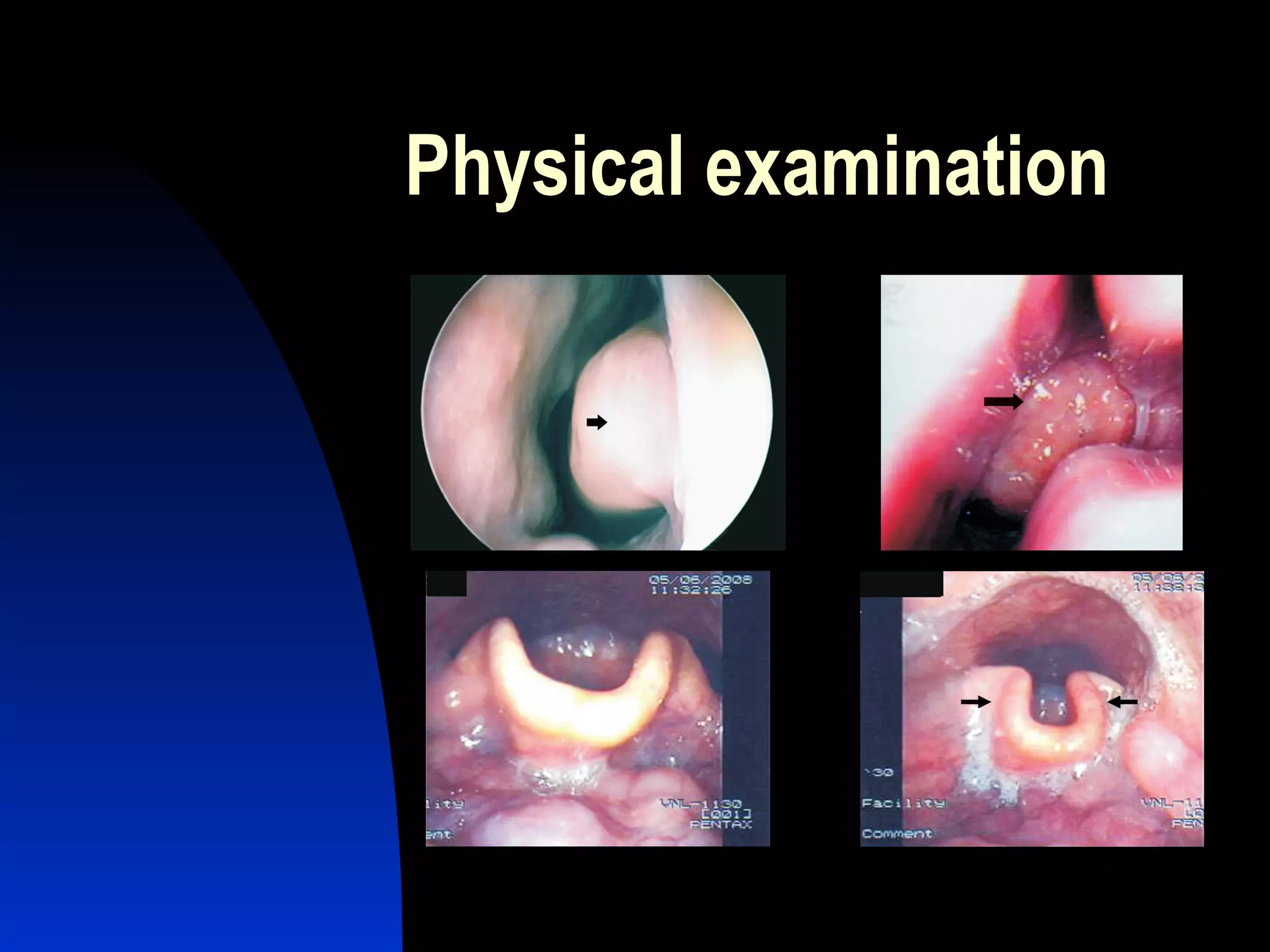
Physical examination
Treatments of Sleep-disordered Breathing in Children Non-surgical treatment   Surgical treatment Rx of nasal allergy  Adenotonsillectomy Treat acute inflammation  UPPP Treatment of reflux  Nasal surgery CPAP  Revision of posterior  pharyngeal flap Rapid maxillary expansion  Distraction  osteogenesis Weight reduction  Tracheotomy
NOISY BREATHERS STERTOR  Snoring type of noise often made by   nasopharyngeal or oropharyngeal   obstruction  May occassionally be created by supraglottic larynx  STRIDOR Harsh sound produced by turbulent airflow through a partial obstruction  May be soft and tuneful/musical quality  Characteristic  of certain pathology but  never diagnostic
Venturi principle Pediatric airway more flexible  Forces exerted by Venturi principle cause the narrowed, flexible airway to be momentarily closed during either inspiration or expiration  Infant larynx-higher, close proximity to pharynx
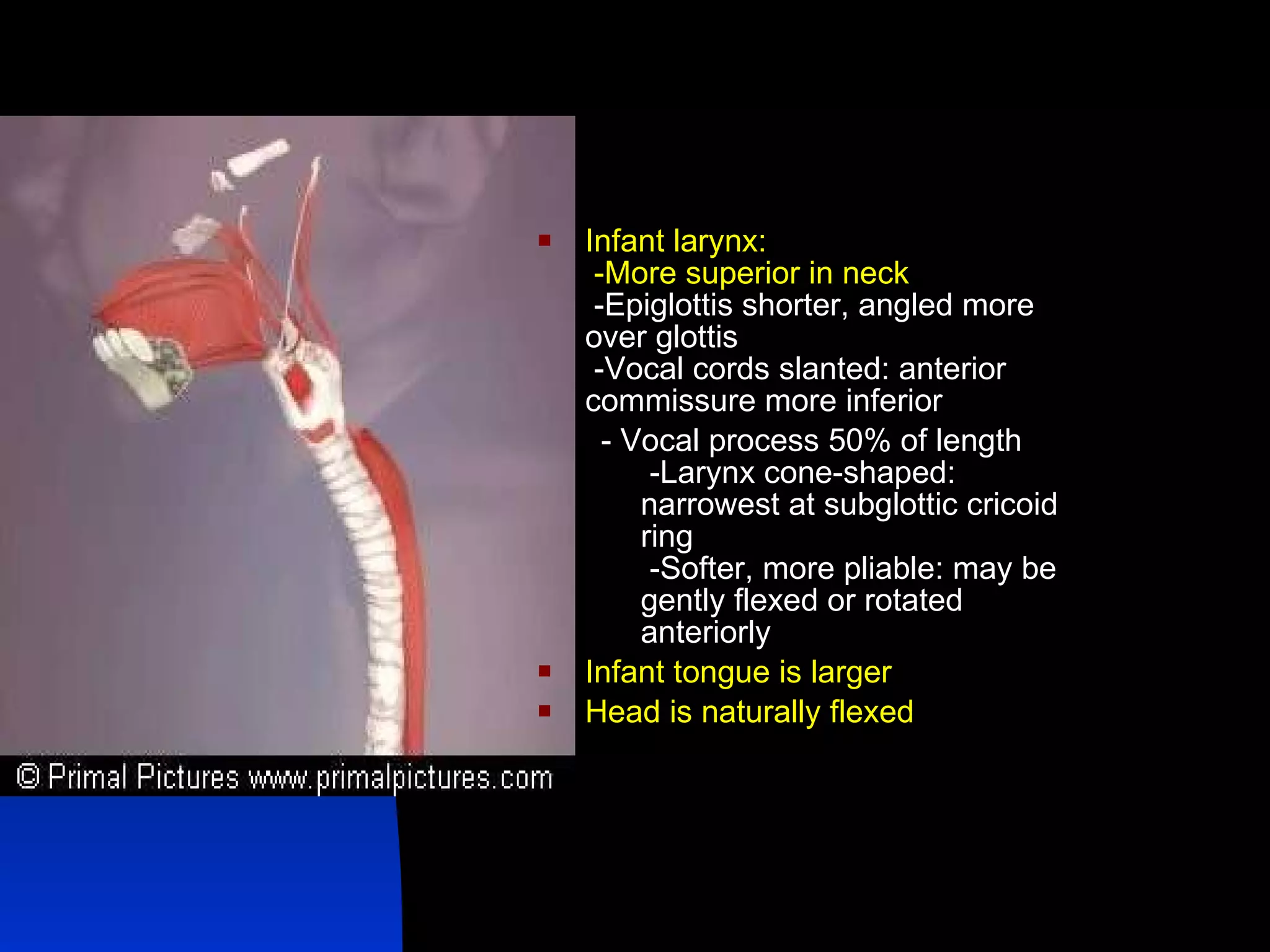
Infant larynx:   -More superior in neck    -Epiglottis shorter, angled more over glottis   -Vocal cords slanted: anterior commissure more inferior - Vocal process 50% of length   -Larynx cone-shaped: narrowest at subglottic cricoid ring   -Softer, more pliable: may be gently flexed or rotated anteriorly  Infant tongue is larger Head is naturally flexed
Assessment Region  / LEVEL OF AIRWAY OBSTRUCTION Voice   Stridor   Retractions   Feeding   Mouth   Cough  
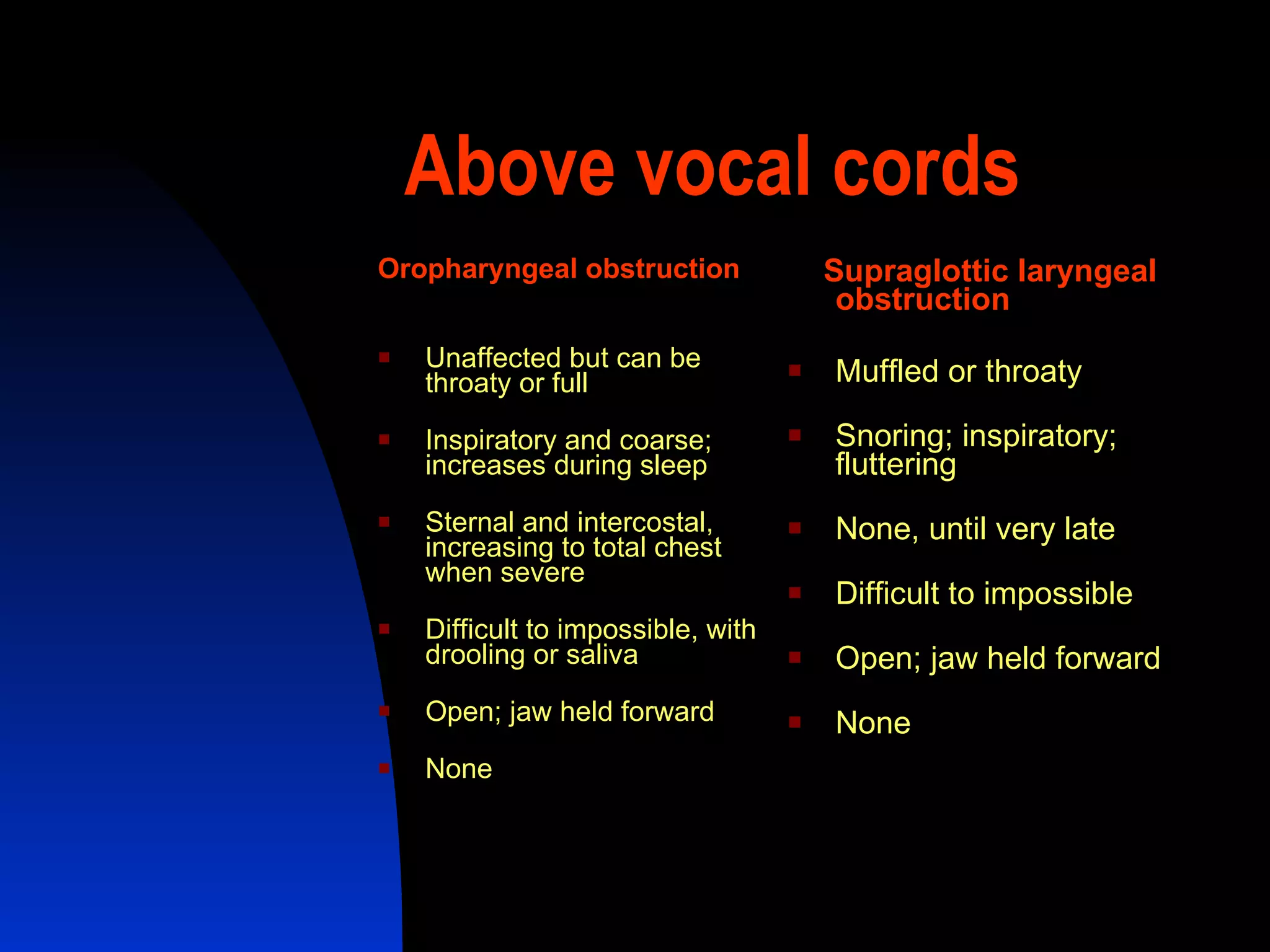
Above vocal cords Supraglottic laryngeal obstruction  Muffled or throaty  Snoring; inspiratory; fluttering  None, until very late  Difficult to impossible  Open; jaw held forward  None  Oropharyngeal obstruction  Unaffected but can be throaty or full  Inspiratory and coarse; increases during sleep  Sternal and intercostal, increasing to total chest when severe  Difficult to impossible, with drooling or saliva  Open; jaw held forward  None 
Vocal cords & below Glottic –level of cords Subglottic tracheobronchial tree
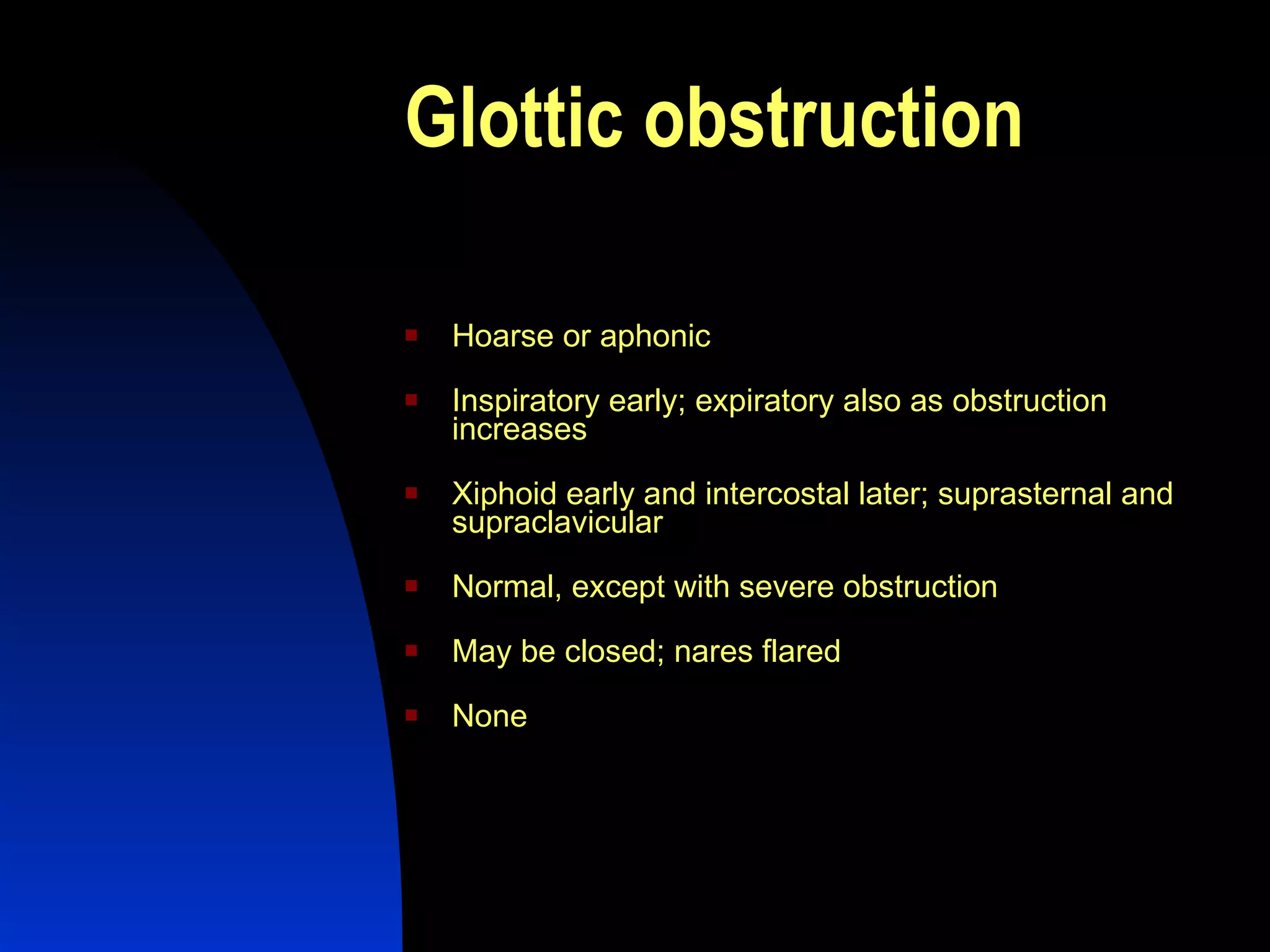
Glottic obstruction   Hoarse or aphonic  Inspiratory early; expiratory also as obstruction increases  Xiphoid early and intercostal later; suprasternal and supraclavicular  Normal, except with severe obstruction  May be closed; nares flared  None 
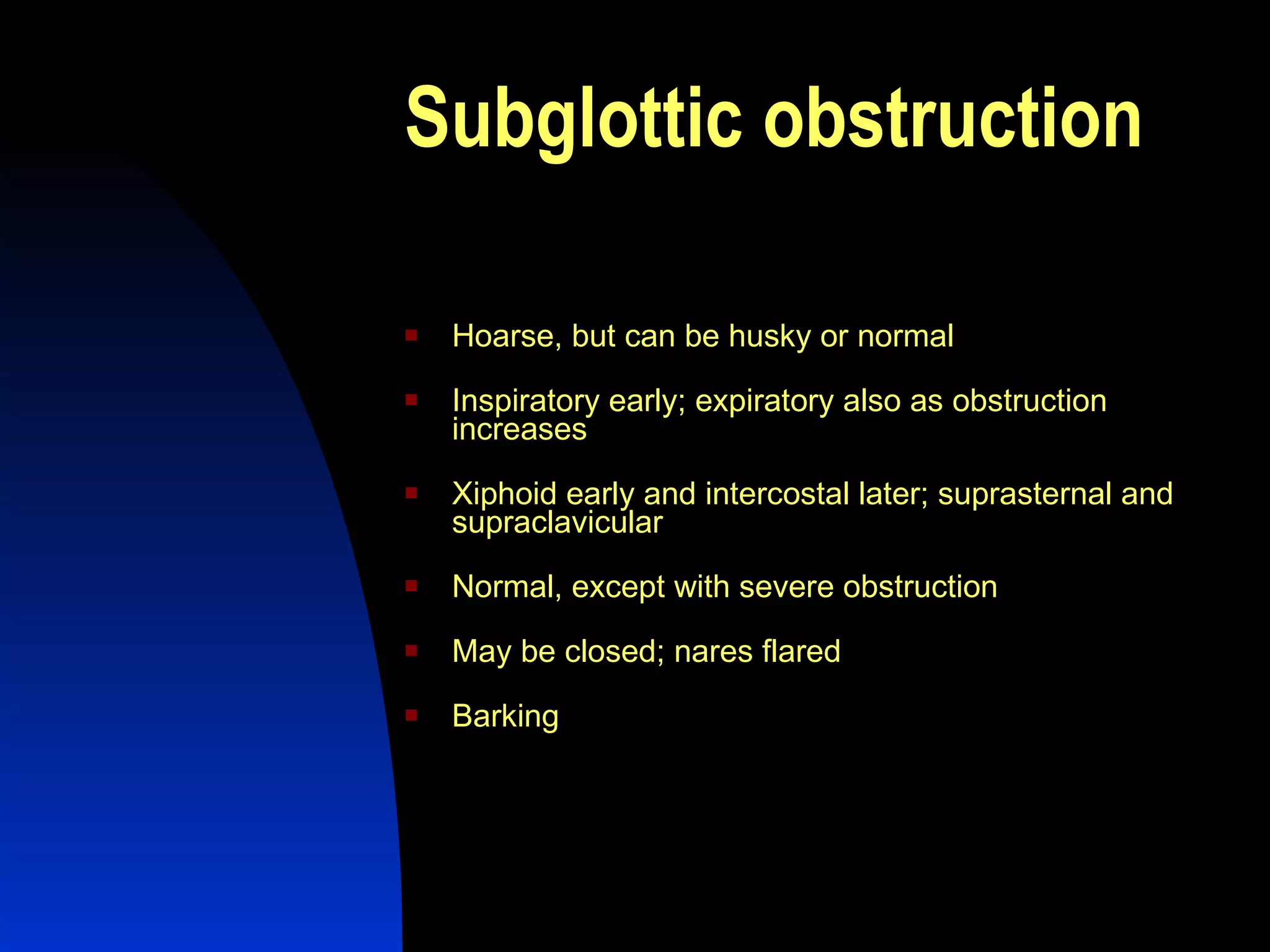
Subglottic obstruction   Hoarse, but can be husky or normal  Inspiratory early; expiratory also as obstruction increases  Xiphoid early and intercostal later; suprasternal and supraclavicular  Normal, except with severe obstruction  May be closed; nares flared  Barking 
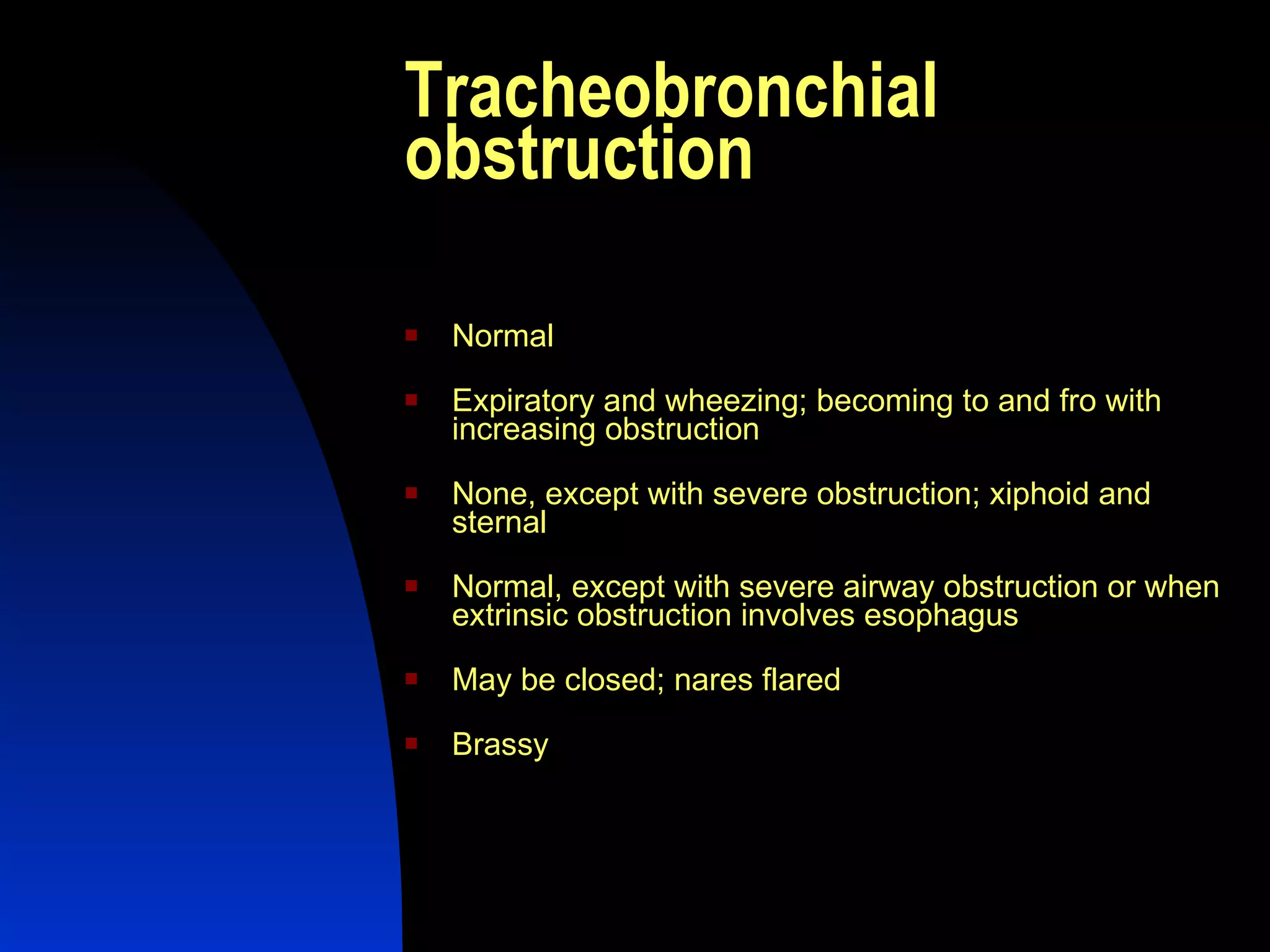
Tracheobronchial obstruction  Normal  Expiratory and wheezing; becoming to and fro with increasing obstruction  None, except with severe obstruction; xiphoid and sternal  Normal, except with severe airway obstruction or when extrinsic obstruction involves esophagus  May be closed; nares flared  Brassy 
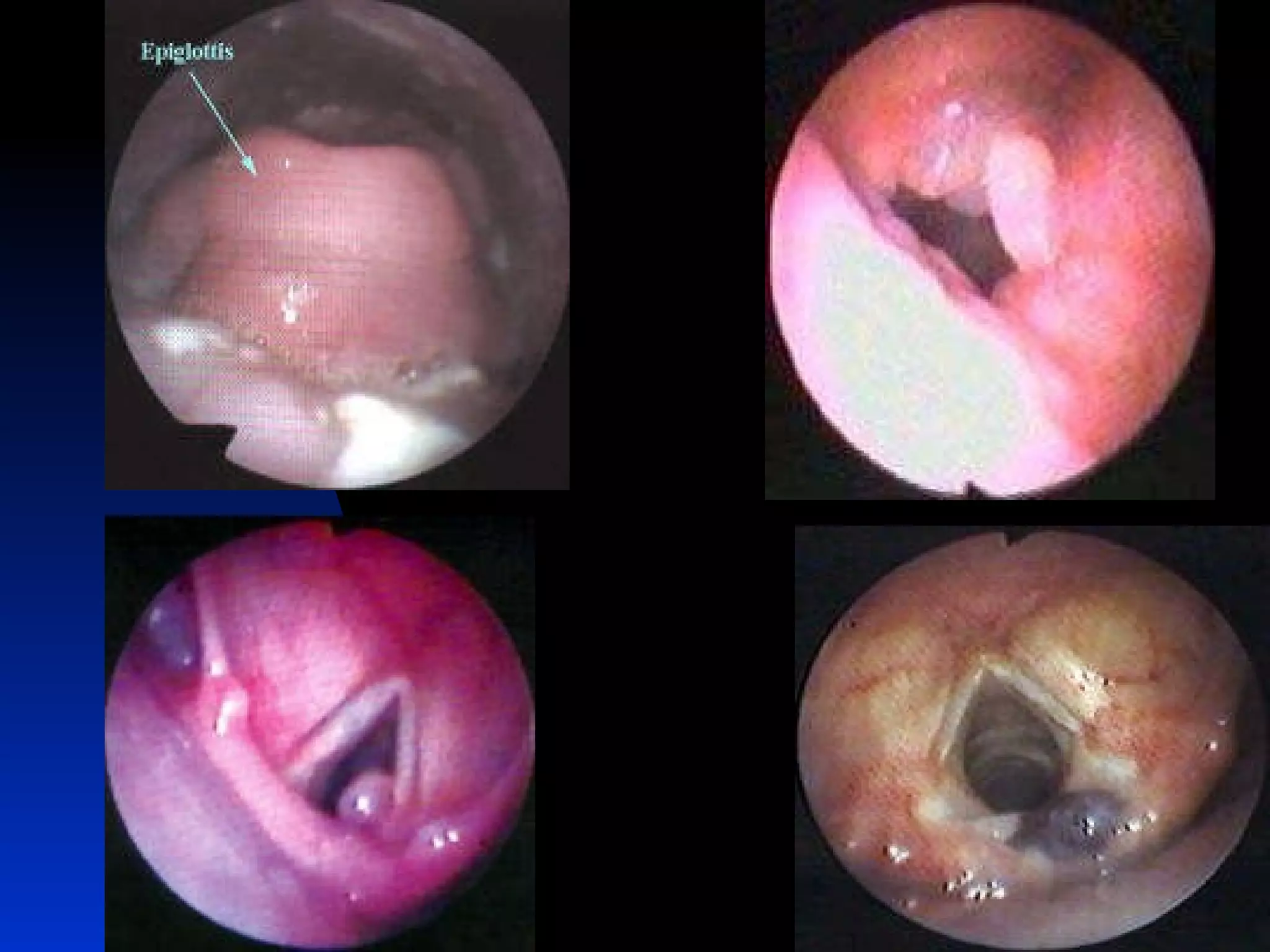
Evaluation -ABC every pediatric casualty should have flexible scopes Choanal atresias Laryngomalacia Vocal cord & glottic anamolies[?clefts] RRP Subglottic anamolies
Proper Equipment Assess nares/choanae Assess adenoid and lingual tonsil Assess true vocal cord  mobility Assess laryngeal structures
 
CHAOS (congenital high airway obstruction syndrome) Emergent airway management at the time of delivery is key for survival Prenatally Flattened diaphragms, polyhydramnios, cervical mass TEAM Members Maternal-fetal specialist Neonatalogist Anesthesiologist Otolaryngologist Patient
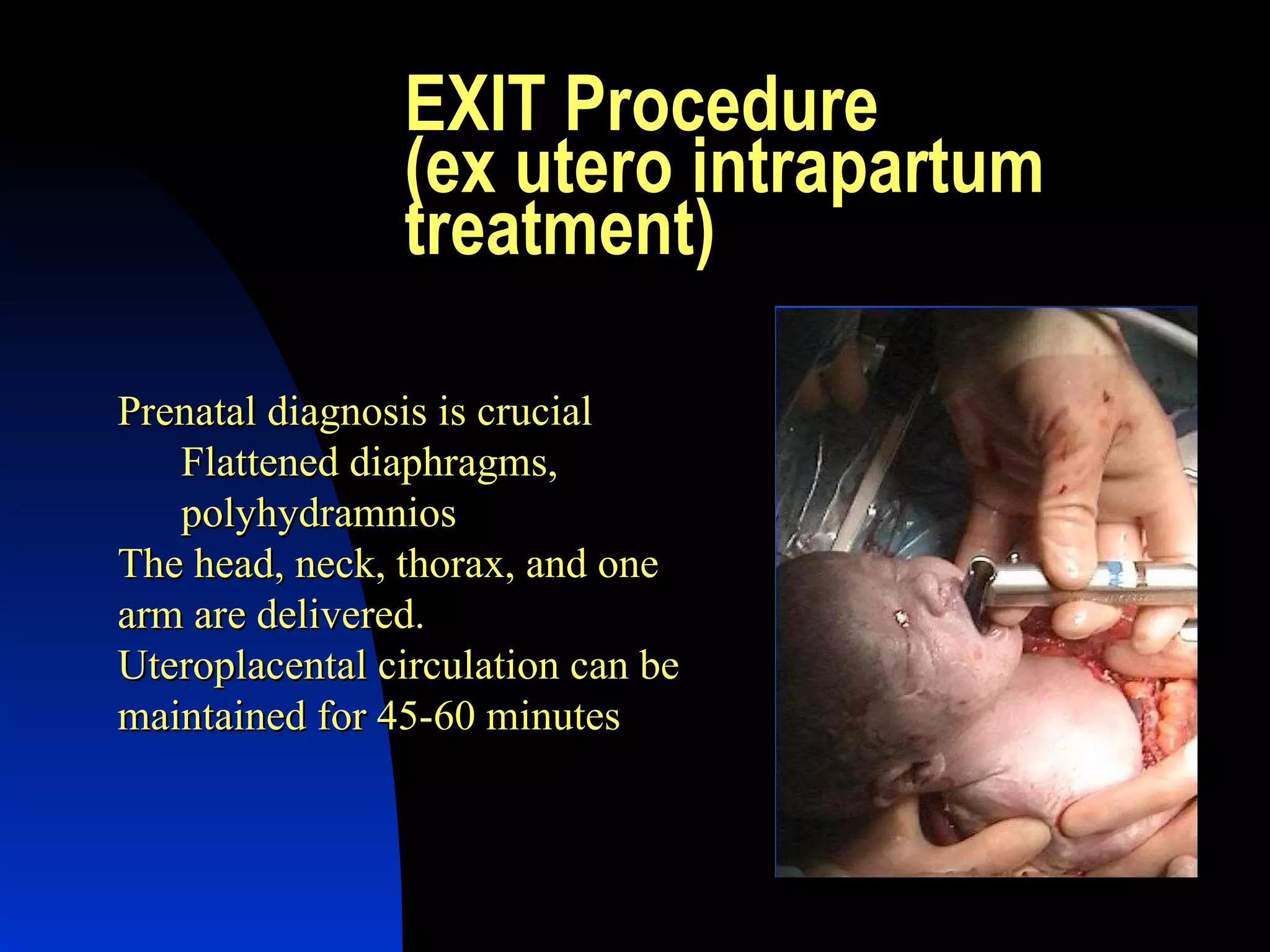
EXIT Procedure (ex utero intrapartum treatment) Prenatal diagnosis is crucial Flattened diaphragms, polyhydramnios The head, neck, thorax, and one arm are delivered. Uteroplacental circulation can be maintained for 45-60 minutes
Foreign Bodies 2-4year olds Acute episode of choking/gagging Triad of acute wheeze, cough and unilateral diminished sounds only in 50% 5-40% of patients manifest no obvious signs
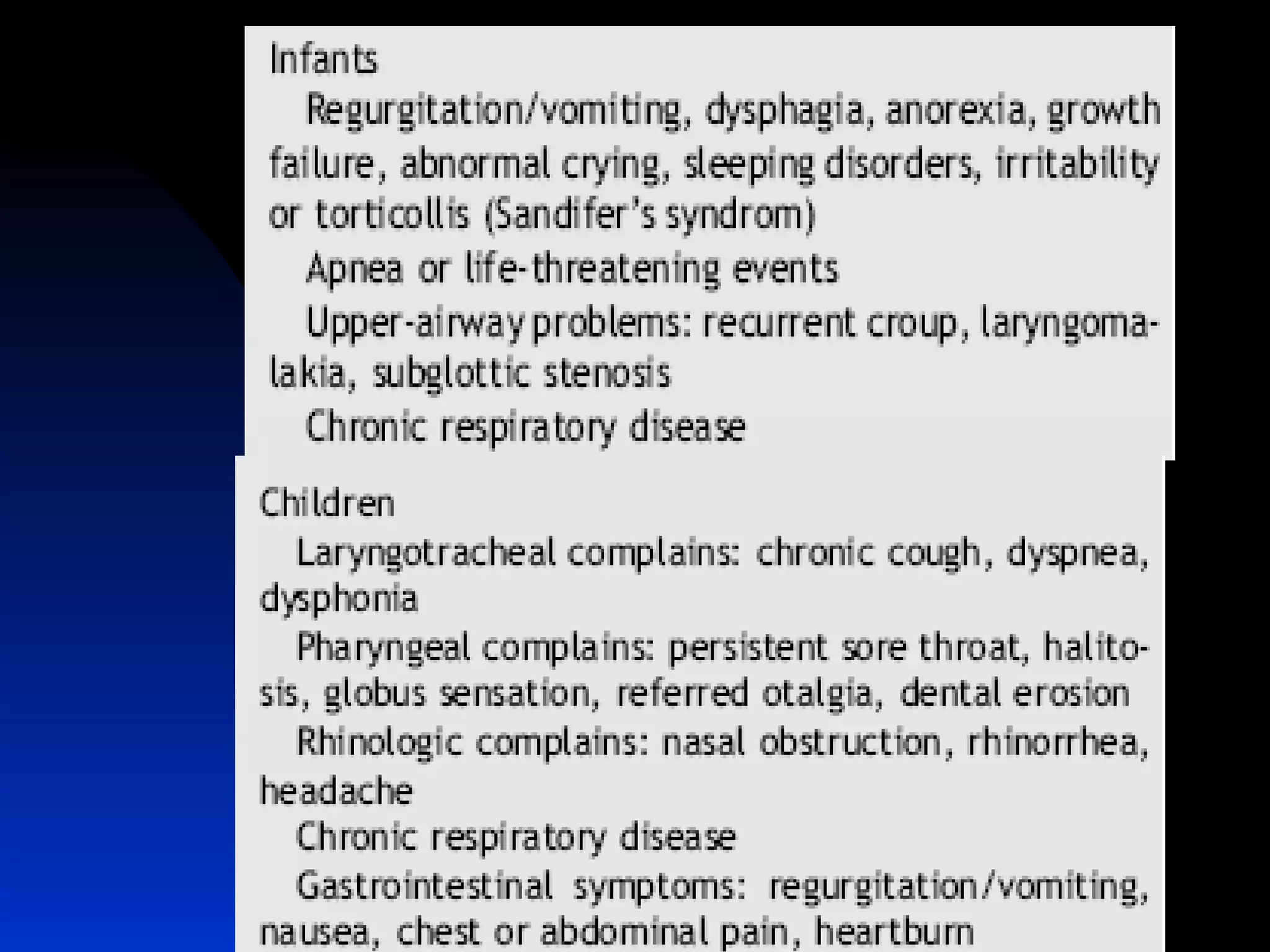
Laryngopharyngeal reflux Up to two-thirds of infants exhibit signs of reflux  (Nelson 1997) A majority of those children will outgrow their reflux by their second year of age Laryngopharyngeal reflux (LPR) has gained increasing recognition as a common pediatric disorder over the past few years .  Its symptoms include benign postprandial vomiting during the first year of life,  failure to thrive,  esophagitis, and airway disturbances.  In some conditions--such as tracheoesophageal fistula, neurologic impairment, or oral motor dysphagia--the incidence might be as high as 70%.
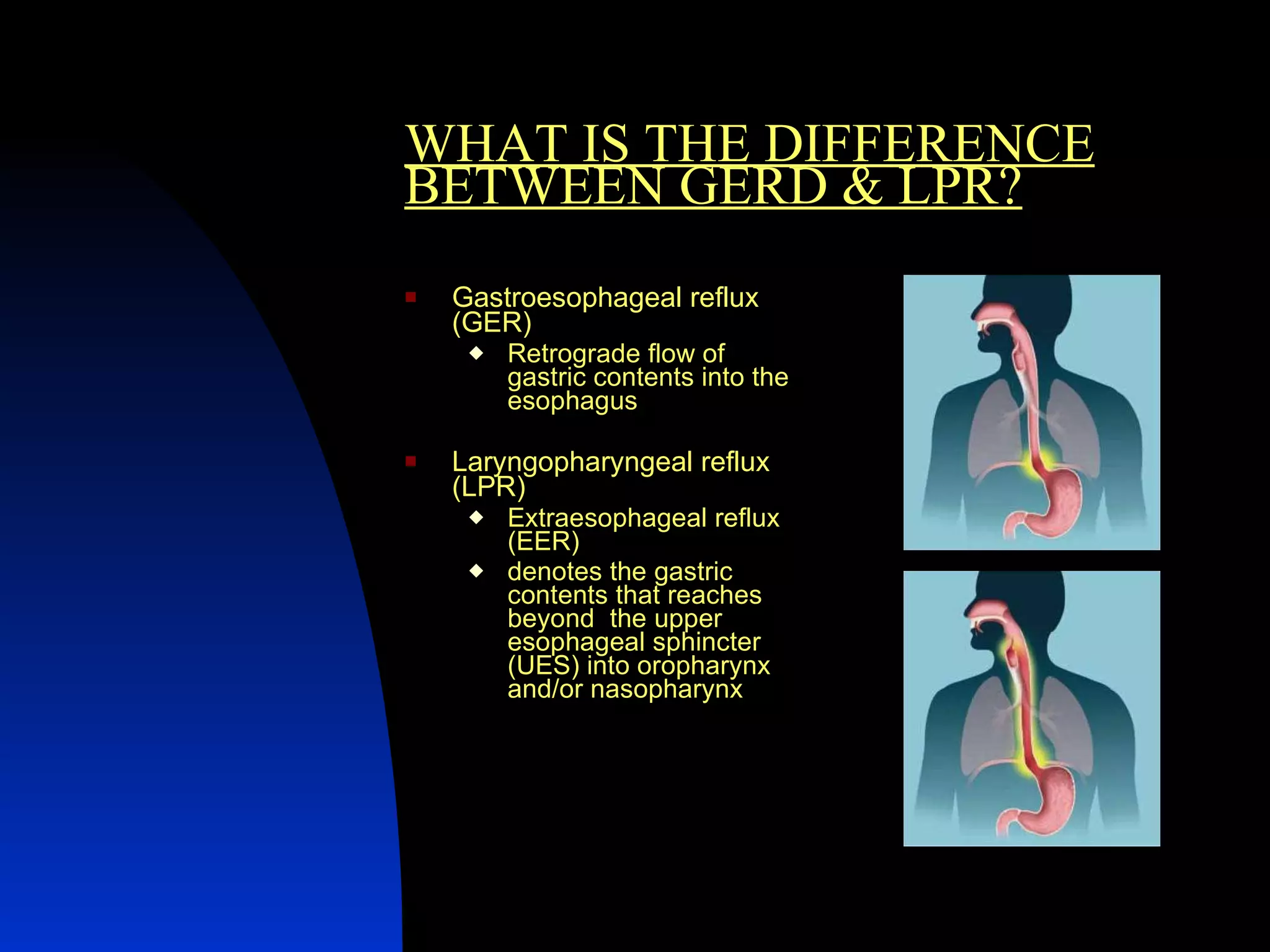
WHAT IS THE DIFFERENCE BETWEEN GERD & LPR? Gastroesophageal reflux   (GER) Retrograde flow of gastric contents into the esophagus Laryngopharyngeal reflux (LPR) Extraesophageal reflux (EER) denotes the gastric contents that reaches beyond  the upper esophageal sphincter (UES) into oropharynx and/or nasopharynx
 
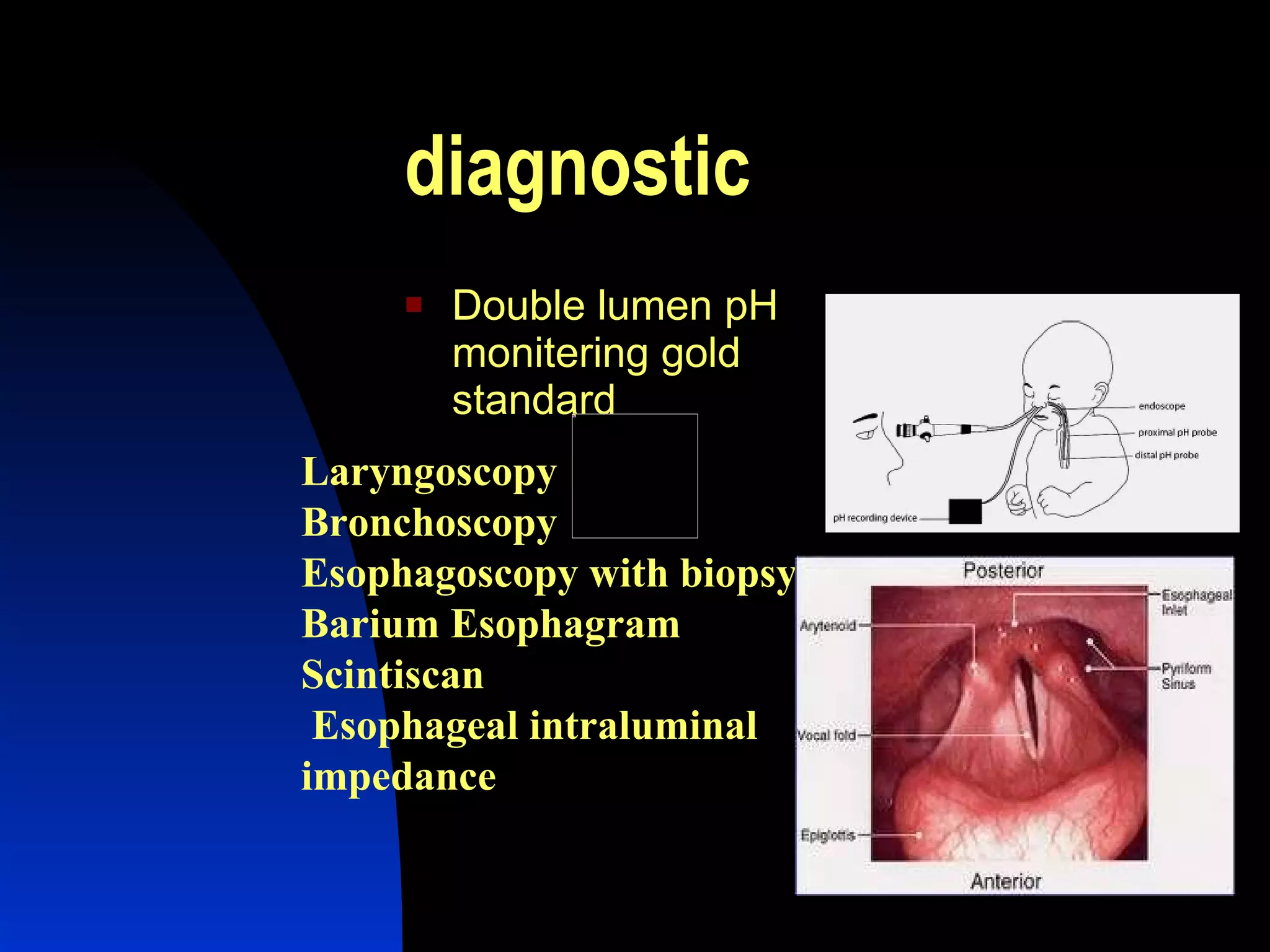
diagnostic Double lumen pH monitering gold standard Laryngoscopy Bronchoscopy Esophagoscopy with biopsy Barium Esophagram Scintiscan Esophageal intraluminal impedance
Swallowing & feeding disorders 40-70% kids with CNS disorders Note: nasal obstruction, nasal masses, oral lesion, cleft lip/palate, upper aero digestive tract anomalies laryngomalacia, vocal cord paralysis, laryngeal clefts, tracheo-esophageal fistula, foregut malformations, or vascular rings of the aorta or pulmonary arteries that compress the esophagus or trachea may all contribute to feeding problems and dysphagia
Assessment of swallowing VSS : videofluoroscopy swallow study FEES: functional endoscopic evaluation of swallowing FEESST  Flexible Endoscopic Evaluation of Swallowing with Sensory Testing  Transnasal oesophagoscopy
Role of ENT in special children Airway Swallowing & drooling Hearing & speech
Drooling severity score (after Thomas-Stonell and Greenberg 1. Dry 2. Mild – wet lips 3. Moderate – wet lips and chin 4. Severe – clothing damp 5. Profuse – clothing, hands and objects wet
Management approaches Conservative methods  include behavioural approaches and techniques to improve sensory awareness Appliances Drug therapy Surgery :salivary duct ligation/transposition
Head & neck tumors Congenital  Inflammatory Neoplastic  Hemangiomas represent the most common of all congenital anomalies, with an incidence of 0.3-2% at birth and 10% at age 1 year.
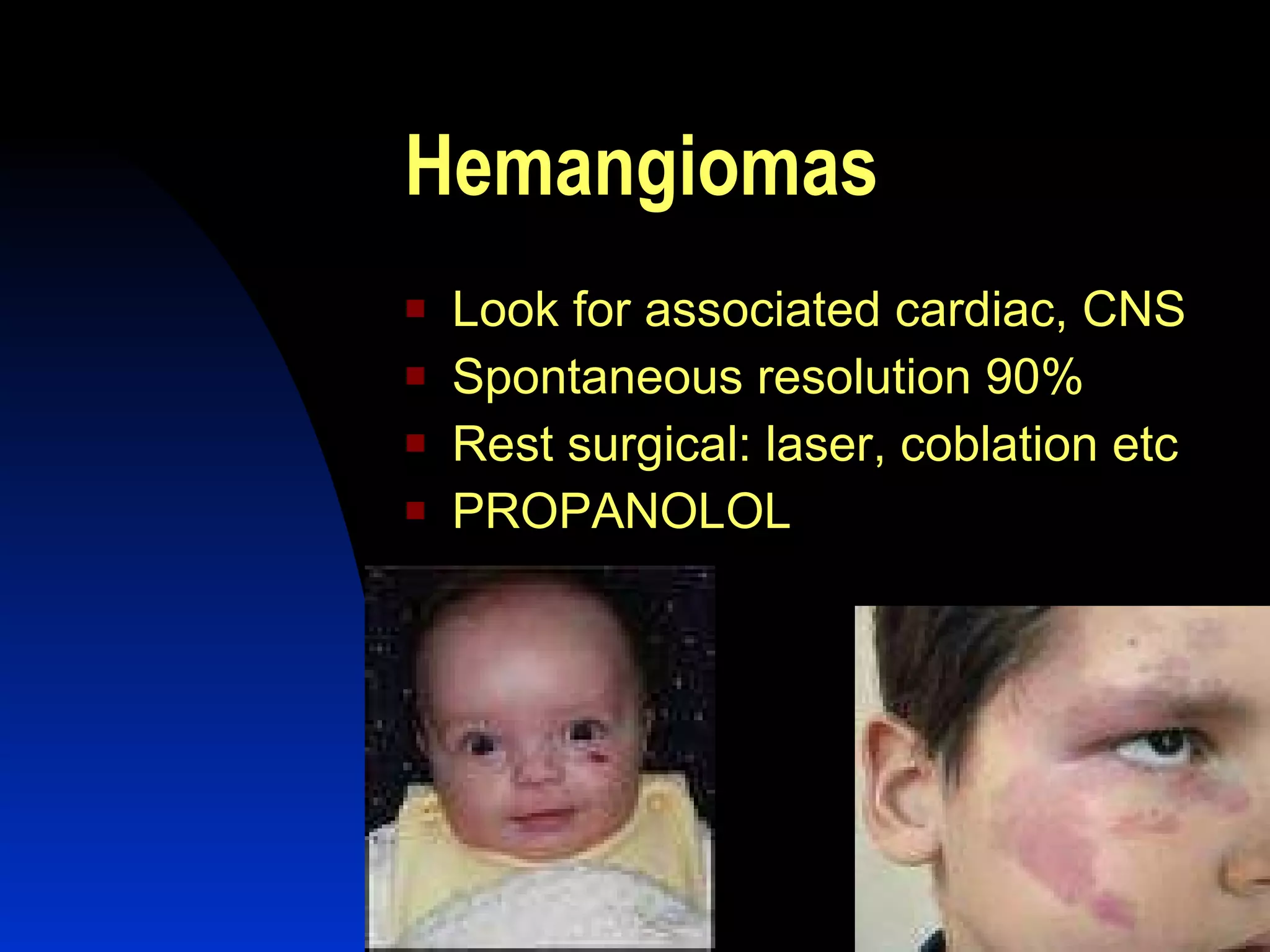
Hemangiomas   Look for associated cardiac, CNS  Spontaneous resolution 90% Rest surgical: laser, coblation etc PROPANOLOL
Have you recently seen a film? Biofilms: organised sessile communities of attached bacteria in an extracellular matrix Role in ENT
We Can Only Refine Our Therapeutics When We Refine Our Diagnostic Abilities THANK YOU SHEELU SRINIVAS [email_address] 9900176770

Office based ent practise in (2)

  • 1.
    OFFICE BASED ENTPRACTISE IN CHILDREN:DIFFICULT SITUATIONS & RECENT TRENDS DR SHEELU SRINIVAS CONSULTANT ENT SURGEON
  • 2.
    We Can OnlyRefine Our Therapeutics When We Refine Our Diagnostic Abilities
  • 3.
  • 4.
  • 5.
  • 6.
  • 7.
    Standard Equipment Assessnares / choanae Assess adenoid and lingual tonsil Assess TVC mobility Assess laryngeal structures
  • 8.
  • 9.
  • 10.
  • 11.
  • 12.
    Sleep disordered breathingin children 4-8 yr olds with variable clinical symptoms at various ages Infants- noisy breathing,disturbed nocturnal sleep Toddlers & preschoolers-snoring & mouth breathing School goers-behavioral & dental problems
  • 13.
    Pathogenesis Notproperly understood Children with sleep-disordered breathing (SDB) can manifest a continuum from simple snoring and upper airway resistance syndrome to obstructive sleep apnea (OSA) with secondary growth impairment, neurocognitive deficits, and less often cardiovascular sequelae.
  • 14.
    Pathogenesis Adenotonsillar hypertrophyis the leading cause of OSA. Other risk factors include allergic rhinitis, craniofacial anomalies, cleft palate following pharyngeal flap surgery, neuromuscular diseases, laryngomalacia, and obesity.
  • 15.
    Symptoms Symptoms of pediatric SDB vary and specialty referral is often done according to symptoms noted by parents. For example, a child with snoring and tonsillar hypertrophy is most likely to be referred to an otolaryngologist, a child with growth impairment to a pediatrician, and a sleepy child to a neurologist.
  • 16.
    Table 1. Clinical Differences in Sleep-disordered Breathing between Children and Adults Variables Children Adults Sex distribution Male: Female = 1:1 Male: Female = 8:1 Weight Underweight Commonly obese Snoring Continuous Intermittent with pause Mouth breathing Common Less common Chief complaint Snoring,difficult Daytime sleepiness breathing Enlarged tonsils/ Common Uncommon adenoids Obstructive pattern Mostly apneas Mostly hypopneas State with most REM REM or non-REM obstruction Clinical arousal Uncommon Common Sleep architecture Preserved Fragmented Sequelae Behavioral changes Daytime sleepiness Neurocognitive Cardiovascular deficits disease Primary treatment Adenotonsillectomy CPAP therapy Abbreviations: SDB: sleep-disordered breathing; REM: rapid eye movement; CPAP: continuous positive airway pressure.
  • 17.
    Diagnostic tool PolysomnographyPSG gold standard can be performed successfully in infants and children of all ages. An AHI > 1 event/h in children is considered abnormal
  • 18.
    Apnea in childrenis defined as absence of airflow with continued chest wall and abdominal wall movement for a duration longer than 2 breaths,(9) whereas obstructive hypopnea is defined as a decrease in nasal flow between 30% and 80% from baseline with a corresponding decrease in oxygen saturation of 3% and /or arousal. differences in OSA between children and adults. 1. Children with OSA frequently do not have cortical arousal associated with obstructive apnea and are less likely to have fragmented sleep than adults. Consequently, sleep architecture is preserved and daytime sleepiness is uncommon. 2. In children, the majority of obstructive apneas occur during rapid eye movement (REM) sleep, particularly in later REM sleep. As a result, OSA may be missed if the REM stage is decreased or absent on screening studies, e.g. nap studies. 3. Children may present with persistent obstructive hypoventilation, rather than cyclic obstructive apnea.Clinically, these children manifest constant snoring and labored breathing instead of breathing pauses or gasps.
  • 19.
  • 20.
    Treatments of Sleep-disorderedBreathing in Children Non-surgical treatment Surgical treatment Rx of nasal allergy Adenotonsillectomy Treat acute inflammation UPPP Treatment of reflux Nasal surgery CPAP Revision of posterior pharyngeal flap Rapid maxillary expansion Distraction osteogenesis Weight reduction Tracheotomy
  • 21.
    NOISY BREATHERS STERTOR Snoring type of noise often made by nasopharyngeal or oropharyngeal obstruction May occassionally be created by supraglottic larynx STRIDOR Harsh sound produced by turbulent airflow through a partial obstruction May be soft and tuneful/musical quality Characteristic of certain pathology but never diagnostic
  • 22.
    Venturi principle Pediatricairway more flexible Forces exerted by Venturi principle cause the narrowed, flexible airway to be momentarily closed during either inspiration or expiration Infant larynx-higher, close proximity to pharynx
  • 23.
    Infant larynx: -More superior in neck -Epiglottis shorter, angled more over glottis -Vocal cords slanted: anterior commissure more inferior - Vocal process 50% of length -Larynx cone-shaped: narrowest at subglottic cricoid ring -Softer, more pliable: may be gently flexed or rotated anteriorly Infant tongue is larger Head is naturally flexed
  • 24.
    Assessment Region  /LEVEL OF AIRWAY OBSTRUCTION Voice   Stridor   Retractions   Feeding   Mouth   Cough  
  • 25.
    Above vocal cordsSupraglottic laryngeal obstruction  Muffled or throaty  Snoring; inspiratory; fluttering  None, until very late  Difficult to impossible  Open; jaw held forward  None  Oropharyngeal obstruction  Unaffected but can be throaty or full  Inspiratory and coarse; increases during sleep  Sternal and intercostal, increasing to total chest when severe  Difficult to impossible, with drooling or saliva  Open; jaw held forward  None 
  • 26.
    Vocal cords &below Glottic –level of cords Subglottic tracheobronchial tree
  • 27.
    Glottic obstruction  Hoarse or aphonic  Inspiratory early; expiratory also as obstruction increases  Xiphoid early and intercostal later; suprasternal and supraclavicular  Normal, except with severe obstruction  May be closed; nares flared  None 
  • 28.
    Subglottic obstruction  Hoarse, but can be husky or normal  Inspiratory early; expiratory also as obstruction increases  Xiphoid early and intercostal later; suprasternal and supraclavicular  Normal, except with severe obstruction  May be closed; nares flared  Barking 
  • 29.
    Tracheobronchial obstruction  Normal Expiratory and wheezing; becoming to and fro with increasing obstruction  None, except with severe obstruction; xiphoid and sternal  Normal, except with severe airway obstruction or when extrinsic obstruction involves esophagus  May be closed; nares flared  Brassy 
  • 30.
    Evaluation -ABC everypediatric casualty should have flexible scopes Choanal atresias Laryngomalacia Vocal cord & glottic anamolies[?clefts] RRP Subglottic anamolies
  • 31.
    Proper Equipment Assessnares/choanae Assess adenoid and lingual tonsil Assess true vocal cord mobility Assess laryngeal structures
  • 32.
  • 33.
    CHAOS (congenital highairway obstruction syndrome) Emergent airway management at the time of delivery is key for survival Prenatally Flattened diaphragms, polyhydramnios, cervical mass TEAM Members Maternal-fetal specialist Neonatalogist Anesthesiologist Otolaryngologist Patient
  • 34.
    EXIT Procedure (exutero intrapartum treatment) Prenatal diagnosis is crucial Flattened diaphragms, polyhydramnios The head, neck, thorax, and one arm are delivered. Uteroplacental circulation can be maintained for 45-60 minutes
  • 35.
    Foreign Bodies 2-4yearolds Acute episode of choking/gagging Triad of acute wheeze, cough and unilateral diminished sounds only in 50% 5-40% of patients manifest no obvious signs
  • 36.
    Laryngopharyngeal reflux Upto two-thirds of infants exhibit signs of reflux (Nelson 1997) A majority of those children will outgrow their reflux by their second year of age Laryngopharyngeal reflux (LPR) has gained increasing recognition as a common pediatric disorder over the past few years . Its symptoms include benign postprandial vomiting during the first year of life, failure to thrive, esophagitis, and airway disturbances. In some conditions--such as tracheoesophageal fistula, neurologic impairment, or oral motor dysphagia--the incidence might be as high as 70%.
  • 37.
    WHAT IS THEDIFFERENCE BETWEEN GERD & LPR? Gastroesophageal reflux (GER) Retrograde flow of gastric contents into the esophagus Laryngopharyngeal reflux (LPR) Extraesophageal reflux (EER) denotes the gastric contents that reaches beyond the upper esophageal sphincter (UES) into oropharynx and/or nasopharynx
  • 38.
  • 39.
    diagnostic Double lumenpH monitering gold standard Laryngoscopy Bronchoscopy Esophagoscopy with biopsy Barium Esophagram Scintiscan Esophageal intraluminal impedance
  • 40.
    Swallowing & feedingdisorders 40-70% kids with CNS disorders Note: nasal obstruction, nasal masses, oral lesion, cleft lip/palate, upper aero digestive tract anomalies laryngomalacia, vocal cord paralysis, laryngeal clefts, tracheo-esophageal fistula, foregut malformations, or vascular rings of the aorta or pulmonary arteries that compress the esophagus or trachea may all contribute to feeding problems and dysphagia
  • 41.
    Assessment of swallowingVSS : videofluoroscopy swallow study FEES: functional endoscopic evaluation of swallowing FEESST Flexible Endoscopic Evaluation of Swallowing with Sensory Testing Transnasal oesophagoscopy
  • 42.
    Role of ENTin special children Airway Swallowing & drooling Hearing & speech
  • 43.
    Drooling severity score(after Thomas-Stonell and Greenberg 1. Dry 2. Mild – wet lips 3. Moderate – wet lips and chin 4. Severe – clothing damp 5. Profuse – clothing, hands and objects wet
  • 44.
    Management approaches Conservativemethods include behavioural approaches and techniques to improve sensory awareness Appliances Drug therapy Surgery :salivary duct ligation/transposition
  • 45.
    Head & necktumors Congenital Inflammatory Neoplastic Hemangiomas represent the most common of all congenital anomalies, with an incidence of 0.3-2% at birth and 10% at age 1 year.
  • 46.
    Hemangiomas Look for associated cardiac, CNS Spontaneous resolution 90% Rest surgical: laser, coblation etc PROPANOLOL
  • 47.
    Have you recentlyseen a film? Biofilms: organised sessile communities of attached bacteria in an extracellular matrix Role in ENT
  • 48.
    We Can OnlyRefine Our Therapeutics When We Refine Our Diagnostic Abilities THANK YOU SHEELU SRINIVAS [email_address] 9900176770