CNS Examination (Central
Nervous System)
DR. SABIR ALI
ASSISTANT PROF.
KAMCH UDAIPUR
CNS Examination (Central Nervous System)
1 Assessment of higher functions
2 Signs of meningeal irritation
3 Examination of cranial nerves
4 Examination of motor system
5 Sensory examination
6 Localizing sign
Assessment of higher functions
 General behavior - Irritability, Confusion
 Memory – Comprehension & intellect
 Orientation – time,space,person,
 Speech
Signs of meningeal irritation
 Nuchal rigidity – pain & stiffness of neck during flexion
 Kernig sign – pain of extension of the leg,following hip
flexion
 Brudzinski sign – involuntary flexion of knee & hips
passive flexion of the neck
https://youtu.be/tN6bbPOFAg8
 Inflamation of spinal meninges
 Irritation of nerve roots
 protective spasm of spinal muscles on streching of spinal
cord
 Seizures
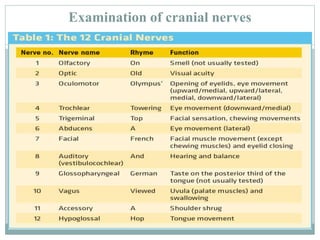
Examination of cranial nerves
Examination of motor system
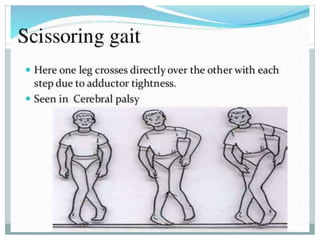
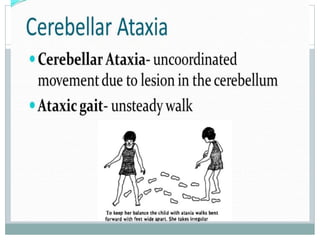
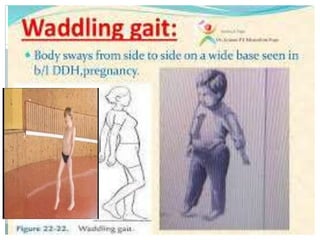
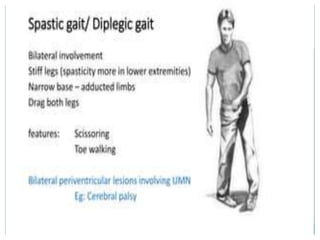
 Gait –
 Posture –
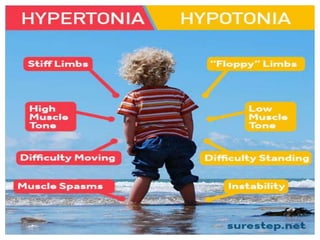
 Muscle tone

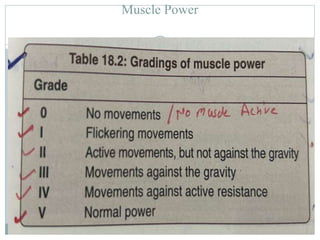
 Muscle Power
 reflexes
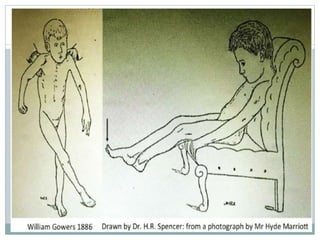
Abnormal but painless gait ind-neuromuscular disease
 https://youtu.be/7OcKkW8_LUU
Decorticate posture – bilateral flexion of upper limbs
& extension of lower limbs
Decerebrate posture- extension of all limbs with
spasticity
frog-like posture – extension of all four limbs
Posture
frog-like posture
Muscle tone
Muscle Power
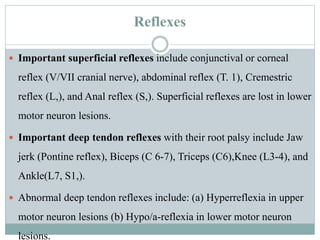
Reflexes
 Important superficial reflexes include conjunctival or corneal
reflex (V/VII cranial nerve), abdominal reflex (T. 1), Cremestric
reflex (L,), and Anal reflex (S,). Superficial reflexes are lost in lower
motor neuron lesions.
 Important deep tendon reflexes with their root palsy include Jaw
jerk (Pontine reflex), Biceps (C 6-7), Triceps (C6),Knee (L3-4), and
Ankle(L7, S1,).
 Abnormal deep tendon reflexes include: (a) Hyperreflexia in upper
motor neuron lesions (b) Hypo/a-reflexia in lower motor neuron
lesions.
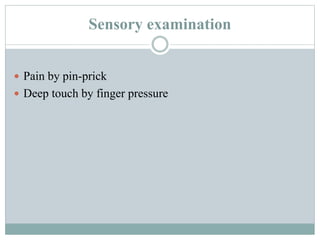
Sensory examination
 Pain by pin-prick
 Deep touch by finger pressure
Localizing sign
 higher functions abnormal
 Speech/vision defects
 Seizures
 Learning disabilities
 Impaired memory
Laboratory evaluation in CNS disease
 CSF Examination
 Neuroimaging (CT,MRI,X-ray )
 Electroencephalography (EEG,EMG,)
 Thank you

CNS examination.pptx

  • 1.
    CNS Examination (Central NervousSystem) DR. SABIR ALI ASSISTANT PROF. KAMCH UDAIPUR
  • 2.
    CNS Examination (CentralNervous System) 1 Assessment of higher functions 2 Signs of meningeal irritation 3 Examination of cranial nerves 4 Examination of motor system 5 Sensory examination 6 Localizing sign
  • 3.
    Assessment of higherfunctions  General behavior - Irritability, Confusion  Memory – Comprehension & intellect  Orientation – time,space,person,  Speech
  • 4.
    Signs of meningealirritation  Nuchal rigidity – pain & stiffness of neck during flexion  Kernig sign – pain of extension of the leg,following hip flexion  Brudzinski sign – involuntary flexion of knee & hips passive flexion of the neck https://youtu.be/tN6bbPOFAg8
  • 6.
     Inflamation ofspinal meninges  Irritation of nerve roots  protective spasm of spinal muscles on streching of spinal cord  Seizures
  • 7.
  • 8.
    Examination of motorsystem  Gait –  Posture –  Muscle tone   Muscle Power  reflexes
  • 9.
    Abnormal but painlessgait ind-neuromuscular disease
  • 15.
  • 16.
    Decorticate posture –bilateral flexion of upper limbs & extension of lower limbs Decerebrate posture- extension of all limbs with spasticity frog-like posture – extension of all four limbs Posture
  • 17.
  • 18.
  • 21.
  • 22.
    Reflexes  Important superficialreflexes include conjunctival or corneal reflex (V/VII cranial nerve), abdominal reflex (T. 1), Cremestric reflex (L,), and Anal reflex (S,). Superficial reflexes are lost in lower motor neuron lesions.  Important deep tendon reflexes with their root palsy include Jaw jerk (Pontine reflex), Biceps (C 6-7), Triceps (C6),Knee (L3-4), and Ankle(L7, S1,).  Abnormal deep tendon reflexes include: (a) Hyperreflexia in upper motor neuron lesions (b) Hypo/a-reflexia in lower motor neuron lesions.
  • 23.
    Sensory examination  Painby pin-prick  Deep touch by finger pressure
  • 24.
    Localizing sign  higherfunctions abnormal  Speech/vision defects  Seizures  Learning disabilities  Impaired memory
  • 25.
    Laboratory evaluation inCNS disease  CSF Examination  Neuroimaging (CT,MRI,X-ray )  Electroencephalography (EEG,EMG,)
  • 26.