





Susceptibility, potency
selection and
repetition.
Dr Ananthakrishnan
Dept of organon of medicine
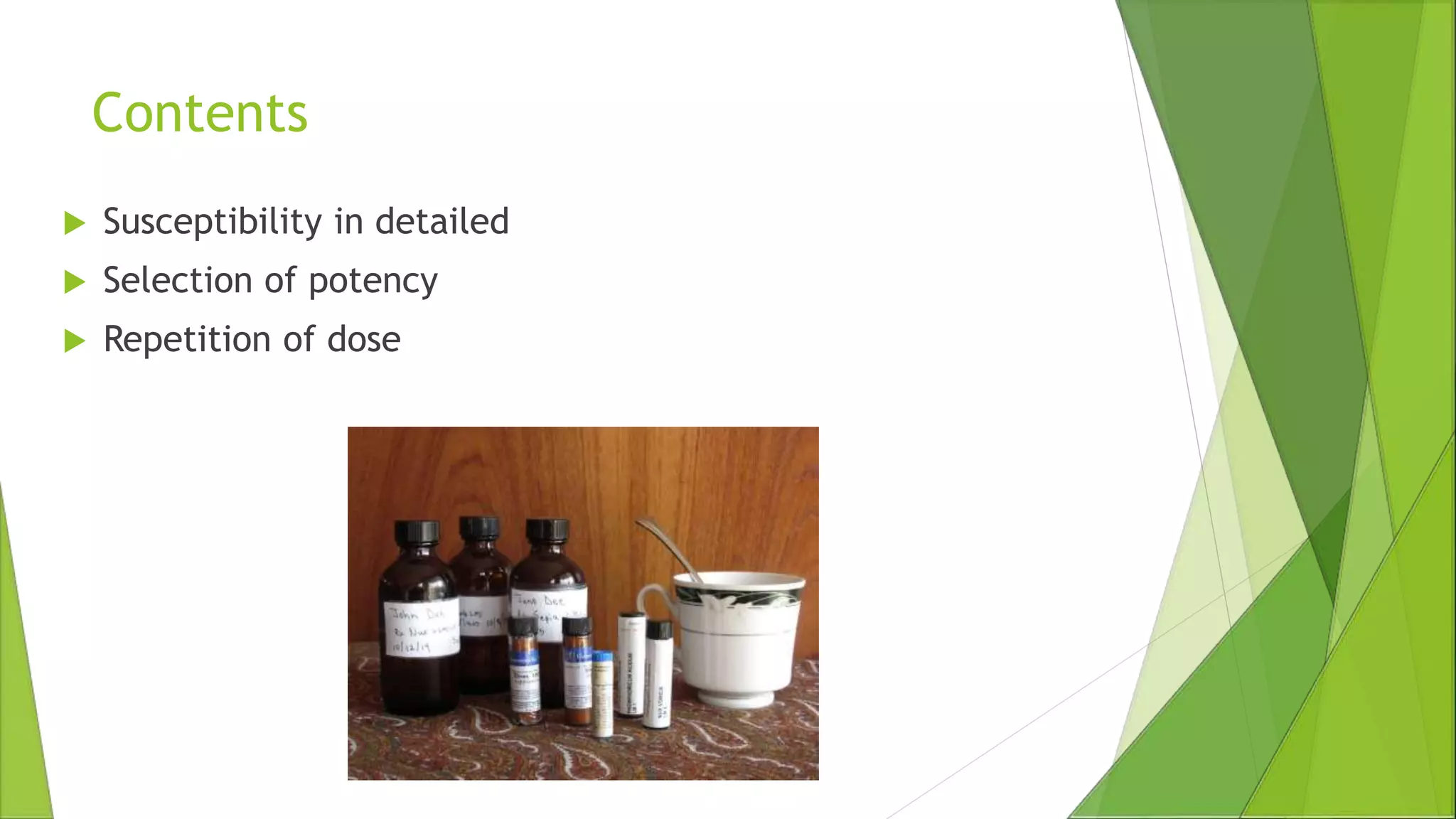
Contents
 Susceptibility in detailed
 Selection of potency
 Repetition of dose
Susceptibility
 It is an inherent capacity in all living things
to react to stimuli in the environment and
represents a fundamental quality that
distinguishes the living from non – living.
Susceptibility
 “We may define susceptibility primarily as the
reaction of the organism to the external and
internal influences”.
 “vacuum that attracts and pulls for most needed
things of same plane.
--H A Roberts
Susceptibility plays important role in..
 Maintenance of health
 Evolution of constitution
 Development of diathesis
 Development of disease
 Manifestations of disease
 Process of recovery and cure
 Evolution of drug picture
 Manifestation of remedy
 Determination of dose and repetition.
Susceptibility and Immunity.
 When immune system is damaged, person
becomes highly susceptible to disease
Increased susceptibility
 Increased susceptibility promotes development of disease
and abnormal responses to stimuli.
 Max susceptibility exhibited by host lead to the discovery
of higher potency
 As in other systems, never to suppress elevated
susceptibility. This can cause further complications later.
 But homoeopathic higher potency medicines can bring
back the elevated susceptibility without causing harm.
Decreased susceptibility
 Decreased susceptibility is denoted by the poor
response of an organism to stimuli in the
environment.
 Poor protective responses - the subject comes
down with illness
 Lower potencies are used.
Factors contribute to assume
susceptibility
 Age
 Sex
 Habbit and environment
 Constitution and temperament
 Nature and depth of the disease
 Nature of medicine
Susceptibility – selection of potency.
 SUSCEPTIBILITY IS THE ONLY GUIDE FOR THE
SELECTION OF POTENCY. MORE THE SUSCEPTIBILITY
HIGHER THE POTENCY, LESS THE SUSCEPTIBILITY
LOWER THE POTENCY .
Age
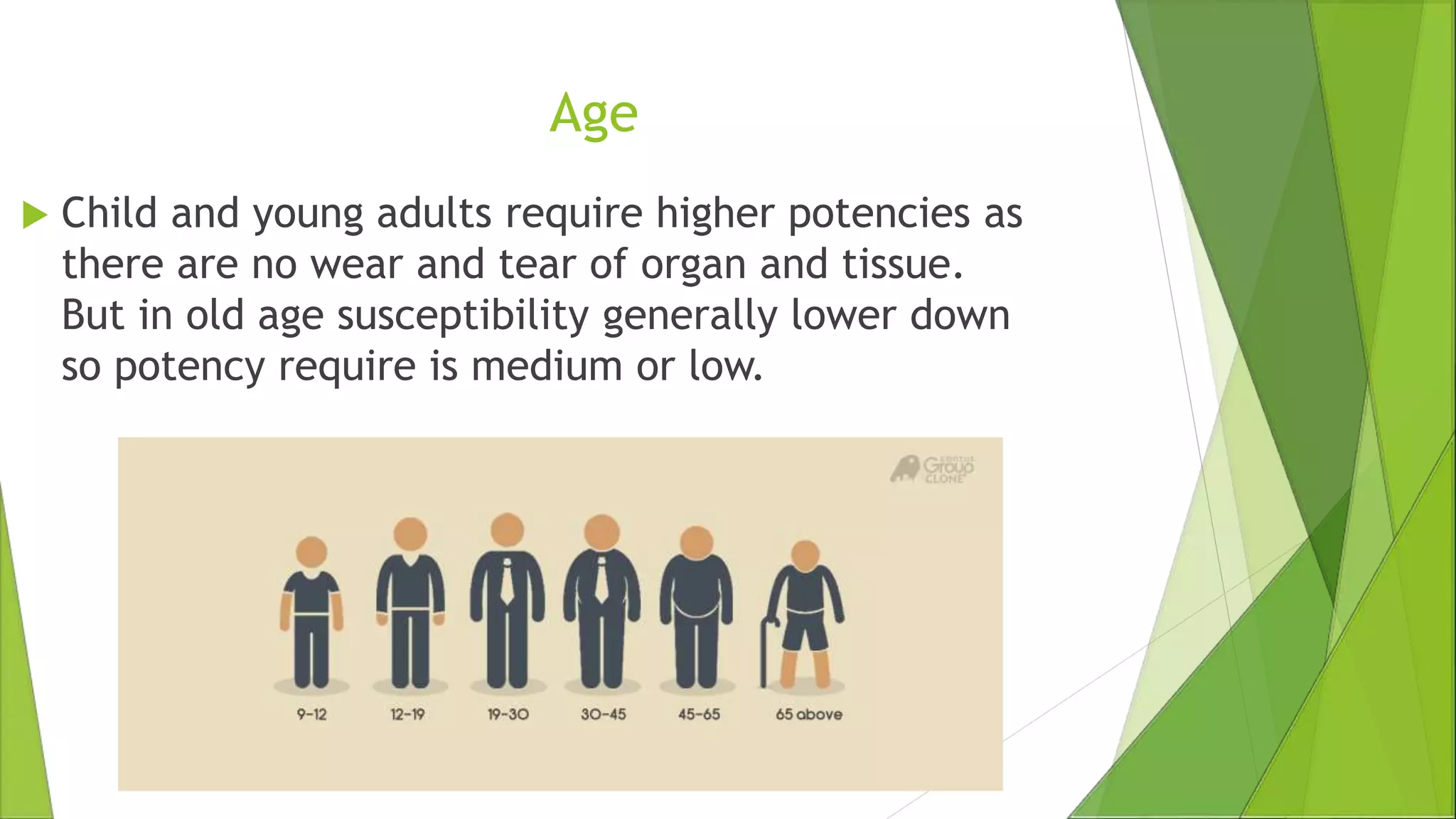
 Child and young adults require higher potencies as
there are no wear and tear of organ and tissue.
But in old age susceptibility generally lower down
so potency require is medium or low.
Sex
 Female require medium potency
 But male require higher potency
Habit and environment
 Higher potency best adapted to:
1. Person engaged in highly mental work ( doctors, lawyer,
ministers etc).
2. Sedentary occupation.
3. Excitement of the imagination and emotions.
4. Long sleep.
Lower potencies are best adapted to:
 Person engaged in physical labor.
 Who sleep less.
 whose food is course
 person expose to drugs, perfumes, chemicals such as
Tabaco worker , dealers.
 People , who are mentally weak.
 But where their illness is directly caused by some particular
drug influence ,a higher potency of the same or similar
drug may prove to be the best antidote .
Constitution
 Higher potencies :
1. Sensitive persons of a nervous ,sanguine or
choleric temperament.
2. Intellectual persons, quick to act and react.
3. Zealous and impulsive persons.
Lower potencies:
 Torpid and phlegmatic individuals , dull of
comprehension and slow to act.
 Coarse fibered , sluggish individuals of gross
habits.
 Those who posses great muscular power but who
require a powerful stimulus to excite them.
Nature and depth of the disease
Acute disease
 No structural change, so susceptibility of patient is high so
higher potency.
 Acute disease with lowered vitality requires low potency.
 Acute manifestations of chronic diseases with gross
pathology require medium or low potency.
Chronic disease
 Without gross pathology requires higher potencies.
 With gross organic changes require low potency.
 Mental disease the susceptibility is high ,potency require
high. But in some cases high potency is contraindicated
the possibility of too violent an aggravation.
 Incurable disease - 50 millesimal potency is best for this
purpose.
 Seat of the disease :where the disease is affecting the
internal organ in those cases, lower potency is required.
 Previous treatment of the disease :patient require higher
potency.
Repetition of doses
Factors responsible for repetition of
dose
Condition and progress of the patient
Nature of the disease
Nature of the remedy
Condition and progress of patient
 Perceptible and continued progress of
improvement contraindicates repetition.
 Repeat the doses when improvement
ceases.
Nature of the disease
 Acute disease
1. Medicine repeated at every 2,3,4 or 6 hr. in most acute
cases it may repeated at 5 min.
2. 50 millesimal scale remedy repeated frequently.
 Chronic disease
1. Repetition of lower potency is acceptable , higher
potency we should wait till the action of remedy is over.
 In cases of large dose,
administration can be repeated
frequently.
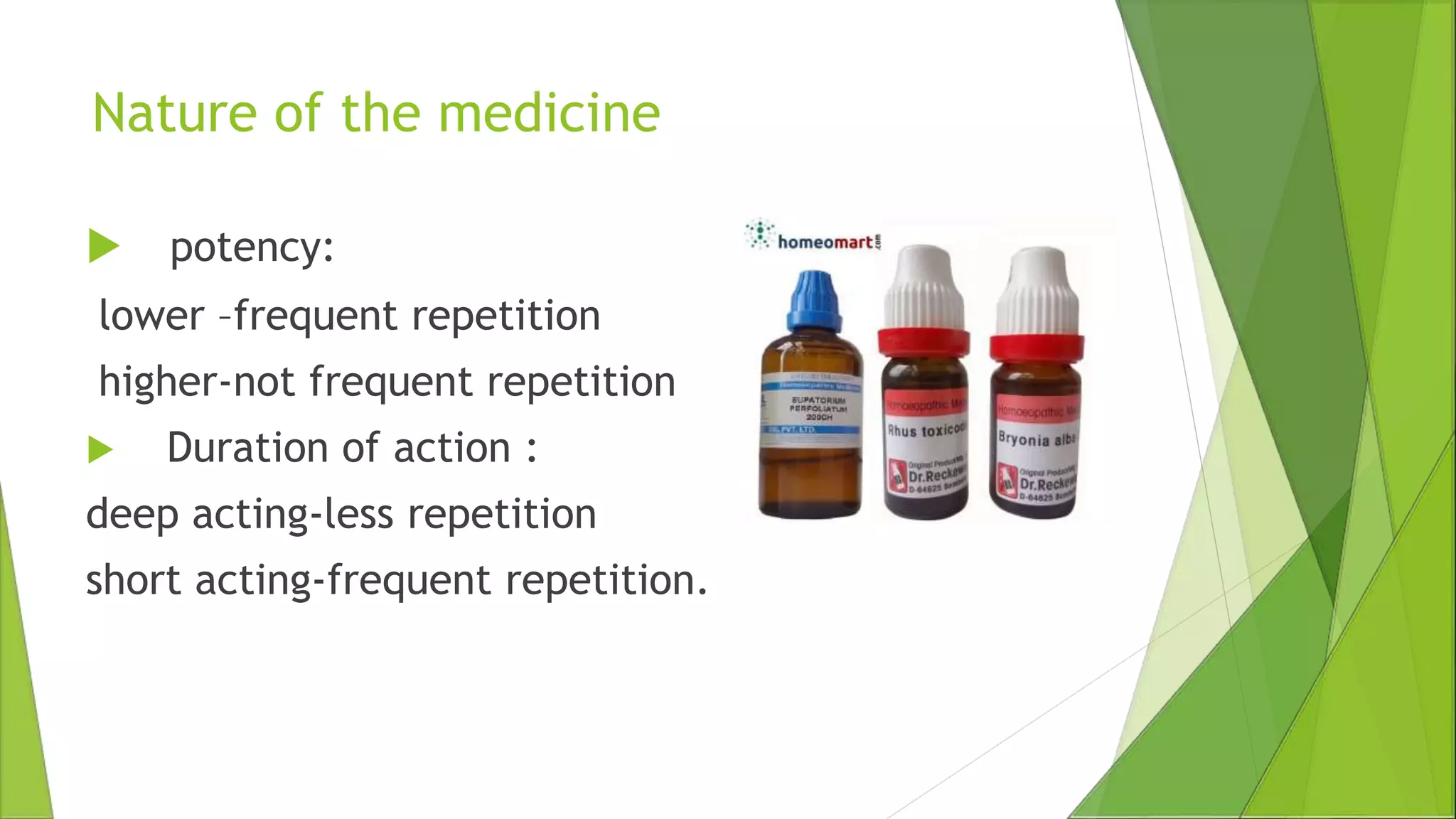
Nature of the medicine
 potency:
lower –frequent repetition
higher-not frequent repetition
 Duration of action :
deep acting-less repetition
short acting-frequent repetition.
Thank you….

Susceptibility, potency selection and repetition of dose in homoeopathy

  • 1.
    Susceptibility, potency selection and repetition. DrAnanthakrishnan Dept of organon of medicine
  • 2.
    Contents  Susceptibility indetailed  Selection of potency  Repetition of dose
  • 3.
    Susceptibility  It isan inherent capacity in all living things to react to stimuli in the environment and represents a fundamental quality that distinguishes the living from non – living.
  • 4.
    Susceptibility  “We maydefine susceptibility primarily as the reaction of the organism to the external and internal influences”.  “vacuum that attracts and pulls for most needed things of same plane. --H A Roberts
  • 5.
    Susceptibility plays importantrole in..  Maintenance of health  Evolution of constitution  Development of diathesis  Development of disease  Manifestations of disease  Process of recovery and cure  Evolution of drug picture  Manifestation of remedy  Determination of dose and repetition.
  • 6.
    Susceptibility and Immunity. When immune system is damaged, person becomes highly susceptible to disease
  • 7.
    Increased susceptibility  Increasedsusceptibility promotes development of disease and abnormal responses to stimuli.  Max susceptibility exhibited by host lead to the discovery of higher potency  As in other systems, never to suppress elevated susceptibility. This can cause further complications later.  But homoeopathic higher potency medicines can bring back the elevated susceptibility without causing harm.
  • 8.
    Decreased susceptibility  Decreasedsusceptibility is denoted by the poor response of an organism to stimuli in the environment.  Poor protective responses - the subject comes down with illness  Lower potencies are used.
  • 9.
    Factors contribute toassume susceptibility  Age  Sex  Habbit and environment  Constitution and temperament  Nature and depth of the disease  Nature of medicine
  • 10.
    Susceptibility – selectionof potency.  SUSCEPTIBILITY IS THE ONLY GUIDE FOR THE SELECTION OF POTENCY. MORE THE SUSCEPTIBILITY HIGHER THE POTENCY, LESS THE SUSCEPTIBILITY LOWER THE POTENCY .
  • 11.
    Age  Child andyoung adults require higher potencies as there are no wear and tear of organ and tissue. But in old age susceptibility generally lower down so potency require is medium or low.
  • 12.
    Sex  Female requiremedium potency  But male require higher potency
  • 13.
    Habit and environment Higher potency best adapted to: 1. Person engaged in highly mental work ( doctors, lawyer, ministers etc). 2. Sedentary occupation. 3. Excitement of the imagination and emotions. 4. Long sleep.
  • 14.
    Lower potencies arebest adapted to:  Person engaged in physical labor.  Who sleep less.  whose food is course  person expose to drugs, perfumes, chemicals such as Tabaco worker , dealers.  People , who are mentally weak.
  • 15.
     But wheretheir illness is directly caused by some particular drug influence ,a higher potency of the same or similar drug may prove to be the best antidote .
  • 16.
    Constitution  Higher potencies: 1. Sensitive persons of a nervous ,sanguine or choleric temperament. 2. Intellectual persons, quick to act and react. 3. Zealous and impulsive persons.
  • 17.
    Lower potencies:  Torpidand phlegmatic individuals , dull of comprehension and slow to act.  Coarse fibered , sluggish individuals of gross habits.  Those who posses great muscular power but who require a powerful stimulus to excite them.
  • 18.
    Nature and depthof the disease Acute disease  No structural change, so susceptibility of patient is high so higher potency.  Acute disease with lowered vitality requires low potency.  Acute manifestations of chronic diseases with gross pathology require medium or low potency.
  • 19.
    Chronic disease  Withoutgross pathology requires higher potencies.  With gross organic changes require low potency.  Mental disease the susceptibility is high ,potency require high. But in some cases high potency is contraindicated the possibility of too violent an aggravation.
  • 20.
     Incurable disease- 50 millesimal potency is best for this purpose.  Seat of the disease :where the disease is affecting the internal organ in those cases, lower potency is required.  Previous treatment of the disease :patient require higher potency.
  • 21.
  • 22.
    Factors responsible forrepetition of dose Condition and progress of the patient Nature of the disease Nature of the remedy
  • 23.
    Condition and progressof patient  Perceptible and continued progress of improvement contraindicates repetition.  Repeat the doses when improvement ceases.
  • 24.
    Nature of thedisease  Acute disease 1. Medicine repeated at every 2,3,4 or 6 hr. in most acute cases it may repeated at 5 min. 2. 50 millesimal scale remedy repeated frequently.  Chronic disease 1. Repetition of lower potency is acceptable , higher potency we should wait till the action of remedy is over.
  • 25.
     In casesof large dose, administration can be repeated frequently.
  • 26.
    Nature of themedicine  potency: lower –frequent repetition higher-not frequent repetition  Duration of action : deep acting-less repetition short acting-frequent repetition.
  • 27.