Cloud Computing


REVOLUTION – NO EVOLUTION


        PEDRO ALEXANDER ROMERO
Cloud Computing

Agenda

- Definition
- Cloud Services Characteristics
- Enablers
  - Virtualization

  - Democratization of Computing

  - Scalability and fast provisioning

  - Commoditization of infrastructure

- Categories within Cloud Computing
Cloud Computing

Definition:
Cloud Computing is a model for enabling convenient, on-
demand network access to a shared pool of configurable
computing resources:
                •   NETWORKS
                •   SERVERS
                •   STORAGE
                •   APPLICATIONS
                •   SERVICES


that can be rapidly provisioned and released with minimal
management effort or service provider interaction.
Cloud Computing

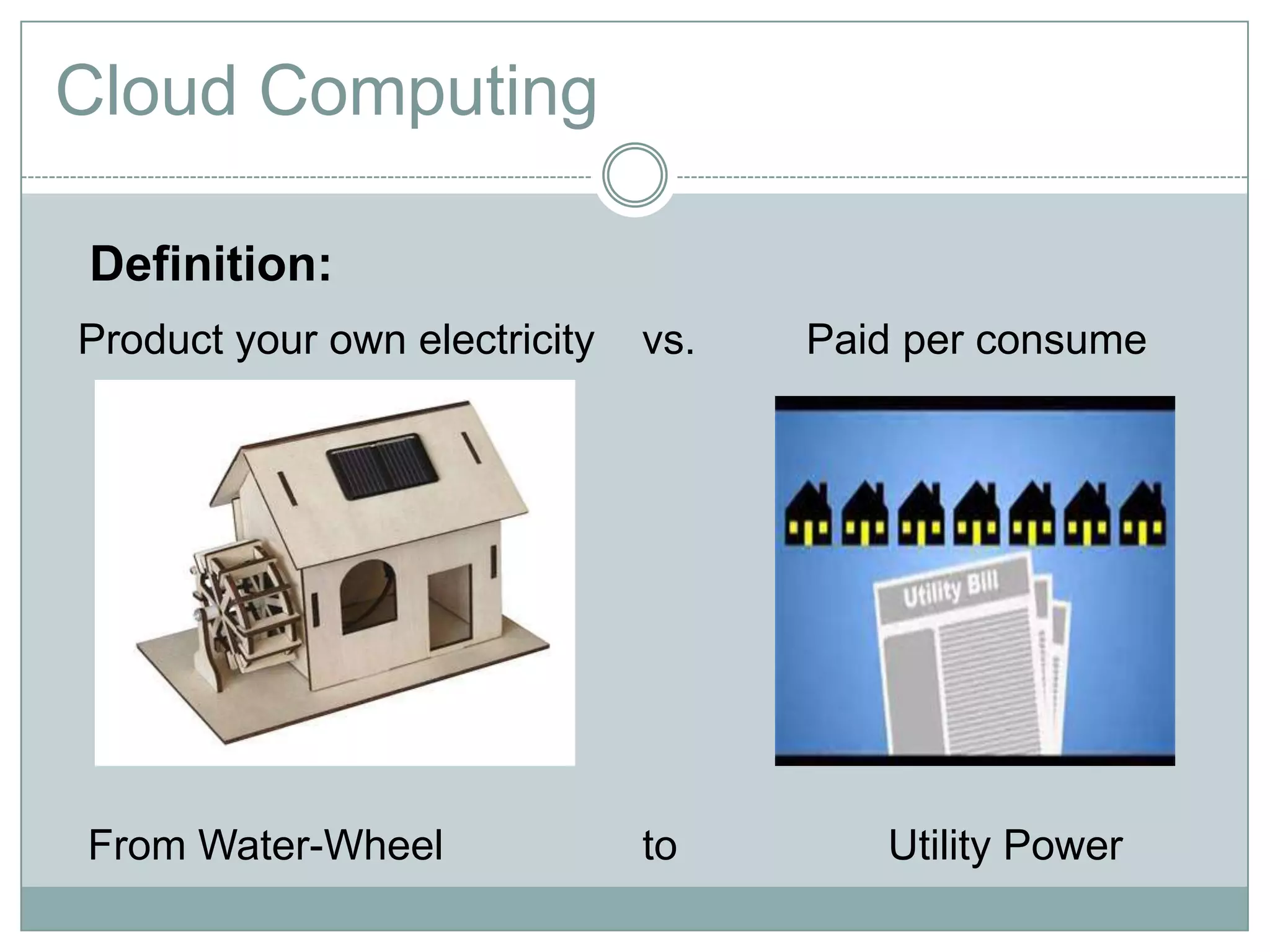
Definition:
Product your own electricity   vs.   Paid per consume


From Water-Wheel               to       Utility Power
Cloud Computing

 Cloud Service Characteristics
• On-demand self service
   Possibility for end users to sign up an receive the service without delays

• Broad network access
   Service can be accessed via standards platforms

• Resource pooling
   Resources are pooled across multiple customers

• Rapid elasticity
   Capacity can scale to cope with demand peaks

• Measured service
   Billing is metered and delivered as a utility service
Cloud Computing
Enablers:
I.     Virtualization – The ability to increase computing
       efficiency

II.    Democratization of computing – Bringing enterprise
       scale infrastructure to small and medium businesses

III.   Scalability and fast provisioning – Bringing web scale
       IT at a rapid pace

IV. Commoditization of infrastructure – Enabling IT to
       focus on the strategic aspects of its role
        Cloud Computing: Need all Enablers working together
Cloud Computing

I. Virtualization:
      The ability to increase computing efficiency
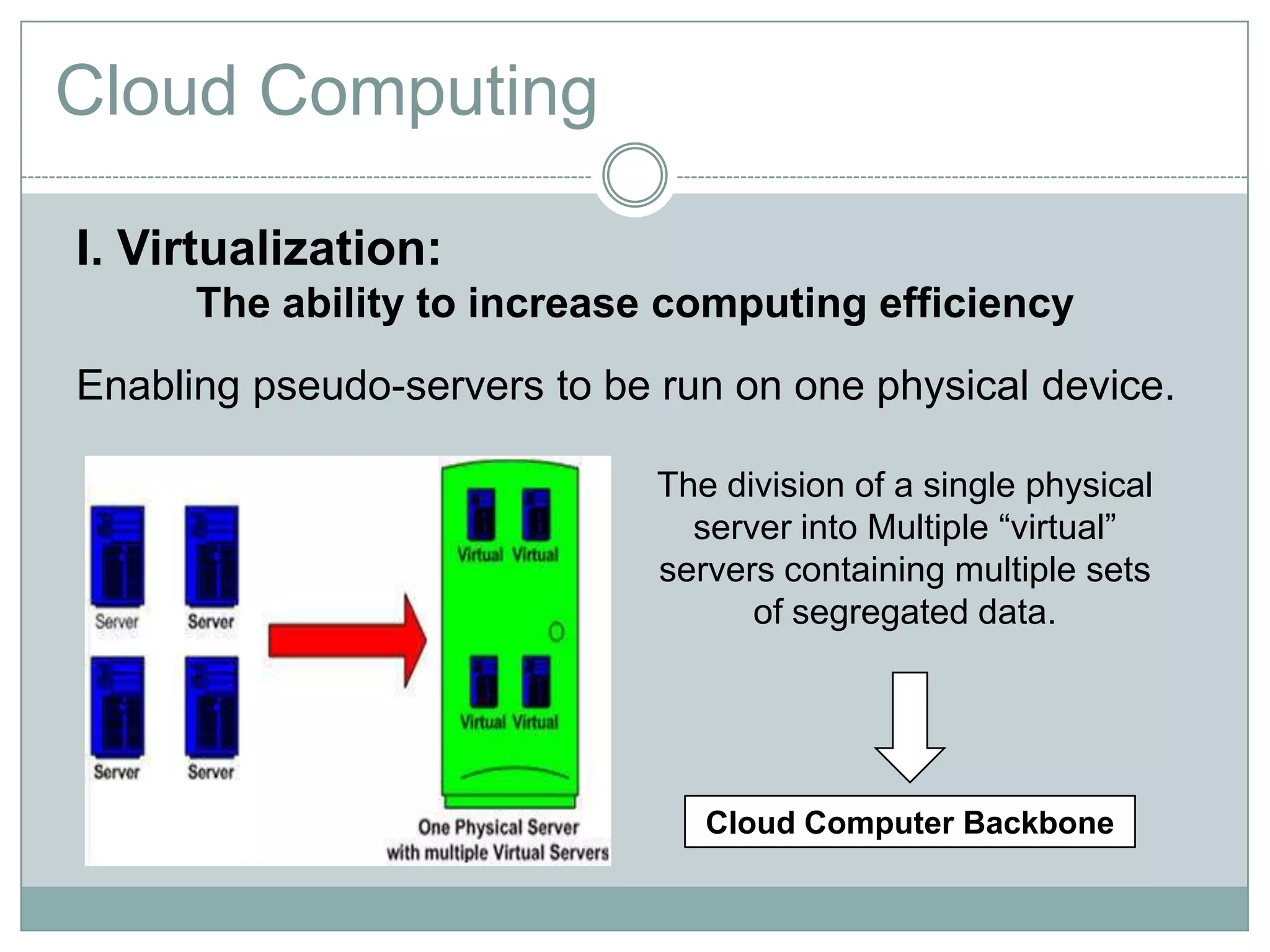
Enabling pseudo-servers to be run on one physical device.

                              The division of a single physical
                                server into Multiple “virtual”
                              servers containing multiple sets
                                    of segregated data.


                                 Cloud Computer Backbone
Cloud Computing

I. Virtualization:
       The ability to increase computing efficiency

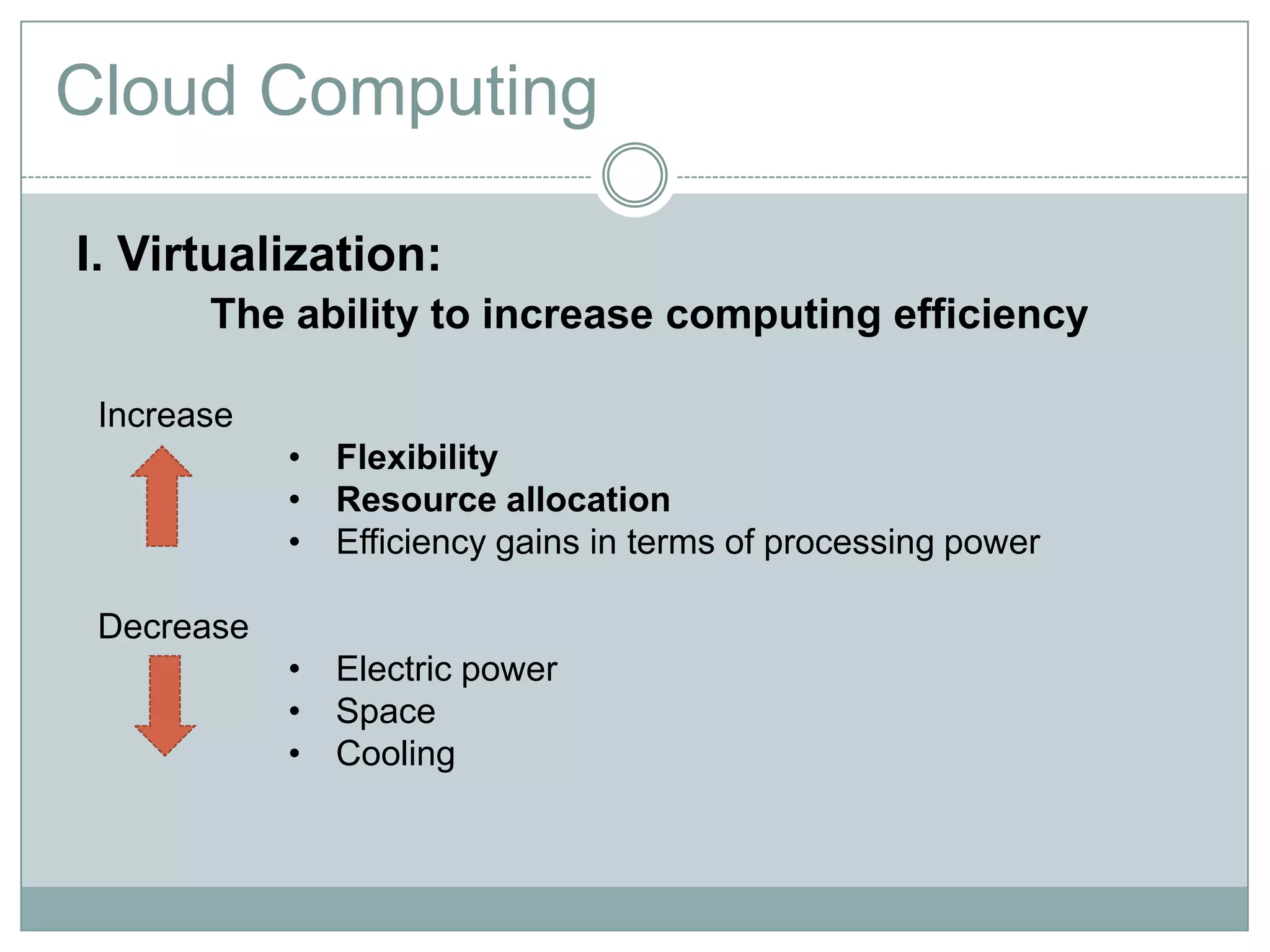
 Increase
            • Flexibility
            • Resource allocation
            • Efficiency gains in terms of processing power

 Decrease
            • Electric power
            • Space
            • Cooling
Cloud Computing

II. Democratization of computing:
  Bringing enterprise scale infrastructure to small and
                  medium businesses

Easy business development, enabling saving in:
               • Hardware
               • Software Licenses


      Ability for small and medium companies to rapidly scale
  infrastructure to levels only achieved by largest organizations.
Cloud Computing

III. Scalability and Fast Provisioning:
Cloud Computing enables organizations to:

   1. Maintain infrastructure at required levels at all
      times

   2. Cost saving originated in the aggregated cost per
      unit. Paying only for what is required when is
      required

            Despite the cost per Unit from an Utility Service
            Provider, can be higher than an owned resource.
Cloud Computing

III. Scalability and Fast Provisioning:
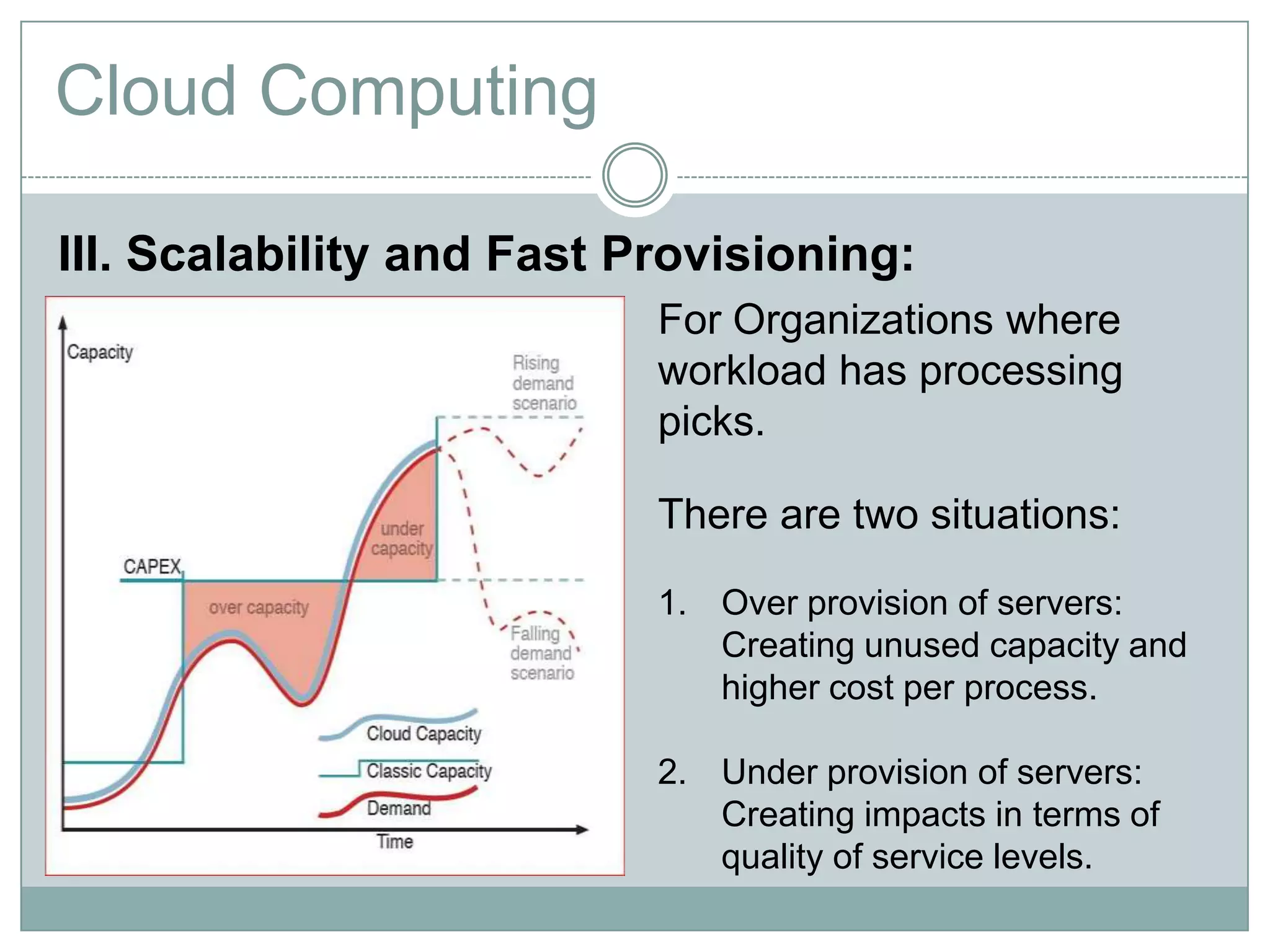
                           For Organizations where
                           workload has processing
                           picks.

                           There are two situations:

                           1. Over provision of servers:
                              Creating unused capacity and
                              higher cost per process.

                           2. Under provision of servers:
                              Creating impacts in terms of
                              quality of service levels.
Cloud Computing

IV. Commoditization of Infrastructure
 Enabling IT to focus on the strategic aspects of its role

Cloud Computing offers:

• The ability for IT departments to apply resources as,
  and where, they are needed.

• To the organizations to focus in their core business.

    Business Agility is the main reason to migrate to Cloud
              Computing (over Cost savings)
Cloud Computing

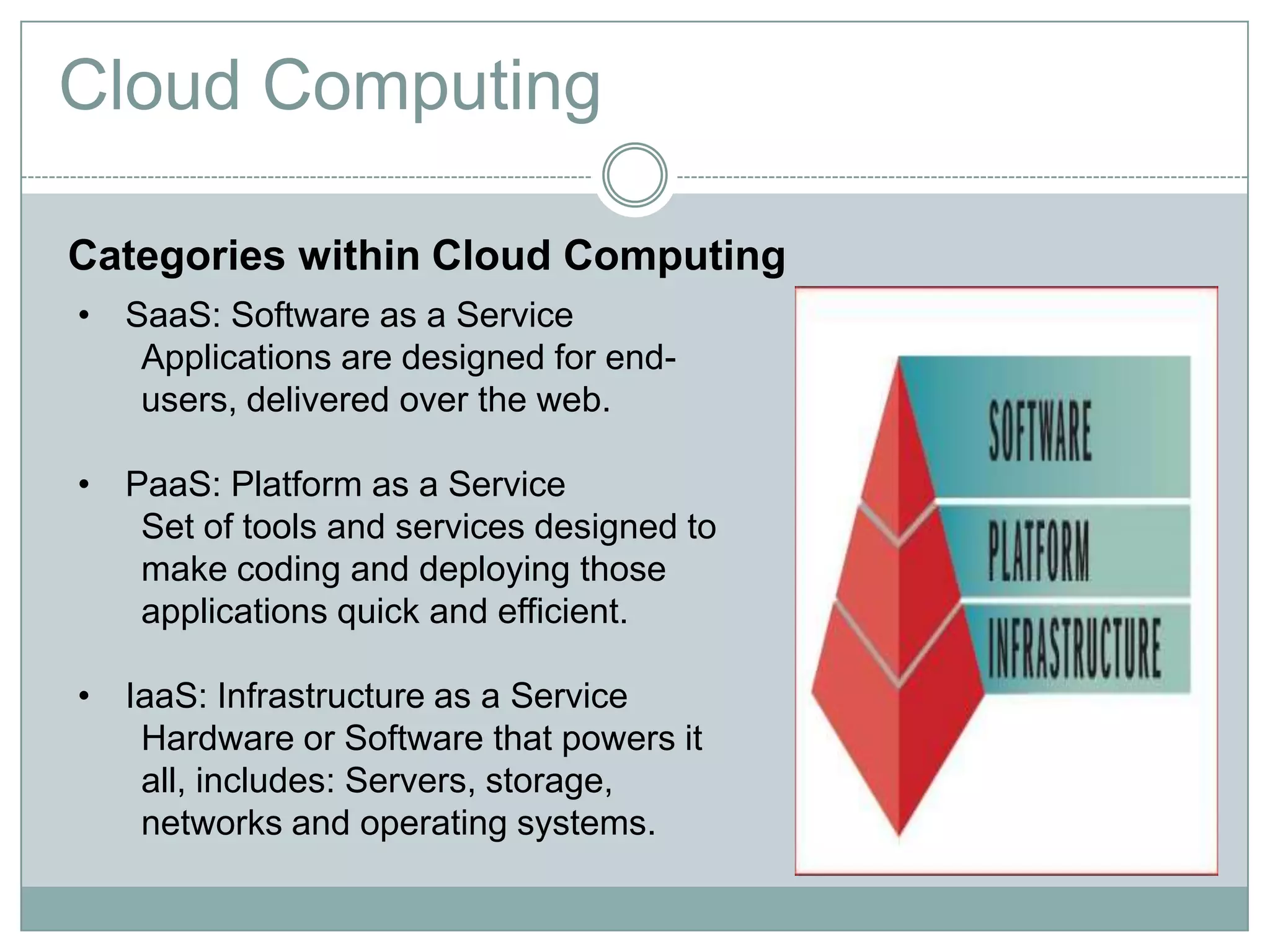
Categories within Cloud Computing
• SaaS: Software as a Service
   Applications are designed for end-
   users, delivered over the web.

• PaaS: Platform as a Service
   Set of tools and services designed to
   make coding and deploying those
   applications quick and efficient.

• IaaS: Infrastructure as a Service
   Hardware or Software that powers it
   all, includes: Servers, storage,
   networks and operating systems.

Cloud computing revolution no evolution

  • 1.
    Cloud Computing REVOLUTION –NO EVOLUTION PEDRO ALEXANDER ROMERO
  • 2.
    Cloud Computing Agenda - Definition -Cloud Services Characteristics - Enablers - Virtualization - Democratization of Computing - Scalability and fast provisioning - Commoditization of infrastructure - Categories within Cloud Computing
  • 3.
    Cloud Computing Definition: Cloud Computingis a model for enabling convenient, on- demand network access to a shared pool of configurable computing resources: • NETWORKS • SERVERS • STORAGE • APPLICATIONS • SERVICES that can be rapidly provisioned and released with minimal management effort or service provider interaction.
  • 4.
    Cloud Computing Definition: Product yourown electricity vs. Paid per consume From Water-Wheel to Utility Power
  • 5.
    Cloud Computing CloudService Characteristics • On-demand self service Possibility for end users to sign up an receive the service without delays • Broad network access Service can be accessed via standards platforms • Resource pooling Resources are pooled across multiple customers • Rapid elasticity Capacity can scale to cope with demand peaks • Measured service Billing is metered and delivered as a utility service
  • 6.
    Cloud Computing Enablers: I. Virtualization – The ability to increase computing efficiency II. Democratization of computing – Bringing enterprise scale infrastructure to small and medium businesses III. Scalability and fast provisioning – Bringing web scale IT at a rapid pace IV. Commoditization of infrastructure – Enabling IT to focus on the strategic aspects of its role Cloud Computing: Need all Enablers working together
  • 7.
    Cloud Computing I. Virtualization: The ability to increase computing efficiency Enabling pseudo-servers to be run on one physical device. The division of a single physical server into Multiple “virtual” servers containing multiple sets of segregated data. Cloud Computer Backbone
  • 8.
    Cloud Computing I. Virtualization: The ability to increase computing efficiency Increase • Flexibility • Resource allocation • Efficiency gains in terms of processing power Decrease • Electric power • Space • Cooling
  • 9.
    Cloud Computing II. Democratizationof computing: Bringing enterprise scale infrastructure to small and medium businesses Easy business development, enabling saving in: • Hardware • Software Licenses Ability for small and medium companies to rapidly scale infrastructure to levels only achieved by largest organizations.
  • 10.
    Cloud Computing III. Scalabilityand Fast Provisioning: Cloud Computing enables organizations to: 1. Maintain infrastructure at required levels at all times 2. Cost saving originated in the aggregated cost per unit. Paying only for what is required when is required Despite the cost per Unit from an Utility Service Provider, can be higher than an owned resource.
  • 11.
    Cloud Computing III. Scalabilityand Fast Provisioning: For Organizations where workload has processing picks. There are two situations: 1. Over provision of servers: Creating unused capacity and higher cost per process. 2. Under provision of servers: Creating impacts in terms of quality of service levels.
  • 12.
    Cloud Computing IV. Commoditizationof Infrastructure Enabling IT to focus on the strategic aspects of its role Cloud Computing offers: • The ability for IT departments to apply resources as, and where, they are needed. • To the organizations to focus in their core business. Business Agility is the main reason to migrate to Cloud Computing (over Cost savings)
  • 13.
    Cloud Computing Categories withinCloud Computing • SaaS: Software as a Service Applications are designed for end- users, delivered over the web. • PaaS: Platform as a Service Set of tools and services designed to make coding and deploying those applications quick and efficient. • IaaS: Infrastructure as a Service Hardware or Software that powers it all, includes: Servers, storage, networks and operating systems.