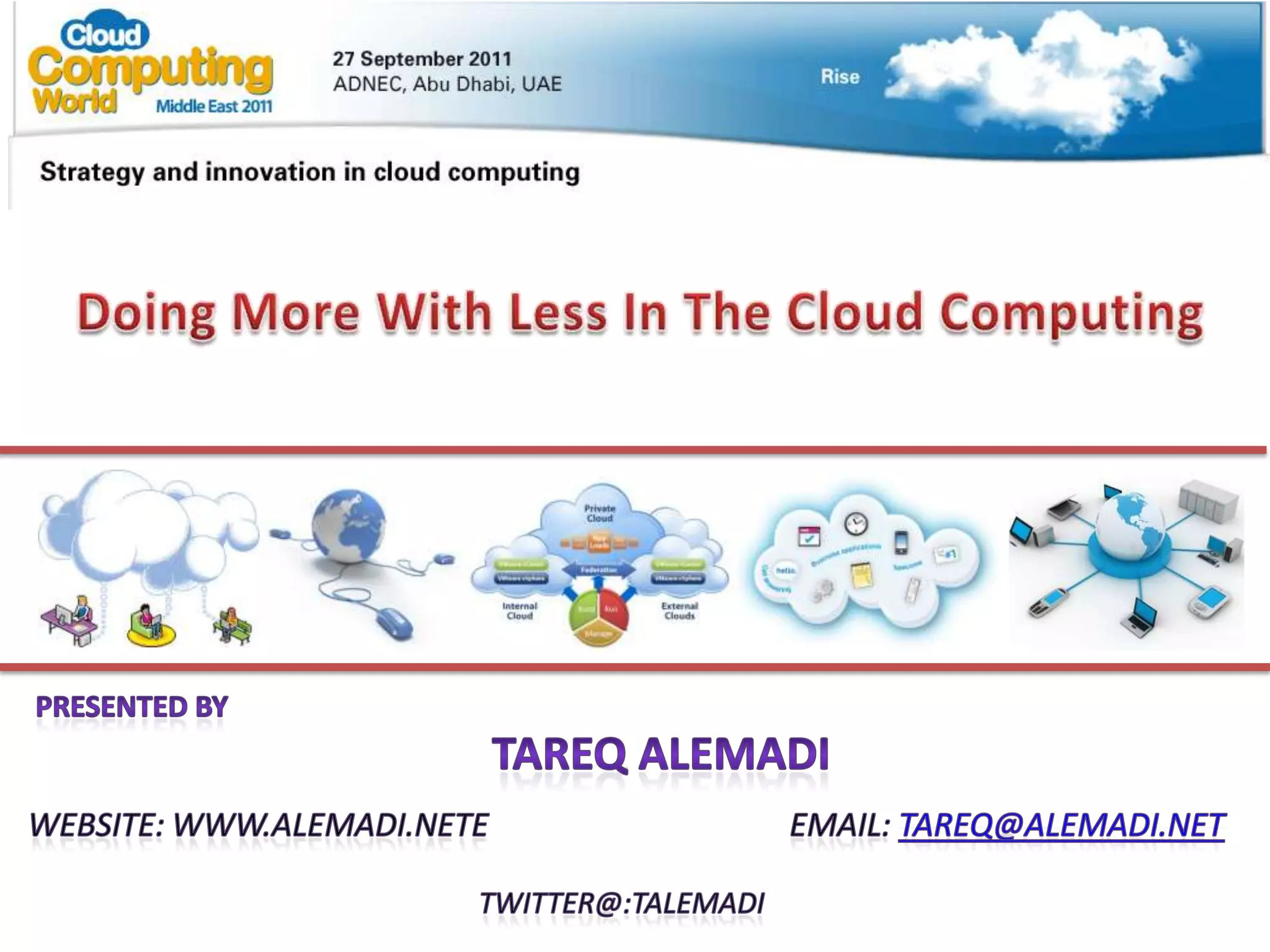
Doing More With Less In The Cloud ComputingPresented ByTareqAlemadiWebsite: www.alemadi.netE                                      Email: Tareq@alemadi.netTwitter@:TAlemadi
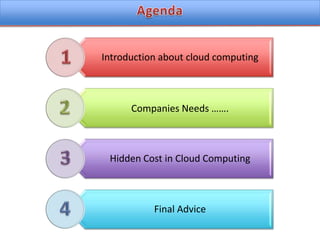
Agenda1234
Introduction To A Cloud Computing
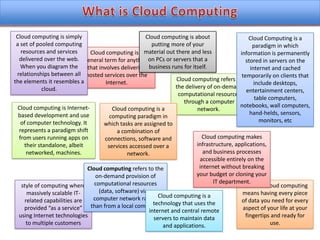
What is Cloud ComputingCloud computing is simply a set of pooled computing resources and services delivered over the web. When you diagram the relationships between all the elements it resembles a cloud.Cloud computing is about putting more of your material out there and less on PCs or servers that a business runs for itself.Cloud Computing is a paradigm in which information is permanently stored in servers on the internet and cached temporarily on clients that include desktops, entertainment centers, table computers, notebooks, wall computers, hand-helds, sensors, monitors, etcCloud computing is a general term for anything that involves delivering hosted services over the Internet.Cloud computing refers to the delivery of on-demand computational resources through a computer network. Cloud computing is Internet-based development and use of computer technology. It represents a paradigm shift from users running apps on their standalone, albeit networked, machines.Cloud computing is a computing paradigm in which tasks are assigned to a combination of connections, software and services accessed over a network. Cloud computing makes infrastructure, applications, and business processes accessible entirely on the internet without breaking your budget or cloning your IT department.Cloud computing refers to the on-demand provision of computational resources (data, software) via a computer network rather than from a local computer.style of computing where massively scalable IT-related capabilities are provided “as a service” using Internet technologies to multiple customersPersonal cloud computing means having every piece of data you need for every aspect of your life at your fingertips and ready for use.Cloud computing is a technology that uses the internet and central remote servers to maintain data and applications.
What is Cloud ComputingCloud computing is a general term for anything that involves delivering hosted services over the Internet
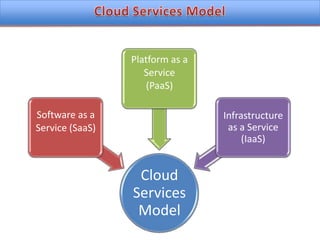
Cloud Services Model
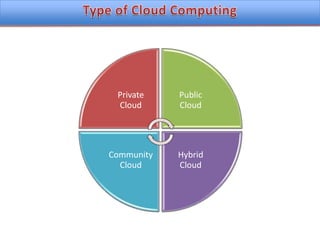
Type of Cloud Computing
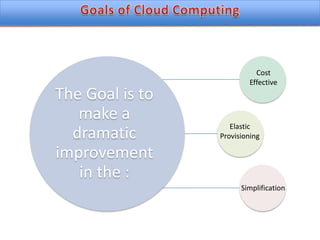
Goals of Cloud ComputingCost EffectiveElasticProvisioningSimplification
Companies Needs …….
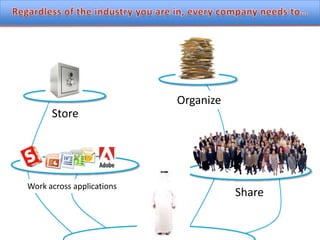
Regardless of the industry you are in, every company needs to…
Regardless of the industry you are in, every company needs to…Store
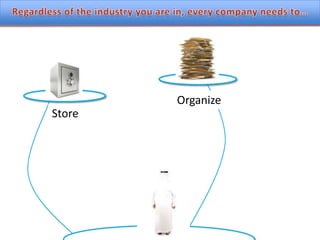
Regardless of the industry you are in, every company needs to…OrganizeStore
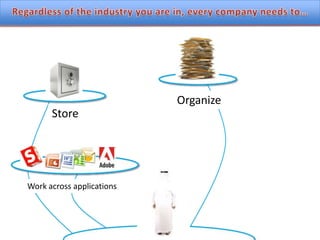
Regardless of the industry you are in, every company needs to…OrganizeStoreWork across applications
Regardless of the industry you are in, every company needs to…OrganizeStoreWork across applicationsShare
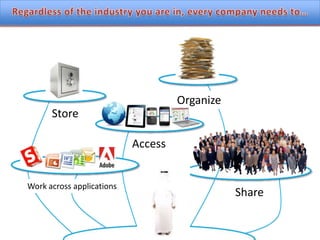
Regardless of the industry you are in, every company needs to…OrganizeStoreAccessWork across applicationsShare
10Hidden Cost in Cloud
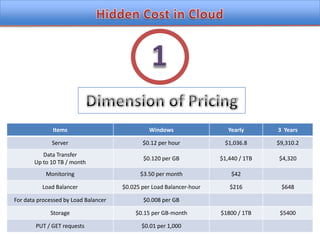
Dimension of PricingHidden Cost in Cloud1
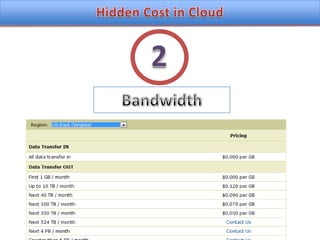
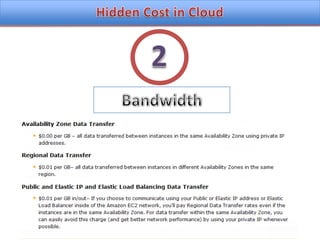
BandwidthHidden Cost in Cloud2
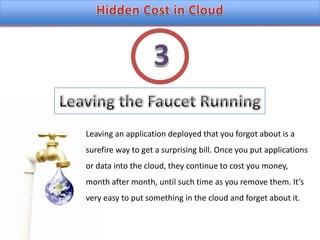
Hidden Cost in CloudLeaving the Faucet Running3Leaving an application deployed that you forgot about is a surefire way to get a surprising bill. Once you put applications or data into the cloud, they continue to cost you money, month after month, until such time as you remove them. It’s very easy to put something in the cloud and forget about it.
Hidden Cost in CloudExit The Cloud4
Hidden Cost in CloudIntegration Costs5If you want or need to be able to integrate your new cloud applications with other applications, you may need to pay for the integration between those applications.  Costs to do this will vary widely depending on the extent of the integration which you plan to do.
Suspended Applications is a Billable ApplicationsHidden Cost in Cloud6
Hidden Cost in CloudMigration7
Hidden Cost in CloudUnwanted Traffic and Denial of Service Attacks8Denial of Service (DoS) attacks - Some security professionals have argued that the cloud is morevulnerable to DoS attacks, because it is shared by many users, which makes DoS attacks much more damaging.Twitter suffered a devastating DoS attack during 2009.
Hidden Cost in CloudManagement9What are these responsibilities? Regularly monitor the health of your applications. Regularly monitor your billing. Regularly review whether what’s in the cloud still needs to be in the cloud. Regularly monitor the amount of load on your applications. Adjust the size of your deployments to match load.
Hidden Cost in CloudRegulations Polices and Training10
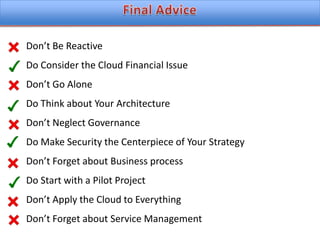
Final AdviceDon’t Be ReactiveDo Consider the Cloud Financial IssueDon’t Go AloneDo Think about Your ArchitectureDon’t Neglect GovernanceDo Make Security the Centerpiece of Your StrategyDon’t Forget about Business processDo Start with a Pilot ProjectDon’t Apply the Cloud to EverythingDon’t Forget about Service Management
ThankYouTareqAlemadiWebsite: www.alemadi.netE                                      Email: Tareq@alemadi.netTwitter@:TAlemadi

Cloud computing doing more with less

  • 1.
    Doing More WithLess In The Cloud ComputingPresented ByTareqAlemadiWebsite: www.alemadi.netE Email: Tareq@alemadi.netTwitter@:TAlemadi
  • 2.
  • 3.
    Introduction To ACloud Computing
  • 4.
    What is CloudComputingCloud computing is simply a set of pooled computing resources and services delivered over the web. When you diagram the relationships between all the elements it resembles a cloud.Cloud computing is about putting more of your material out there and less on PCs or servers that a business runs for itself.Cloud Computing is a paradigm in which information is permanently stored in servers on the internet and cached temporarily on clients that include desktops, entertainment centers, table computers, notebooks, wall computers, hand-helds, sensors, monitors, etcCloud computing is a general term for anything that involves delivering hosted services over the Internet.Cloud computing refers to the delivery of on-demand computational resources through a computer network. Cloud computing is Internet-based development and use of computer technology. It represents a paradigm shift from users running apps on their standalone, albeit networked, machines.Cloud computing is a computing paradigm in which tasks are assigned to a combination of connections, software and services accessed over a network. Cloud computing makes infrastructure, applications, and business processes accessible entirely on the internet without breaking your budget or cloning your IT department.Cloud computing refers to the on-demand provision of computational resources (data, software) via a computer network rather than from a local computer.style of computing where massively scalable IT-related capabilities are provided “as a service” using Internet technologies to multiple customersPersonal cloud computing means having every piece of data you need for every aspect of your life at your fingertips and ready for use.Cloud computing is a technology that uses the internet and central remote servers to maintain data and applications.
  • 5.
    What is CloudComputingCloud computing is a general term for anything that involves delivering hosted services over the Internet
  • 6.
  • 7.
    Type of CloudComputing
  • 8.
    Goals of CloudComputingCost EffectiveElasticProvisioningSimplification
  • 9.
  • 10.
    Regardless of theindustry you are in, every company needs to…
  • 11.
    Regardless of theindustry you are in, every company needs to…Store
  • 12.
    Regardless of theindustry you are in, every company needs to…OrganizeStore
  • 13.
    Regardless of theindustry you are in, every company needs to…OrganizeStoreWork across applications
  • 14.
    Regardless of theindustry you are in, every company needs to…OrganizeStoreWork across applicationsShare
  • 15.
    Regardless of theindustry you are in, every company needs to…OrganizeStoreAccessWork across applicationsShare
  • 16.
  • 17.
  • 18.
  • 19.
  • 20.
    Hidden Cost inCloudLeaving the Faucet Running3Leaving an application deployed that you forgot about is a surefire way to get a surprising bill. Once you put applications or data into the cloud, they continue to cost you money, month after month, until such time as you remove them. It’s very easy to put something in the cloud and forget about it.
  • 21.
    Hidden Cost inCloudExit The Cloud4
  • 22.
    Hidden Cost inCloudIntegration Costs5If you want or need to be able to integrate your new cloud applications with other applications, you may need to pay for the integration between those applications.  Costs to do this will vary widely depending on the extent of the integration which you plan to do.
  • 23.
    Suspended Applications isa Billable ApplicationsHidden Cost in Cloud6
  • 24.
    Hidden Cost inCloudMigration7
  • 25.
    Hidden Cost inCloudUnwanted Traffic and Denial of Service Attacks8Denial of Service (DoS) attacks - Some security professionals have argued that the cloud is morevulnerable to DoS attacks, because it is shared by many users, which makes DoS attacks much more damaging.Twitter suffered a devastating DoS attack during 2009.
  • 26.
    Hidden Cost inCloudManagement9What are these responsibilities? Regularly monitor the health of your applications. Regularly monitor your billing. Regularly review whether what’s in the cloud still needs to be in the cloud. Regularly monitor the amount of load on your applications. Adjust the size of your deployments to match load.
  • 27.
    Hidden Cost inCloudRegulations Polices and Training10
  • 28.
    Final AdviceDon’t BeReactiveDo Consider the Cloud Financial IssueDon’t Go AloneDo Think about Your ArchitectureDon’t Neglect GovernanceDo Make Security the Centerpiece of Your StrategyDon’t Forget about Business processDo Start with a Pilot ProjectDon’t Apply the Cloud to EverythingDon’t Forget about Service Management
  • 29.
    ThankYouTareqAlemadiWebsite: www.alemadi.netE Email: Tareq@alemadi.netTwitter@:TAlemadi