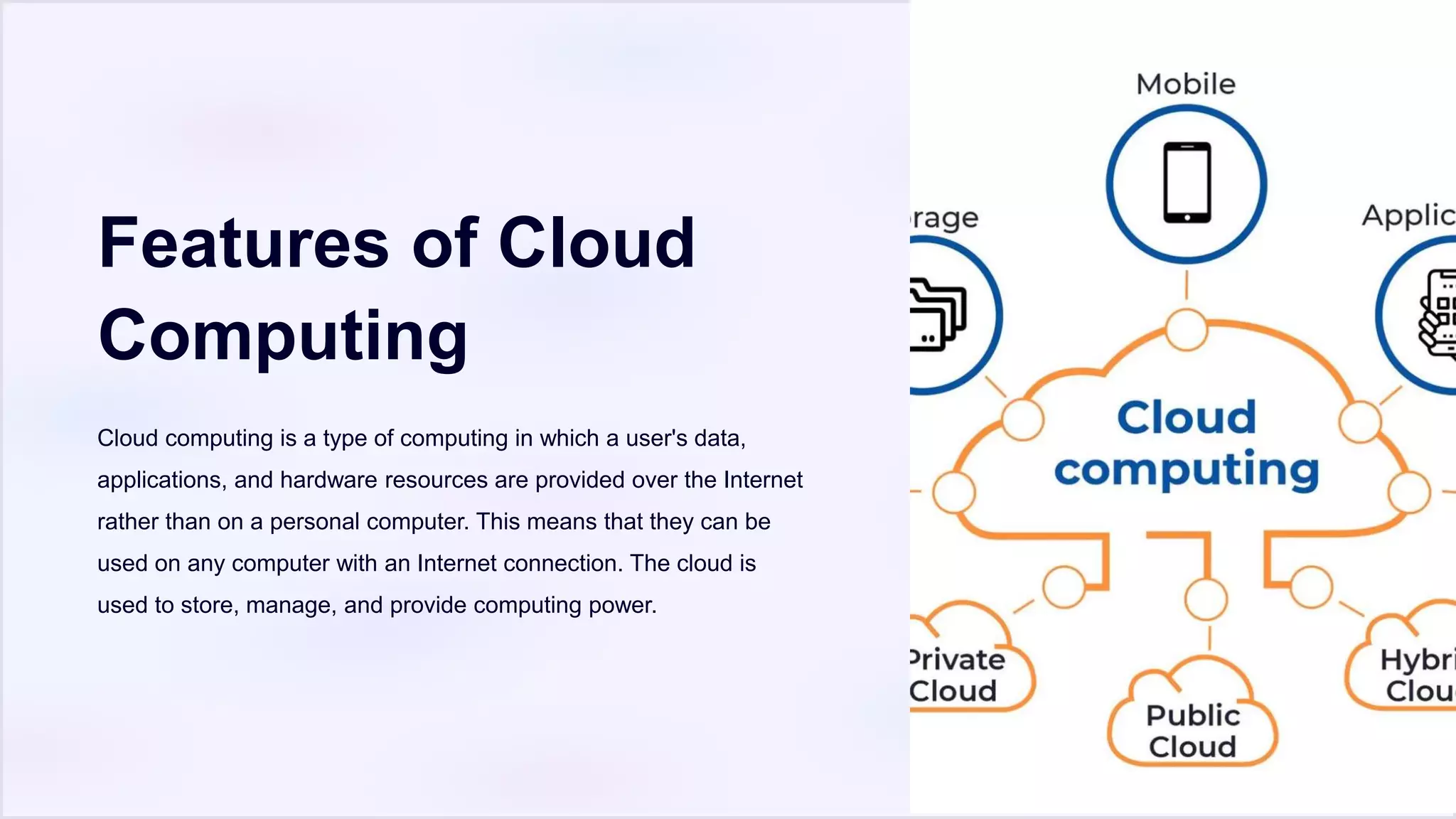
Features of Cloud
Computing
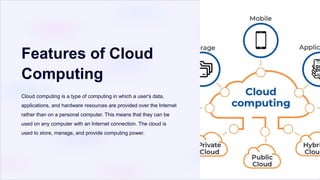
Cloud computing is a type of computing in which a user's data,
applications, and hardware resources are provided over the Internet
rather than on a personal computer. This means that they can be
used on any computer with an Internet connection. The cloud is
used to store, manage, and provide computing power.
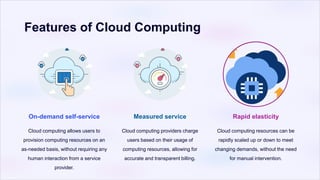
Features of Cloud Computing
On-demand self-service
Cloud computing allows users to
provision computing resources on an
as-needed basis, without requiring any
human interaction from a service
provider.
Measured service
Cloud computing providers charge
users based on their usage of
computing resources, allowing for
accurate and transparent billing.
Rapid elasticity
Cloud computing resources can be
rapidly scaled up or down to meet
changing demands, without the need
for manual intervention.
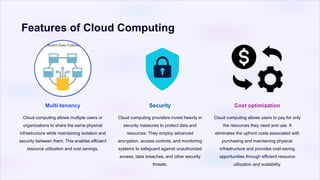
Features of Cloud Computing
Multi-tenancy
Cloud computing allows multiple users or
organizations to share the same physical
infrastructure while maintaining isolation and
security between them. This enables efficient
resource utilization and cost savings.
Security
Cloud computing providers invest heavily in
security measures to protect data and
resources. They employ advanced
encryption, access controls, and monitoring
systems to safeguard against unauthorized
access, data breaches, and other security
threats.
Cost optimization
Cloud computing allows users to pay for only
the resources they need and use. It
eliminates the upfront costs associated with
purchasing and maintaining physical
infrastructure and provides cost-saving
opportunities through efficient resource
utilization and scalability.
Advantages of Cloud Computing
Scalability
You can scale your computing
resources up and down as
needed, making it much more
cost-effective than traditional
computing.
Flexibility
Users can access data and
applications from any device
with an internet connection,
which makes remote work much
easier and more efficient.
Disaster Recovery
Cloud providers have backups
in place, making it easier to
recover data and resume
operations in the event of a
disaster.
Cost Effective
Cloud computing can eliminate the need for companies to invest in expensive hardware and infrastructure.
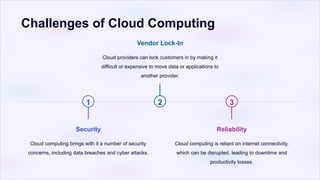
Challenges of Cloud Computing
1
Security
Cloud computing brings with it a number of security
concerns, including data breaches and cyber attacks.
2
Vendor Lock-In
Cloud providers can lock customers in by making it
difficult or expensive to move data or applications to
another provider.
3
Reliability
Cloud computing is reliant on internet connectivity,
which can be disrupted, leading to downtime and
productivity losses.
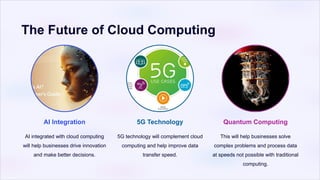
The Future of Cloud Computing
AI Integration
AI integrated with cloud computing
will help businesses drive innovation
and make better decisions.
5G Technology
5G technology will complement cloud
computing and help improve data
transfer speed.
Quantum Computing
This will help businesses solve
complex problems and process data
at speeds not possible with traditional
computing.
Conclusion
Cloud computing has revolutionized the way we do business. It provides an array of benefits such as scalability, flexibility,
and cost-effectiveness but also presents significant challenges such as security concerns. The future of cloud computing
is incredibly exciting with the integration of AI, 5G technology, and quantum computing.
Features-of-Cloud-Computing.pptx

  • 1.
    Features of Cloud Computing Cloudcomputing is a type of computing in which a user's data, applications, and hardware resources are provided over the Internet rather than on a personal computer. This means that they can be used on any computer with an Internet connection. The cloud is used to store, manage, and provide computing power.
  • 2.
    Features of CloudComputing On-demand self-service Cloud computing allows users to provision computing resources on an as-needed basis, without requiring any human interaction from a service provider. Measured service Cloud computing providers charge users based on their usage of computing resources, allowing for accurate and transparent billing. Rapid elasticity Cloud computing resources can be rapidly scaled up or down to meet changing demands, without the need for manual intervention.
  • 3.
    Features of CloudComputing Multi-tenancy Cloud computing allows multiple users or organizations to share the same physical infrastructure while maintaining isolation and security between them. This enables efficient resource utilization and cost savings. Security Cloud computing providers invest heavily in security measures to protect data and resources. They employ advanced encryption, access controls, and monitoring systems to safeguard against unauthorized access, data breaches, and other security threats. Cost optimization Cloud computing allows users to pay for only the resources they need and use. It eliminates the upfront costs associated with purchasing and maintaining physical infrastructure and provides cost-saving opportunities through efficient resource utilization and scalability.
  • 4.
    Advantages of CloudComputing Scalability You can scale your computing resources up and down as needed, making it much more cost-effective than traditional computing. Flexibility Users can access data and applications from any device with an internet connection, which makes remote work much easier and more efficient. Disaster Recovery Cloud providers have backups in place, making it easier to recover data and resume operations in the event of a disaster. Cost Effective Cloud computing can eliminate the need for companies to invest in expensive hardware and infrastructure.
  • 5.
    Challenges of CloudComputing 1 Security Cloud computing brings with it a number of security concerns, including data breaches and cyber attacks. 2 Vendor Lock-In Cloud providers can lock customers in by making it difficult or expensive to move data or applications to another provider. 3 Reliability Cloud computing is reliant on internet connectivity, which can be disrupted, leading to downtime and productivity losses.
  • 6.
    The Future ofCloud Computing AI Integration AI integrated with cloud computing will help businesses drive innovation and make better decisions. 5G Technology 5G technology will complement cloud computing and help improve data transfer speed. Quantum Computing This will help businesses solve complex problems and process data at speeds not possible with traditional computing.
  • 7.
    Conclusion Cloud computing hasrevolutionized the way we do business. It provides an array of benefits such as scalability, flexibility, and cost-effectiveness but also presents significant challenges such as security concerns. The future of cloud computing is incredibly exciting with the integration of AI, 5G technology, and quantum computing.