What is cloud
computing?
Cloud computing refers to the delivery of computing services—including
servers, storage, databases, networking, software, and analytics—over
the internet. It offers faster innovation, flexible resources, and economies
of scale.
by Sandesh
Why is cloud computing important?
Cost-Effective
Cloud computing reduces the need for
extensive hardware, lowering operational
costs.
Scalability
It allows businesses to easily scale their
resources up or down based on demand.
Flexibility
Enables remote access to data and
applications, providing flexibility for teams.
Disaster Recovery
Cloud services offer robust disaster
recovery solutions, ensuring data backup
and security.
What are the benefits of cloud
computing?
• Scalability: Cloud computing allows for flexible and scalable IT resources, adjusting to the
changing needs of businesses.
• Cost Efficiency: It reduces the need for substantial upfront investment in hardware and software,
lowering operational costs.
• Accessibility: Cloud services offer the advantage of accessing data and applications from
anywhere with an internet connection.
How does cloud computing
work?
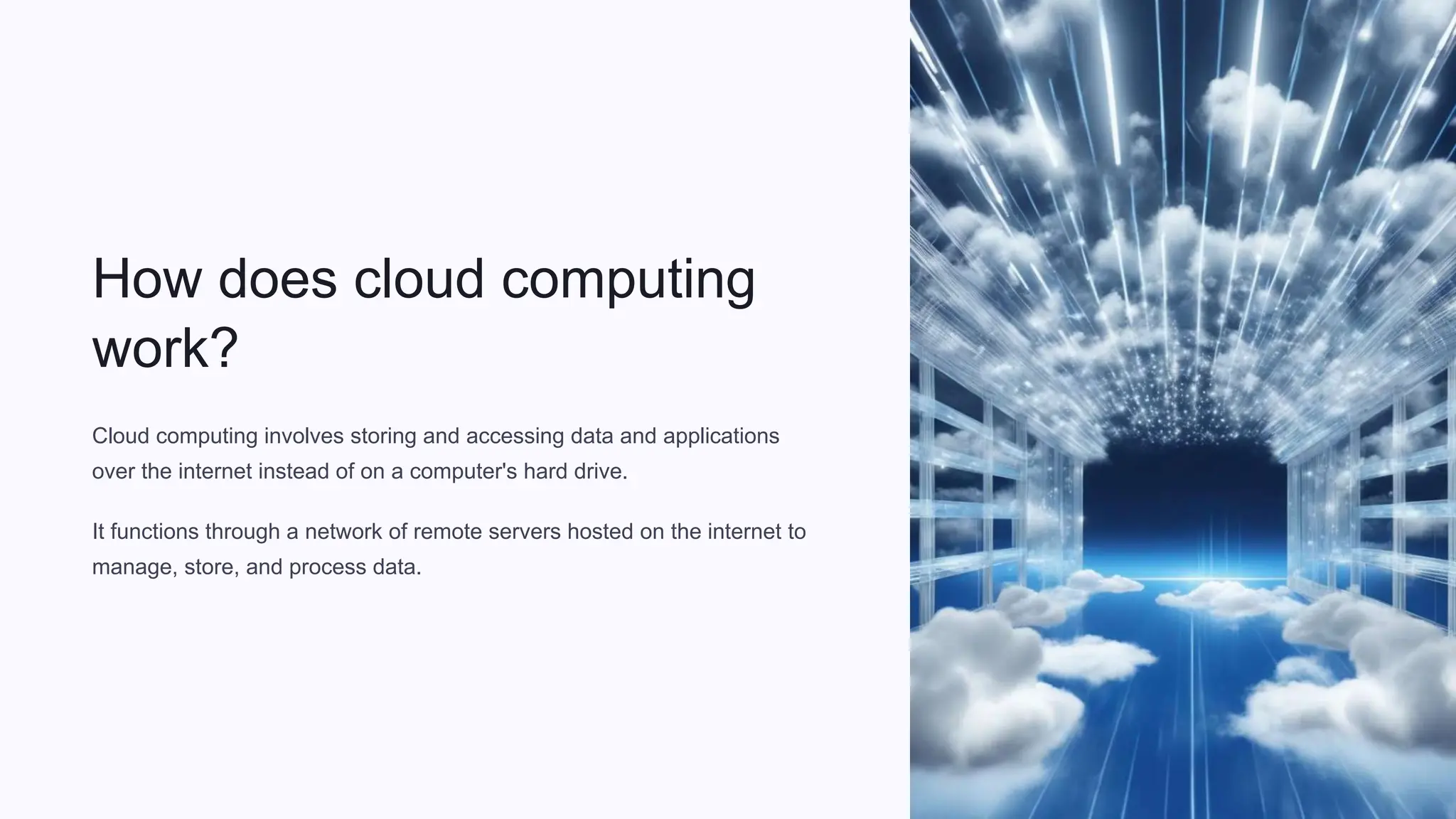
Cloud computing involves storing and accessing data and applications
over the internet instead of on a computer's hard drive.
It functions through a network of remote servers hosted on the internet to
manage, store, and process data.
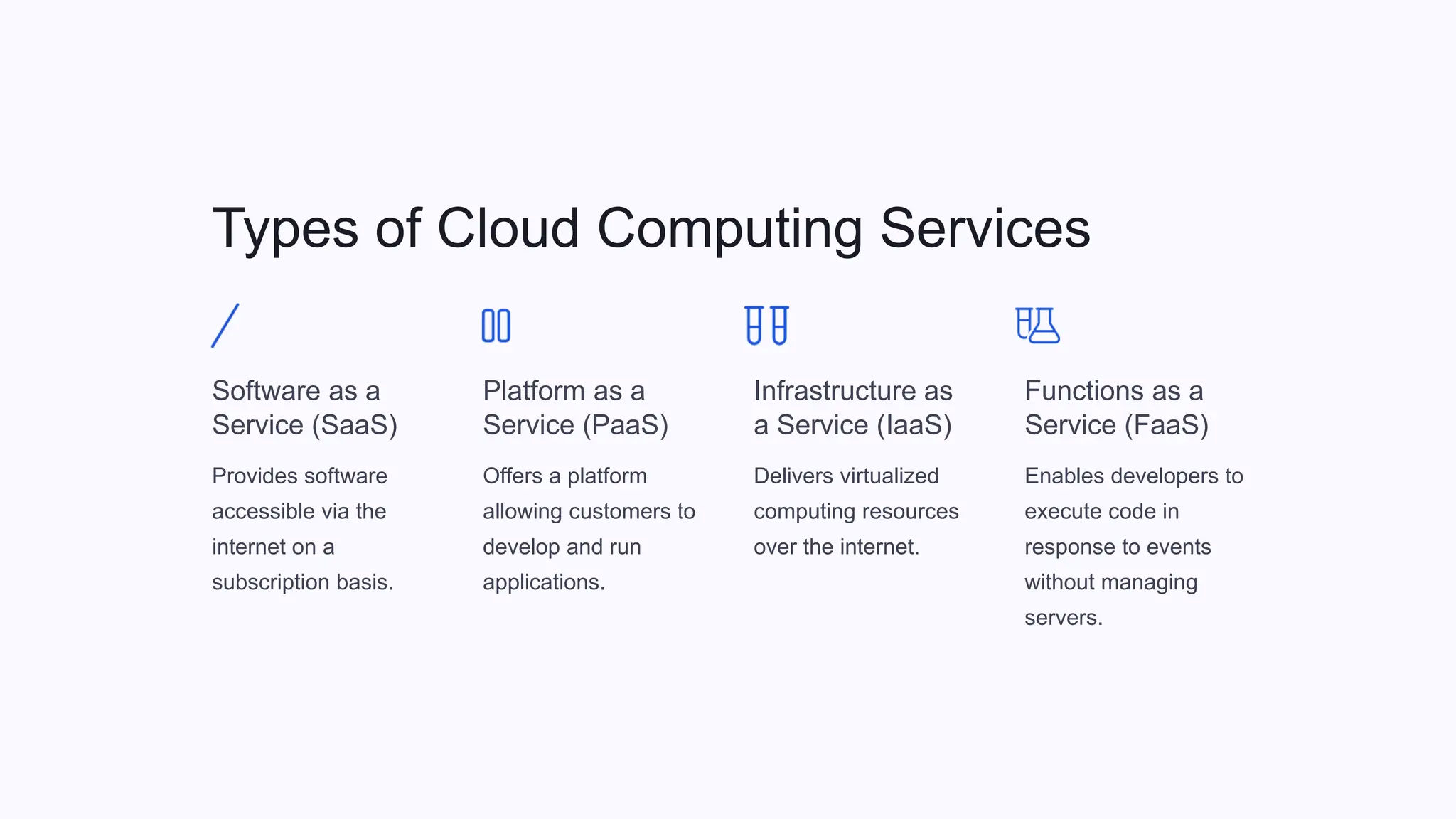
Types of Cloud Computing Services
Software as a
Service (SaaS)
Provides software
accessible via the
internet on a
subscription basis.
Platform as a
Service (PaaS)
Offers a platform
allowing customers to
develop and run
applications.
Infrastructure as
a Service (IaaS)
Delivers virtualized
computing resources
over the internet.
Functions as a
Service (FaaS)
Enables developers to
execute code in
response to events
without managing
servers.
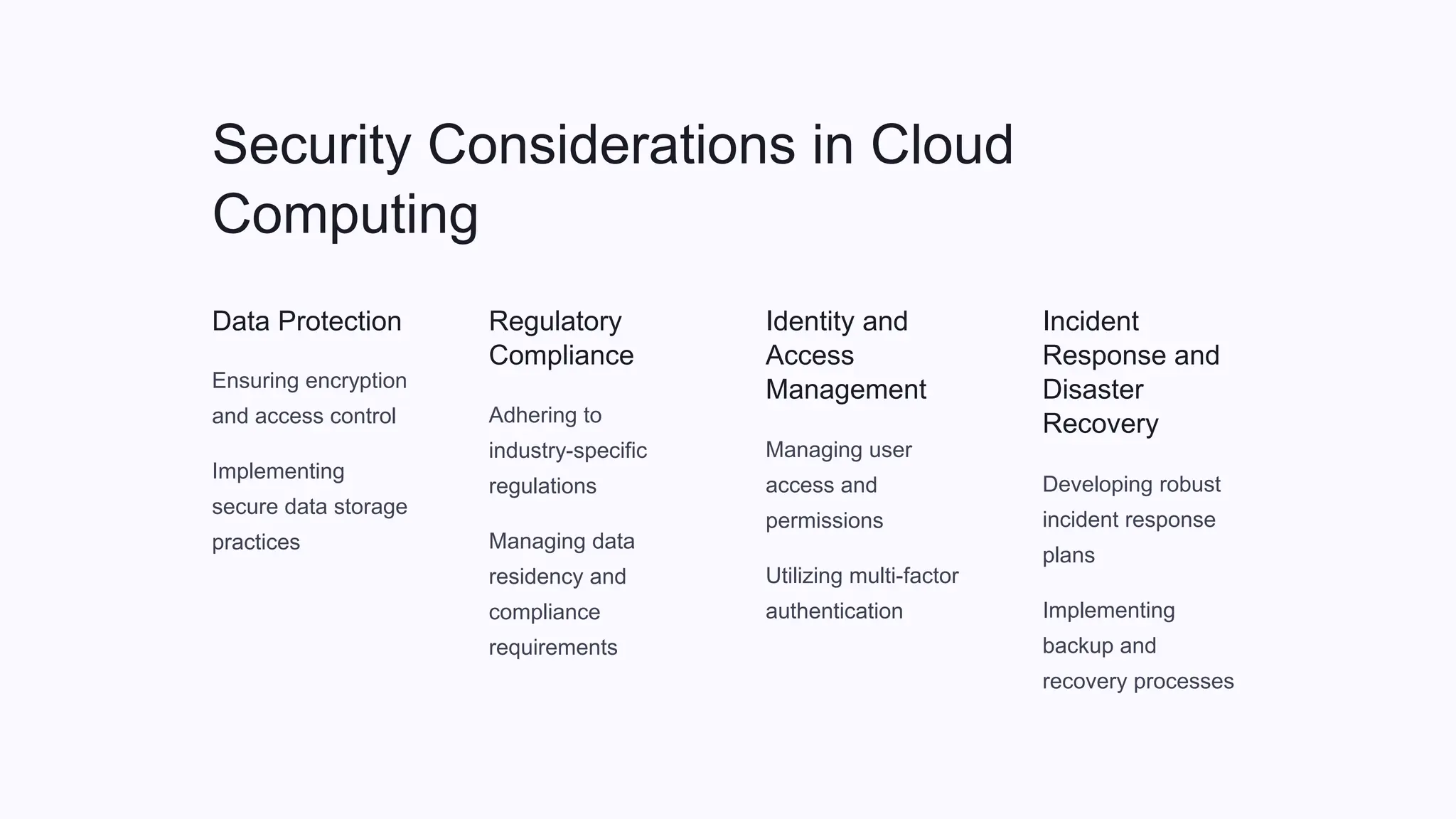
Security Considerations in Cloud
Computing
Data Protection
Ensuring encryption
and access control
Implementing
secure data storage
practices
Regulatory
Compliance
Adhering to
industry-specific
regulations
Managing data
residency and
compliance
requirements
Identity and
Access
Management
Managing user
access and
permissions
Utilizing multi-factor
authentication
Incident
Response and
Disaster
Recovery
Developing robust
incident response
plans
Implementing
backup and
recovery processes
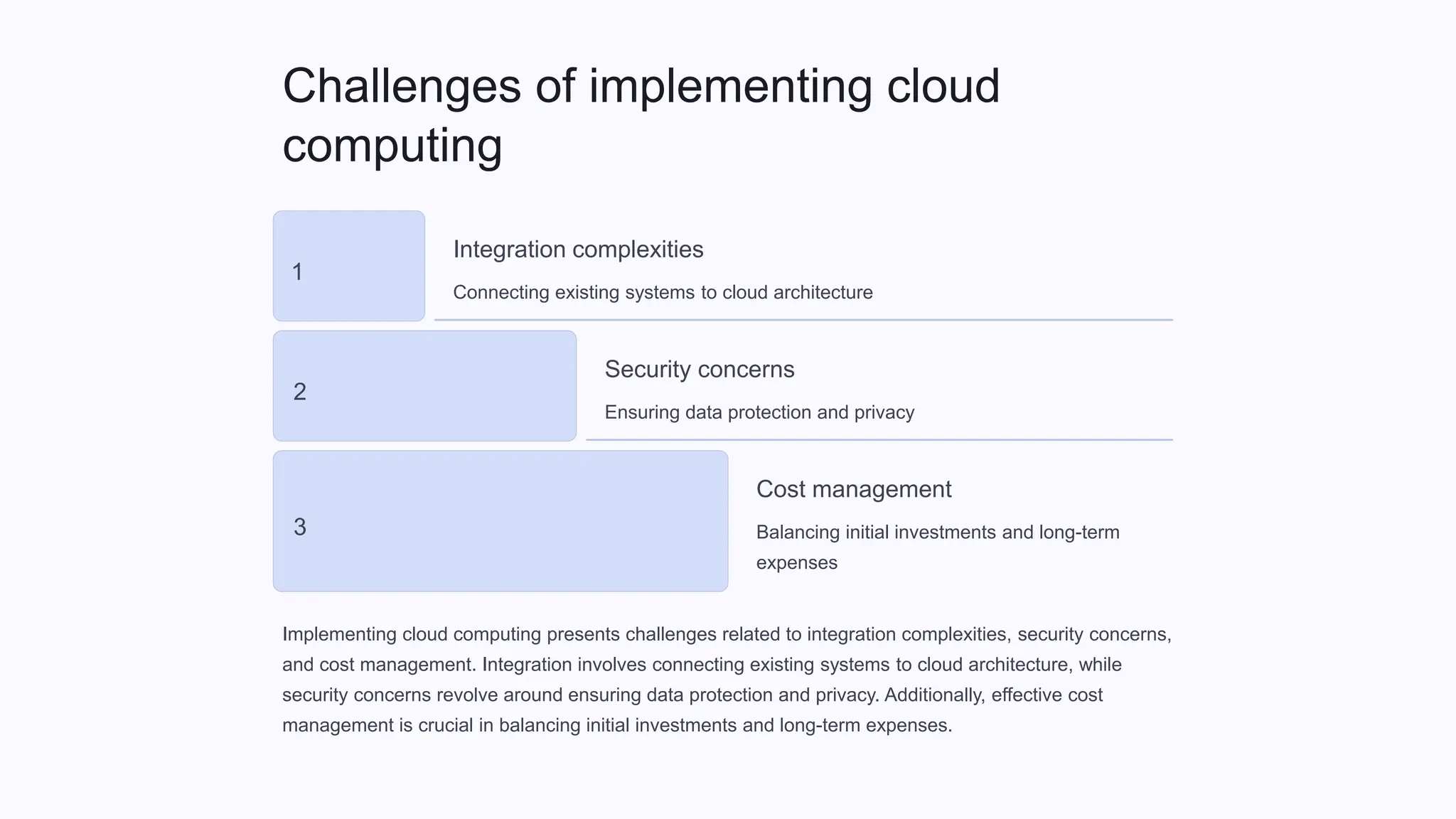
Challenges of implementing cloud
computing
1
Integration complexities
Connecting existing systems to cloud architecture
2
Security concerns
Ensuring data protection and privacy
3
Cost management
Balancing initial investments and long-term
expenses
Implementing cloud computing presents challenges related to integration complexities, security concerns,
and cost management. Integration involves connecting existing systems to cloud architecture, while
security concerns revolve around ensuring data protection and privacy. Additionally, effective cost
management is crucial in balancing initial investments and long-term expenses.
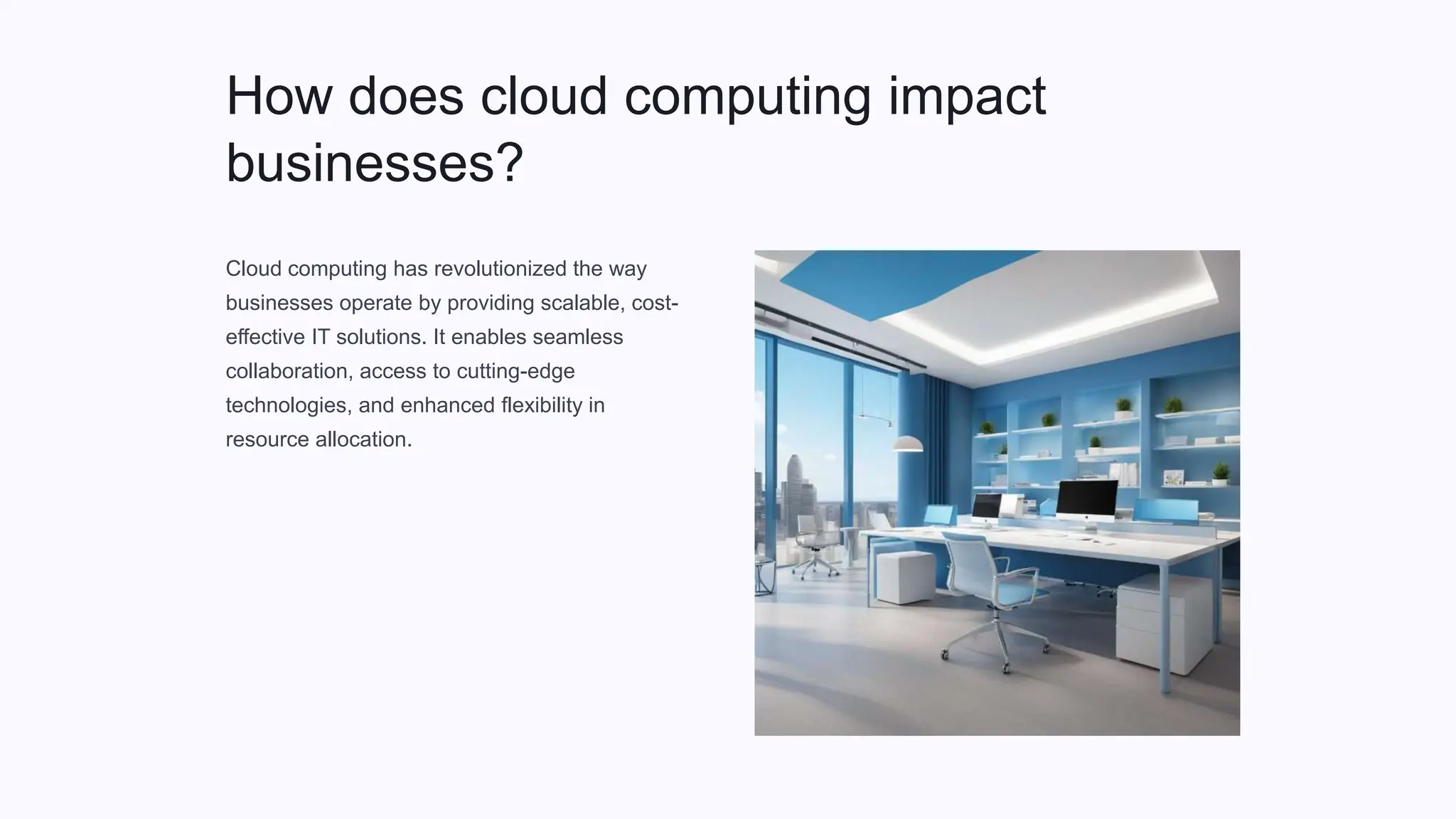
How does cloud computing impact
businesses?
Cloud computing has revolutionized the way
businesses operate by providing scalable, cost-
effective IT solutions. It enables seamless
collaboration, access to cutting-edge
technologies, and enhanced flexibility in
resource allocation.
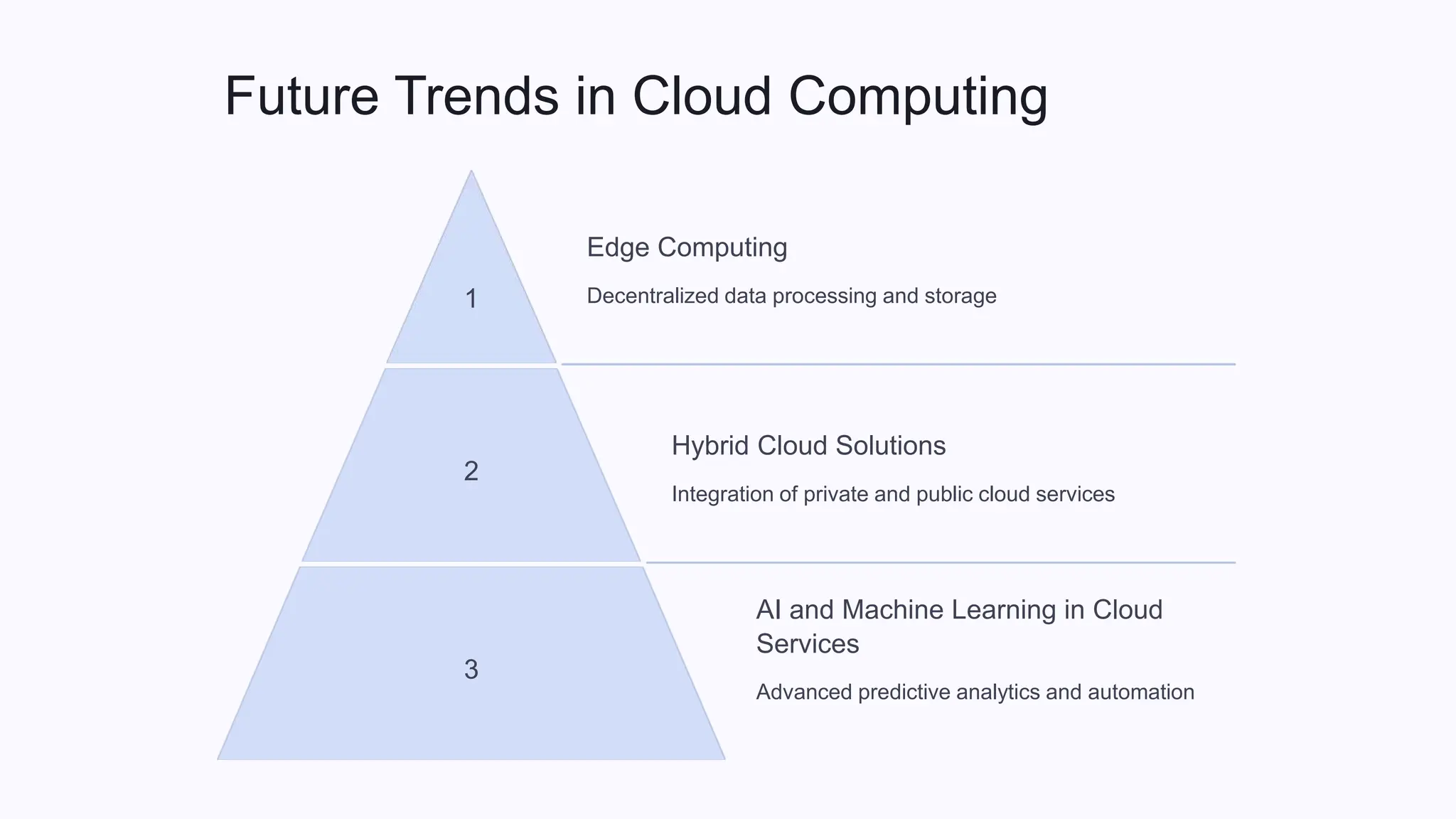
Future Trends in Cloud Computing
1
Edge Computing
Decentralized data processing and storage
2
Hybrid Cloud Solutions
Integration of private and public cloud services
3
AI and Machine Learning in Cloud
Services
Advanced predictive analytics and automation
Preparing for a Career in
Cloud Computing
Individuals and organizations can prepare for a career in cloud computing
by obtaining relevant certifications and training.
They should focus on developing expertise in popular cloud platforms
such as AWS, Azure, and Google Cloud.
Networking with professionals in the industry and staying updated with the
latest technologies and trends is also crucial.
Additionally, gaining practical experience through internships or projects
can significantly enhance their prospects.

benefits of cloud computing course

  • 1.
    What is cloud computing? Cloudcomputing refers to the delivery of computing services—including servers, storage, databases, networking, software, and analytics—over the internet. It offers faster innovation, flexible resources, and economies of scale. by Sandesh
  • 2.
    Why is cloudcomputing important? Cost-Effective Cloud computing reduces the need for extensive hardware, lowering operational costs. Scalability It allows businesses to easily scale their resources up or down based on demand. Flexibility Enables remote access to data and applications, providing flexibility for teams. Disaster Recovery Cloud services offer robust disaster recovery solutions, ensuring data backup and security.
  • 3.
    What are thebenefits of cloud computing? • Scalability: Cloud computing allows for flexible and scalable IT resources, adjusting to the changing needs of businesses. • Cost Efficiency: It reduces the need for substantial upfront investment in hardware and software, lowering operational costs. • Accessibility: Cloud services offer the advantage of accessing data and applications from anywhere with an internet connection.
  • 4.
    How does cloudcomputing work? Cloud computing involves storing and accessing data and applications over the internet instead of on a computer's hard drive. It functions through a network of remote servers hosted on the internet to manage, store, and process data.
  • 5.
    Types of CloudComputing Services Software as a Service (SaaS) Provides software accessible via the internet on a subscription basis. Platform as a Service (PaaS) Offers a platform allowing customers to develop and run applications. Infrastructure as a Service (IaaS) Delivers virtualized computing resources over the internet. Functions as a Service (FaaS) Enables developers to execute code in response to events without managing servers.
  • 6.
    Security Considerations inCloud Computing Data Protection Ensuring encryption and access control Implementing secure data storage practices Regulatory Compliance Adhering to industry-specific regulations Managing data residency and compliance requirements Identity and Access Management Managing user access and permissions Utilizing multi-factor authentication Incident Response and Disaster Recovery Developing robust incident response plans Implementing backup and recovery processes
  • 7.
    Challenges of implementingcloud computing 1 Integration complexities Connecting existing systems to cloud architecture 2 Security concerns Ensuring data protection and privacy 3 Cost management Balancing initial investments and long-term expenses Implementing cloud computing presents challenges related to integration complexities, security concerns, and cost management. Integration involves connecting existing systems to cloud architecture, while security concerns revolve around ensuring data protection and privacy. Additionally, effective cost management is crucial in balancing initial investments and long-term expenses.
  • 8.
    How does cloudcomputing impact businesses? Cloud computing has revolutionized the way businesses operate by providing scalable, cost- effective IT solutions. It enables seamless collaboration, access to cutting-edge technologies, and enhanced flexibility in resource allocation.
  • 9.
    Future Trends inCloud Computing 1 Edge Computing Decentralized data processing and storage 2 Hybrid Cloud Solutions Integration of private and public cloud services 3 AI and Machine Learning in Cloud Services Advanced predictive analytics and automation
  • 10.
    Preparing for aCareer in Cloud Computing Individuals and organizations can prepare for a career in cloud computing by obtaining relevant certifications and training. They should focus on developing expertise in popular cloud platforms such as AWS, Azure, and Google Cloud. Networking with professionals in the industry and staying updated with the latest technologies and trends is also crucial. Additionally, gaining practical experience through internships or projects can significantly enhance their prospects.