Presented By :
Gayathri Madhira
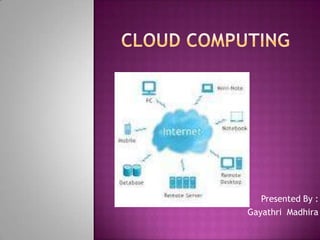
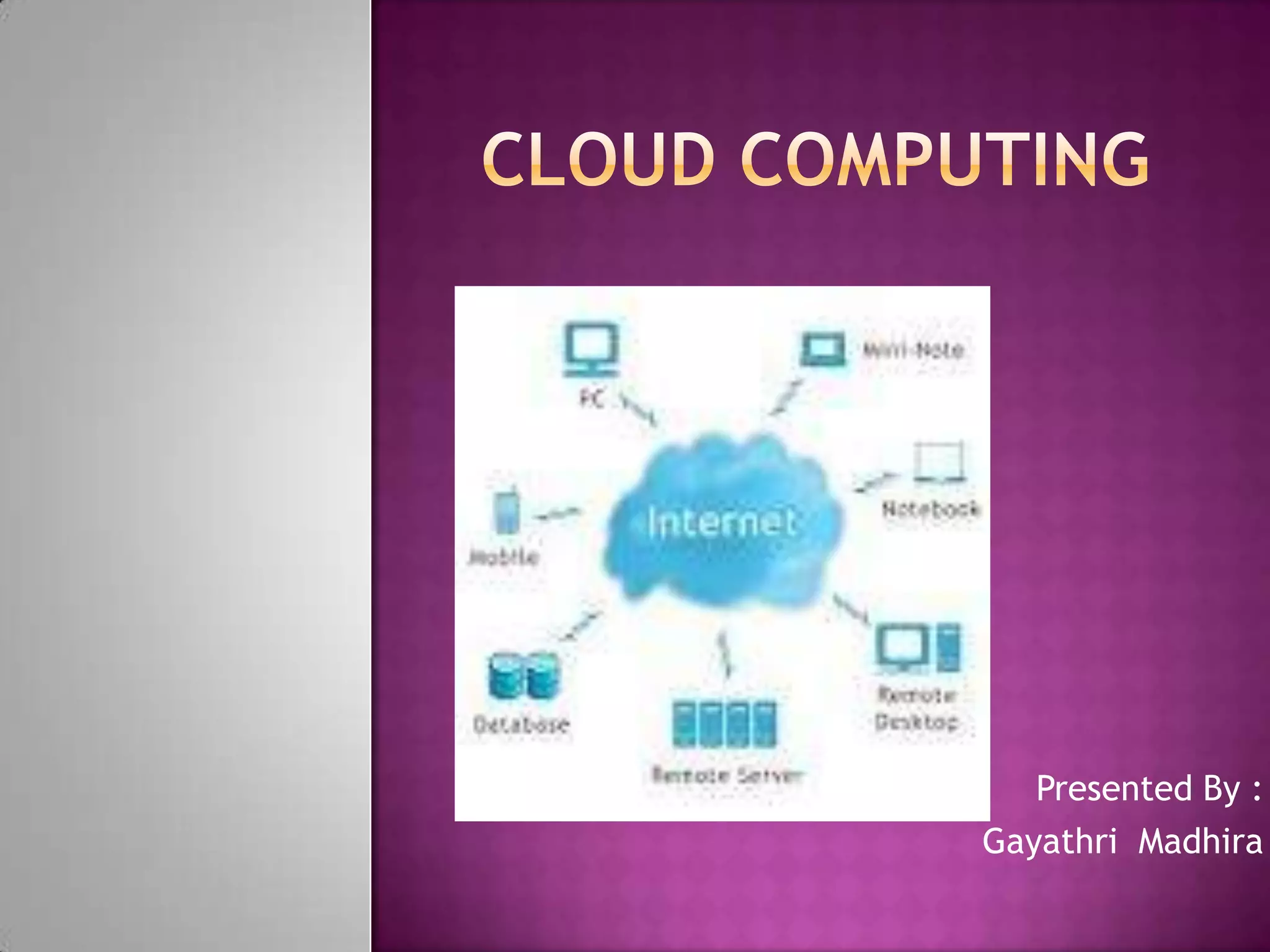
 Cloud  is an metaphor for internet used here.
 Computing is an IT activity carried out.
 Customers do not have physical
  infrastructure.
 Consume resources as a service and only pay
  for those resources used.
 Information that a digitized system has to
  offer is provided as service.
 Empowerment of end users.
 Resources are hosted by service provider on
  behalf of entity.
 Data processed by resources is private to the
  entity and its associates.
 It increases the speed of application
  development.
 API accessibility to softwaresthat enables
  machine to interact with cloud software.
 Cost is reduced.
 Device and location independence.
 Peak load capacity increases.
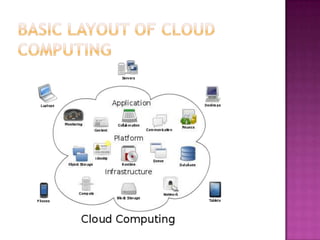
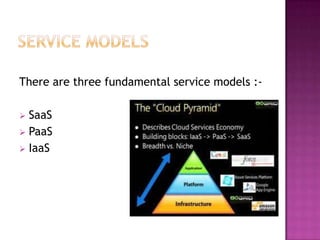
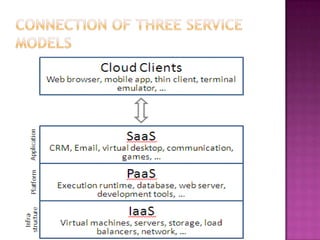
There are three fundamental service models :-

 SaaS
 PaaS
 IaaS
 Itprovides a software that is specific to end
  users requirement.
 The host manages the software and
  infrastructure runs the software and stores
  data.
 Consumers cannot control software beyond
  the usual configure settings .
 Host regularly back up all data.
 Itconsists of software development and
  deployment platforms known as cloud
  platforms.
 Host provides complete software
  development and run time environment.
 Infrastructure include a database and
  identity management or access control
  software.
 It consists of hardware infrastructure located
  in the cloud.
 It includes cloud storage,servers and
  networks and is also known as hardware as a
  service.
 It is used to run software or simply store
  data.
 Consumers can be end users developers or
  other cloud providers.
There are three types of deployment models:-

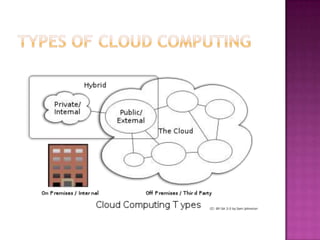
 Public   cloud

 Private   cloud

 Community     cloud

 Hybrid    cloud
 Public clouds are cloud systems that are
  made available to any member of non
  exclusive group.
 These services are or offered on a pay-per-
  use model
 Private  clouds are cloud systems that are
  accessible by a single consumer or exclusive
  group.
 It is also known as internal or corporate
  clouds.
 These clouds are private because of the need
  for system and data security.
 These   are cloud systems that are available
  only to a specific group of entities which
  share common purpose.
 These clouds are managed by community or
  third party.
 It is neither private nor public as unlike
  private it isn’t narrowly exclusive and unlike
  public entities outside the community
  although can benefit from the service but
  cannot become consumers.
 It is a combination of two or more public
  private and community clouds that are used
  on day to day basis.
 It contains larger pool of resources that can
  be made available to their consumers.
 It is also called “cloud of clouds”
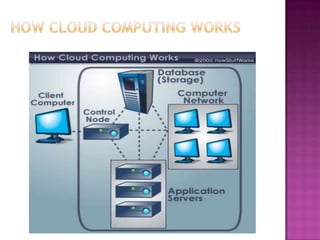
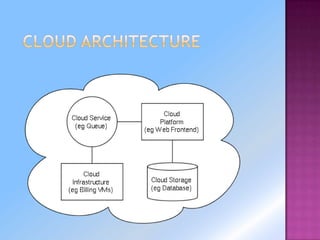
It is divided into two sections:-

 Front   end :- It is the side that client or
 the      computer user sees.

 Backend:- It is the cloud section of the
 system
 Itis a database that runs on cloud computing
  platform.
 There are two primary methods to run a
  database n cloud:-

   Virtual machine image:- cloud platforms
    allow users to purchase virtual machine
    instances for limited time it is possible to run
    database on these virtual machines.
Database   as a service :- Some cloud
platforms offer options for using a database
as a service, without physically launching a
virtual machine instance for the database.
In this configuration, application owners do
not have to install and maintain the
database on their own. Instead, the
database service provider takes
responsibility for installing and maintaining
the database, and application owners pay
according to their usage
 Reduced  costs:- Cloud services paid for on a
  usage basis can be financially advantageous
  for a consumer when compared to the
  outright purchase, or long-term rental, of
  what would be a big-budget item.
 Up-to-date software:- SaaS consumers can
  always have the most up-to-date
  software, because versioning is controlled
  centrally by the cloud provider, and when
  they make a new release it is automatically
  available to every user.
 Improved  access:- Cloud computing involves
  using the Internet, and this can provide
  access from multiple locations and many
  different types of user device.
 Sharing and co-operation:- Cloud services are
  advantageous, when compared to PCs and
  local servers, for activities that require co-
  operation among distributed groups.
 Privacy and security:- Since data is stored on a
  cloud provider's systems, and possibly in a
  location that may not be known by the
  consumer, there can be data-privacy and security
  issues.
 Regulatory and customer requirements:- There
  are some issues that may prevent the use of
  cloud services.
 Service-provider outages:- Any accidental
  downtime, or outage, of cloud systems can
  affect some or all of the provider’s tenants, and
  so this can deprive many users of access to their
  IT systems.
Thank you

Cloud computing

  • 1.
  • 2.
     Cloud is an metaphor for internet used here.  Computing is an IT activity carried out.  Customers do not have physical infrastructure.  Consume resources as a service and only pay for those resources used.  Information that a digitized system has to offer is provided as service.
  • 4.
     Empowerment ofend users.  Resources are hosted by service provider on behalf of entity.  Data processed by resources is private to the entity and its associates.  It increases the speed of application development.  API accessibility to softwaresthat enables machine to interact with cloud software.  Cost is reduced.  Device and location independence.  Peak load capacity increases.
  • 6.
    There are threefundamental service models :-  SaaS  PaaS  IaaS
  • 7.
     Itprovides asoftware that is specific to end users requirement.  The host manages the software and infrastructure runs the software and stores data.  Consumers cannot control software beyond the usual configure settings .  Host regularly back up all data.
  • 8.
     Itconsists ofsoftware development and deployment platforms known as cloud platforms.  Host provides complete software development and run time environment.  Infrastructure include a database and identity management or access control software.
  • 9.
     It consistsof hardware infrastructure located in the cloud.  It includes cloud storage,servers and networks and is also known as hardware as a service.  It is used to run software or simply store data.  Consumers can be end users developers or other cloud providers.
  • 11.
    There are threetypes of deployment models:-  Public cloud  Private cloud  Community cloud  Hybrid cloud
  • 12.
     Public cloudsare cloud systems that are made available to any member of non exclusive group.  These services are or offered on a pay-per- use model
  • 13.
     Private clouds are cloud systems that are accessible by a single consumer or exclusive group.  It is also known as internal or corporate clouds.  These clouds are private because of the need for system and data security.
  • 14.
     These are cloud systems that are available only to a specific group of entities which share common purpose.  These clouds are managed by community or third party.  It is neither private nor public as unlike private it isn’t narrowly exclusive and unlike public entities outside the community although can benefit from the service but cannot become consumers.
  • 15.
     It isa combination of two or more public private and community clouds that are used on day to day basis.  It contains larger pool of resources that can be made available to their consumers.  It is also called “cloud of clouds”
  • 17.
    It is dividedinto two sections:-  Front end :- It is the side that client or the computer user sees.  Backend:- It is the cloud section of the system
  • 19.
     Itis adatabase that runs on cloud computing platform.  There are two primary methods to run a database n cloud:-  Virtual machine image:- cloud platforms allow users to purchase virtual machine instances for limited time it is possible to run database on these virtual machines.
  • 20.
    Database as a service :- Some cloud platforms offer options for using a database as a service, without physically launching a virtual machine instance for the database. In this configuration, application owners do not have to install and maintain the database on their own. Instead, the database service provider takes responsibility for installing and maintaining the database, and application owners pay according to their usage
  • 21.
     Reduced costs:- Cloud services paid for on a usage basis can be financially advantageous for a consumer when compared to the outright purchase, or long-term rental, of what would be a big-budget item.  Up-to-date software:- SaaS consumers can always have the most up-to-date software, because versioning is controlled centrally by the cloud provider, and when they make a new release it is automatically available to every user.
  • 22.
     Improved access:- Cloud computing involves using the Internet, and this can provide access from multiple locations and many different types of user device.  Sharing and co-operation:- Cloud services are advantageous, when compared to PCs and local servers, for activities that require co- operation among distributed groups.
  • 23.
     Privacy andsecurity:- Since data is stored on a cloud provider's systems, and possibly in a location that may not be known by the consumer, there can be data-privacy and security issues.  Regulatory and customer requirements:- There are some issues that may prevent the use of cloud services.  Service-provider outages:- Any accidental downtime, or outage, of cloud systems can affect some or all of the provider’s tenants, and so this can deprive many users of access to their IT systems.
  • 24.

Editor's Notes

  • #5 Access to the resources is:Controlled by the entity, and restricted by them to their authorised users