
Chapter 4
PaaS
Platform as a Service
By Prof. Raj Sarode
Evaluation of Computing Paradigms
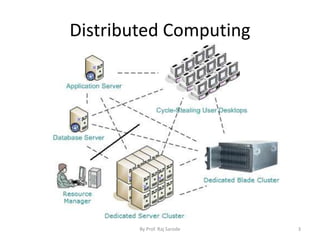
Distributed Computing
• Distributed Computing is a field of computer science that studies
distributed systems.
• A distributed system is a model in which components located on
networked computers communicate and coordinate their actions by
passing messages
• The components interact with each other in order to achieve a common
goal.
• Distributed computing uses a centralized resource manager and all nodes
cooperatively work together as a single unified resource or a system.
By Prof. Raj Sarode 2
Distributed Computing
By Prof. Raj Sarode 3
Utility Computing
• It is a service provisioning model in which a service provider makes
computing resources and infrastructure management available to the
customer as needed, and charges them for specific usage rather than a flat
rate.
• Like other types of on-demand computing (such as grid computing), the
utility model seeks to maximize the efficient use of resources and/or
minimize associated costs.
• Utility is the packaging of computing resources, such as computation,
storage and services, as a metered service.
• This model has the advantage of a low or no initial cost to acquire
computer resources; instead, computational resources are essentially
rented.
By Prof. Raj Sarode 4
Grid Computing
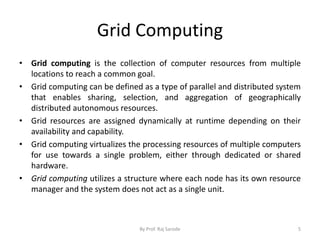
• Grid computing is the collection of computer resources from multiple
locations to reach a common goal.
• Grid computing can be defined as a type of parallel and distributed system
that enables sharing, selection, and aggregation of geographically
distributed autonomous resources.
• Grid resources are assigned dynamically at runtime depending on their
availability and capability.
• Grid computing virtualizes the processing resources of multiple computers
for use towards a single problem, either through dedicated or shared
hardware.
• Grid computing utilizes a structure where each node has its own resource
manager and the system does not act as a single unit.
By Prof. Raj Sarode 5
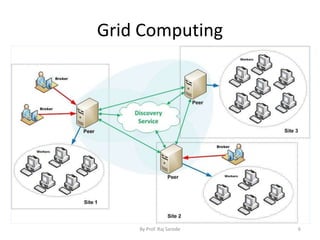
Grid Computing
By Prof. Raj Sarode 6
Cloud Computing
By Prof. Raj Sarode 7
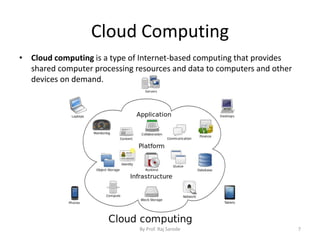
• Cloud computing is a type of Internet-based computing that provides
shared computer processing resources and data to computers and other
devices on demand.
Introduction to PaaS
By Prof. Raj Sarode 8
What is PaaS ?
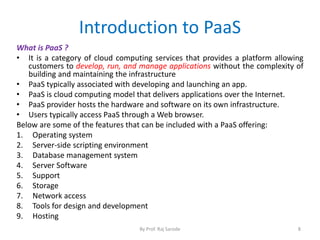
• It is a category of cloud computing services that provides a platform allowing
customers to develop, run, and manage applications without the complexity of
building and maintaining the infrastructure
• PaaS typically associated with developing and launching an app.
• PaaS is cloud computing model that delivers applications over the Internet.
• PaaS provider hosts the hardware and software on its own infrastructure.
• Users typically access PaaS through a Web browser.
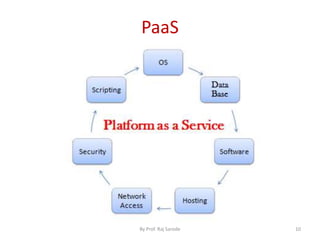
Below are some of the features that can be included with a PaaS offering:
1. Operating system
2. Server-side scripting environment
3. Database management system
4. Server Software
5. Support
6. Storage
7. Network access
8. Tools for design and development
9. Hosting
Benefit of PaaS
By Prof. Raj Sarode 9
• They don’t have to invest in physical infrastructure: being able to ‘rent’ virtual
infrastructure has both cost benefits and practical benefits. They don’t need to
purchase hardware themselves or employ the expertise to manage it. This
leaves them free to focus on the development of applications. What’s more,
clients will only need to rent the resources they need rather than invest in fixed,
unused and therefore wasted capacity.
• Makes development possible for ‘non-experts’: with some PaaS offerings
anyone can develop an application. They can simply do this through their web
browser utilising one-click functionality. Salient examples of this are one-click
blog software installs such as WordPress.
• Flexibility: customers can have control over the tools that are installed within
their platforms and can create a platform that suits their specific requirements.
They can ‘pick and choose’ the features they feel are necessary.
• Adaptability: Features can be changed if circumstances dictate that they should.
• Teams in various locations can work together: as an internet connection and
web browser are all that is required, developers spread across several locations
can work together on the same application build.
• Security: security is provided, including data security and backup and recovery.
PaaS
By Prof. Raj Sarode 10
Service Oriented Architecture (SOA)
By Prof. Raj Sarode 11
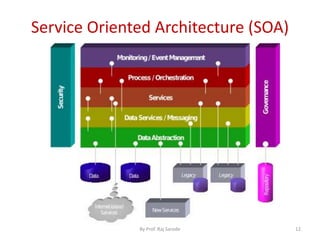
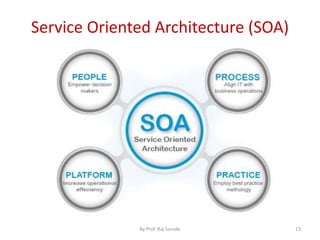
• A service-oriented architecture is essentially a collection of services.
• These services communicate with each other.
• The communication can involve either simple data passing or it could
involve two or more services coordinating some activity.
• SOA's primary goal is to provide agility to businesses, allowing them to
adapt quickly and cost-efficiently to changes in the marketplace.
• SOA provides enterprises better flexibility in building applications and
business processes in an agile manner by leveraging existing application
infrastructure to compose new services.
Service Oriented Architecture (SOA)
By Prof. Raj Sarode 12
Service Oriented Architecture (SOA)
By Prof. Raj Sarode 13
Examples
Google App Engine
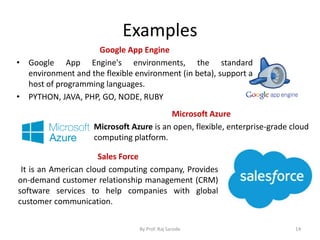
• Google App Engine's environments, the standard
environment and the flexible environment (in beta), support a
host of programming languages.
• PYTHON, JAVA, PHP, GO, NODE, RUBY
By Prof. Raj Sarode 14
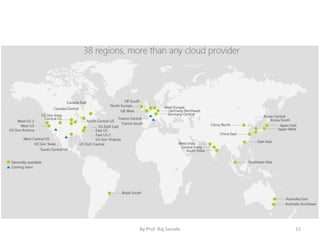
Microsoft Azure
Microsoft Azure is an open, flexible, enterprise-grade cloud
computing platform.
Sales Force
It is an American cloud computing company, Provides
on-demand customer relationship management (CRM)
software services to help companies with global
customer communication.
By Prof. Raj Sarode 15
Thank You
By Prof. Raj Sarode 16

Chap 4 platform as a service (paa s)

  • 1.
    Chapter 4 PaaS Platform asa Service By Prof. Raj Sarode
  • 2.
    Evaluation of ComputingParadigms Distributed Computing • Distributed Computing is a field of computer science that studies distributed systems. • A distributed system is a model in which components located on networked computers communicate and coordinate their actions by passing messages • The components interact with each other in order to achieve a common goal. • Distributed computing uses a centralized resource manager and all nodes cooperatively work together as a single unified resource or a system. By Prof. Raj Sarode 2
  • 3.
  • 4.
    Utility Computing • Itis a service provisioning model in which a service provider makes computing resources and infrastructure management available to the customer as needed, and charges them for specific usage rather than a flat rate. • Like other types of on-demand computing (such as grid computing), the utility model seeks to maximize the efficient use of resources and/or minimize associated costs. • Utility is the packaging of computing resources, such as computation, storage and services, as a metered service. • This model has the advantage of a low or no initial cost to acquire computer resources; instead, computational resources are essentially rented. By Prof. Raj Sarode 4
  • 5.
    Grid Computing • Gridcomputing is the collection of computer resources from multiple locations to reach a common goal. • Grid computing can be defined as a type of parallel and distributed system that enables sharing, selection, and aggregation of geographically distributed autonomous resources. • Grid resources are assigned dynamically at runtime depending on their availability and capability. • Grid computing virtualizes the processing resources of multiple computers for use towards a single problem, either through dedicated or shared hardware. • Grid computing utilizes a structure where each node has its own resource manager and the system does not act as a single unit. By Prof. Raj Sarode 5
  • 6.
  • 7.
    Cloud Computing By Prof.Raj Sarode 7 • Cloud computing is a type of Internet-based computing that provides shared computer processing resources and data to computers and other devices on demand.
  • 8.
    Introduction to PaaS ByProf. Raj Sarode 8 What is PaaS ? • It is a category of cloud computing services that provides a platform allowing customers to develop, run, and manage applications without the complexity of building and maintaining the infrastructure • PaaS typically associated with developing and launching an app. • PaaS is cloud computing model that delivers applications over the Internet. • PaaS provider hosts the hardware and software on its own infrastructure. • Users typically access PaaS through a Web browser. Below are some of the features that can be included with a PaaS offering: 1. Operating system 2. Server-side scripting environment 3. Database management system 4. Server Software 5. Support 6. Storage 7. Network access 8. Tools for design and development 9. Hosting
  • 9.
    Benefit of PaaS ByProf. Raj Sarode 9 • They don’t have to invest in physical infrastructure: being able to ‘rent’ virtual infrastructure has both cost benefits and practical benefits. They don’t need to purchase hardware themselves or employ the expertise to manage it. This leaves them free to focus on the development of applications. What’s more, clients will only need to rent the resources they need rather than invest in fixed, unused and therefore wasted capacity. • Makes development possible for ‘non-experts’: with some PaaS offerings anyone can develop an application. They can simply do this through their web browser utilising one-click functionality. Salient examples of this are one-click blog software installs such as WordPress. • Flexibility: customers can have control over the tools that are installed within their platforms and can create a platform that suits their specific requirements. They can ‘pick and choose’ the features they feel are necessary. • Adaptability: Features can be changed if circumstances dictate that they should. • Teams in various locations can work together: as an internet connection and web browser are all that is required, developers spread across several locations can work together on the same application build. • Security: security is provided, including data security and backup and recovery.
  • 10.
  • 11.
    Service Oriented Architecture(SOA) By Prof. Raj Sarode 11 • A service-oriented architecture is essentially a collection of services. • These services communicate with each other. • The communication can involve either simple data passing or it could involve two or more services coordinating some activity. • SOA's primary goal is to provide agility to businesses, allowing them to adapt quickly and cost-efficiently to changes in the marketplace. • SOA provides enterprises better flexibility in building applications and business processes in an agile manner by leveraging existing application infrastructure to compose new services.
  • 12.
    Service Oriented Architecture(SOA) By Prof. Raj Sarode 12
  • 13.
    Service Oriented Architecture(SOA) By Prof. Raj Sarode 13
  • 14.
    Examples Google App Engine •Google App Engine's environments, the standard environment and the flexible environment (in beta), support a host of programming languages. • PYTHON, JAVA, PHP, GO, NODE, RUBY By Prof. Raj Sarode 14 Microsoft Azure Microsoft Azure is an open, flexible, enterprise-grade cloud computing platform. Sales Force It is an American cloud computing company, Provides on-demand customer relationship management (CRM) software services to help companies with global customer communication.
  • 15.
    By Prof. RajSarode 15
  • 16.
    Thank You By Prof.Raj Sarode 16