Clostridium Difficile: Prevention,
symptoms, current practice, and
recommendations
Shane Karna, SN
St. Cloud State University
Clostridium Difficile
• Anaerobic gram positive spore forming bacteria
• Signs and Symptoms include:
• 3-15 liquid stools per 24 hr., fever, loss of appetite, fever, nausea, and abdominal
pain/tenderness.
• Transmission
• Fecal-Oral Route including tube feedings
• Factors that increase C. Diff. infection risk
• Patients over the age of 65
• Antibiotics, especially fluoroquinolones, cephalosporins, and clindamycin
• Proton pump inhibitors, H2 blockers
• Patient antibiotic exposure within the last 3 months
• Patient Healthcare setting exposure within the last 3 months
Current Practice
• Hand Hygiene
• Contact Precautions (PPE)
• Room with private bathroom
• Using dedicated equipment or cleaning equipment immediately after use
• Obtaining only fresh liquid stool for sampling
• Educating the patient, family, and care providers on C. Diff.
• Monitoring Electrolytes and serum creatinine
• Discontinuing non-essential medications after a positive diagnosis
(antibiotics, PPIs, and H2 blockers
• Keeping the environment clean
Audit Findings
• Chart audits were performed on four patients who were diagnosed
with C. Diff. four days after their admission
• Nurses followed recommended testing guidelines (3 liquid stools per 24 hr)
• Other C. Diff. symptoms (abdominal pain/tenderness, loss of appetite, fever,
and nausea) were masked by their primary diagnosis or weren’t present until
the fourth day
• One patient was unnecessarily re-tested
• Early C. Diff. recognition wasn’t possible
Recommendations
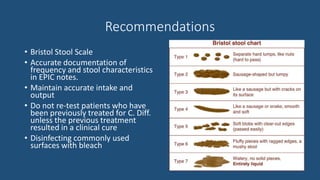
• Bristol Stool Scale
• Accurate documentation of
frequency and stool characteristics
in EPIC notes.
• Maintain accurate intake and
output
• Do not re-test patients who have
been previously treated for C. Diff.
unless the previous treatment
resulted in a clinical cure
• Disinfecting commonly used
surfaces with bleach
References
• "Health Professional Information on Clostridium Difficile." Minnesota Department of Health.
2015. Retrieved from http://www.health.state.mn.us/divs/idepc/diseases/cdiff/hcp/index.html
• Bor, B. Clostridium Difficile [Powerpoint]
• "Bristol Stool Chart." Continence Foundation of Australia. 2016. Retrieved from
http://www.continence.org.au/pages/bristol-stool-chart.html
• “Clostridium Difficile Infection (CDI) Prevention Strategies 2.0.” Collaborative Healthcare-
Associated Infection Network. Retrieved from
http://www.mnreducinghais.org/documents/HAIGapAnalysisCDI.PDF

Clostridium difficile powerpoint presentation

  • 1.
    Clostridium Difficile: Prevention, symptoms,current practice, and recommendations Shane Karna, SN St. Cloud State University
  • 2.
    Clostridium Difficile • Anaerobicgram positive spore forming bacteria • Signs and Symptoms include: • 3-15 liquid stools per 24 hr., fever, loss of appetite, fever, nausea, and abdominal pain/tenderness. • Transmission • Fecal-Oral Route including tube feedings • Factors that increase C. Diff. infection risk • Patients over the age of 65 • Antibiotics, especially fluoroquinolones, cephalosporins, and clindamycin • Proton pump inhibitors, H2 blockers • Patient antibiotic exposure within the last 3 months • Patient Healthcare setting exposure within the last 3 months
  • 3.
    Current Practice • HandHygiene • Contact Precautions (PPE) • Room with private bathroom • Using dedicated equipment or cleaning equipment immediately after use • Obtaining only fresh liquid stool for sampling • Educating the patient, family, and care providers on C. Diff. • Monitoring Electrolytes and serum creatinine • Discontinuing non-essential medications after a positive diagnosis (antibiotics, PPIs, and H2 blockers • Keeping the environment clean
  • 4.
    Audit Findings • Chartaudits were performed on four patients who were diagnosed with C. Diff. four days after their admission • Nurses followed recommended testing guidelines (3 liquid stools per 24 hr) • Other C. Diff. symptoms (abdominal pain/tenderness, loss of appetite, fever, and nausea) were masked by their primary diagnosis or weren’t present until the fourth day • One patient was unnecessarily re-tested • Early C. Diff. recognition wasn’t possible
  • 5.
    Recommendations • Bristol StoolScale • Accurate documentation of frequency and stool characteristics in EPIC notes. • Maintain accurate intake and output • Do not re-test patients who have been previously treated for C. Diff. unless the previous treatment resulted in a clinical cure • Disinfecting commonly used surfaces with bleach
  • 6.
    References • "Health ProfessionalInformation on Clostridium Difficile." Minnesota Department of Health. 2015. Retrieved from http://www.health.state.mn.us/divs/idepc/diseases/cdiff/hcp/index.html • Bor, B. Clostridium Difficile [Powerpoint] • "Bristol Stool Chart." Continence Foundation of Australia. 2016. Retrieved from http://www.continence.org.au/pages/bristol-stool-chart.html • “Clostridium Difficile Infection (CDI) Prevention Strategies 2.0.” Collaborative Healthcare- Associated Infection Network. Retrieved from http://www.mnreducinghais.org/documents/HAIGapAnalysisCDI.PDF