Engineering to sustain
Clostridia and n-butanol - Multi-market
platforms for profitable introduction of
commodity scale renewable chemicals
Mission and History
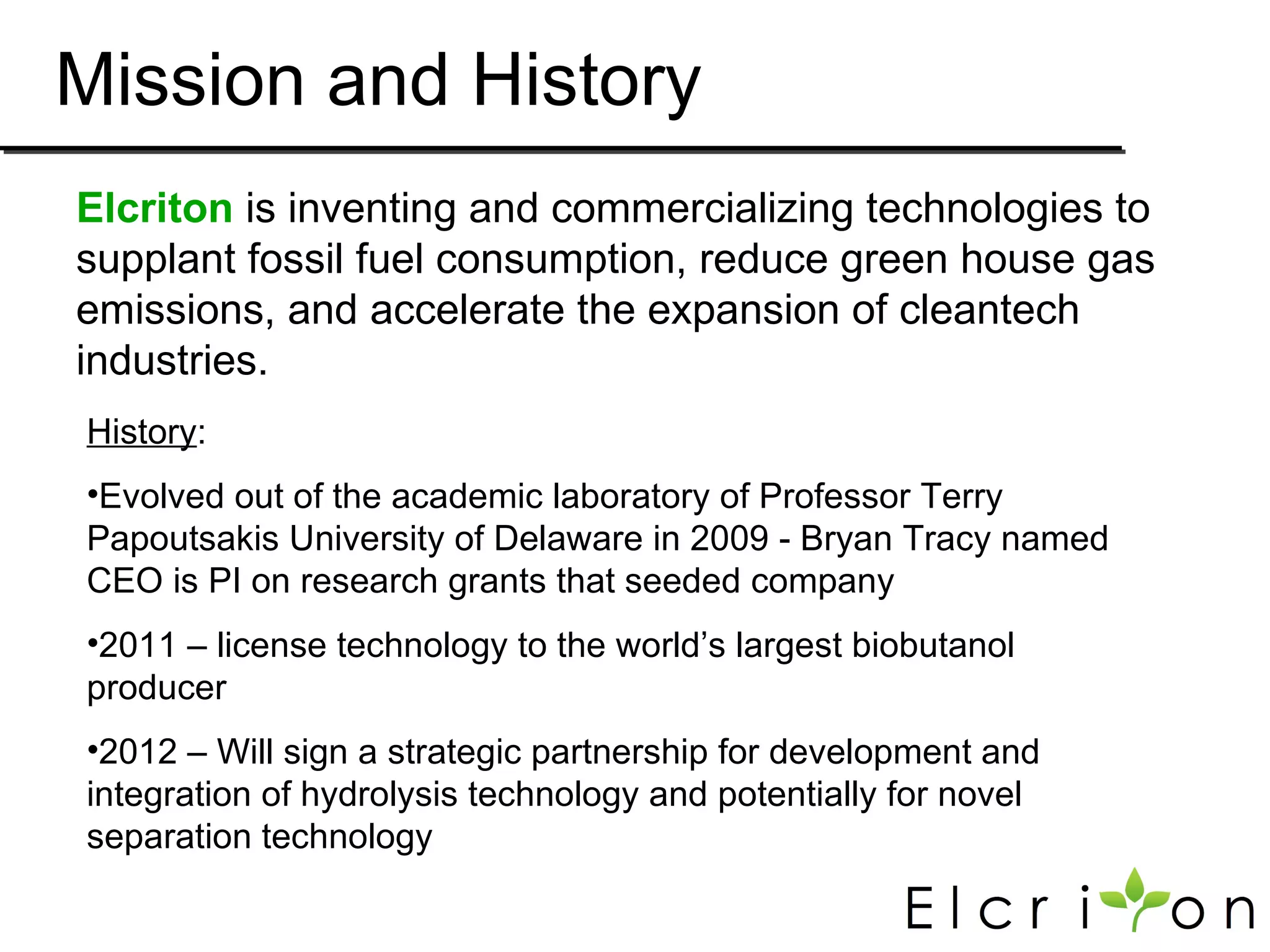
Elcriton is inventing and commercializing technologies to
supplant fossil fuel consumption, reduce green house gas
emissions, and accelerate the expansion of cleantech
industries.
History:
•Evolved out of the academic laboratory of Professor Terry
Papoutsakis University of Delaware in 2009 - Bryan Tracy named
CEO is PI on research grants that seeded company
•2011 – license technology to the world’s largest biobutanol
producer
•2012 – Will sign a strategic partnership for development and
integration of hydrolysis technology and potentially for novel
separation technology
Mission and History

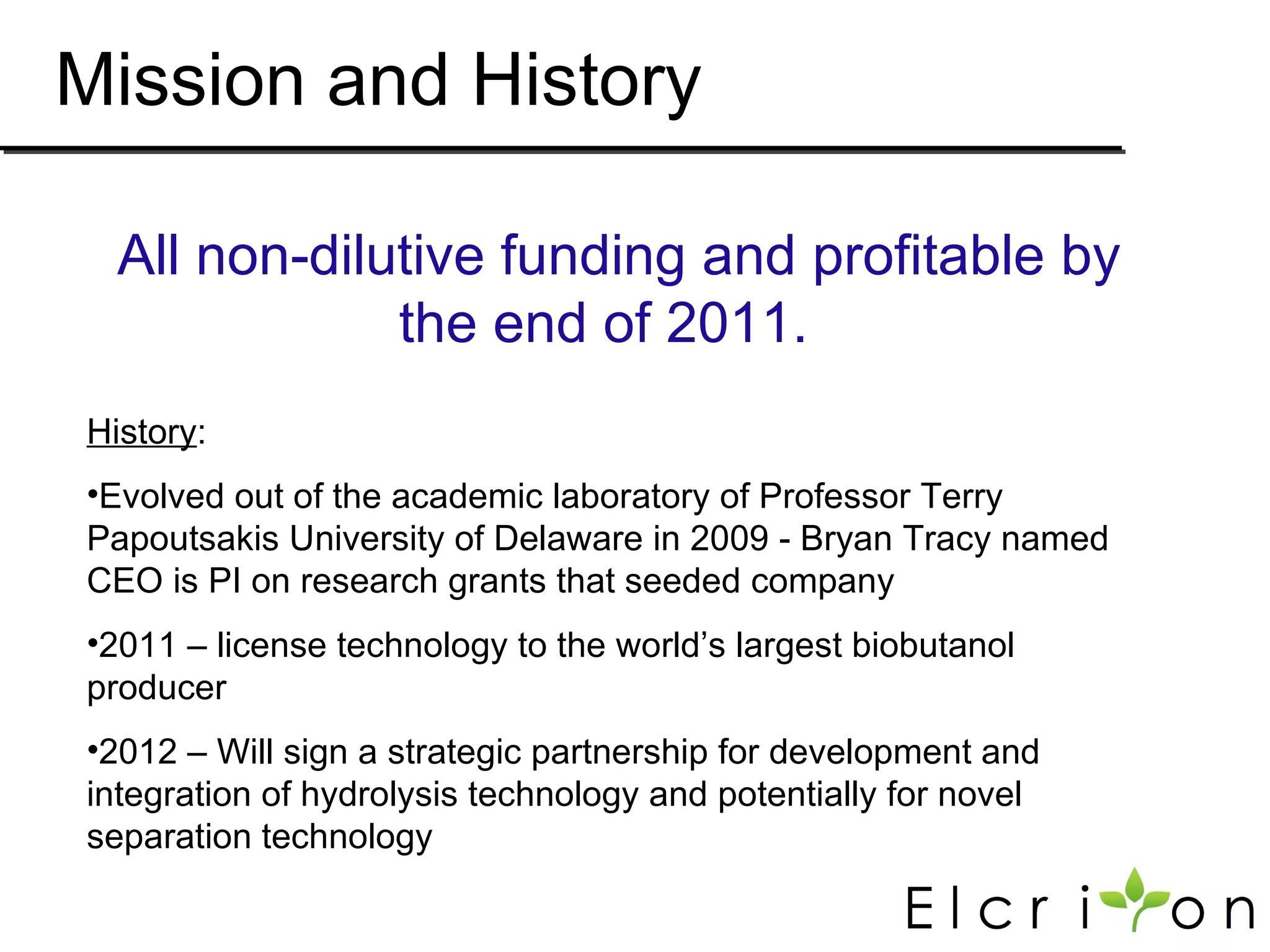
  All non-dilutive funding and profitable by
              the end of 2011.
History:
•Evolved out of the academic laboratory of Professor Terry
Papoutsakis University of Delaware in 2009 - Bryan Tracy named
CEO is PI on research grants that seeded company
•2011 – license technology to the world’s largest biobutanol
producer
•2012 – Will sign a strategic partnership for development and
integration of hydrolysis technology and potentially for novel
separation technology
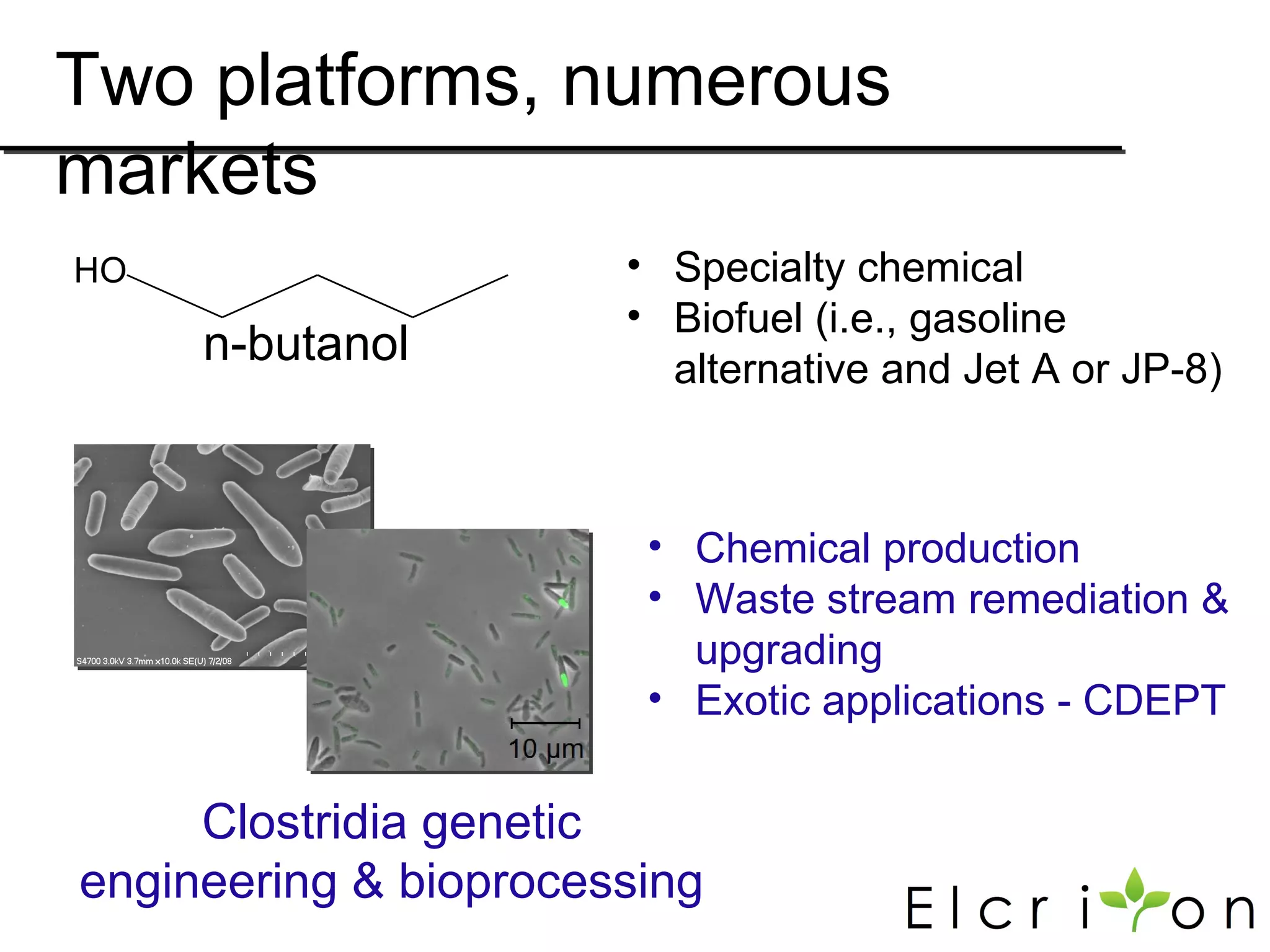
Two platforms, numerous
markets
HO                     • Specialty chemical
                       • Biofuel (i.e., gasoline
     n-butanol           alternative and Jet A or JP-8)


                        • Chemical production
                        • Waste stream remediation &
                          upgrading
                        • Exotic applications - CDEPT

     Clostridia genetic
engineering & bioprocessing
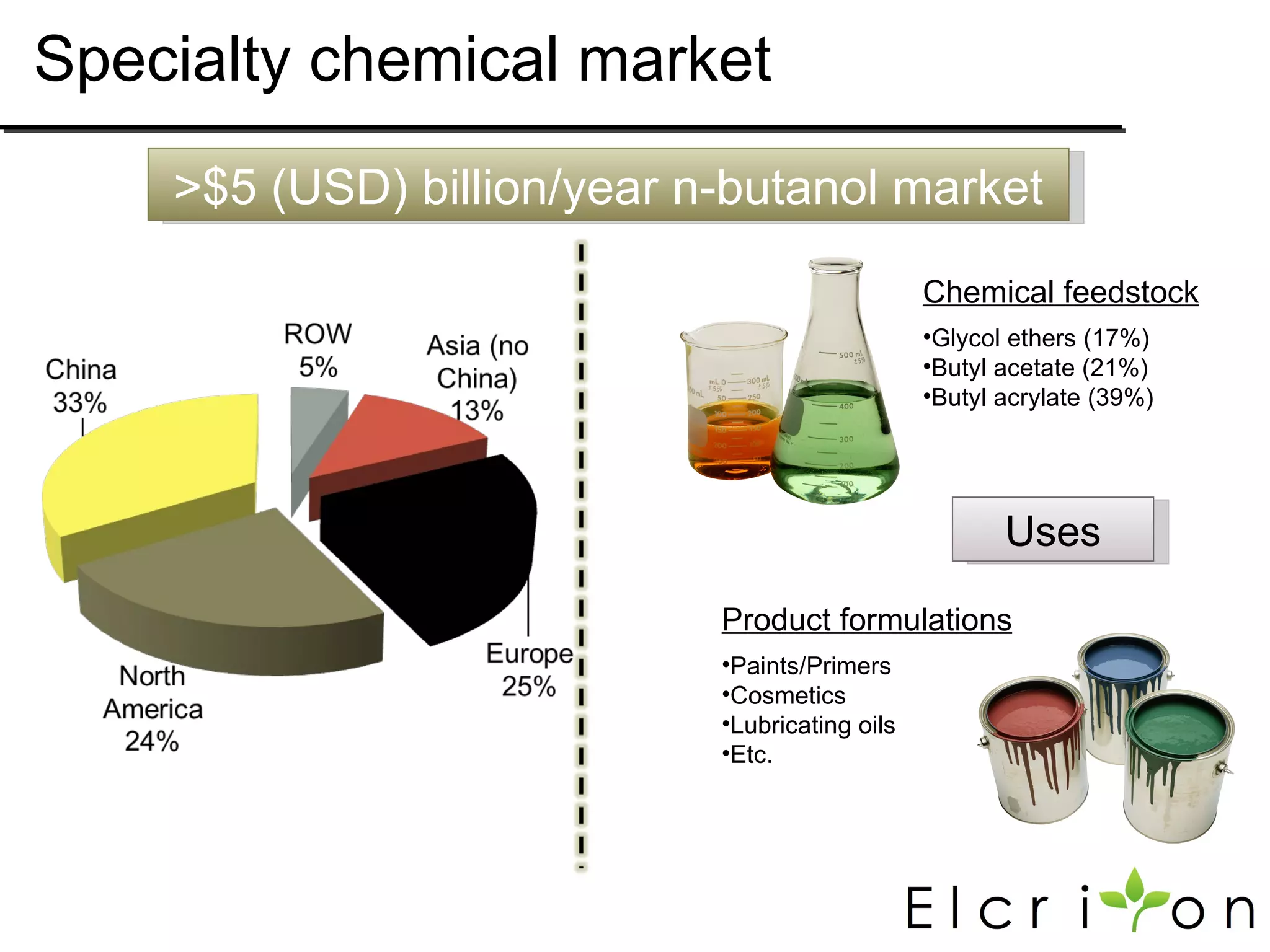
Specialty chemical market
    >$5 (USD) billion/year n-butanol market

                                                Chemical feedstock
                                                •Glycol ethers (17%)
                                                •Butyl acetate (21%)
                                                •Butyl acrylate (39%)


                                                       Uses

                            Product formulations
                            •Paints/Primers
                            •Cosmetics
                            •Lubricating oils
                            •Etc.
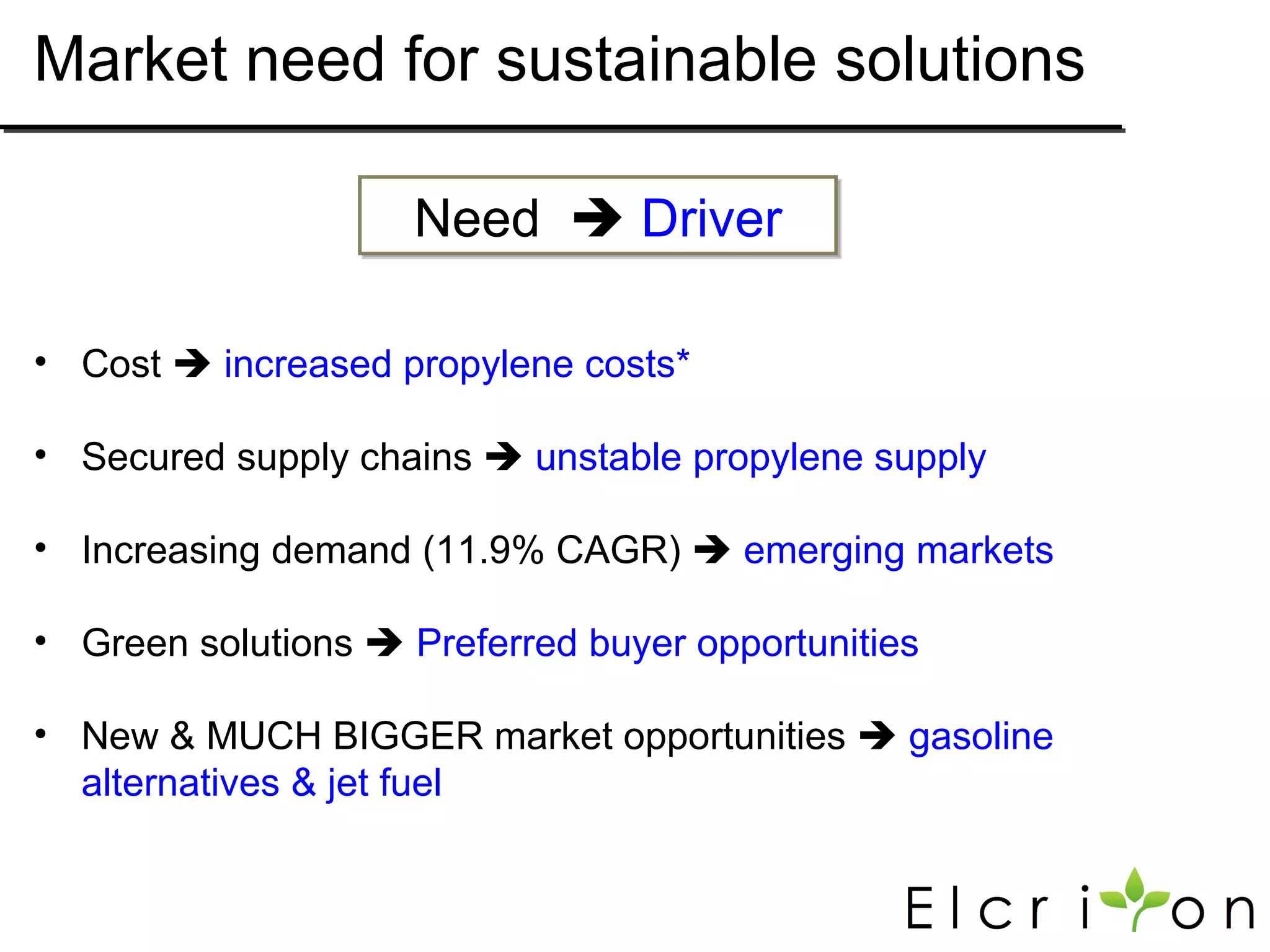
Market need for sustainable solutions

                     Need  Driver

• Cost  increased propylene costs*

• Secured supply chains  unstable propylene supply

• Increasing demand (11.9% CAGR)  emerging markets

• Green solutions  Preferred buyer opportunities

• New & MUCH BIGGER market opportunities  gasoline
  alternatives & jet fuel
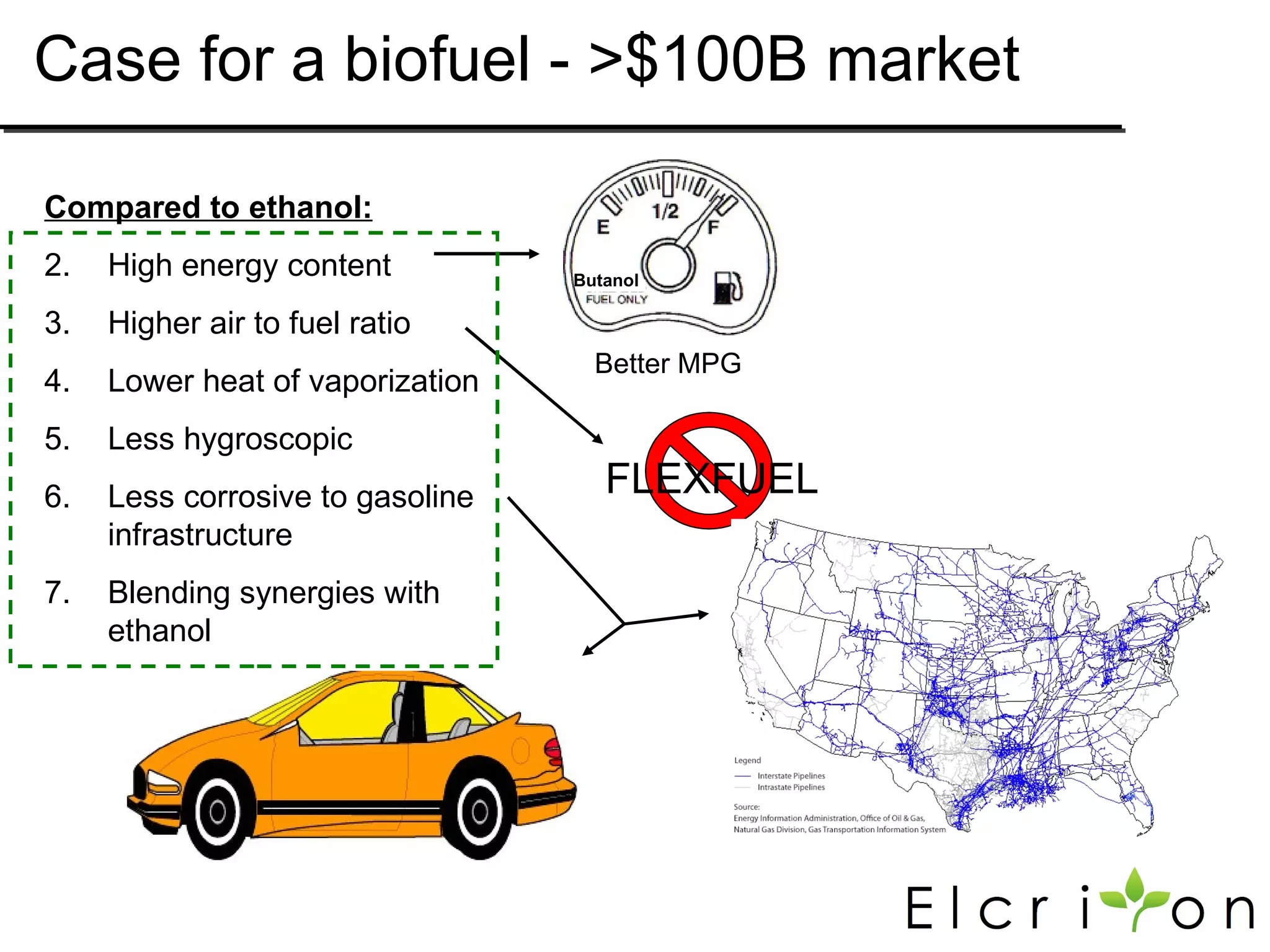
Case for a biofuel - >$100B market

Compared to ethanol:
2.   High energy content          Butanol

3.   Higher air to fuel ratio
                                    Better MPG
4.   Lower heat of vaporization
5.   Less hygroscopic
6.   Less corrosive to gasoline      FLEXFUEL
     infrastructure
7.   Blending synergies with
     ethanol
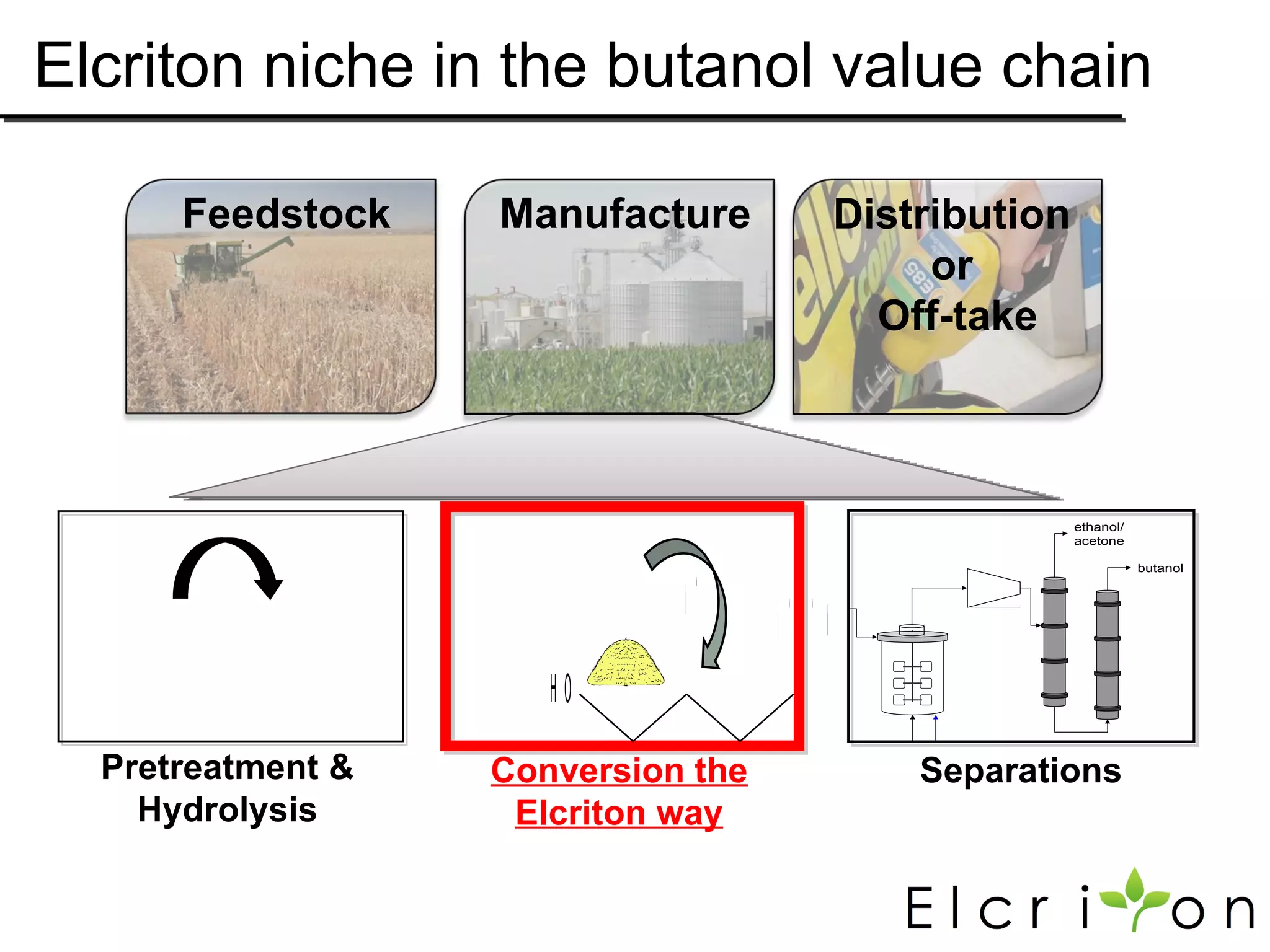
Elcriton niche in the butanol value chain

      Feedstock    Manufacture                            Distribution
                                                               or
                                                            Off-take


                           Mechanical             Hydrolysis                  Separation/
                             prep.                                            Purification
                                     Pretreat-                 Fermentation      ethanol/
                                       ment                                      acetone

                                                                                            butanol


                            heat/
                            energy


                      HO
                                         enzyme

                                                       clostridia      gas
  Pretreatment &   Conversion the                                    Separations
    Hydrolysis      Elcriton way
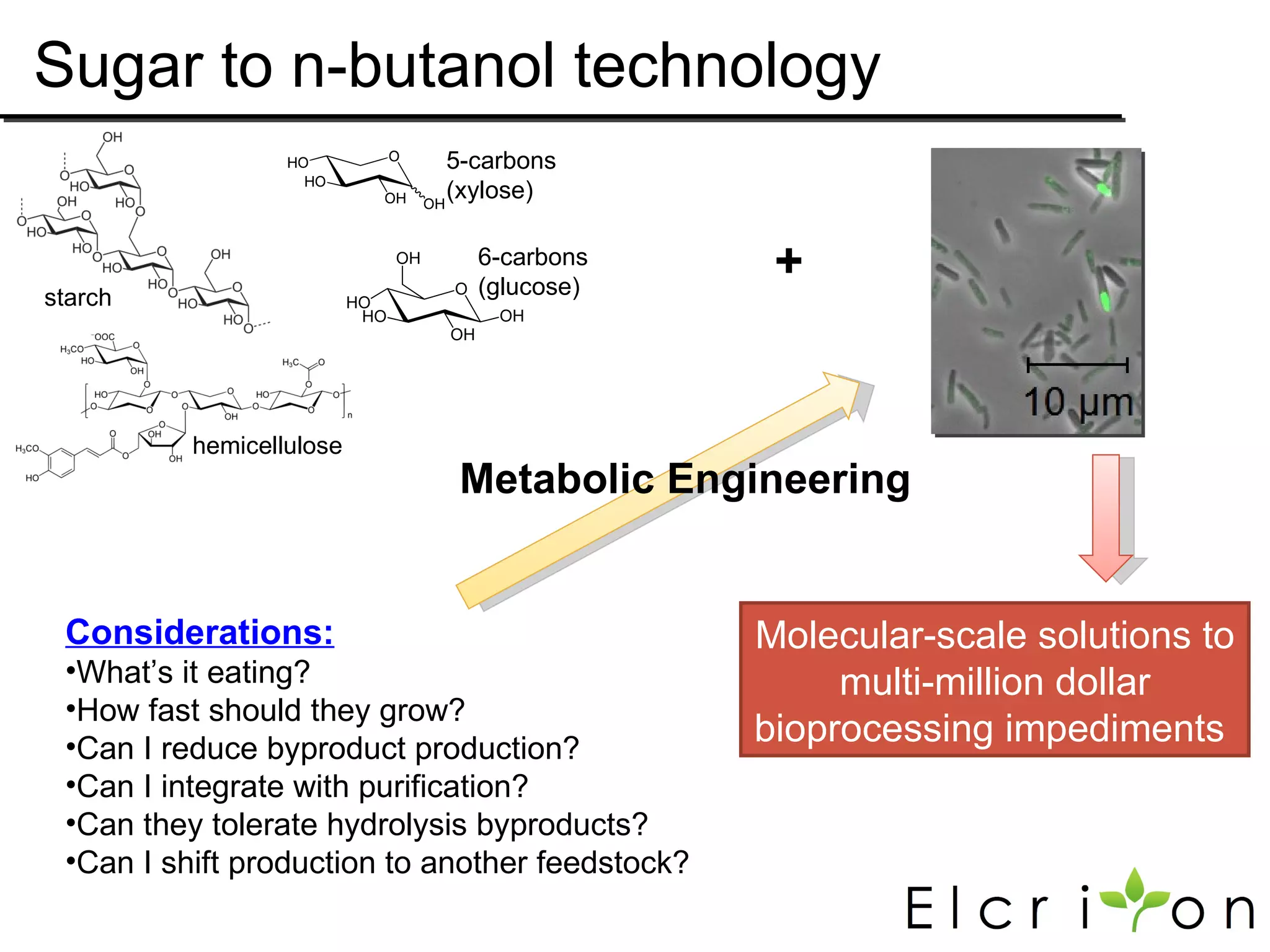
Sugar to n-butanol technology
                            5-carbons
                            (xylose)

                              6-carbons
                              (glucose)
                                                  +
starch


          hemicellulose
                             Metabolic Engineering


 Considerations:                                 Molecular-scale solutions to
 •What’s it eating?                                   multi-million dollar
 •How fast should they grow?
 •Can I reduce byproduct production?
                                                 bioprocessing impediments
 •Can I integrate with purification?
 •Can they tolerate hydrolysis byproducts?
 •Can I shift production to another feedstock?
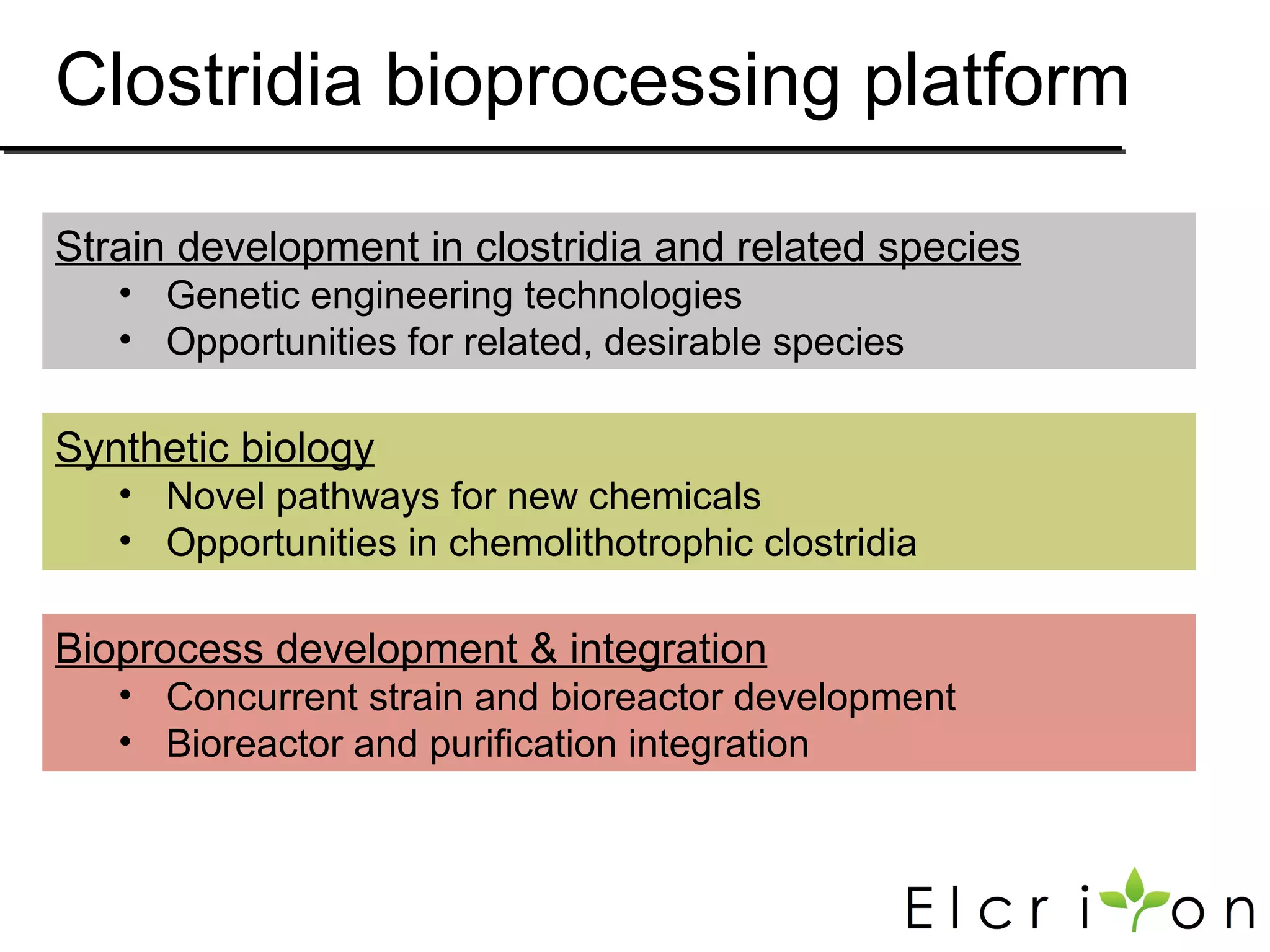
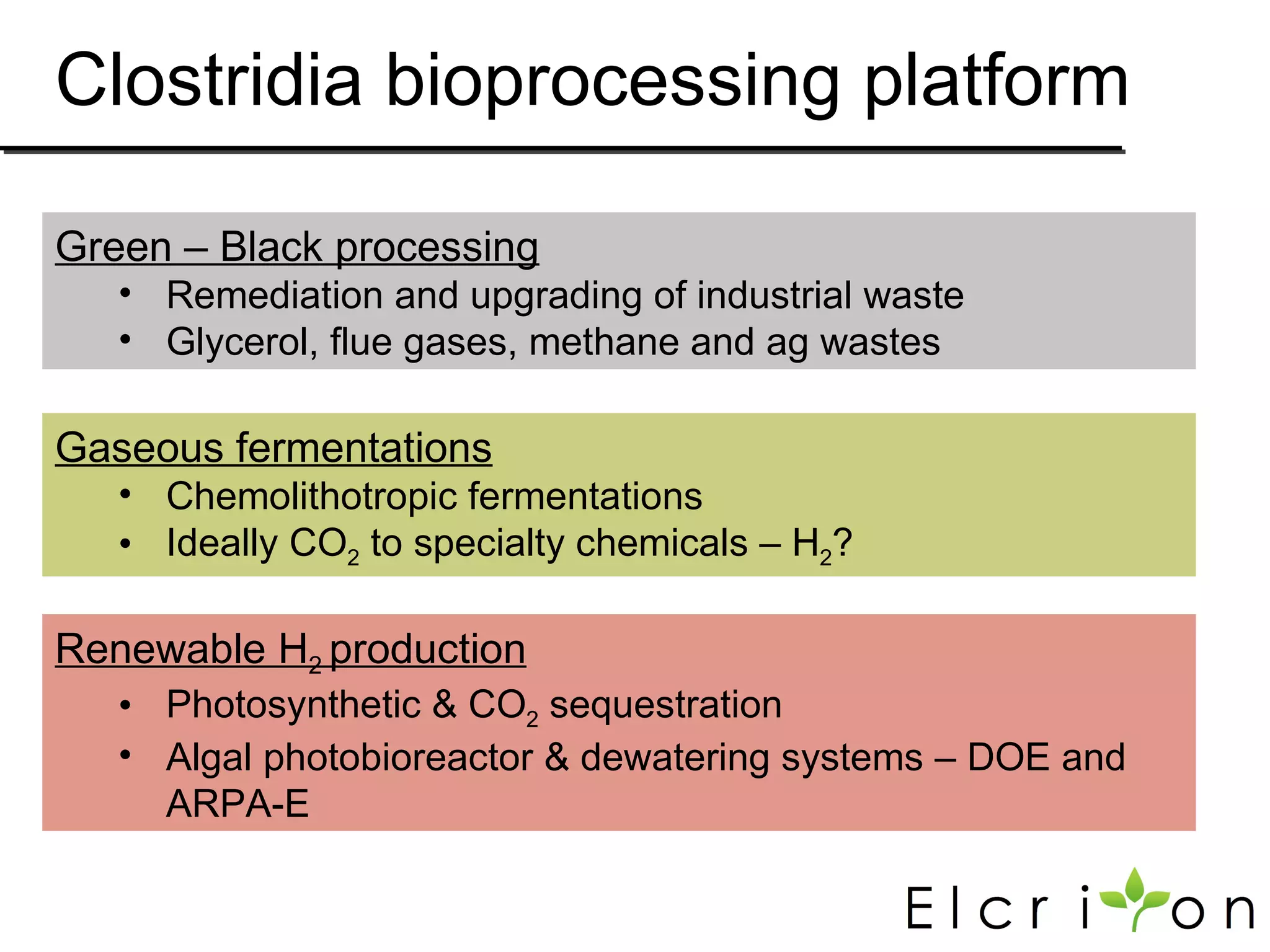
Clostridia bioprocessing platform

Strain development in clostridia and related species
   • Genetic engineering technologies
   • Opportunities for related, desirable species

Synthetic biology
   • Novel pathways for new chemicals
   • Opportunities in chemolithotrophic clostridia

Bioprocess development & integration
   • Concurrent strain and bioreactor development
   • Bioreactor and purification integration
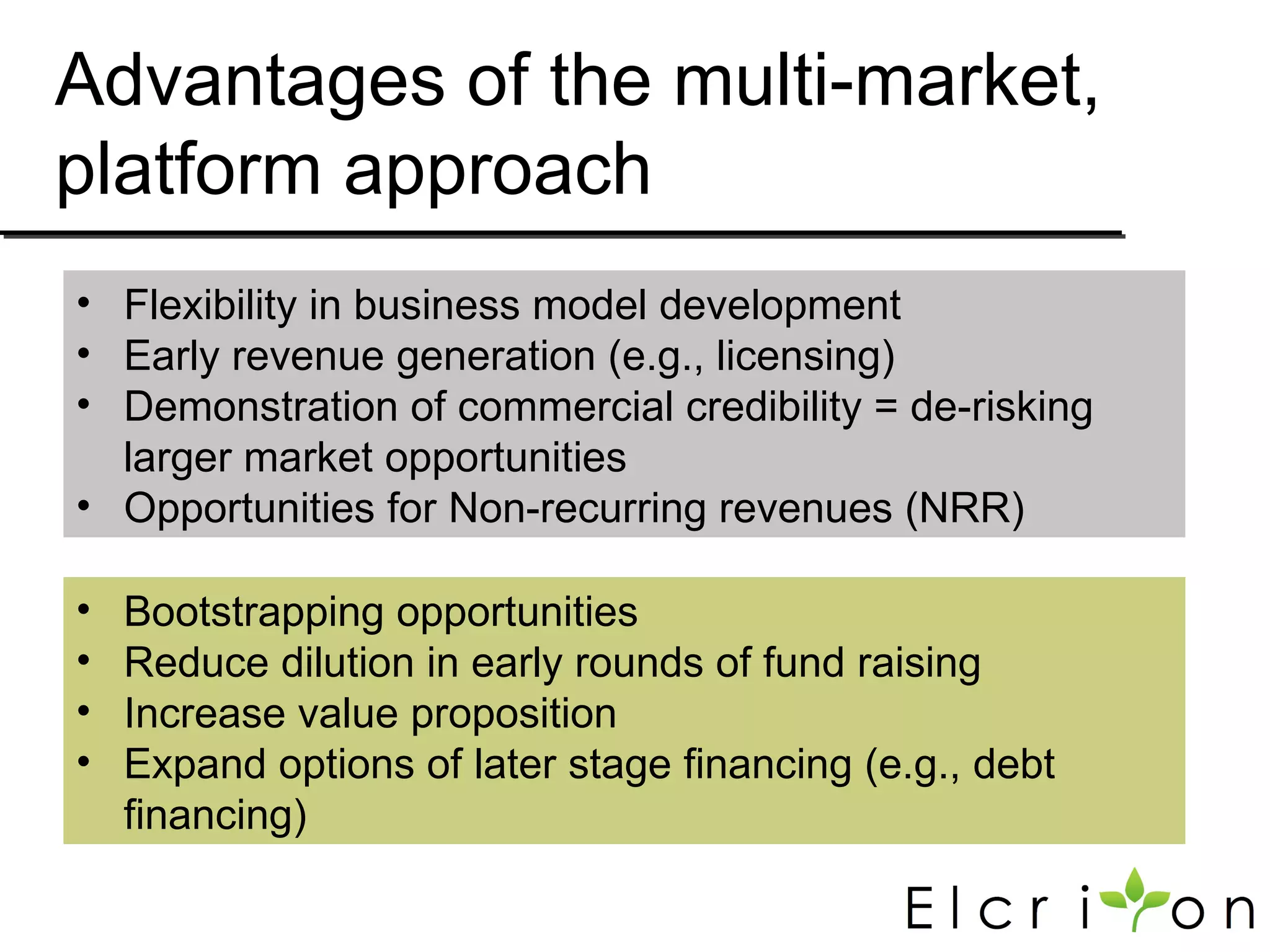
Advantages of the multi-market,
platform approach
• Flexibility in business model development
• Early revenue generation (e.g., licensing)
• Demonstration of commercial credibility = de-risking
  larger market opportunities
• Opportunities for Non-recurring revenues (NRR)

•   Bootstrapping opportunities
•   Reduce dilution in early rounds of fund raising
•   Increase value proposition
•   Expand options of later stage financing (e.g., debt
    financing)
Clostridia bioprocessing platform

Green – Black processing
   • Remediation and upgrading of industrial waste
   • Glycerol, flue gases, methane and ag wastes

Gaseous fermentations
   • Chemolithotropic fermentations
   • Ideally CO2 to specialty chemicals – H2?

Renewable H2 production
   • Photosynthetic & CO2 sequestration
   • Algal photobioreactor & dewatering systems – DOE and
     ARPA-E
For questions please contact:


    Bryan P. Tracy, PhD
  15 Reads Way Suite 106
   New Castle, DE 19720
 BryanTracy@elcriton.com
      302-220-4760
      864-921-5146

Clostridia and n-butanol - Multi-market platforms

  • 1.
  • 2.
    Clostridia and n-butanol- Multi-market platforms for profitable introduction of commodity scale renewable chemicals
  • 3.
    Mission and History Elcritonis inventing and commercializing technologies to supplant fossil fuel consumption, reduce green house gas emissions, and accelerate the expansion of cleantech industries. History: •Evolved out of the academic laboratory of Professor Terry Papoutsakis University of Delaware in 2009 - Bryan Tracy named CEO is PI on research grants that seeded company •2011 – license technology to the world’s largest biobutanol producer •2012 – Will sign a strategic partnership for development and integration of hydrolysis technology and potentially for novel separation technology
  • 4.
    Mission and History All non-dilutive funding and profitable by the end of 2011. History: •Evolved out of the academic laboratory of Professor Terry Papoutsakis University of Delaware in 2009 - Bryan Tracy named CEO is PI on research grants that seeded company •2011 – license technology to the world’s largest biobutanol producer •2012 – Will sign a strategic partnership for development and integration of hydrolysis technology and potentially for novel separation technology
  • 5.
    Two platforms, numerous markets HO • Specialty chemical • Biofuel (i.e., gasoline n-butanol alternative and Jet A or JP-8) • Chemical production • Waste stream remediation & upgrading • Exotic applications - CDEPT Clostridia genetic engineering & bioprocessing
  • 6.
    Specialty chemical market >$5 (USD) billion/year n-butanol market Chemical feedstock •Glycol ethers (17%) •Butyl acetate (21%) •Butyl acrylate (39%) Uses Product formulations •Paints/Primers •Cosmetics •Lubricating oils •Etc.
  • 7.
    Market need forsustainable solutions Need  Driver • Cost  increased propylene costs* • Secured supply chains  unstable propylene supply • Increasing demand (11.9% CAGR)  emerging markets • Green solutions  Preferred buyer opportunities • New & MUCH BIGGER market opportunities  gasoline alternatives & jet fuel
  • 8.
    Case for abiofuel - >$100B market Compared to ethanol: 2. High energy content Butanol 3. Higher air to fuel ratio Better MPG 4. Lower heat of vaporization 5. Less hygroscopic 6. Less corrosive to gasoline FLEXFUEL infrastructure 7. Blending synergies with ethanol
  • 9.
    Elcriton niche inthe butanol value chain Feedstock Manufacture Distribution or Off-take Mechanical Hydrolysis Separation/ prep. Purification Pretreat- Fermentation ethanol/ ment acetone butanol heat/ energy HO enzyme clostridia gas Pretreatment & Conversion the Separations Hydrolysis Elcriton way
  • 10.
    Sugar to n-butanoltechnology 5-carbons (xylose) 6-carbons (glucose) + starch hemicellulose Metabolic Engineering Considerations: Molecular-scale solutions to •What’s it eating? multi-million dollar •How fast should they grow? •Can I reduce byproduct production? bioprocessing impediments •Can I integrate with purification? •Can they tolerate hydrolysis byproducts? •Can I shift production to another feedstock?
  • 11.
    Clostridia bioprocessing platform Straindevelopment in clostridia and related species • Genetic engineering technologies • Opportunities for related, desirable species Synthetic biology • Novel pathways for new chemicals • Opportunities in chemolithotrophic clostridia Bioprocess development & integration • Concurrent strain and bioreactor development • Bioreactor and purification integration
  • 12.
    Advantages of themulti-market, platform approach • Flexibility in business model development • Early revenue generation (e.g., licensing) • Demonstration of commercial credibility = de-risking larger market opportunities • Opportunities for Non-recurring revenues (NRR) • Bootstrapping opportunities • Reduce dilution in early rounds of fund raising • Increase value proposition • Expand options of later stage financing (e.g., debt financing)
  • 13.
    Clostridia bioprocessing platform Green– Black processing • Remediation and upgrading of industrial waste • Glycerol, flue gases, methane and ag wastes Gaseous fermentations • Chemolithotropic fermentations • Ideally CO2 to specialty chemicals – H2? Renewable H2 production • Photosynthetic & CO2 sequestration • Algal photobioreactor & dewatering systems – DOE and ARPA-E
  • 14.
    For questions pleasecontact: Bryan P. Tracy, PhD 15 Reads Way Suite 106 New Castle, DE 19720 BryanTracy@elcriton.com 302-220-4760 864-921-5146

Editor's Notes

  • #4 Sustainability in general refers to future generations having the same or greater access to resources as the current generation. The 3 pillars of sustainability consist of social, environmental and economic considerations. Social - human rights, labor rights, and corporate governance Environment -
  • #5 Sustainability in general refers to future generations having the same or greater access to resources as the current generation. The 3 pillars of sustainability consist of social, environmental and economic considerations. Social - human rights, labor rights, and corporate governance Environment -
  • #6 Sustainability in general refers to future generations having the same or greater access to resources as the current generation. The 3 pillars of sustainability consist of social, environmental and economic considerations. Social - human rights, labor rights, and corporate governance Environment -
  • #7 Sustainability in general refers to future generations having the same or greater access to resources as the current generation. The 3 pillars of sustainability consist of social, environmental and economic considerations. Social - human rights, labor rights, and corporate governance Environment -
  • #8 Sustainability in general refers to future generations having the same or greater access to resources as the current generation. The 3 pillars of sustainability consist of social, environmental and economic considerations. Social - human rights, labor rights, and corporate governance Environment -
  • #12 Sustainability in general refers to future generations having the same or greater access to resources as the current generation. The 3 pillars of sustainability consist of social, environmental and economic considerations. Social - human rights, labor rights, and corporate governance Environment -
  • #13 Sustainability in general refers to future generations having the same or greater access to resources as the current generation. The 3 pillars of sustainability consist of social, environmental and economic considerations. Social - human rights, labor rights, and corporate governance Environment -
  • #14 Sustainability in general refers to future generations having the same or greater access to resources as the current generation. The 3 pillars of sustainability consist of social, environmental and economic considerations. Social - human rights, labor rights, and corporate governance Environment -