

TRANSCATHETER AORTIC
VALVE IMPLANTATION (TAVI)
Preventing Cerebral Embolization
Schulich Innovation Research Day 2015
Team
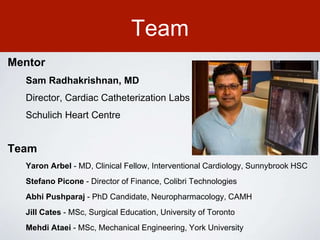
Mentor
Sam Radhakrishnan, MD
Director, Cardiac Catheterization Labs
Schulich Heart Centre
Team
Yaron Arbel - MD, Clinical Fellow, Interventional Cardiology, Sunnybrook HSC
Stefano Picone - Director of Finance, Colibri Technologies
Abhi Pushparaj - PhD Candidate, Neuropharmacology, CAMH
Jill Cates - MSc, Surgical Education, University of Toronto
Mehdi Ataei - MSc, Mechanical Engineering, York University
Aortic Stenosis (AS)
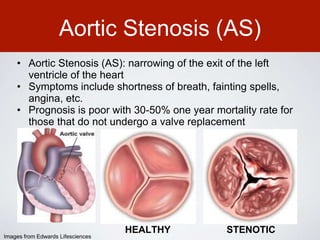
• Aortic Stenosis (AS): narrowing of the exit of the left
ventricle of the heart
• Symptoms include shortness of breath, fainting spells,
angina, etc.
• Prognosis is poor with 30-50% one year mortality rate for
those that do not undergo a valve replacement
HEALTHY STENOTIC
Images from Edwards Lifesciences
Transcatheter Aortic Valves
Implantation (TAVI) or Replacement (TAVR)
• Relatively new minimally invasive procedure
• First performed on patient in 2002
• Three retrograde approaches:
• Transfemoral
• Transaortic
• Transubclavian
• One anterograde approach: Transapical
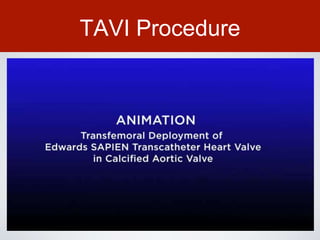
TAVI Procedure
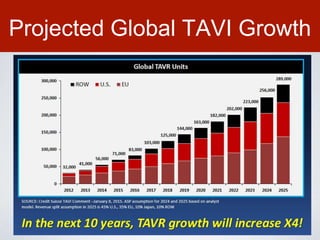
Projected Global TAVI Growth
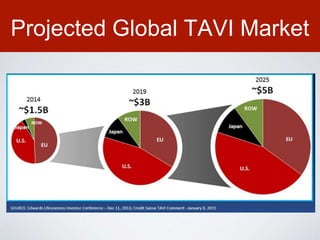
Projected Global TAVI Market
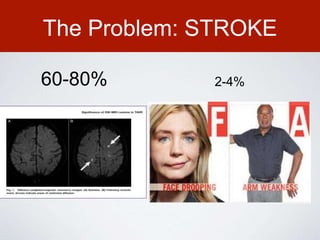
The Problem: STROKE
60-80% 2-4%
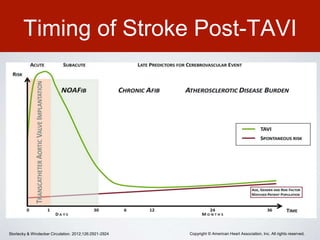
Timing of Stroke Post-TAVI
Stortecky & Windecker Circulation. 2012;126:2921-2924 Copyright © American Heart Association, Inc. All rights reserved.
Problem & Need Statements
Problem Statement
• The risk of cerebral embolization
occurring during TAVI is clinically
problematic
Need Statement
• A solution capable of reducing the risk of
cerebral embolization during TAVI by at
least 50%
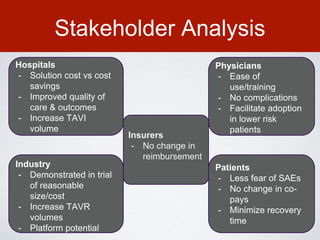
Stakeholder Analysis
Insurers
- No change in
reimbursement
Hospitals
- Solution cost vs cost
savings
- Improved quality of
care & outcomes
- Increase TAVI
volume
Physicians
- Ease of
use/training
- No complications
- Facilitate adoption
in lower risk
patients
Industry
- Demonstrated in trial
of reasonable
size/cost
- Increase TAVR
volumes
- Platform potential
Patients
- Less fear of SAEs
- No change in co-
pays
- Minimize recovery
time
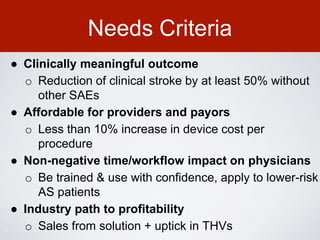
Needs Criteria
● Clinically meaningful outcome
o Reduction of clinical stroke by at least 50% without
other SAEs
● Affordable for providers and payors
o Less than 10% increase in device cost per
procedure
● Non-negative time/workflow impact on physicians
o Be trained & use with confidence, apply to lower-risk
AS patients
● Industry path to profitability
o Sales from solution + uptick in THVs
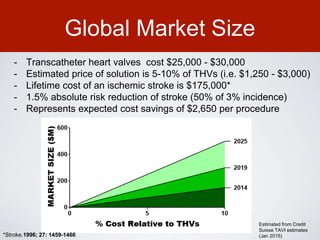
Global Market Size
- Transcatheter heart valves cost $25,000 - $30,000
- Estimated price of solution is 5-10% of THVs (i.e. $1,250 - $3,000)
- Lifetime cost of an ischemic stroke is $175,000*
- 1.5% absolute risk reduction of stroke (50% of 3% incidence)
- Represents expected cost savings of $2,650 per procedure
Estimated from Credit
Suisse TAVI estimates
(Jan 2015)*Stroke.1996; 27: 1459-1466
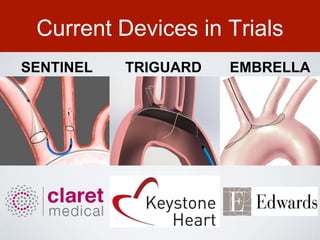
Current Devices in Trials
SENTINEL TRIGUARD EMBRELLA
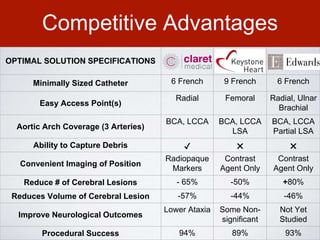
Competitive Advantages
OPTIMAL SOLUTION SPECIFICATIONS
Minimally Sized Catheter 6 French 9 French 6 French
Easy Access Point(s)
Radial Femoral Radial, Ulnar
Brachial
Aortic Arch Coverage (3 Arteries)
BCA, LCCA BCA, LCCA
LSA
BCA, LCCA
Partial LSA
Ability to Capture Debris ✔ ✖ ✖
Convenient Imaging of Position
Radiopaque
Markers
Contrast
Agent Only
Contrast
Agent Only
Reduce # of Cerebral Lesions - 65% -50% +80%
Reduces Volume of Cerebral Lesion -57% -44% -46%
Improve Neurological Outcomes
Lower Ataxia Some Non-
significant
Not Yet
Studied
Procedural Success 94% 89% 93%
Hurdles for Creating a Solution
- Etiology of stroke is not clearly understood
following TAVI (and other procedures)
- Calcified debris; Native valve tissue; Thrombus
- Potentially large trial to demonstrate
reduced stroke incidence may be needed if
effect size of solution is not high (~75%)
- Value ($) of surrogate benefits are unclear
- Reduced DW-MRI # of lesions & lesion volumes
- Reduced neurocognitive deficits
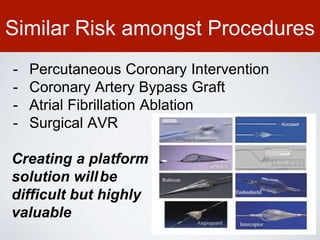
Similar Risk amongst Procedures
- Percutaneous Coronary Intervention
- Coronary Artery Bypass Graft
- Atrial Fibrillation Ablation
- Surgical AVR
Creating a platform
solution willbe
difficult but highly
valuable
Thank You!
Appendix
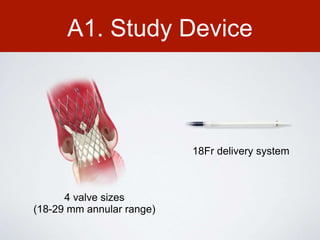
A1. Study Device
4 valve sizes
(18-29 mm annular range)
18Fr delivery system
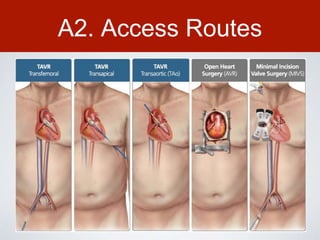
A2. Access Routes

Clinical needs finding presentation tavi

  • 1.
    TRANSCATHETER AORTIC VALVE IMPLANTATION(TAVI) Preventing Cerebral Embolization Schulich Innovation Research Day 2015
  • 2.
    Team Mentor Sam Radhakrishnan, MD Director,Cardiac Catheterization Labs Schulich Heart Centre Team Yaron Arbel - MD, Clinical Fellow, Interventional Cardiology, Sunnybrook HSC Stefano Picone - Director of Finance, Colibri Technologies Abhi Pushparaj - PhD Candidate, Neuropharmacology, CAMH Jill Cates - MSc, Surgical Education, University of Toronto Mehdi Ataei - MSc, Mechanical Engineering, York University
  • 3.
    Aortic Stenosis (AS) •Aortic Stenosis (AS): narrowing of the exit of the left ventricle of the heart • Symptoms include shortness of breath, fainting spells, angina, etc. • Prognosis is poor with 30-50% one year mortality rate for those that do not undergo a valve replacement HEALTHY STENOTIC Images from Edwards Lifesciences
  • 4.
    Transcatheter Aortic Valves Implantation(TAVI) or Replacement (TAVR) • Relatively new minimally invasive procedure • First performed on patient in 2002 • Three retrograde approaches: • Transfemoral • Transaortic • Transubclavian • One anterograde approach: Transapical
  • 5.
  • 6.
  • 7.
  • 8.
  • 9.
    Timing of StrokePost-TAVI Stortecky & Windecker Circulation. 2012;126:2921-2924 Copyright © American Heart Association, Inc. All rights reserved.
  • 10.
    Problem & NeedStatements Problem Statement • The risk of cerebral embolization occurring during TAVI is clinically problematic Need Statement • A solution capable of reducing the risk of cerebral embolization during TAVI by at least 50%
  • 11.
    Stakeholder Analysis Insurers - Nochange in reimbursement Hospitals - Solution cost vs cost savings - Improved quality of care & outcomes - Increase TAVI volume Physicians - Ease of use/training - No complications - Facilitate adoption in lower risk patients Industry - Demonstrated in trial of reasonable size/cost - Increase TAVR volumes - Platform potential Patients - Less fear of SAEs - No change in co- pays - Minimize recovery time
  • 12.
    Needs Criteria ● Clinicallymeaningful outcome o Reduction of clinical stroke by at least 50% without other SAEs ● Affordable for providers and payors o Less than 10% increase in device cost per procedure ● Non-negative time/workflow impact on physicians o Be trained & use with confidence, apply to lower-risk AS patients ● Industry path to profitability o Sales from solution + uptick in THVs
  • 13.
    Global Market Size -Transcatheter heart valves cost $25,000 - $30,000 - Estimated price of solution is 5-10% of THVs (i.e. $1,250 - $3,000) - Lifetime cost of an ischemic stroke is $175,000* - 1.5% absolute risk reduction of stroke (50% of 3% incidence) - Represents expected cost savings of $2,650 per procedure Estimated from Credit Suisse TAVI estimates (Jan 2015)*Stroke.1996; 27: 1459-1466
  • 14.
    Current Devices inTrials SENTINEL TRIGUARD EMBRELLA
  • 15.
    Competitive Advantages OPTIMAL SOLUTIONSPECIFICATIONS Minimally Sized Catheter 6 French 9 French 6 French Easy Access Point(s) Radial Femoral Radial, Ulnar Brachial Aortic Arch Coverage (3 Arteries) BCA, LCCA BCA, LCCA LSA BCA, LCCA Partial LSA Ability to Capture Debris ✔ ✖ ✖ Convenient Imaging of Position Radiopaque Markers Contrast Agent Only Contrast Agent Only Reduce # of Cerebral Lesions - 65% -50% +80% Reduces Volume of Cerebral Lesion -57% -44% -46% Improve Neurological Outcomes Lower Ataxia Some Non- significant Not Yet Studied Procedural Success 94% 89% 93%
  • 16.
    Hurdles for Creatinga Solution - Etiology of stroke is not clearly understood following TAVI (and other procedures) - Calcified debris; Native valve tissue; Thrombus - Potentially large trial to demonstrate reduced stroke incidence may be needed if effect size of solution is not high (~75%) - Value ($) of surrogate benefits are unclear - Reduced DW-MRI # of lesions & lesion volumes - Reduced neurocognitive deficits
  • 17.
    Similar Risk amongstProcedures - Percutaneous Coronary Intervention - Coronary Artery Bypass Graft - Atrial Fibrillation Ablation - Surgical AVR Creating a platform solution willbe difficult but highly valuable
  • 18.
  • 19.
  • 20.
    A1. Study Device 4valve sizes (18-29 mm annular range) 18Fr delivery system
  • 21.