Pathologies
Clinical Perspectives on
Disease and Disorder
Presenters
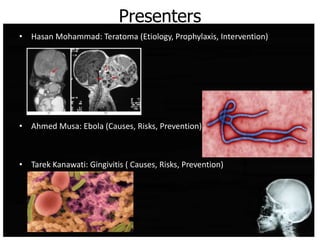
• Hasan Mohammad: Teratoma (Etiology, Prophylaxis, Intervention)
• Ahmed Musa: Ebola (Causes, Risks, Prevention)
• Tarek Kanawati: Gingivitis ( Causes, Risks, Prevention)
Teratoma-Nature and Etiology
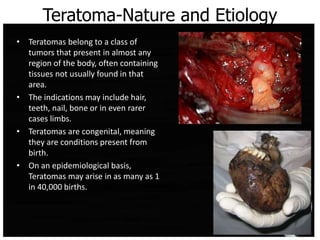
• Teratomas belong to a class of
tumors that present in almost any
region of the body, often containing
tissues not usually found in that
area.
• The indications may include hair,
teeth, nail, bone or in even rarer
cases limbs.
• Teratomas are congenital, meaning
they are conditions present from
birth.
• On an epidemiological basis,
Teratomas may arise in as many as 1
in 40,000 births.
Teratoma-Risk Factors
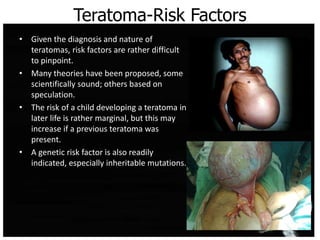
• Given the diagnosis and nature of
teratomas, risk factors are rather difficult
to pinpoint.
• Many theories have been proposed, some
scientifically sound; others based on
speculation.
• The risk of a child developing a teratoma in
later life is rather marginal, but this may
increase if a previous teratoma was
present.
• A genetic risk factor is also readily
indicated, especially inheritable mutations.
Teratoma-Prevention/Prophylaxis
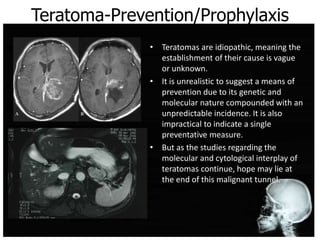
• Teratomas are idiopathic, meaning the
establishment of their cause is vague
or unknown.
• It is unrealistic to suggest a means of
prevention due to its genetic and
molecular nature compounded with an
unpredictable incidence. It is also
impractical to indicate a single
preventative measure.
• But as the studies regarding the
molecular and cytological interplay of
teratomas continue, hope may lie at
the end of this malignant tunnel.
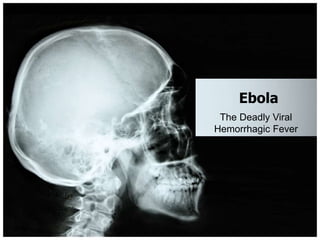
Ebola
The Deadly Viral
Hemorrhagic Fever
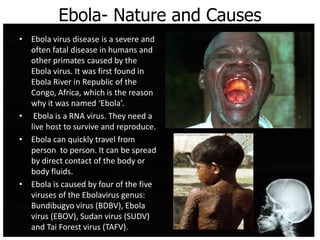
Ebola- Nature and Causes
• Ebola virus disease is a severe and
often fatal disease in humans and
other primates caused by the
Ebola virus. It was first found in
Ebola River in Republic of the
Congo, Africa, which is the reason
why it was named ‘Ebola’.
• Ebola is a RNA virus. They need a
live host to survive and reproduce.
• Ebola can quickly travel from
person to person. It can be spread
by direct contact of the body or
body fluids.
• Ebola is caused by four of the five
viruses of the Ebolavirus genus:
Bundibugyo virus (BDBV), Ebola
virus (EBOV), Sudan virus (SUDV)
and Tai Forest virus (TAFV).
Ebola- Risks
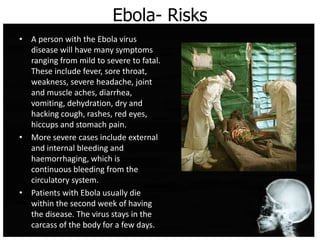
• A person with the Ebola virus
disease will have many symptoms
ranging from mild to severe to fatal.
These include fever, sore throat,
weakness, severe headache, joint
and muscle aches, diarrhea,
vomiting, dehydration, dry and
hacking cough, rashes, red eyes,
hiccups and stomach pain.
• More severe cases include external
and internal bleeding and
haemorrhaging, which is
continuous bleeding from the
circulatory system.
• Patients with Ebola usually die
within the second week of having
the disease. The virus stays in the
carcass of the body for a few days.
Ebola- Prevention
• There are currently no treatments for
the Ebola virus diseases. A patient with
Ebola has a fatality rate of 50-90%. If the
patient does not die within the first
couple of weeks, the virus will go away.
• There also are currently no vaccines for
the virus, so the only methods for
preventing the spreading of Ebola is no
direct contact and keeping the patients
away from the rest of the population.
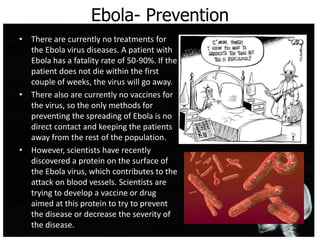
• However, scientists have recently
discovered a protein on the surface of
the Ebola virus, which contributes to the
attack on blood vessels. Scientists are
trying to develop a vaccine or drug
aimed at this protein to try to prevent
the disease or decrease the severity of
the disease.
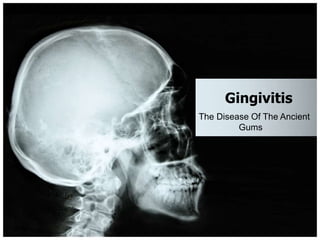
Gingivitis
The Disease Of The Ancient
Gums
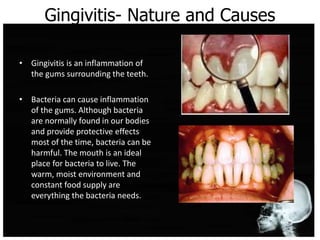
Gingivitis- Nature and Causes
• Gingivitis is an inflammation of
the gums surrounding the teeth.
• Bacteria can cause inflammation
of the gums. Although bacteria
are normally found in our bodies
and provide protective effects
most of the time, bacteria can be
harmful. The mouth is an ideal
place for bacteria to live. The
warm, moist environment and
constant food supply are
everything the bacteria needs.
Gingivitis-Risk Factors
• The people at risk of gingivitis are
people that lack oral hygiene. The
lack of oral hygiene encourages
the bacterial build up and plaque
formation.
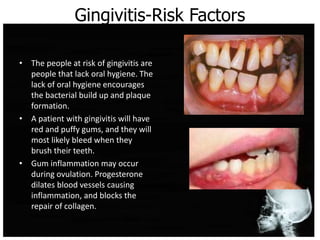
• A patient with gingivitis will have
red and puffy gums, and they will
most likely bleed when they
brush their teeth.
• Gum inflammation may occur
during ovulation. Progesterone
dilates blood vessels causing
inflammation, and blocks the
repair of collagen.
Gingivitis-Preventions
• There are not many ways to
prevent Gingivitis . Besides going
to the dentist for a regular check
up, prevention for gingivitis
mainly takes place at home.
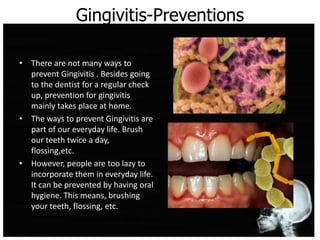
• The ways to prevent Gingivitis are
part of our everyday life. Brush
our teeth twice a day,
flossing,etc.
• However, people are too lazy to
incorporate them in everyday life.
It can be prevented by having oral
hygiene. This means, brushing
your teeth, flossing, etc.
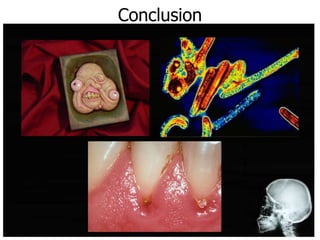
Conclusion

Clinical Cases

  • 1.
  • 2.
    Presenters • Hasan Mohammad:Teratoma (Etiology, Prophylaxis, Intervention) • Ahmed Musa: Ebola (Causes, Risks, Prevention) • Tarek Kanawati: Gingivitis ( Causes, Risks, Prevention)
  • 3.
    Teratoma-Nature and Etiology •Teratomas belong to a class of tumors that present in almost any region of the body, often containing tissues not usually found in that area. • The indications may include hair, teeth, nail, bone or in even rarer cases limbs. • Teratomas are congenital, meaning they are conditions present from birth. • On an epidemiological basis, Teratomas may arise in as many as 1 in 40,000 births.
  • 4.
    Teratoma-Risk Factors • Giventhe diagnosis and nature of teratomas, risk factors are rather difficult to pinpoint. • Many theories have been proposed, some scientifically sound; others based on speculation. • The risk of a child developing a teratoma in later life is rather marginal, but this may increase if a previous teratoma was present. • A genetic risk factor is also readily indicated, especially inheritable mutations.
  • 5.
    Teratoma-Prevention/Prophylaxis • Teratomas areidiopathic, meaning the establishment of their cause is vague or unknown. • It is unrealistic to suggest a means of prevention due to its genetic and molecular nature compounded with an unpredictable incidence. It is also impractical to indicate a single preventative measure. • But as the studies regarding the molecular and cytological interplay of teratomas continue, hope may lie at the end of this malignant tunnel.
  • 6.
  • 7.
    Ebola- Nature andCauses • Ebola virus disease is a severe and often fatal disease in humans and other primates caused by the Ebola virus. It was first found in Ebola River in Republic of the Congo, Africa, which is the reason why it was named ‘Ebola’. • Ebola is a RNA virus. They need a live host to survive and reproduce. • Ebola can quickly travel from person to person. It can be spread by direct contact of the body or body fluids. • Ebola is caused by four of the five viruses of the Ebolavirus genus: Bundibugyo virus (BDBV), Ebola virus (EBOV), Sudan virus (SUDV) and Tai Forest virus (TAFV).
  • 8.
    Ebola- Risks • Aperson with the Ebola virus disease will have many symptoms ranging from mild to severe to fatal. These include fever, sore throat, weakness, severe headache, joint and muscle aches, diarrhea, vomiting, dehydration, dry and hacking cough, rashes, red eyes, hiccups and stomach pain. • More severe cases include external and internal bleeding and haemorrhaging, which is continuous bleeding from the circulatory system. • Patients with Ebola usually die within the second week of having the disease. The virus stays in the carcass of the body for a few days.
  • 9.
    Ebola- Prevention • Thereare currently no treatments for the Ebola virus diseases. A patient with Ebola has a fatality rate of 50-90%. If the patient does not die within the first couple of weeks, the virus will go away. • There also are currently no vaccines for the virus, so the only methods for preventing the spreading of Ebola is no direct contact and keeping the patients away from the rest of the population. • However, scientists have recently discovered a protein on the surface of the Ebola virus, which contributes to the attack on blood vessels. Scientists are trying to develop a vaccine or drug aimed at this protein to try to prevent the disease or decrease the severity of the disease.
  • 10.
    Gingivitis The Disease OfThe Ancient Gums
  • 11.
    Gingivitis- Nature andCauses • Gingivitis is an inflammation of the gums surrounding the teeth. • Bacteria can cause inflammation of the gums. Although bacteria are normally found in our bodies and provide protective effects most of the time, bacteria can be harmful. The mouth is an ideal place for bacteria to live. The warm, moist environment and constant food supply are everything the bacteria needs.
  • 12.
    Gingivitis-Risk Factors • Thepeople at risk of gingivitis are people that lack oral hygiene. The lack of oral hygiene encourages the bacterial build up and plaque formation. • A patient with gingivitis will have red and puffy gums, and they will most likely bleed when they brush their teeth. • Gum inflammation may occur during ovulation. Progesterone dilates blood vessels causing inflammation, and blocks the repair of collagen.
  • 13.
    Gingivitis-Preventions • There arenot many ways to prevent Gingivitis . Besides going to the dentist for a regular check up, prevention for gingivitis mainly takes place at home. • The ways to prevent Gingivitis are part of our everyday life. Brush our teeth twice a day, flossing,etc. • However, people are too lazy to incorporate them in everyday life. It can be prevented by having oral hygiene. This means, brushing your teeth, flossing, etc.
  • 14.