 Ebola virus disease is also called Ebola hemorrhagic
fever, or simply Ebola.
 Disease caused by Ebola virus.
History
 It was identified in 1976, when two outbreaks
occurred in Sudan and Zaire (areas near Africa)
0
50
100
150
200
250
300
350
sudan zaire
cases
mortility
Introduction
 In 1979, it was found in Africa and no clinical case has
been found for 15 years.
 Another strain of Ebola was isolated in 1989 during an
outbreak of infection of monkeys named Macaca
fascicularus.
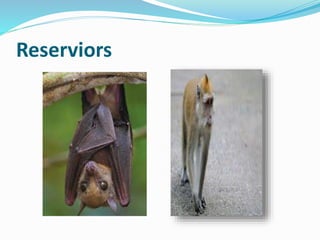
Reserviors
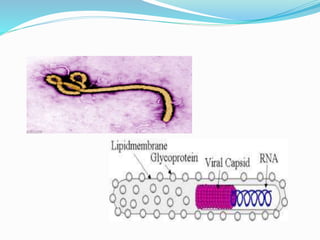
Structure
 The EBOV genome is a single stranded RNA
 19,000 nucleotides
 They have reserved directions, branches and loops.
 They mostly have thread like structures
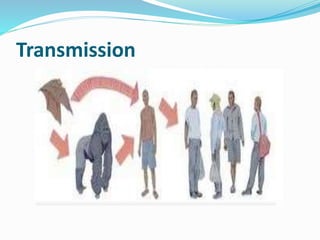
Spread
 Spread by direct contact with blood or other fluids of
an infected human or other animal
Transmission
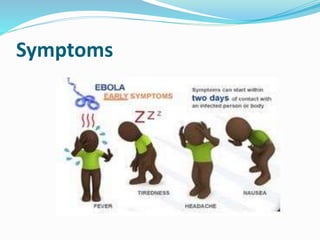
Symptoms
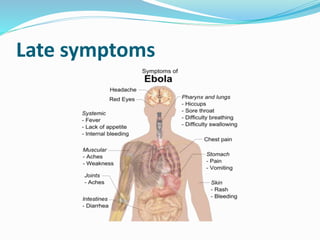
Late symptoms
How it gets into our systems?
 There are two candidates for host cell entry proteins:
 Cholestrol transport protein
 Macophages: the immune cell receptors
Epidemology
 The disease tipicaly occurs in tropical regions of Sub-
Saharan Africa.
 From 1976 to 2013, WHO reported 1,716 confirm cases.
 As of 16 Dec,2014 6,756 deaths are reported.
Zaire outbreak
 On 26 August,1976 outbreak of Ebola began in small
village.
 The first person infected with this disease was a village
school headmaster.
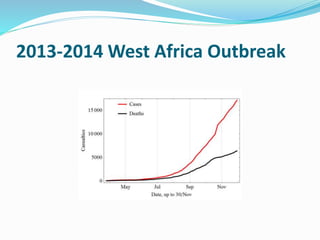
2013-2014 West Africa Outbreak
World wide outbreaks
Affected Parts
The expected reservoirs(Fruit bat)
Effects on animals (WILD animals)
 Ebola have resulted in deaths of 5,000 Gorillas
 Resulted in 88% decline in Chimpanzee
Domestic animals
 In 2012, it was demonstrated that it can travel without
contact with pigs.
 Scientists failed to achieve transmission factors in
animals.
 Dogs may become infected from this virus but not
develop symptoms.
Medications
 Balancing electrolytes in body
 Treat other infections in body
 Maintain blood pressure
Treatment
 Currently, there is no treatment for EVD and doctors
simply treat symptoms, support the infected person
and deal with any complications that result from the
disease.
Preventative Measures
 Avoid contact with infected bats, monkeys or apes.
 Avoid contact with raw bush meat. Bush meat is the
meat of wild animals; this includes hoofed animals,
rats, bats and monkeys.
Future Perspective
 The natural reservoirs or the hosting body for this
deadly creature is still unknown
Summary
 We have isolated a new strain of Ebola virus from a
non-fetal human case infected during the autopsy of a
wild Chimpanzee. The wild troop to which this animal
belonged has been decimated by outbreaks of
haemorrhagic syndromes. This is the first time that a
human infection has been connected to naturally-
infected monkeys in Africa. Data from the long term
survey of this troop of chimpanzee could answer
questions about the natural reservoirs of the Ebola
virus.
May Almighty keep us
away from such viruses.
Ameen

Ebola

  • 2.
     Ebola virusdisease is also called Ebola hemorrhagic fever, or simply Ebola.  Disease caused by Ebola virus.
  • 3.
    History  It wasidentified in 1976, when two outbreaks occurred in Sudan and Zaire (areas near Africa)
  • 4.
  • 5.
    Introduction  In 1979,it was found in Africa and no clinical case has been found for 15 years.  Another strain of Ebola was isolated in 1989 during an outbreak of infection of monkeys named Macaca fascicularus.
  • 6.
  • 7.
    Structure  The EBOVgenome is a single stranded RNA  19,000 nucleotides  They have reserved directions, branches and loops.  They mostly have thread like structures
  • 9.
    Spread  Spread bydirect contact with blood or other fluids of an infected human or other animal
  • 10.
  • 11.
  • 12.
  • 13.
    How it getsinto our systems?  There are two candidates for host cell entry proteins:  Cholestrol transport protein  Macophages: the immune cell receptors
  • 16.
    Epidemology  The diseasetipicaly occurs in tropical regions of Sub- Saharan Africa.  From 1976 to 2013, WHO reported 1,716 confirm cases.  As of 16 Dec,2014 6,756 deaths are reported.
  • 18.
    Zaire outbreak  On26 August,1976 outbreak of Ebola began in small village.  The first person infected with this disease was a village school headmaster.
  • 19.
  • 20.
  • 21.
  • 22.
  • 23.
    Effects on animals(WILD animals)  Ebola have resulted in deaths of 5,000 Gorillas  Resulted in 88% decline in Chimpanzee
  • 24.
    Domestic animals  In2012, it was demonstrated that it can travel without contact with pigs.  Scientists failed to achieve transmission factors in animals.  Dogs may become infected from this virus but not develop symptoms.
  • 25.
    Medications  Balancing electrolytesin body  Treat other infections in body  Maintain blood pressure
  • 26.
    Treatment  Currently, thereis no treatment for EVD and doctors simply treat symptoms, support the infected person and deal with any complications that result from the disease.
  • 27.
  • 28.
    Preventative Measures  Avoidcontact with infected bats, monkeys or apes.  Avoid contact with raw bush meat. Bush meat is the meat of wild animals; this includes hoofed animals, rats, bats and monkeys.
  • 29.
    Future Perspective  Thenatural reservoirs or the hosting body for this deadly creature is still unknown
  • 30.
    Summary  We haveisolated a new strain of Ebola virus from a non-fetal human case infected during the autopsy of a wild Chimpanzee. The wild troop to which this animal belonged has been decimated by outbreaks of haemorrhagic syndromes. This is the first time that a human infection has been connected to naturally- infected monkeys in Africa. Data from the long term survey of this troop of chimpanzee could answer questions about the natural reservoirs of the Ebola virus.
  • 31.
    May Almighty keepus away from such viruses. Ameen