Ebola Outbreak Factsheet 
What you need to know about the Ebola 
Virus Disease
Is Ebola Real or just a Media 
Hoax?
What is the Ebola Virus? 
Ebola, previously known as Ebola haemorrhagic 
fever, is a rare and deadly disease caused by 
infection with one of the Ebola virus strains. Ebola 
can cause disease in humans and nonhuman 
primates (monkeys, gorillas, and chimpanzees).
Ebola Cont. 
Ebola is caused by infection with a virus of the 
family Filoviridae, genus Ebolavirus. There are 
five identified Ebola virus species, four of which are 
known to cause disease in humans: 
 Ebola virus (Zaire ebolavirus); 
 Sudan virus (Sudan ebolavirus); 
 Taï Forest virus (Taï Forest ebolavirus, formerly 
Côte d’Ivoire ebolavirus); and 
 Bundibugyo virus (Bundibugyo ebolavirus). 
 The fifth, Reston virus (Reston ebolavirus), has 
caused disease in nonhuman primates, but not in 
humans.
Ebola History 
Ebola was first discovered in 1976 near the Ebola 
River in what is now the Democratic Republic of the 
Congo. Since then, outbreaks have appeared 
sporadically in Africa (more specifically West-Africa)
What of the Ebola Outbreak 
2014? 
An epidemic of Ebola Virus Disease (EVD) is 
ongoing in certain West African countries. 
It began in Guinea in December 2013 and spread 
to Liberia and Sierra Leone then to other countries 
as follows;
Major Countries with Ebola Transmission (in 2014) 
 Guinea 
 Liberia 
 Sierra Leone 
Countries with limited local transmission (in 2014) 
 Spain 
 United States 
Countries with contained spread ( in 2014) 
 Senegal 
 Nigeria
How Do You Get Ebola? 
 Human -to - human transmission, primarily 
through direct or indirect contact with bodily fluids 
such as blood, urine, and saliva 
 Contact with contaminated objects such as 
needles or soiled bedding or clothing 
 The Virus is not airborne like flu
What are the Symptoms? 
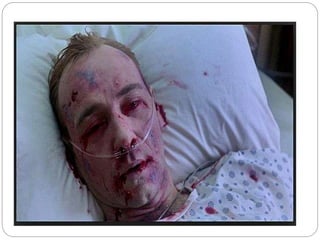
 Sudden onset of fever, weakness, muscle pain, 
headache, sore throat followed by vomiting, 
diarrhoea, rash, impaired kidney, and liver 
function. 
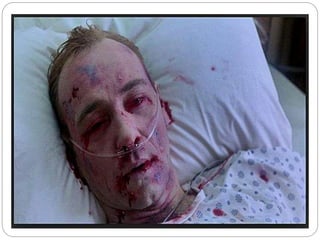
 In some cases, there is internal bleeding and 
external bleeding
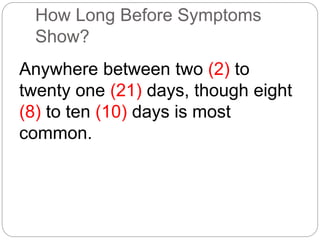
How Long Before Symptoms 
Show? 
Anywhere between two (2) to 
twenty one (21) days, though eight 
(8) to ten (10) days is most 
common.
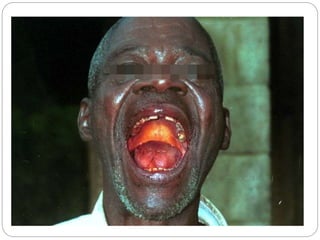
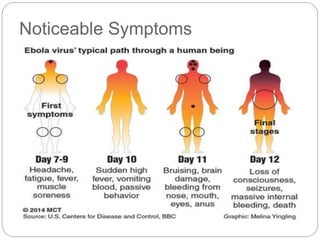
Noticeable Symptoms
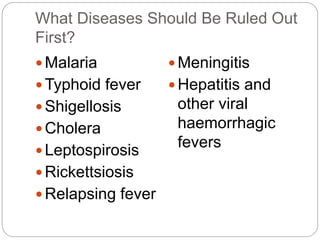
What Diseases Should Be Ruled Out 
First? 
 Malaria 
Typhoid fever 
 Shigellosis 
 Cholera 
 Leptospirosis 
 Rickettsiosis 
 Relapsing fever 
 Meningitis 
Hepatitis and 
other viral 
haemorrhagic 
fevers
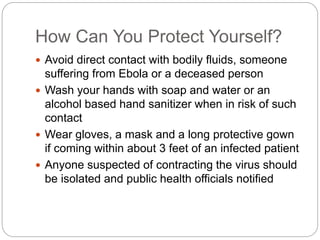
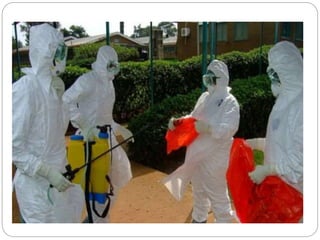
How Can You Protect Yourself? 
 Avoid direct contact with bodily fluids, someone 
suffering from Ebola or a deceased person 
 Wash your hands with soap and water or an 
alcohol based hand sanitizer when in risk of such 
contact 
 Wear gloves, a mask and a long protective gown 
if coming within about 3 feet of an infected patient 
 Anyone suspected of contracting the virus should 
be isolated and public health officials notified
How is it Treated? 
 Balancing the patient's fluids and electrolytes 
 Maintaining patient's oxygen status and blood 
pressure 
 Treating him or her for any complicating infection
Is there an Ebola cure? 
There is currently No Cure for Ebola however, there 
are a number of experimental drugs that are being 
considered for use in this context such as; 
 ZMapp which is a combination of monoclonal 
antibodies 
 TKM-Ebola an RNA interference drug 
 Favipivir a drug approved in Japan for stockpiling 
against influenza pandemics 
 BCX4430 is a broad-spectrum antiviral drug 
developed by BioCryst Pharmaceuticals and currently 
being researched as a potential treatment for Ebola 
by USAMRIID. 
 Brincidofovir, another broad-spectrum antiviral drug 
 JK-05, a small molecule drug among others
Do You Believe 
the Media 
Stories about 
Ebola?

Facts on Ebola Virus Outbreak: Symptoms and Prevention Tips

  • 1.
    Ebola Outbreak Factsheet What you need to know about the Ebola Virus Disease
  • 2.
    Is Ebola Realor just a Media Hoax?
  • 3.
    What is theEbola Virus? Ebola, previously known as Ebola haemorrhagic fever, is a rare and deadly disease caused by infection with one of the Ebola virus strains. Ebola can cause disease in humans and nonhuman primates (monkeys, gorillas, and chimpanzees).
  • 4.
    Ebola Cont. Ebolais caused by infection with a virus of the family Filoviridae, genus Ebolavirus. There are five identified Ebola virus species, four of which are known to cause disease in humans:  Ebola virus (Zaire ebolavirus);  Sudan virus (Sudan ebolavirus);  Taï Forest virus (Taï Forest ebolavirus, formerly Côte d’Ivoire ebolavirus); and  Bundibugyo virus (Bundibugyo ebolavirus).  The fifth, Reston virus (Reston ebolavirus), has caused disease in nonhuman primates, but not in humans.
  • 5.
    Ebola History Ebolawas first discovered in 1976 near the Ebola River in what is now the Democratic Republic of the Congo. Since then, outbreaks have appeared sporadically in Africa (more specifically West-Africa)
  • 6.
    What of theEbola Outbreak 2014? An epidemic of Ebola Virus Disease (EVD) is ongoing in certain West African countries. It began in Guinea in December 2013 and spread to Liberia and Sierra Leone then to other countries as follows;
  • 7.
    Major Countries withEbola Transmission (in 2014)  Guinea  Liberia  Sierra Leone Countries with limited local transmission (in 2014)  Spain  United States Countries with contained spread ( in 2014)  Senegal  Nigeria
  • 9.
    How Do YouGet Ebola?  Human -to - human transmission, primarily through direct or indirect contact with bodily fluids such as blood, urine, and saliva  Contact with contaminated objects such as needles or soiled bedding or clothing  The Virus is not airborne like flu
  • 11.
    What are theSymptoms?  Sudden onset of fever, weakness, muscle pain, headache, sore throat followed by vomiting, diarrhoea, rash, impaired kidney, and liver function.  In some cases, there is internal bleeding and external bleeding
  • 13.
    How Long BeforeSymptoms Show? Anywhere between two (2) to twenty one (21) days, though eight (8) to ten (10) days is most common.
  • 14.
  • 15.
    What Diseases ShouldBe Ruled Out First?  Malaria Typhoid fever  Shigellosis  Cholera  Leptospirosis  Rickettsiosis  Relapsing fever  Meningitis Hepatitis and other viral haemorrhagic fevers
  • 16.
    How Can YouProtect Yourself?  Avoid direct contact with bodily fluids, someone suffering from Ebola or a deceased person  Wash your hands with soap and water or an alcohol based hand sanitizer when in risk of such contact  Wear gloves, a mask and a long protective gown if coming within about 3 feet of an infected patient  Anyone suspected of contracting the virus should be isolated and public health officials notified
  • 18.
    How is itTreated?  Balancing the patient's fluids and electrolytes  Maintaining patient's oxygen status and blood pressure  Treating him or her for any complicating infection
  • 19.
    Is there anEbola cure? There is currently No Cure for Ebola however, there are a number of experimental drugs that are being considered for use in this context such as;  ZMapp which is a combination of monoclonal antibodies  TKM-Ebola an RNA interference drug  Favipivir a drug approved in Japan for stockpiling against influenza pandemics  BCX4430 is a broad-spectrum antiviral drug developed by BioCryst Pharmaceuticals and currently being researched as a potential treatment for Ebola by USAMRIID.  Brincidofovir, another broad-spectrum antiviral drug  JK-05, a small molecule drug among others
  • 21.
    Do You Believe the Media Stories about Ebola?