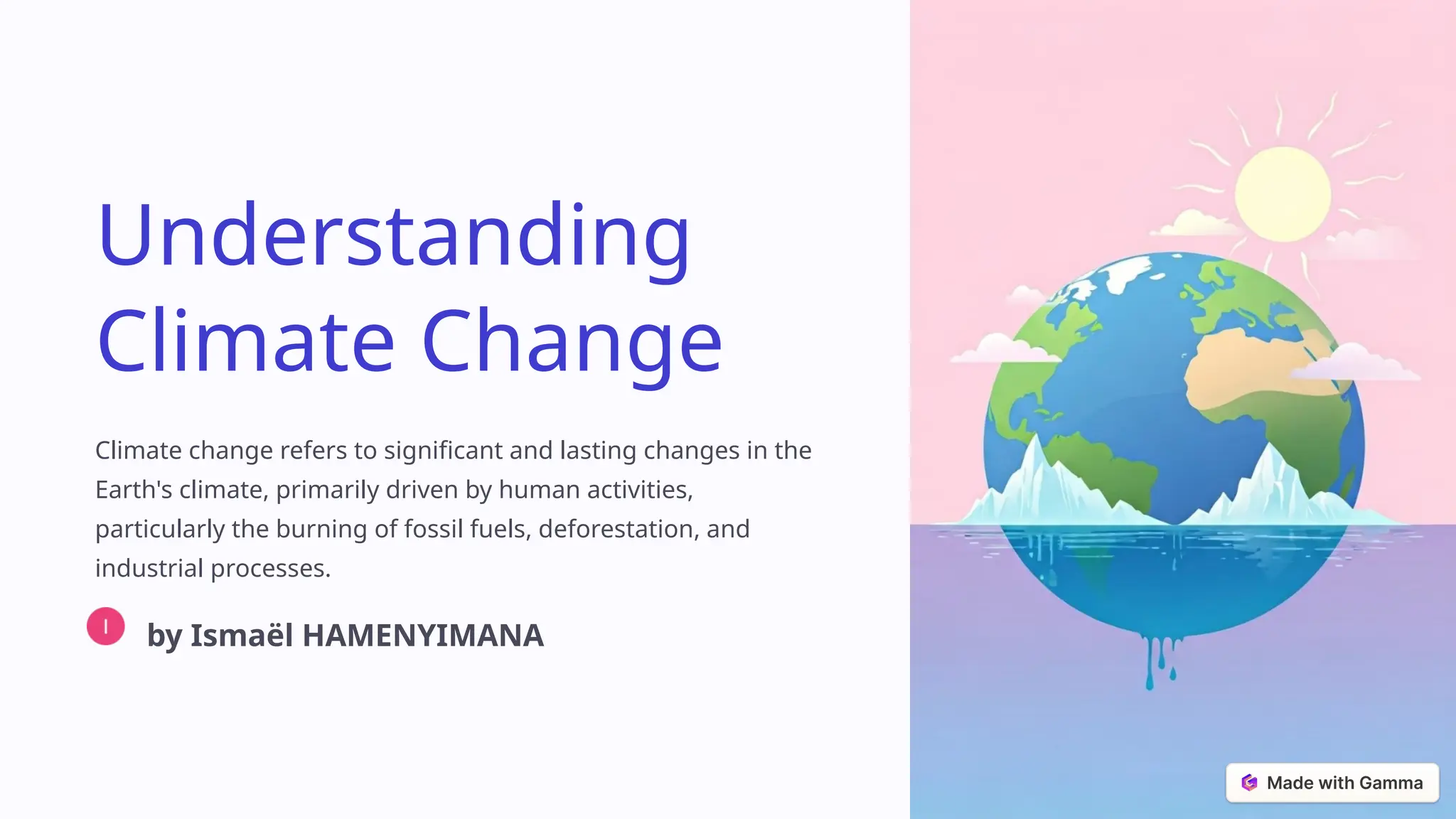
Understanding
Climate Change
Climate change refers to significant and lasting changes in the
Earth's climate, primarily driven by human activities,
particularly the burning of fossil fuels, deforestation, and
industrial processes.
by Ismaël HAMENYIMANA
Greenhouse Effect
The greenhouse effect is a natural process where certain gases in the Earth's atmosphere trap heat, keeping the
planet warm enough to support life. However, human activities have intensified this effect, leading to higher
global temperatures.
Water Vapor
The most abundant greenhouse gas, responsible
for the majority of the natural greenhouse effect.
Carbon Dioxide
The primary greenhouse gas emitted by human
activities, contributing significantly to global
warming.
Methane
A powerful greenhouse gas released from various
sources, including livestock, natural gas
production, and agriculture.
Nitrous Oxide
A greenhouse gas emitted from agricultural
activities, industrial processes, and fossil fuel
combustion.
Causes of Climate Change
Major contributors to climate change include the emission of greenhouse gases (GHGs) from various human
activities, particularly the burning of fossil fuels, deforestation, and industrial processes.
Fossil Fuel Combustion
Burning coal, oil, and natural
gas for electricity generation,
transportation, and industrial
processes releases significant
amounts of CO2, a major
contributor to climate change.
Deforestation
The clearing of forests for
agriculture, logging, and
urbanization removes trees,
which absorb CO2 from the
atmosphere, leading to a net
increase in atmospheric CO2.
Industrial Processes
Industrial activities such as
manufacturing, cement
production, and chemical
processing release various
GHGs, including CO2, methane,
and nitrous oxide.
Impacts of Climate Change
Climate change has far-reaching effects on natural and human systems, including rising sea
levels, increased frequency and intensity of extreme weather events, disruption of ecosystems,
and threats to food security and water supply.
1 Sea Level Rise
Melting glaciers and ice sheets contribute to rising sea levels, threatening coastal
communities, ecosystems, and infrastructure.
2 Extreme Weather Events
Climate change increases the frequency and intensity of hurricanes, droughts, floods,
and heatwaves, leading to damage, displacement, and loss of life.
3 Ecosystem Disruption
Changing climate patterns disrupt natural ecosystems, leading to habitat loss,
biodiversity decline, and shifts in plant and animal populations.
4 Threats to Food Security
Climate change impacts agricultural productivity, leading to crop failures, food
shortages, and increased food prices, particularly in vulnerable regions.
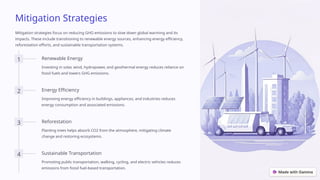
Mitigation Strategies
Mitigation strategies focus on reducing GHG emissions to slow down global warming and its
impacts. These include transitioning to renewable energy sources, enhancing energy efficiency,
reforestation efforts, and sustainable transportation systems.
1 Renewable Energy
Investing in solar, wind, hydropower, and geothermal energy reduces reliance on
fossil fuels and lowers GHG emissions.
2 Energy Efficiency
Improving energy efficiency in buildings, appliances, and industries reduces
energy consumption and associated emissions.
3 Reforestation
Planting trees helps absorb CO2 from the atmosphere, mitigating climate
change and restoring ecosystems.
4 Sustainable Transportation
Promoting public transportation, walking, cycling, and electric vehicles reduces
emissions from fossil fuel-based transportation.
Adaptation Strategies
Adaptation strategies focus on adjusting to the impacts of climate change that are already
occurring and are expected to continue. This involves building resilient infrastructure,
implementing water conservation measures, developing drought-resistant crops, and
enhancing early warning systems for extreme weather events.
Coastal Defenses
Building seawalls, raising coastal structures, and creating natural barriers help
protect coastal communities from rising sea levels and storm surges.
Water Conservation
Implementing water-efficient technologies, promoting rainwater harvesting, and
managing water resources effectively help conserve water in the face of drought.
Early Warning Systems
Investing in advanced weather monitoring and communication systems helps
provide timely warnings for extreme weather events, allowing communities to
prepare and mitigate risks.
Resilient Infrastructure
Designing and building infrastructure that can withstand extreme weather events,
such as heatwaves, floods, and hurricanes, helps protect communities from
Global Response
International agreements like the Paris Agreement aim to unite countries in their
efforts to limit global warming to well below 2 degrees Celsius above pre-industrial
levels.
Paris Agreement A legally binding international treaty
to limit global warming to well below
2 degrees Celsius, preferably to 1.5
degrees Celsius, compared to pre-
industrial levels.
United Nations Framework
Convention on Climate Change
(UNFCCC)
An international environmental treaty
that aims to stabilize greenhouse gas
concentrations in the atmosphere at a
level that would prevent dangerous
anthropogenic interference with the
climate system.
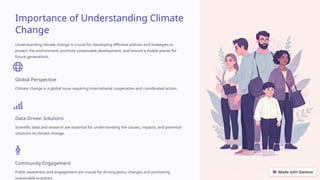
Importance of Understanding Climate
Change
Understanding climate change is crucial for developing effective policies and strategies to
protect the environment, promote sustainable development, and ensure a livable planet for
future generations.
Global Perspective
Climate change is a global issue requiring international cooperation and coordinated action.
Data-Driven Solutions
Scientific data and research are essential for understanding the causes, impacts, and potential
solutions to climate change.
Community Engagement
Public awareness and engagement are crucial for driving policy changes and promoting
sustainable practices.

Understanding-Climate-Change+-Climate-Change

  • 1.
    Understanding Climate Change Climate changerefers to significant and lasting changes in the Earth's climate, primarily driven by human activities, particularly the burning of fossil fuels, deforestation, and industrial processes. by Ismaël HAMENYIMANA
  • 2.
    Greenhouse Effect The greenhouseeffect is a natural process where certain gases in the Earth's atmosphere trap heat, keeping the planet warm enough to support life. However, human activities have intensified this effect, leading to higher global temperatures. Water Vapor The most abundant greenhouse gas, responsible for the majority of the natural greenhouse effect. Carbon Dioxide The primary greenhouse gas emitted by human activities, contributing significantly to global warming. Methane A powerful greenhouse gas released from various sources, including livestock, natural gas production, and agriculture. Nitrous Oxide A greenhouse gas emitted from agricultural activities, industrial processes, and fossil fuel combustion.
  • 3.
    Causes of ClimateChange Major contributors to climate change include the emission of greenhouse gases (GHGs) from various human activities, particularly the burning of fossil fuels, deforestation, and industrial processes. Fossil Fuel Combustion Burning coal, oil, and natural gas for electricity generation, transportation, and industrial processes releases significant amounts of CO2, a major contributor to climate change. Deforestation The clearing of forests for agriculture, logging, and urbanization removes trees, which absorb CO2 from the atmosphere, leading to a net increase in atmospheric CO2. Industrial Processes Industrial activities such as manufacturing, cement production, and chemical processing release various GHGs, including CO2, methane, and nitrous oxide.
  • 4.
    Impacts of ClimateChange Climate change has far-reaching effects on natural and human systems, including rising sea levels, increased frequency and intensity of extreme weather events, disruption of ecosystems, and threats to food security and water supply. 1 Sea Level Rise Melting glaciers and ice sheets contribute to rising sea levels, threatening coastal communities, ecosystems, and infrastructure. 2 Extreme Weather Events Climate change increases the frequency and intensity of hurricanes, droughts, floods, and heatwaves, leading to damage, displacement, and loss of life. 3 Ecosystem Disruption Changing climate patterns disrupt natural ecosystems, leading to habitat loss, biodiversity decline, and shifts in plant and animal populations. 4 Threats to Food Security Climate change impacts agricultural productivity, leading to crop failures, food shortages, and increased food prices, particularly in vulnerable regions.
  • 5.
    Mitigation Strategies Mitigation strategiesfocus on reducing GHG emissions to slow down global warming and its impacts. These include transitioning to renewable energy sources, enhancing energy efficiency, reforestation efforts, and sustainable transportation systems. 1 Renewable Energy Investing in solar, wind, hydropower, and geothermal energy reduces reliance on fossil fuels and lowers GHG emissions. 2 Energy Efficiency Improving energy efficiency in buildings, appliances, and industries reduces energy consumption and associated emissions. 3 Reforestation Planting trees helps absorb CO2 from the atmosphere, mitigating climate change and restoring ecosystems. 4 Sustainable Transportation Promoting public transportation, walking, cycling, and electric vehicles reduces emissions from fossil fuel-based transportation.
  • 6.
    Adaptation Strategies Adaptation strategiesfocus on adjusting to the impacts of climate change that are already occurring and are expected to continue. This involves building resilient infrastructure, implementing water conservation measures, developing drought-resistant crops, and enhancing early warning systems for extreme weather events. Coastal Defenses Building seawalls, raising coastal structures, and creating natural barriers help protect coastal communities from rising sea levels and storm surges. Water Conservation Implementing water-efficient technologies, promoting rainwater harvesting, and managing water resources effectively help conserve water in the face of drought. Early Warning Systems Investing in advanced weather monitoring and communication systems helps provide timely warnings for extreme weather events, allowing communities to prepare and mitigate risks. Resilient Infrastructure Designing and building infrastructure that can withstand extreme weather events, such as heatwaves, floods, and hurricanes, helps protect communities from
  • 7.
    Global Response International agreementslike the Paris Agreement aim to unite countries in their efforts to limit global warming to well below 2 degrees Celsius above pre-industrial levels. Paris Agreement A legally binding international treaty to limit global warming to well below 2 degrees Celsius, preferably to 1.5 degrees Celsius, compared to pre- industrial levels. United Nations Framework Convention on Climate Change (UNFCCC) An international environmental treaty that aims to stabilize greenhouse gas concentrations in the atmosphere at a level that would prevent dangerous anthropogenic interference with the climate system.
  • 8.
    Importance of UnderstandingClimate Change Understanding climate change is crucial for developing effective policies and strategies to protect the environment, promote sustainable development, and ensure a livable planet for future generations. Global Perspective Climate change is a global issue requiring international cooperation and coordinated action. Data-Driven Solutions Scientific data and research are essential for understanding the causes, impacts, and potential solutions to climate change. Community Engagement Public awareness and engagement are crucial for driving policy changes and promoting sustainable practices.